Lessons for Startups from the Russia-Ukraine War
March 17, 2026 by Harshit Gupta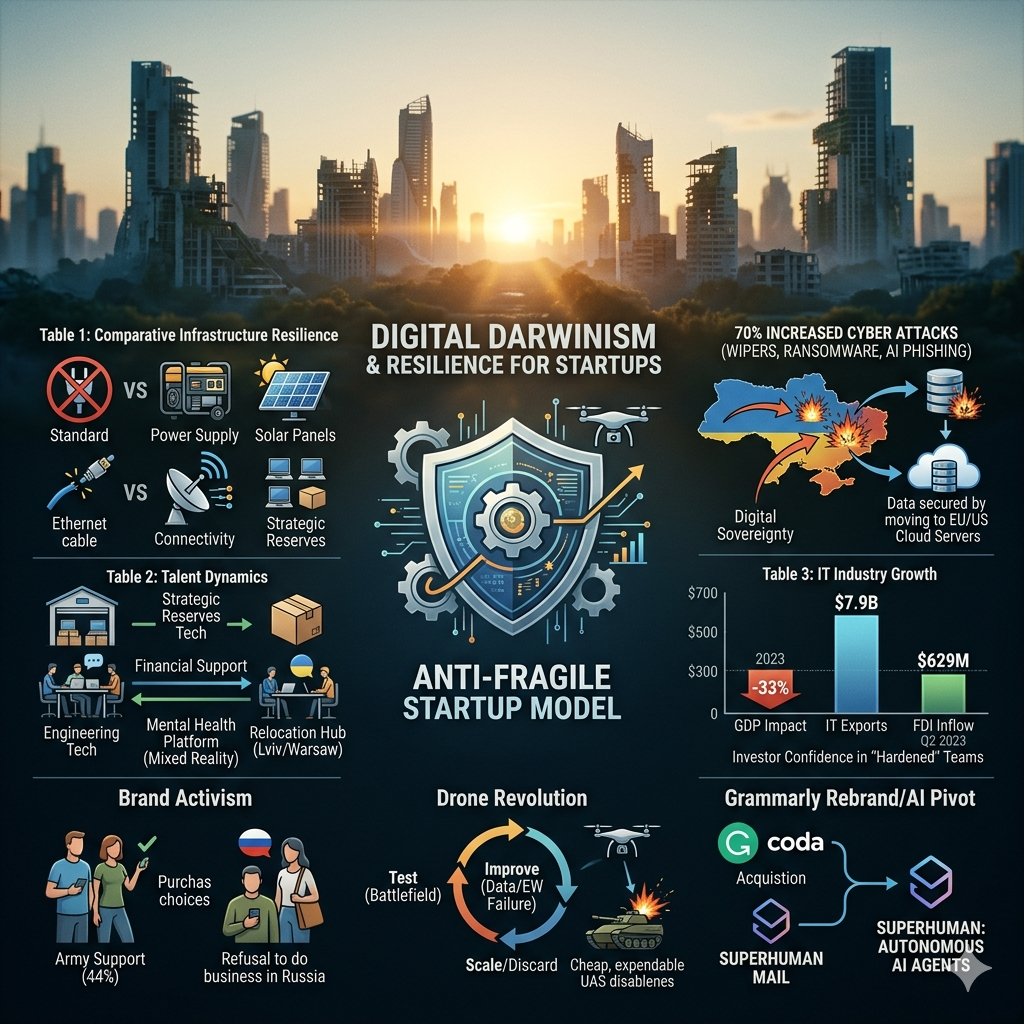
The eruption of high-intensity conventional warfare on the European continent has necessitated a fundamental reassessment of startup operational logic, moving the paradigm from efficiency-centric scaling to a model of extreme structural resilience. The experience of the Ukrainian technology ecosystem during the Russian invasion provides a unique longitudinal study in "Digital Darwinism," where survival is predicated on a decentralized, digitally fluent innovation culture that prioritizes rapid battlefield and market adaptation over bureaucratic stability. Startups operating in this environment have demonstrated that the traditional prerequisites for innovation—stability, predictable funding, and centralized infrastructure—are not absolute requirements but rather luxuries that must be replaced by strategic agility and mission-driven continuity when faced with existential threats. This report analyzes the multifaceted adaptations of the Ukrainian startup scene, offering a comprehensive framework for global enterprises to build anti-fragile systems capable of enduring geopolitical and economic volatility.
The Philosophical Foundations of Wartime Entrepreneurship
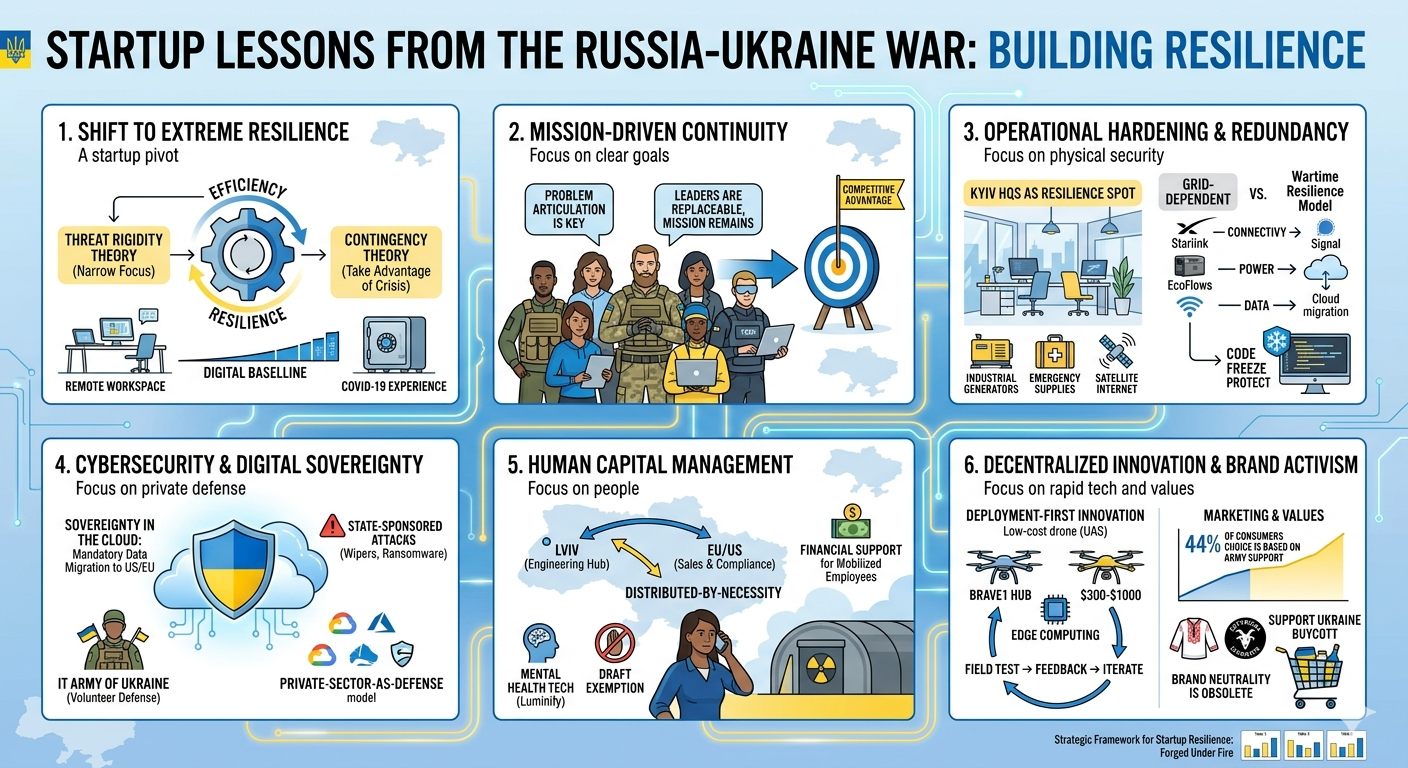
The initial shock of the February 2022 invasion forced an immediate transition in managerial philosophy, where the core theories of crisis reaction—threat-rigidity and contingency theory—played out in real-time. Threat-rigidity theory suggests that under extreme stress, organizations tend to narrow their focus and rely on established routines; however, the subsequent behavior of Ukrainian firms shifted toward contingency theory, where managers sought to take advantage of the crisis to build long-term resilience and redundancy. A surprising finding in this transition was the value of the COVID-19 pandemic as a preliminary experience; the remote-work infrastructure and digital processes established during the pandemic provided a functional baseline that allowed firms to maintain operations even as physical headquarters became untenable.
A critical lesson for startups is the prioritization of problem articulation as the primary driver of competitive advantage. In a wartime context, the ability to recognize and explain a problem quickly to the right stakeholders is more valuable than the technology used to solve it. Ukrainian entrepreneurs have highlighted that if a problem cannot be articulated clearly to mobilize a team, the entire development pipeline becomes clogged, impeding the progress of essential solutions. This mission-driven focus creates an environment where personal interests are secondary to organizational objectives; if a leader is unable to perform due to mobilization or injury, the organizational structure is designed to replace them with an equally qualified individual immediately, ensuring the mission remains the central pivot of all activity.
The concept of "first, fastest, and most adequate" has replaced the traditional search for a "perfect" product. Startups have learned that delivering a functional solution into a user's hands—whether it is a soldier on the front line or a customer in a disrupted market—is the only way to facilitate an honest discussion about the problem being solved. If a startup is not fast enough, the dynamic environment will render the solution obsolete before it is even deployed. This requires an entrepreneur's mindset characterized by personal fortitude and the ability to manage the stress of potential catastrophic failure. Furthermore, the war has underscored the necessity of a "Plan B," as seen in Russia's vulnerability to SWIFT banking sanctions; organizations that fail to study alternatives to their flagship concepts provide competitors with the opportunity to leap ahead during times of disruption.
Operational Hardening and Infrastructure Redundancy
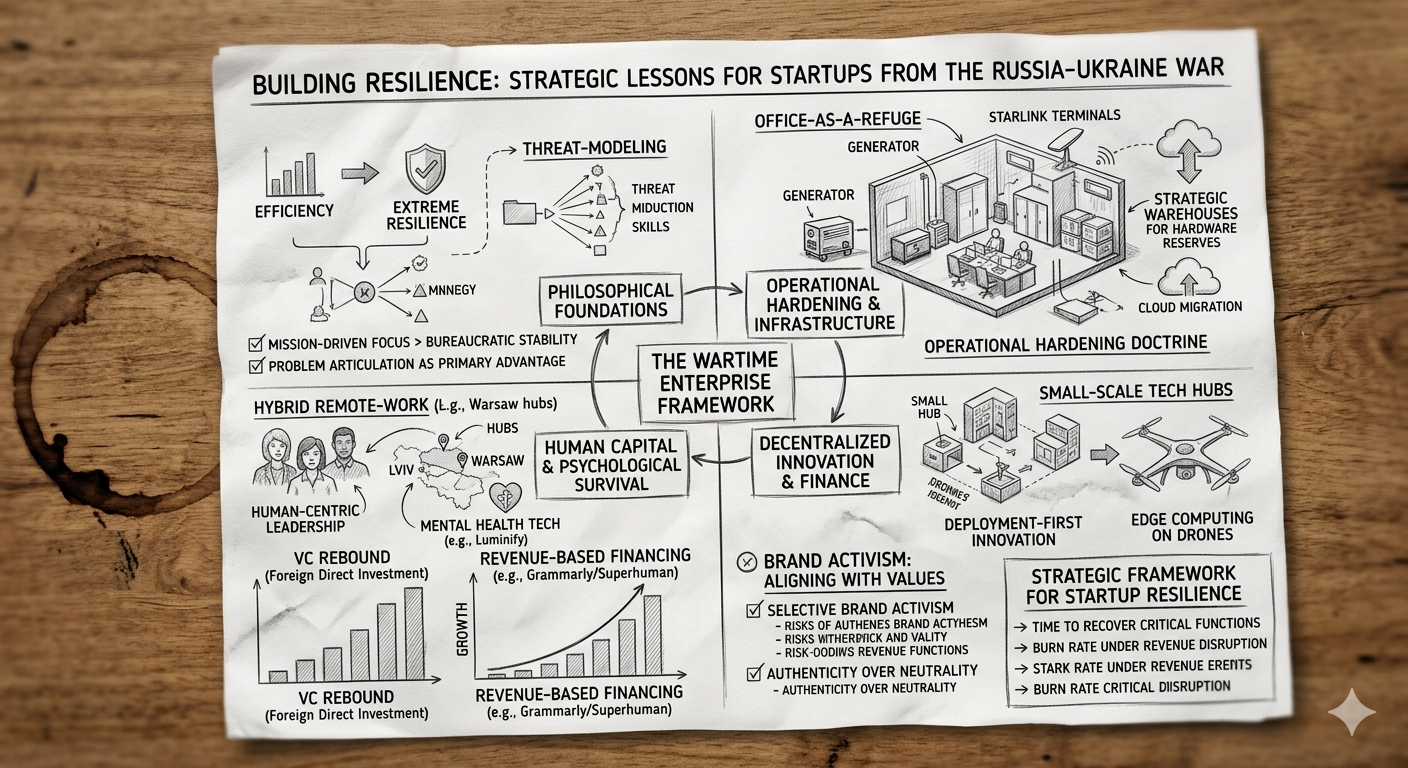
Wartime operational continuity is defined by the hardening of physical and digital assets against a spectrum of threats ranging from missile strikes to rolling blackouts. The transition from contingency planning to an active operating doctrine is best exemplified by the case of MacPaw, which began threat-modeling its business two months before the full-scale invasion. This proactive approach involved the creation of a specialized "Emergency Team" including executives and stakeholders from information security, IT, product, and finance.
Institutionalizing Physical Resilience
To ensure the safety of its workforce while maintaining service delivery, MacPaw established its Kyiv headquarters as a primary "resilience spot". This involved significant investment in autonomous infrastructure, including industrial-grade diesel generators and emergency water and food supplies. This model of the office as a "warm refuge" has become standard across the Ukrainian ecosystem; companies like Preply maintain 24/7 office availability with satellite internet to ensure that engineering teams can remain productive regardless of the state of the national power grid. For smaller startups that lack the capital for independent infrastructure, coworking hubs have stepped in to provide essential shelters with guaranteed heating and internet.
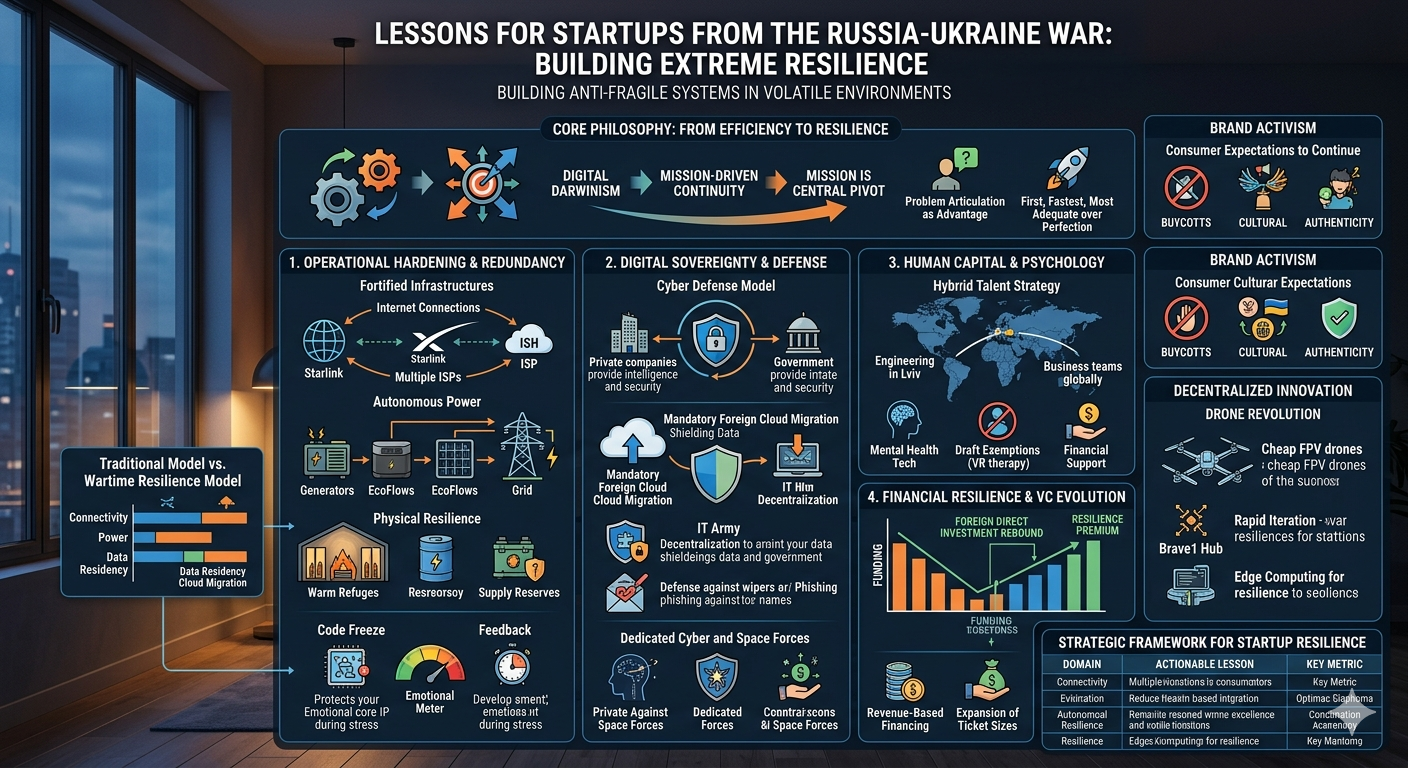
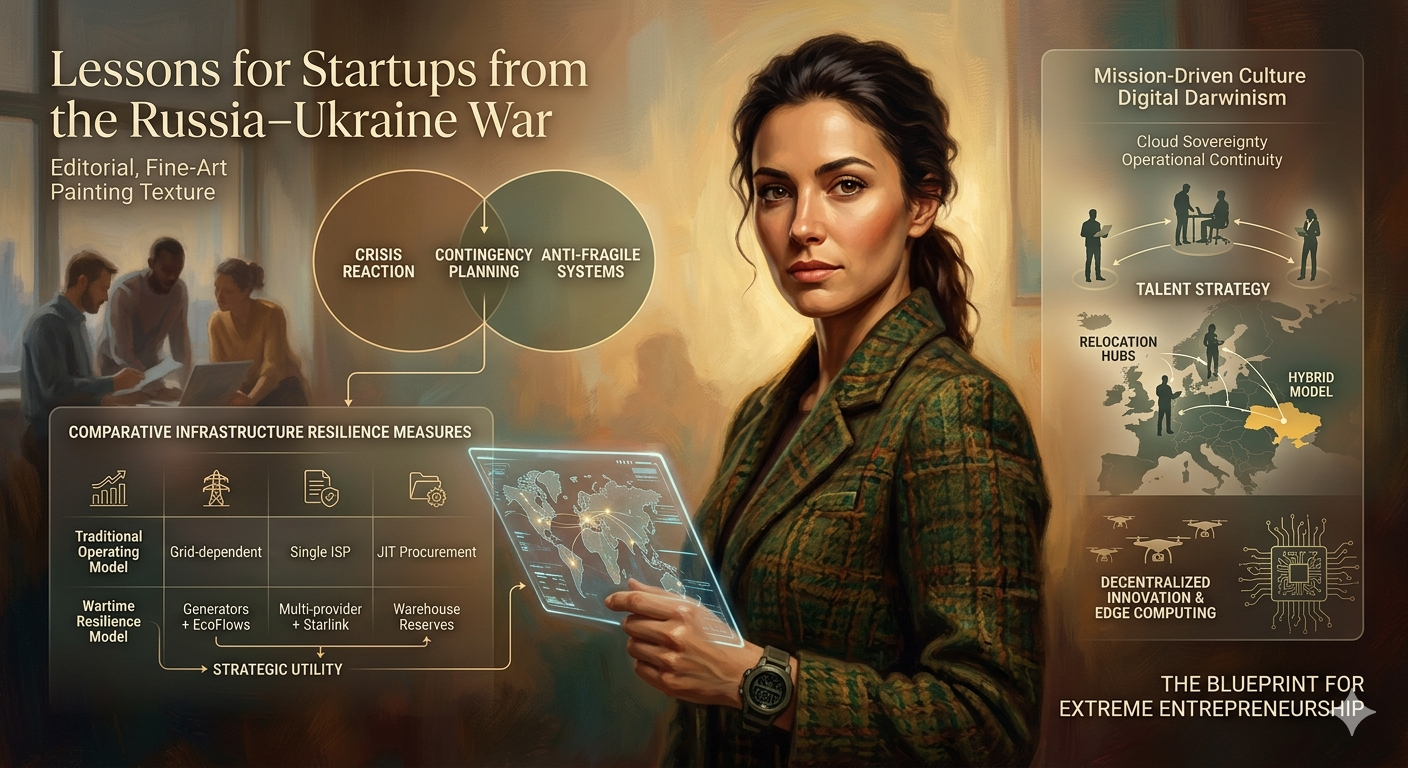
Table 1: Comparative Infrastructure Resilience Measures
Asset Category | Traditional Operating Model | Wartime Resilience Model | Strategic Utility |
Connectivity | Standard ISP / Single Fiber | Multi-provider + Starlink + Signal | Mitigation of jamming and physical cable destruction. |
Power Supply | Grid-dependent | Grid + Industrial Generators + EcoFlows | Operational continuity during targeted infrastructure strikes. |
Hardware | JIT Procurement / Lean Inventory | Strategic Warehouse Reserves (Laptops/Servers) | Bypass of border closures and supply chain delays. |
Personnel Support | Remote work options | Emergency Bags (First-aid/Food) + Relocation Funds | Physical safety and psychological security of talent. |
Data Residency | Mixed Local/Cloud | Mandatory Foreign Cloud Migration | Protection of digital sovereignty and user data. |
Beyond physical hardening, MacPaw implemented a "Code Freeze" regime for critical systems. This policy acknowledged that the emotional distress caused by active shelling could lead to rational errors in programming. By placing critical code in a read-only mode, only accessible by authorized members of the emergency team, the company protected its core IP from the human cost of psychological trauma. This nuanced understanding of the intersection between employee mental state and technical integrity is a high-level lesson in risk management.
Cybersecurity and Digital Sovereignty in the Battlespace
The Russia-Ukraine conflict represents the world's first large-scale cyber war where the private sector has served as a primary line of defense. The conflict has revealed a profound dependency on products and infrastructure owned by private companies, which have provided irreplaceable support often without initial government requests or payment. This "private-sector-as-defense" model has seen firms providing intelligence, hardware for real-time information dominance, and specialized software to establish an edge on the modern battlefield.
Threat Evolution and State-Sponsored Aggression
The scale of cyber activity has been unprecedented, with Ukraine experiencing a 70% surge in attacks targeting civilian and defense infrastructure in 2024 alone. Russian state-sponsored actors, linked to the FSB (Gamaredon), GRU (Sandstorm), and SVR, have utilized a sophisticated array of wipers, ransomware, and AI-generated phishing campaigns to disrupt government and economic functions. For example, the Sandstorm group intensified its use of the "Sting" and "Zerlot" wipers against educational and logistics sectors in early 2025.
Startups must recognize that cyber weapons are now an integral component of geopolitical conflict. The Russian strategy includes coordinated strikes where cyberattacks on communications or energy grids coincide with kinetic military operations. This has led to the formalization of Ukraine's defensive capabilities, including the 2025 establishment of a dedicated Cyber Force and a parallel Space Force to manage on-orbit threats and space-based intelligence.
Digital Resilience through Cloud Sovereignty
A cornerstone of Ukraine's digital defense was the rapid migration of government and critical private data to secure cloud servers in the United States and the European Union. By decoupling digital registries from physical geography, Ukraine ensured that essential administrative processes could continue even if government buildings were destroyed or power was lost. This model of "sovereignty in the cloud" is a vital lesson for startups in volatile regions; local data residency, once considered a security measure, can become a liability during conventional conflict.
The "IT Army of Ukraine," a volunteer group of international cyber operators, demonstrates the power of decentralized, informal defense. While often conducting unsophisticated DDoS attacks, the sheer scale of the volunteer effort has managed to inconvenience Russian financial institutions and disrupt internet services. This civil-military fusion has integrated private-sector IT specialists into national defense teams, creating a dynamic coalition that can adapt faster than a centralized state bureaucracy.
Human Capital Management and the Psychology of Survival
The most significant asset in any startup ecosystem is its human capital, and in a war zone, the preservation and management of this capital is the most complex challenge founders face. The Ukrainian experience has shown that innovation does not require peace, but it does require a high degree of determination and a structured approach to employee well-being.
The Hybrid Talent Strategy
Many startups have adopted a "distributed-by-necessity" workforce model to balance risk with productivity. Engineering and product functions often remain in Ukraine, specifically in hubs like Lviv, which has become a magnet for displaced developers due to its proximity to the Polish border. Simultaneously, sales, marketing, and compliance teams are frequently relocated to the European Union or the United States to ensure proximity to customers and international investors. This hybrid model allows firms to tap into the high talent density and "hardened" productivity of the Ukrainian workforce while maintaining a stable international operational footprint.
Table 2: Talent Relocation and Retention Dynamics
Mechanism | Implementation Detail | Organizational Impact |
Draft Exemption | "Special Status" for defense-critical firms | Retention of core engineering teams. |
Mental Health Tech | Integration of platforms like Luminify | Mitigation of PTSD and chronic war stress. |
Relocation Hubs | Lviv (Ukraine) and Warsaw (Poland) | Continuity of operations in secure zones. |
Remote-First Ops | Zero-physical-infrastructure models | Leaner operations than stable-market peers. |
Financial Support | Subsidies for generators/batteries/apartments | Stabilization of employee household environments. |
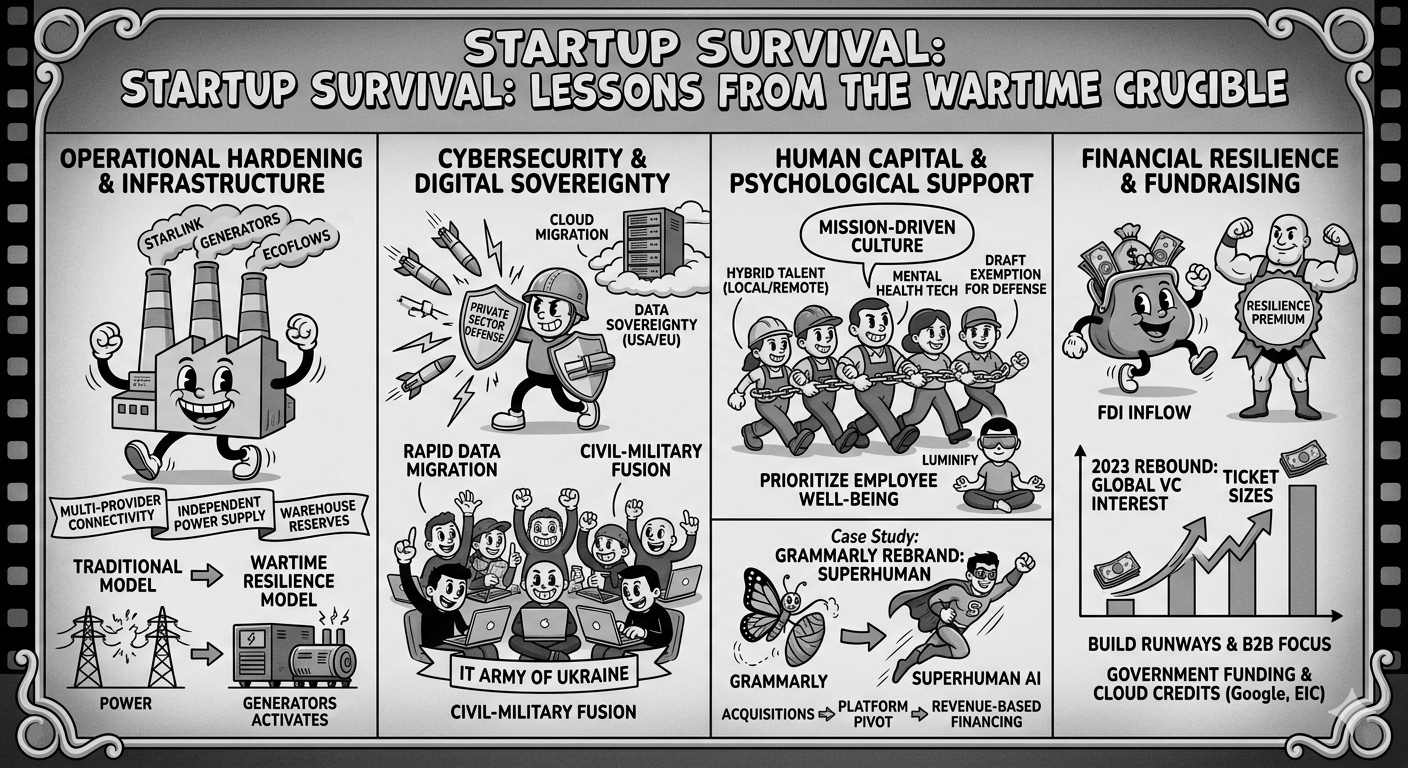
The psychological aspect of leadership in this context cannot be overstated. Founders have prioritized human-centric leadership, continuing to pay salaries to employees who have been mobilized into the Armed Forces to support their families. This commitment strengthens team cohesion and morale, as the company is seen not just as an employer but as a pillar of community support. The emergence of mental health platforms like Luminify, which uses mixed reality for trauma therapy, illustrates how Ukrainian engineers have pivoted their expertise toward pressing humanitarian needs.
Managing the "Human Cost" of Productivity
Operating a startup during a war means navigating a reality where investor calls happen from bomb shelters and product launches are delayed by air raid sirens. Founders must manage the "existential threat" as a constant background variable. Interestingly, many founders report that this environment has sharpened their product discipline; because resources and time are scarce, release cycles are shorter, QA is stricter, and every sprint includes business continuity as a core metric. The "quality of entrepreneurship" is nurtured by the unfair necessity of navigating constant risk, making Ukrainian founders some of the most sought-after globally for their resilience and adaptability.
Financial Resilience and the Evolution of Venture Capital
The financial landscape for Ukrainian startups underwent a severe contraction immediately following the 2022 invasion, with early-stage funding and grant-based investment from sources like the Ukrainian Startup Fund facing significant limitations. Global investment activity dropped by half just days after the invasion began, reflecting a sharp increase in the perceived risk of geopolitical exposure.
The Rebound and the "Resilience Premium"
By 2023 and 2024, however, a heartening narrative emerged as investor confidence returned. Data from the National Bank of Ukraine showed a surge in Foreign Direct Investment (FDI) of $629 million in Q2 2023 alone. This rebound was driven by the realization that startups capable of maintaining growth during wartime possess a level of operational resilience that defines high-quality investments. International VCs recognized that these teams had "forged their cohesion under fire," making them uniquely competitive.
Local VCs have played a critical role in bridging the gap when international investors hesitated right before signing transaction documents. Firms like Flyer One Ventures and u.ventures stepped in to provide "operational closeness," assisting founders with local needs and acting as connectors to global networks. Fundraising strategies shifted toward a higher concentration of capital in resilient companies, with ticket sizes expanding and a greater percentage of capital being reserved for follow-on rounds to ensure longer runways.
Table 3: Economic Indicators of the Ukrainian Tech Ecosystem (2022-2025)
Metric | 2022 Impact | 2023/2024 Recovery | Key Drivers |
GDP Impact | -33% ($150B loss) | Sectoral rebound in IT | Export-driven resilience. |
IT Industry Growth | Disrupted | +7% (2023) | Global demand for resilient devs. |
IT Exports | Fluctuating | $7.9 billion (2023) | Shift to B2B and international markets. |
FDI Inflow | Significant drop | +$629M (Q2 2023) | Investor confidence in "hardened" teams. |
Investment Interest | -37% initially | Ticket sizes up to $7M | Focus on dual-use and cybersecurity. |
Google for Startups established a $5 million fund in 2022, followed by a $10 million fund for 2024-2025, providing non-dilutive cash awards and cloud credits to help startups maintain liquidity. Similarly, the European Innovation Council (EIC) announced €20 million in 2025 specifically for deep-tech startups, emphasizing women-led enterprises and integration into European markets. These institutional supports have provided a lifeline for firms to transition from survival mode to post-war economic recovery planning.
Brand Activism and the Market of Values
In a wartime economy, "brand neutrality" is no longer a viable strategic position. Ukrainian consumers have developed a new "demandingness," expecting both national and international brands to take a clear stance on the conflict. This shift has profound implications for startup marketing and customer loyalty.
The Rise of "Buycotts" and Army Support
Recent surveys indicate that 44% of Ukrainian consumers choose brands based on their position regarding support for the Armed Forces. A clear position—whether through financial donations, volunteering, or refusal to do business in Russia—is now a dominant criterion for brand selection, particularly among Generation Z. This behavior has transitioned from rare to common, with shoppers actively "buycotting" (supporting) brands that align with their personal values and civic positions.
Startups have leveraged cultural symbols and satire to build community resilience. Satire, such as reclaiming the slur "Ukrop" for branding, helps mobilize public spirit and defiance, reducing the psychological impact of the conflict. National symbols like the vyshyvanka (traditional embroidery) are used in advertisements to evoke identity and togetherness, turning a product into a symbol of collective resistance.
Authenticity as a Competitive Advantage
The research highlights that "Selective Brand Activism"—where a brand takes a stand on some issues but remains silent on others—can lead to perceptions of hypocrisy and negative consumer attitudes. To build sustainable competitive advantage, emotionally charged communications must be reinforced by genuine, socially impactful actions. For example, global brands that left the Russian market, such as McDonald's, saw an increase in brand value and loyalty among those who support Ukraine. Startups that integrate CSR (Corporate Social Responsibility) into their core management and reporting systems strengthen the trust between business, government, and society, which is a critical element of enterprise resilience.
Cross-Border Relocation and the Polish Hub
The mass relocation of Ukrainian high-tech companies has transformed Poland into a critical regional hub. By 2024, Ukrainian firms constituted 7.1% of all high-tech companies in Poland, concentrated primarily in Warsaw, Krakow, and Wroclaw. This relocation was driven primarily by security concerns (65% of respondents) and has led to an increase in business activity in the host regions, although it brought distinct challenges related to cultural differences and the loss of local suppliers.
Navigating the Polish Tax and Legal Framework
The Polish government introduced the "Special Act" in March 2022 to provide Ukrainian citizens with temporary protection (PESEL UKR status), allowing them to register businesses on equal footing with Polish citizens. The establishment of a sole proprietorship (CEIDG) is free, although entrepreneurs must navigate complex social insurance (ZUS) and tax regulations.
Table 4: Key Tax Reliefs for Relocated Startups in Poland (2025)
Relief Program | Key Provision | Eligibility/Conditions |
Cash-Based PIT | Tax paid only upon receipt of payment | Turnover limit of PLN 2M; SMEs/Sole props. |
Start-up Relief | 6 months without social contributions | For new businesses; only health insurance paid. |
Preferential ZUS | Reduced social contributions for 24 months | Follows the initial 6-month start-up relief. |
VAT Exemption | No registration required for small firms | Annual sales below PLN 200,000. |
R&D Relief | 200% deduction of innovative costs | For companies engaged in transformative tech. |
One of the most valuable reliefs introduced in 2025 is the Cash-based PIT, which allows startups to defer personal income tax payments until they have actual liquidity from a customer payment. This is particularly vital for service-oriented startups where cash flow timing is often mismatched with invoicing. Additionally, the Double Taxation Avoidance Agreement between Poland and Ukraine allows entrepreneurs to deduct taxes paid in Ukraine from their Polish tax liabilities, provided they can prove their "center of vital interests" remains in Ukraine or they have not exceeded 183 days of residency.
Transitioning to Permanent Status
As the special legal regime for temporary protection is phased out (expected March 2026), startups must prepare for a transition to standard immigration rules. The introduction of the CUKR permit offers a simplified online procedure for a three-year residence status, which will maintain the right to work without separate permits. However, this transition will tie social welfare benefits (like child support) to formal employment and social security contributions, necessitating a shift from refugee status to a formal business residency model.
Decentralized Innovation and the Drone Revolution
The war in Ukraine has fundamentally challenged conventional thinking about military technology and procurement. Rather than relying on expensive, centralized defense-industrial complexes, Ukraine has pioneered a "tech hub" culture—an ecosystem of small-scale entrepreneurial ventures that iterate products based on real-time operator feedback.
The Brave1 Hub and Deployment-First Innovation
Launched in 2023, the government-backed Brave1 hub has become the focal point for this defense innovation. It has supported more than 500 manufacturers, producing millions of cheap, expendable unmanned aerial systems (UAS). These drones, often built from commercially available components, cost as little as $300 to $1,000 but are capable of disabling armored vehicles worth millions. The core of this success is a "deployment-first" model where products are tested directly on the battlefield, improved within days based on data from electronic warfare failures, and then scaled or discarded.
Edge Computing and Resilient Intelligence
In jammed or degraded environments where constant links to distant data centers are impossible, Ukrainian developers have pushed processing power directly onto the drones and sensors. This use of edge computing allows systems to operate independently of a central hub, making them harder to knock out and easier to deploy in electronic warfare conditions. This proves that intelligence does not need to live in one place to be powerful; a lesson with significant implications for industrial automation, remote healthcare, and predictive maintenance.
The Fragmentation Challenge
While this radical decentralization fuels speed and experimentation, it also creates fragmentation. Small teams rarely achieve the complex systems engineering or high-volume serial production needed for advanced weapons systems over a prolonged conflict. There is an ongoing debate about the need for moderate centralized consolidation of tech hubs to avoid duplicated research and to achieve the industrial scale necessary to compete with a major power like Russia. Startups must learn to balance the agility of small-team innovation with the structural requirements of mass production.
Case Study: The Grammarly Rebrand and AI Pivot
Grammarly, founded in Kyiv in 2009, serves as a premier symbol of the Ukrainian tech sector's evolution. In October 2025, the company underwent a significant rebranding, changing its name to Superhuman and pivoting its strategy toward autonomous AI agents.
Strategic M&A and Leadership Transition
To broaden its capabilities beyond simple writing assistance, Grammarly/Superhuman executed a series of strategic acquisitions:
Coda (December 2024): A collaborative workspace platform that brought a database and workflow engine under the Grammarly umbrella.
Superhuman Mail (June 2025): A popular AI email app that provided a high-frequency interface for AI agents.
The company also installed Coda's co-founder, Shishir Mehrotra, as CEO to lead this platform shift. This strategy reflects a move from a single-utility "writing assistant" to a comprehensive AI productivity platform. Despite the rebranding, the company has maintained its commitment to its Ukrainian hub, which grew by 15% in 2025 and remains a core site for engineering teams working on the Superhuman Go assistant and AI agents.
Revenue-Based Financing and Scalability
In 2025, the company secured a unique funding round through revenue-based financing from General Catalyst. This structure allowed the company to access capital for product development and M&A without re-pricing existing shareholders or giving up additional equity, maintaining its $13 billion valuation from 2021. With annual revenue well above $700 million and 40 million daily users, Superhuman/Grammarly demonstrates that a startup with Ukrainian roots can achieve global scale and profitability while navigating the complexities of a changing AI market and a home-country war.
Comprehensive Conclusions and Actionable Strategies
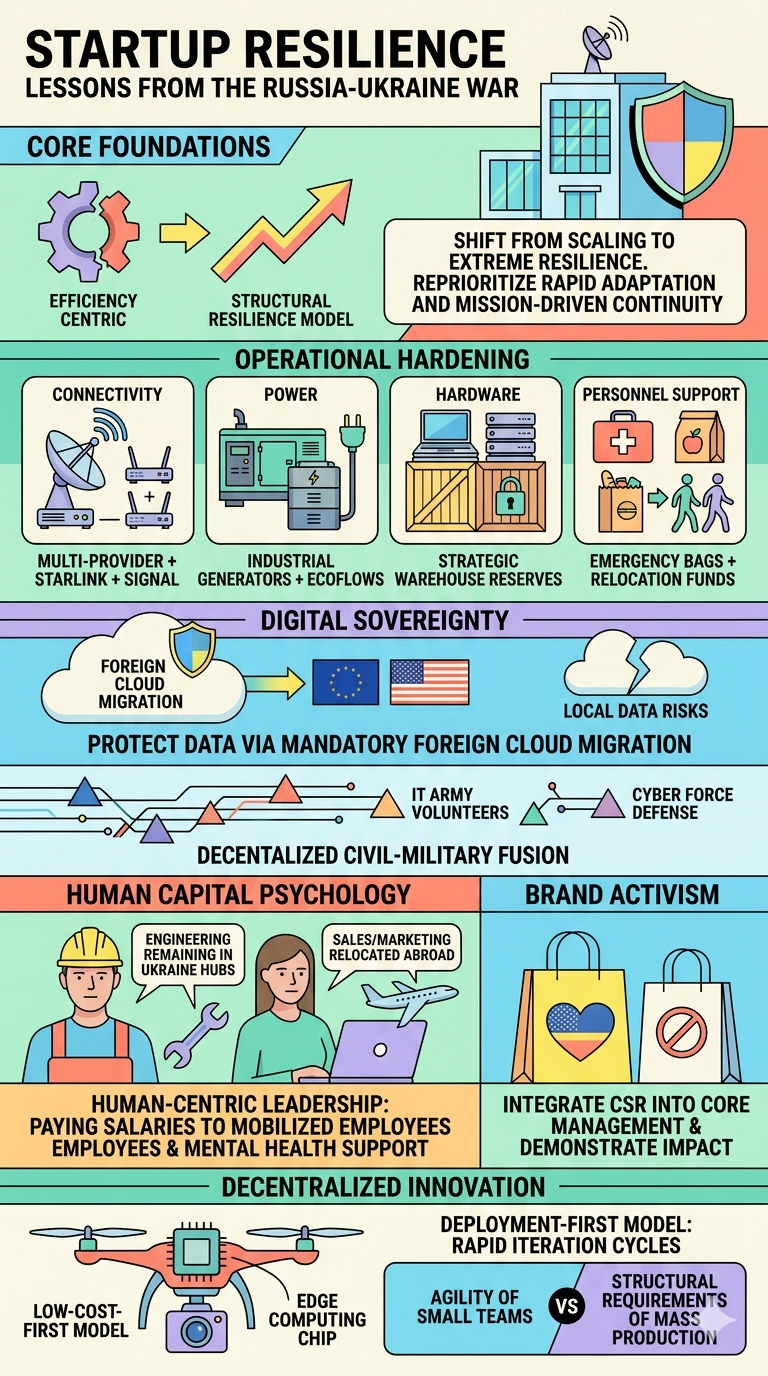
The Russia-Ukraine war has served as a crucible for a new form of "Extreme Entrepreneurship," providing a roadmap for startups globally to navigate a world of increasing geopolitical and economic instability. The primary takeaway is that resilience is not a single feature but a multi-layered organizational capacity encompassing infrastructure, human capital, financial logic, and technological decentralization.
Table 5: Strategic Framework for Startup Resilience
Domain | Actionable Lesson | Key Metric |
Operational | Threat-model the business for "worst-case" scenarios. | Time to recover critical functions. |
Technological | Adopt edge computing and cloud-first data sovereignty. | Uptime in jammed/degraded environments. |
Financial | Build runways through operational efficiency and B2B focus. | Burn rate under revenue disruption. |
Leadership | Mission-driven culture with replaceable hierarchies. | Continuity of service during personnel shifts. |
Marketing | Align brand with societal values; avoid neutrality. | NPS among core demographic groups. |
Innovation | Implement "Deployment-First" rapid iteration cycles. | Number of iterations per week. |
The transition from a stable operating environment to one of "Digital Darwinism" requires startups to view every crisis as a learning opportunity. Digital resilience is delivered through the strategic mobilization of resources—what researchers call "entrepreneurial bricolage"—where existing tools are repurposed and recombined to maintain operations under pressure. This improvisation, combined with structured contingency planning, allows firms to response faster and recover more quickly than their competitors.
For the global technology community, the success of Ukrainian startups like Preply, MacPaw, and Superhuman (Grammarly) proves that innovation does not require a perfect environment; it requires a resilient one. These companies are not just surviving; they are "out-executing" their peers in stable markets by building leaner, more disciplined, and more mission-focused organizations. As the assumption of a stable global order continues to be tested, the blueprints for wartime entrepreneurship will likely become the foundational strategies for the next generation of global market leaders. The mission, ultimately, remains everything.
From Idea to Startup: The Real Journey of Modern Founders
Building a startup is exciting, chaotic, and often misunderstood. If you’ve ever wondered how founders actually validate ideas, find co-founders, raise funding, and survive the emotional rollercoaster, these articles explore the realities behind the startup world.
Start with How to Validate Your Startup Idea in 48 Hours for $0 to understand how founders test ideas quickly before wasting months building the wrong product. Once you have an idea, the next challenge is building it—From Idea to MVP: A Step-by-Step Guide for Solo Founder walks through the journey from concept to a real product.
Many founders struggle with partnerships and team decisions. Should your co-founder live in the same city? Explore Remote vs. Local: Does Your Co-Founder Need to Live in the Same City? and learn the risks hidden in partnerships in 5 Red Flags to Look for When Choosing a Startup Partner. If you’re searching for technical help, How to Find a Technical Co-Founder (Without a Six-Figure Salary) explains how founders actually do it.
The startup journey isn’t just about building products—it’s also about mindset and decision-making. Articles like Decision Fatigue: The Silent Startup Killer, Fear vs Logic: How Founders Actually Make Decisions, and How Overthinking Destroys Early Momentum reveal the psychological battles founders face behind the scenes.
Growth is another misunderstood part of startups. Learn why strategy matters more than hype in Ideas Don’t Scale. Systems Do. and why discipline matters in Why Your Startup Doesn’t Need Growth — It Needs Focus. Discover the importance of early traction in How the First 100 Users Decide Your Startup’s Fate and understand team building through The First Hire That Actually Matters.
Funding is often romanticized, but reality is more complex. Why First-Time Founders Should Avoid Big Funding challenges common assumptions about venture capital, while Revenue Solves More Problems Than Funding explains why sustainable businesses matter more than investor money.
The startup ecosystem also varies by geography. If you're curious about India’s startup scene, explore The New Playbook for Raising in Bangalore, Why Raising Pre-Seed in Bangalore Is Harder Than Ever, and Why B2B SaaS from Bangalore Scales Faster.
But startups are not just about strategy and growth—they’re also about people and emotions. Articles like The Hidden Burnout of Bangalore Founders, Comparison Culture in India’s Startup, and The Loneliness of First-Time Founders in Bangalore reveal the personal struggles founders rarely talk about publicly.
And finally, if you want a deeper perspective on the startup journey itself, explore Lessons Learned Too Late by First-Time Founders and The Myth of the “Overnight Success” Startup—because the truth behind startup success is far more complex than it appears.
Protect Your Future: The Precision Vesting Calculator
Don't let a "handshake deal" complicate your exit. Map out your ownership journey with our Vesting Calculator
Calculate Your Vesting Schedule →