Lessons Learned Too Late by First-Time Founders
February 21, 2026 by Harshit GuptaThe statistical reality of the startup ecosystem is defined by a paradox where the visibility of outlier successes often masks a foundational landscape of systemic failure. For first-time founders, the transition from ideation to sustainable operation is rarely a linear progression; rather, it is a volatile navigation through a "maze" of decisions where the consequences of early-stage errors often manifest too late for structural correction. Empirical data derived from post-mortem analyses of over 190 failed startups suggests that while lack of capital is a terminal symptom, the root causes reside in a complex interplay of market misalignment, human capital mismanagement, and a fundamental misunderstanding of operational and legal debt.
The Genesis of Market Misalignment and the Validation Fallacy
The most pervasive and lethal error among first-time founders is the pursuit of a solution for a non-existent or non-urgent problem. Approximately 42% of startups that fail identify "no market need" as the primary driver of their collapse. This phenomenon often stems from a "validation fallacy," where the founder mistakes their own passion or a small sample of polite feedback for a scalable market demand.
The Mechanism of Product-Market Misfit
Founders frequently succumb to the "build it and they will come" philosophy, investing significant capital and time into product development before engaging in deep problem discovery. This drive is particularly strong among technically skilled founders who prioritize the "how" of a solution over the "why" of the customer’s pain point. The resulting products often solve problems that users perceive as marginal or which are already adequately addressed by existing, albeit less sophisticated, workflows. In the enterprise software and healthcare sectors, founders often fail to account for the total cost of ownership, including integration costs, switching pain, and regulatory friction, which can outweigh the perceived benefits of a "better" product.
A notable case study in this validation failure is the development of a product designed to aggregate local events and social media activity on a map. Despite a $63,000 investment and nine months of development, the product launched to an indifferent market because the problem it solved was not urgent enough to command user attention or monetize effectively. This highlight's a critical second-order insight: market need is not a binary state but a spectrum of urgency. Founders who fail to identify a "beachhead" of approximately 100 users with a critical, daily pain point often find their messaging diluted and their marketing costs unsustainable.
The Trap of Premature Sophistication
First-time founders often equate product complexity with value, leading to "feature creep" as a misguided attempt to attract investors or a broader user base. This overcomplication results in a confusing user experience, internal exhaustion, and a bloated roadmap that prevents the team from perfecting the core value proposition. The ability to say "no" to secondary opportunities—partnerships, side experiments, and adjacent features—is a strategic tool that separates sustainable startups from those that succumb to scattered focus. Retrospective analysis suggests that a brutally simple offering solving one urgent problem for a well-defined persona is the most effective entry point.
Market Validation Risk Factors | Impact on Probability of Failure | Primary Retrospective Mitigation Strategy |
No Market Need | 42% (Highest single cause) | Pre-build customer interviews (200+ subjects) |
Building Before Problem Discovery | High (leads to technical debt) | Delaying build; prioritize user workflow mapping |
Targeting "Everyone" | High (marketing dilution) | Define 100-user "beachhead" segment |
Trend Chasing (AI/Web3/etc.) | Medium (short-term hype) | Anchor innovation in utility, not buzzwords |
Financial Stewardship and the Liquidity Mirage
While "running out of cash" is the most cited terminal event in startup post-mortems (29% to 38% depending on the study), it is rarely a standalone cause. Instead, cash depletion is the final manifestation of deeper structural failures in business modeling, pricing, and capital allocation.
Revenue vs. Cash Flow: The Visibility Gap
A common lesson learned too late is that rapid revenue growth can mask a deteriorating cash position. First-time founders often struggle with the distinction between profit margins and cash flow cycles. For instance, a venture may scale revenue from $600,000 to over $7 million, yet fail because it suffers from low profit margins, high payroll overhead, and a significant time lag between sales and cash collection. This "liquidity mirage" is exacerbated when a company lacks recurring revenue streams to stabilize operations.
The fundamental math of a startup’s survival can be expressed through the relationship between the Burn Rate (B) and the remaining Cash Reserves (C).
Runway (Months)=BC
However, founders often fail to account for the dynamic nature of B. As a company scales, the complexity of operations increases the burn rate non-linearly due to "Jack of all trades" hiring premiums and the hidden costs of scaling, such as insurance, legal compliance, and software overhead.
The Psychological and Structural Weight of Debt
When faced with a dwindling runway, first-time founders frequently turn to personal or bank-backed debt to maintain momentum. This decision often compounds psychological insecurity and financial risk. Retrospective accounts describe debt as a "weight" that distorts decision-making, leading founders to chase small, non-strategic wins to meet loan repayments rather than focusing on long-term value creation.
Operational debt—defined as the reliance on workarounds and undocumented processes—eventually manifests as financial debt when those systems break under the load of scaling. Founders who use debt for growth or equipment often find success if the ROI is clear and the turnaround is fast, such as buying inventory at a discount or equipment that directly increases efficiency. Conversely, using debt to cover operating expenses or payroll is a high-stakes gamble that often leads to total insolvency.
Type of Startup Debt | Origin/Mechanism | Retrospective Risk Assessment |
Personal/Founder Debt | Credit cards, 401k cash-outs | Extreme personal risk; high burnout rate |
Operational Debt | Undocumented SOPs, "tribal knowledge" | System collapse during demand spikes |
Strategic Debt | Raising too early/misaligned terms | Locked into unproven strategies |
Technical Debt | Rushed code for demos/investors | Compounded cost of future development |
Human Architecture: Co-Founders and the Cult of Momentum
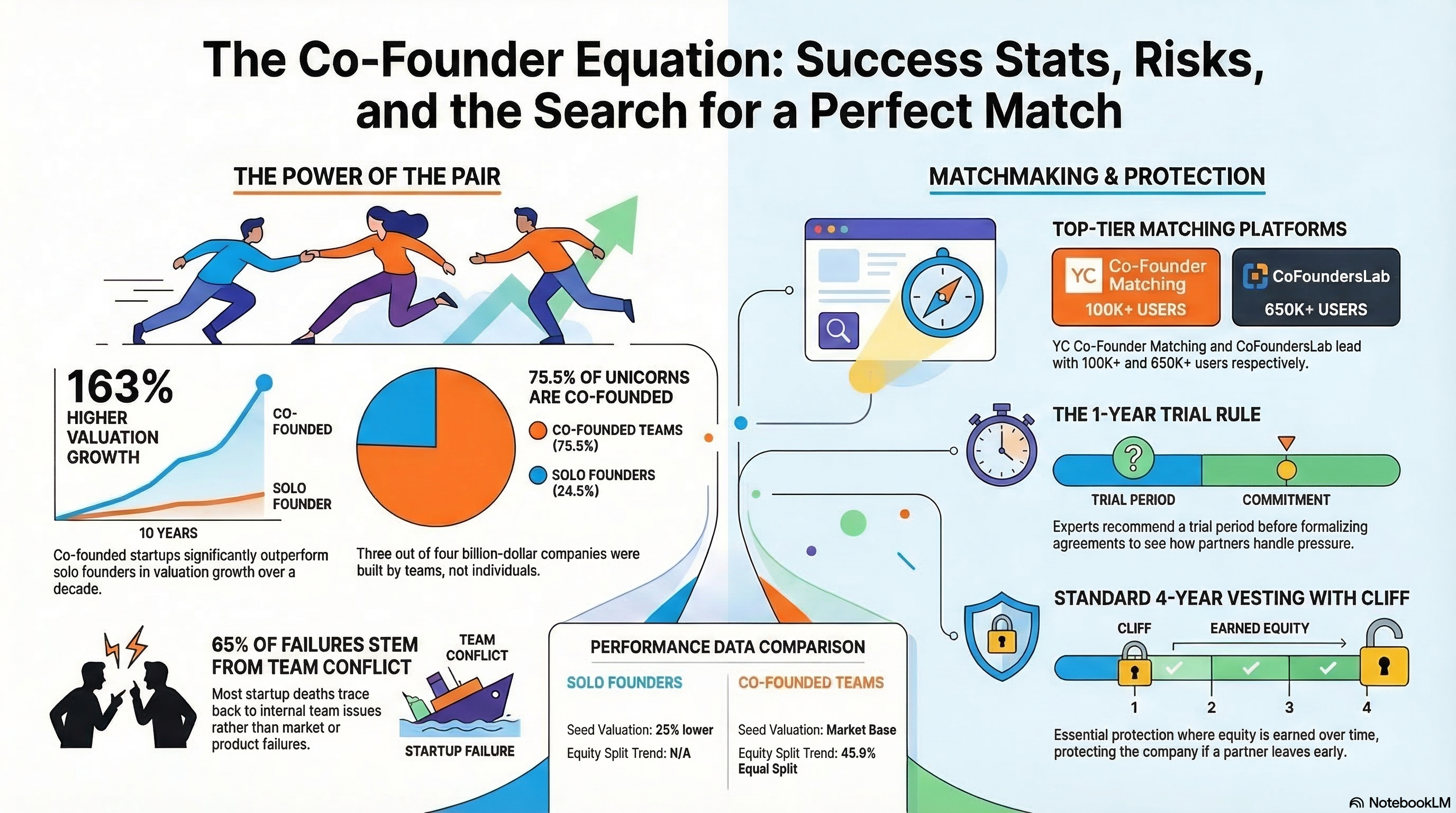
The team is the most critical asset in a startup, yet team disharmony is a fatal issue in approximately 23% of cases. First-time founders often rush into partnerships or hiring without the necessary diligence, driven by the desire to show progress to external observers.
The Dynamics of Founding Teams
The relationship between co-founders requires "constructive tension"—a state where trust and respect allow for the resolution of disagreements without damaging the mission. Common errors include choosing partners with overlapping skills rather than complementary ones, or failing to establish clear areas of ownership. Repeat founders note that a primary advantage of working together multiple times is the elimination of "founder drama," allowing the team to focus entirely on the market rather than internal debugging.
A significant lesson learned retrospectively is the danger of "faking it"—lying to oneself or the team about the state of the product or finances to maintain morale. This lack of transparency erodes the "feedback loop" necessary for survival and can lead to scandals that mirror the ethical failures of much larger corporations.
The Pitfalls of Rapid Scaling and Hiring
After securing funding, founders often face internal and external pressure to scale the team quickly. This frequently leads to several catastrophic outcomes:
Hiring for Speed over Fit: Bringing in "bodies" without clear roles, cultural alignment, or onboarding processes.
Over-reliance on Junior Talent: Attempting to conserve budget by hiring interns or entry-level staff who require constant supervision, thereby slowing down the senior founders rather than accelerating them.
The "Rockstar" Fallacy: Searching for a "Jack of all trades" who can perform every role, which inevitably leads to individual burnout and a lack of specialized excellence.
Retrospective advice emphasizes hiring slowly and intentionally, especially before product-market fit has been established. High-performing, small teams often outperform large, undertrained staffs, as evidenced by the small team sizes of historically successful acquisitions like WhatsApp.
Legal and Governance Frameworks: The Foundation of Integrity
Founders often view legal requirements as a distraction from building, a mistake that creates "deal killers" for future acquisitions or funding rounds. The complexity of equity, tax compliance, and intellectual property is such that early errors are often irreversible or prohibitively expensive to fix.
Cap Table Integrity and the Specter of Dead Equity
A "dirty" cap table—one with misallocated equity or unrecorded ownership—is a major red flag for venture capitalists. A particularly damaging phenomenon is "dead equity," which refers to significant ownership stakes held by individuals who are no longer contributing to the company, such as former co-founders, early advisors, or contractors.
Equity/Legal Element | Standard First-Time Mistake | Retrospective Best Practice |
Vesting Schedules | Issuing stock upfront without conditions | 4-year vesting with a 1-year cliff |
83(b) Election | Missing the 30-day IRS filing deadline | Immediate filing with calendar alerts |
Advisor Equity | Granting double-digit stakes (10-15%) | Keeping stakes below 1% for mentors |
Entity Type | Selecting LLC/S-Corp for VC-backed ventures | Starting with C-Corp to qualify for QSBS |
The failure to implement vesting schedules is the primary cause of dead equity. If a co-founder leaves after six months with a large upfront grant, that equity becomes "unusable" currency, making it harder to attract new talent or investors. Furthermore, the lack of an 83(b) election can lead to "phantom income" taxes, where founders owe taxes on the increasing value of unvested stock despite having no cash to pay them.
Intellectual Property (IP) and Chain of Title
Another critical legal oversight is the failure to secure IP assignment agreements from every founder, employee, and contractor who touches the product. Without these agreements, the startup may not legally own its core technology, which can terminate an acquisition deal or funding round during due diligence. This issue is particularly acute when using offshore developers or unpaid interns, the latter of whom may inadvertently become "accidental co-founders" with a claim to company equity.
The Mechanics of Premature Scaling and Technical Debt
Scaling is the act of growing a business, but premature scaling—growing before the foundation is ready—is the cause of failure for approximately 70% of startups. This occurs when founders confuse vanity metrics (signups, traffic) with validation metrics (retention, unit economics).
Engineering Readiness and the Metrics Pyramid
True product-market fit (PMF) is a moving target, not a one-time milestone. Scaling a product without "engineering readiness"—defined by metrics such as error budgets, deployment stability, and observability—is like building on soft ground. When demand surges, these fragile systems fail, breaking user trust and leading to high churn rates.
Founders are encouraged to use a "metrics pyramid" to maintain clarity:
Top: North Star Outcome (e.g., Daily Active Users solving a specific problem).
Middle: Action-oriented metrics (e.g., conversion rate, feature adoption).
Bottom: Diagnostic data points for troubleshooting.
Confusing signups with engagement is a hallmark of premature scaling. A founder may have 200 users, but if none of them use the product weekly, the problem-solution fit has not been proven, and spending on ads or hiring more engineers will only accelerate the collapse.
The Order of Hiring Post-Funding
The sequence of growth is as important as the growth itself. Founders often hire mid-level executors or managers too early, when they actually need senior engineers who can handle ambiguity and build the initial infrastructure. Managers should only be hired when coordination becomes a full-time job, and the first Product Manager should only be brought on when the founder's marginal hour is better spent on go-to-market strategies or fundraising.
Operational Scaling Pitfall | Underlying Cause | Retrospective Insight |
High Churn Rate | Poor value-add or "leaky bucket" marketing | Fix retention before scaling acquisition |
Platform Creep | Delayed development due to over-engineering | Simplify before you systematize |
Single Points of Failure | "Tribal knowledge" living in one person's head | Build for handoff, not for heroics |
Mismanaged Pivots | Changing direction without data | Pivot based on churn signal, not feature requests |
The Founder’s Psychology: Burnout, Resilience, and Decision Fatigue
The personal impact of startup leadership is often the most significant lesson learned too late. The transition from a structured corporate environment to the "ground zero" of entrepreneurship requires a reset of professional and social status that many founders find demeaning and exhausting.
The Toll of Decision Fatigue and Isolation
As a founder, the responsibility shifts from performing tasks to deciding which tasks are meaningful. This constant strategic gear-switching leads to decision fatigue. When a founder is overwhelmed, they often lose the ability to distinguish between strategic imperatives (the forest) and tactical distractions (the trees). Retrospective analysis highlights that "distance from the problem" is essential for clarity; taking time away allows for simpler, more effective resolutions.
Burnout is not merely a state of tiredness but a total depletion of passion and energy, cited by many as the reason for shutting down even successful-looking ventures. Approximately 68% of tech employees report increased burnout when working in the high-pressure environments typical of startups.
Mitigation and the "Bedrock" of Health
First-time founders often treat health as a luxury, yet repeat founders view it as a strategic necessity. Lessons learned retrospectively emphasize that a healthy lifestyle—eating, sleeping, and exercising well—is the bedrock that absorbs the immense stress of startup life. Neglecting these factors leads to a cycle of mistakes, panic attacks, and poor management.
Furthermore, the "silence" that occurs when a founder’s vision is not understood by family or friends can lead to profound isolation. Founders must build a support system of mentors and peers who have "been in their shoes" to navigate the emotional toll of failure. Successful founders select one or two mentors with deep, relevant experience rather than collecting a broad range of conflicting advice that only increases confusion.
Industry-Specific Failure Patterns and Strategic Shifts
The reasons for failure often vary by the nature of the venture, though certain patterns persist across the technology landscape.
Software, Social Media, and Mobile Apps
Software companies often fail due to "technical-only" founding teams that lack marketing knowledge, leading to products that are technically sound but lack a distribution strategy. Social media startups frequently struggle with creating a viable business model beyond simple user growth, while mobile apps face intense competition and high user acquisition costs that often outpace their Average Revenue Per User (ARPU).
The Pandemic and Economic Shocks
The COVID-19 pandemic served as a catalyst for both growth and failure. While many startups failed due to the immediate shock, 40% of founders were able to pivot successfully by readjusting their business plans to the new reality. However, launching a venture during a crisis without being "ready"—lacking defined verticals or parameters—can lead to being overwhelmed by demand that the product cannot sustainably meet.
Industry/Category | Dominant Failure Reason | Retrospective Strategic Correction |
Tech-Only Ventures | Customer development issues | Early hire of a marketing/business founder |
Social/Mobile Apps | Sustainable business model/traction | Focus on retention over vanity signups |
Emerging Markets | Incorrect timing (too early/late) | Monitor market readiness and infrastructure |
Platform Businesses | Winner-take-all dynamics (e.g., Mobile OS) | Rapid scale to standard-setter status |

Conclusions and the Lifecycle of Wisdom
The collective history of startup failures serves as an "Idea Maze" where the path to success is often found by observing where others have reached a dead end. For the first-time founder, the most critical realization is that failure is rarely the result of a single catastrophic event, but the culmination of small, uncorrected missteps in the foundational stages of the business.
Retrospective analysis suggests that the most valuable skills for a founder are not technical brilliance or "hustle," but the ability to learn from mistakes, the humility to be coachable, and the discipline to maintain strategic focus. A product is not truly "in-market" until it has cleared its technical, legal, and business hurdles simultaneously.
The "failing fast" mantra is only effective if it is accompanied by deep reflection on the causes of that failure. Founders who survive the early-stage "valley of death" are those who prioritize validation over vanity, integrity over expediency, and slow, intentional growth over the mirage of explosive momentum. In the final estimation, the transition from a first-time founder to a seasoned entrepreneur is defined by the internalization of these hard-earned lessons: that cash flow is the only true king, that culture is intentional or it is toxic, and that a startup is a marathon of strategic decisions where the most important decision is often what to stop doing.
Want to calculate the equity for your cofounder?
Nail your cap table before you sign. Whether you're splitting equity with a co-founder or planning your next funding round, our Equity Calculator gives you precision in seconds
Equity calculator →