Why Many Belgian Startups Expand Across Europe Early
March 14, 2026 by Harshit Gupta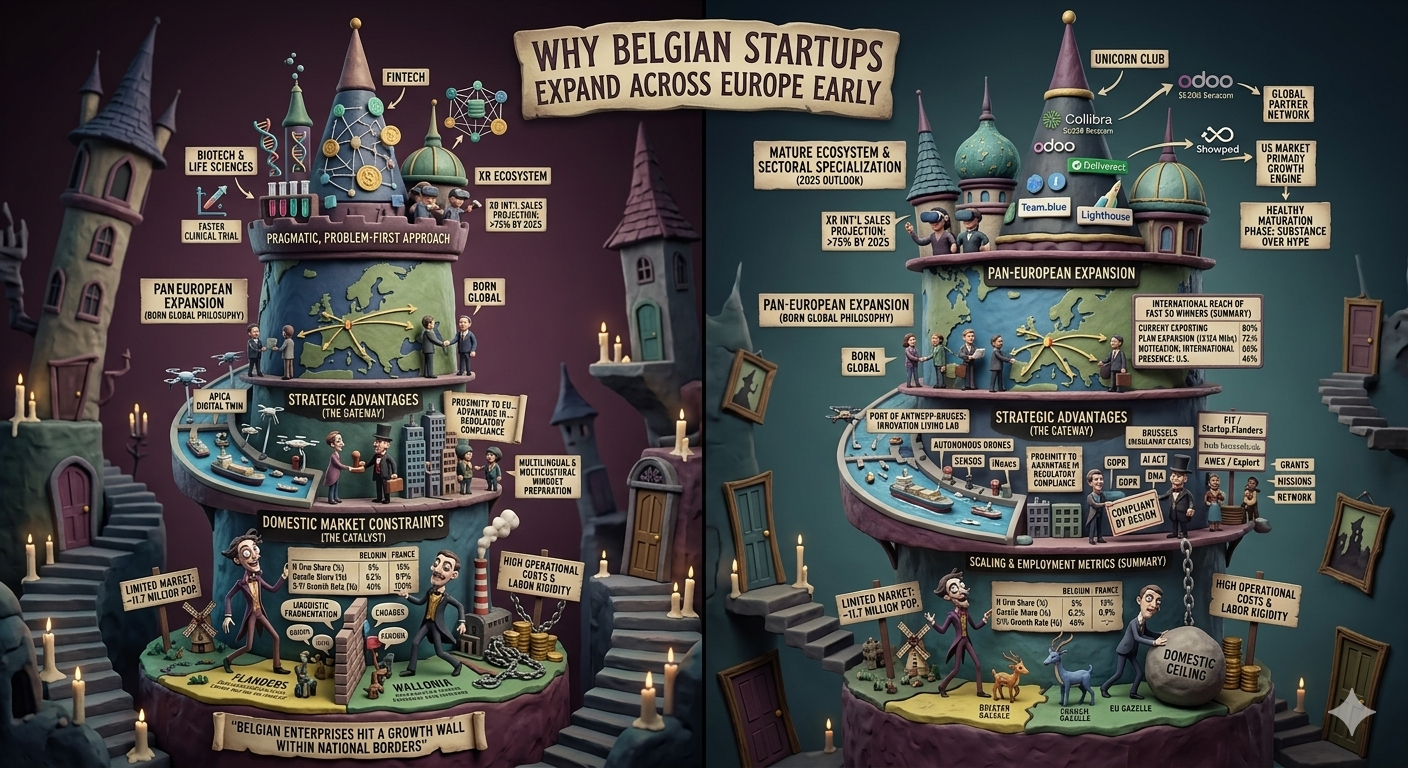
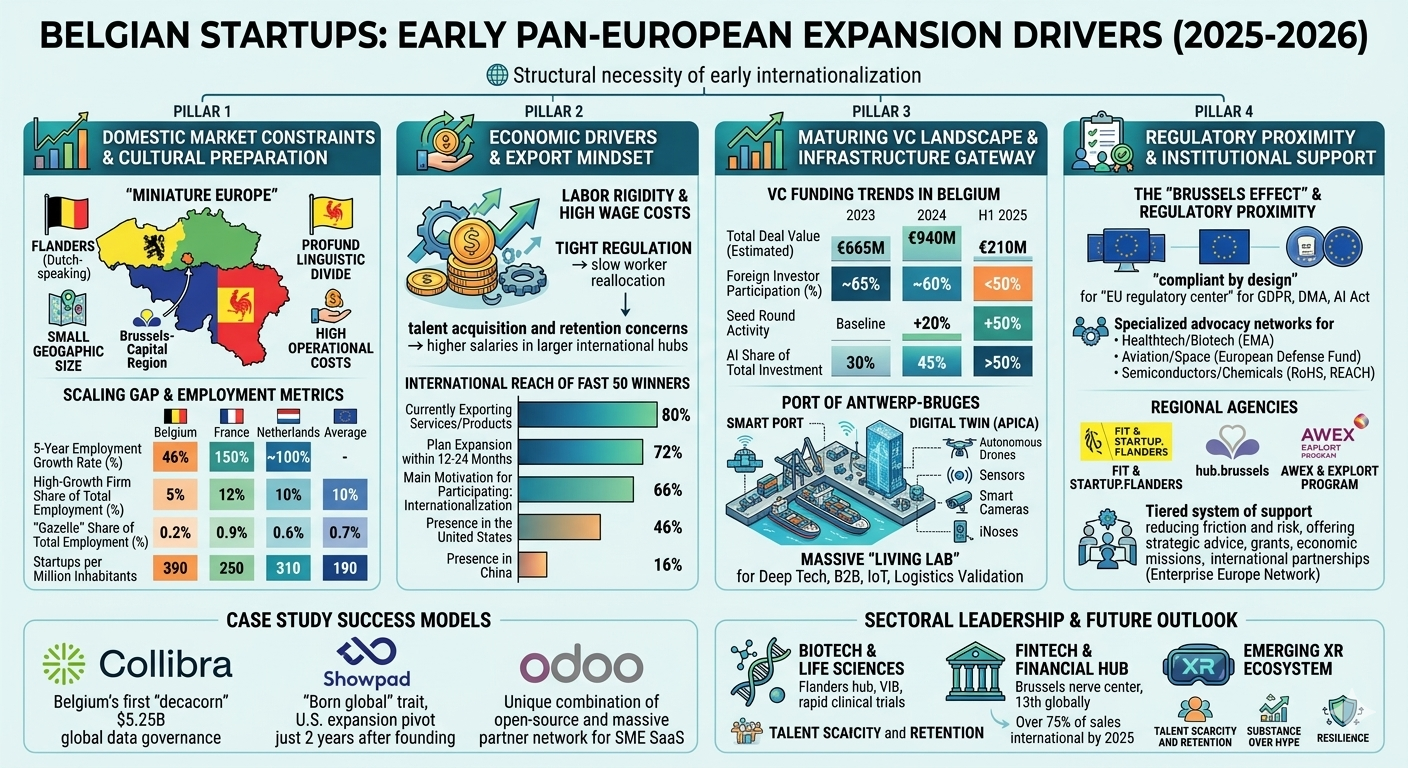
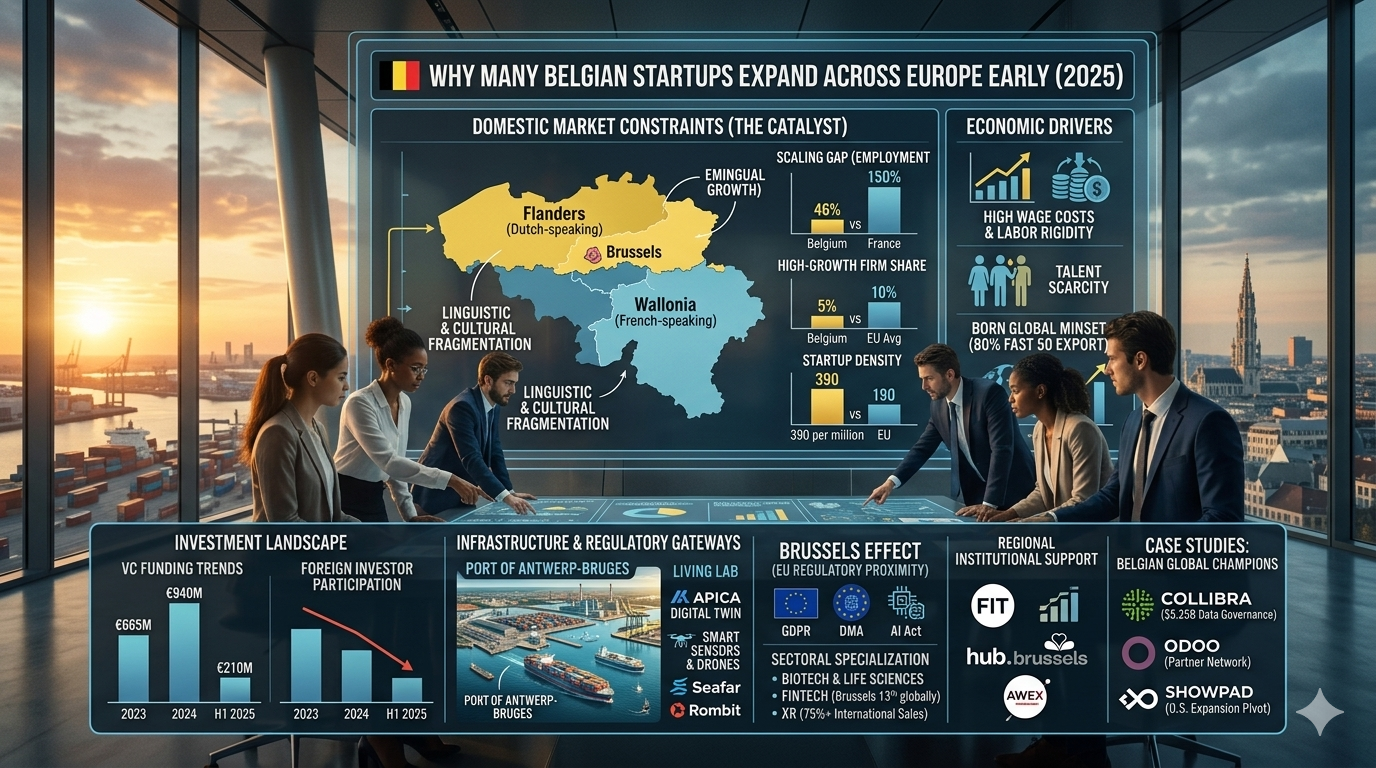
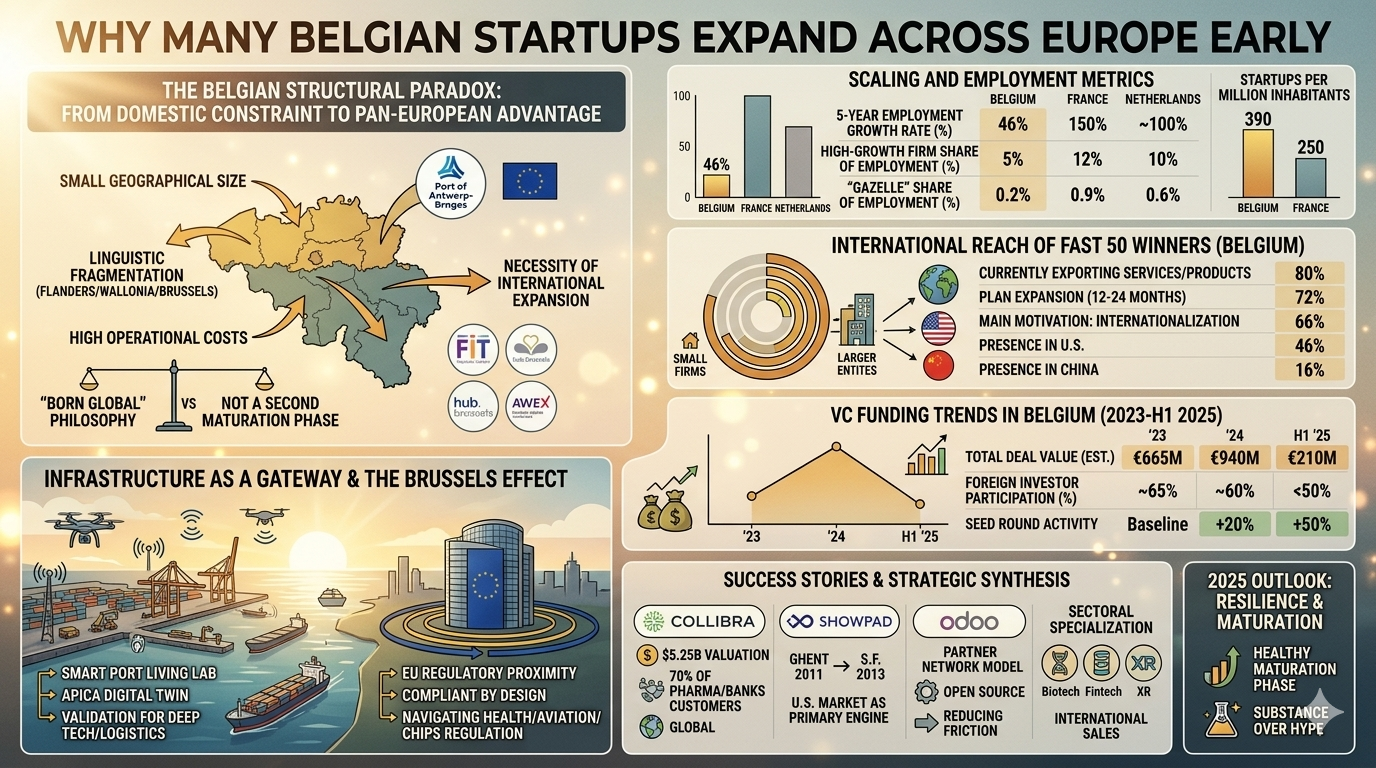
The Belgian startup ecosystem presents a unique structural paradox within the European technological landscape. While the nation maintains one of the highest densities of entrepreneurial ventures in Western Europe, the inherent limitations of its domestic market—defined by restricted geographical size, profound linguistic fragmentation, and high operational costs—necessitate an almost immediate pivot toward international expansion for any venture seeking meaningful scale. Unlike their counterparts in larger jurisdictions like France, Germany, or the United Kingdom, Belgian founders do not view cross-border scalability as a secondary maturation phase; rather, they treat it as an existential prerequisite for viability. This "born global" philosophy is supported by a sophisticated network of regional agencies, world-class logistics infrastructure centered around the Port of Antwerp-Bruges, and a strategic proximity to the European Union’s regulatory center in Brussels. Together, these factors transform Belgium’s domestic constraints into a competitive advantage for pan-European market entry.
The Domestic Market Constraint: A Catalyst for Global Ambition
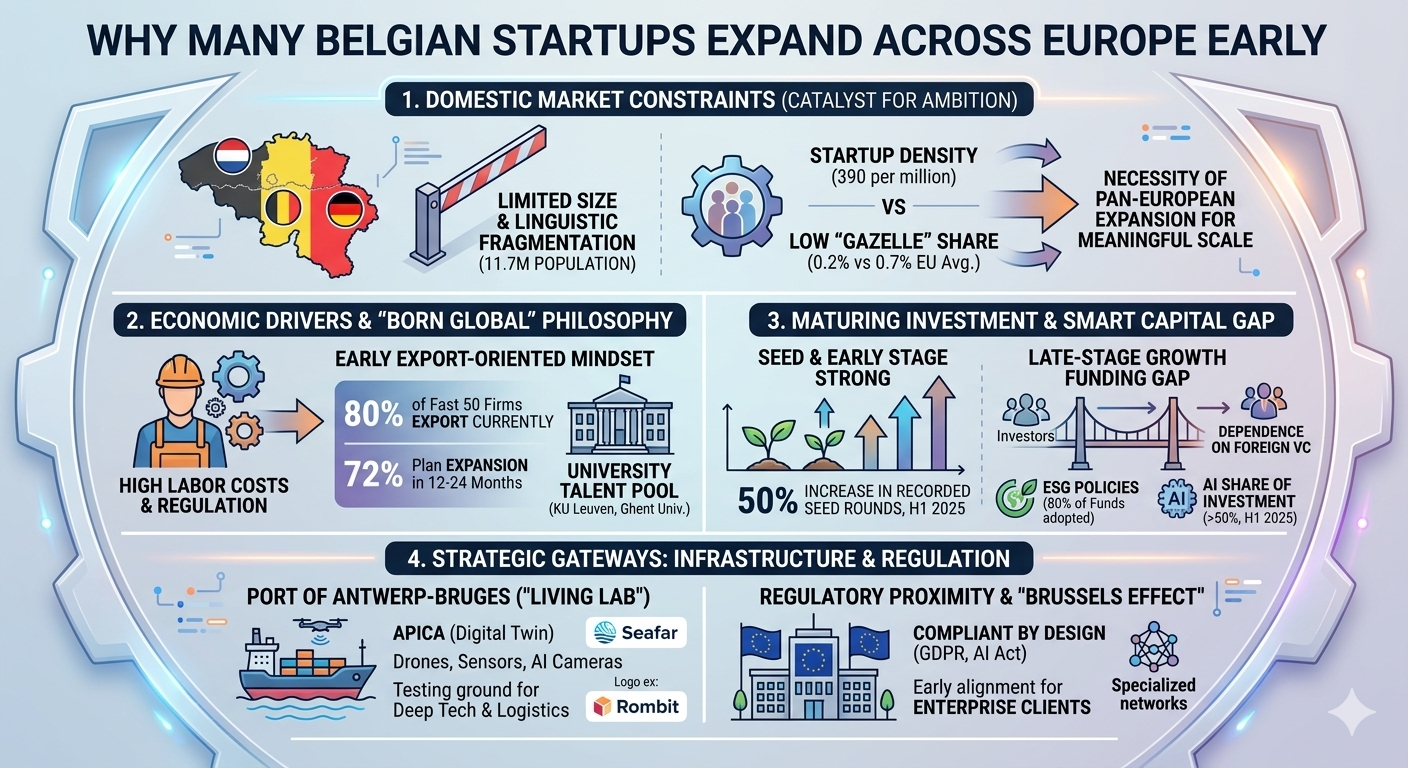
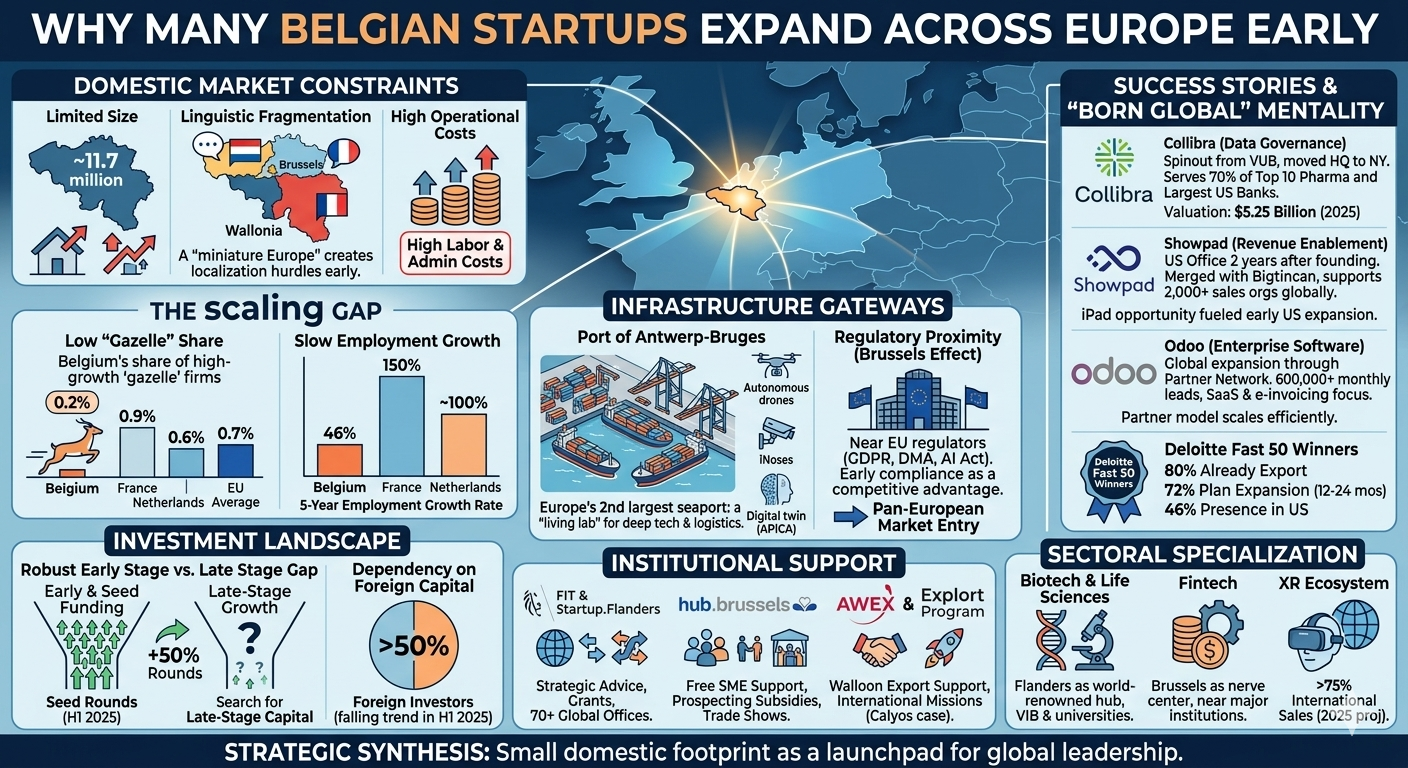
The primary driver for the early internationalization of Belgian startups is the limited ceiling of the domestic market. With a population of approximately 11.7 million, Belgium is classified as a mid-sized OECD economy, yet it outperforms many larger nations in terms of startup density, boasting nearly 390 startups per million inhabitants. However, this density is not matched by internal market depth. The Belgian market is fundamentally bifurcated into Dutch-speaking Flanders and French-speaking Wallonia, with a significant bilingual and international hub in Brussels. For a technology startup, this fragmentation means that a product optimized for one region must undergo cultural, linguistic, and often regulatory localization before it can effectively penetrate the other—an effort frequently comparable to entering an entirely new national market.
The Fragmentation Paradox and the Scaling Gap
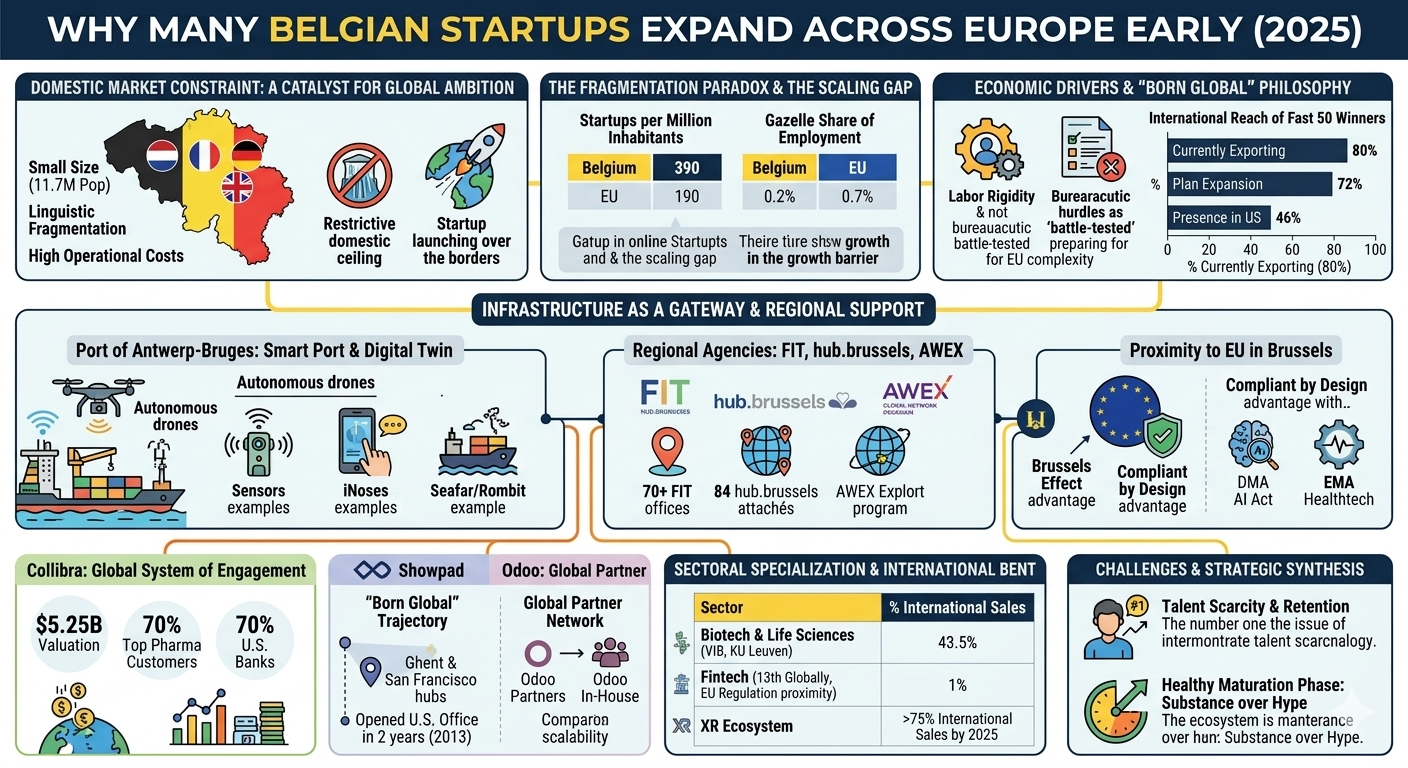
The linguistic divide creates a "miniature Europe" within Belgian borders, forcing founders to develop a multilingual and multicultural mindset from day one. While this prepares them for the broader EU market, it simultaneously limits the initial "safe harbor" of a large, homogenous domestic consumer base. This reality is reflected in the National Bank of Belgium’s findings regarding business dynamism. While Belgium’s business start-up rate is healthy and on par with neighboring countries, the share of jobs in young, fast-growing companies—often termed "gazelles"—remains significantly lower than the EU average.
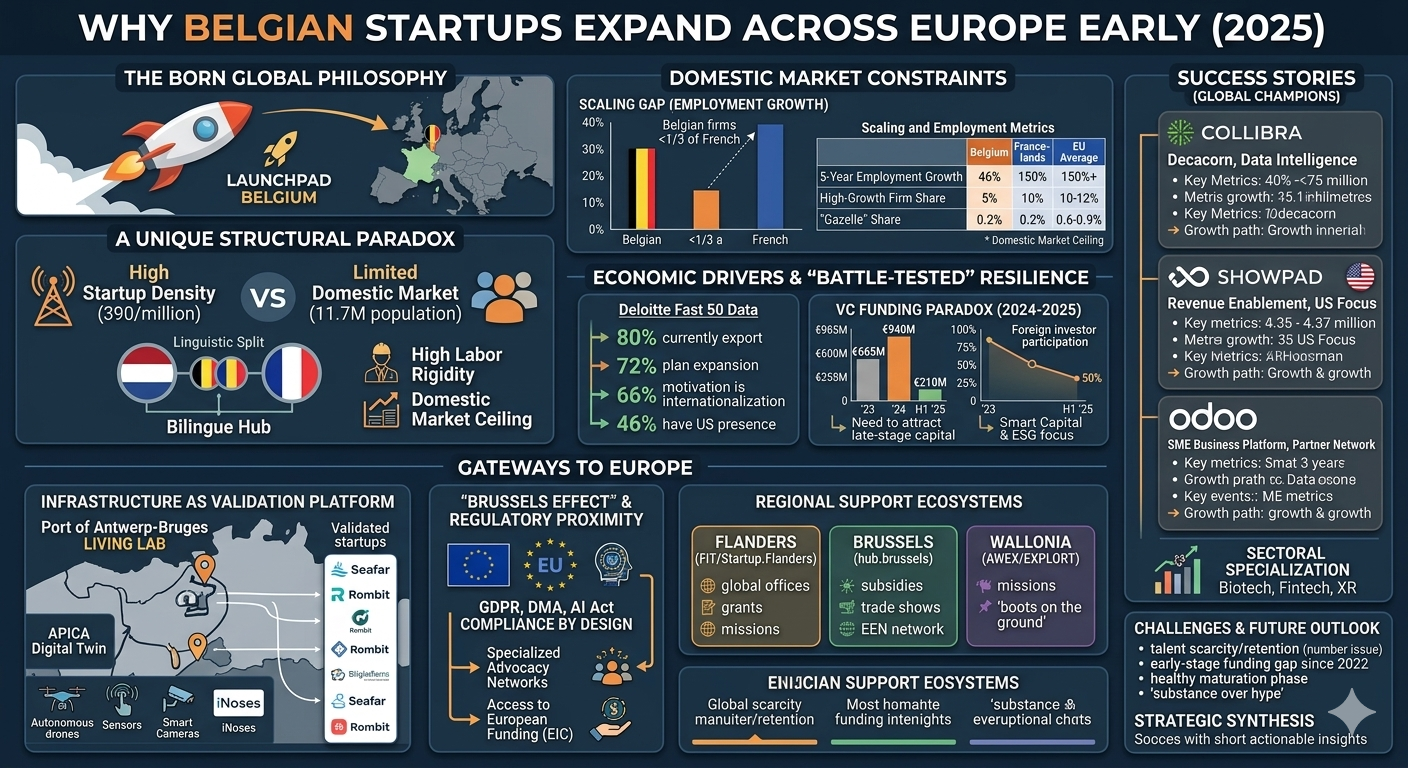
Scaling and Employment Metrics | Belgium | France | Netherlands | EU Average |
5-Year Employment Growth Rate (%) | 46% | 150% | ~100% | - |
High-Growth Firm Share of Total Employment (%) | 5% | 12% | 10% | 10% |
"Gazelle" Share of Total Employment (%) | 0.2% | 0.9% | 0.6% | 0.7% |
Startups per Million Inhabitants | 390 | 250 | 310 | 190 |
As the data indicates, the average five-year-old Belgian firm achieves less than one-third of the employment growth of its French counterparts. This "tepid scale-up performance" suggests that Belgian enterprises hit a growth wall within national borders, compelling them to seek "critical mass" in foreign markets to justify continued investment and hiring. The scarcity of these "gazelles" within Belgium is not due to a lack of innovation but rather a structural inability to scale within a fragmented, high-cost domestic environment.
Economic Drivers: Labor Rigidity and the Necessity of Export
Beyond market size, the specific economic frictions within Belgium drive startups to seek growth abroad. The Belgian labor market is characterized by high wage costs and tight regulation, which slow the reallocation of workers from stagnant firms to expanding ones. These local frictions, combined with powerful global trends that reward large "superstar" firms, make the emergence of new Belgian giants arduous without an international strategy.
The Cost of Talent and Administrative Burdens
Founders frequently cite talent acquisition as a primary concern, noting that while Belgian universities like KU Leuven and Ghent University produce world-class engineers, retaining them is difficult due to the lure of higher salaries in larger international hubs. High social security contributions and bureaucratic hurdles further complicate the scaling journey. Interestingly, some investors view these challenges as a "double-edged sword"; if a startup can survive and thrive within the complex regulatory and fiscal environment of Belgium, it is often viewed as being "battle-tested" and ready for the even greater complexities of pan-European expansion.
The response of the Belgian tech sector has been to embrace an export-oriented mindset early. Among the winners of the Deloitte Technology Fast 50—a ranking of Belgium's highest-growth tech companies—80% already export their products or services. Furthermore, 72% of these high-growth firms plan to expand into new international markets within the next 12 to 24 months, indicating that internationalization is a permanent feature of their growth strategy rather than a one-time event.
International Reach of Fast 50 Winners | Percentage of Firms |
Currently Exporting Services/Products | 80% |
Plan Expansion within 12-24 Months | 72% |
Main Motivation for Participating: Internationalization | 66% |
Presence in the United States | 46% |
Presence in China | 16% |
This data underscores that for Belgium's top tech performers, the domestic market is merely a launchpad. The fact that nearly half of these companies have established a U.S. presence highlights the ambition of Belgian founders to compete on the global stage early in their lifecycle.

Investment Landscape: The Search for Late-Stage Capital
The Belgian venture capital (VC) market has matured significantly, but it continues to face a specific structural gap that encourages international expansion. While early-stage and seed funding are robust—with a 50% increase in recorded seed rounds in the first half of 2025—the ecosystem lacks a sufficient number of domestic investors capable of leading massive, late-stage growth rounds.
The Funding Paradox of 2024-2025
In 2024, the Belgian VC market demonstrated remarkable resilience, with total deal value increasing by 41% despite a broader European correction. However, this growth was concentrated in fewer, larger deals, signaling a maturation phase where investors prioritize scale, profitability, and resilience over sheer volume.
VC Funding Trends in Belgium | 2023 | 2024 | H1 2025 |
Total Deal Value (Estimated) | €665M | €940M | €210M |
Foreign Investor Participation (%) | ~65% | ~60% | <50% |
Seed Round Activity | Baseline | +20% | +50% |
AI Share of Total Investment | 30% | 45% | >50% |
The decline in funding in H1 2025—a 50% drop compared to the extraordinary performance of 2024—mirrors the European trend of cautious capital deployment. Crucially, the participation of foreign investors fell below 50% for the first time in several years during this period. This trend has significant implications: to secure the late-stage capital required for international scaling, Belgian startups must maintain high visibility with international VC firms, who have historically provided two-thirds of the capital for the country’s tech successes. This financial dependency creates a feedback loop where startups must internationalize their operations to attract the international capital needed to internationalize further.
The Role of "Smart Capital" and ESG
Investors in Belgium are increasingly focusing on "smart capital"—providing not just funds but mentorship and connections to global networks. Furthermore, 80% of Belgian VC funds have now adopted ESG (Environmental, Social, and Governance) investment policies, reflecting a broader European shift toward responsible investing. This focus on ESG acts as another bridge to international markets, as global institutional investors prioritize startups that meet high sustainability and governance standards, particularly in sectors like Cleantech and Biotech.
Infrastructure as a Gateway: The Port of Antwerp-Bruges and Logistics Innovation
Belgium’s physical infrastructure serves as a literal and metaphorical gateway to Europe. The country ranks as the 12th largest exporting nation globally, a position anchored by its world-class ports and transportation links. The Port of Antwerp-Bruges, the second-largest seaport in Europe, has reinvented itself as a massive "living lab" for technology startups, providing a high-stakes industrial environment for validating innovations.
The Smart Port and the Digital Twin
The port has opened its infrastructure as an innovation platform, collaborating with startups and scale-ups through initiatives like "The Beacon," a tech hub focused on IoT and AI. A central pillar of this strategy is APICA (Advanced Port Information & Control Assistant), a comprehensive "digital twin" of the port.
APICA integrates data from:
Thousands of sensors monitoring water quality, asphalt life, and energy use.
A network of autonomous drones for infrastructure inspection and oil spill detection.
AI-powered smart cameras for object recognition and berth management.
Digital "iNoses" designed to detect harmful gases in real-time.
This infrastructure supports local startups like Seafar, which controls unmanned ships remotely, and Rombit, which developed wearable safety solutions for frontline workers. By providing a real-world testing ground for "Deep Tech" and logistics solutions, the port allows these companies to prove their value at a global scale before they begin their pan-European expansion. For a startup, having a "digital nervous system" like the Port of Antwerp-Bruges as a first customer provides a level of credibility that is invaluable when entering larger markets.
The "Brussels Effect" and Regulatory Proximity
A distinct advantage for Belgian startups, particularly those located in or near the capital, is their proximity to the European Union’s central institutions. This geographic alignment allows local firms to develop deep expertise in European regulatory frameworks—such as GDPR, the Digital Markets Act (DMA), and the AI Act—well before their international competitors.
Regulatory Arbitrage and Compliant by Design
The "Brussels Effect" describes the phenomenon where the EU sets the global standard for product and data regulation, forcing foreign governments and companies to adopt EU rules to access its massive consumer market. Belgian startups are at the epicenter of this regulatory standard-setting. By being "compliant by design" within the Brussels ecosystem, they can position themselves as the default, low-risk vendors for European enterprises that are increasingly wary of the compliance burdens associated with non-EU technology stacks.
Startups often leverage specialized advocacy networks to navigate the "EU regulatory maze". This is particularly critical in sectors like:
Healthtech and Biotech: Navigating the European Medicines Agency (EMA) and clinical trial regulations.
Aviation and Space: Engaging with the European Defense Fund and aviation legislators to ensure proportionate regulation.
Semiconductors and Chemicals: Adapting to RoHS and REACH directives.
Proximity to the EU also facilitates access to European funding through the European Innovation Council (EIC), which is slated for a budget tripling under the next long-term budget. This access to non-dilutive capital is a key enabler for deep tech startups that require long R&D cycles before they can compete internationally.
Regional Institutional Support: FIT, hub.brussels, and AWEX
The Belgian state recognizes the necessity of internationalization and has established a robust, tiered system of support through regional agencies. These organizations act as "strike forces" that reduce the friction and risk associated with venturing into foreign markets.
Flanders Investment & Trade (FIT) and Startup.Flanders
FIT plays a central role in the internationalization of the Flemish economy, which alone exported €479 billion in 2022. Through "Startup.Flanders," FIT assists startups in unlocking technological and international growth by:
Providing strategic advice and market information through a network of 70+ global offices.
Offering grants for international trade, business development, and innovation.
Organizing economic missions, such as the 2025 mission to California where Flanders signed 18 collaborations.
hub.brussels: Export Support for the Capital Region
In Brussels, hub.brussels offers free support to SMEs through a network of 84 economic and commercial attachés distributed across every continent. Their services include:
Prospecting Trip Subsidies: Reimbursing costs for founders to explore potential new markets.
Trade Show Support: Financial help to exhibit at international fairs and create export-oriented marketing materials.
Enterprise Europe Network (EEN): Facilitating international technological and commercial partnerships across 60+ countries.
AWEX and the Explort Program in Wallonia
The Wallonia Export & Investment Agency (AWEX) operates the "Explort" program, which has become a benchmark for supporting Walloon companies with international ambitions. A prominent success story is Calyos, which utilized an AWEX mission to North America and France to showcase its two-phase passive cooling technologies for data centers. Such programs provide the "boots on the ground" expertise that young startups often lack, allowing them to engage with key decision-makers in rapidly growing markets like AI and sustainable energy.
Case Study: Collibra and the Global System of Engagement
The trajectory of Collibra, Belgium’s first "decacorn," provides a definitive roadmap for early internationalization. Founded in 2008 as a spinout from the Vrije Universiteit Brussel (VUB), Collibra addressed the emerging need for data governance—a problem most acute in the world’s largest, most complex organizations.
Strategy: From Cloud Chaos to Strategic Command
Collibra’s strategy was predicated on the belief that "governed, accessible, and trusted data has the power to change things for good". The company recognized early that the "Global 2000" companies were its primary target, and these firms are predominantly headquartered in the United States. By moving its headquarters to New York while maintaining a robust engineering presence in Belgium, Collibra was able to capture the massive demand for data intelligence from U.S. banks and pharmaceutical giants.
Collibra's Market Reach (2025) | Statistics |
Global Valuation | $5.25 Billion |
Proportion of Top 10 Pharma Companies as Customers | 70% |
Proportion of Largest U.S. Banks as Customers | 70% |
Total Global Enterprises Served | 500+ |
Collibra’s success stems from its ability to turn complexity into a "strategic accelerator". By unifying data and AI governance across diverse ecosystems, they allow large enterprises to modernize their disparate data sources—a mission that requires a global footprint to support the technical and cultural adoption curves inherent in large-scale enterprise software.
Case Study: Showpad and the "Born Global" Philosophy
Showpad, founded in Ghent in 2011, embodies the "born global" trait common in the European tech scene, where fragmented national markets force founders to think internationally from day one. The company began with a focused product idea: helping sales teams present content at trade shows using the then-newly released iPad.
The US Expansion Pivot (2013)
Just two years after its founding, in 2013, Showpad opened its first U.S. office in San Francisco. This move was driven by immediate market validation; only three days after their website went live, they received a call from a U.S. customer who needed 2,000 licenses for a newly purchased fleet of iPads. The founders—Pieterjan Bouten, Louis Jonckheere, and Peter Minne—realized that the iPad was the "opportunity" they needed to enter the enterprise market.
Showpad’s expansion was fueled by:
Strategic Acquisitions: Buying companies like LearnCore (sales coaching) and Voicefox (meeting intelligence) to build a comprehensive platform.
Cultural Intentionality: Managing a workforce of 28 nationalities across hubs in Ghent, Chicago, and Bucharest through a "genuine, good-natured ass-kicker" culture.
Focus on AI: Investing early in AI-powered search, summaries, and pitch practice to automate "busywork" for sellers.
By 2025, Showpad merged with Bigtincan to create a global leader in AI-powered revenue enablement, supporting over 2,000 sales organizations worldwide. This journey illustrates that for Belgian B2B startups, the U.S. market is not an endpoint but a primary growth engine that must be engaged early to achieve global leadership.
Case Study: Odoo and the Ecosystem of Enterprise Software
Odoo provides a different but equally compelling model of international growth. Originally known as OpenERP, Odoo has built a global business management platform through a unique combination of open-source community support and a massive partner network.
Partner Network vs. Direct Sales
Odoo’s global expansion is primarily driven by its partner ecosystem, which includes consultants and implementation experts who tailor Odoo’s modules to local regulatory and industry requirements. This model allows Odoo to scale into markets like the UK, the U.S., and Asia without the massive overhead of building local sales teams in every country.
Odoo Implementation Models | Speed | Customization | Target Segment |
Odoo Direct | High | Low (Standard) | <10 users, Simple setups |
Odoo Partners | Medium | High (Deep) | Complex workflows, Enterprises |
In-House (DIY) | Variable | Manual | Technical teams, Core apps |
Odoo has leveraged market trends like the shift to SaaS and upcoming European e-invoicing mandates to position itself as a necessary infrastructure for SMEs. By avoiding per-invoice fees and investing in certifications like SOC/ISO, Odoo has reduced sales friction, allowing it to manage over 600,000 leads per month globally. Their success highlights how a Belgian startup can dominate a global market by creating a "single-architecture philosophy" that remains agile enough to adapt to diverse regional needs.
Sectoral Specialization and the Mature Ecosystem (2025)
As the Belgian ecosystem matures, specific sectors are emerging as global frontrunners, each with a high propensity for early internationalization.
Biotech and Life Sciences
Belgium, and particularly the Flanders region, is a world-renowned hub for life sciences. Organizations like the VIB (Flanders Institute for Biotechnology) and universities like KU Leuven provide a pipeline of talent and spinouts. The region boasts the fastest clinical trial procedure in Europe, making it an ideal "test market" for global pharmaceutical players.
Fintech and the Financial Hub
Brussels remains the "nerve center" for Fintech, ranking 13th globally in the industry. Belgian Fintech companies benefit from proximity to major financial institutions and the EU’s evolving digital finance regulations. The segment is consistently among the top-growing categories in the country, alongside Media and Life Sciences.
The Emerging XR Ecosystem
The Belgian XR (Extended Reality) market is entering a phase of accelerated growth, with an estimated value of €40 million in 2024 and projections for significant expansion. Over 75% of Belgian XR sales are expected to come from international markets by 2025. This sector exemplifies the "international first" mindset; because the domestic market for immersive training and prototyping is small, Belgian XR players must establish a global footprint from their inception to remain profitable.
Challenges and Future Outlook: The Rebound of 2025
While the reasons for early expansion are clear, the path is not without significant hurdles. Belgian startups must navigate a "reported 36% decrease" in early-stage investment numbers since 2022, a challenge potentially linked to increased interest rates and a shift in investor focus toward more mature, profitable companies.
Talent Scarcity and Retention
Retaining talent remains the "number one issue" for the ecosystem. While Belgium produces fantastic scientists and engineers, they are often recruited by "superstar" firms or lured to international hubs by higher salaries. This creates a "seed-stage funding gap" or a talent gap that can only be bridged by making Belgian startups as attractive as their Silicon Valley or London-based competitors.
Resilience and the Phase of Maturation
Despite these challenges, the "State of Belgian Tech Report 2025" describes the ecosystem as being in a "healthy maturation phase". There is room for growth, and a "tentative rebound" is underway, driven by the services sector and established firms. The divergence between regions remains, with Flanders leading in R&D and Wallonia showing renewed momentum in proportional funding terms.
The future outlook for Belgian startups is one of "substance over hype". Belgian founders are characterized by a pragmatic, problem-first approach that prioritizes building sustainable businesses over raising massive rounds for valuation alone. This cultural pragmatism, combined with the structural necessity of early international expansion, ensures that the Belgian tech ecosystem will continue to produce "genuine, good-natured" global champions.
Strategic Synthesis and Practical Recommendations
The evidence suggests that the "Belgian model" of startup growth is an intentional strategy of early pan-European and global engagement, necessitated by domestic constraints. For stakeholders looking to capitalize on this ecosystem, the following insights are paramount:
The "Miniature Europe" Advantage: Belgium serves as an ideal testing ground for products that must eventually navigate the cultural and linguistic diversity of the broader EU. Companies that succeed in Flanders and Wallonia have already mastered 70% of the complexity they will face in the rest of Europe.
Infrastructure Synergy: Startups in B2B, IoT, and Logistics should leverage the Port of Antwerp-Bruges and "The Beacon" as critical validation platforms to gain international credibility.
Regulatory Arbitrage: Proximity to Brussels provides a "first-mover" advantage in regulatory compliance, a key selling point for enterprise customers in the "Brussels Effect" era.
Institutional Leverage: Regional grants from FIT, hub.brussels, and AWEX are not just funding sources; they are entry points to global networks that young firms should engage with from their first year of operation.
Late-Stage Focus: As the ecosystem matures, the focus will shift from "starting up" to "scaling up." Policies and investments must evolve to bridge the "Gazelle gap," ensuring that high-growth firms have the local support needed to remain anchored in Belgium even as they expand globally.
Ultimately, the early internationalization of Belgian startups is a testament to the resilience and ambition of its founders. By treating the entire continent—and the world—as their target market from day one, they turn a small domestic footprint into a launching pad for global leadership.
The Real Startup Playbook: Ideas, Growth, Funding, and Founder Psychology
Building a startup is exciting, chaotic, and often misunderstood. If you’ve ever wondered how founders actually validate ideas, find co-founders, raise funding, and survive the emotional rollercoaster, these articles explore the realities behind the startup world.
Start with How to Validate Your Startup Idea in 48 Hours for $0 to understand how founders test ideas quickly before wasting months building the wrong product. Once you have an idea, the next challenge is building it—From Idea to MVP: A Step-by-Step Guide for Solo Founder walks through the journey from concept to a real product.
Many founders struggle with partnerships and team decisions. Should your co-founder live in the same city? Explore Remote vs. Local: Does Your Co-Founder Need to Live in the Same City? and learn the risks hidden in partnerships in 5 Red Flags to Look for When Choosing a Startup Partner. If you’re searching for technical help, How to Find a Technical Co-Founder (Without a Six-Figure Salary) explains how founders actually do it.
The startup journey isn’t just about building products—it’s also about mindset and decision-making. Articles like Decision Fatigue: The Silent Startup Killer, Fear vs Logic: How Founders Actually Make Decisions, and How Overthinking Destroys Early Momentum reveal the psychological battles founders face behind the scenes.
Growth is another misunderstood part of startups. Learn why strategy matters more than hype in Ideas Don’t Scale. Systems Do. and why discipline matters in Why Your Startup Doesn’t Need Growth — It Needs Focus. Discover the importance of early traction in How the First 100 Users Decide Your Startup’s Fate and understand team building through The First Hire That Actually Matters.
Funding is often romanticized, but reality is more complex. Why First-Time Founders Should Avoid Big Funding challenges common assumptions about venture capital, while Revenue Solves More Problems Than Funding explains why sustainable businesses matter more than investor money.
The startup ecosystem also varies by geography. If you're curious about India’s startup scene, explore The New Playbook for Raising in Bangalore, Why Raising Pre-Seed in Bangalore Is Harder Than Ever, and Why B2B SaaS from Bangalore Scales Faster.
But startups are not just about strategy and growth—they’re also about people and emotions. Articles like The Hidden Burnout of Bangalore Founders, Comparison Culture in India’s Startup, and The Loneliness of First-Time Founders in Bangalore reveal the personal struggles founders rarely talk about publicly.
And finally, if you want a deeper perspective on the startup journey itself, explore Lessons Learned Too Late by First-Time Founders and The Myth of the “Overnight Success” Startup—because the truth behind startup success is far more complex than it appears.