Why Brussels Is Emerging as a Tech and Policy Startup Hub
March 14, 2026 by Harshit Gupta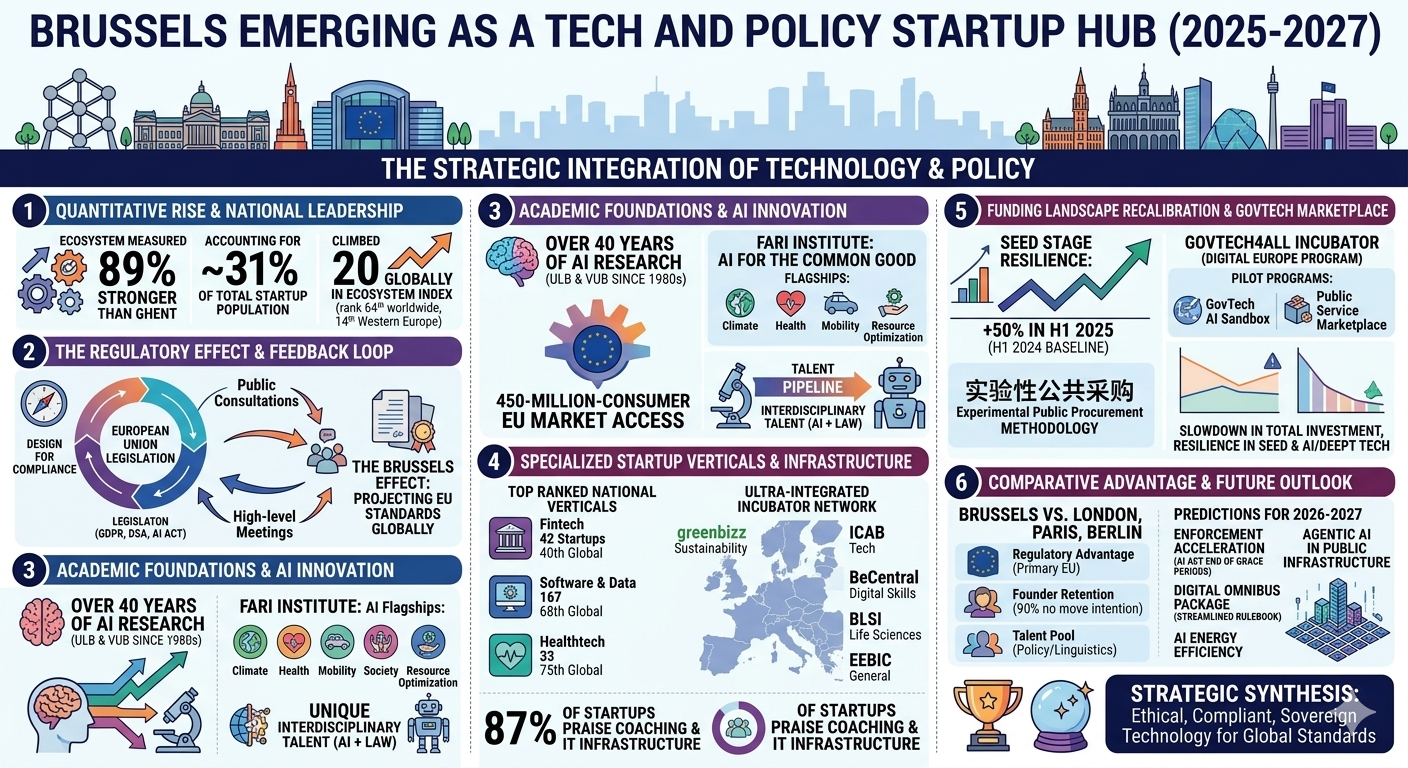
The Quantitative Rise of a Global Innovation Node
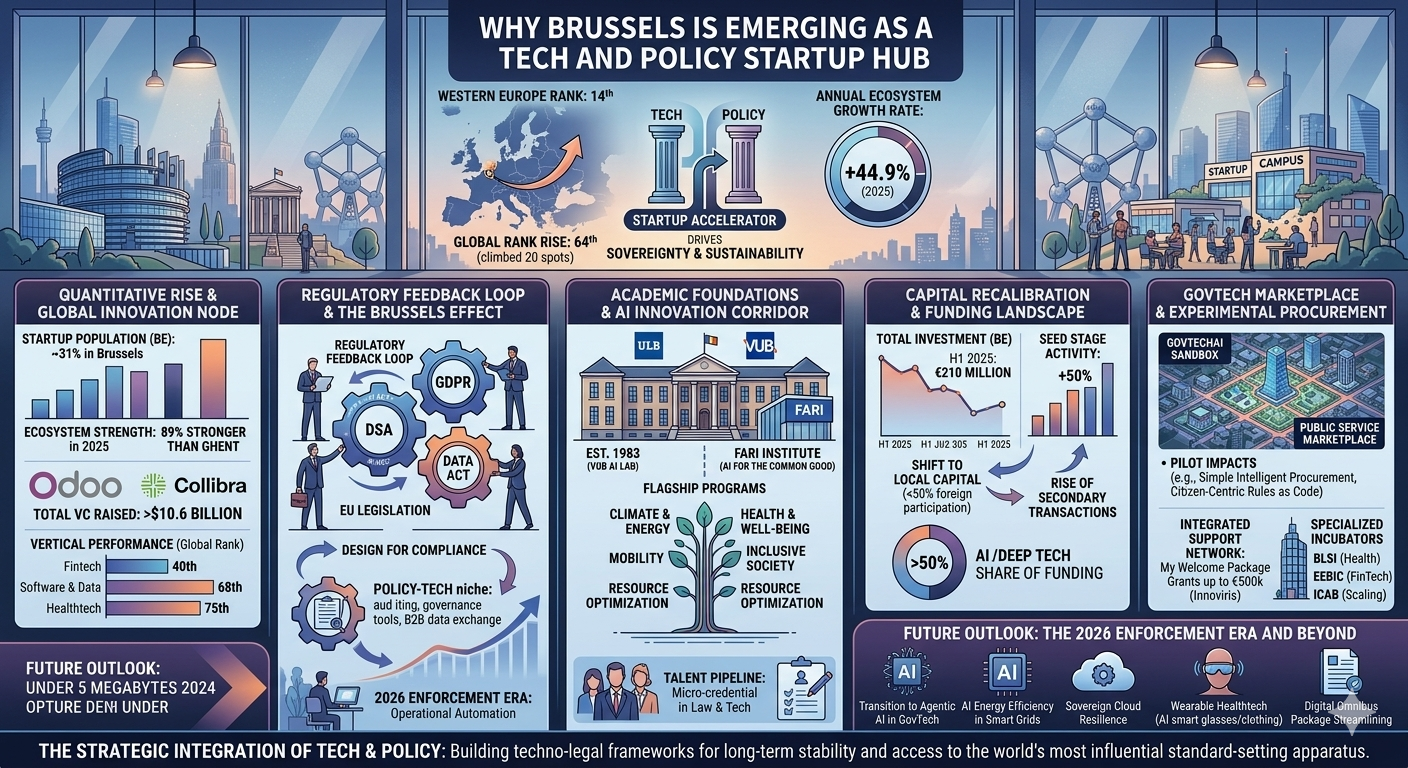
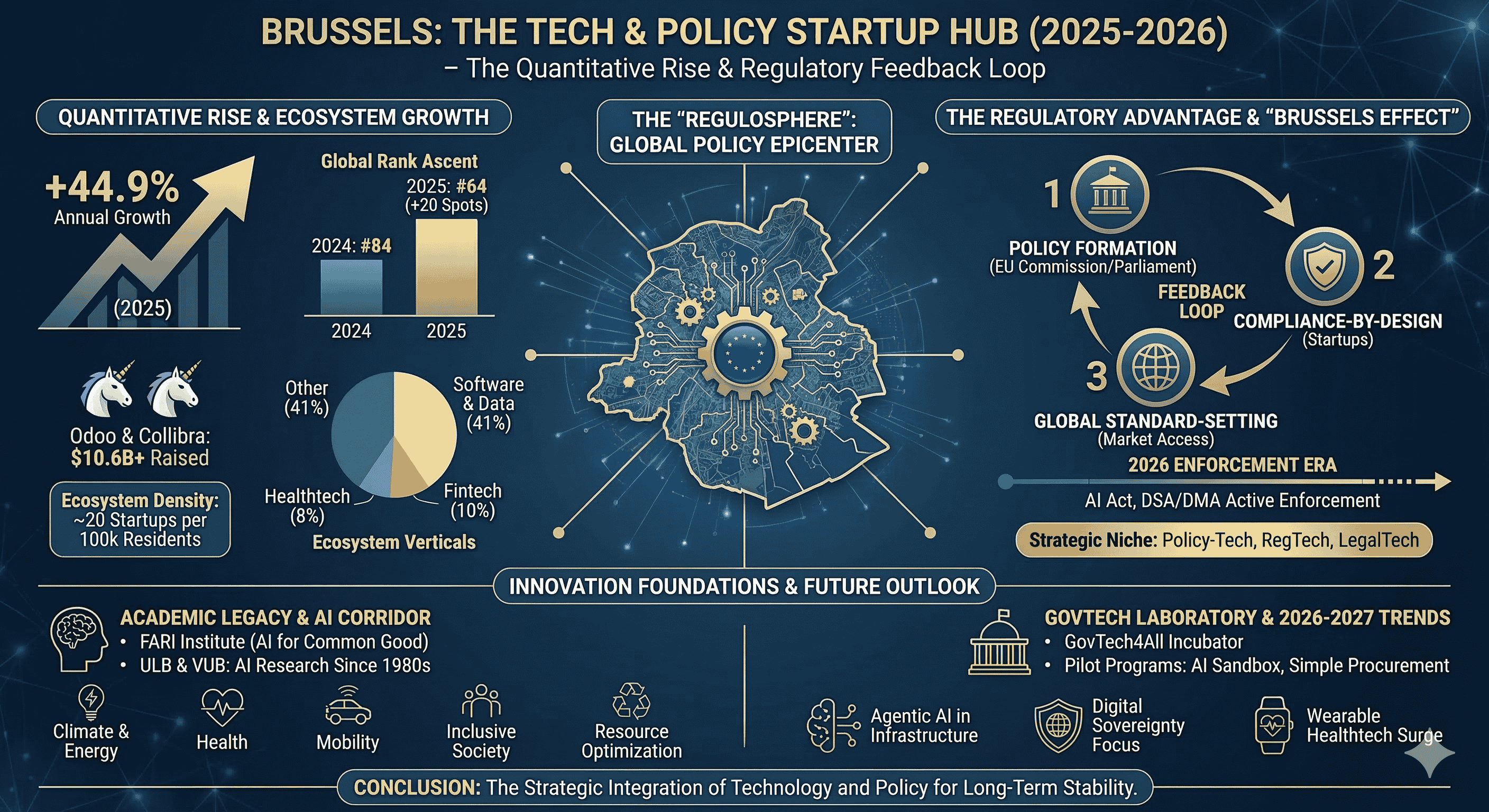
The emergence of Brussels as a primary center for technology and policy is characterized by an unprecedented acceleration in ecosystem value and strategic positioning. By the start of 2025, Brussels has consolidated its status as the leading startup environment in Belgium, accounting for approximately 31% of the nation's total startup population. This leadership is quantified by a startup ecosystem that is analytically measured to be 89% stronger than Ghent, its nearest national competitor. The city’s ascent in global rankings is a testament to this growth; Brussels climbed 20 spots in the most recent StartupBlink Ecosystem Index to reach the 64th position worldwide. Within the context of Western Europe, the city holds the 14th rank, reflecting a steady three-spot improvement within a single fiscal cycle.
This growth is underpinned by a robust annual expansion rate of 44.9% recorded in 2025. The ecosystem density is now estimated at approximately 20 startups per 100,000 residents, a metric that indicates a maturing urban environment where entrepreneurial activity is becoming a core economic driver rather than a peripheral interest. The presence of two major unicorns, Odoo and Collibra, serves as a beacon for international venture capital, demonstrating that the Brussels environment possesses the structural capacity to support high-growth, billion-dollar enterprises. These entities alone have raised over $10.6 billion, signaling to the global market that Brussels-based firms can compete effectively in the capital-intensive realms of Software & Data and Data Analytics.
Ecosystem Dimension | Metric Detail | National Rank | Global Rank |
Overall Ecosystem | 412 Startups | 1st | 64th |
Fintech Vertical | 42 Startups | 1st | 40th |
Software & Data | 167 Startups | 1st | 68th |
Healthtech | 33 Startups | 1st | 75th |
Annual Growth Rate | +44.9% | N/A | N/A |
Source:
The expansion of Brussels is not merely a quantitative success but a qualitative specialization. The city’s rise to the 40th position globally in Fintech reflects its historical roots as a financial clearinghouse and the home of critical infrastructure players like Swift and Euroclear. This historical foundation has allowed for a seamless transition into modern digital financial services, where regulatory proximity provides a distinct competitive advantage for firms navigating the complex landscape of European financial directives.
The Regulatory Feedback Loop and the Brussels Effect
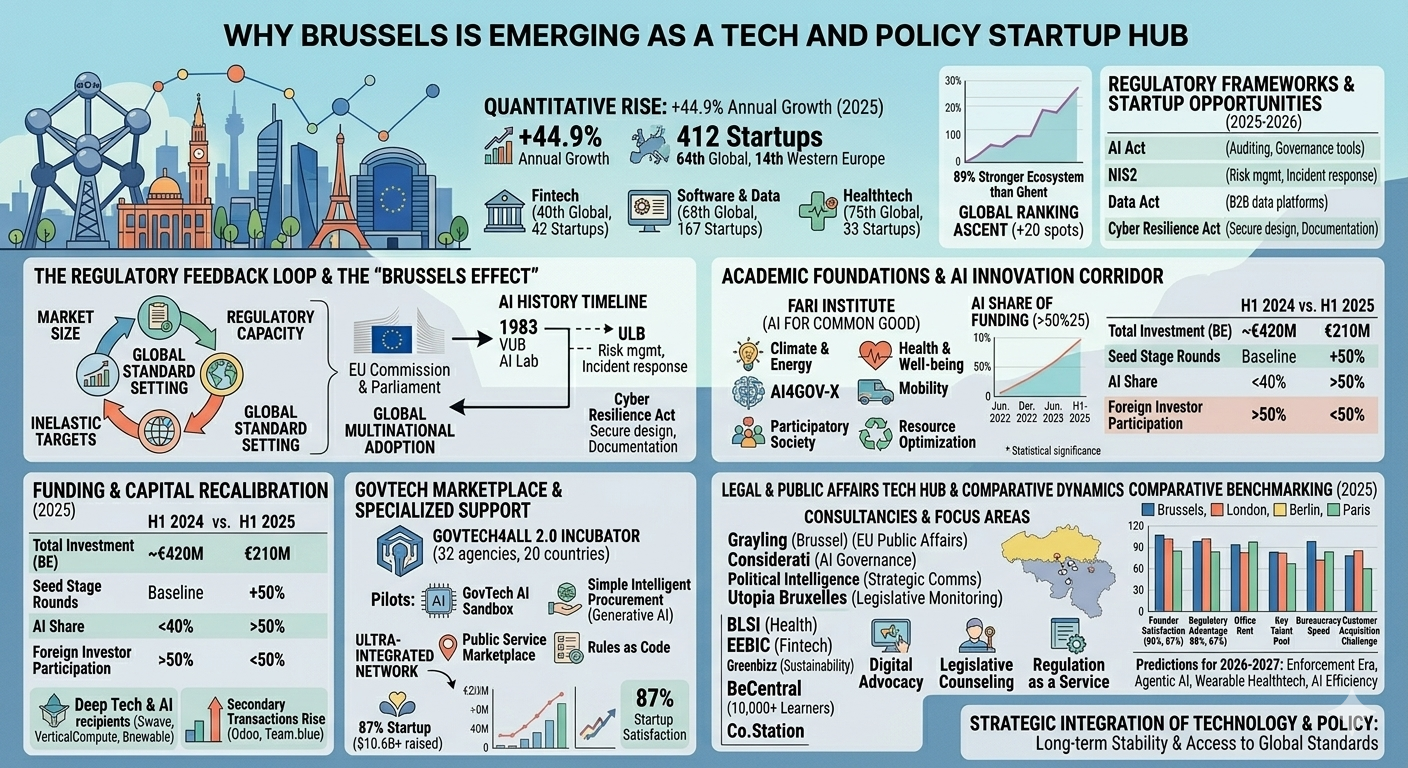
The most significant driver of the Brussels tech hub is its status as the "Regulosphere"—the epicenter of global policy for the digital age. The "Brussels Effect," a term pioneered to describe the European Union's ability to project its regulatory standards globally, has transformed from an unintended byproduct of market size into a deliberate tool of technological sovereignty. Startups located in the "Brussels Bubble" operate at the intersection of legislative intent and technical execution, allowing them to participate in a regulatory feedback loop that is largely inaccessible to their peers in Silicon Valley or Shenzhen.
The proximity to the European Commission, the European Parliament, and the Council of the EU allows local entrepreneurs to engage directly in the formation of landmark legislation such as the General Data Protection Regulation (GDPR), the Digital Services Act (DSA), and the Artificial Intelligence Act (AI Act). This engagement manifests through extensive public consultations, institutional seminars, and high-level meetings. For a startup, this means the ability to "design for compliance," ensuring that their products are built with the necessary safeguards to enter the 450-million-consumer EU market without the need for costly retroactive adjustments.
The Standard-Setting Mechanism
The mechanism of the Brussels Effect operates on three core conditions: market size, regulatory capacity, and inelastic targets. Because the EU market is too wealthy to ignore, multinational corporations often find it more efficient to adopt the EU’s stringent standards globally rather than maintaining fragmented operations. Brussels startups leverage this by positioning themselves as the early adopters and facilitators of these standards. When a Brussels-based firm develops a GDPR-compliant data processing tool or an ethical AI framework, they are effectively building a product that is globally pre-certified by the world's most influential regulator.
This dynamic creates a specialized niche for "Policy-Tech" startups—firms that provide the tools for regulatory adherence. The surge in RegTech and LegalTech in Brussels is a direct consequence of this environment. As digital regulation enters its enforcement phase in 2026, the focus for these firms is shifting from legislative tracking to operational automation. The introduction of the "Digital Omnibus Package" in late 2025 further illustrates this evolution, as the EU moves to streamline its rulebook, reducing duplication across cybersecurity, data, and AI regimes.
Regulatory Framework | Core Impact Area | Enforcement Horizon | Startup Opportunity |
AI Act | Risk classification; Ethics | 2026 | Auditing; Governance tools |
NIS2 Directive | Cybersecurity compliance | 2024-2025 | Incident response; Risk mgmt |
Data Act | Data sharing; Interoperability | 2025 | B2B data exchange platforms |
Cyber Resilience Act | Secure product design | 2026 | Embedded security; Documentation |
Source:
The future of the Brussels Effect is moving toward a more collaborative "third way" for digital governance, where the EU partners with other major economies like India, Brazil, and Japan to co-create open protocols and standards. This internationalization of the Brussels model provides local startups with a gateway into emerging markets that are increasingly wary of the "regulatory imperialism" associated with a purely unidirectional export of European rules.
Academic Foundations and the AI Innovation Corridor
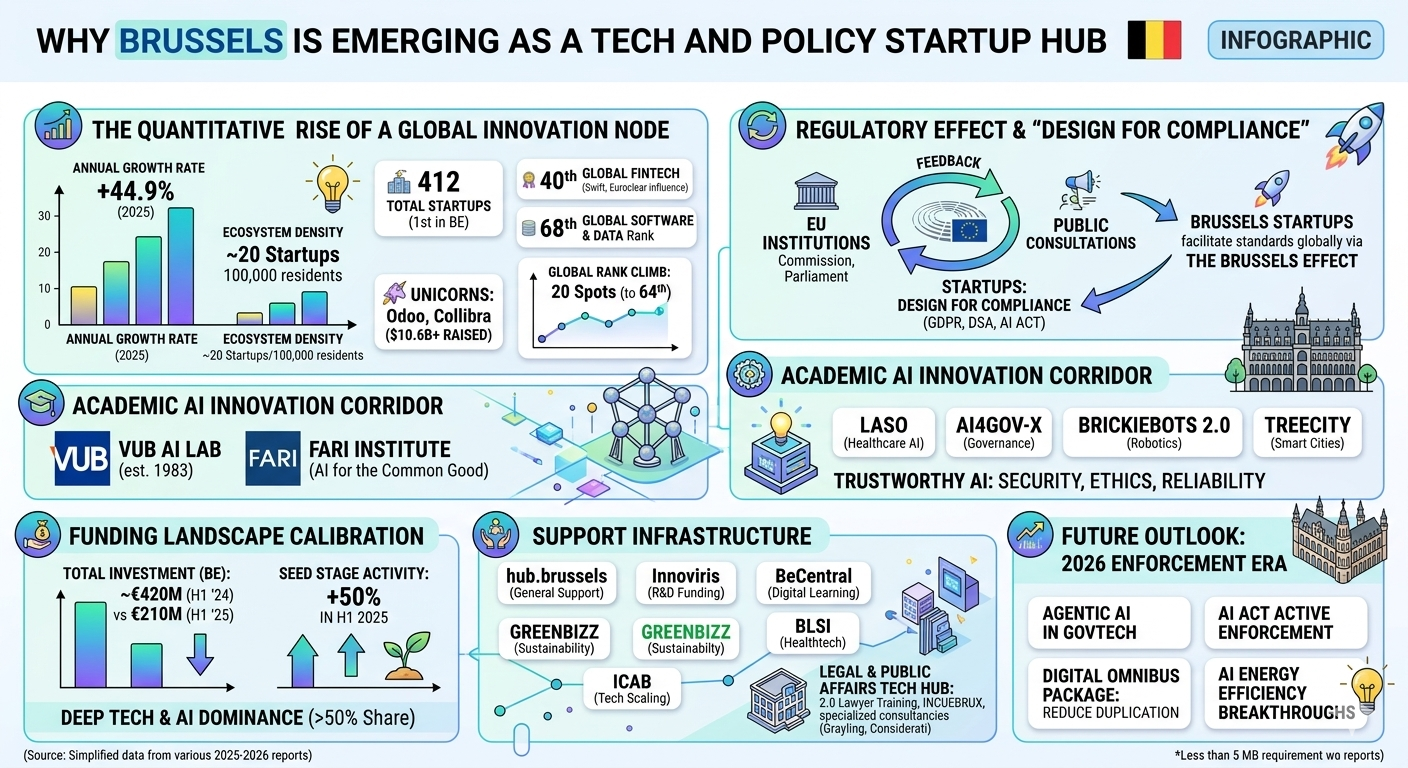
The current boom in Artificial Intelligence in Brussels is built upon a profound academic legacy. The Université Libre de Bruxelles (ULB) and the Vrije Universiteit Brussel (VUB) have been at the forefront of AI research since the early 1980s. The VUB AI Lab, established in 1983, remains one of the oldest and most respected centers for research in machine learning, robotics, and natural language processing in Europe. This historical depth has cultivated a talent pool that is not only technically proficient but also deeply attuned to the ethical and social implications of autonomous systems.
The FARI Institute (AI for the Common Good) represents the modern culmination of this academic tradition. By bridging the gap between university research and the public interest, FARI focuses on high-impact areas such as sustainable AI, urban mobility, and healthcare. The institute’s current projects, such as "AI4GOV-X" and "LASO" (HospitaL-centric AI Selection and Operationalization), demonstrate a clear commitment to using technology to solve administrative and societal challenges within the Brussels-Capital Region.
The FARI Research Flagships
FARI’s interdisciplinary research is organized around five flagship programs that guide its societal impact:
Climate & Energy: Optimization of resource use and climate change mitigation.
Health and Well-being: Enhancing diagnostics and medical data management through AI.
Mobility: Intelligent traffic management and optimization of public transit.
Participatory and Inclusive Society: Ensuring AI fosters democratic engagement.
Resource Optimization: Efficiency in public service delivery.
This academic-led approach ensures that the Brussels AI ecosystem is characterized by "Trustworthiness"—a focus on security, ethics, and reliability that aligns with European legal expectations. Publications from the institute, such as "Engineering the law-machine learning translation problem," highlight the unique intellectual environment of Brussels, where legal scholars and computer scientists collaborate to define the technical boundaries of policy.
AI Research Domain | Example Project | Lead Entities |
Smart Cities | TreeCity Pilot | FARI, Brussels Region |
Governance AI | AI4GOV-X | Digital Europe Program |
Healthcare AI | LASO | VUB, ULB, Local Hospitals |
Robotics | BrickieBots 2.0 | Sustainable AI & Data Unit |
Source:
This talent pipeline is reinforced by specialized educational programs designed for the modern "Lawyer 2.0." The VUB's micro-credential in Law and Technology, for instance, trains professionals in the legal, ethical, and social issues surrounding AI, big data, and biotech. This creates a class of specialists who are uniquely qualified to staff the burgeoning RegTech firms and in-house compliance teams of multinational corporations.

Capital Recalibration: Navigating the 2025 Funding Landscape
The financial environment for Brussels startups in 2025 has entered a phase of healthy recalibration, moving away from the exuberant peaks of 2021 toward a more sustainable growth model. While the total amount of funding for Belgian tech startups saw an approximately 50% decrease in H1 2025 compared to the previous year, this trend is in line with broader European market adjustments. Total investment reached €210 million in the first half of the year, with deep tech and AI companies preventing a more significant dip.
A notable shift in the 2025 data is the resilience of early-stage activity. Recorded seed rounds increased by nearly 50% in H1 2025 compared to H1 2024, signaling a vibrant and energetic young startup scene. However, the Brussels region itself has slipped to a distant third place in proportional investment within Belgium, trailing behind the Flanders and Wallonia regions. This suggests that while Brussels remains the ideological and policy center, capital-intensive industrial and manufacturing startups are increasingly finding their financial homes in neighboring regions.
The Investor Mix and Secondary Transactions
The 2025 data highlights a pullback from non-Belgian investors, with foreign participation dipping below 50% for the first time in H1. This is largely due to the absence of massive Series C+ funding rounds, which are typically led by international venture capital firms. Despite this, renowned VC firms continue to monitor the Belgian market, particularly following the exceptional performance of 2024.
A maturing trend in the ecosystem is the rise of secondary transactions. High-profile companies like Odoo and Team.blue have utilized secondary markets to provide liquidity to early investors and employees, signaling a transition toward a more mature, sustainable ecosystem where exits do not necessarily require a traditional IPO. This maturation is further evidenced by the fact that over 60% of startups now have Employee Stock Ownership Plans (ESOPs) in place, up from 50% the previous year, despite challenging social and fiscal regulations.
Metric | H1 2024 | H1 2025 | Trend |
Total Investment (BE) | ~€420M (Projected) | €210M | Recalibration/Slowdown |
Seed Stage Rounds | Baseline | +50% | Early-stage Vitality |
AI Share of Funding | <40% | >50% | Dominance of AI/DeepTech |
Foreign Investor Participation | >50% | <50% | Shift to Local Capital |
Source:
The primary funding recipients in early 2025 included deep tech firms such as Swave Photonics, VerticalCompute, and Bnewable, underscoring the investor preference for companies with strong intellectual property and strategic R&D initiatives.
GovTech: Transforming Public Administration into a Startup Marketplace
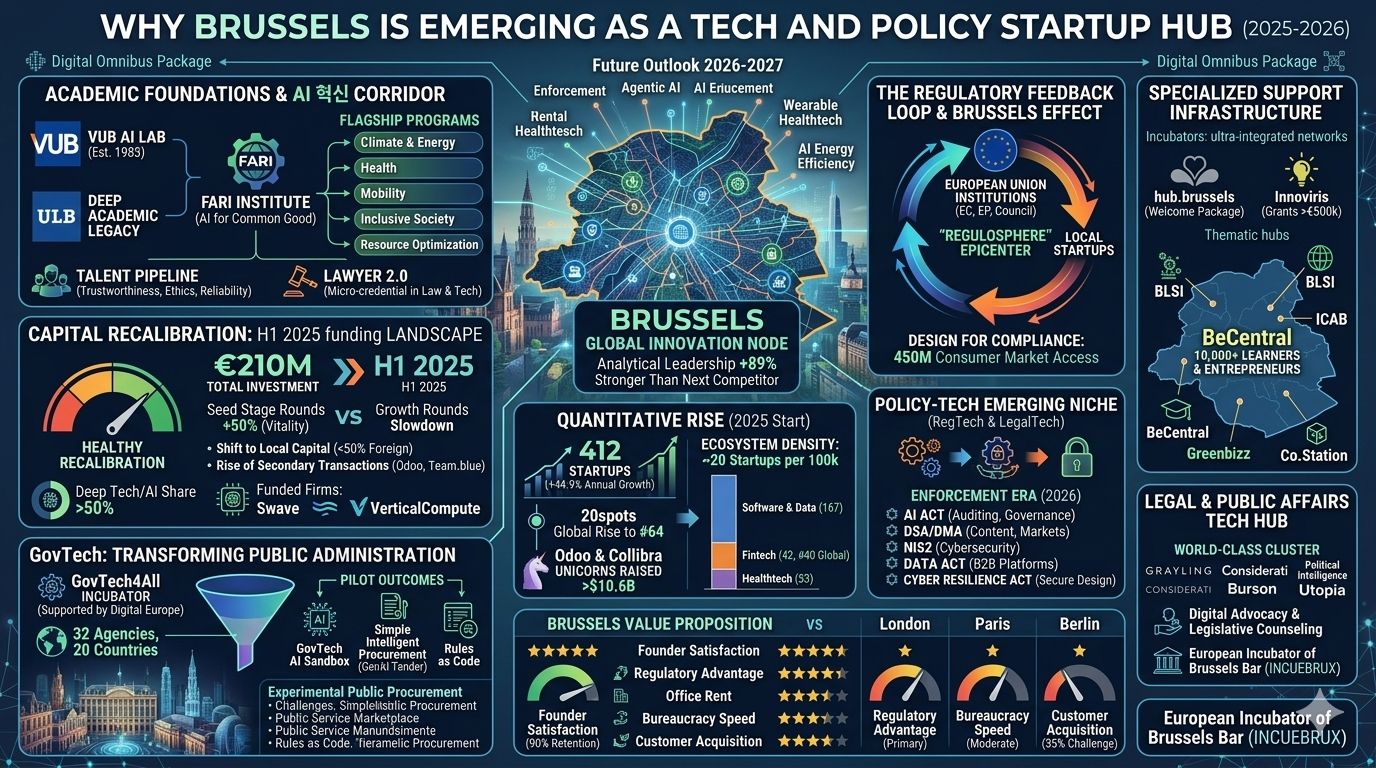
Brussels has emerged as the primary laboratory for the European GovTech movement, driven by the dual pressure of digital transformation and the need for fiscal efficiency. The GovTech sector, valued at more than €350 billion globally, is gaining traction among EU member states through a wave of new offices, accelerators, and national programs. In Brussels, this is spearheaded by the GovTech4All incubator, a flagship initiative supported by the Digital Europe Programme.
GovTech4All 2.0, launched in June 2025, represents a collaborative effort among 32 digital agencies from 20 European countries. Its mission is to accelerate the reuse and scaling of digital solutions across public administrations while launching startup-driven challenges. By fostering strategic partnerships between startups and traditional service providers, the incubator aims to overcome the "outsourcing blame culture" that historically plagued public sector IT projects.
The Impact of Pilot Programs
The first phase of the GovTech incubator (2023-2025) successfully completed pilots in areas such as secure cross-border data spaces and machine-readable regulation assistants for social benefits. These pilots are not merely technical exercises; they are designed to impact the lives of millions by making public services more accessible and efficient.
Specific current pilots include:
GovTech AI Sandbox: A controlled environment for developing and scaling AI-driven public service innovations in collaboration with regulators.
Public Service Marketplace: A web-based platform designed to simplify the procurement of digital services, allowing startups easier access to government contracts.
Simple Intelligent Procurement: Leveraging Generative AI to automate the creation of tender documents and integrate a GovTech database to streamline the administrative process.
Citizen-Centric Rules as Code: A project aimed at making legislation machine-readable, reducing the time and cost required for public administrations to implement new rules.
This "Experimental Public Procurement" methodology, led by organizations like the Lisbon Council and Gobe, allows cities like Brussels to define their energy efficiency or mobility challenges and pilot innovative solutions from startups. This transforms the public sector from a slow-moving monolith into an active participant in the innovation ecosystem.
Specialized Support Infrastructure: Incubators and Public Agencies
The Brussels startup ecosystem is supported by an "ultra-integrated" network of incubators and public agencies that provide a safety net for early-stage ventures. hub.brussels, the region’s public agency for business support, offers a "My Welcome Package" that covers everything from legal guidance to subsidized office space for foreign entrepreneurs. Innoviris, the public agency for research and innovation, provides significant non-dilutive funding, such as the "Innovative Starters Awards," which offers grants of up to €500,000 per project.
The city’s incubators are thematic, ensuring that startups find themselves in a matching ecosystem that fits their specific vertical.
Incubator Name | Specialization | Capacity/Location |
BLSI | Life Sciences & Health | 2,350 m² (Woluwe-St-Lambert) |
EEBIC | Financing & General Tech | 4,000 m² (Anderlecht) |
Greenbizz | Sustainability & Circular Economy | 8,000 m² (Brussels City) |
ICAB | Technology & Scaling | 2,230 m² (Etterbeek) |
BeCentral | Digital Learning & Academies | Central Station |
Co.Station | Accelerating Corporate Innovation | Brussels Hub |
Source:
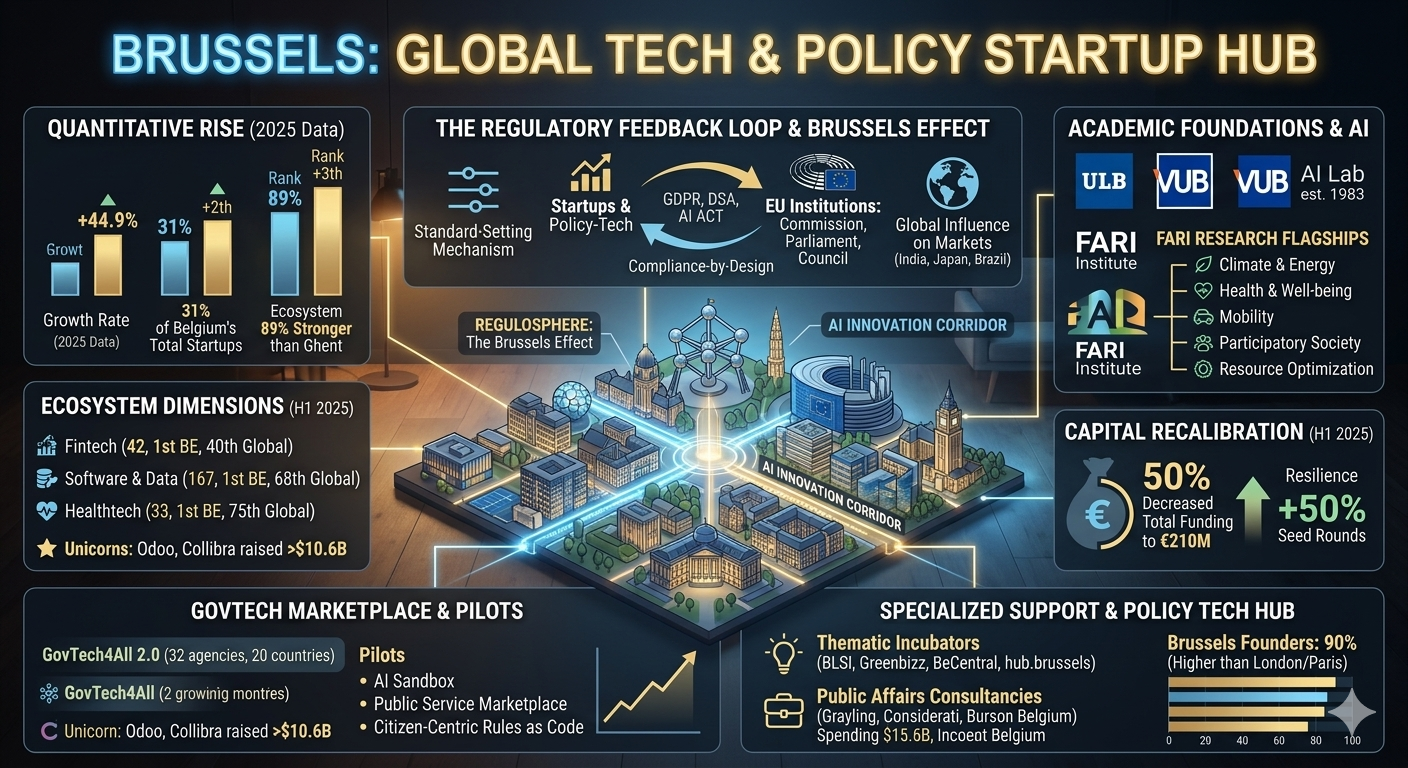
BeCentral stands out as a unique success story, having transformed underused railway property into a campus for over 10,000 learners and entrepreneurs as of 2024. It hosts digital academies, NGOs, and innovation labs, all united by a mission to democratize access to technology. This infrastructure is a critical factor in the city's high satisfaction rate; 87% of Brussels startups praise the quality of the coaching and IT infrastructure provided.
The Legal and Public Affairs Tech Hub
Brussels' status as a political crossroads has naturally led to the development of a world-class cluster of Public Affairs and LegalTech firms. Unlike generalist tech hubs, Brussels attracts companies whose core business is influencing, tracking, and complying with the law. Organizations like Grayling, Considerati, and Political Intelligence provide the "political intelligence" and monitoring necessary for startups and multinationals to navigate the EU's complex legislative cycles.
LegalTech in Brussels is deeply integrated with the bar associations. The European Incubator of the Brussels Bar (INCUEBRUX) is an international organization founded by both the French and Dutch-speaking orders of lawyers in Brussels. It focuses on the innovation and modernization of the legal profession, ensuring that technological advancements like AI-native workspaces (e.g., LegalFly) and automated contract drafting (e.g., Lawren.io) are developed within a framework of professional ethics and fundamental rights.
Advocacy and Lobbying as a Service
The lobbying scene in Brussels is vast, with tech firms spending a record €151 million per year on EU influencing activities. This includes US giants like Google and Microsoft, but increasingly, it also includes startups seeking to secure favorable regulatory frameworks. Public affairs consultancies in Brussels offer specialized "Digital Advocacy" and "Legislative Counseling," helping companies like Honda, eBay, and OLX Group build their political brand and respond to regulatory risks.
Consultancy Entity | Focus Area | Strategic Advantage |
Grayling Brussels | EU Public Affairs | Hub for 28 European offices; 7 policy poles |
Considerati | Legal & Public Affairs | Tech-driven risk mgmt; AI governance |
Political Intelligence | Strategic Communications | 25 years of cross-party dialogue in EU |
Burson Belgium | Integrated Communication | Proprietary AI solutions for reputation |
Utopia Bruxelles | Legislative Monitoring | Direct proximity to European Parliament |
Source:
This concentration of public affairs expertise means that a startup in Brussels can effectively hire "Regulation as a Service." By partnering with these consultancies, early-stage firms can monitor the "Digital Omnibus" or "Cyber Resilience Act" as they are being drafted, allowing them to pivot their product roadmap in real-time to meet the eventual legal requirements.
Comparative Dynamics: Brussels versus London, Paris, and Berlin
In the competitive landscape of European tech hubs, Brussels presents a distinct value proposition focused on regulatory security and interdisciplinary talent. According to the European Start-up Survey, Brussels outranks major centers like London, Paris, and Berlin in terms of founder satisfaction and retention. A significant 87% of Brussels-based startups have no intention of moving their operations to another country—a rate far higher than the European average of 59%.
Benchmarking the Hubs
The following table provides a comparison of the strategic factors influencing startup location choices in 2025.
Factor | Brussels | London | Berlin | Paris |
Global Index Rank | 64th | 1st | ~2nd-3rd | ~3rd |
Founder Satisfaction | 90% | 87% | 88% | 67% |
Regulatory Advantage | Primary (EU) | Secondary | National | National |
Office Rent (sqm) | Moderate | Very High | €17-20 (Low) | High |
Key Talent Pool | Policy/Linguistics | Finance/Tech | Creative/Urban | Students/R&D |
Bureaucracy Speed | Moderate | Fast | Moderate | Slow (3-6 mo) |
Source:
While Berlin is known for its creative energy and London for its finance-tech dominance, Brussels occupies the unique niche of "Standard-Setter." Startups in Brussels prioritize access to the EU’s decision-making apparatus over cheap rent (Berlin) or deep financial markets (London). However, Brussels continues to struggle with "customer acquisition" compared to larger domestic markets like France or the UK, with 35% of local startups identifying it as a major challenge compared to the EU average of 23%.
Future Outlook: The 2026 Enforcement Era and Beyond
As we move toward 2026 and 2027, the Brussels tech hub will be defined by the "Year of Truth" for Artificial Intelligence and the shift toward "Agentic AI". The transition from an exploratory phase of AI pilots to structural, operational integration will test the resilience of the local ecosystem.
Predictions for 2026-2027
Technological and policy trends are expected to converge in several critical areas:
Enforcement Acceleration: 2026 marks the end of grace periods for the AI Act and DSA/DMA. Regulators will begin active enforcement, favoring startups that have already integrated "compliance-by-design".
Agentic AI in Public Infrastructure: Next-generation networks will use "agentic AI" to autonomously manage smart grids, energy waste, and traffic flow, with Brussels acting as the primary testbed for these GovTech solutions.
Digital Sovereignty vs. Autarchy: Europe will continue its push for technological sovereignty, focusing on cloud resilience and data sovereignty without retreating into isolation.
The Rise of Wearable Healthtech: AI-integrated smart glasses and clothing are projected to replace mobile phones for healthcare monitoring, creating a new surge in the Brussels Healthtech vertical.
AI Energy Efficiency: As AI's energy demands increase, smart grid systems in the Brussels-Capital Region will begin using AI to predict and balance loads, turning the technology into a solution for its own environmental footprint.
The emergence of the "Digital Omnibus Package" will be a pivotal moment for the ecosystem. If the EU successfully streamlines its digital rulebook, it could unlock a new wave of innovation by reducing the administrative friction that currently hampers some scaling efforts.
Conclusion: The Strategic Integration of Technology and Policy
The evolution of Brussels into a specialized tech and policy hub is a fundamental reconfiguration of what it means to be an innovation center. It is not a hub built on the Silicon Valley model of "move fast and break things," but rather a "techno-legal" hub built on "move responsibly and build lasting frameworks." The city’s strength lies in its multiplicity—acting simultaneously as a research corridor, a regulatory lighthouse, and a marketplace for public innovation.
The data from 2024 and 2025 confirms that while global funding may fluctuate, the demand for technology that is ethical, compliant, and sovereign is at an all-time high. Brussels-based startups, with their unique proximity to power and their deep academic roots in AI and law, are perfectly positioned to define the global standards of the next decade. For professional founders and investors, the choice of Brussels is increasingly a choice for long-term regulatory stability and access to the world's most influential standard-setting apparatus. As the enforcement era begins in 2026, the "Brussels Effect" will continue to be the most potent competitive advantage for startups navigating the future of the global digital economy.
The Real Startup Playbook: Ideas, Growth, Funding, and Founder Psychology
Building a startup is exciting, chaotic, and often misunderstood. If you’ve ever wondered how founders actually validate ideas, find co-founders, raise funding, and survive the emotional rollercoaster, these articles explore the realities behind the startup world.
Start with How to Validate Your Startup Idea in 48 Hours for $0 to understand how founders test ideas quickly before wasting months building the wrong product. Once you have an idea, the next challenge is building it—From Idea to MVP: A Step-by-Step Guide for Solo Founder walks through the journey from concept to a real product.
Many founders struggle with partnerships and team decisions. Should your co-founder live in the same city? Explore Remote vs. Local: Does Your Co-Founder Need to Live in the Same City? and learn the risks hidden in partnerships in 5 Red Flags to Look for When Choosing a Startup Partner. If you’re searching for technical help, How to Find a Technical Co-Founder (Without a Six-Figure Salary) explains how founders actually do it.
The startup journey isn’t just about building products—it’s also about mindset and decision-making. Articles like Decision Fatigue: The Silent Startup Killer, Fear vs Logic: How Founders Actually Make Decisions, and How Overthinking Destroys Early Momentum reveal the psychological battles founders face behind the scenes.
Growth is another misunderstood part of startups. Learn why strategy matters more than hype in Ideas Don’t Scale. Systems Do. and why discipline matters in Why Your Startup Doesn’t Need Growth — It Needs Focus. Discover the importance of early traction in How the First 100 Users Decide Your Startup’s Fate and understand team building through The First Hire That Actually Matters.
Funding is often romanticized, but reality is more complex. Why First-Time Founders Should Avoid Big Funding challenges common assumptions about venture capital, while Revenue Solves More Problems Than Funding explains why sustainable businesses matter more than investor money.
The startup ecosystem also varies by geography. If you're curious about India’s startup scene, explore The New Playbook for Raising in Bangalore, Why Raising Pre-Seed in Bangalore Is Harder Than Ever, and Why B2B SaaS from Bangalore Scales Faster.
But startups are not just about strategy and growth—they’re also about people and emotions. Articles like The Hidden Burnout of Bangalore Founders, Comparison Culture in India’s Startup, and The Loneliness of First-Time Founders in Bangalore reveal the personal struggles founders rarely talk about publicly.
And finally, if you want a deeper perspective on the startup journey itself, explore Lessons Learned Too Late by First-Time Founders and The Myth of the “Overnight Success” Startup—because the truth behind startup success is far more complex than it appears.