The Role of Government Support in Belgium’s Startup Growth
March 14, 2026 by Harshit Gupta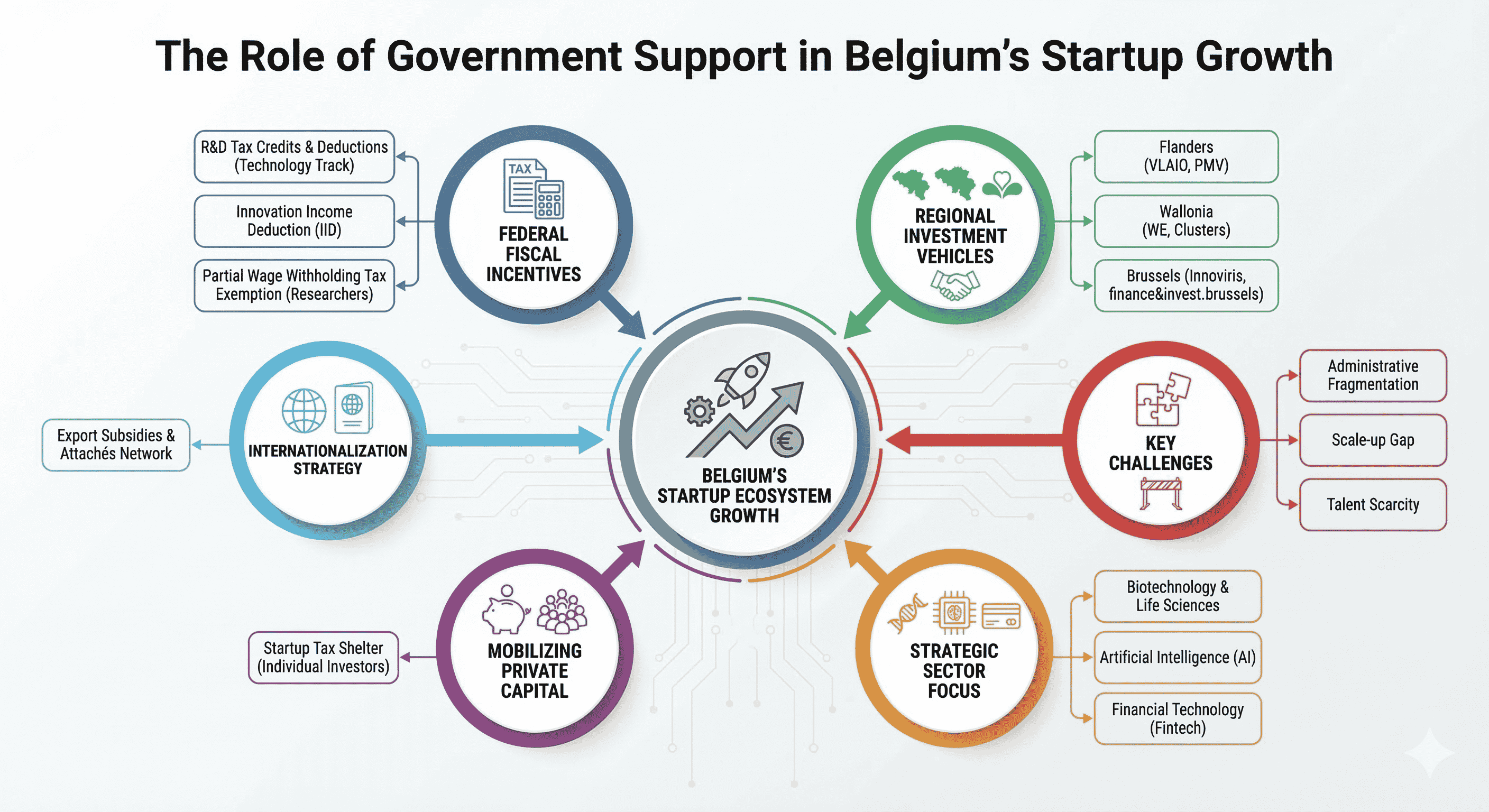
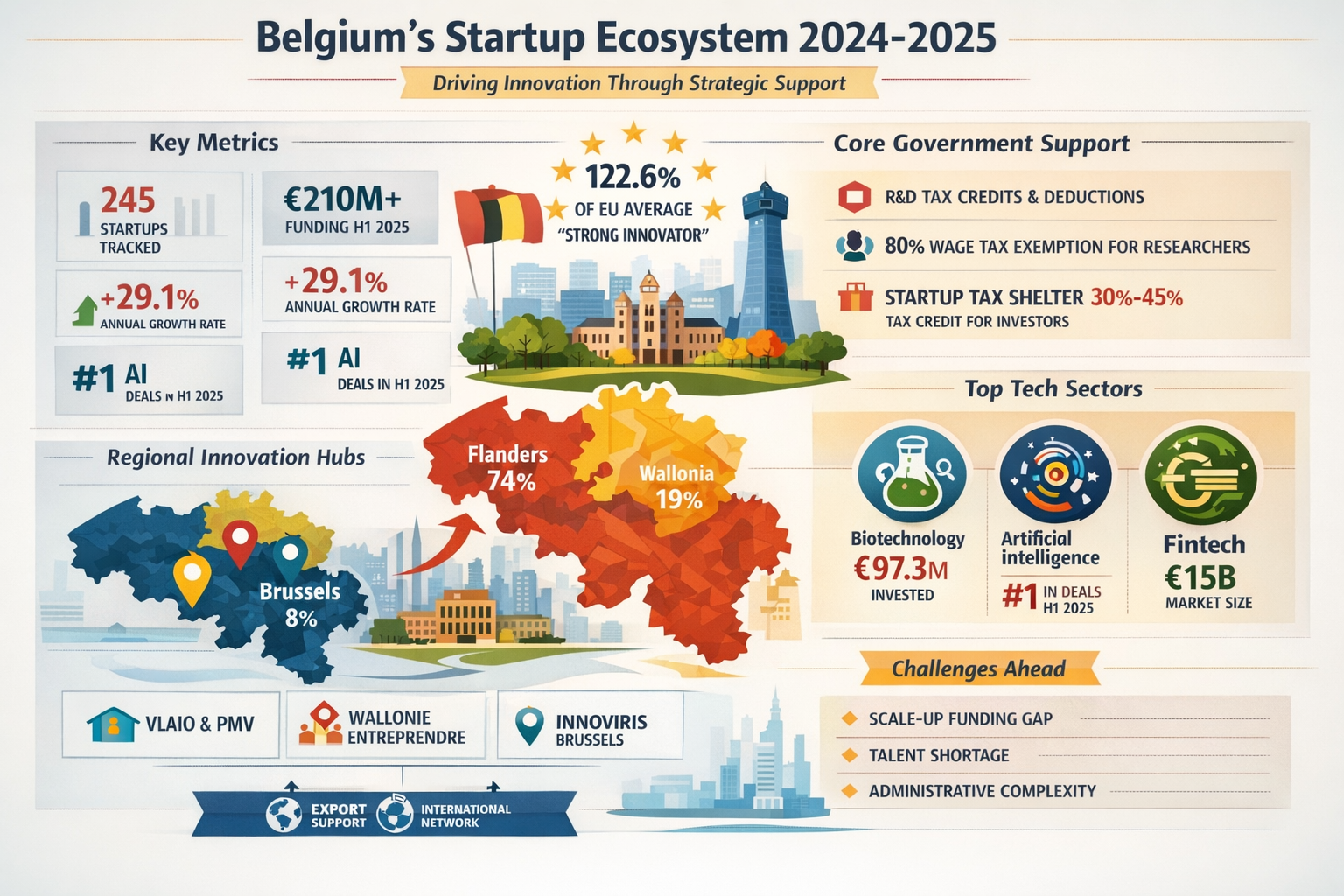
The Belgian startup ecosystem has transitioned from a fragmented collection of localized entrepreneurial hubs into a sophisticated, multi-tiered innovation landscape characterized by high-density capital influx and robust institutional scaffolding. As of the 2024-2025 period, the nation has solidified its reputation as a "Strong Innovator," performing at approximately 122.6% of the European Union average in the Summary Innovation Index. This trajectory is not merely a product of market forces but is deeply rooted in a deliberate and complex framework of government support that spans federal tax incentives, regional investment vehicles, and strategic sector-specific clusters. The synergy between these levels of government has fostered a climate where high-tech sectors, particularly biotechnology, artificial intelligence, and financial technology, can achieve global competitiveness despite the inherent constraints of a relatively small domestic market.
The Macroeconomic Context: Growth, Maturation, and Funding Resilience
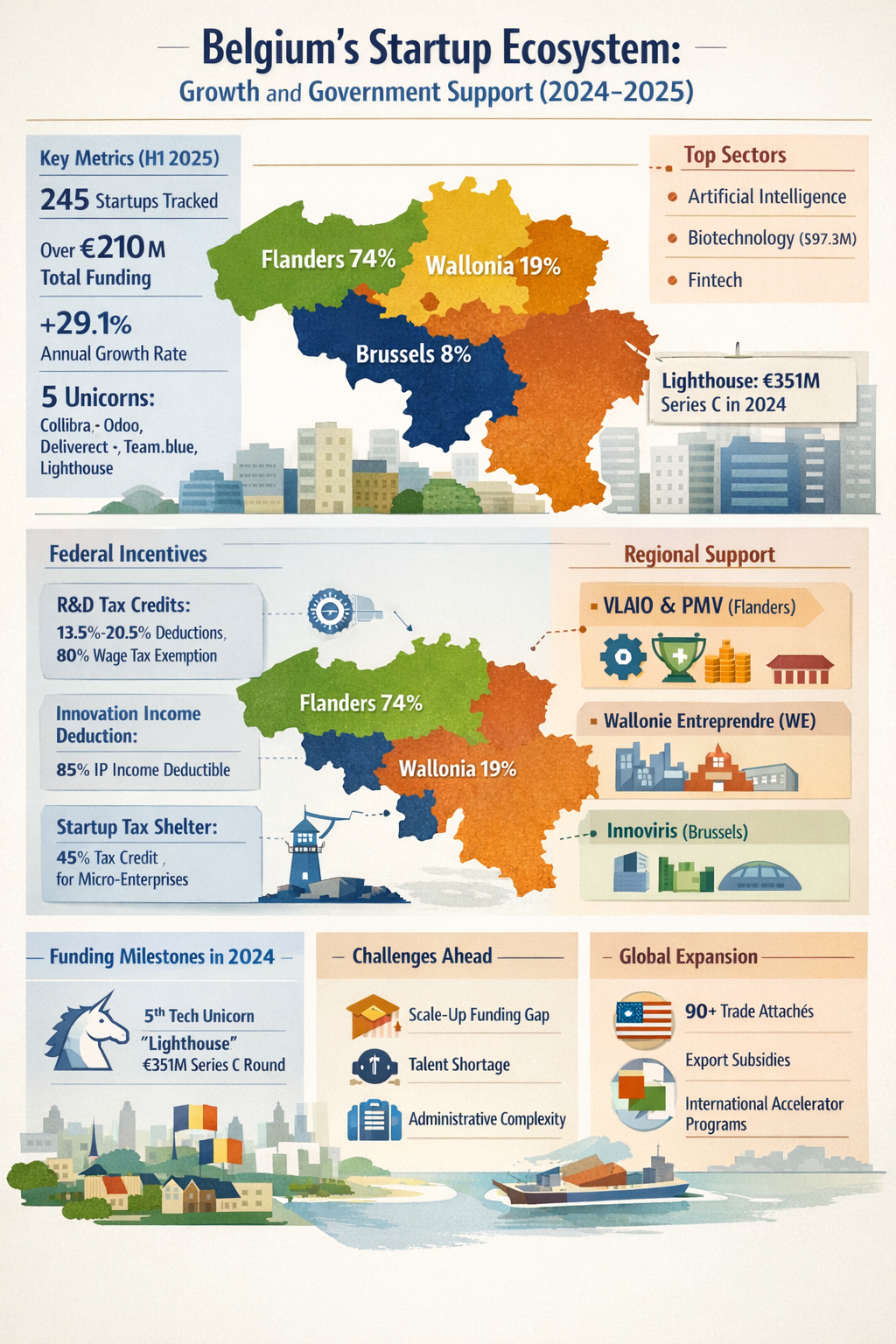
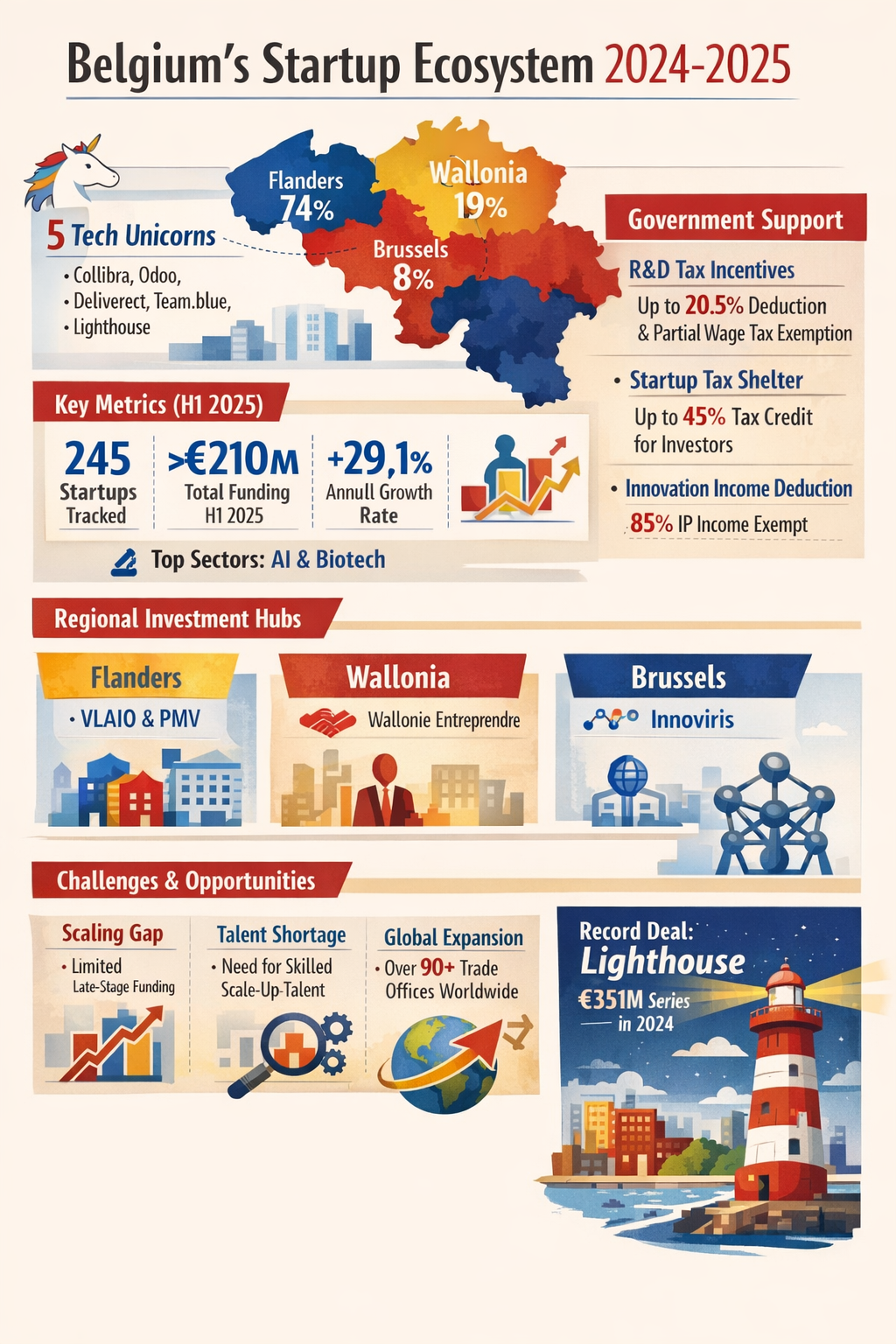
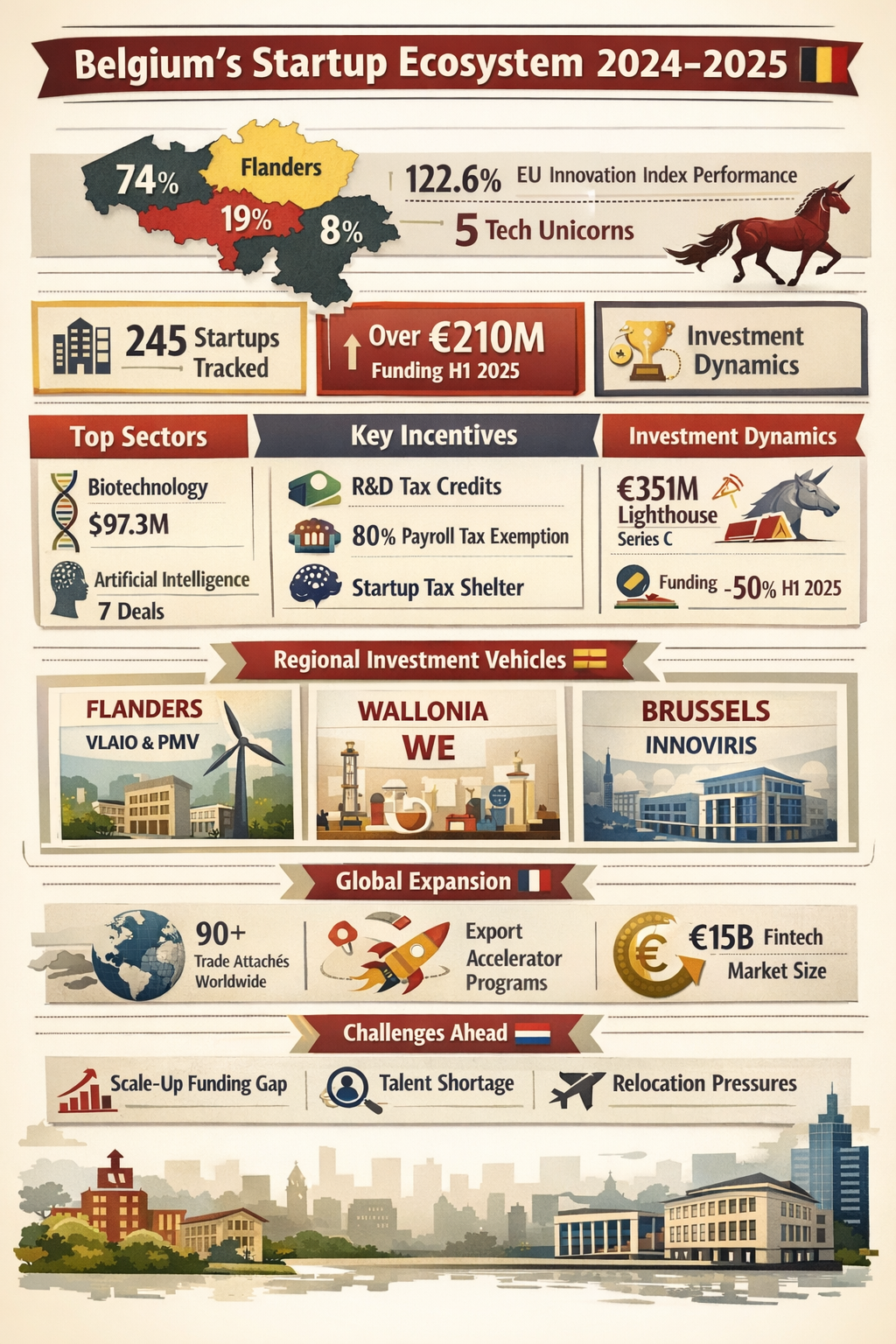
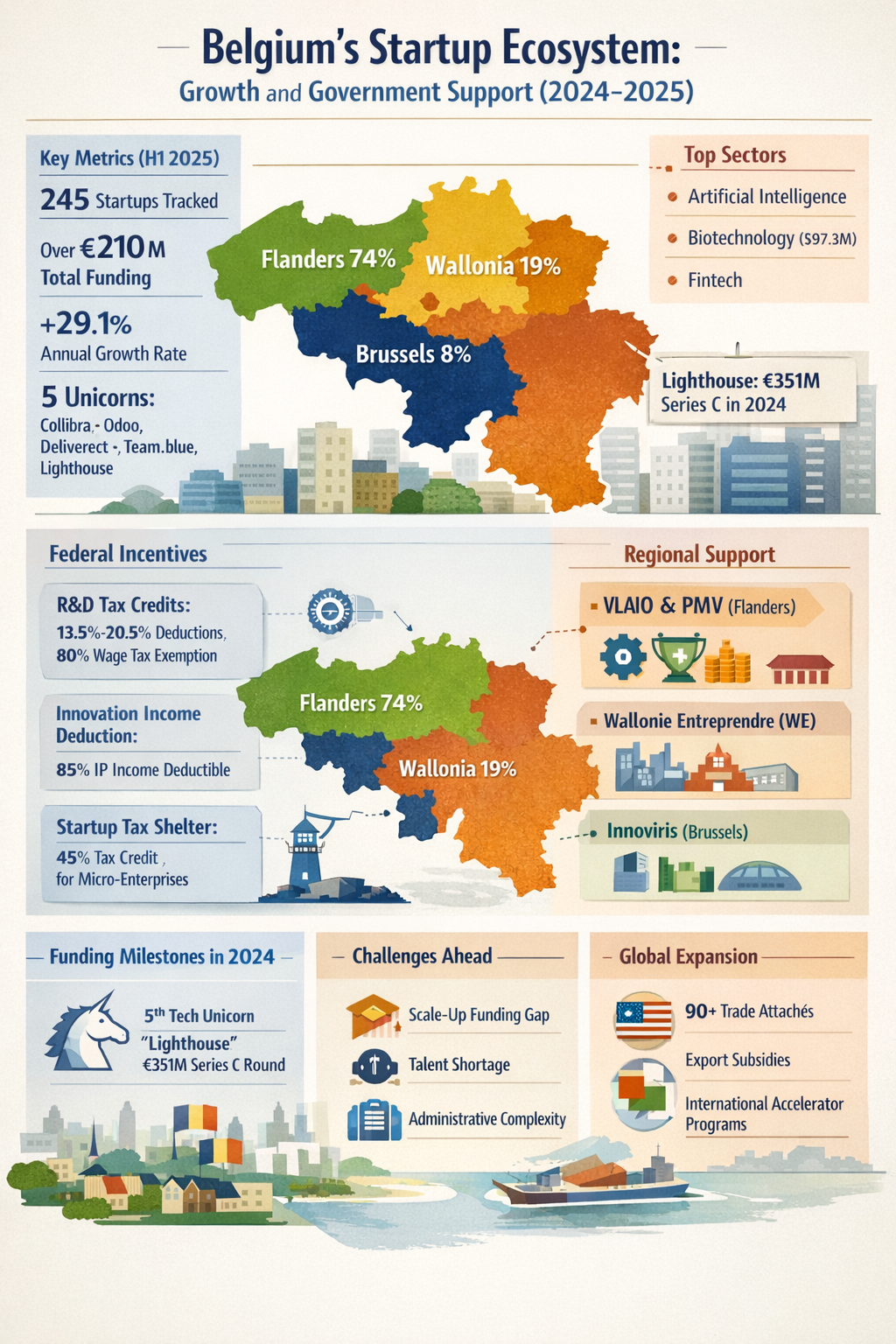
The Belgian startup scene has demonstrated remarkable resilience and an ability to attract significant international attention despite broader European headwinds. The tracking of 245 high-growth startups reveals a consistent trend of capital injection, with 63 startups successfully raising funds in 2024 and 44 continuing this momentum into the first half of 2025. While the broader European market faced a funding slowdown, Belgium recorded some of its most significant milestones during this period, including the emergence of its fifth tech unicorn, Lighthouse, which raised a record-breaking €351 million Series C round in 2024.
However, the investment landscape remains nuanced and subject to broader macroeconomic shifts. Data from the first half of 2025 indicates a temporary contraction in total equity funding, which fell by approximately 50% compared to the record highs of 2024, bringing figures back in line with 2023 statistics and European market trends. Despite this dip, the maturation of the ecosystem is evident in the increasing value of early-stage rounds. Average capital invested at the seed stage has tripled since 2018, while Series B rounds have seen a 5.5x increase in average value. This indicates that while the number of deals may fluctuate, the quality and capital intensity of Belgian ventures are ascending.
Investment Metric (H1 2025) | Performance Detail |
Total Startups Tracked | 245 |
Total Funding (H1 2025) | Over €210 Million |
Annual Ecosystem Growth Rate | +29.1% |
Top Industry by Deal Number | Artificial Intelligence (7 deals) |
Top Industry by Capital Volume | Biotechnology ($97.3 Million) |
Unicorn Count | 5 (Collibra, Odoo, Deliverect, Team.blue, Lighthouse) |
The geographical distribution of this growth remains concentrated but is undergoing significant shifts. Flanders continues to dominate the landscape, historically accounting for 60% of total investment volume, a share that jumped to nearly 74% in 2024 and maintained similar levels in early 2025. Wallonia has shown a significant rebound, capturing 19% of H1 2025 investment after a quieter 2024, while Brussels has seen a proportional decline from 24% in 2024 to approximately 8% in early 2025. This regional competition is moderated by federal-level support mechanisms that ensure a baseline of attractiveness for all Belgian-based entities.
Federal Fiscal Scaffolding: R&D Incentives and Tax Structures
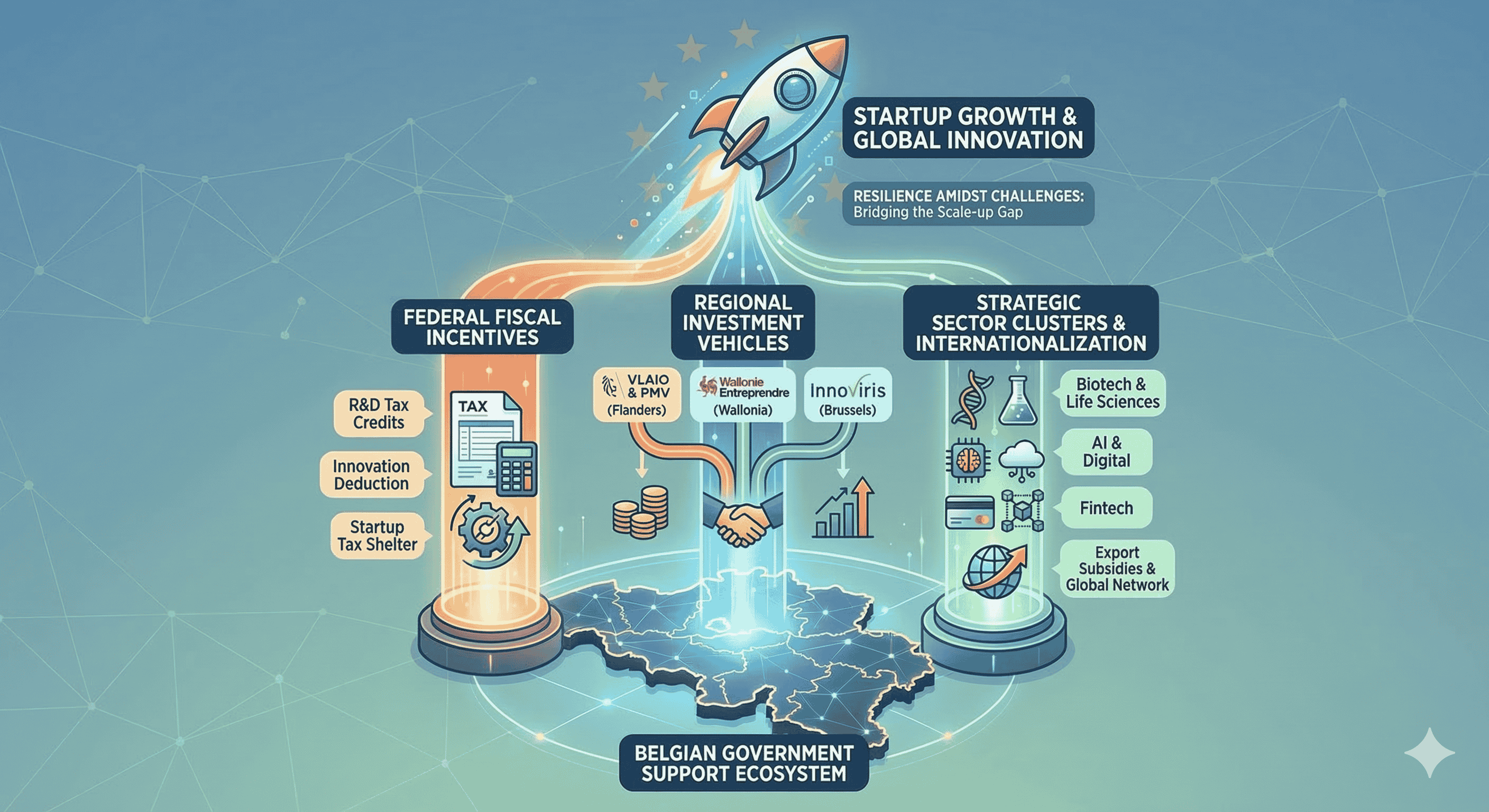
The cornerstone of the Belgian government's support strategy is its comprehensive fiscal regime, which is widely regarded as one of the most generous in the European Union for research and development. This framework is designed to lower the barriers to entry for startups while providing long-term incentives for established scale-ups to maintain their R&D operations within the country.
Research and Development Tax Credits and Investment Deductions
Belgium offers a dual-track approach to incentivizing R&D investment: the investment deduction and the R&D tax credit. The investment deduction allows taxpayers to deduct a percentage of the acquisition value of R&D-related fixed assets from their taxable base, in addition to annual amortizations. This deduction can be applied as a "one-shot" measure or spread over the depreciation period of the asset.
For startups and SMEs, the "Technology Track" of the investment deduction, restructured in 2025, provides a fixed rate of 13.5% for one-off deductions or 20.5% for spread deductions. Alternatively, companies can opt for a refundable R&D tax credit. This credit is particularly beneficial for startups that are not yet profitable, as any unused portion of the credit is automatically reimbursed in cash after four years—a period reduced from five years starting in tax year 2025. The tax credit is calculated by multiplying the investment deduction amount by the standard corporate tax rate of 25%, effectively providing a cash benefit of approximately €3.38 to €5.13 per €100 invested.
Investment Deduction Category | SME Rate (One-off) | SME Rate (Spread) | Other Company Rate |
Technology (Patents/R&D) | 13.5% | 20.5% | 13.5% / 20.5% |
Digital Investments | 20% | N/A | Not Applicable |
Thematic (Green/Energy) | 40% | N/A | 30% |
Ordinary SME | 10% | N/A | Not Applicable |
Partial Wage Withholding Tax Exemption for Researchers
One of the most impactful measures for talent-heavy tech startups is the partial exemption from wage withholding tax for qualified researchers. Companies employing staff with specific STEM degrees (PhD, Master, or qualifying Bachelor degrees) in R&D roles are allowed to retain 80% of the wage withholding tax that would otherwise be paid to the federal treasury.
This incentive directly reduces the cost of labor without affecting the employee's net salary, making it significantly easier for startups to recruit highly skilled engineers and scientists. Since mid-2023, the government has enforced stricter notification requirements. To benefit from this regime, companies must notify their R&D projects or programs to the Belgian Science Policy Office (BELSPO) via their portal prior to the effective start date of the activities. Failure to meet this notification requirement results in the nullity of the exemption for the entire duration of that specific activity. Furthermore, while timesheets are not a legal requirement, tax authorities increasingly expect robust documentation of the time spent on R&D to justify the 80% exemption.
Innovation Income Deduction (IID)
To encourage the commercialization and anchoring of intellectual property within Belgium, the government implemented the Innovation Income Deduction (IID), which replaced the older patent income deduction. Under the IID, 85% of net income derived from qualifying intellectual property—including patents, copyrighted software from R&D programs, plant breeders' rights, and certain orphan drugs—is deducted from the taxable base.
This results in an effective corporate tax rate as low as 3.75% on innovation-derived profits. The IID utilizes a "modified nexus approach," adhering to OECD BEPS Action Point 5. This means the deduction is proportional to the R&D activities actually performed by the company itself (the "nexus fraction") rather than those acquired or outsourced to related parties. For the 2025 tax year, the law introduced a new option: taxpayers can choose to convert the IID into a non-refundable tax credit for innovation income, which can be carried forward, providing greater flexibility in tax planning during periods of lower profitability.
Mobilizing Private Capital: The Startup Tax Shelter
A unique feature of the Belgian landscape is the Tax Shelter for startups, designed to mobilize "sleeping" private savings into productive entrepreneurial investments. With over €257 billion estimated to be held in Belgian savings accounts, the government has created powerful incentives to redirect this capital toward the growth of young companies.
Incentives for Individual Investors
The Tax Shelter provides varying levels of tax credits based on the size and age of the target company. For investments in micro-enterprises—defined as companies with fewer than 10 employees, turnover below €700,000, or a balance sheet total below €350,000—individual investors receive a 45% tax credit on their investment. For investments in small companies (fewer than 100 employees, turnover below €7.3 million, or balance sheet below €3.65 million), the credit is 30%.
In 2025, the maximum amount a startup can raise through this scheme was doubled to €500,000 to assist in post-pandemic growth recovery. This increase provides young companies with significantly more room to expand their activities, invest in innovation, or enlarge their workforce. Investors are capped at an annual investment of €100,000 across all Tax Shelter projects and must hold their shares for at least four years to retain the benefit.
Company Category | Tax Credit Rate | Maximum Capital Raised | Age Limit |
Micro-enterprise | 45% | €500,000 | < 4 years |
Small Company (SME) | 30% | €500,000 | < 4 years |
Scale-up | 25% | €1,000,000 | 4 to 10 years |
The program also supports indirect investment through approved crowdfunding platforms and starter funds, facilitating a wider democratization of startup financing. Startups such as Sunrise and NietsCo have utilized equity crowdfunding to attract thousands of individual investors while benefiting from the Tax Shelter certifications managed by platforms like Spreds.
Regional Investment Vehicles: Flanders, Wallonia, and Brussels
Belgium's federal structure delegates the majority of direct business support and economic development to its three regions. Each has established specialized agencies that act as venture capitalists, lenders, and advisors, creating a decentralized but highly competitive support network.
Flanders: The Synergy of VLAIO and PMV
Flanders utilizes a highly coordinated approach through two main entities: Flanders Innovation & Entrepreneurship (VLAIO) and Participatiemaatschappij Vlaanderen (PMV). VLAIO serves as the primary gateway for grants and subsidies, offering the "SME e-wallet" for training and advice, as well as specialized grants for ecological investments like EP PLUS and STRES.
PMV, on the other hand, operates as a structural investment company with over €1.7 billion in assets under management. It provides a spectrum of financial products tailored to different growth stages:
Winwinlening (Win-win Loan): This instrument encourages private individuals to lend to SMEs by providing them with a 2.5% annual tax credit and a 30% government guarantee on the principal in the event of default.
Startlening (Start Loan): Subordinated loans specifically for beginning entrepreneurs, self-employed individuals, and small businesses that lack traditional collateral.
Cofinanciering (Co-financing): PMV partners with private banks or investors to bridge funding gaps for projects that require a mix of debt and equity.
Welvaartsfonds (Prosperity Fund): A dedicated fund aimed at reinforcing the equity of Flemish companies following the economic disruptions of the pandemic and energy crises.
Flanders also emphasizes "spearhead clusters"—strategic industry associations such as Catalisti (chemicals), Blue Cluster (maritime), and MEDVIA (healthtech)—where the government provides additional R&D funding and networking support to create critical mass in high-growth sectors.
Wallonia: The Consolidation of Wallonie Entreprendre (WE)
In Wallonia, the recent consolidation of SOGEPA, SOWALFIN, and SRIW into a single entity, Wallonie Entreprendre (WE), has significantly streamlined the region's support architecture. WE acts as the economic and financial partner for Walloon businesses, offering resources for creation, growth, and internationalization. It focuses on several strategic domains, including life sciences, deeptech, and aerospace, providing both equity and debt financing.
Wallonia also utilizes a network of specialized technology incubators and accelerators that combine business mentoring with technical resources:
WSL: Specializes in engineering sciences, focusing on industry, ICT, MedTech, and CleanTech.
Galaxia: Dedicated to the space sector, supporting applications connected to telecommunications, earth observation, and satellite navigation.
LeanSquare: Part of the Noshaq group, it supports startups in the "new economy," including MusicTech, SportsTech, and Gaming.
BioPark: Located in Gosselies, it supports pharmaceutical and biomedical engineering companies, acting as a hub for the region's biotech excellence.
The "Startup Wallonia" initiative aims to select high-potential enterprises and accompany them through every stage of development, integrating research institutes directly into their projects to improve the visibility and efficiency of the ecosystem.
Brussels: Innoviris and the Urban Innovation Model
As the administrative heart of the European Union, the Brussels-Capital Region positions itself as a "nerve center" for startups. Innoviris, the region's research and innovation agency, manages a significant budget, awarding €44.6 million in new funding across 325 projects in 2024. Its flagship programs include:
Innovative Starters Award: A grant offering up to €500,000 per project to early-stage startups developing strategic R&D initiatives. Winners in 2025 included startups like Pleevi, Virenti, and Leexi.
Brains for Brussels: A program that supports high-risk academic research and the development of new expertise relevant to the region's societal and economic challenges.
Applied PhD: Funding that allows doctoral students to combine academic theory with practical application in partnership with private or non-profit sectors.
The region's financial arm, finance&invest.brussels, specializes in subordinated lending and seed financing. Recently, it secured a €50 million loan from the European Investment Bank (EIB) to unlock a total of €140 million in new financing for local SMEs and Mid-Caps, focusing on sectors like green food, urban farming, and financial technology. Brussels also hosts unique digital campuses like BeCentral, which has supported over 10,000 learners and entrepreneurs in democratizing access to technology.
Sectoral Leadership: The Pillars of Belgian Tech
Government support has been instrumental in cultivating world-class clusters in specific high-tech domains. The alignment of public funding with academic excellence has made Belgium a global leader in several strategic verticals.
Biotechnology and Life Sciences
Biotechnology remains the flagship of the Belgian tech economy, attracting nearly $100 million in funding in 2024 and 2025. The growth of this sector is driven by the BioWin (Wallonia) and MEDVIA (Flanders) clusters. In a landmark move in 2024, these two clusters signed a strategic collaboration agreement—the first of its kind between a Walloon and a Flemish cluster—to leverage their respective strengths and harmonize funding flows.
Wallonia excels in vaccine production and advanced therapies (ATMPs), with BioWin members accounting for over 18,500 employees and a decade of 5.3% average annual employment growth. The cluster coordinates the "ATMP-PIT," a major collaborative initiative with a portfolio worth €81.7 million, which yielded 4 patent applications and 7 scientific publications in its first year. In Flanders, the presence of the VIB (Flanders Institute for Biotechnology) and the imec institute provides a world-class research foundation that regularly spins out high-value startups.
Cluster | Key Strengths | Members | Employees |
BioWin (Wallonia) | Biopharma, Vaccines, ATMPs, Nuclear Medicine | 260 | 18,500 |
MEDVIA (Flanders) | Biotech, Medtech, Digital Health | 150 | N/A |
The sectors are also focusing on nuclear medicine and radiopharmaceuticals, with BioWin initiating a national study to develop a clinical trial network for vaccines, aiming to address the declining competitiveness in vaccine research.
Artificial Intelligence and the Digital AmBEtion
The Belgian government has prioritized artificial intelligence as a horizontal enabler for the entire economy. In partnership with Microsoft, the national "Digital AmBEtion" plan was launched to accelerate digital transformation through three pillars: world-class digital infrastructure, digital skill-building, and sustainable societal impact. A central component of this initiative is the establishment of a new Microsoft datacenter region in Belgium, providing local data residency and faster cloud access.
Regional efforts complement this national strategy:
Innoviris AI Accelerator: Brussels invested €7.3 million to accelerate AI adoption, supporting 46 projects aimed at addressing economic and societal challenges.
Flemish AI Plan: Invests in R&D, supporting startups and integrating AI into public services.
sustAIn.brussels: A hub promoting ethical AI adoption by connecting research institutions and AI-driven startups, funded by the European Commission and Innoviris.
As of the first half of 2025, AI investment in Belgium primarily concentrated in the application and implementation layer, attracting over 90% of AI-related funding.
Financial Technology and Regulatory Innovation
Belgium has positioned itself as Europe's digital finance laboratory, with the fintech ecosystem growing 300% in three years. This growth is driven by progressive regulation and the National Bank of Belgium’s (NBB) sandbox approach, which allows for innovation while maintaining financial stability.
Open banking adoption in Belgium exceeds EU averages, with over 85% of banks now API-enabled. Major banks like KBC, BNP Paribas Fortis, and Belfius have integrated APIs that allow third-party fintech providers to plug into their systems, reflecting the successful local implementation of the European PSD2 directive. Belgian fintechs like iBanFirst are pioneering multi-currency real-time payments, while others focus on accounting automation and risk scoring for SMEs.
Fintech Growth Driver | Impact Detail |
Ecosystem Growth | 300% over 3 years |
Open Banking Adoption | 85% of banks API-enabled |
Market Size | €15 Billion (2023) |
Efficiency Gains | 40% gain through AI integration |
Internationalization: The Global Gateway Strategy
Given the small size of the domestic market, the Belgian government views internationalization not as an option but as a necessity for startup survival. A network of regional agencies provides an extensive global footprint to help startups scale.
The Network of Attachés and Export Subsidies
The three regions maintain a combined network of over 90 economic and trade attachés across five continents. These representatives provide startups with free services, including market analysis, legal and regulatory advice, and personalized introductions to potential local partners and customers.
To lower the financial barriers to global expansion, regions offer substantial subsidies. In Brussels, export subsidies can cover up to 75% of costs related to prospecting trips, exhibiting at international trade shows, or producing export-related marketing materials. The "Brussels Exporters Days" bring international representatives back to the capital annually to meet with local entrepreneurs and refine their export strategies.
Accelerating Export Maturity
Specific programs are designed to take companies from local success to international presence:
Export Accelerator (hub.brussels): A 10-month program offering group training and individual coaching to help startups take their first steps in exporting.
Explort (AWEX): Prepares international trade experts through internships and missions abroad, supporting Walloon businesses in their global canvassing.
imec.istart Future Fund: A follow-on investment fund designed to help promising portfolio companies bridge the gap between early-stage funding and Series A rounds, specifically targeting international commercial breakthroughs.
Structural Challenges and Systemic Fragmentation
Despite the robust support framework, the Belgian startup ecosystem faces significant structural hurdles that policy-makers and stakeholders are actively attempting to address.
The Challenge of Administrative Fragmentation
Belgium is described as a "small and fragmented country on a myriad of levels," which affects the ecosystem's cohesion. The institutional setup is exceedingly complex; for instance, there are nine different ministers with some healthcare responsibility and no formal hierarchy between them, making joint decisions on policy responses (such as those required during the COVID-19 pandemic) difficult. This fragmentation can hinder the scaling of companies that need to navigate different regional regulations and grant programs.
The Scale-up Gap and Talent Scarcity
While Belgium excels in early-stage support, there is a recognized "scale-up gap." The ecosystem currently lacks the volume of late-stage (Series C+) funding found in larger hubs. In H1 2025, foreign participation in Belgian funding rounds dipped below 50% for the first time, reflecting a retreat by international firms and a greater reliance on local capital.
Furthermore, talent scarcity remains a primary concern for founders. While the education system produces high-quality STEM graduates, there is a shortage of "scaling talent"—individuals with the specific experience required to guide a company from 50 to 500 employees. The high cost of labor, driven by social security contributions and indexed wages, also remains a competitive disadvantage. Founders have called for reforms to the Employee Stock Ownership Plan (ESOP) framework to make it more competitive with other European countries, allowing them to better reward and retain senior talent through equity.
Relocation Pressures and the "28th Regime"
Nearly 30% of European unicorns relocate their headquarters abroad to access larger markets and more risk-tolerant capital. Belgian startups often retain their R&D and engineering teams in-country to benefit from local tax incentives while moving holding companies and sales teams to the US or other larger hubs.
To counter this, there is an ongoing discussion regarding a "28th regime"—a harmonized regulatory framework that would allow startups to operate across the EU internal market without facing the administrative burden of each individual member state. Start-up organizations are pushing for this to be a regulation that applies immediately across the EU, rather than a directive, to ensure real change in speed and scalability.
Future Outlook: The 2026 Strategic Roadmap
The Belgian government and regional agencies have established clear roadmaps for the coming years to maintain the ecosystem's momentum. AWEX has established a new strategic roadmap for the 2026–2029 period to better accompany Walloon companies in their international development, focusing on high-growth markets like the Far East.
In the digital sector, the completion of broadband strategies by the end of 2024 aimed to eliminate high-speed service gaps, supporting the European gigabit connectivity 2025 targets. The government continues to stimulate 5G roll-out by lowering costs for operators and reducing administrative burdens, ensuring that Belgian startups have the infrastructure necessary to compete in a data-driven global economy.
The Belgian model of startup growth is a testament to the power of targeted government intervention. By leveraging federal tax policy to lower R&D costs and regional agencies to provide direct equity and debt, Belgium has created an environment where high-tech innovation is financially derisked. The transition to a more mature ecosystem will require addressing the systemic issues of fragmentation and the late-stage funding gap, but the current trajectory suggests that Belgium remains a leading European hub for the technologies of the future.
The Real Startup Playbook: Ideas, Growth, Funding, and Founder Psychology
Building a startup is exciting, chaotic, and often misunderstood. If you’ve ever wondered how founders actually validate ideas, find co-founders, raise funding, and survive the emotional rollercoaster, these articles explore the realities behind the startup world.
Start with How to Validate Your Startup Idea in 48 Hours for $0 to understand how founders test ideas quickly before wasting months building the wrong product. Once you have an idea, the next challenge is building it—From Idea to MVP: A Step-by-Step Guide for Solo Founder walks through the journey from concept to a real product.
Many founders struggle with partnerships and team decisions. Should your co-founder live in the same city? Explore Remote vs. Local: Does Your Co-Founder Need to Live in the Same City? and learn the risks hidden in partnerships in 5 Red Flags to Look for When Choosing a Startup Partner. If you’re searching for technical help, How to Find a Technical Co-Founder (Without a Six-Figure Salary) explains how founders actually do it.
The startup journey isn’t just about building products—it’s also about mindset and decision-making. Articles like Decision Fatigue: The Silent Startup Killer, Fear vs Logic: How Founders Actually Make Decisions, and How Overthinking Destroys Early Momentum reveal the psychological battles founders face behind the scenes.
Growth is another misunderstood part of startups. Learn why strategy matters more than hype in Ideas Don’t Scale. Systems Do. and why discipline matters in Why Your Startup Doesn’t Need Growth — It Needs Focus. Discover the importance of early traction in How the First 100 Users Decide Your Startup’s Fate and understand team building through The First Hire That Actually Matters.
Funding is often romanticized, but reality is more complex. Why First-Time Founders Should Avoid Big Funding challenges common assumptions about venture capital, while Revenue Solves More Problems Than Funding explains why sustainable businesses matter more than investor money.
The startup ecosystem also varies by geography. If you're curious about India’s startup scene, explore The New Playbook for Raising in Bangalore, Why Raising Pre-Seed in Bangalore Is Harder Than Ever, and Why B2B SaaS from Bangalore Scales Faster.
But startups are not just about strategy and growth—they’re also about people and emotions. Articles like The Hidden Burnout of Bangalore Founders, Comparison Culture in India’s Startup, and The Loneliness of First-Time Founders in Bangalore reveal the personal struggles founders rarely talk about publicly.
And finally, if you want a deeper perspective on the startup journey itself, explore Lessons Learned Too Late by First-Time Founders and The Myth of the “Overnight Success” Startup—because the truth behind startup success is far more complex than it appears.