The Rise of Startup Innovation in Antwerp
March 14, 2026 by Harshit Gupta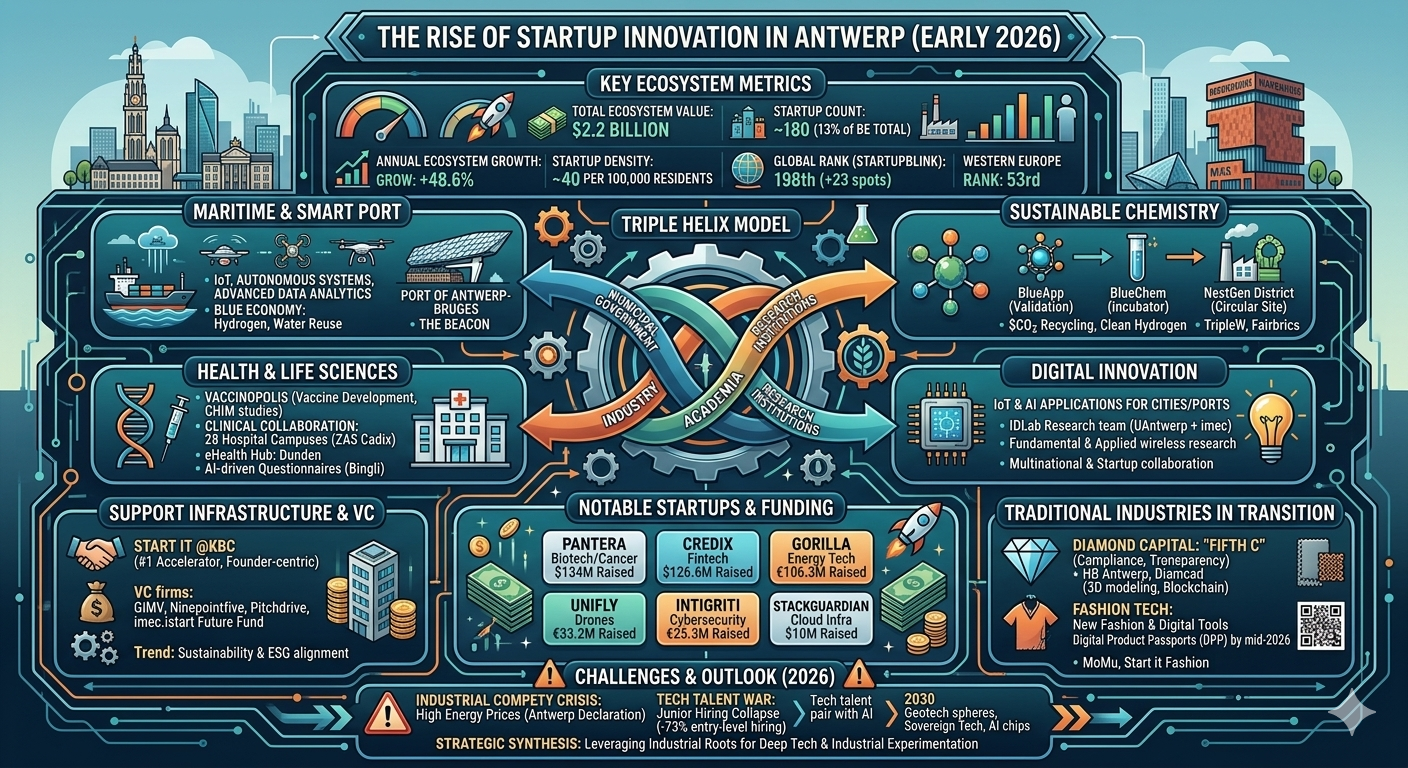
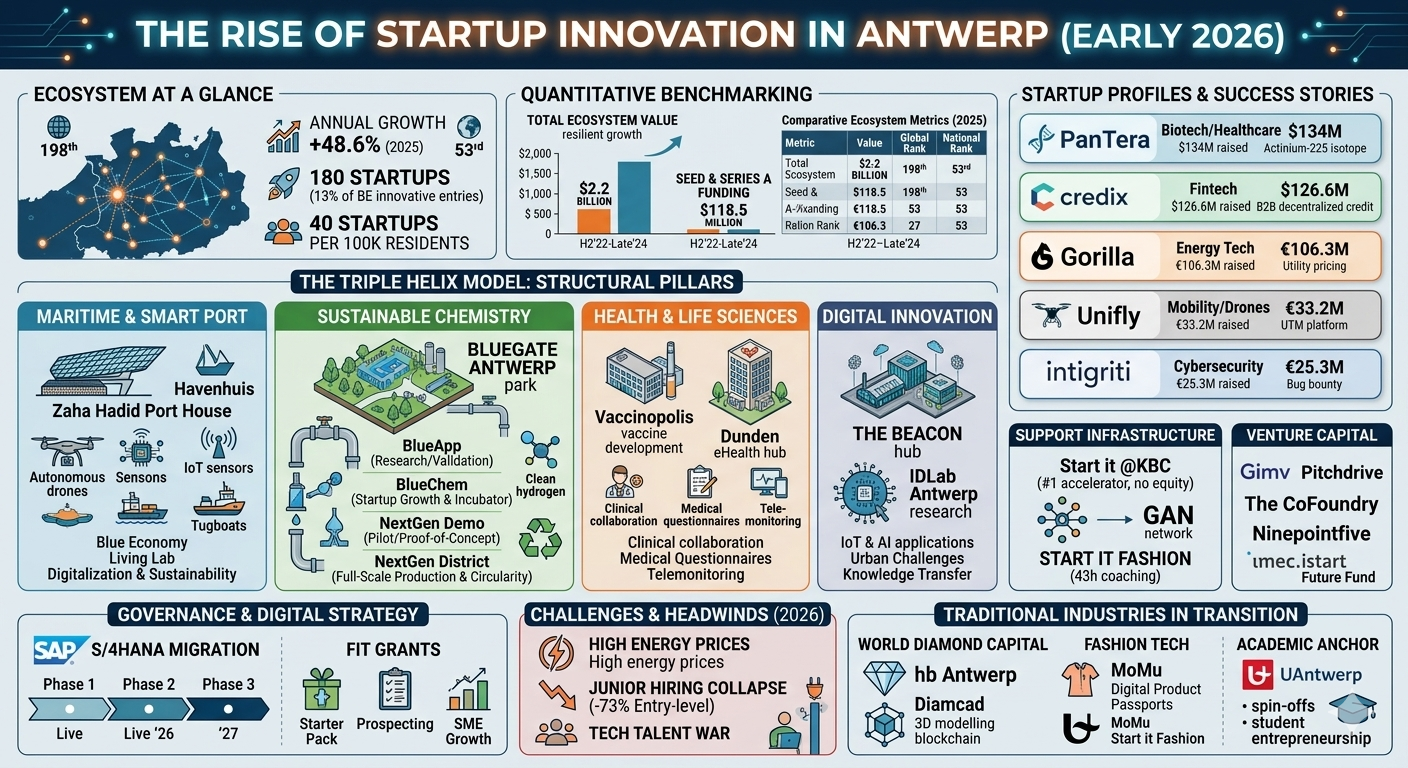
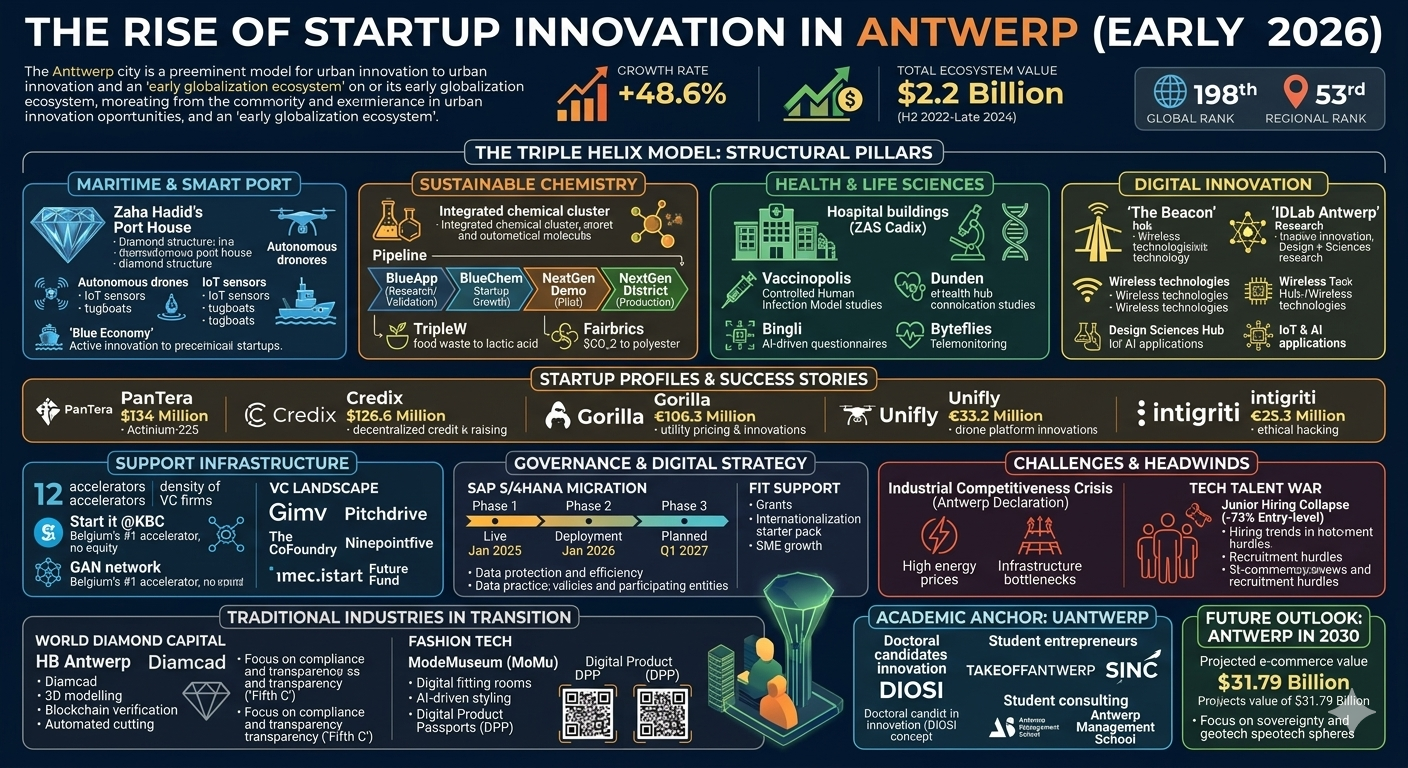
The structural transformation of Antwerp’s economy during the mid-2020s has positioned the city as a preeminent model for European urban innovation. By effectively bridging its historical industrial dominance in maritime logistics and sustainable chemistry with high-growth digital ventures, Antwerp has evolved into an "early globalization ecosystem". As of early 2026, the city serves as a critical node in the Western European innovation corridor, demonstrating a robust annual growth rate of 48.6% in 2025. This expansion is not merely quantitative; it represents a qualitative shift in how traditional industries—ranging from the centuries-old diamond trade to the capital-intensive petrochemical sector—interact with emerging technologies like artificial intelligence, the Internet of Things (IoT), and biotechnology.
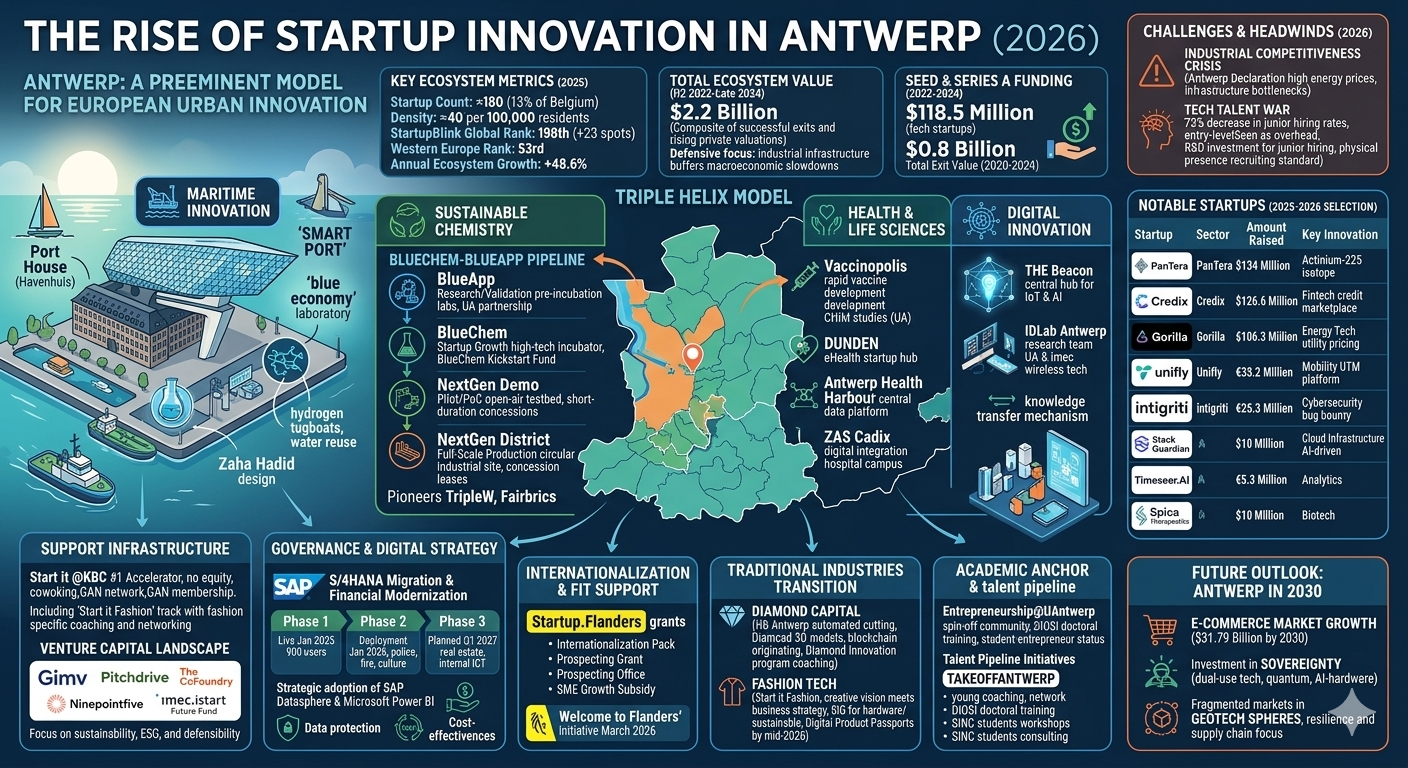
The city currently hosts approximately 180 startups, a figure that accounts for 13% of the total innovative enterprise volume in Belgium. This concentration translates to a density of approximately 40 startups per 100,000 residents, reflecting a vibrant entrepreneurial culture that is deeply embedded in the urban fabric. Globally, Antwerp’s ecosystem has demonstrated remarkable upward mobility, climbing 23 spots in the StartupBlink Ecosystem Index to reach 198th worldwide by 2025. Within the regional context of Western Europe, it occupies the 53rd position, illustrating its increasing relevance as a specialized hub for deep-tech and industrial applications.
Quantitative Benchmarking and Ecosystem Value
The economic vitality of the Antwerp startup landscape is underscored by its total ecosystem value, which reached $2.2 billion between the second half of 2022 and late 2024. This valuation is a composite of successful exits and the rising valuations of companies remaining within the private market. Despite a global contraction in venture capital liquidity during this period, Antwerp's early-stage funding remained resilient. Tech startups in the ecosystem secured $118.5 million in total seed and Series A funding during this timeframe, signaling strong investor confidence in the region’s specialized focus areas.
Comparative Ecosystem Metrics (2025)
Metric | Antwerp Value | Global Rank | National Rank (BE) | Source |
Annual Ecosystem Growth | +48.6% | — | — | |
Startup Count | 180 | — | 3rd | |
Total Ecosystem Value | $2.2 Billion | — | 3rd | |
Startup Blink Score | — | 198th | 3rd | |
Seed & Series A Funding | $118.5 Million | — | — | |
Total Exit Value (2020-2024) | $0.8 Billion | — | — |
The stability of funding deals between 2023 and 2024, in contrast to the volatility seen in other European hubs like Berlin or Amsterdam, highlights the defensive qualities of the Antwerp ecosystem. While consumer-focused tech markets experienced significant valuation adjustments, Antwerp’s focus on essential industrial infrastructure—such as smart port technologies, sustainable chemistry, and nuclear medicine—provided a buffer against broader macroeconomic slowdowns. Nationally, Antwerp’s ecosystem is characterized as being 81% stronger than its neighbor Leuven, although it remains roughly 125% smaller in aggregate scale than Ghent, which has historically led in software and SaaS ventures.
The Triple Helix Model: Structural Pillars of Innovation
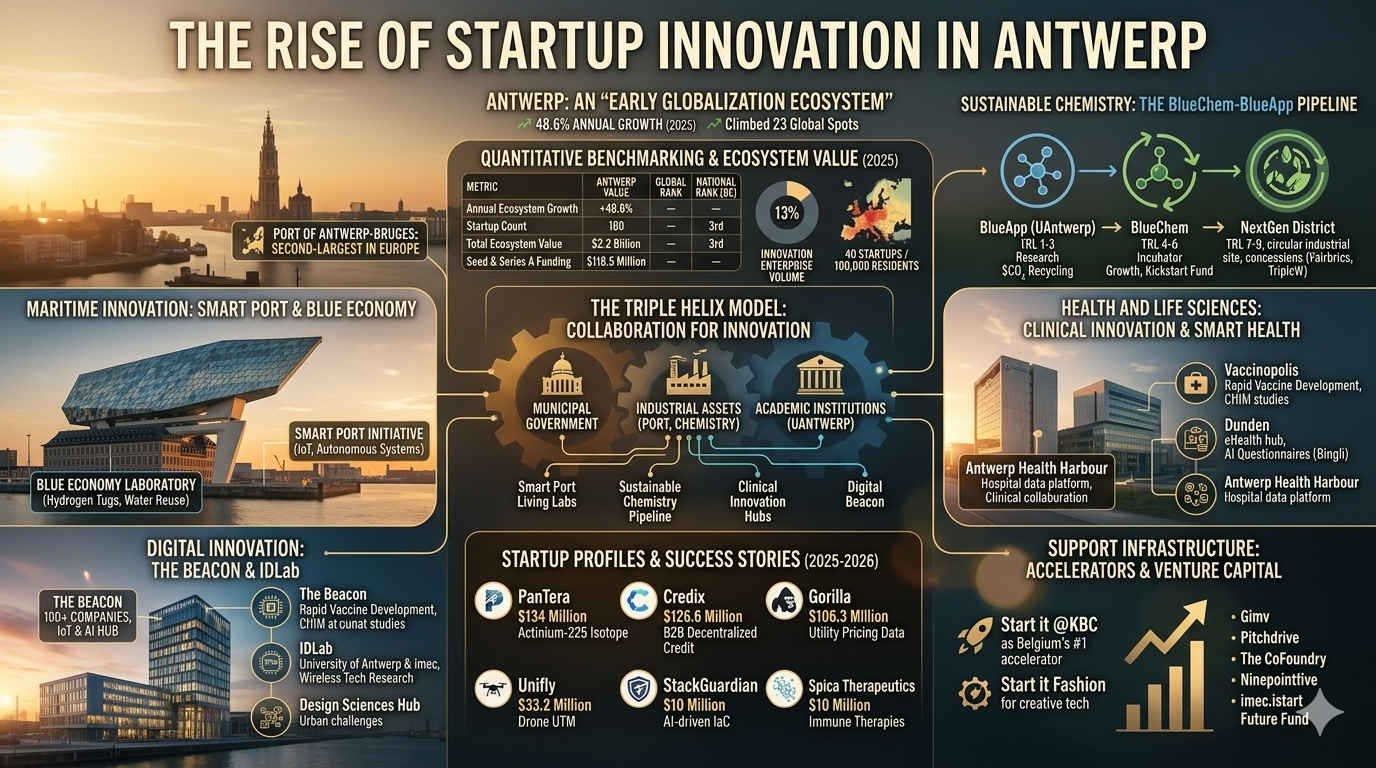
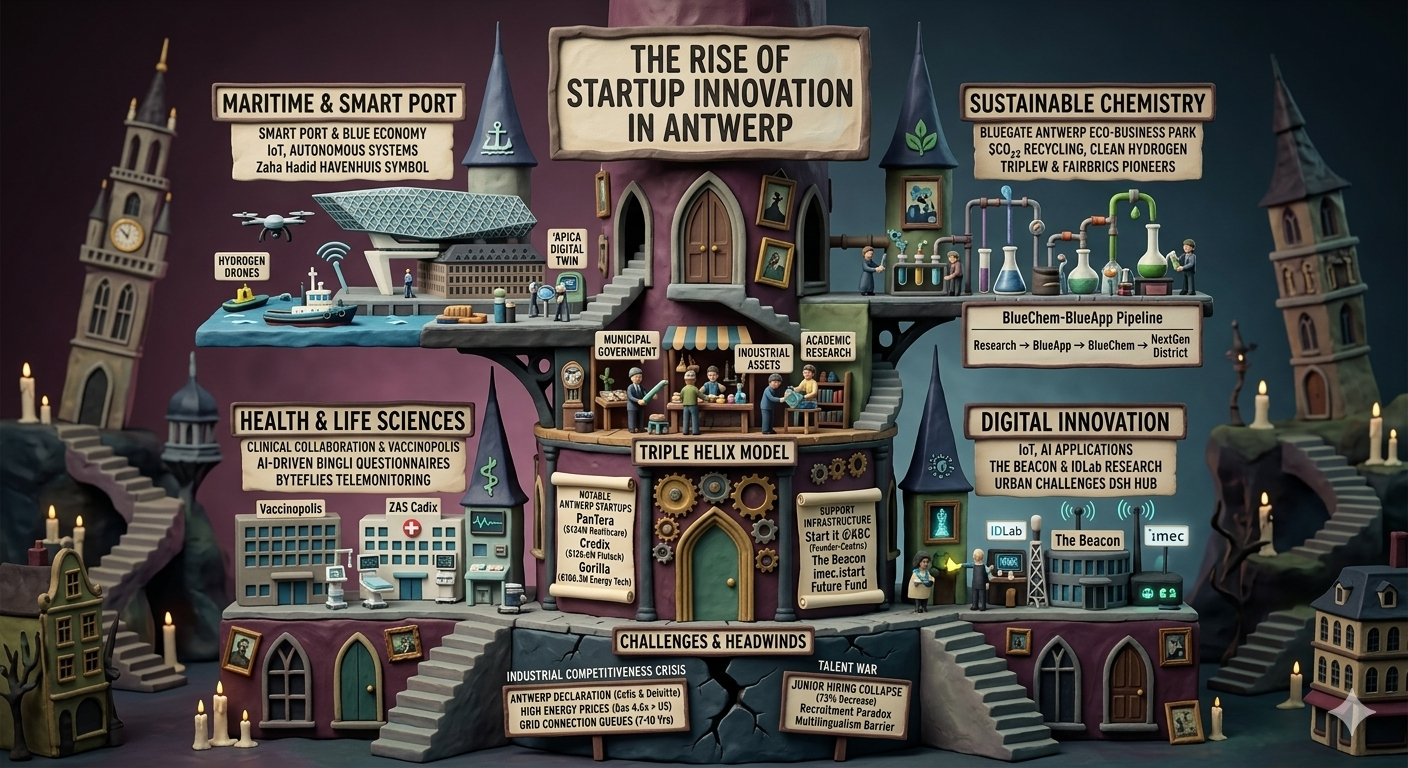
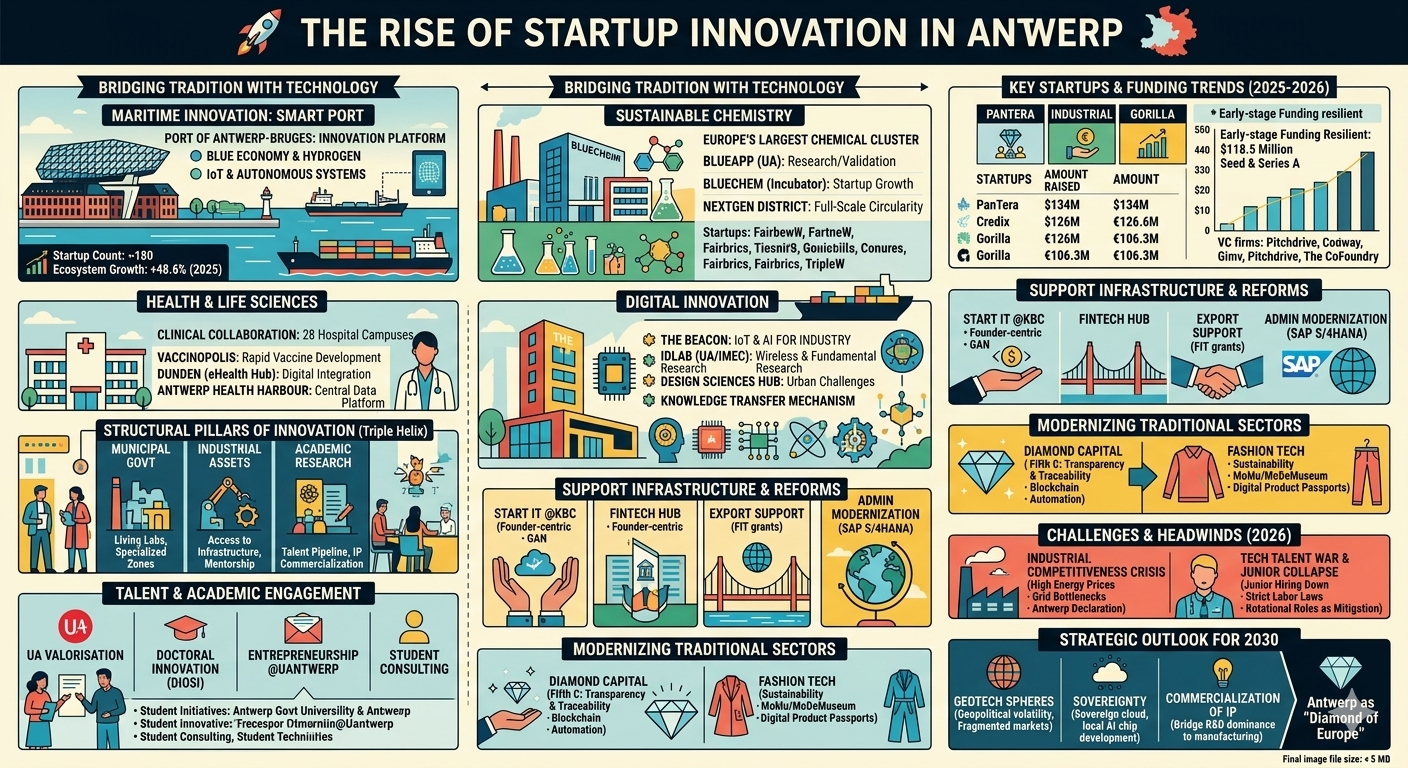
The rise of startup innovation in Antwerp is underpinned by a collaborative framework involving the municipal government, major industrial assets, and academic research institutions. This "Triple Helix" model has enabled the creation of specialized "living labs" where new technologies can be tested in real-world industrial settings. The city’s innovation strategy is anchored by four primary clusters: maritime and smart port development, sustainable chemistry, health and life sciences, and digital innovation.
Maritime Innovation: The Smart Port and Blue Economy
The Port of Antwerp-Bruges, the second-largest maritime hub in Europe, is the engine of the region’s innovation. In 2026, the port has transitioned from being a passive infrastructure provider to an active innovation platform. This shift is driven by the dual imperatives of digitalization and sustainability. The port’s "Smart Port" initiative prioritizes the use of IoT, autonomous systems, and advanced data analytics to enhance safety and operational efficiency.
One of the most significant architectural and symbolic markers of this transition is the Port House (Havenhuis). Designed by Zaha Hadid Architects, it crowns a former fire station with a diamond-shaped superstructure, symbolizing the bridge between the city’s historical diamond trade and its future as a global maritime innovator. This facility serves as a focal point for coordinating high-tech logistics services, including the management of the world’s most extensive value-added industrial services within a port environment.
The "Blue Economy" has emerged as a critical sub-sector within the maritime cluster. Antwerp is positioning itself as a laboratory for water-linked innovation, ranging from hydrogen-powered tugboats to advanced water reuse systems. The city connects startups with established maritime giants, facilitating a cross-pollination of ideas that accelerates the journey from lab bench to industrial scale.
Sustainable Chemistry: The BlueChem-BlueApp Pipeline
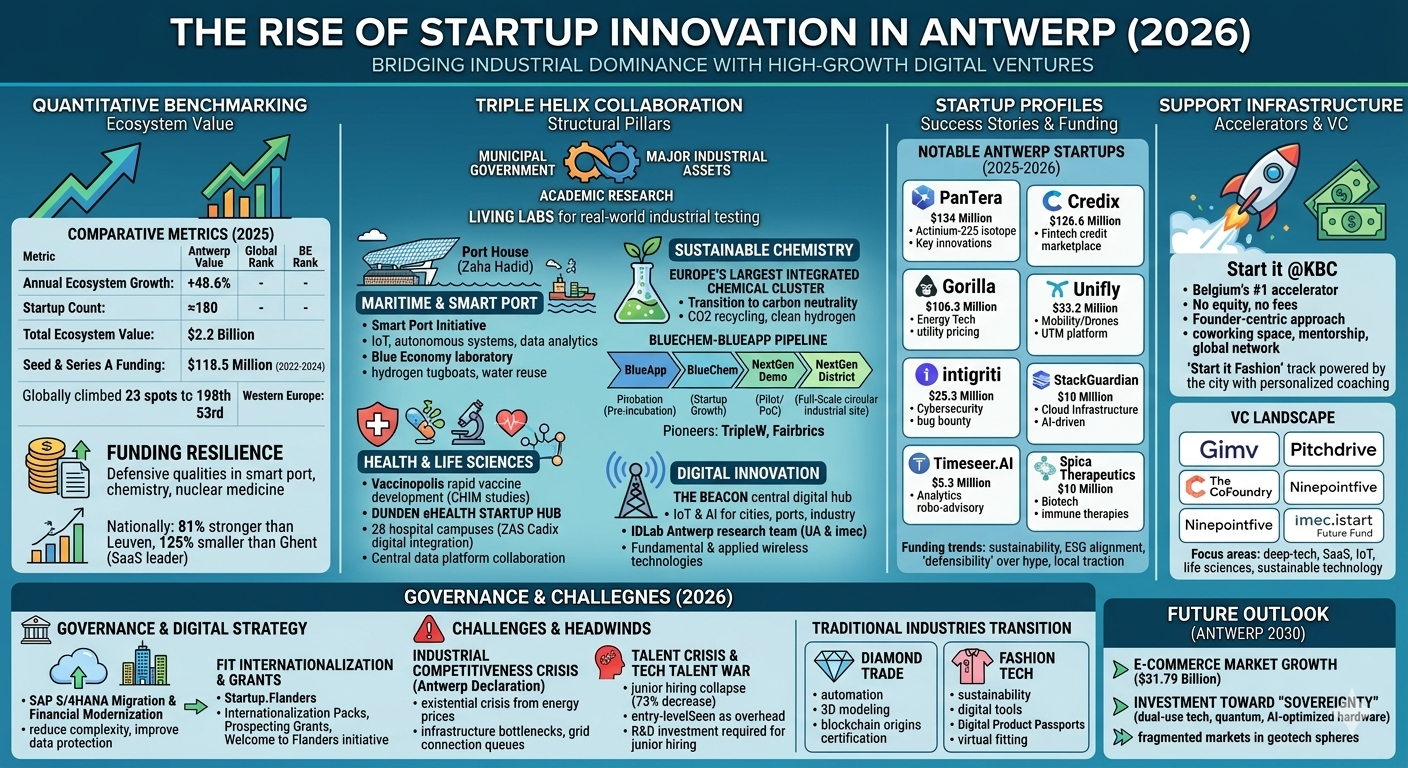
Antwerp hosts the largest integrated chemical cluster in Europe and the second-largest globally. With over 500 chemical companies and 300 different chemicals produced locally, the cluster attracts massive global investment. However, the sector faces an existential challenge: the transition to carbon neutrality. To address this, the city has established a unique innovation pipeline designed to de-risk sustainable chemistry breakthroughs.
This pipeline begins with BlueApp, an initiative of the University of Antwerp launched in 2023. Located at the Blue Gate Antwerp eco-business park, BlueApp provides state-of-the-art laboratories and a pilot hall where researchers and startups work on $CO_2$ recycling, clean hydrogen, and new materials. Once a technology is validated, startups can move to BlueChem, the first incubator in Belgium dedicated specifically to sustainable chemistry.
Facility | Stage of TRL | Primary Function | Support Mechanism | Source |
BlueApp | Research/Validation | Pre-incubation labs | University partnership | |
BlueChem | Startup Growth | High-tech incubator | BlueChem Kickstart Fund | |
NextGen Demo | Pilot/Proof-of-Concept | Open-air testbed | Short-duration concessions | |
NextGen District | Full-Scale Production | Circular industrial site | Concession leases |
The final stage of this journey is the NextGen District, an industrial site in the port area dedicated to circularity. This district hosts pioneers such as TripleW, which converts food waste into lactic acid for biodegradable plastics, and Fairbrics, which converts $CO_2$ emissions into polyester for the textile industry. By 2026, Fairbrics aims to produce one ton of polyester per day, with plans for a full-scale factory capable of converting 50,000 tons of $CO_2$ annually.
Health and Life Sciences: Clinical Innovation and Smart Health
Antwerp’s Health & Life Sciences cluster is characterized by its structural ability to enable clinical collaboration. The ecosystem includes 28 hospital campuses, most notably the ZAS Cadix hospital, which emphasizes digital integration in patient care. The cluster’s strength is epitomized by Vaccinopolis, a 6,000 m² facility at the University of Antwerp dedicated to rapid vaccine development through Controlled Human Infection Model (CHIM) studies—one of the few such centers in Europe.
Digital health innovation is concentrated at Dunden, the city’s flagship eHealth startup hub. Dunden provides a specialized environment for startups like Bingli (AI-driven medical questionnaires) and Byteflies (telemonitoring for oncology and COVID-19 recovery) to integrate their products into hospital workflows. Furthermore, the Antwerp Health Harbour collaboration, involving the university and major regional hospitals, has established a central data platform that facilitates the development of new diagnostic and treatment tools.
Digital Innovation: The Beacon and IDLab
The Beacon serves as the central hub for digital advancement in Antwerp, focusing on IoT and AI applications for cities, ports, and industry. Spanning 9,300 m², it houses over 100 companies and research institutions, including the IDLab Antwerp research team, a joint venture between the University of Antwerp and imec. This collaboration performs fundamental and applied research on wireless technologies, enabling industrial partners to navigate complex digital transformations.
The Beacon also hosts the Design Sciences Hub, which focuses on urban challenges through the lens of architectural and planning innovation. By bringing together multinational IT corporations, local startups, and academic researchers under one roof, The Beacon facilitates a "knowledge transfer" mechanism that is essential for maintaining the city's competitive edge in the global tech landscape.
Startup Profiles: Success Stories and Funding Trends
The maturity of Antwerp’s ecosystem is reflected in its ability to produce high-value ventures that address critical global needs. In 2026, the leading startups in the region span diverse sectors including nuclear medicine, fintech, and energy data.
Notable Antwerp Startups (2025-2026 Selection)
Startup | Sector | Amount Raised | Key Innovation | Source |
PanTera | Biotech/Healthcare | $134 Million | Actinium-225 isotope production | |
Credix | Fintech | $126.6 Million | B2B decentralized credit marketplace | |
Gorilla | Energy Tech | €106.3 Million | Utility pricing and forecasting platform | |
Unifly | Mobility/Drones | €33.2 Million | UTM platform for autonomous drones | |
intigriti | Cybersecurity | €25.3 Million | Ethical hacking and bug bounty platform | |
StackGuardian | Cloud Infrastructure | $10 Million | AI-driven Infrastructure-as-Code management | |
Analytics | €5.3 Million | Robo-advisory for time-series analytics | ||
Spica Therapeutics | Biotech | €10 Million | Macrophage-targeted immune therapies |
PanTera stands out as a significant industrial success, securing $134 million to manufacture actinium-225, a rare medical isotope used in targeted cancer therapies. By addressing the global shortage of this material, PanTera enables researchers to develop next-generation personalized treatments. In the fintech domain, Credix has raised over $126 million to bridge the gap between global investors and emerging market credit, demonstrating Antwerp’s ability to foster globally-minded financial platforms. Gorilla, with its €106.3 million raise, illustrates the growing importance of data-driven solutions in the energy transition, allowing utility companies to manage pricing and forecasting with unprecedented precision.

Support Infrastructure: Accelerators and Venture Capital
Antwerp’s startups benefit from a mature support infrastructure that provides not only capital but also specialized mentorship and international networking. This includes 12 incubators and accelerators, as well as a growing density of venture capital firms.
Start it @KBC: The "Founder-Centric" Approach
Start it @KBC is recognized as Belgium’s #1 startup accelerator, characterized by its "no-strings-attached" policy. The program does not take equity or charge fees, focusing instead on long-term founder growth. In 2026, the accelerator continues to expand its reach, supporting over 1,900 founders through a one-year intensive program that includes mentorship, coworking space, and access to a global network through its GAN membership.
Start it Fashion, a specialized track within the accelerator powered by the City of Antwerp, offers additional support for creative entrepreneurs. This program provides 43 hours of personalized coaching—16 more than the standard track—along with networking evenings specifically for the fashion industry. By aligning creative vision with business strategy, the initiative aims to foster a "new Antwerp Eight" of fashion designers who combine heritage with modern tech like sustainable materials and SaaS platforms.
The Venture Capital Landscape
Antwerp is home to several influential VC firms that fuel the ecosystem’s growth from pre-seed to maturity. Gimv, a leading European private equity and venture capital firm, remains a dominant force, particularly in the life sciences and sustainable technology sectors.
Pitchdrive: An operator-led fund that uses data-driven selection to support early-stage European startups.
The CoFoundry: Focuses on helping entrepreneurs transform ideas into sustainable, long-term companies.
Ninepointfive: Co-invests with corporate partners to take tech-based startups from pre-seed to maturity, with a focus on digital platforms.
imec.istart Future Fund: Provides ticket sizes between €1.5 million and €3 million for deep-tech, SaaS, and IoT solutions emerging from the imec.istart accelerator.
In 2026, the investment trend in Antwerp emphasizes sustainability and ESG alignment. Investors increasingly prioritize "defensibility" over pure hype, favoring startups that show strong local traction and the ability to scale into the broader European market.
Governance and Digital Strategy: Building a Future-Proof City
The City of Antwerp has adopted a forward-looking digital strategy to modernize its administrative foundations and better support public services. This transformation is not merely technical but aimed at creating a secure, cost-effective, and data-informed city governance.
SAP S/4HANA Migration and Financial Modernization
In January 2025, the city’s SAP S/4HANA program went live for phase one entities, involving 900 users across city mobility, municipality, and social services. This migration from aging ERP systems to a modern, AI-enabled cloud platform is designed to reduce complexity and improve efficiency. By 2026, the second phase will bring the police, fire department, and cultural institutions onto the platform. This modernization effort serves as a critical backbone for the startup ecosystem, as it streamlines the city's financial back office and improves data protection measures, thereby boosting trust in its digital operations.
Implementation Phase | Participating Entities | Timeline | Status |
Phase 1 | City mobility, social services, education | January 2025 | Live |
Phase 2 | Police, fire department, culture | January 2026 | Deployment |
Phase 3 | Real estate, internal ICT provider | Q1 2027 | Planned |
Data Layer | SAP Datasphere & Microsoft Power BI | Ongoing | Strategic adoption |
Source:
Internationalization and FIT Support
Flanders Investment & Trade (FIT) plays a central role in the internationalization of Antwerp’s economy. Through the Startup.Flanders brand, FIT provides a comprehensive set of grants and support services aimed at helping ambitious entrepreneurs scale globally.
Specific FIT grants available in 2026 include:
Internationalization Starter Pack: €9,000 for a company’s first export activities.
Prospecting Grant: Up to 75% coverage of travel and accommodation costs for trade fairs outside the EU.
Prospecting Office Grant: Up to €75,000 to help set up offices in markets like the US or China.
SME Growth Subsidy: Up to €50,000 per track for innovation, digitalization, or circular entrepreneurship.
FIT’s "Welcome to Flanders" initiative, a 4-day high-level experience scheduled for March 2026, aims to connect international leaders and investors with the region’s strongest technology companies through guided tours of climate, health, and digital tech hubs.
Challenges and Headwinds: The 2026 Context
Despite its upward trajectory, the Antwerp startup ecosystem faces significant structural challenges in 2026. These range from macroeconomic pressures to a deepening crisis in the tech talent pipeline.
The Industrial Competitiveness Crisis: The Antwerp Declaration
In February 2026, the Antwerp Declaration Monitoring Report, commissioned by Cefic and prepared by Deloitte, revealed a stark decline in the EU’s industrial competitiveness. High energy prices remain a critical pain point; in 2024, gas prices for industrial users in the EU were 4.6 times higher than in the US, and electricity prices in Belgium were 12% to 23% higher than in neighboring countries.
This "existential crisis" led to the Antwerp Declaration, a call for urgent emergency measures to restore Europe's manufacturing base. For Antwerp’s industrial startups, particularly those in sustainable chemistry, these high energy costs and infrastructure bottlenecks—such as grid connection queues of 7 to 10 years—pose a direct threat to their ability to scale. The declaration advocates for lowering energy and carbon costs and restoring fair trading conditions to ensure that the industries enabling the clean transition remain in Europe.
The Tech Talent War and the Junior Hiring Collapse
The European startup ecosystem is grappling with a "talent crisis" that intensified in 2026. While founders continue to compete for senior engineers and AI specialists, there has been a 73% decrease in entry-level hiring rates across European tech over the past year. This "junior hiring collapse" creates a long-term risk to the leadership pipeline.
Talent Challenge | Mechanism | Strategic Mitigation | Source |
Junior Hiring Collapse | Entry-level roles seen as overhead | Rotational roles & hire-to-train | |
Experience Paradox | "Entry-level" jobs requiring 3-5 years | Rethinking job requirements | |
Multilingualism | Barrier for regional recruitment | Multi-city recruitment synergy | |
Cost of Recruitment | High job posting fees | Partnering with global agencies |
In Belgium, the recruitment landscape is particularly complex due to strict labor laws and a multi-lingual market. Companies are increasingly turning to physical presence as a recruiting standard, using tech meetups and job fairs to capture "passive" candidates who are not actively searching on job boards. Smart founders are treating junior hiring as an R&D investment, pairing new talent with AI tools to build company-specific expertise internally.

Sector Deep-Dive: Traditional Industries in Transition
A hallmark of Antwerp’s innovation strategy is the modernization of its traditional high-prestige sectors: the diamond trade and fashion.
World Diamond Capital: The Fifth C
Antwerp has been the heart of the global diamond trade since the 15th century, handling 80% of the world’s rough diamonds. In 2026, the industry has embraced cutting-edge technology to maintain its leadership. This is centered on the "Fifth C"—Compliance and Transparency—alongside the traditional Carat, Color, Cut, and Clarity.
Automation: Companies like HB Antwerp have developed automated cutting machines to improve results for large stones.
3D Modeling: Diamcad uses high-precision scanning, developed with the University of Antwerp, to create accurate 3D models that identify imperfections deep within rough stones.
Blockchain: In 2024, Antwerp led the development of a blockchain-based certification system to verify diamond origins and ensure a closed-circuit supply chain from mine to manufacture.
Innovative Coaching: The Antwerp Diamond Innovation Opportunities program provides free coaching in AI, data analysis, and robotization for diamond organizations.
Fashion Tech: Creative Vision Meets Business Strategy
Antwerp’s status as a fashion capital is anchored by the legacy of the "Antwerp Six" designers and the presence of the world-renowned ModeMuseum (MoMu). In 2026, the focus has shifted toward "New Fashion," which integrates sustainability and digital tools.
The Start it Fashion program, powered by the City of Antwerp, is designed to launch scale-ups that navigate the intersection of creativity and digital transformation. This includes Special Interest Groups (SIG) focused on hardware development and sustainable textiles. Startups in this cohort are encouraged to utilize AI-driven styling platforms and virtual fitting rooms to connect with consumers more effectively. The integration of Digital Product Passports (DPP) is another major trend, with every garment sold in the EU by mid-2026 requiring a QR code that reveals its entire history—from farm to consumer—to ensure environmental and ethical accountability.
The Academic Anchor: Entrepreneurship at UAntwerp
The University of Antwerp (UAntwerp) serves as the primary engine for talent and technology transfer in the ecosystem. Through its Valorisation Office, the university has successfully translated fundamental research into high-impact ventures, with the active spin-off community growing steadily.
The DIOSI (Doctoral Innovation and Open Science Training) concept provides doctoral candidates with training in open innovation and entrepreneurship, aiming to tackle skills shortages and foster a culture shift toward commercialization of academic results. Students are also supported through the Entrepreneurship@UAntwerp program, which allows them to combine study with business building via the "student-entrepreneur status".
Talent Pipeline Initiatives (2026)
Program | Target Group | Core Offering | Partners | Source |
TAKEOFFANTWERP | Young entrepreneurs | Coaching, network, events | City of Antwerp, Voka | |
DIOSI | Doctoral candidates | Transversal skills training | UA Faculties | |
SINC | Students | Workshops & pitch contests | Student-led organization | |
Student Consulting | Master’s students | Junior consulting for SMEs | Antwerp Management School |
Collaborative projects like the Innovation Sprint at Antwerp Management School connect organizations with international student teams who develop business-ready concepts through design thinking. These initiatives ensure that the next generation of Antwerp’s workforce is equipped with the "global mindset" and "societal awareness" required to succeed in a rapidly evolving economy.
Future Outlook: Antwerp in 2030
As Antwerp looks toward 2030, several global and regional trends will define the trajectory of its startup ecosystem. The Belgian e-commerce market is projected to reach $31.79 billion by 2030, driven by digital adoption and payment innovations like digital wallets and "Buy Now Pay Later" (BNPL) platforms. This provides a massive opportunity for the city’s fintech and retail-tech startups to scale.
However, the broader European tech market forecast for 2025-2030 suggests a shift toward "sovereignty" as an investment criterion. Investment will increasingly focus on areas where countries cannot afford to depend on external partners, such as dual-use tech, quantum computing, and AI-optimized hardware. For Antwerp, this means its focus on "sovereign cloud" services and local AI chip development through imec and The Beacon will be critical for maintaining its relevance.
The world in 2030 is expected to be shaped by "geotech spheres," where geopolitical volatility leads to fragmented markets. Strategic decisions for startups will involve heightened complexity and interdependence of risks. Antwerp’s survival will depend on its ability to remain an open, collaborative hub while simultaneously investing in supply chain resilience and the commercialization of its unique industrial IP.
Strategic Synthesis and Conclusion
The rise of startup innovation in Antwerp represents a sophisticated evolutionary path where the city has successfully leveraged its inherent industrial advantages to foster a high-growth tech economy. By integrating the Port of Antwerp-Bruges, the European chemical cluster, and a world-class academic infrastructure into a unified "Triple Helix," Antwerp has created a unique environment for deep-tech and industrial experimentation.
The maturation of the ecosystem is evident in the record-breaking growth of startups like PanTera and Gorilla, and the structural support provided by organizations like Start it @KBC and The Beacon. However, the path forward is not without significant obstacles. The 2026 industrial competitiveness crisis, highlighted by the Antwerp Declaration, underscores the need for pragmatic solutions to energy costs and regulatory burdens. Furthermore, the "junior hiring collapse" poses a threat to the long-term human capital required to sustain this momentum.
Ultimately, Antwerp’s success as an innovation hub is rooted in its historical identity as a "city of doers"—a place where experimentation is encouraged and heritage meets the future. By continuing to invest in digital infrastructure, fostering the next generation of entrepreneurial talent, and leading the European dialogue on industrial competitiveness, Antwerp is well-positioned to remain the "Diamond of Europe"—a resilient and dynamic center of global trade and innovation for the next decade and beyond.
The Real Startup Playbook: Ideas, Growth, Funding, and Founder Psychology
Building a startup is exciting, chaotic, and often misunderstood. If you’ve ever wondered how founders actually validate ideas, find co-founders, raise funding, and survive the emotional rollercoaster, these articles explore the realities behind the startup world.
Start with How to Validate Your Startup Idea in 48 Hours for $0 to understand how founders test ideas quickly before wasting months building the wrong product. Once you have an idea, the next challenge is building it—From Idea to MVP: A Step-by-Step Guide for Solo Founder walks through the journey from concept to a real product.
Many founders struggle with partnerships and team decisions. Should your co-founder live in the same city? Explore Remote vs. Local: Does Your Co-Founder Need to Live in the Same City? and learn the risks hidden in partnerships in 5 Red Flags to Look for When Choosing a Startup Partner. If you’re searching for technical help, How to Find a Technical Co-Founder (Without a Six-Figure Salary) explains how founders actually do it.
The startup journey isn’t just about building products—it’s also about mindset and decision-making. Articles like Decision Fatigue: The Silent Startup Killer, Fear vs Logic: How Founders Actually Make Decisions, and How Overthinking Destroys Early Momentum reveal the psychological battles founders face behind the scenes.
Growth is another misunderstood part of startups. Learn why strategy matters more than hype in Ideas Don’t Scale. Systems Do. and why discipline matters in Why Your Startup Doesn’t Need Growth — It Needs Focus. Discover the importance of early traction in How the First 100 Users Decide Your Startup’s Fate and understand team building through The First Hire That Actually Matters.
Funding is often romanticized, but reality is more complex. Why First-Time Founders Should Avoid Big Funding challenges common assumptions about venture capital, while Revenue Solves More Problems Than Funding explains why sustainable businesses matter more than investor money.
The startup ecosystem also varies by geography. If you're curious about India’s startup scene, explore The New Playbook for Raising in Bangalore, Why Raising Pre-Seed in Bangalore Is Harder Than Ever, and Why B2B SaaS from Bangalore Scales Faster.
But startups are not just about strategy and growth—they’re also about people and emotions. Articles like The Hidden Burnout of Bangalore Founders, Comparison Culture in India’s Startup, and The Loneliness of First-Time Founders in Bangalore reveal the personal struggles founders rarely talk about publicly.
And finally, if you want a deeper perspective on the startup journey itself, explore Lessons Learned Too Late by First-Time Founders and The Myth of the “Overnight Success” Startup—because the truth behind startup success is far more complex than it appears.
Want to calculate the equity for your cofounder?
Nail your cap table before you sign. Whether you're splitting equity with a co-founder or planning your next funding round, our Equity Calculator gives you precision in seconds
Equity calculator →