The Rise of Cybersecurity Startups in Belgium
March 14, 2026 by Harshit Gupta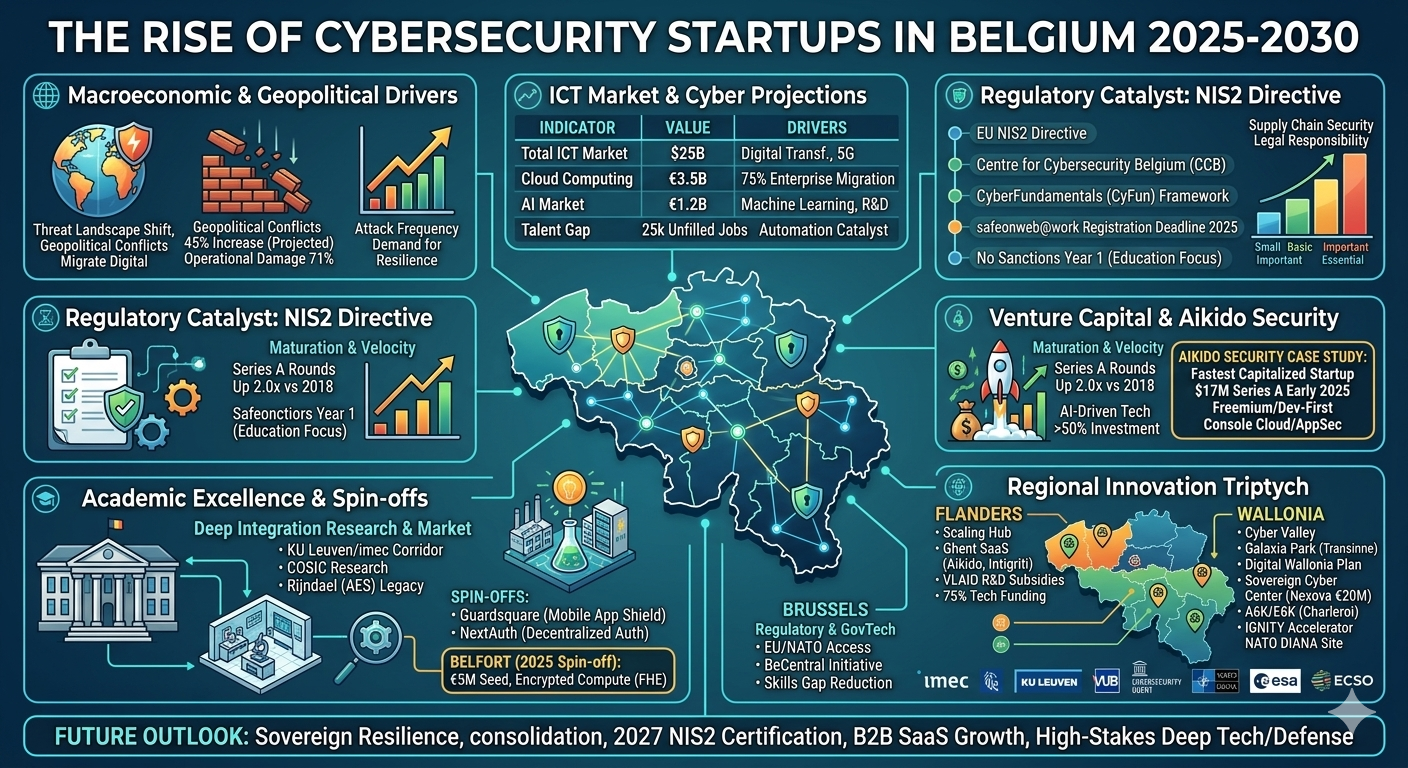
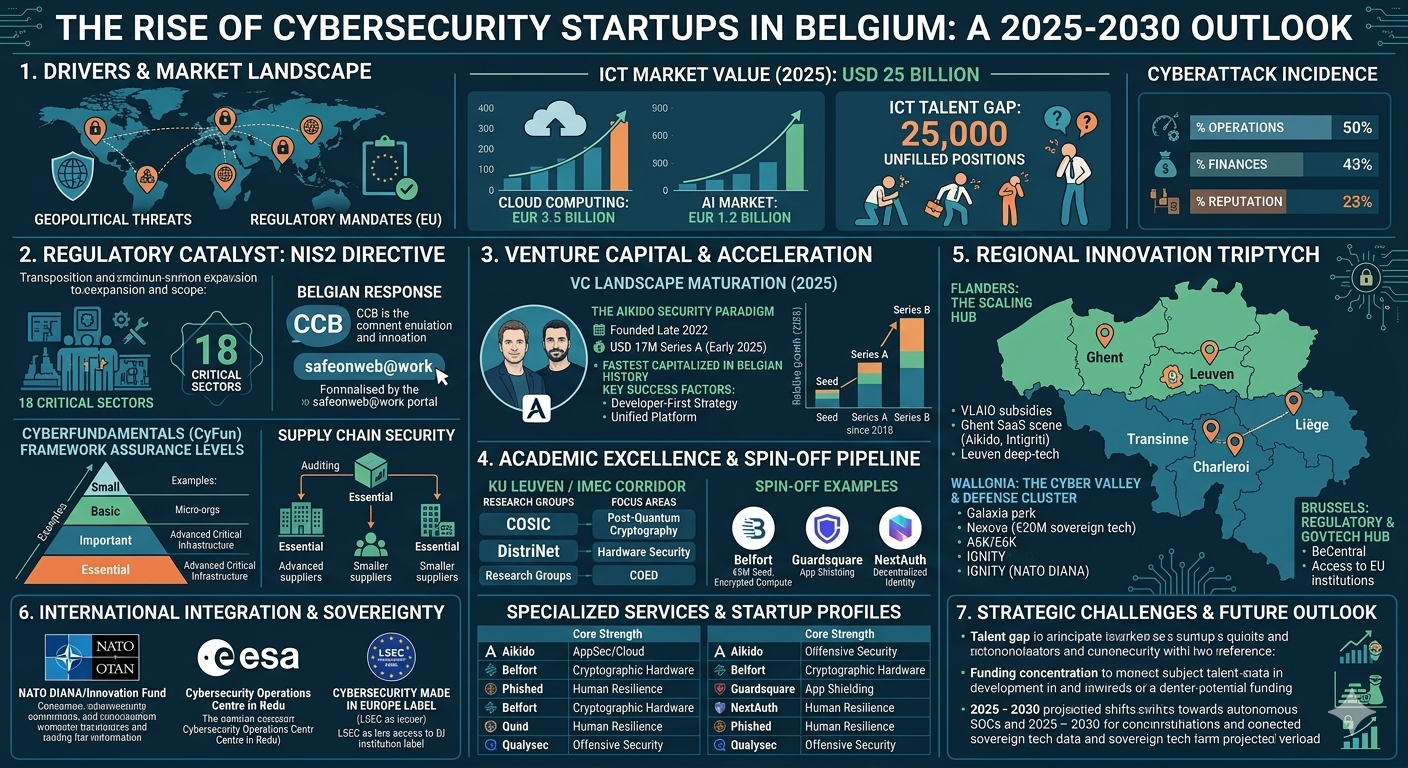
The digital landscape within the Kingdom of Belgium is currently experiencing an unprecedented period of structural transformation, evolving from a traditional administrative center of European governance into a highly specialized hub for cybersecurity innovation. This shift is not merely incidental but is the result of a complex interplay between deteriorating global security conditions, aggressive regulatory mandates from the European Union, and a maturing venture capital environment that has recently demonstrated the capacity to produce some of the fastest-capitalized technology firms in the continent’s history. As of early 2025, the Belgian cybersecurity market is no longer a peripheral sector; it has become a cornerstone of a wider ICT economy valued at approximately USD 25 billion, characterized by a unique "triple-region" innovation hub model that leverages the distinct strengths of Flanders, Wallonia, and the Brussels-Capital Region.
The Macroeconomic and Geopolitical Impetus for Cyber Resilience
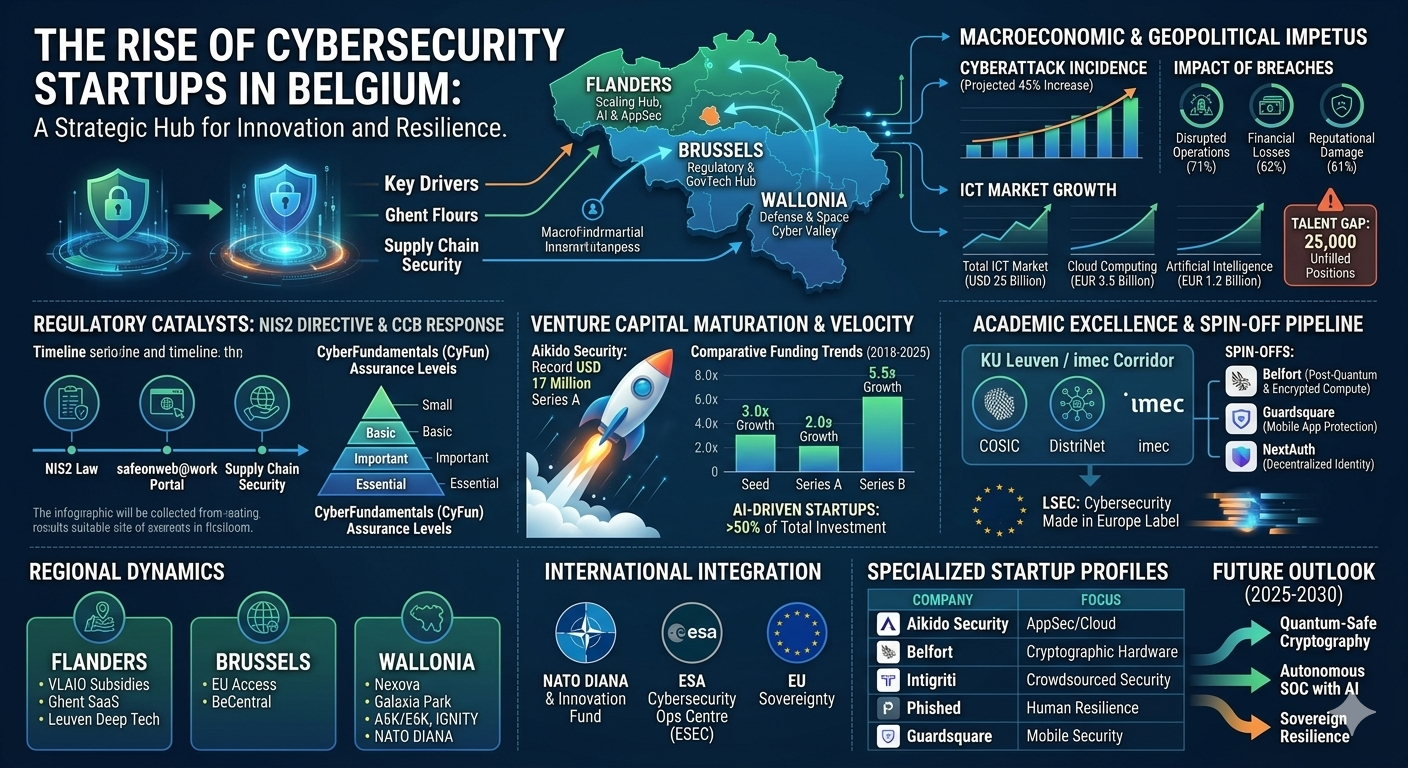
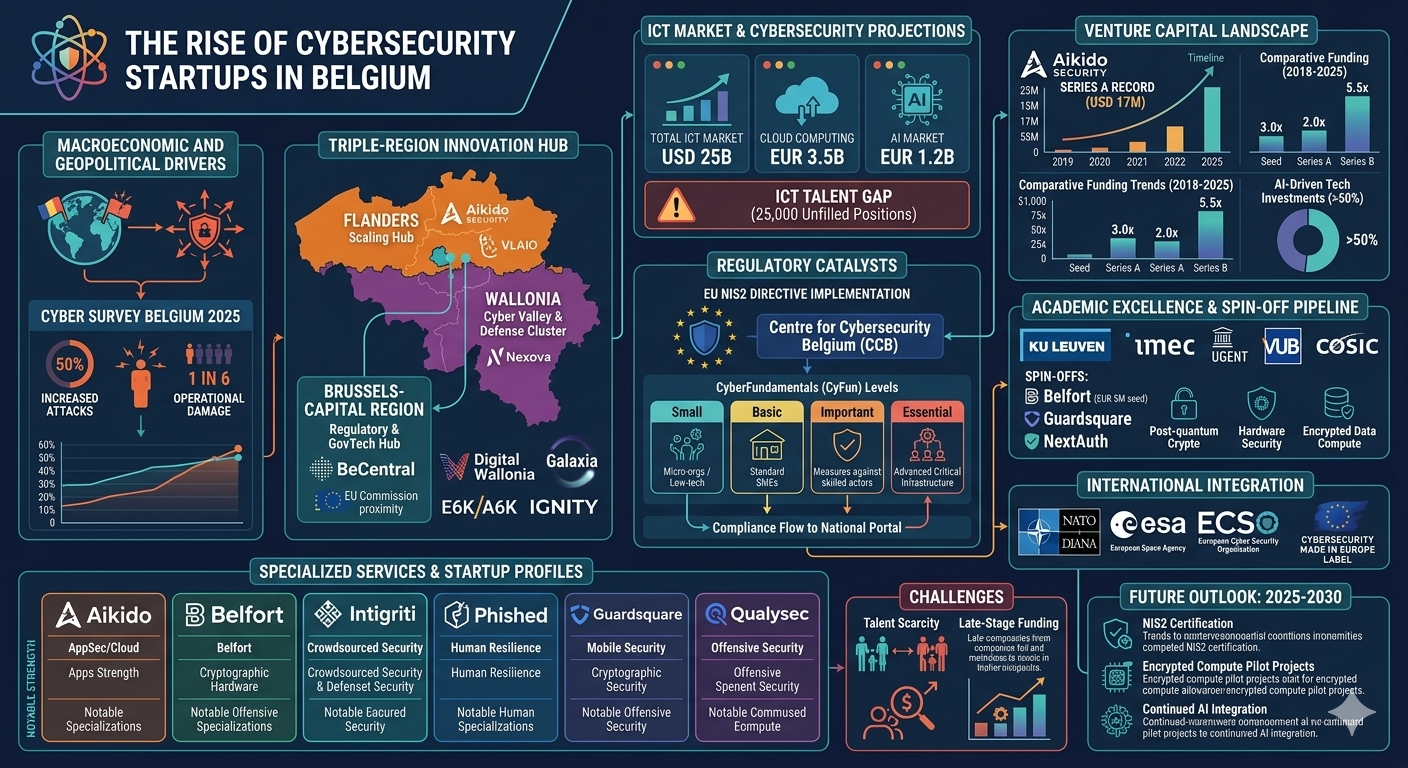
The foundational driver for the surge in Belgian cybersecurity startups is a radical shift in the threat landscape. Geopolitical conflicts that were once confined to physical borders have fundamentally migrated into the digital domain, directly impacting Belgian organizations across all industrial and administrative sectors. Recent findings from the Cyber Survey Belgium 2025 indicate that state-backed groups and organized crime syndicates now play a decisive role in the national threat environment. Approximately half of the surveyed organizations in Belgium reported a notable increase in cyberattacks over the past year, with one in six organizations suffering at least one disruptive attack that resulted in operational damage.
This high-frequency attack environment has created a robust "demand-pull" for innovative security solutions. The consequences of these breaches are increasingly severe, with disruptions of operations affecting 71% of victimized organizations, financial losses impacting 62%, and reputational damage affecting 61%. Consequently, digital trust has transitioned from a technical preference to a critical success factor for Belgian companies. This environment has provided a fertile ground for startups that can offer resilience—the ability to withstand, adapt to, and recover from sophisticated attacks—rather than just preventative tools.
The ICT Market and Cybersecurity Projections
The growth of the cybersecurity vertical is inextricably linked to the broader Belgian ICT market. Fueled by the rapid deployment of 5G infrastructure, the surge in remote work solutions, and the massive integration of artificial intelligence, the ICT sector has seen a consistent upward trajectory.
Market Indicator | Estimated Value/Status | Strategic Growth Drivers |
Total ICT Market Value | USD 25 Billion | Digital transformation, 5G, Private sector investment |
Cloud Computing Market | EUR 3.5 Billion | 75% enterprise migration to cloud services |
Artificial Intelligence Market | EUR 1.2 Billion | Machine learning, data analytics, R&D intensity |
ICT Talent Gap | 25,000 Unfilled Positions | Barriers to innovation, 75% company recruitment struggle |
Cyberattack Incidence | 45% Increase (Projected) | Geopolitical instability, supply chain vulnerability |
The talent shortage, while a significant challenge, has also acted as an unintended catalyst for startup innovation. Organizations facing a lack of qualified ICT professionals are increasingly turning to startups that provide automated, AI-driven security platforms. These "developer-first" and "autonomous SOC" solutions reduce the reliance on scarce human resources, allowing companies to maintain a high security posture without expanding their internal headcount.
Regulatory Catalysts: The NIS2 Directive and the Belgian Response
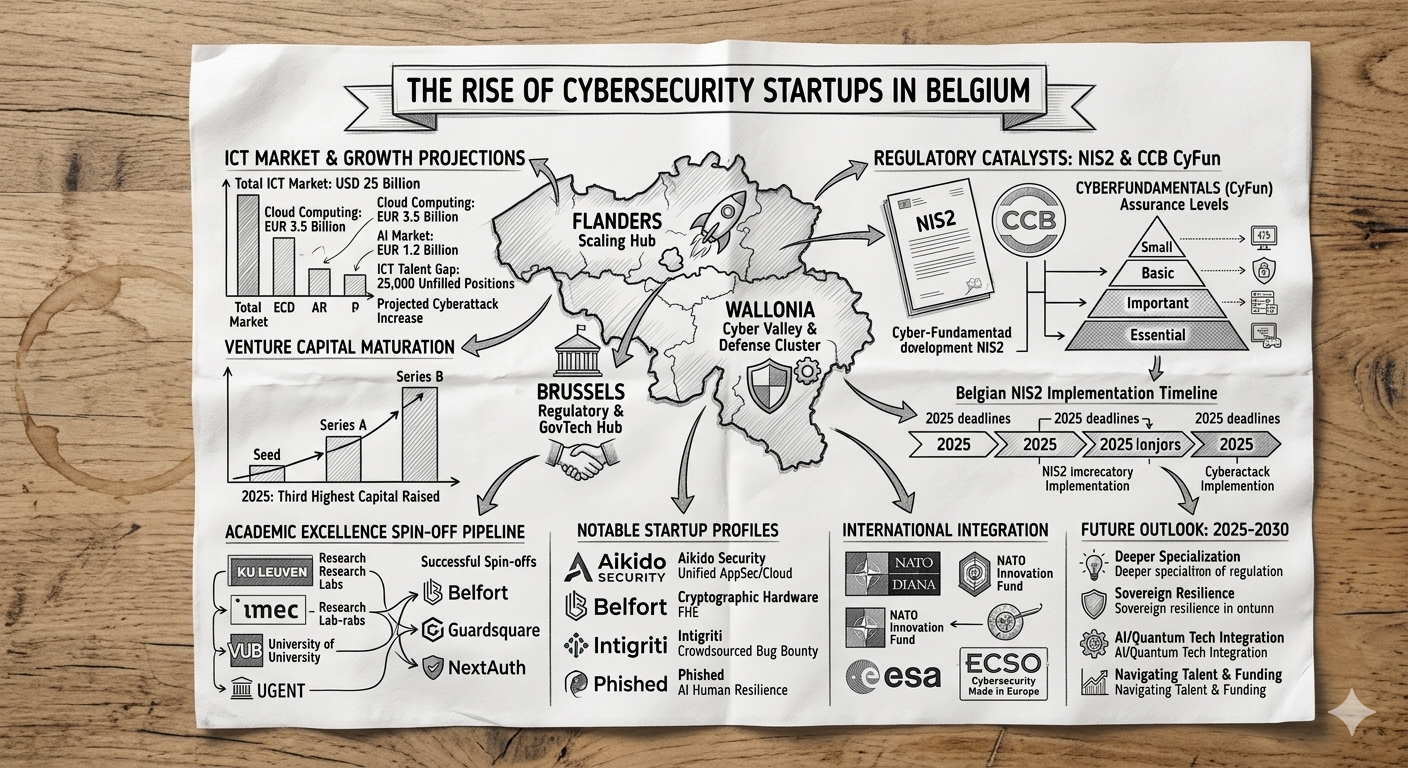
The single most influential regulatory factor driving the rise of cybersecurity startups in Belgium is the transposition of the European Union’s Network and Information Security (NIS2) Directive. This legislative framework represents a paradigm shift in how cybersecurity is governed, moving from a narrow focus on "Essential Service Providers" to a broad mandate covering 18 critical sectors, including public administration, waste management, and manufacturing. In Belgium, the impact of NIS2 is amplified by the proactive stance of the Centre for Cybersecurity Belgium (CCB), which has introduced the CyberFundamentals (CyFun) framework to provide a standardized roadmap for compliance.
Structural Mechanics of the Belgian NIS2 Implementation
The Belgian NIS2 law mandates that organizations must implement a comprehensive cybersecurity risk management framework. By March 18, 2025, entities within the scope of the directive were required to register on the national safeonweb@work portal. The regulatory pressure created by this deadline has catalyzed a massive surge in demand for local cybersecurity startups that can assist in risk analysis, incident reporting, and the implementation of technical security measures.
The CyberFundamentals framework provides a structured approach, categorized into four assurance levels, which allows startups to tailor their offerings to different tiers of organizational maturity.
CyberFundamentals Level | Target Organizations | Technical Requirements |
Small | Micro-orgs / Low-tech entities | Basic assessments and fundamental hygiene |
Basic | Standard SMEs and Enterprises | Standard security measures applicable to all |
Important | Targets of common cyber-attacks | Measures to minimize risks from skilled actors |
Essential | Advanced Critical Infrastructure | Capabilities to detect/respond to sophisticated threats |
One of the most profound implications of the NIS2 implementation is its focus on supply chain security. Under the new Belgian law, "essential" and "important" entities are legally responsible for the security standards of their suppliers. This has created a massive market for startups specializing in supply chain audits and third-party risk management (TPRM). Smaller Belgian startups, even those not directly in the scope of NIS2, find themselves compelled to adopt the "Basic" or "Important" CyFun labels to maintain their status as trusted partners to larger corporations.
Furthermore, the CCB’s approach has focused on cooperation rather than immediate punishment. The first year of NIS2 implementation in Belgium saw no sanctions issued, as the CCB prioritized education, early incident reporting, and the use of the safeonweb@work portal to provide startups and SMEs with vulnerability scanning tools and webinars. This supportive regulatory environment has reduced the "compliance barrier" for startups, allowing them to focus on product innovation while remaining aligned with national security goals.
The Venture Capital Landscape: Maturation and Velocity
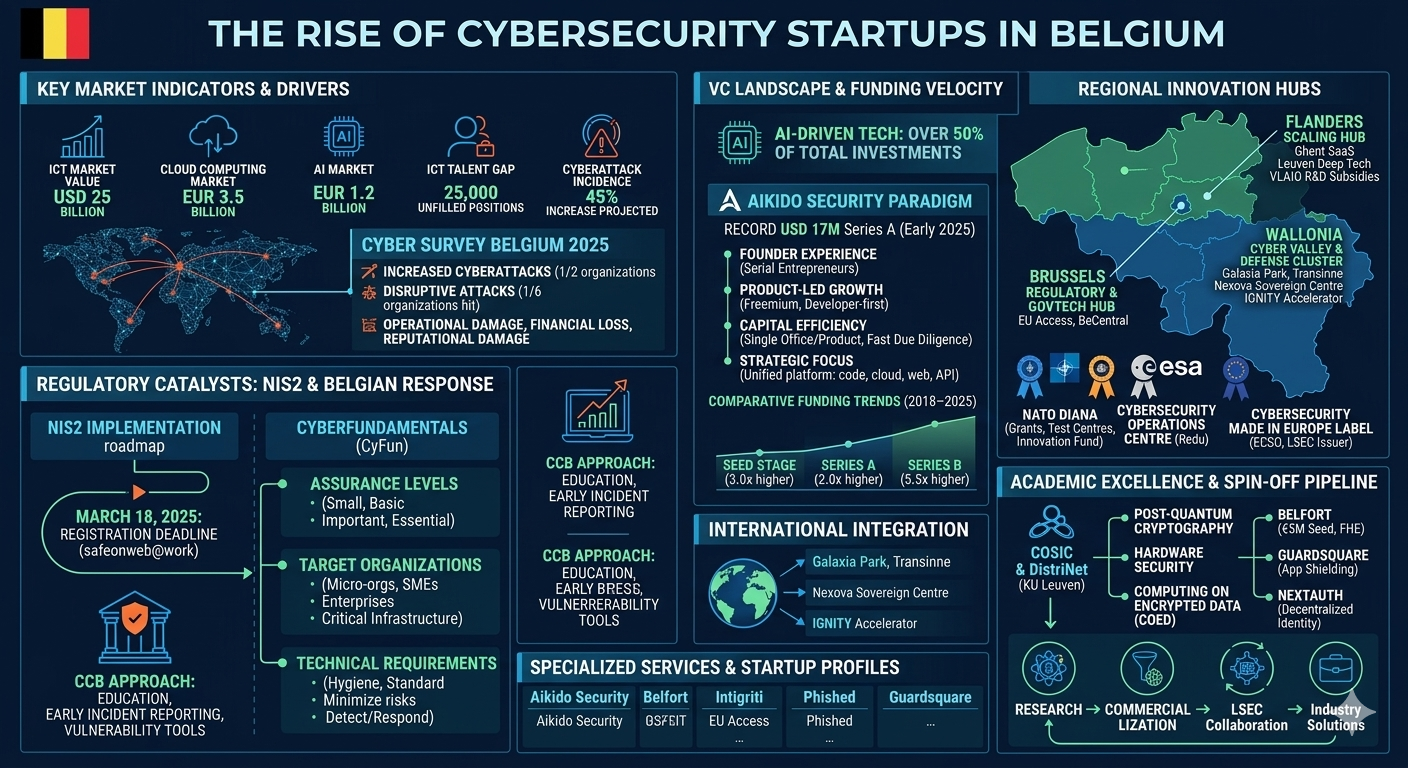
The Belgian tech ecosystem in 2025 is characterized by a significant increase in maturity, despite a broader slowdown in some European markets. A key indicator of this maturity is the shift in investment patterns, with 2025 recording the third-highest capital raised by Belgian funds in history. While the total funding volume for Belgian tech in the first half of 2025 surpassed EUR 210 million, cybersecurity has emerged as a particularly resilient vertical.
The Aikido Security Paradigm
The most prominent example of the new breed of Belgian cybersecurity startups is Ghent-based Aikido Security. Founded in late 2022, Aikido has become the fastest-capitalized startup in the country’s history, securing a record USD 17 million in its Series A round in early 2025. Aikido’s success illustrates several critical trends within the Belgian ecosystem:
Founder Experience: The founding team brought experience from three previous SaaS ventures, highlighting the emergence of "serial entrepreneurs" who understand how to scale rapidly while maintaining operational simplicity.
Product-Led Growth: Rather than relying on lengthy enterprise sales cycles typical of traditional security firms, Aikido utilized a freemium, developer-first strategy. This allowed the company to bypass the "big bank" gatekeepers and gain traction directly within the software engineering community.
Capital Efficiency: The company maintained a "clean" corporate setup with a single office and a single product type, which facilitated an exceptionally fast due diligence process—taking only two to three weeks to negotiate a term sheet.
Strategic Focus: By consolidating code, cloud, web-scanning, and API security into one user-friendly platform, Aikido addressed the "alert fatigue" that plagues modern security teams.
This record deal has elevated Belgium to a worthy rival of established cybersecurity players in the United States and Israel. It also signifies a shift in the market focus away from the exclusive preserve of Fortune 500 companies toward mid-market firms and other startups that require robust but accessible security solutions.
Comparative Funding Trends (2018–2025)
The growth in funding stages for Belgian tech startups indicates a robust pipeline for cybersecurity innovation.
Funding Stage | Capital Invested Growth (vs. 2018) | 2025 Performance vs. 2024 |
Seed Stage | 3.0x higher | 50% increase in recorded rounds |
Series A | 2.0x higher | High concentration in AI and Deep Tech |
Series B | 5.5x higher | Stabilizing at larger ticket sizes |
The prevalence of AI-driven tech is undeniable, with over 50% of total investments in the ecosystem going toward AI-related startups in early 2025. This is particularly relevant for cybersecurity, where AI is being utilized for autonomous threat detection, automated incident response, and personalized security training.
Academic Excellence and the Spin-off Pipeline
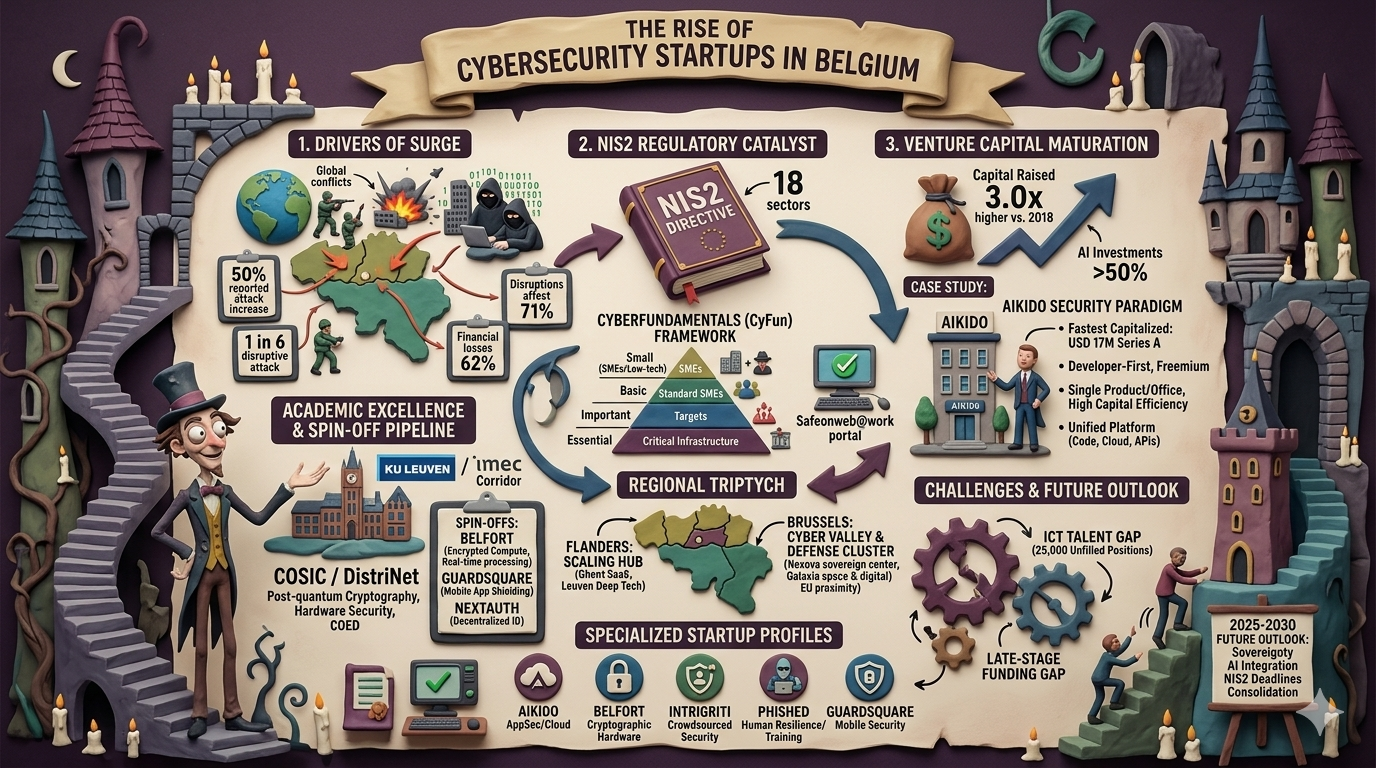
A defining characteristic of the Belgian cybersecurity ecosystem is the deep integration between world-class research institutions and the commercial market. The "Cybersecurity Research Program Flanders" is a prime example of this synergy, uniting top-tier institutions like KU Leuven, VUB, UGent, and imec.
The KU Leuven / imec Corridor
Leuven has established itself as the deep-tech capital of Belgium, driven by the presence of imec—the world’s leading semiconductor research center—and the KU Leuven research groups COSIC and DistriNet. COSIC (Computer Security and Industrial Cryptography) has a storied history, including the development of the Rijndael algorithm, which became the global Advanced Encryption Standard (AES).
The current research focus at COSIC and DistriNet is centered on post-quantum cryptography, hardware security, and "Computing on Encrypted Data" (COED). This academic rigour has translated into high-impact spin-offs:
Belfort: A 2025 spin-off from COSIC that raised EUR 5 million in seed funding. Belfort focuses on hardware-accelerated encrypted compute, enabling real-time processing of data without decryption. This solves a fundamental cloud security challenge by preventing exposure to servers or cloud providers with privileged access.
Guardsquare: Specializing in mobile application protection, Guardsquare has matured from a university-linked initiative into a global leader in app shielding and obfuscation, securing multiple rounds of funding.
NextAuth: Focused on decentralized identity and authentication, another example of how Belgian academic research in crypto and identity management is being commercialized to meet modern security needs.
The "Cybersecurity Research Program" structure allows these labs to bridge the gap between fundamental research and sustainable industry solutions. By collaborating with clusters like LSEC (Leaders In Security), researchers can ensure that their developments—such as "whitebox cryptography" or "Physically Unclonable Functions" (PUFs)—are aligned with the actual needs of the industry.
Regional Dynamics: A Triptych of Innovation
The Belgian federal structure has resulted in three distinct regional ecosystems, each with its own focus and support mechanisms.
Flanders: The Scaling Hub
Flanders Innovation & Entrepreneurship (VLAIO) provides substantial R&D subsidies, often covering 25-50% of project costs. The region’s tech output is dominated by the Ghent SaaS scene (e.g., Aikido, Intigriti) and the Leuven deep-tech corridor. Flanders accounts for close to three-quarters of the total tech funding in Belgium as of early 2025.
Wallonia: The Cyber Valley and Defense Cluster
Wallonia has adopted a highly strategic approach centered on the concept of a European "Cyber Valley." The region’s master plan, Digital Wallonia, has established the Galaxia business park in Transinne as a hub for space and digital security.
Key players in the Walloon ecosystem include:
Nexova: A EUR 20 million 100% Belgian investment aimed at creating a sovereign cybersecurity center. Nexova’s mission is to provide security solutions for critical sectors (energy, transport, space) using only European technologies, thereby avoiding dependence on Chinese or American vendors.
A6K/E6K: A multidisciplinary engineering center in Charleroi that facilitates collaboration between startups and industrial companies.
IGNITY: An accelerator in Liège that focuses on deep-tech, defense, and cybersecurity, acting as a primary site for the NATO DIANA program.
Brussels: The Regulatory and GovTech Hub
As the de facto capital of the EU, Brussels offers startups unique access to international organizations and policy-shaping institutions. Hubs like BeCentral at Brussels Central Station host dozens of initiatives focused on reducing the digital skills gap and growing startups with direct proximity to the European Commission.
International Integration: NATO, ESA, and European Sovereignty
Belgium’s geographic and political position allows its cybersecurity startups to integrate deeply with international defense and space frameworks. This integration is a critical factor in the rise of "dual-use" technologies that serve both civilian and military markets.
NATO DIANA and the Innovation Fund
The Defence Innovation Accelerator for the North Atlantic (DIANA) works directly with Belgian startups to solve critical security challenges. Innovators selected into DIANA receive non-dilutive grants and access to over 180 test centers. Furthermore, the EUR 1 billion NATO Innovation Fund—the world’s first multi-sovereign venture capital fund—invests in Belgian startups developing disruptive technologies in areas like quantum-enabled tech and autonomous systems.
The Space Security Axis
The European Space Agency (ESA) has established its Cybersecurity Operations Centre at the ESEC Centre in Redu, Wallonia. This strategic decision positions Belgium at the heart of Europe’s efforts to safeguard space infrastructure. Startups in the Walloon Galaxia cluster benefit from this proximity, developing specialized expertise in protecting ground-based systems and airborne activities against evolving digital threats.
The European Cybersecurity Label
The "Cybersecurity Made in Europe" label, created by the European Cyber Security Organisation (ECSO), serves as a critical trust signal for Belgian startups. To carry the label, companies must be headquartered in Europe, have no major ownership from outside the EU, and demonstrate that more than 50% of their R&D and staff are located within Europe. Belgian cluster LSEC is one of the authorized issuers of this label, helping local firms like Aikido, Intigriti, and Phished increase their visibility among European end-users who prioritize digital sovereignty.
Specialized Services and Startup Profiles
The diversity of the Belgian cybersecurity ecosystem is reflected in the wide array of specializations offered by its startups and established local players.
Company / Startup | Core Strength | Notable Specializations |
Aikido Security | AppSec / Cloud Security | Unified platform for code and cloud security |
Belfort | Cryptographic Hardware | Real-time processing of encrypted data (FHE) |
Intigriti | Crowdsourced Security | Global bug bounty and vulnerability disclosure platform |
Phished | Human Resilience | AI-driven automated security awareness training |
Guardsquare | Mobile Security | Mobile app shielding, obfuscation, and RASP |
Qualysec | Offensive Security | VAPT, security consulting, incident response |
Nano IT | Infrastructure Security | Vulnerability scanning and data protection for large enterprises |
Cronos Security | Incident Response | Breach containment and forensic analysis |
Resilient | Cyber Resilience | Threat intelligence and protection for critical infrastructure |
The Rise of Offensive Security and VAPT
Offensive security, particularly Vulnerability Assessment and Penetration Testing (VAPT), has seen significant growth. Companies like Qualysec and CyberSecurityPro have emerged as trusted partners for companies needing to validate their defenses against modern tactics. The shift toward "continuous" security testing is a response to the rapid release cycles of modern DevOps, a trend that Aikido has successfully capitalized on by integrating security directly into the developer workflow.
Security Awareness and the Human Element
Recognizing that 100% technical security is unattainable, startups like Phished focus on the "human firewall." By automating simulations and providing personalized training academies, these firms address the social engineering threats that remain the leading cause of initial breaches. This automated approach is particularly attractive to organizations struggling with the aforementioned ICT talent shortage.
Strategic Challenges: The Talent Gap and Funding Concentration
Despite the robust growth, the Belgian cybersecurity startup scene faces significant headwinds. The talent shortage remains the single largest barrier to scaling. With 25,000 unfilled ICT positions and 75% of companies reporting difficulties in finding qualified professionals, startups must compete with multinational giants for a limited pool of experts. This has led to a fierce competition for candidates, pushing salaries higher and potentially straining the resources of early-stage startups.
Furthermore, while early-stage and seed funding has exploded, late-stage funding (Series C and beyond) remains more challenging to secure within the Belgian market. This often leads successful Belgian startups to seek capital from foreign VCs in London, Paris, or the United States, which can eventually lead to headquarters relocation or acquisition. For example, for the first time in 2025, foreign investor participation in Belgian tech dipped below 50%, a shift from previous years where two-thirds of funding came from international sources. While this indicates a strengthening of local funds, it also highlights the need for a sustained pipeline of large-scale capital to support "unicorns" as they mature.
Geopolitical and Technical Dependencies
While firms like Nexova are pushing for "sovereign" European tech, the reality for many startups is a heavy reliance on foundational technologies from outside Europe, particularly in cloud infrastructure and AI models. The challenge for the Belgian ecosystem is to develop "moats" at the application and implementation layer that can remain resilient even if global supply chains are disrupted.
The Future Outlook: 2025–2030
The trajectory of the Belgian cybersecurity startup ecosystem suggests a move toward deeper specialization and "sovereign" resilience. As the implementation deadlines for NIS2 approach—with full certification required by 2027—the market will likely see a consolidation of compliance and audit-focused startups.
Technological breakthroughs in areas like encrypted compute (Belfort) and quantum-safe cryptography (Thales, COSIC) are expected to transition from research projects to pilot implementations in the finance and government sectors. The continued integration of AI into cybersecurity—not just for threat detection but for autonomous security operations—will remain the primary theme for venture capital investment.
The "Cyber Valley" strategy in Wallonia and the continued deep-tech output from Flanders indicate that Belgium is successfully building a bifurcated ecosystem: one side focused on high-velocity B2B SaaS (Ghent/Antwerp) and the other on high-stakes, sovereign hardware and defense tech (Leuven/Transinne/Charleroi).
In conclusion, the rise of cybersecurity startups in Belgium is a direct response to a "perfect storm" of geopolitical necessity, regulatory pressure, and academic excellence. By leveraging its unique regional strengths and its position at the heart of European decision-making, Belgium has established a cybersecurity ecosystem that is not only resilient but increasingly competitive on the global stage. The success of firms like Aikido Security and the emergence of deep-tech spin-offs like Belfort serve as a blueprint for how a small, highly developed nation can carve out a leadership position in a critical global industry. The challenge for the coming years will be to navigate the talent shortage and the funding "ceiling" to ensure that these startups can grow into the world-class companies they aspire to be.
The Real Startup Playbook: Ideas, Growth, Funding, and Founder Psychology
Building a startup is exciting, chaotic, and often misunderstood. If you’ve ever wondered how founders actually validate ideas, find co-founders, raise funding, and survive the emotional rollercoaster, these articles explore the realities behind the startup world.
Start with How to Validate Your Startup Idea in 48 Hours for $0 to understand how founders test ideas quickly before wasting months building the wrong product. Once you have an idea, the next challenge is building it—From Idea to MVP: A Step-by-Step Guide for Solo Founder walks through the journey from concept to a real product.
Many founders struggle with partnerships and team decisions. Should your co-founder live in the same city? Explore Remote vs. Local: Does Your Co-Founder Need to Live in the Same City? and learn the risks hidden in partnerships in 5 Red Flags to Look for When Choosing a Startup Partner. If you’re searching for technical help, How to Find a Technical Co-Founder (Without a Six-Figure Salary) explains how founders actually do it.
The startup journey isn’t just about building products—it’s also about mindset and decision-making. Articles like Decision Fatigue: The Silent Startup Killer, Fear vs Logic: How Founders Actually Make Decisions, and How Overthinking Destroys Early Momentum reveal the psychological battles founders face behind the scenes.
Growth is another misunderstood part of startups. Learn why strategy matters more than hype in Ideas Don’t Scale. Systems Do. and why discipline matters in Why Your Startup Doesn’t Need Growth — It Needs Focus. Discover the importance of early traction in How the First 100 Users Decide Your Startup’s Fate and understand team building through The First Hire That Actually Matters.
Funding is often romanticized, but reality is more complex. Why First-Time Founders Should Avoid Big Funding challenges common assumptions about venture capital, while Revenue Solves More Problems Than Funding explains why sustainable businesses matter more than investor money.
The startup ecosystem also varies by geography. If you're curious about India’s startup scene, explore The New Playbook for Raising in Bangalore, Why Raising Pre-Seed in Bangalore Is Harder Than Ever, and Why B2B SaaS from Bangalore Scales Faster.
But startups are not just about strategy and growth—they’re also about people and emotions. Articles like The Hidden Burnout of Bangalore Founders, Comparison Culture in India’s Startup, and The Loneliness of First-Time Founders in Bangalore reveal the personal struggles founders rarely talk about publicly.
And finally, if you want a deeper perspective on the startup journey itself, explore Lessons Learned Too Late by First-Time Founders and The Myth of the “Overnight Success” Startup—because the truth behind startup success is far more complex than it appears.