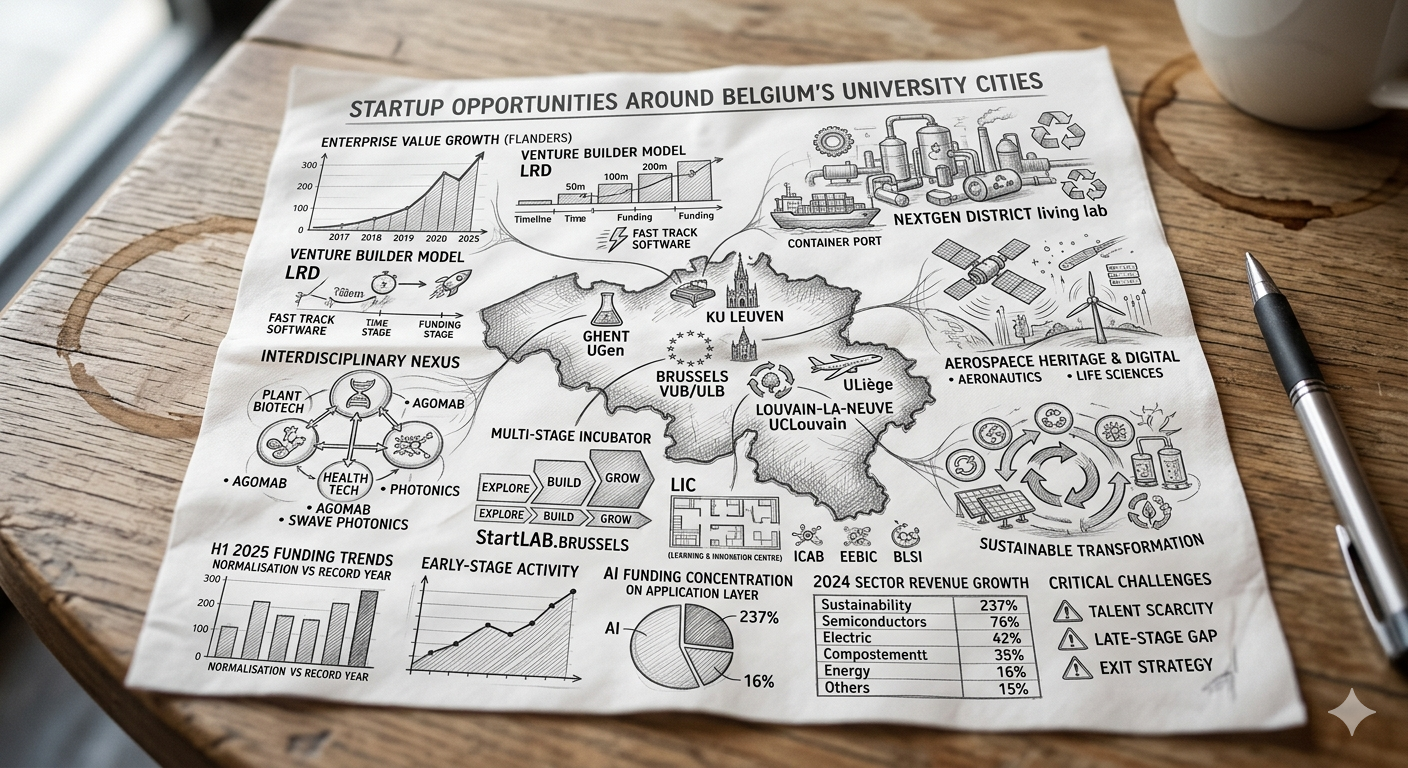
Startup Opportunities Around Belgium’s University Cities
July 1, 2026 by Harshit Gupta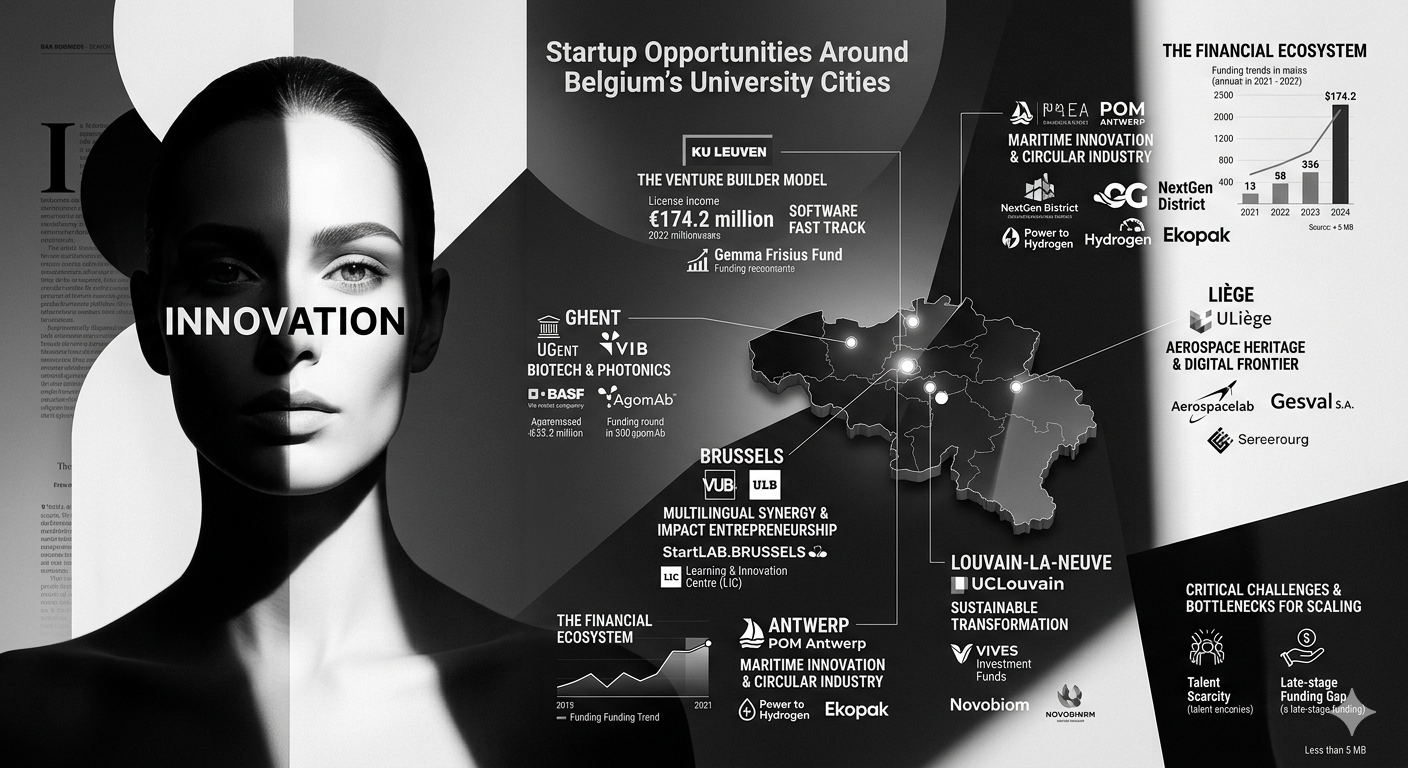
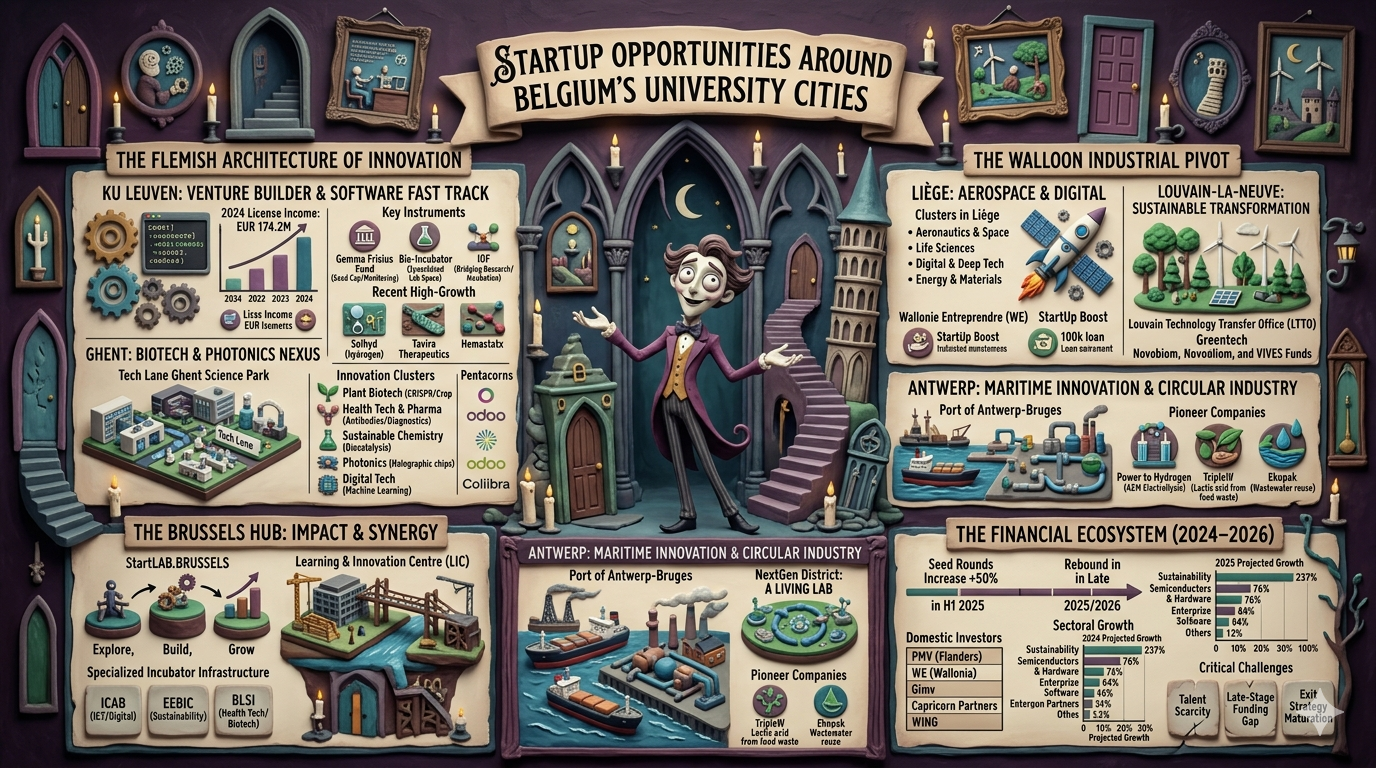
The global landscape of innovation is currently defined by a significant recalibration of how technology ecosystems scale and sustain themselves. According to the 2025 Dealroom Global Tech Ecosystem Index, while traditional hyper-hubs like the Bay Area, New York, and Boston maintain their dominance, a shift is occurring wherein smaller, highly integrated ecosystems are closing the gap by prioritizing smarter scaling, stronger policy alignment, and deep-seated university linkages. Within this international context, Belgium has emerged as a particularly resilient and sophisticated model of university-driven innovation. The Belgian tech ecosystem is currently in a maturation phase, characterized by a dense network of university cities that act as localized engines for global industries.
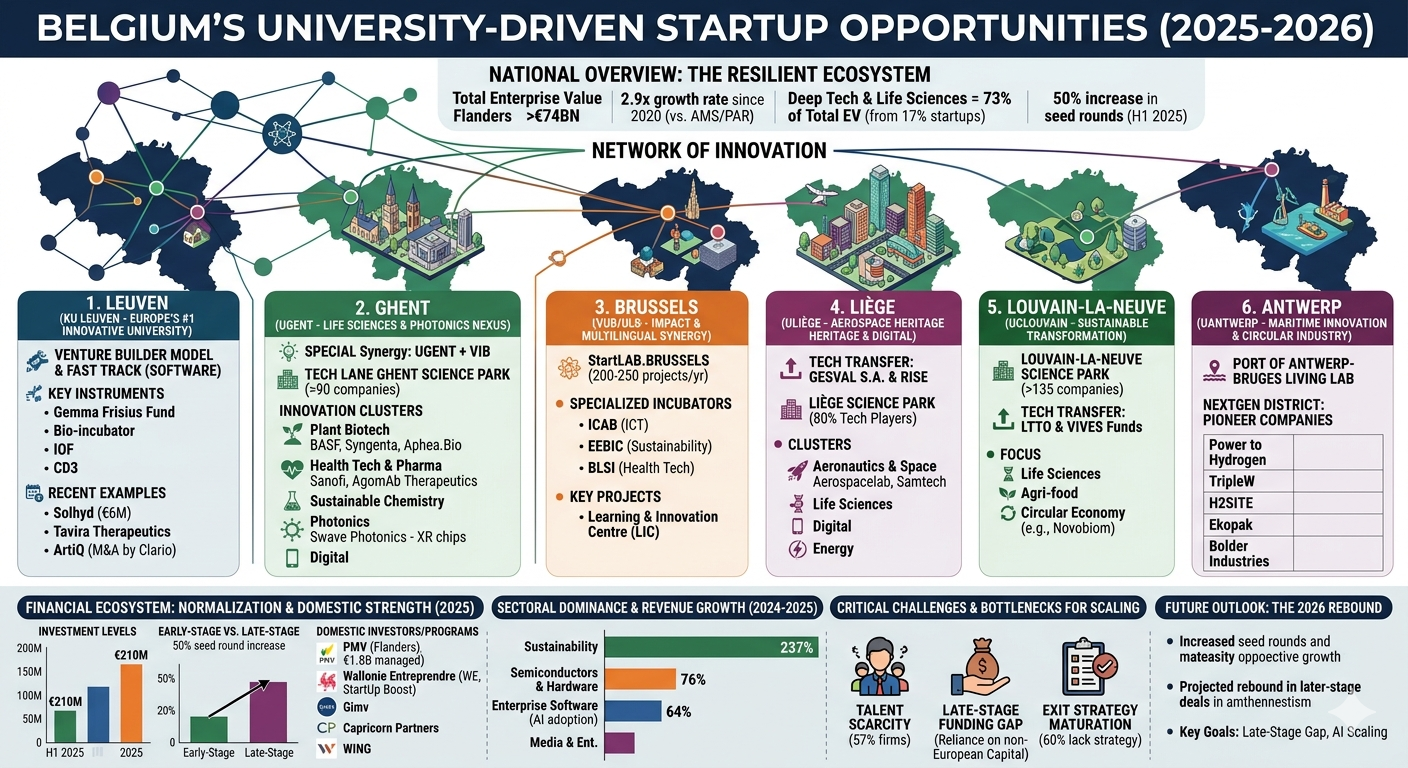
The total enterprise value of the startup ecosystem in Flanders alone has surpassed EUR 74 billion, reflecting a growth rate since 2020 that is 2.9 times faster than comparable European hubs like Amsterdam or Paris. This trajectory is not merely a result of capital influx but is fundamentally rooted in the structural integration of academic research and commercial valorization. Deep tech and life sciences, sectors that are intrinsically linked to university research, represent 17% of all startups in the region but account for a staggering 73% of the total startup enterprise value. This analysis explores the specific opportunities arising within the corridors of Leuven, Ghent, Brussels, Liège, Louvain-la-Neuve, and Antwerp, examining the mechanisms of tech transfer, the funding landscape, and the emerging sectoral trends that will define the 2025–2026 period.
The Architecture of Innovation: Flemish University Hubs
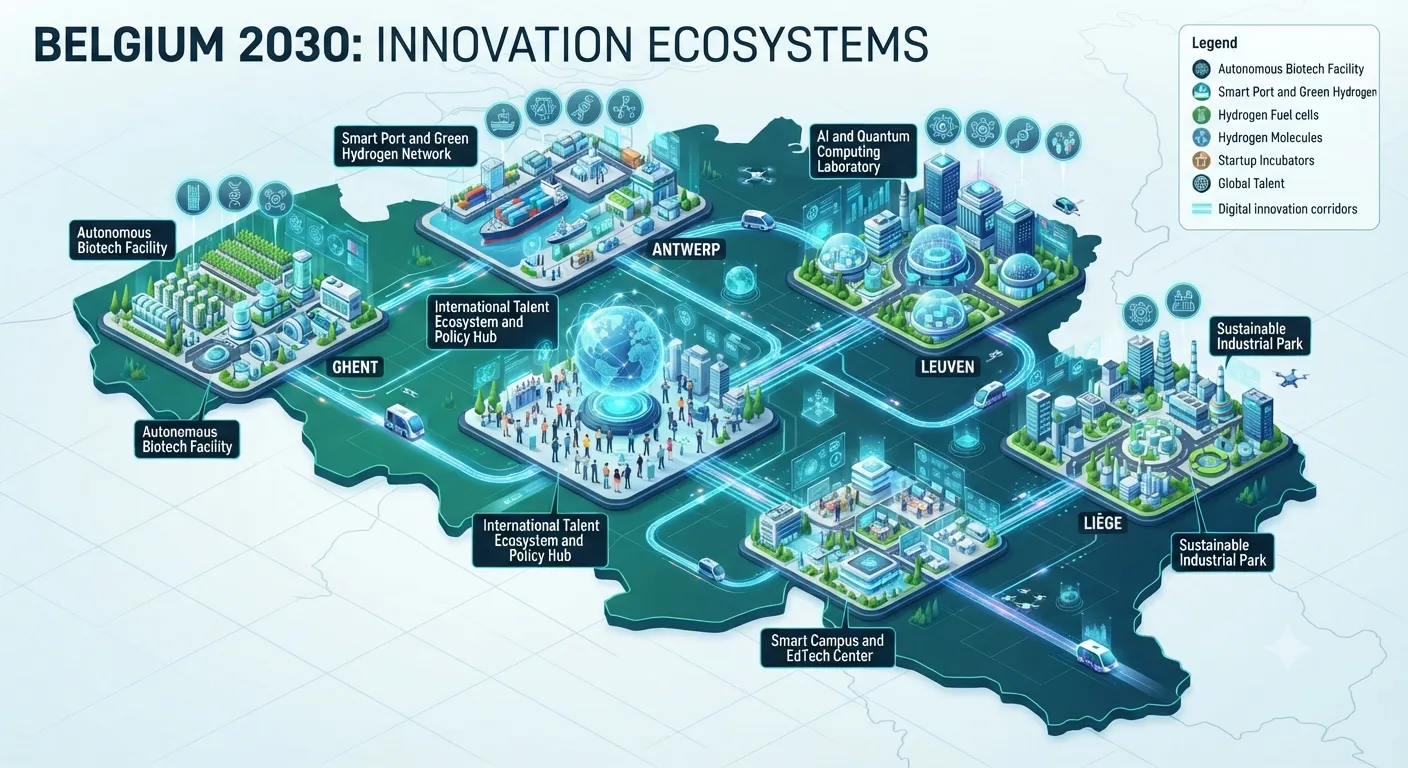
The Flemish region of Belgium serves as a primary example of how institutionalized technology transfer can create a self-sustaining cycle of innovation and wealth creation. Central to this performance are the universities of Leuven and Ghent, which have successfully moved beyond the "ivory tower" model to become central nodes in international industrial networks.
KU Leuven: The Venture Builder Model and the Software FAST Track
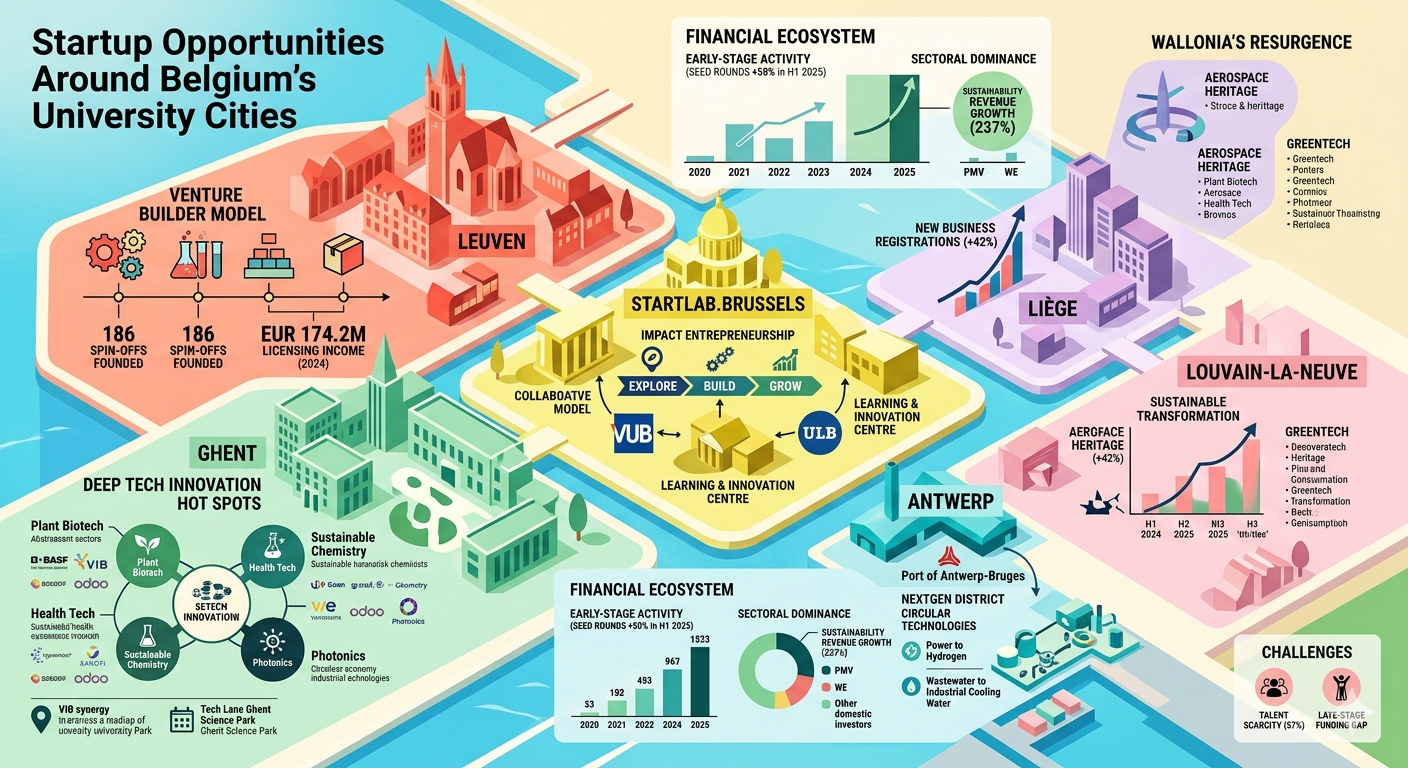
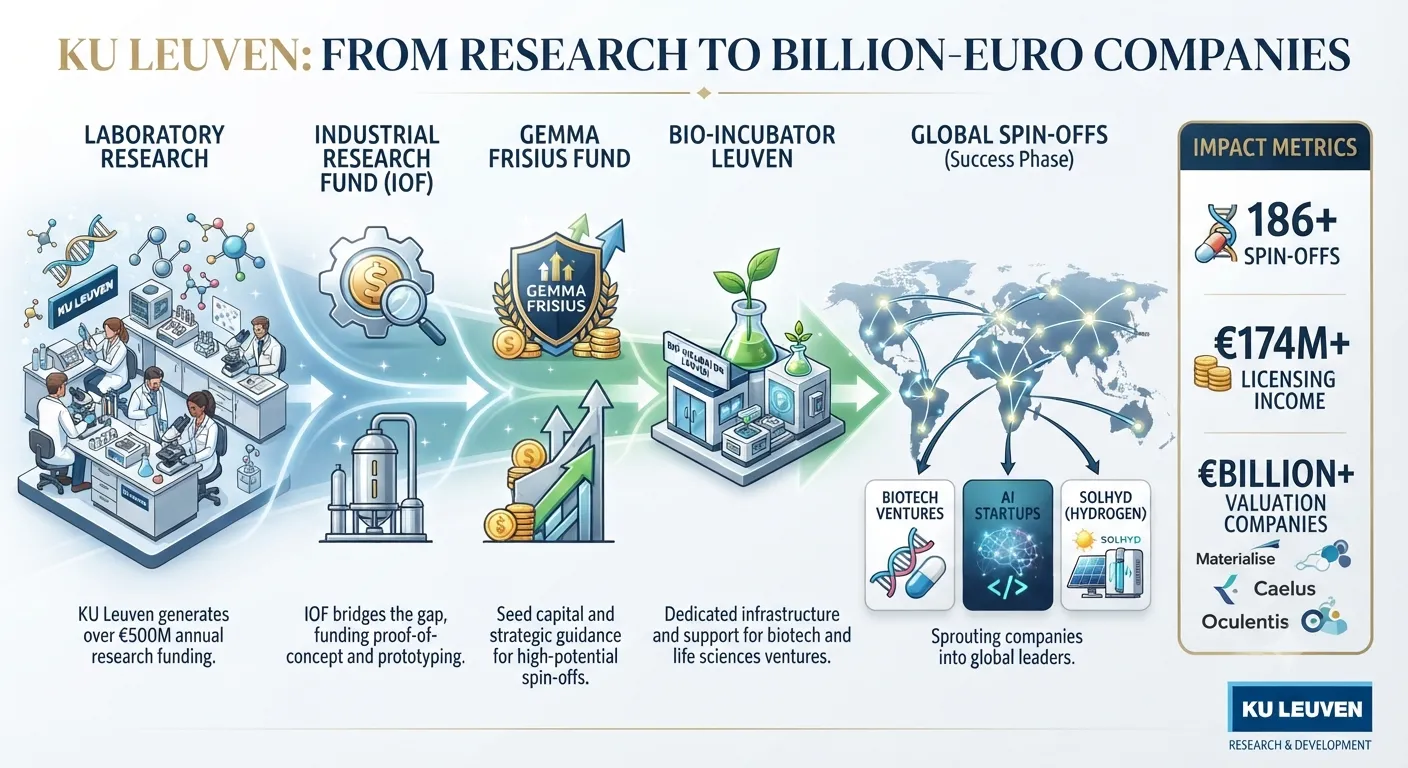
KU Leuven consistently ranks as Europe’s most innovative university, a position driven by the sophisticated operations of KU Leuven Research & Development (LRD). The university’s tech transfer office manages a massive portfolio, including 186 spin-offs founded since the early 1980s, and generated approximately EUR 174.2 million in license income in 2024. The LRD model is characterized by its "venture builder" approach, where the university takes an active role in the incubation phase, often lasting several years before a company is officially incorporated.
A significant evolution in Leuven’s strategy is the implementation of the "FAST Track" for non-deep tech, software-based spin-offs. Historically, spin-off negotiations could be protracted due to the complexity of intellectual property (IP) and equity discussions. The FAST Track uses standardized licensing conditions to accelerate the startup process for software ventures, reflecting the broader market trend toward rapid digital deployment. This speed-to-market is critical in an era where AI and software-as-a-service (SaaS) are the primary drivers of investment. In the first half of 2025, AI-related funding in Belgium reached a parity with the European average, accounting for over 50% of total investments.

Key Instrument | Primary Function | Relevant Impact/Data |
Gemma Frisius Fund | Seed capital and financial monitoring | Early-stage funding for KU Leuven spin-offs. |
Bio-incubator Leuven | Specialized lab and office space | High-density biotech startup environment. |
Industrial Research Fund (IOF) | Bridging basic research and industrial app | Direct support for valorization projects. |
Centre for Drug Design (CD3) | Drug discovery and incubation | Derisking pharmaceutical innovations. |
Source:
Recent high-growth opportunities in the Leuven ecosystem have diversified from traditional life sciences into climate tech and specialized engineering. For example, Solhyd, a spin-off developing hydrogen technology that produces renewable fuel from light and air, secured a commitment of up to EUR 6 million in 2024. In the biomedical space, Tavira Therapeutics and Hemastatx represent a new wave of highly specialized therapeutics targeting gene therapy delivery and severe bleeding disorders, respectively. The acquisition of the AI-driven spin-off ArtiQ by the American multinational Clario in 2024 demonstrates that Leuven’s academic output is increasingly attractive for international M&A exits.
Ghent: The Interdisciplinary Nexus of Biotech and Photonics
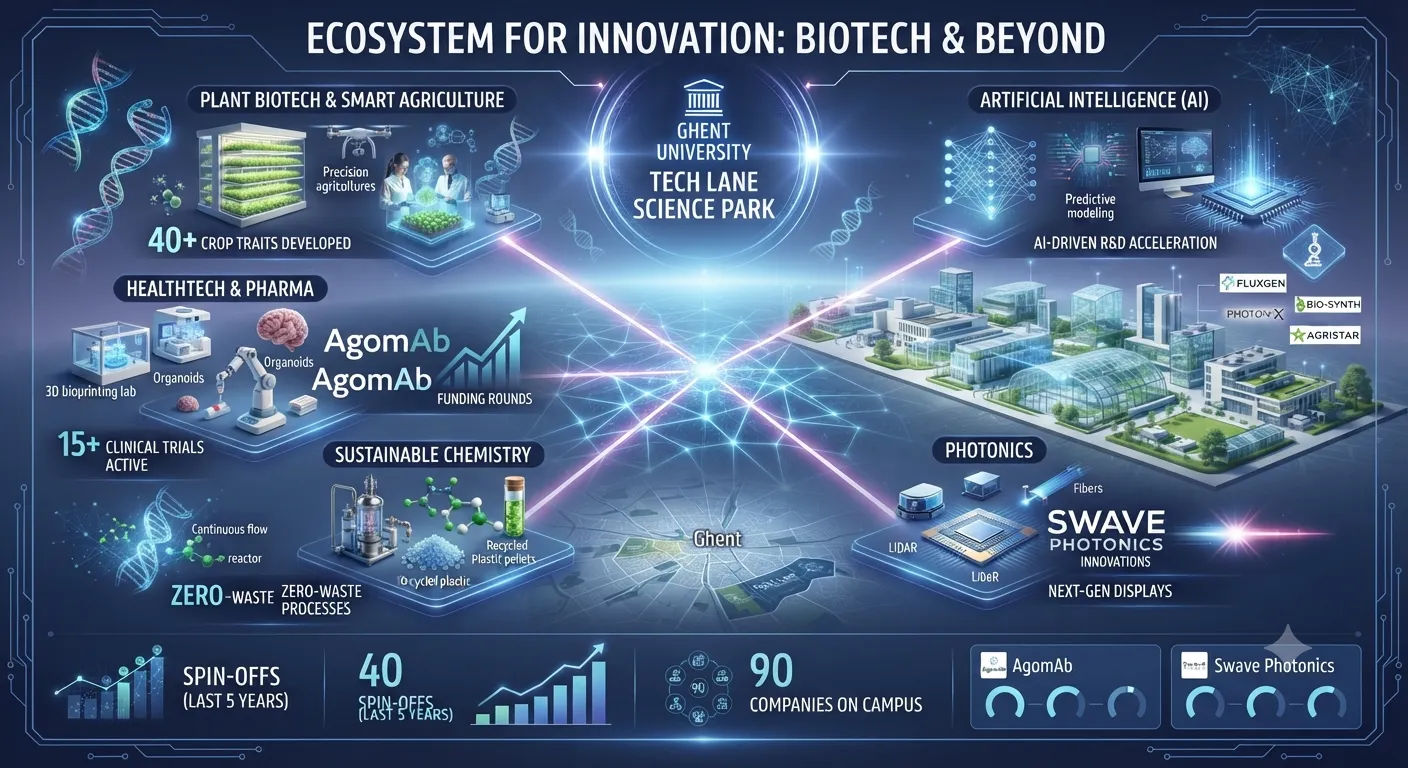
If Leuven is the pioneer of tech transfer, Ghent is the global specialist in life sciences and plant biotechnology. The synergy between Ghent University (UGent) and the Flanders Institute for Biotechnology (VIB) has created an ecosystem that is virtually unmatched in its sector-specific density. In the past five years, UGent has founded 40 new spin-off companies, supported by 216 approved Industrial Research Fund (IOF) projects.
Tech Lane Ghent Science Park serves as the physical epicenter, housing over 90 knowledge-intensive companies across a 60-hectare campus. The park is organized into "Deep Tech Innovation Hot Spots" that provide specialized infrastructure for various industries.
Innovation Cluster | Research Focus | Key Industrial Players/Startups |
Plant Biotech | CRISPR/Cas, Biostimulants, Crop Yield | BASF, Syngenta, Aphea.Bio, Protealis. |
Health Tech & Pharma | Antibodies, molecular diagnostics, medical devices | Sanofi, Janssen Pharma, AgomAb, Confo Therapeutics. |
Sustainable Chemistry | Biocatalysis, process modeling, polymers | BASF, Eastman, OCAS. |
Photonics | Photonic sensors, high-speed communication | Ligentec, Huawei/Caliopa, Daikin. |
Digital Technologies | Machine Learning, Big Data, Image Processing | iText/Apryse, Sofico, IMEC. |

The Ghent ecosystem is unique for its "Pentacorn" status—hosting companies like Odoo and Collibra, which are valued at over EUR 5 billion. This concentration of high-value scale-ups creates a "multiplier effect" where former employees of these unicorns transition into new entrepreneurial roles, a trend also observed in Central and Eastern Europe where over 300 former unicorn employees have become founders. The 2024–2025 period saw significant funding rounds in Ghent, including AgomAb Therapeutics (Series D, $88.8M) and the semiconductor startup Swave Photonics, which creates holographic extended reality chips.
The Brussels Hub: Multilingual Synergy and Impact Entrepreneurship
The Brussels-Capital Region offers a distinct startup environment shaped by its status as an international political center and the presence of two major sister universities: the Vrije Universiteit Brussel (VUB) and the Université libre de Bruxelles (ULB). The regional ecosystem is increasingly focused on "impact entrepreneurship"—ventures that aim for economic, social, and environmental returns.
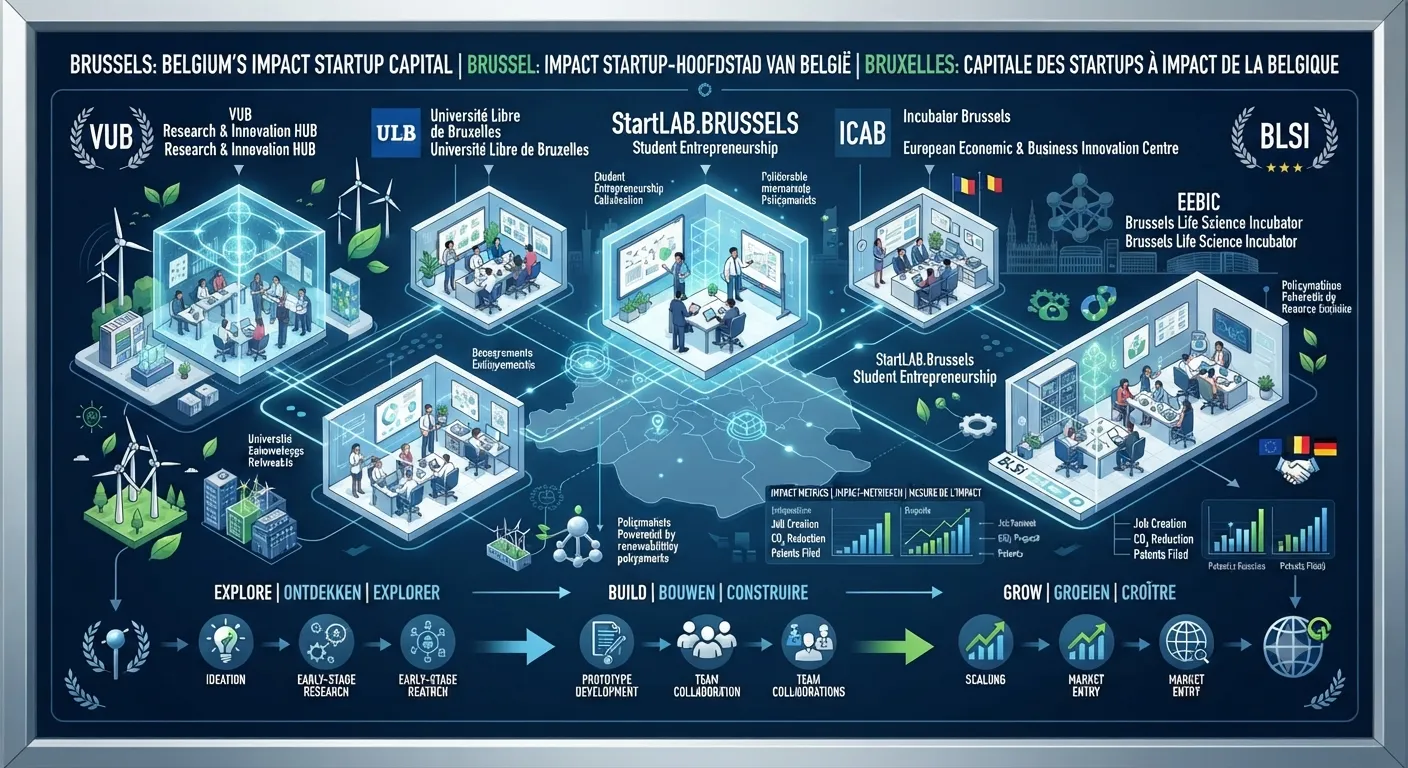
StartLAB.BRUSSELS and the Collaborative Model
StartLAB.BRUSSELS, supported by both VUB and ULB, is a cornerstone of the Brussels entrepreneurial scene, supporting approximately 200 to 250 projects annually. The incubator provides a structured three-phase support system: "Explore" for initial feasibility, "Build" for problem-solution validation, and "Grow" for market launch. This approach is particularly effective for young, first-time entrepreneurs, including students and researchers who may lack formal business training but possess deep technical expertise.
A landmark project for the region is the Learning & Innovation Centre (LIC), a 9,000 m² facility currently under construction on the border between the VUB and ULB campuses. This center is designed to bridge the two universities and serve as a "networking center where the academic world and society meet," providing quiet study areas, collaborative laboratories, and experimentation centers. This physical integration is expected to catalyze further cross-disciplinary research and startup creation in the capital.
Specialized Incubator Infrastructure in the Capital
Brussels utilizes a specialized incubator strategy to provide startups with domain-specific mentorship and facilities. This localized approach ensures that startups are not merely provided with office space but are integrated into specific industrial networks.
ICAB (Incubatiecentrum Arsenaal Brussel): Established in collaboration with VUB, it specializes in ICT, digital, and engineering sectors, offering a bridge to Brussels’ engineering talent.
EEBIC (Erasmus European Business and Innovation Center): Created in partnership with ULB, it is a multi-sectoral incubator located on the Erasme medical campus, emphasizing innovation and sustainability.
BLSI (Brussels Life Science Incubator): A collaboration between UCLouvain and the Brussels region, focusing on health tech and biotechnology, providing specialized laboratories on the university's Woluwe campus.
Despite these strengths, recent data indicates that Brussels has slipped to a distant third place in regional funding totals behind Flanders and Wallonia, accounting for a smaller proportion of the total investment recorded in the first half of 2025. This shift suggests a critical opportunity for investors to capitalize on early-stage projects in the capital that may currently be undervalued compared to those in the more mature Flemish hubs.
The Walloon Industrial Pivot: Liège and Louvain-la-Neuve
The Walloon region has witnessed a dramatic surge in entrepreneurship in 2025. Following the abolition of the business management certificate in October 2025, new business registrations in Wallonia spiked by 42% in the fourth quarter compared to the previous year. This regulatory shift has unlocked a latent entrepreneurial spirit, which is being funneled into high-tech sectors through the region’s university science parks.
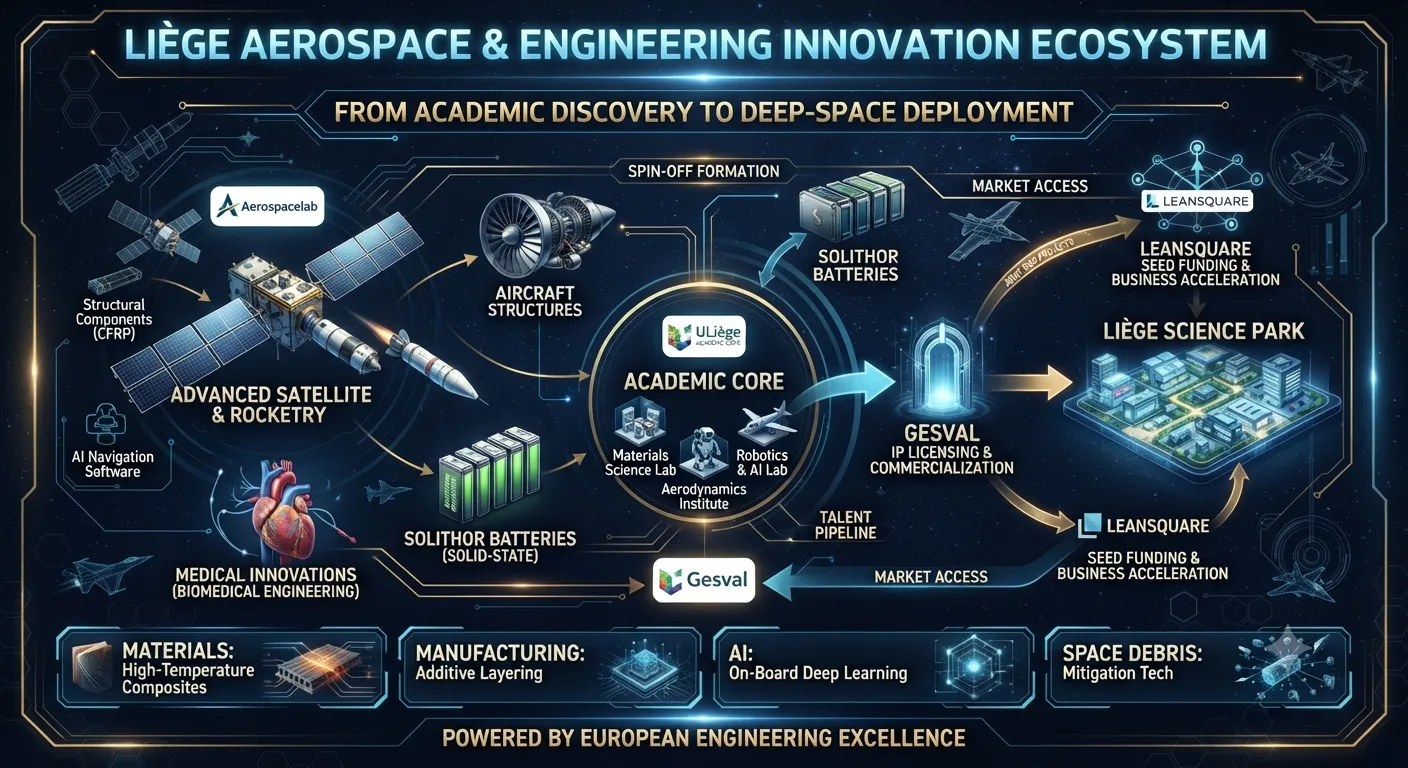
Liège: Aerospace Heritage and the Digital Frontier
The University of Liège (ULiège) has parlayed its 200-year history into a leading position in aerospace and mechanical engineering. The university’s Aerospace & Mechanical (A&M) research unit is internationally recognized for its expertise in finite element methods and numerical modeling, dating back to the 1960s. This academic foundation has made Liège a primary hub for European aerospace industries, training engineers to design cutting-edge technologies for aircraft, spacecraft, and propulsion systems.
Tech transfer in Liège is managed by Gesval S.A. and RISE (Research Innovation, Support & Enterprises). Gesval manages approximately 100 patent families and holds equity in 50 spin-offs on behalf of the university and the CHU de Liège. The Liège Science Park serves as the physical base for these ventures, with 80% of its occupants being technology players.
Cluster in Liège | Key Focus Areas | Notable Entities/Startups |
Aeronautics & Space | Light structures, propulsion, satellite tech | Aerospacelab, Samtech, LTAS Legacy. |
Life Sciences | Cell therapy, immunology, medical imaging | Bio-Sourcing, CM4CURE, Légiapark. |
Digital & Deep Tech | SaaS, AI, Blockchain, Cybersecurity | LeanSquare, WING, The Faktory Fund. |
Energy & Materials | Batteries, building simulation, sustainable catalysis | Solithor, Safir Software, CSCE. |
The funding landscape in Wallonia has also rebounded, with the region accounting for 19% of total Belgian investments in H1 2025. Wallonie Entreprendre (WE), the public investment tool formed from the merger of SRIW, Sowalfin, and others, has launched the "StartUp Boost" program. This program provides early-stage startups with convertible loans of up to EUR 100,000, specifically targeting technological or digital innovations with high growth potential.
Louvain-la-Neuve: The Sustainable Transformation
Louvain-la-Neuve Science Park, the first in Belgium and the largest in Wallonia, hosts more than 135 innovative companies. Managed by UCLouvain, the park has a strong strategic focus on life sciences, agri-food, and the circular economy. The Louvain Technology Transfer Office (LTTO), supported by Sopartec and the VIVES Investment Funds, provides a complete ecosystem for the valorization of research.
Recent developments in the park highlight a shift toward "Greentech" and sustainable transformation. Companies like Novobiom, which focuses on sustainable biotechnology, are emerging from the park’s research institutes. The VIVES funds act as a multi-sectoral bridge, investing in UCLouvain spin-offs across Belgium and neighboring countries, ensuring that academic breakthroughs can scale across borders.
Antwerp: Maritime Innovation and Circular Industry
Antwerp represents a unique intersection of maritime logistics and high-tech environmental science. The Science Park University of Antwerp in Niel, managed by POM Antwerp, focuses on Health and Environment sectors, offering specialized clusters such as eu.reca (respiratory innovation) and at.las (cell and gene therapy).
The NextGen District and the Circular Economy
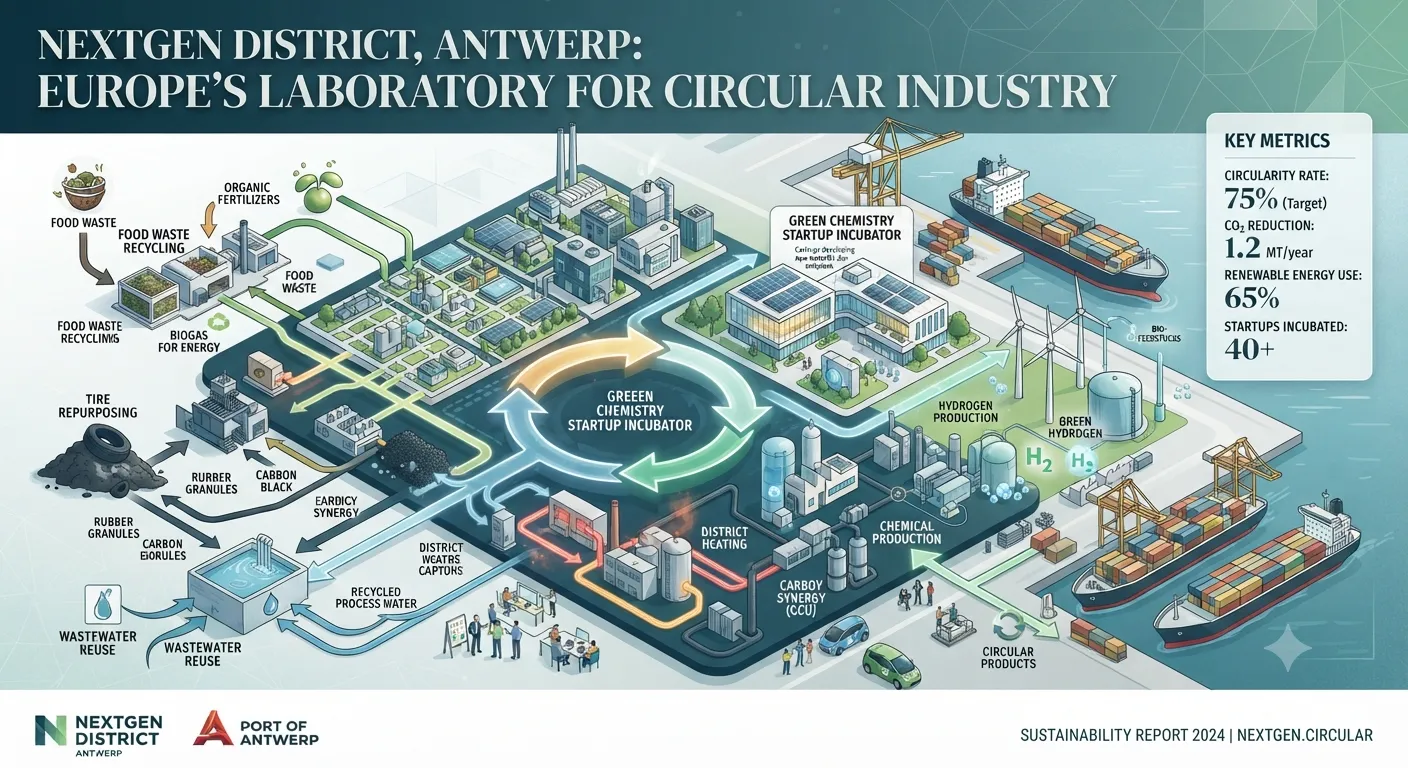
The Port of Antwerp-Bruges has taken a pioneering role in the energy transition through its NextGen District and NextGen Demo zones. This area is designed as a "living lab" where startups can test circular and climate-neutral technologies at an industrial scale.
Pioneer Company | Technology Focus | Commercial/Demo Status |
Power to Hydrogen | AEM Electrolysis for green hydrogen | World's largest system to be installed Q4 2024. |
TripleW | Lactic acid from food waste | Scaling to commercial biodegradable plastics by 2025. |
H2SITE | Hydrogen from renewable ammonia | Membrane reactor demo starting 2025-2026. |
Ekopak | Wastewater to industrial cooling water | 20 billion liters of wastewater reuse annually. |
Bolder Industries | Repurposing end-of-life tires | Circular rubber and petrochemical supply. |
This industrial symbiosis—where the waste produced by one company serves as the raw material for another—is a cornerstone of the Antwerp model. By locating startups near Europe’s largest integrated petrochemical cluster, the port enables a level of industrial interaction that is difficult to replicate elsewhere, providing a significant competitive advantage for startups in sustainable chemistry and energy storage.
The Financial Ecosystem: Funding Trends and Policy Dynamics (2024–2026)
Belgium’s venture capital market in 2025 reflects a "normalization" phase after a record-breaking 2024. Total investment in Belgian tech reached over EUR 210 million in the first half of 2025, a 50% decrease from the same period in 2024, but aligned with 2023 levels. However, early-stage activity remains remarkably healthy, with seed rounds increasing by 50% in H1 2025 compared to the previous year.
The Role of Domestic and Public Investors
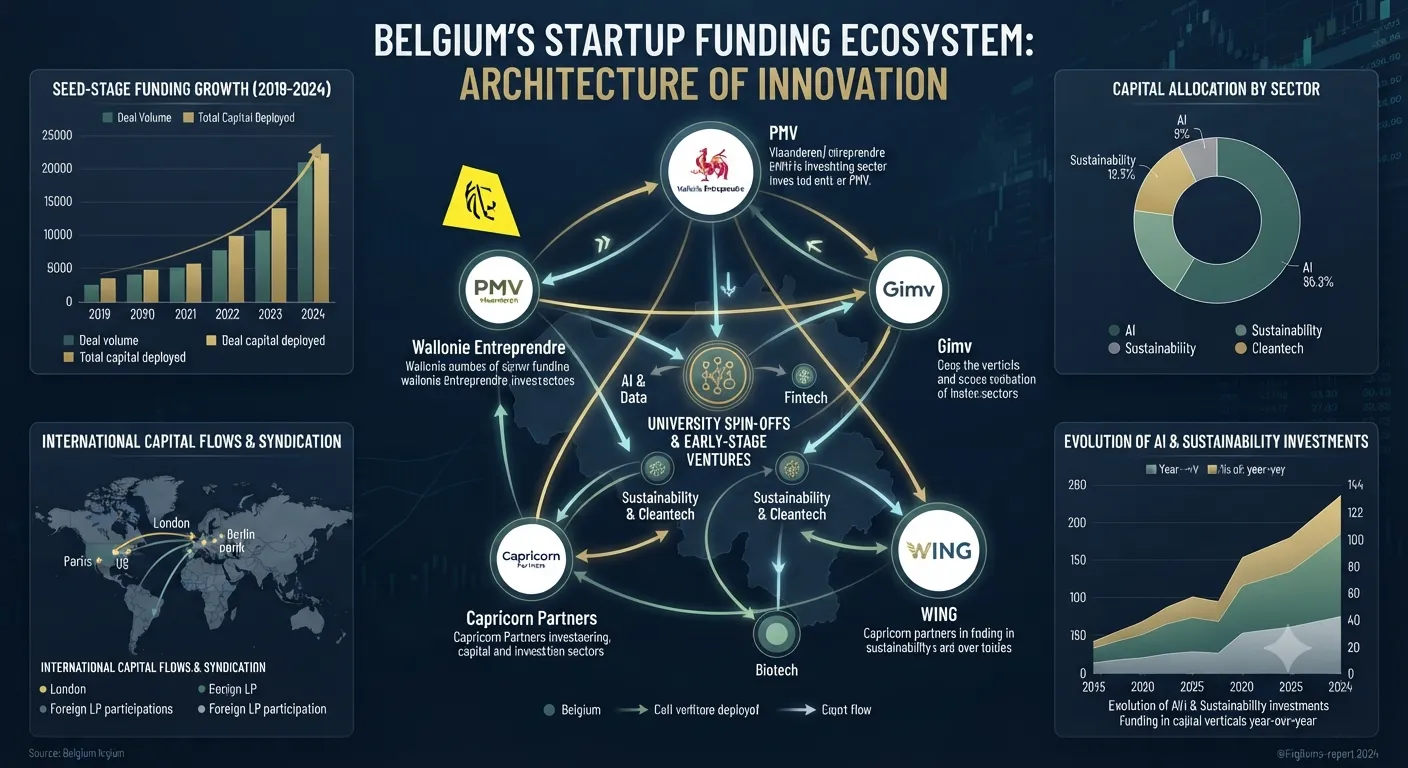
A defining feature of the Belgian ecosystem is the strength and resilience provided by domestic investors. Public and semi-public entities like PMV in Flanders and Wallonie Entreprendre in Wallonia ensure that startups have access to capital even when international markets are volatile.
Investor/Program | Target Sector/Stage | Key Funding Details |
PMV (Flanders) | Multi-stage/growth | Managing €1.8B; cofinancing up to €150K for startups. |
Wallonie Entreprendre (WE) | Multi-stage/Walloon region | Sweet spot check $3M; StartUp Boost loans up to €100K. |
Gimv | High-growth potential | Mid-sized companies in Health and Smart Industries. |
Capricorn Partners | Technology-driven firms | Managing funds in digital, health, and cleantech. |
WING (Wallonia) | Digital & Deep Tech | Focus on AI, SaaS, Medtech, and IoT. |
Domestic investors account for the majority of early-stage rounds and nearly half of breakout and late-stage rounds in Flanders, a level of engagement that is rare in Europe and contributes to the region’s high capital efficiency. This domestic support is crucial because nearly 50% of late-stage funding for European Deep Tech and Life Sciences spin-offs still comes from outside the continent, primarily the United States.
Sectoral Dominance and Revenue Growth
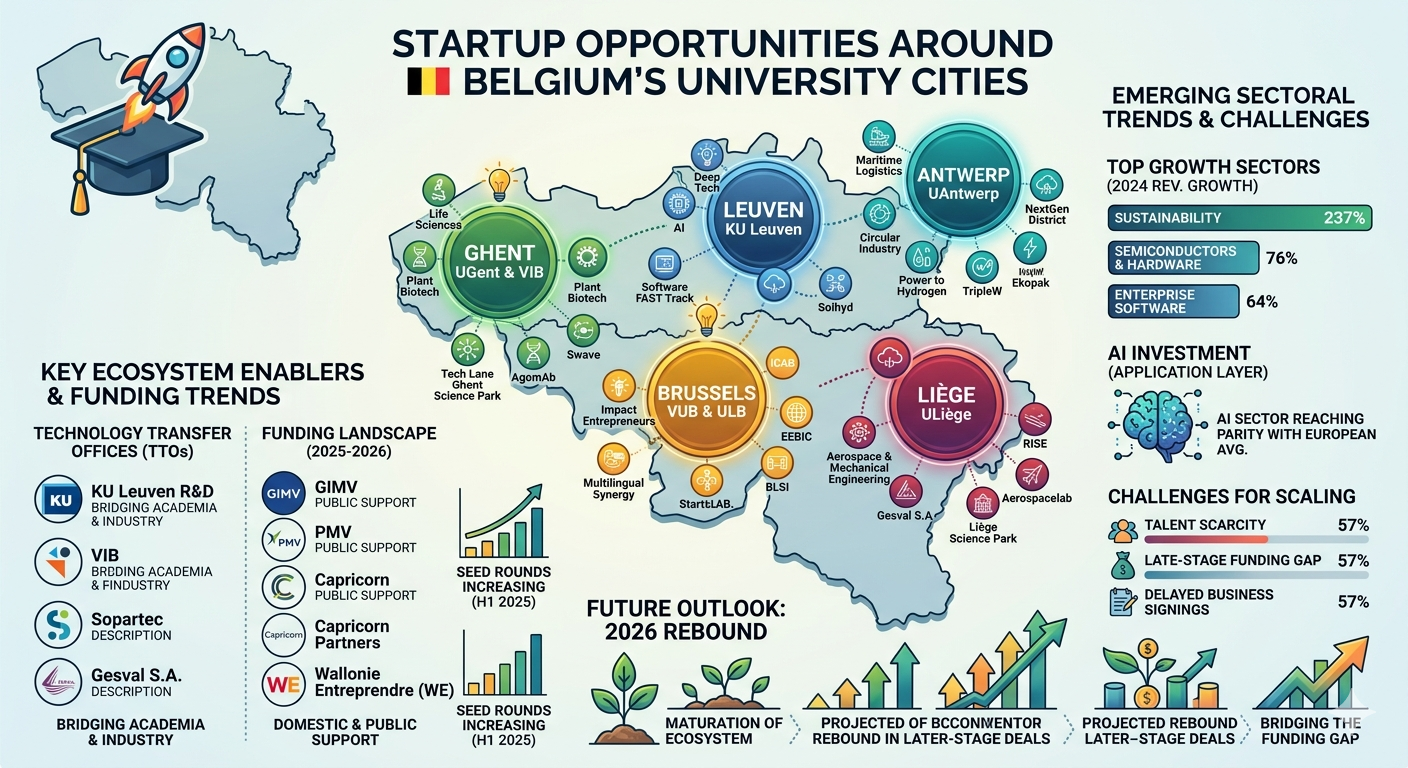
The 2025 Scale-Up Confidence Survey highlights that sustainability-focused startups recorded the highest average revenue growth in 2024 at 237%. This is followed by electronic devices, hardware, and semiconductors at 76% growth, and enterprise software at 64%.
Sector/Segment | 2024 Revenue Growth | 2025 Projected Growth |
Sustainability | 237% | Continued acceleration. |
Semiconductors & Hardware | 76% | Focused on holographic/quantum tech. |
Enterprise Software | 64% | Driven by AI adoption. |
Communications & Networking | (Varied) | 310% (est.). |
Media & Entertainment | 69% | 283% (est.). |
The AI sector has seen a particularly strong concentration of funding in the "application and implementation layer," which has attracted over 90% of AI-related funding since 2023. This indicates that Belgian investors and founders are focusing on solving specific industrial and business challenges rather than competing in the more capital-intensive foundational model space.
Critical Challenges and Bottlenecks for Scaling
While the Belgian ecosystem is maturing, several challenges remain that could hinder its future growth. The 2025 Scale-Up Confidence Survey identified that 51% of startups face difficulties with lower or delayed new business signings, reflecting a tough market climate where sales cycles are lengthening.
Talent Scarcity: Finding specific profiles—particularly engineers, product managers, and sales leaders—remains a bottleneck for 57% of firms. While the universities produce a steady stream of PhDs and researchers, the competition for talent is fierce, especially from major international players who can offer higher salaries.
The Late-Stage Funding Gap: As startups move from Series A to later stages, the reliance on non-European capital increases. This dependency on US-based investors and companies, who have captured nearly $24 billion in value from European spin-offs since 2019, poses a strategic risk.
Exit Strategy Maturation: 60% of Belgian startups currently do not have a formal exit strategy in place. Of those that do, there is a clear preference for acquisition over IPO, reflecting the global trend where IPO markets have been largely inactive since 2021.
Future Outlook: The 2026 Rebound
The energy and determination within early-stage Belgian startups remain vibrant. The maturation of the ecosystem is evident in the near 50% increase in seed rounds in early 2025, which provides a strong foundation for a projected rebound in later-stage deals in late 2025 and 2026. Deals recorded in early H2 2025 for companies like Aerospacelab, Lizy, and Wooclap already suggest this rebound is underway.
Belgium’s university cities have successfully transitioned from local academic centers to global innovation nodes. By leveraging their specific sectoral strengths—Leuven’s venture building, Ghent’s biotech specialization, Brussels’ impact focus, Liège’s aerospace heritage, and Antwerp’s maritime circularity—these cities offer a diverse and resilient landscape for startup opportunities. The focus for 2026 will be on bridging the late-stage funding gap and ensuring that the high volume of early-stage "deep tech" and AI innovations can successfully scale into global market leaders. The structural support provided by organizations like LRD, VIB, Sopartec, and the regional investment agencies (PMV and WE) ensures that Belgium remains one of the most capital-efficient and research-rich startup environments in Europe.
Want to calculate the equity for your cofounder?
Nail your cap table before you sign. Whether you're splitting equity with a co-founder or planning your next funding round, our Equity Calculator gives you precision in seconds
Equity calculator →