Smart City Startups Emerging in Belgian Urban Centers
July 1, 2026 by Harshit Gupta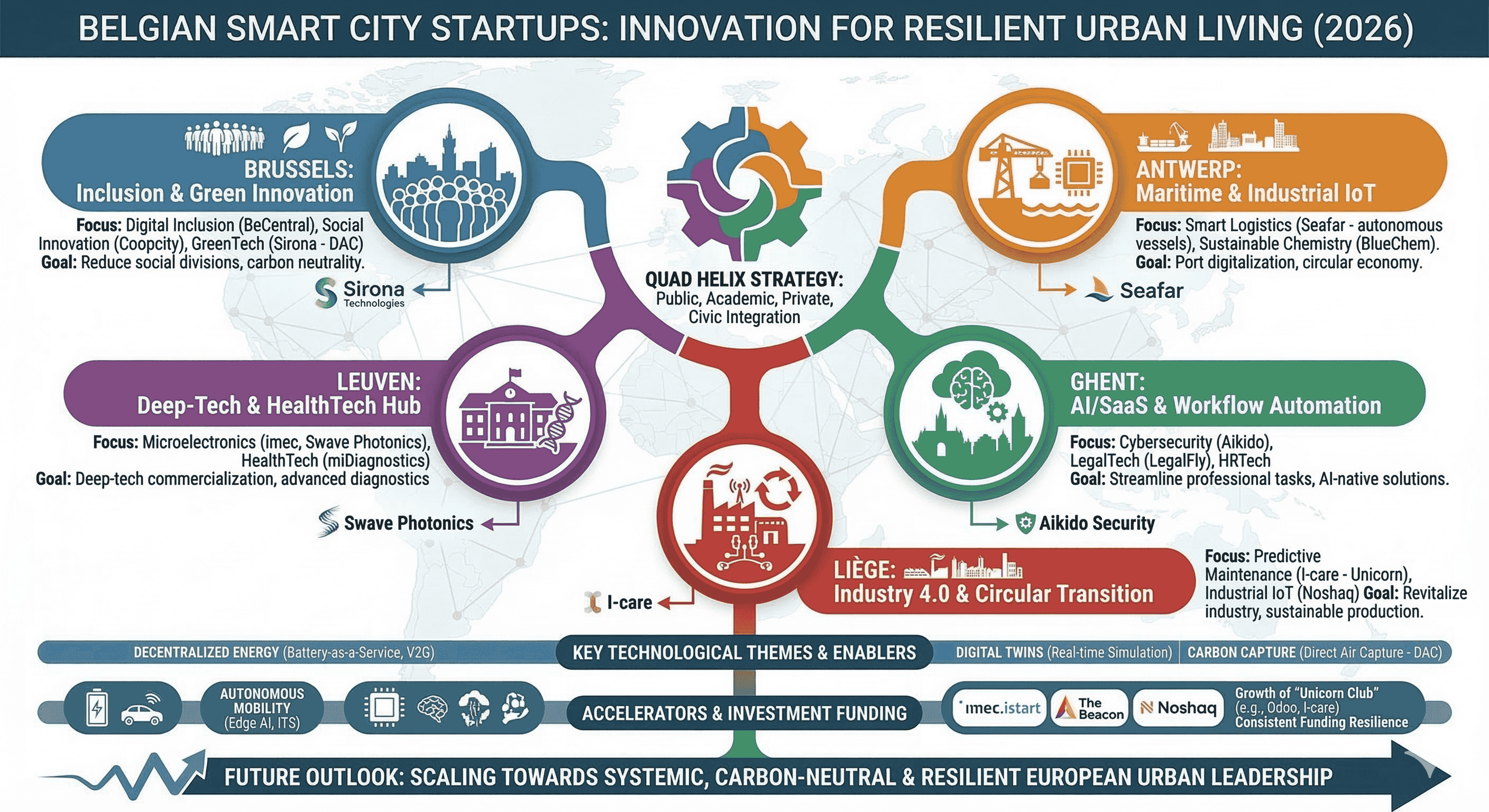
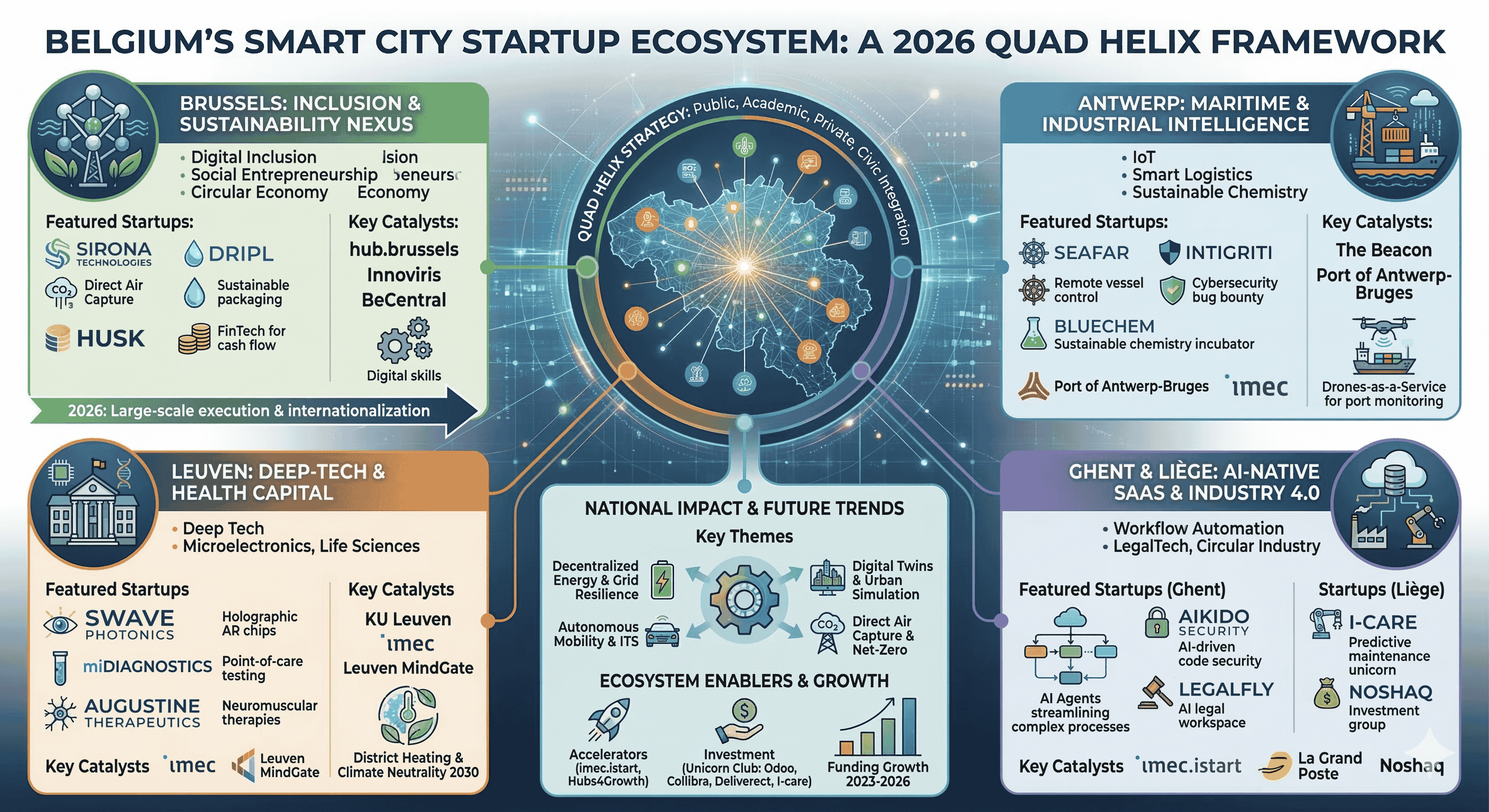
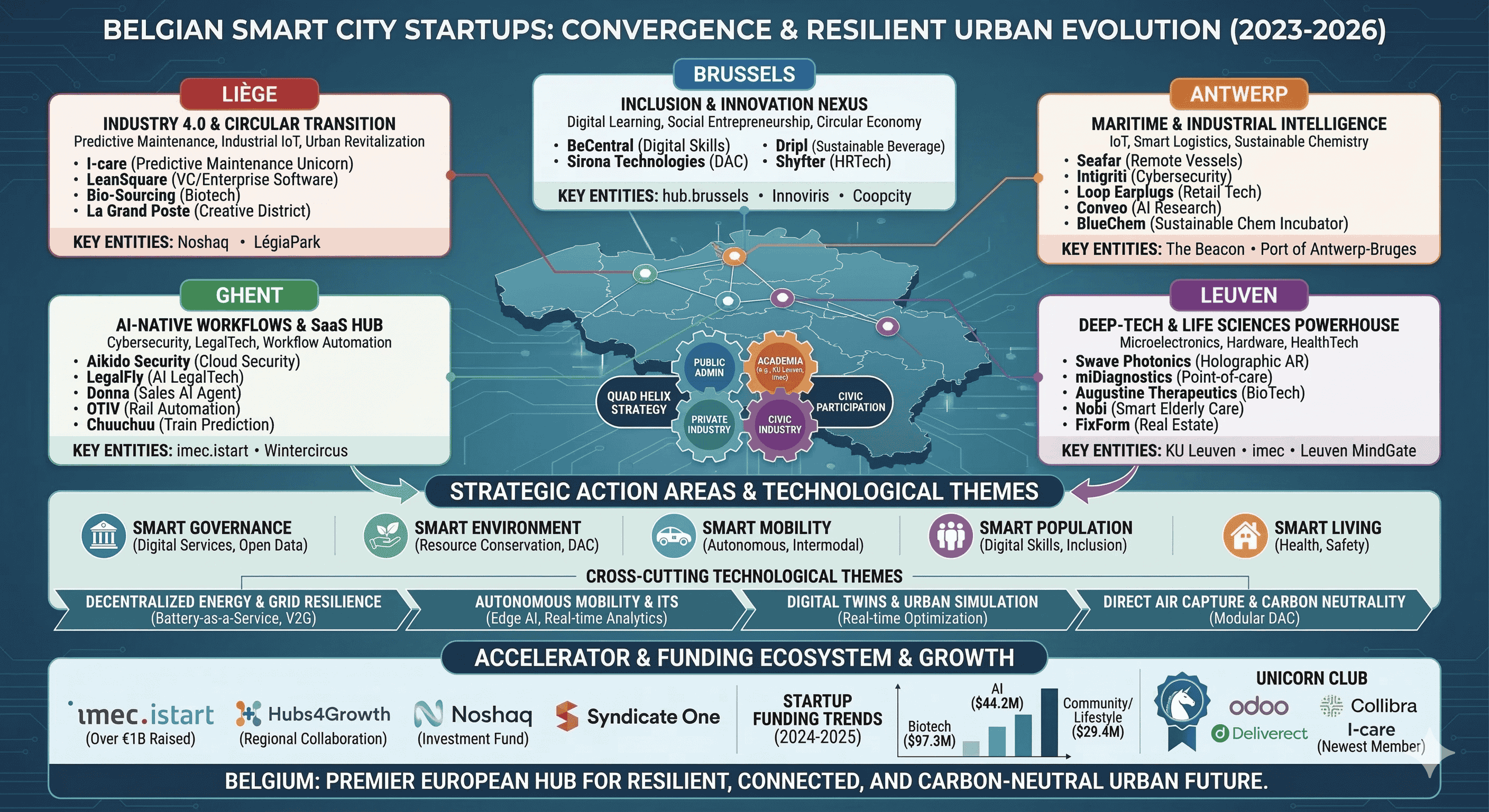
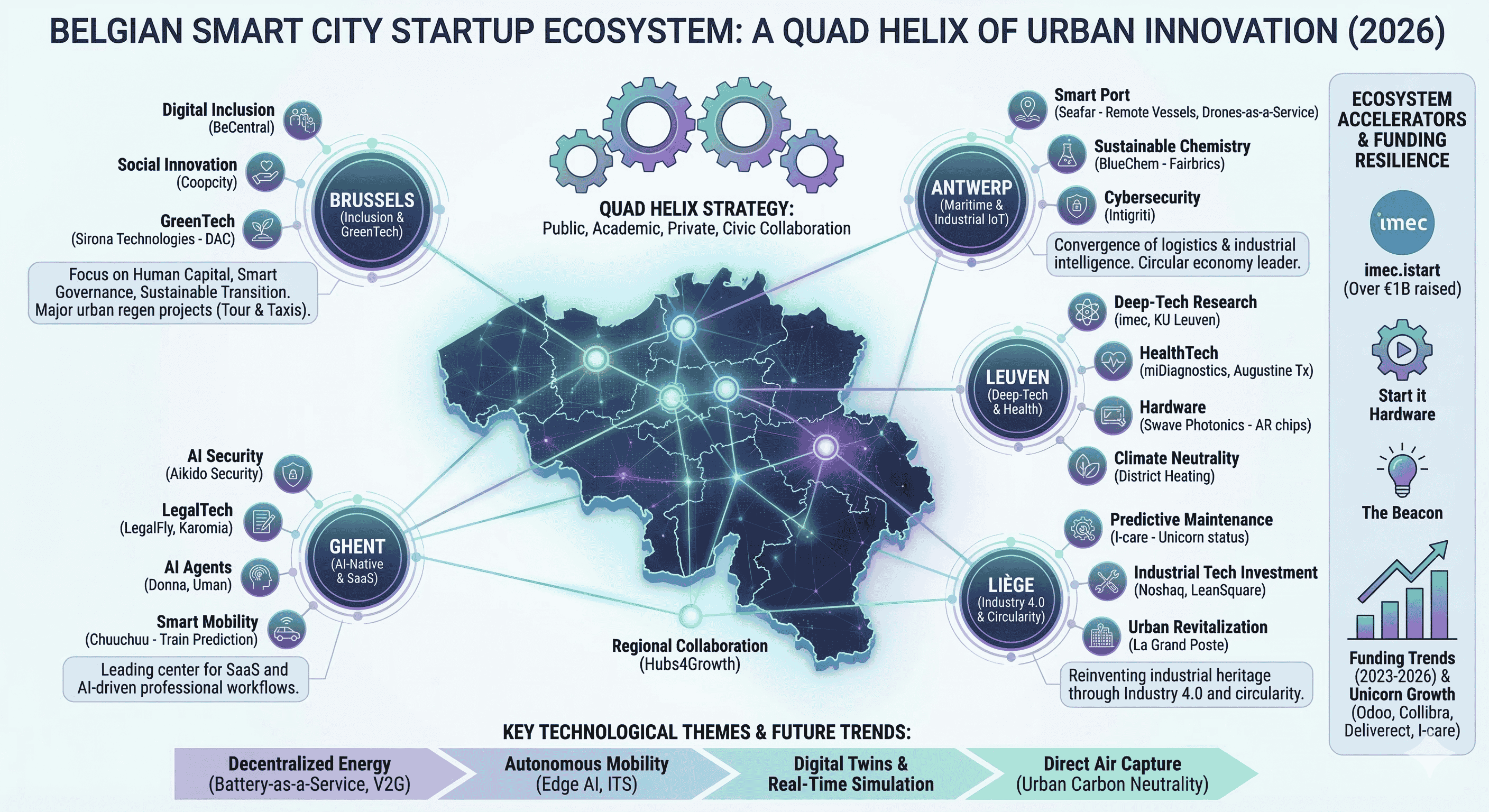
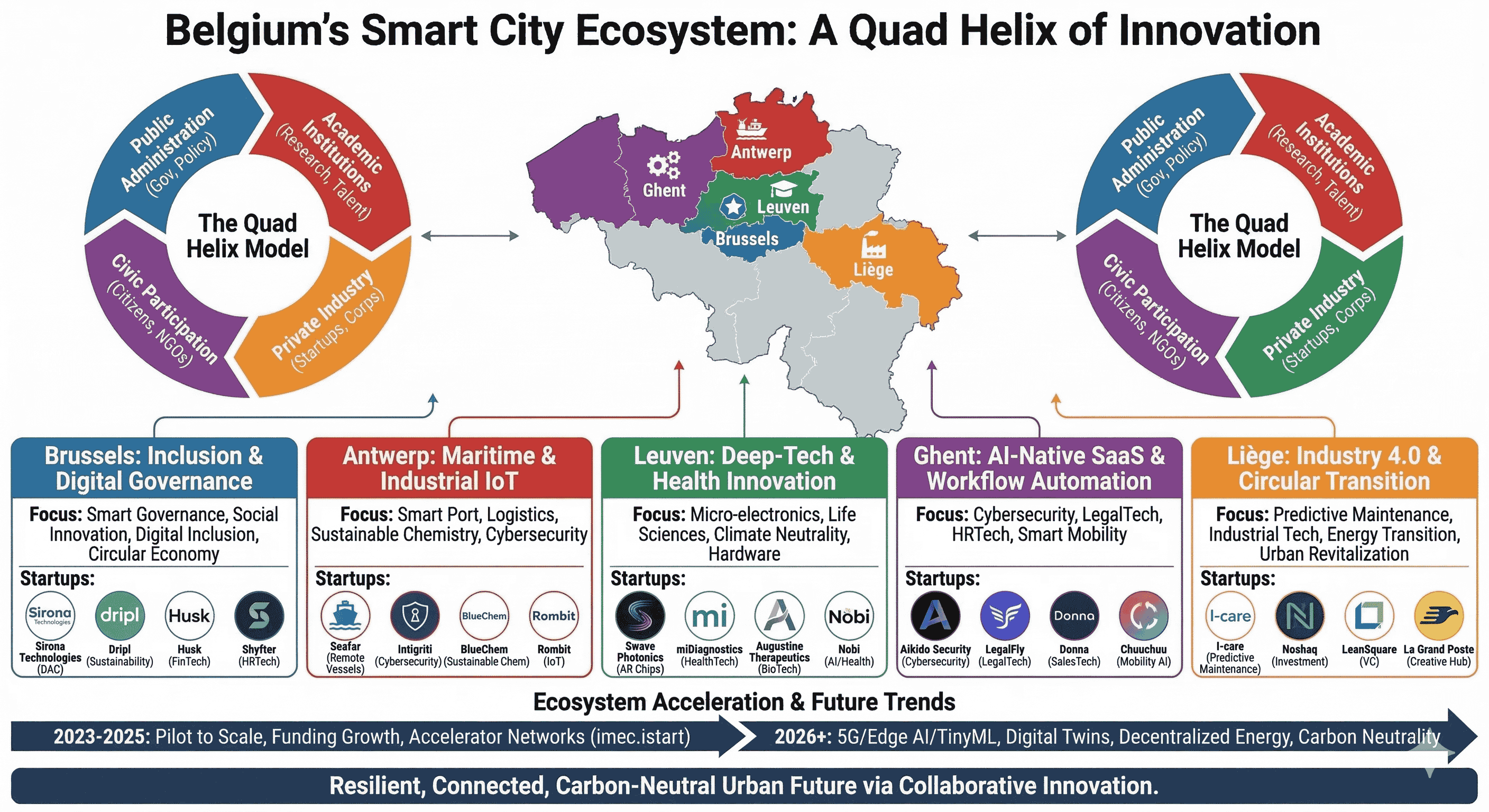
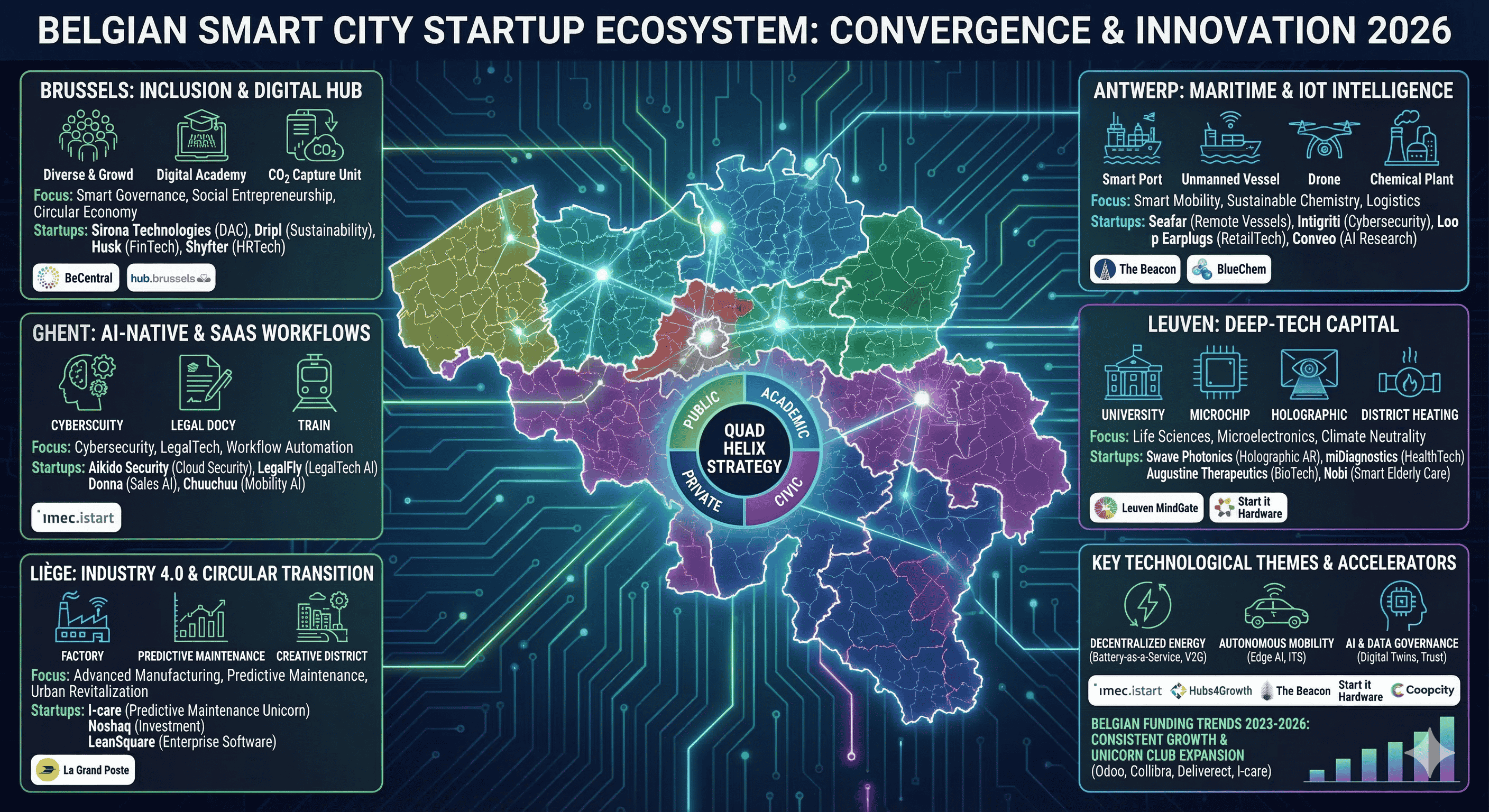
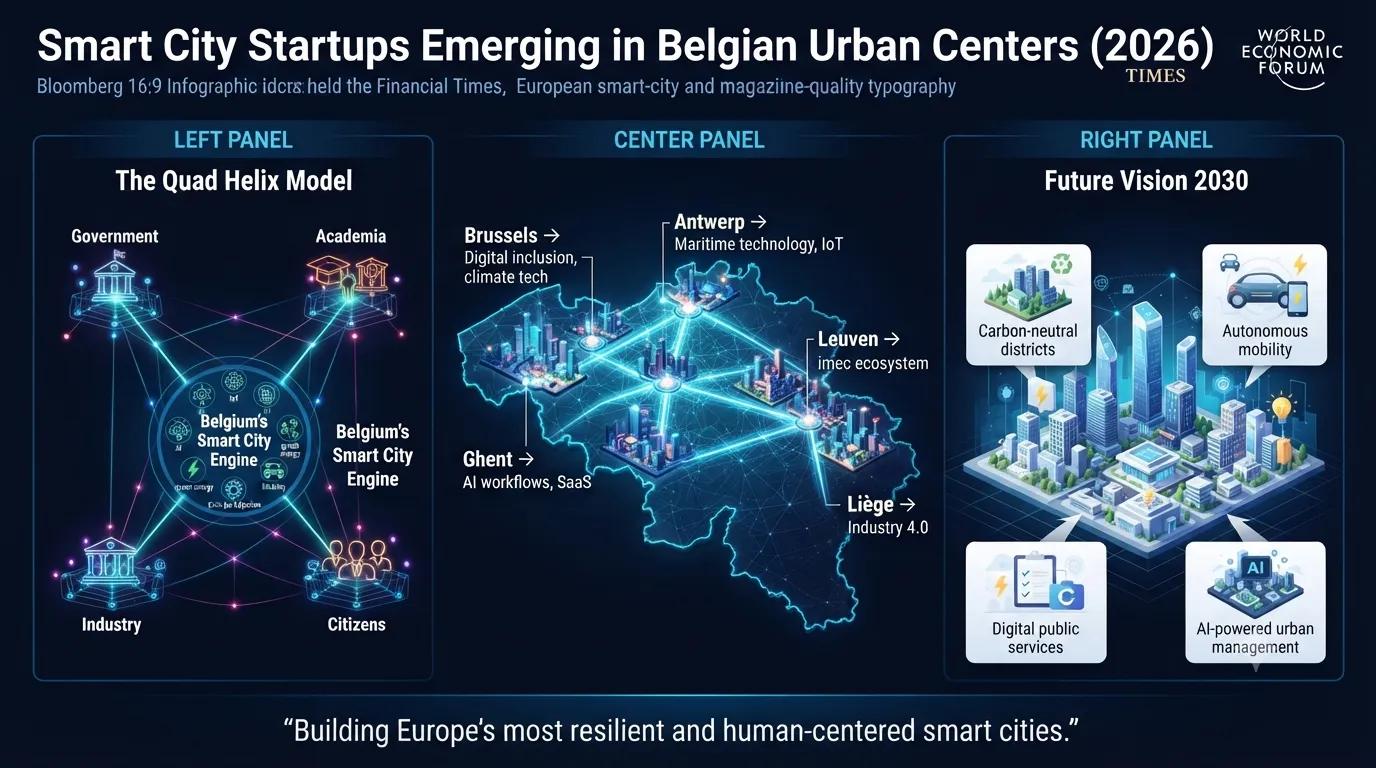
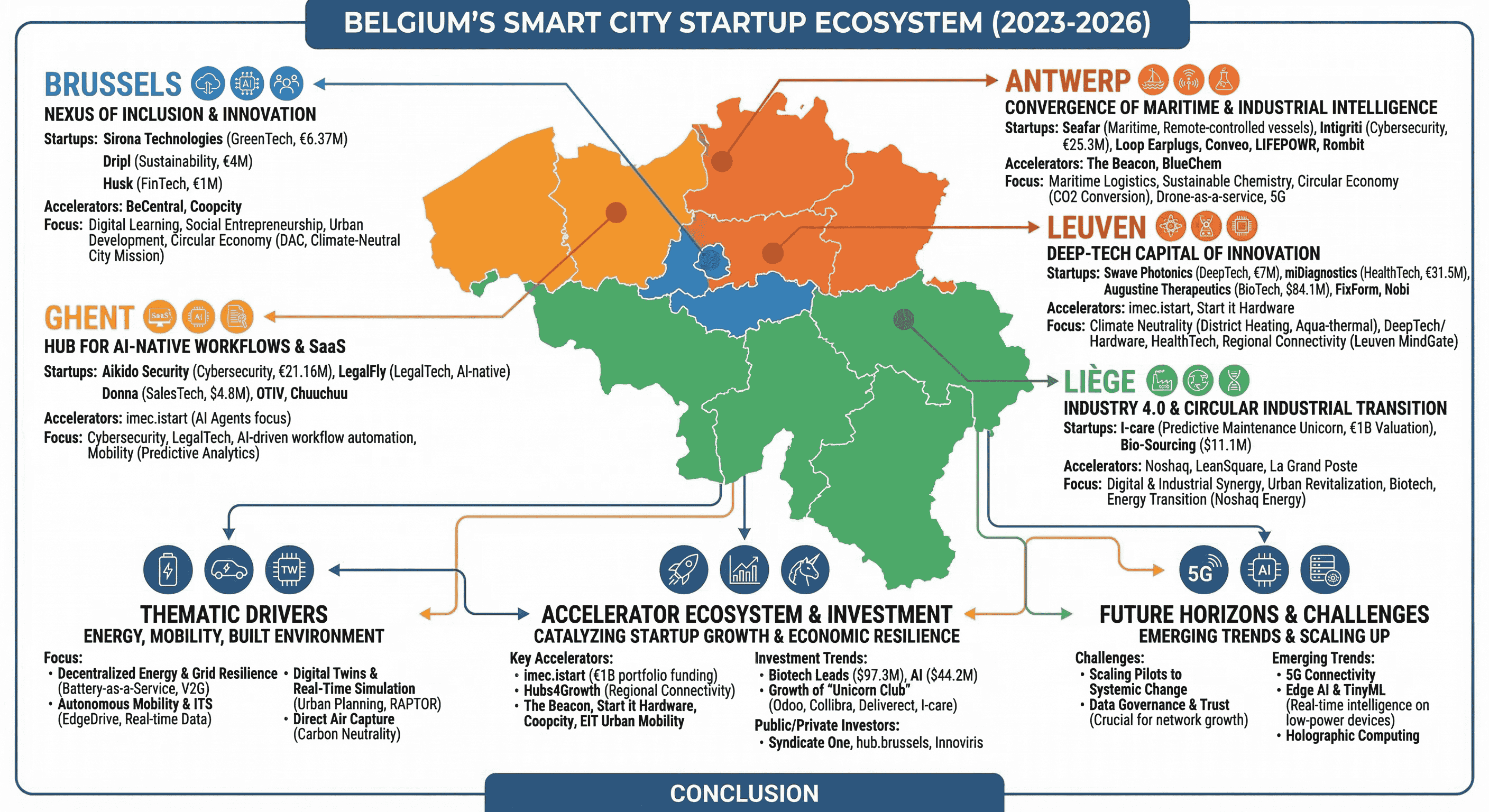
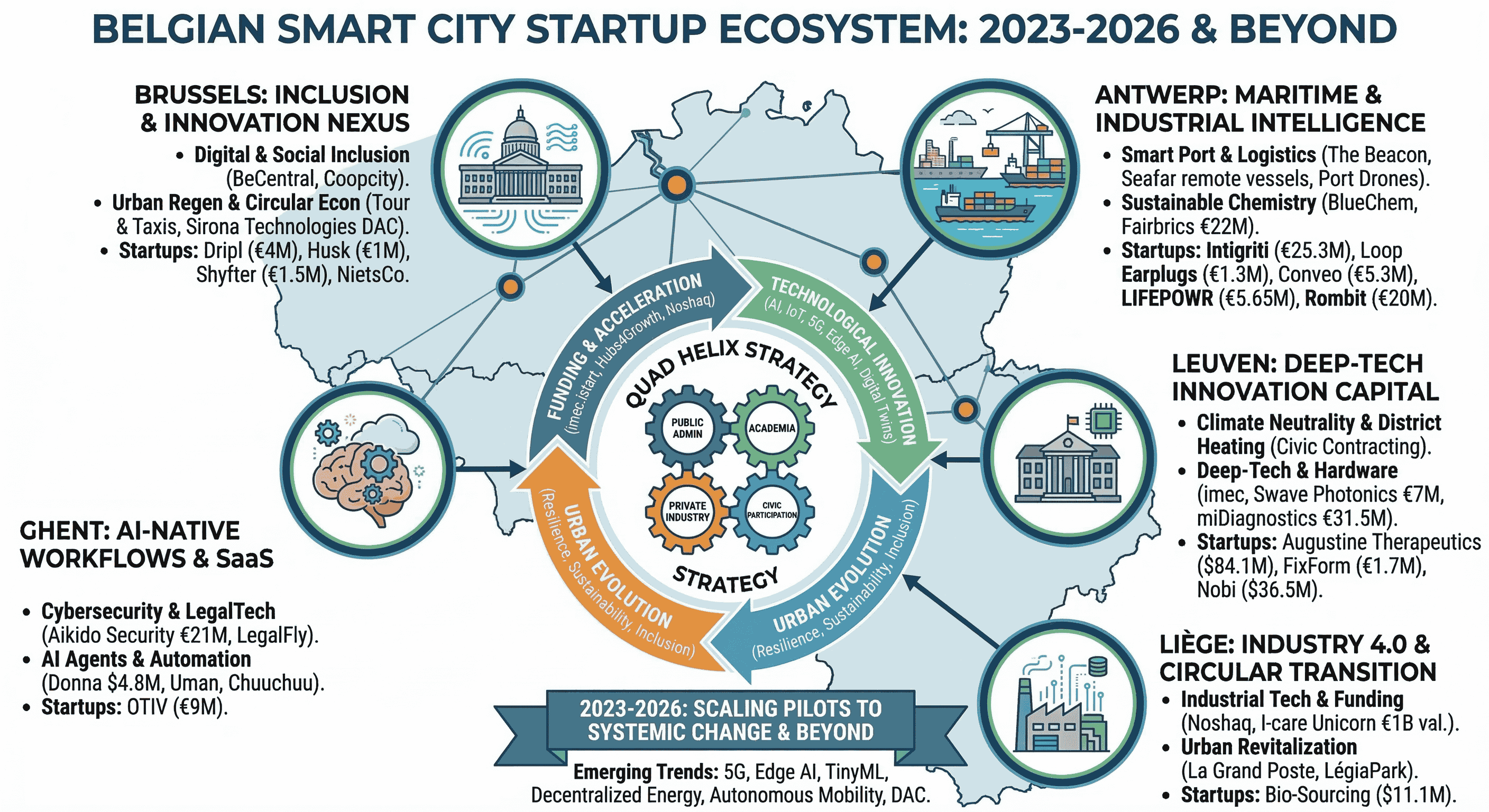
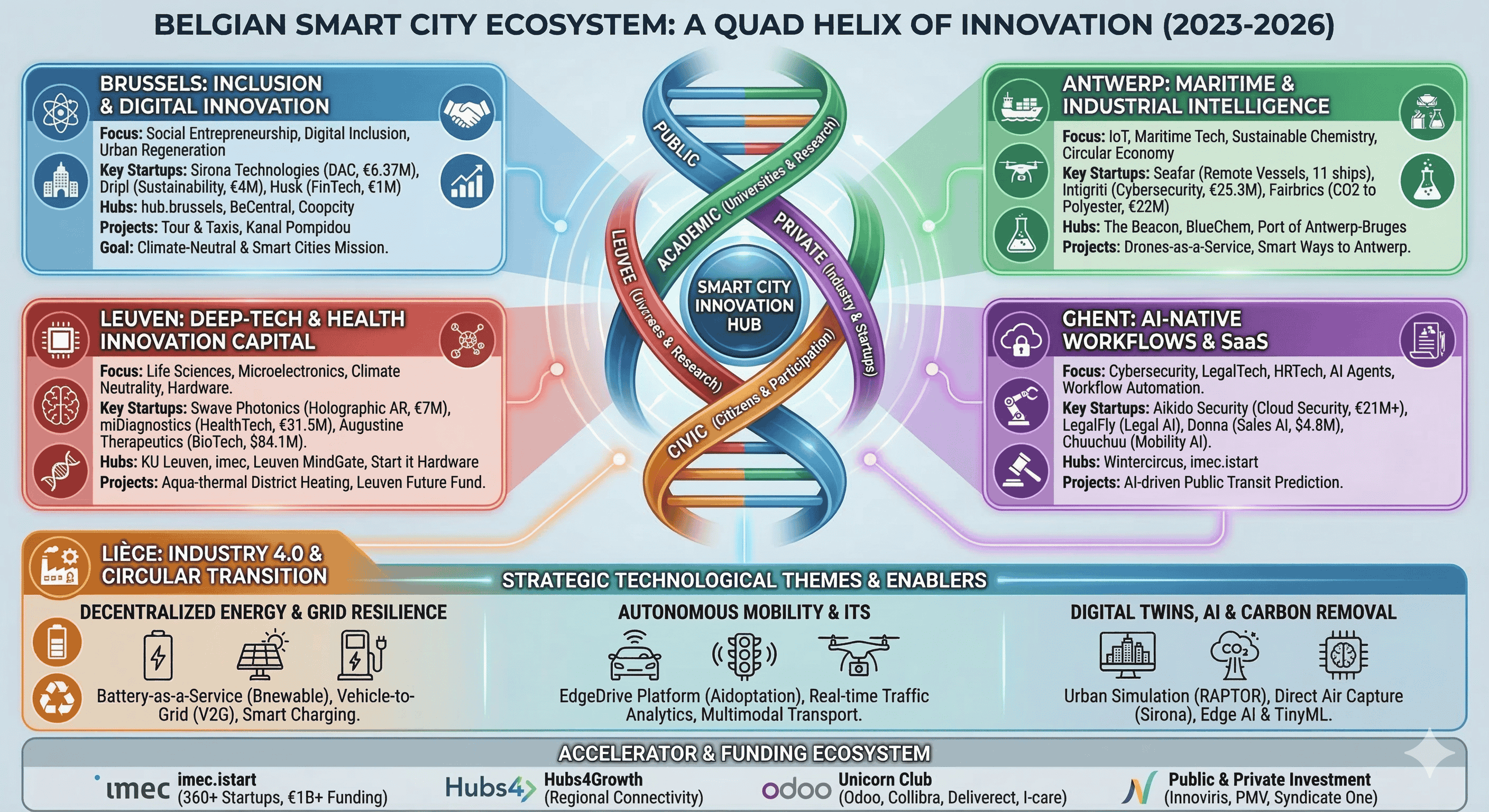
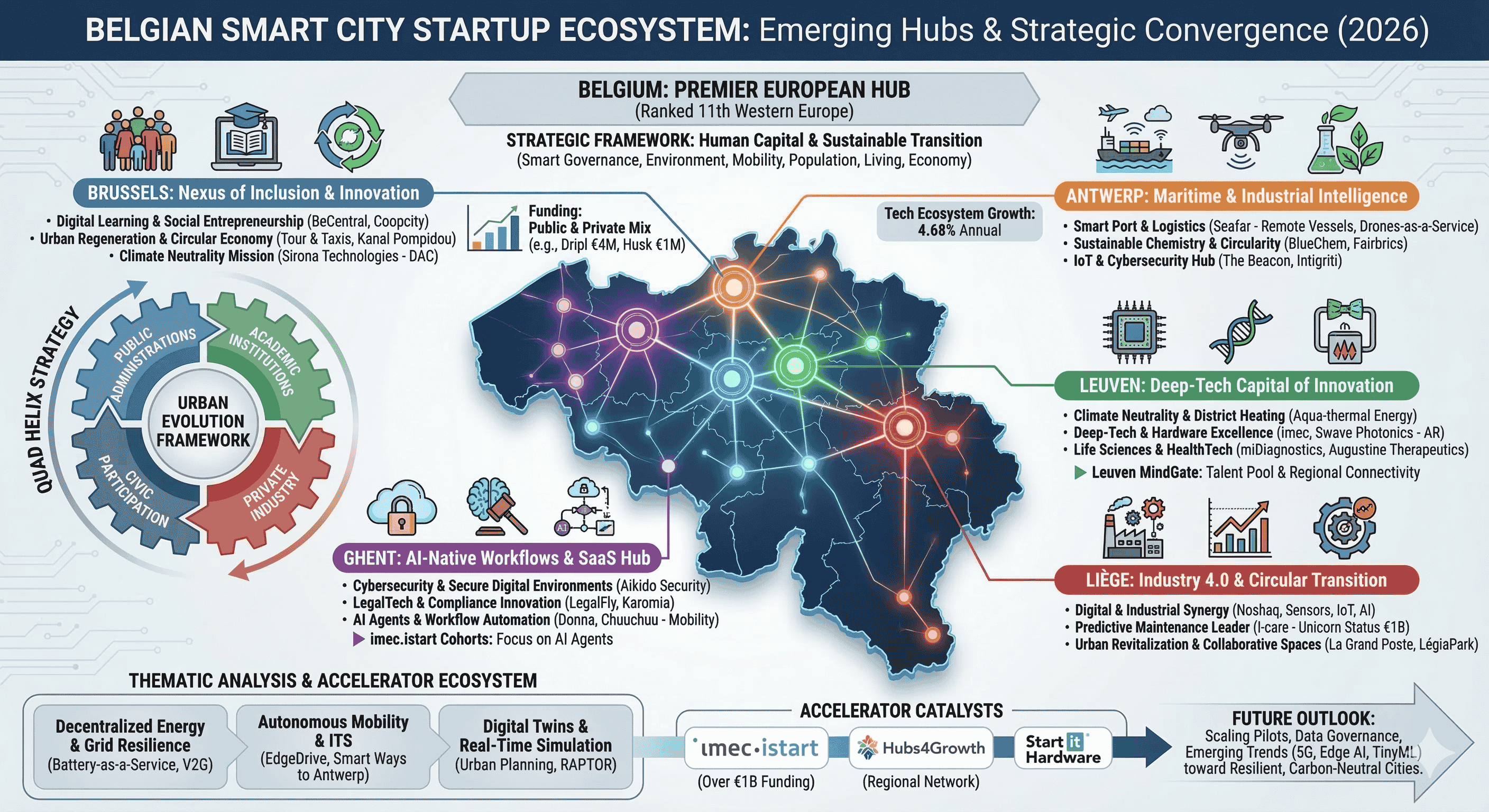
The Belgian urban landscape is currently defined by an intensive convergence of digital infrastructure, decentralized energy systems, and high-precision mobility solutions. As of early 2026, the nation’s startup ecosystem has solidified its position as a premier European hub, ranking twenty-third globally and eleventh within Western Europe. This maturation is not an isolated phenomenon but rather the result of a coordinated "Quad Helix" strategy—a multi-dimensional model that integrates public administrations, academic institutions, private industry, and civic participation into a unified framework for urban evolution. This report examines the intricate web of startups emerging across major Belgian urban centers, including Brussels, Antwerp, Ghent, Leuven, and Liège, detailing their technological mechanisms, funding trajectories, and the strategic implications of their solutions for the future of resilient urban living.
The Strategic Framework of the Belgian Smart City
The definition of a smart city in the Belgian context has transitioned from a technology-first approach to one centered on human capital and sustainable transition. The Brussels-Capital Region, for instance, has articulated six fundamental action areas: smart governance, smart environment, smart mobility, smart population, smart living, and smart economy. This framework is supported by catalysts such as integrated data spaces, technological interoperability, and cooperative governance models. The underlying trend suggests that the "smartness" of a city is increasingly measured by its ability to reduce social divisions and carbon footprints while enhancing urban dynamism through innovative services.
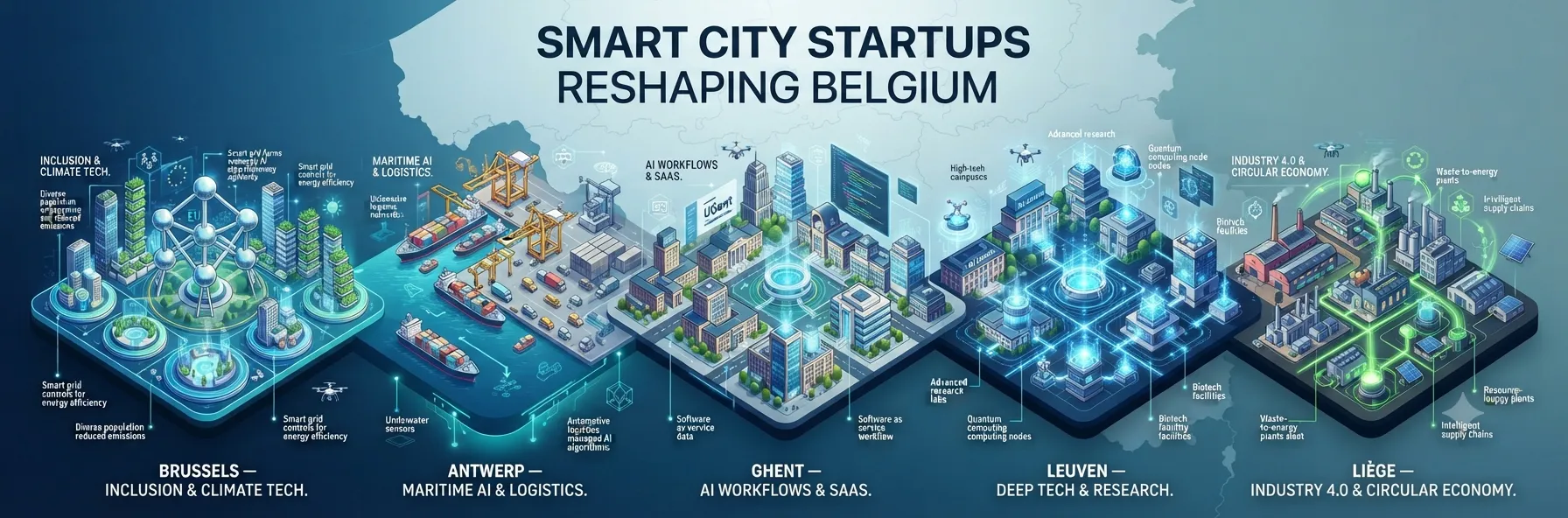
This strategic orientation has created a fertile environment for startups to move beyond conceptual phases into the realm of large-scale execution. By 2026, many Belgian startups that were highlighted as promising in 2024 and 2025 have reached advanced technology readiness levels (TRL), shifting their focus toward international commercialization and infrastructure integration. This progression is facilitated by a robust network of accelerators and investment funds that provide the necessary capital and technical support to navigate the complexities of urban implementation.
Action Area | Strategic Objective | Key Indicators of Success |
Smart Governance | Digitalization of public services and wifi ubiquity | Service efficiency, citizen engagement, data transparency |
Smart Environment | Resource conservation and emission reduction | Energy savings, waste valorization, air quality |
Smart Mobility | Alternatives to car congestion and pollution | Intermodal efficiency, public transit usage, CO2 reduction |
Smart Population | Skill development and inequality reduction | Educational access, digital literacy, social cohesion |
Smart Living | High-level health and safety standards | Public health outcomes, emergency response times |
The Brussels-Capital Region: A Nexus of Inclusion and Innovation
Brussels serves as a critical node in the European startup landscape, benefiting from its political centrality and a dense concentration of international corporations. The region has successfully positioned itself as a rising destination for founders, ranking among the top 30 cities in Europe for startup relocations according to the 2024 Startup Heatmap. Central to this success is the agency hub.brussels, which offers tailored support services for foreign entrepreneurs, alongside Innoviris, the public agency for research and innovation that provides substantial grants for strategic R&D initiatives.
Digital Learning and Social Entrepreneurship
The transformation of Brussels into a smart city is deeply rooted in digital inclusion. Projects like BeCentral, located within Brussels Central Station, have successfully democratized access to technology by hosting digital academies, startups, and NGOs. As of 2024, BeCentral had supported over 10,000 learners, effectively creating a talent pipeline for the region’s growing tech sector. Similarly, the Coopcity project emphasizes social innovation and cooperative economic models, providing support programs for social entrepreneurs who address unmet social needs in areas such as housing, health, and environment.
This focus on social and digital inclusion ensures that the transition to a smart city does not exacerbate existing social divisions. By integrating vulnerable groups—such as school drop-outs and the long-term unemployed—into the technology sector through initiatives like the "IT garage" and drone piloting workshops, Brussels is building a more resilient and equitable urban economy.
Urban Development and Circular Economy
Brussels is also undergoing major physical transformations that mirror its digital ambitions. The Tour & Taxis site and the Canal district represent some of Europe’s most ambitious urban regeneration projects, blending sustainable housing with cultural hubs like the Kanal Pompidou Centre. These projects serve as real-world laboratories for circular economy solutions and ethical AI adoption, facilitated by organizations like sustAIn.brussels.
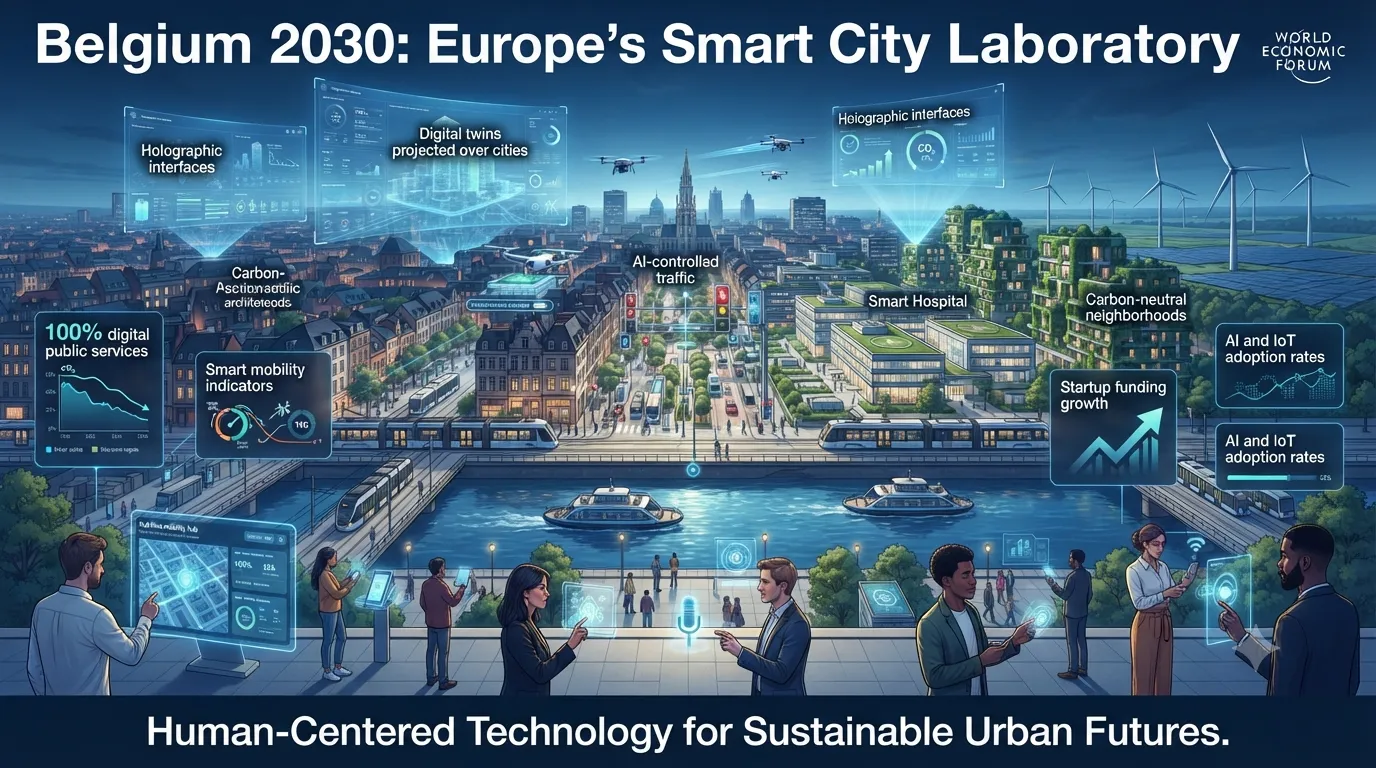
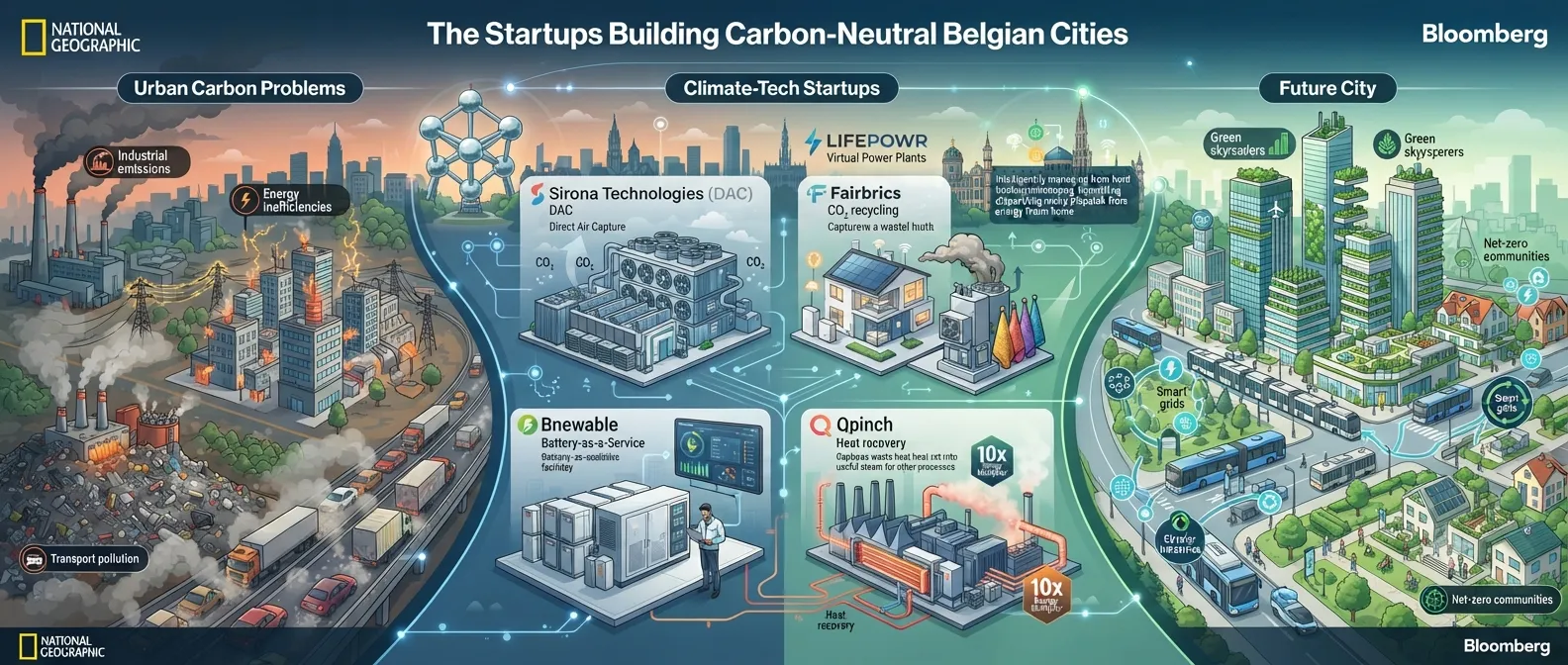
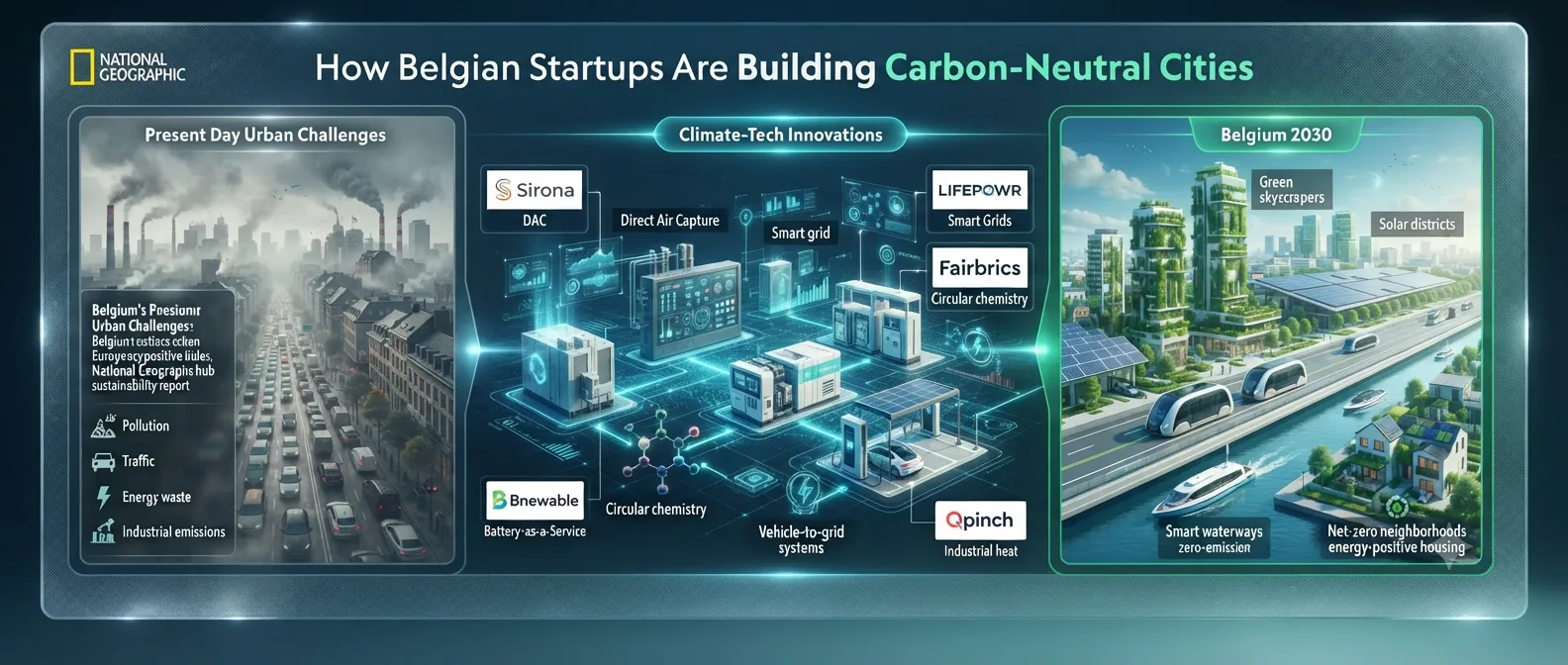
The region’s commitment to climate neutrality is further evidenced by its involvement in the EU Mission for 100 Climate-Neutral and Smart Cities. Startups like Sirona Technologies, founded in 2023, are at the forefront of this mission, developing direct air capture (DAC) technology designed to remove carbon dioxide from the atmosphere. Sirona’s modular and scalable systems are designed for rapid deployment, prioritizing low capital costs to enable widespread use in urban carbon removal strategies.
Funding and Notable Startups in Brussels
The funding landscape in Brussels is characterized by a mix of public support and active private investment. For instance, the startup Dripl recently secured €4 million for its sustainable beverage solutions, while Husk, a FinTech startup, raised €1 million to assist other ventures in optimizing cash flow and costs.
Startup/Entity | Sector | Key Activity/Impact | Funding/Status |
Sirona Technologies | GreenTech | Direct Air Capture (DAC) systems | €6.37M raised |
Dripl | Sustainability | Automated beverage dispensing | €4M (Jan 2026) |
Husk | FinTech | Cash flow optimization for startups | €1M (May 2025) |
Shyfter | HRTech | Workforce management scale-up | €1.5M (May 2025) |
NietsCo | FoodTech | Alcohol-free spirit alternatives | Equity Crowdfunding (Sep 2025) |
Antwerp: The Convergence of Maritime and Industrial Intelligence
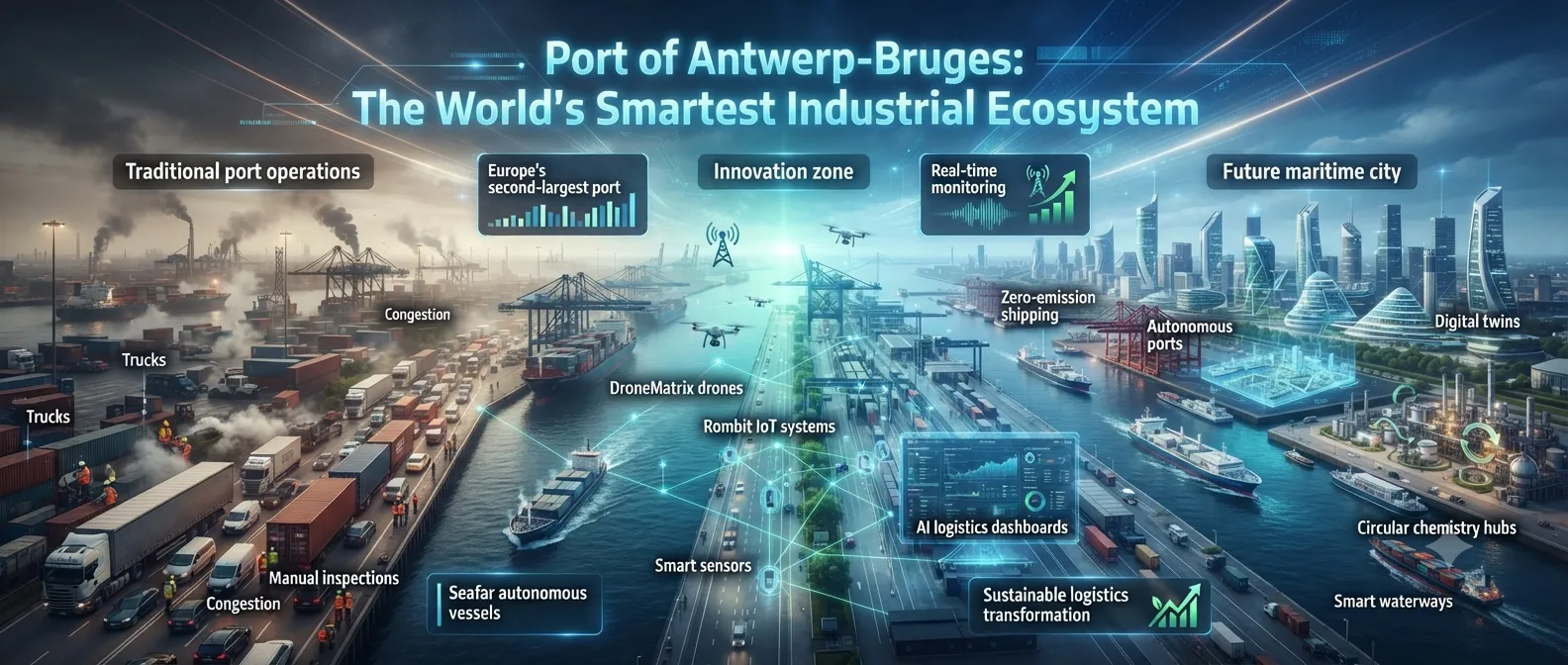
Antwerp has emerged as a specialized hub for IoT, maritime technology, and sustainable chemistry. The city’s innovation ecosystem is anchored by The Beacon, an innovation hub that fosters collaboration between the City of Antwerp, the Port of Antwerp-Bruges, the University of Antwerp, and imec. This ecosystem is particularly focused on solving complex challenges in logistics, industry, and smart city infrastructure.
The Maritime and Logistics Revolution
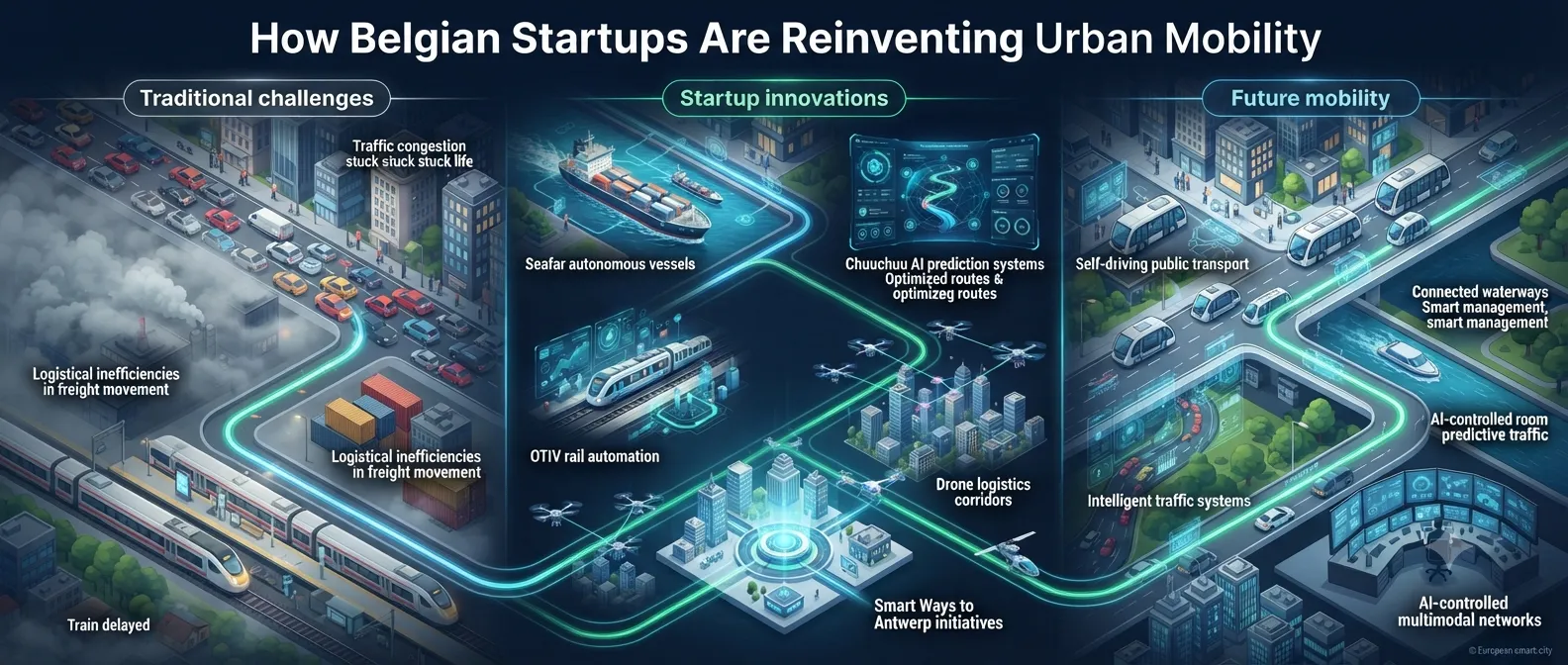
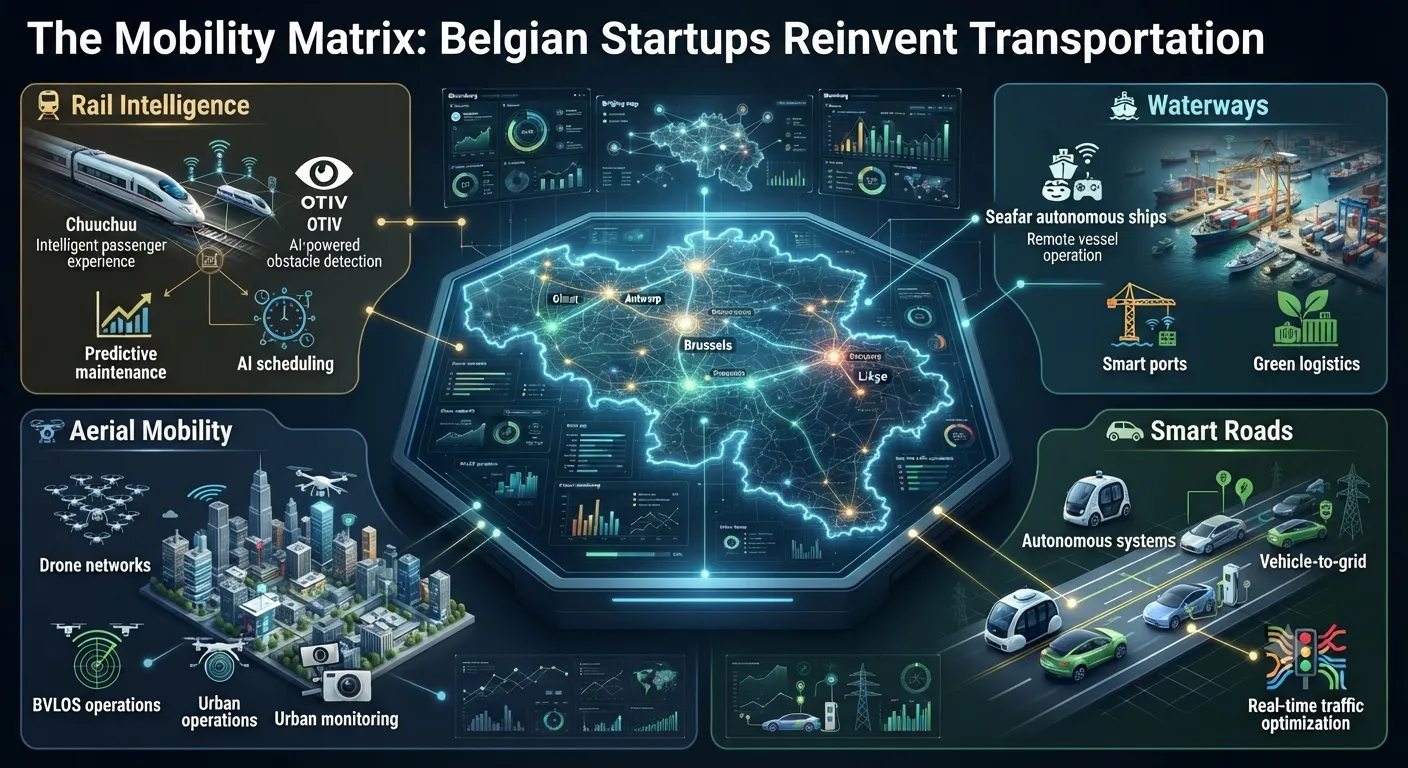
The Port of Antwerp-Bruges, Europe’s second-largest port, serves as a primary testbed for digital and circular innovations. Startups such as Seafar are revolutionizing inland waterway transport by developing systems for the remote control of unmanned vessels. Currently controlling eleven ships, Seafar’s technology enhances cost-efficiency and facilitates a modal shift from road to water, which is critical for reducing urban traffic congestion and emissions.
Drones also play a pivotal role in the port’s digitalization strategy. Through a "Drones-as-a-service" network, the port conducts beyond-visual-line-of-sight (BVLOS) flights for security inspections and environmental monitoring. This network, developed with partners like DroneMatrix and Skeydrone, utilizes 5G connectivity to provide real-time streaming and data analytics for container identification and water pollution detection.
Sustainable Chemistry and the Circular Economy
Antwerp’s leadership in the circular economy is driven by the "Innovation Journey" in sustainable chemistry, which spans from academic research at BlueApp to startup incubation at BlueChem and pilot testing at NextGen Demo. BlueChem, Belgium’s first incubator dedicated to sustainable chemistry, supports startups developing solutions for waste recycling, carbon valorization, and water reuse.
A significant development in 2026 is the expansion of BlueChem with a second laboratory building, BlueChem XL, to accommodate the growing demand for research space. Notable startups in this cluster include Fairbrics, which raised €22 million to build a pilot plant that converts CO2 into polyester, and Qpinch, which focuses on industrial heat recovery.
Antwerp's Startup Landscape and Funding
Antwerp's startup growth rate is a leading factor in Belgium's 4.68% annual expansion in the tech ecosystem. The city has become a hotbed for ventures in AI, fintech, and cybersecurity. For instance, Intigriti, a crowdsourced bug bounty platform, has successfully connected enterprises with ethical hackers to reduce cyber vulnerabilities by 60%.
Startup | Sector | Technology/Solution | Funding/Details |
Seafar | Maritime | Remote-controlled unmanned vessels | 11 ships in control |
Intigriti | Cybersecurity | Bug bounty platform | €25.3M (Series B) |
Loop Earplugs | Retail/Tech | High-tech noise reduction | €1.3M raised |
Conveo | AI/Research | Qualitative research platform | €5.3M Seed (Mar 2025) |
LIFEPOWR | EnergyTech | Virtual Power Plants | €5.65M (Nov 2025) |
Rombit | IoT | Industrial safety and efficiency | €20M raised |
Leuven: The Deep-Tech Capital of Innovation
Leuven is widely recognized as a global powerhouse in deep tech, life sciences, and microelectronics, largely due to the presence of KU Leuven and the research institute imec. The "Leuven Model" of collaboration—where academia, industry, and local government work in close proximity—has accelerated the development and commercialization of breakthrough technologies.
Climate Neutrality and District Heating
Leuven’s commitment to becoming climate neutral by 2030 is supported by its participation as an EU Pilot City. A major focus of the city’s energy strategy is the decarbonization of heating through collective systems at the district level. One innovative project involves harvesting aqua-thermal energy from the city’s river and canal to power a city-wide heating network. This initiative is supported by "Civic Contracting," which distributes leadership and agency among citizens and local organizations to foster a collaborative governance model.
The city has also established the "Leuven Future Fund," an investment vehicle designed to boost sustainable entrepreneurship. With an initial investment of €2.5 million, the fund identifies and supports projects that align with the city’s roadmap to climate neutrality.
Deep-Tech and Hardware Excellence
Leuven is considered Belgium’s primary hardware hub, supported by the "Start it Hardware" accelerator. This program provides startups with access to prototyping labs and manufacturing partners, leveraging the expertise of local leaders like Materialise and imec. One emerging startup in this sector is Swave Photonics, which is developing holographic chips for augmented reality (AR). Their NanoPixel technology enables compact, high-resolution displays that blend digital information with the real world, promising a new generation of immersive urban experiences.
In the healthcare sector, Leuven-based startups like miDiagnostics and Augustine Therapeutics are leveraging the region’s research excellence to develop advanced diagnostics and treatments. miDiagnostics, for instance, recently raised €31.5 million in a Series D round to scale its point-of-care testing technology.
Strategic Talent and Regional Connectivity
Leuven MindGate plays a crucial role in linking key players in the region to accelerate collaborative growth. To address the challenge of talent acquisition, Leuven MindGate launched a "Smart Talent Pool" that allows companies to share high-quality candidates, thereby reducing recruitment costs and ensuring that skilled individuals remain within the regional ecosystem.
Furthermore, the "Hubs4Growth" initiative connects Leuven with other major hubs like Wintercircus in Ghent and The Beacon in Antwerp, breaking down regional walls to create a single, interconnected Flemish startup landscape.
Startup | Domain | Core Innovation | Funding/Status |
Swave Photonics | DeepTech | Holographic AR chips | €7M Series A (Jun 2025) |
miDiagnostics | HealthTech | Point-of-care diagnostics | €31.5M Series D (Dec 2024) |
Augustine Therapeutics | BioTech | Neuromuscular therapies | $84.1M Series A (Mar 2025) |
FixForm | Real Estate | Building maintenance platform | €1.7M Seed (Sep 2024) |
Nobi | AI/Health | Smart ceiling lamps for elderly care | €36.5M Series B (Jan 2025) |
Ghent: A Hub for AI-Native Workflows and SaaS
Ghent has established itself as a leading center for Software-as-a-Service (SaaS) and AI-driven business solutions, particularly in the fields of cybersecurity, legal technology, and human resources. The city’s ecosystem is characterized by startups that focus on workflow simplification and the automation of complex professional tasks.
Cybersecurity and Secure Digital Environments
Aikido Security is a standout Ghent-based startup that offers a unified platform for securing code, cloud environments, and applications. By using AI to automatically detect vulnerabilities and suggest fixes, Aikido helps engineering teams manage security without extensive manual oversight. Founded in 2022, the company has already raised over €21 million, reflecting the high demand for integrated security solutions in the digital economy.
LegalTech and Compliance Innovation
The rise of LegalTech in Ghent is exemplified by LegalFly, an AI-native workspace designed for in-house legal and procurement teams. The platform automates contract review, risk analysis, and drafting support, significantly increasing the efficiency of legal departments. Another notable venture is Karomia, which provides a SaaS platform for sustainability officers to conduct Double Materiality Assessments as part of their ESG reporting. This focus on regulatory compliance and ESG data ensures that companies can navigate increasing transparency requirements with greater accuracy.
AI Agents and Workflow Automation
The Spring 2025 and Autumn 2025 imec.istart cohorts highlight the prevalence of AI agents in the Ghent ecosystem. Startups like Uman are disrupting the sales enablement market by using AI agents to provide personalized support, while Donna has raised $4.8 million to transform field sales operations through agentic AI. These solutions are less about the hype of AI and more about solving real-world, everyday problems by streamlining chaotic processes into structured systems.
In the mobility sector, Ghent-based Chuuchuu utilizes AI to predict train delays and missed connections, helping passengers make more reliable sustainable travel choices. This application of predictive analytics to public transit is a critical component of the smart city’s goal to improve the efficiency and attractiveness of collective transportation.
Startup | Specialization | Impact Area | Funding Details |
Aikido Security | Cybersecurity | Cloud/Code security automation | €21.16M |
LegalFly | LegalTech | AI contract and risk analysis | AI-native platform |
Donna | SalesTech | Agentic AI for field sales | $4.8M (Dec 2025) |
OTIV | Mobility | Rail automation and safety | €9M (Dec 2025) |
Chuuchuu | Mobility | AI-driven train delay prediction | imec.istart cohort |
Liège: Industry 4.0 and the Circular Industrial Transition
Liège is reinventing its industrial heritage through a focus on "Industry 4.0" and circular economy initiatives, largely facilitated by the investment group Noshaq. The region’s strategy is based on four pillars: funding, sectoral expertise, appropriate infrastructure, and support services.
Digital and Industrial Synergy
Noshaq has developed various financing vehicles to support SMEs and startups in the Liège region, with a portfolio of over 470 companies. The dedicated subsidiary "Noshaq Energy" focuses on the local energy transition by investing in renewable production, storage assets, and promising energy-sector companies.
A core component of Liège’s strategy is the integration of cutting-edge technologies into traditional industrial processes. Startups in the region are leveraging sensors, IoT, AI, and big data to improve performance in production industries such as mechanical, spatial, and material sciences. For instance, LeanSquare, an investment fund within the Noshaq group, focuses on innovative projects in enterprise software and life sciences, providing the capital and network needed for mature startups to scale.
Urban Revitalization and Collaborative Spaces
Liège is also investing in strategic infrastructure projects that serve as hubs for innovation. La Grand Poste, a creative district, offers coworking spaces, startup support programs, and a media campus, creating a vibrant environment for digital entrepreneurs. Other projects like LégiaPark provide business centers specifically for the life sciences sector, while the rehabilitation of brownfields like the Dynamo project demonstrates the city’s commitment to sustainable urban development.
I-care: A Global Leader in Predictive Maintenance
The success of the Liège industrial tech sector is epitomized by I-care, a Mons-based company that recently achieved unicorn status with a €1 billion valuation. I-care utilizes advanced diagnostic techniques and its proprietary Wi-care™ vibration sensors to monitor hundreds of thousands of machines globally. By predicting machine failures before they occur, I-care prevents production disruptions and enhances the efficiency of industrial operations. This breakthrough highlights the potential for Belgian industrial tech to dominate global markets.
Entity/Startup | Focus | Role in Ecosystem | Key Projects/Funding |
I-care | Predictive Maintenance | Industrial Tech Unicorn | €1B valuation |
Noshaq | Investment Fund | Regional ecosystem developer | €700M share capital |
LeanSquare | Venture Capital | Support for mature startups | Enterprise Software, ICC |
La Grand Poste | Creative District | Startup and media hub | Urban revitalization |
Bio-Sourcing | Biotech | Biological drug production | $11.1M funding (Sep 2024) |
Thematic Analysis: Energy, Mobility, and the Built Environment
Across all Belgian urban centers, certain technological themes emerge as primary drivers of the smart city transition. These themes represent areas where startup innovation and municipal policy are most closely aligned.
Decentralized Energy and Grid Resilience
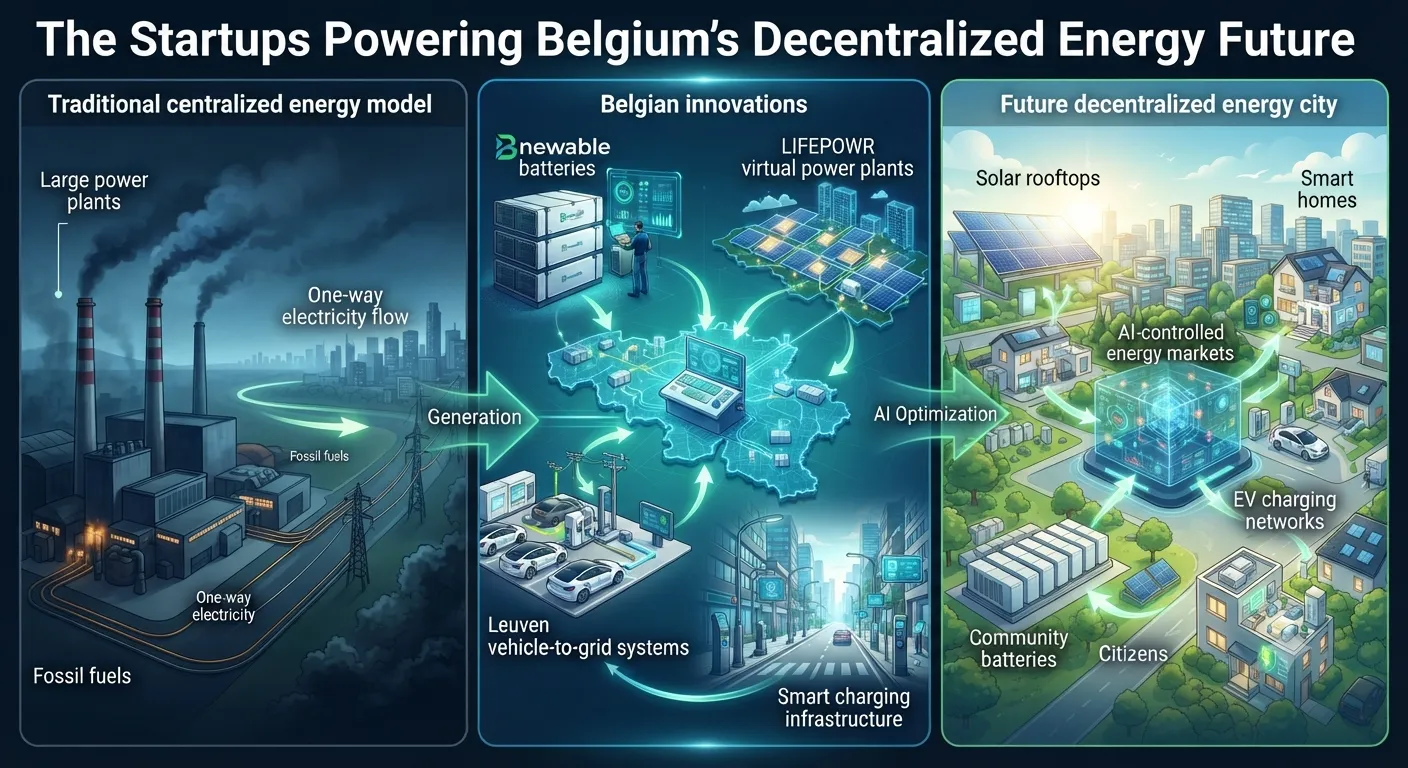
The transition to a decentralized energy grid is characterized by the rise of "Battery-as-a-Service" models and smart charging technologies. Zaventem-based Bnewable combines battery hardware, intelligent software, and financing into a single offering, allowing businesses to optimize their energy storage without high upfront costs. This integrated approach is critical for the stability of the urban grid, especially as the share of intermittent renewable energy sources increases.
In Leuven, researchers are investigating smart and bidirectional charging for electric vehicles (EVs). This technology allows EVs to act as small, mobile batteries that can feed energy back into the grid during periods of high demand, thereby contributing to the integration of renewable energy and grid stability. This "Vehicle-to-Grid" (V2G) mechanism is a fundamental component of the future smart energy landscape.
Autonomous Mobility and Intelligent Transport Systems (ITS)
Belgian startups are developing advanced platforms for autonomous driving that extend beyond personal vehicles into commercial and emergency services. Aidoptation’s EdgeDrive platform, for instance, focuses on dual-use applications (civil and defense), offering an AI-driven autonomous system that has been validated under extreme conditions. The broader benefit for urban populations includes improved road safety and enhanced emergency response capabilities.
Intelligent transport systems (ITS) are also being enhanced through real-time data analytics. In Antwerp, the "Smart ways to Antwerp" program provides structured insights into how different mobility solutions are used and their impact on urban flows. This data-driven approach allows for more efficient traffic management and the optimization of multi-modal travel routes.
Digital Twins and Real-Time Urban Simulation
Digital twins are becoming essential for urban planners to simulate and optimize city operations in real-time. In Shanghai and Singapore, digital twins allow planners to test the impact of new transport routes or climate changes before they are implemented. In Belgium, the RAPTOR program has supported the deployment of a digital twin for Munich to simulate multimodal transport flows, and similar approaches are being adopted in Belgian cities to manage congestion and energy consumption. The 13th EAI International Conference on Mobility, IoT and Smart Cities (2026) highlights urban digital twins as a key topic for simulating and optimizing city operations.
Direct Air Capture and Urban Carbon Neutrality
As cities strive for net-zero targets, carbon removal technologies like Direct Air Capture (DAC) are gaining prominence. Sirona Technologies' modular DAC units, which remove CO2 directly from ambient air, are designed to be manufactured off-site and installed quickly, significantly reducing capital costs. This approach allows for scalable and globally adaptable carbon removal, which helps mitigate the long-term impacts of climate change such as extreme weather and rising resource costs.
The Accelerator Ecosystem: Catalyzing Startup Growth
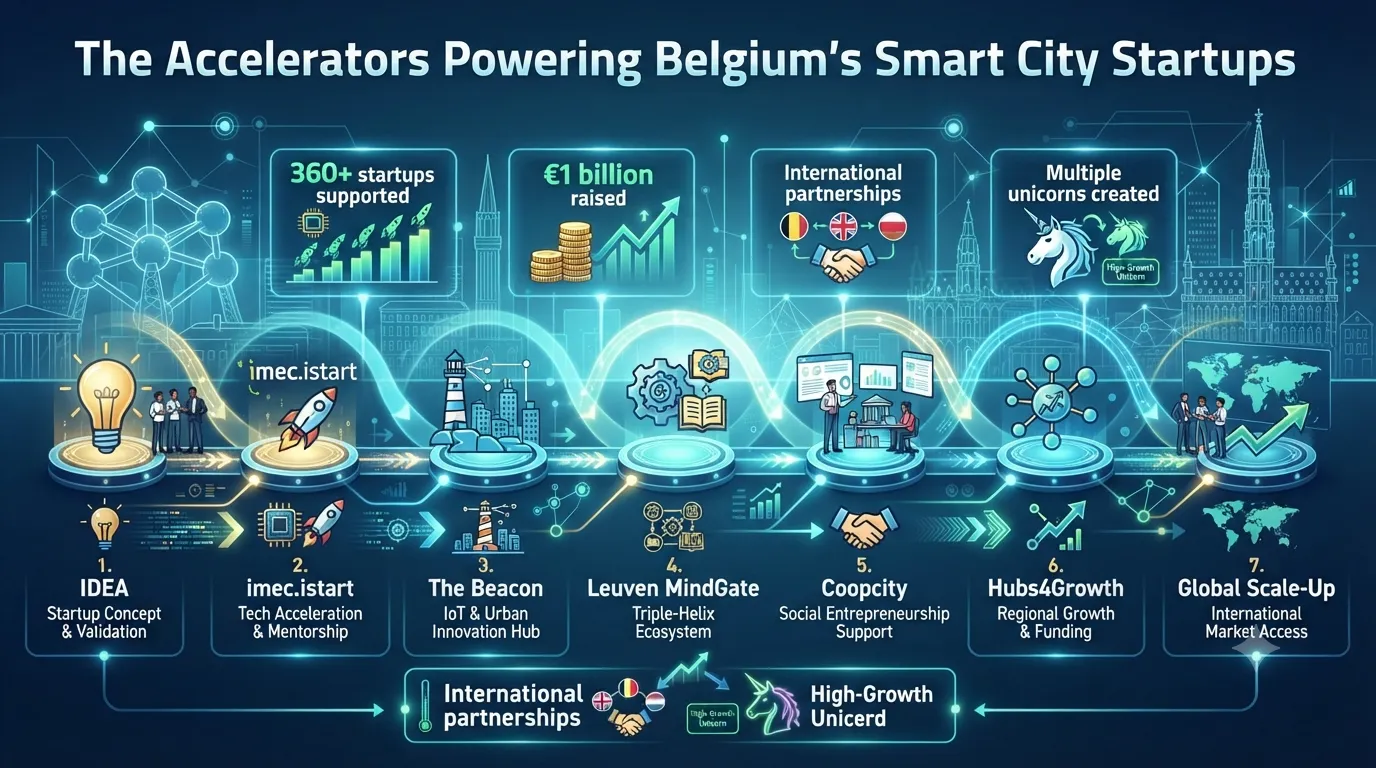
The rapid emergence of smart city startups in Belgium is supported by a world-class network of accelerators and incubators that provide the necessary pre-seed funding, coaching, and access to international networks.
imec.istart: A Decade of Impact
imec.istart has played a transformative role in the Belgian tech ecosystem, investing in over 360 startups since its inception in 2011. In 2024, the total funding raised by imec.istart portfolio companies surpassed the €1 billion mark, demonstrating the ecosystem's ability to attract both national and international investors. The accelerator's open calls, held three times a year, attract talent from diverse domains including HealthTech, Mobility, and LegalTech.
The imec.istart cohorts reflect broader market trends. For instance, the Spring 2025 cohort featured a "melting pot" of industries spanning construction, healthtech, and manufacturing, with a clear focus on resource efficiency and waste reduction. The Autumn 2025 cohort saw a significant rise in LegalTech, as AI continues to be used as a practical engine for automating complex professional workflows.
Regional Collaboration through Hubs4Growth
To address fragmentation in the Flemish startup landscape, the Hubs4Growth consortium unites six major hubs: Wintercircus (Ghent), Hangar K, The Beacon (Antwerp), Leuven MindGate, Limburg Startup, and Brussels Airport Company. Supported by VLAIO, this network provides startups with seamless access to workspaces and expertise across the entire region, helping them transition from local players to international competitors.
One notable program within this network is the "Take a Seat" initiative, which gives startups 30 days of co-working space in international incubators, facilitating global connections with regions like the USA and China. This level of regional and international connectivity is vital for startups looking to scale their solutions in the global smart city market.
Accelerator/Hub | Location | Core Focus | Key Programs |
imec.istart | Ghent/Antwerp/Leuven | Tech Startups | Pre-seed funding, tailored coaching |
The Beacon | Antwerp | IoT & AI | Collaborative projects, Tech Scout |
Start it Hardware | Leuven | Physical Products | Prototyping labs, manufacturing partners |
Coopcity | Brussels | Social Innovation | Seeds, Blossom, Pollinize |
EIT Urban Mobility | Brussels (Hub West) | Sustainable Mobility | RAPTOR, Startup portfolio |
Investment Trends and Economic Resilience
The Belgian startup scene has shown remarkable resilience in its funding activities between 2023 and 2026. This consistent trend highlights Belgium’s position as an emerging hub for innovative ideas and groundbreaking technologies.
Growth of the "Unicorn Club"
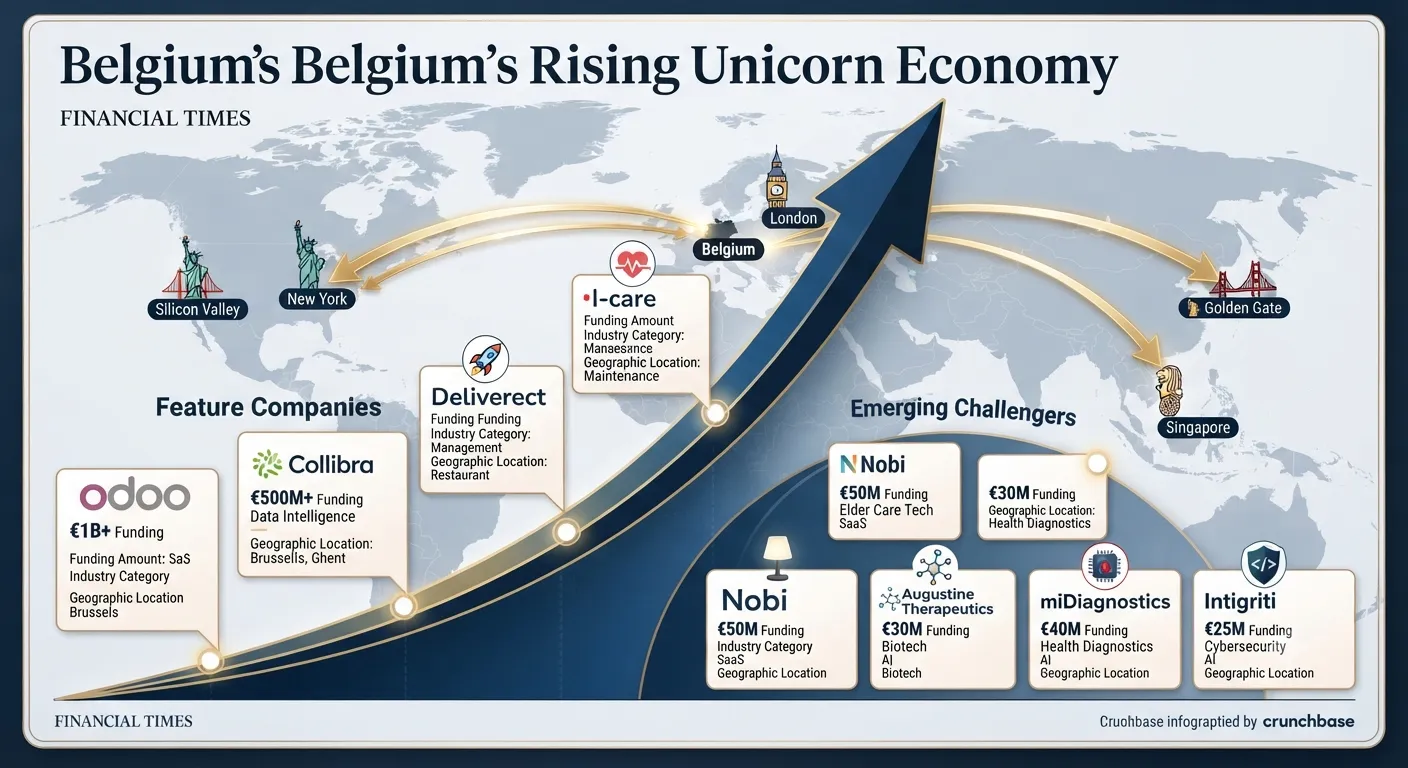
Belgium’s "unicorn club" (startups valued at over $1 billion) continues to expand. Notable members include Odoo, an open-source suite of business applications, Collibra, a data analytics and governance platform, and Deliverect, which streamlines restaurant delivery operations. The recent addition of I-care to this elite group underscores the strength of Belgium’s industrial technology sector.
Funding Statistics and Sectoral Strength
In the past year, 63 Belgian startups successfully raised funds in 2024, with another 44 securing capital by mid-2025. The top industries by funding amount reflect the nation’s strategic priorities: Biotechnology leads with $97.3 million, followed by Artificial Intelligence at $44.2 million, and Community and Lifestyle at $29.4 million.
In Antwerp alone, the startup ecosystem tracks 29 companies, with total funding raised in early 2025 reaching $10.5 million. The largest deal in this period was for Conveo, which secured $5.3 million in its Seed round. These figures demonstrate a vibrant and growing market for innovative urban solutions.
The Role of Public and Private Investors
The Belgian funding landscape is supported by a mix of institutional investors, public funds, and angel networks. Syndicate One, a Brussels-based organization, recently concluded a €22 million second fund to back early-stage Belgian startups, with support from Sofina and over 120 tech founders. Public agencies like hub.brussels and Innoviris play a critical role in providing the early-stage grants and support services needed to de-risk ambitious R&D projects.
Startup | Location | Funding Amount | Date | Industry |
I-care | Mons | €20M (@ €1B valuation) | Mar 2026 | Industrial Tech |
Augustine Therapeutics | Leuven | $84.1M | Mar 2025 | Biotechnology |
Nobi | Antwerp | $36.5M | Jan 2025 | AI/Health |
miDiagnostics | Leuven | $31.5M | Dec 2024 | Health Care |
Gorilla | Antwerp | $24.7M | Jun 2024 | Information Tech |
Challenges and Opportunities for the Future Smart City
As Belgian urban centers progress toward their 2030 sustainability and digitalization goals, they face both significant challenges and substantial opportunities.
Scaling Pilots to Systemic Change
A recurring challenge identified in smart city development is the gap between successful pilot projects and city-wide implementation. Achieving urban climate goals requires faster action and systemic change, which can only be achieved through public-private cooperation and flexible funding models. Programs like RAPTOR, which swiftly test solutions for niche urban mobility challenges, are essential for bridging this gap by enabling high-impact ideas to turn into real improvements in urban living.
Data Governance and Trust
The success of data-driven smart city systems depends on robust data governance frameworks. In the project involving water quality sensors in Flanders, "trust" was cited by stakeholders as the primary factor for further network growth, even above interoperability and cybersecurity. This underscores the importance of creating transparent data-sharing protocols that protect the interests of all stakeholders, from citizens to private companies.
Emerging Trends: 5G, Edge AI, and TinyML
Looking toward 2026 and 2027, several emerging trends will shape the future of smart cities. 5G connectivity will enable faster communication between millions of connected devices, while Edge AI and TinyML will allow for real-time, energy-efficient intelligence on low-power IoT devices. These technologies will empower citizens with real-time services, from smart parking to intelligent healthcare monitoring, driving a global shift toward greener and more resilient urban living.
Synthesis and Conclusion
The Belgian smart city ecosystem is currently in a state of rapid execution and structural maturation. The period between 2023 and 2026 has seen the transition of numerous startups from the incubation phase to industrial-scale deployment, particularly in the sectors of green energy, autonomous mobility, and AI-driven professional services. The "Quad Helix" model has proven effective in aligning technological innovation with societal needs, ensuring that smart city initiatives are inclusive, sustainable, and economically viable.
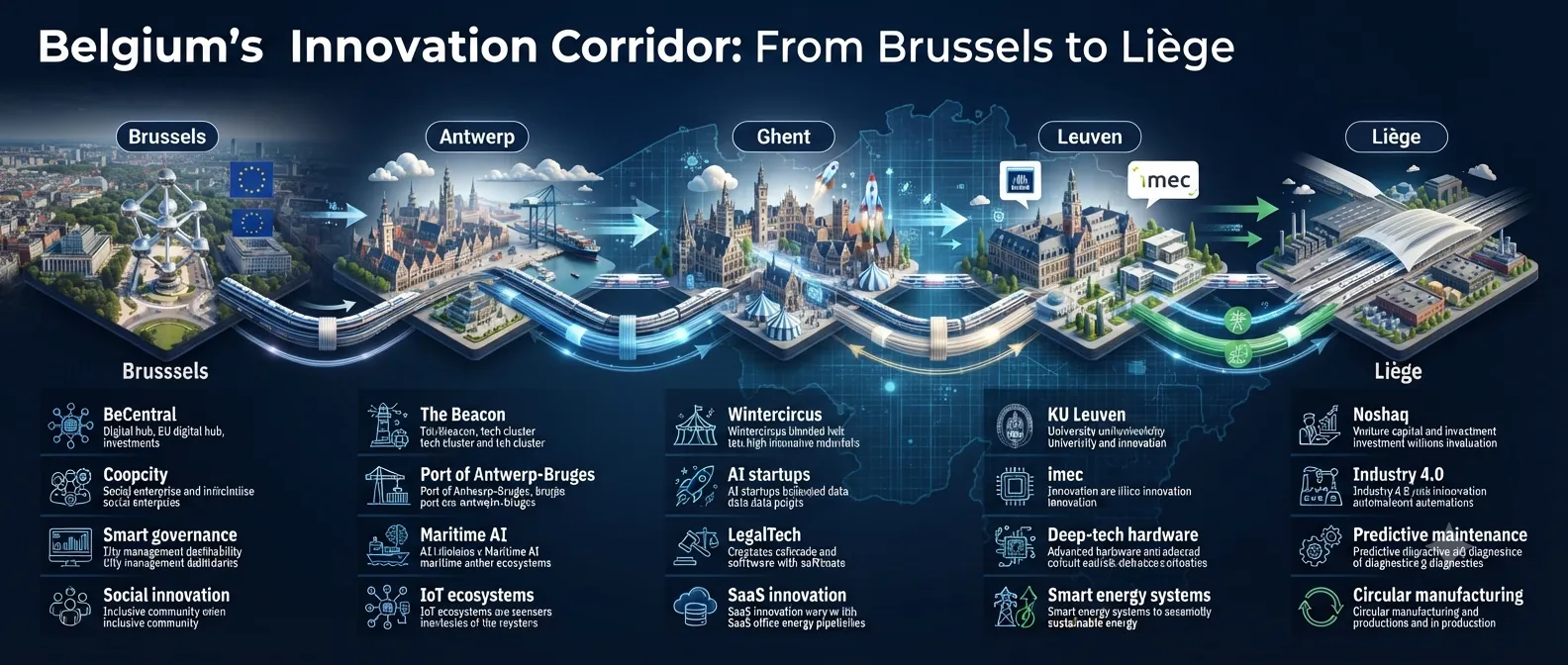
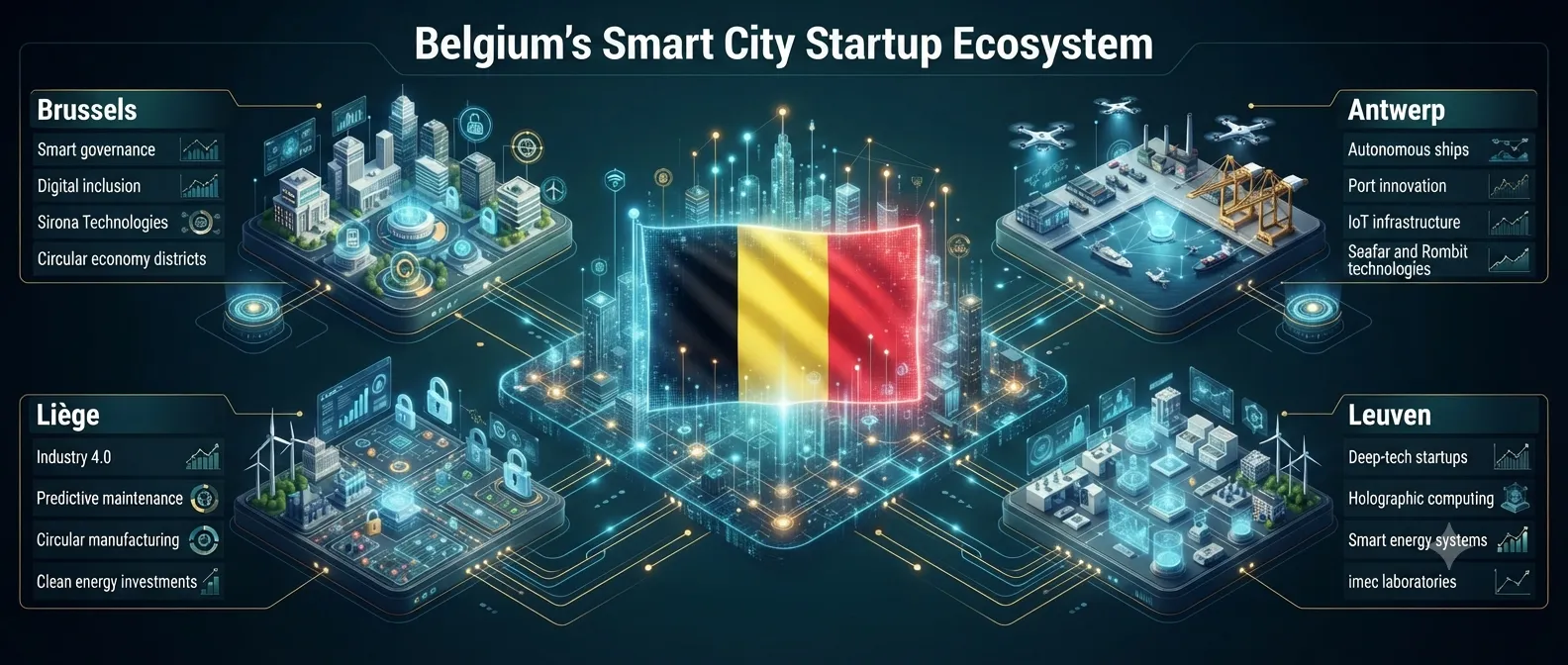
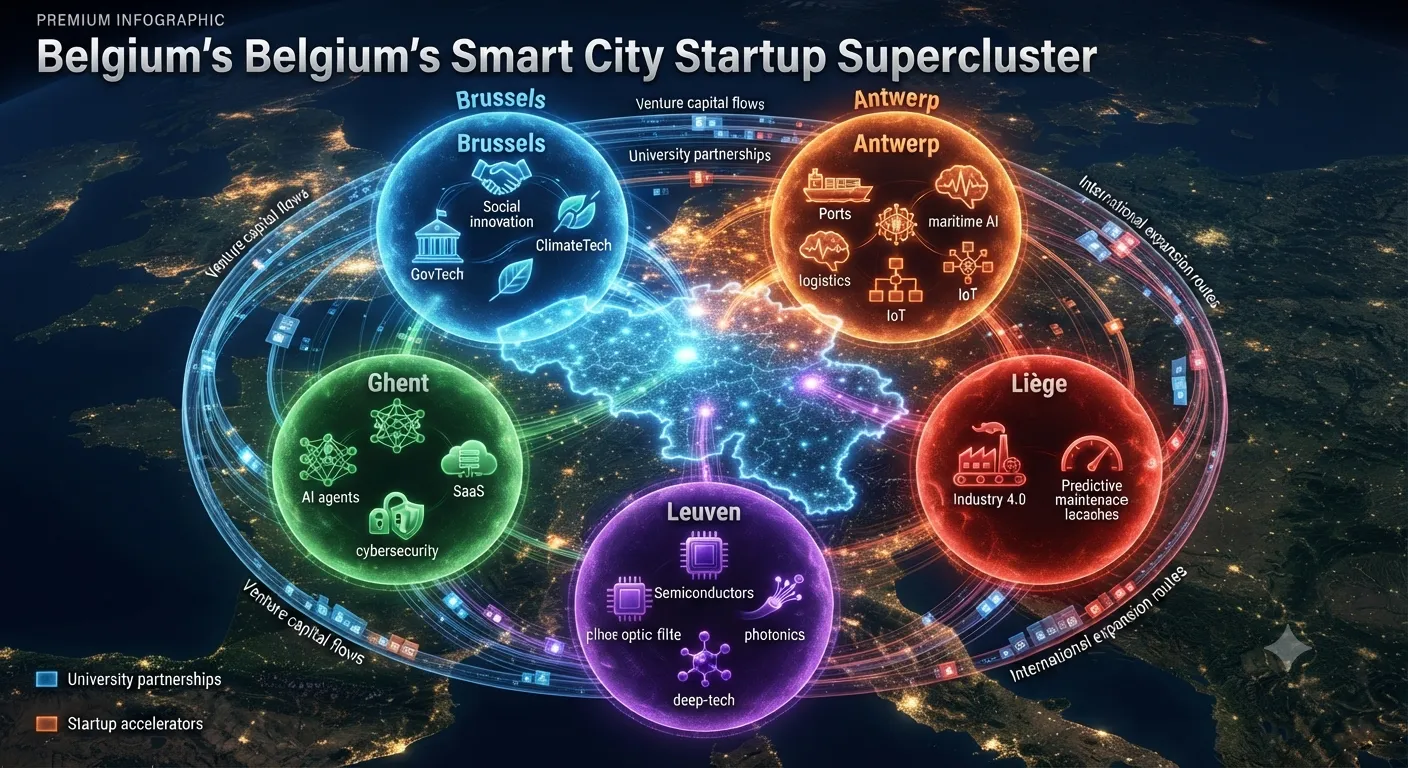
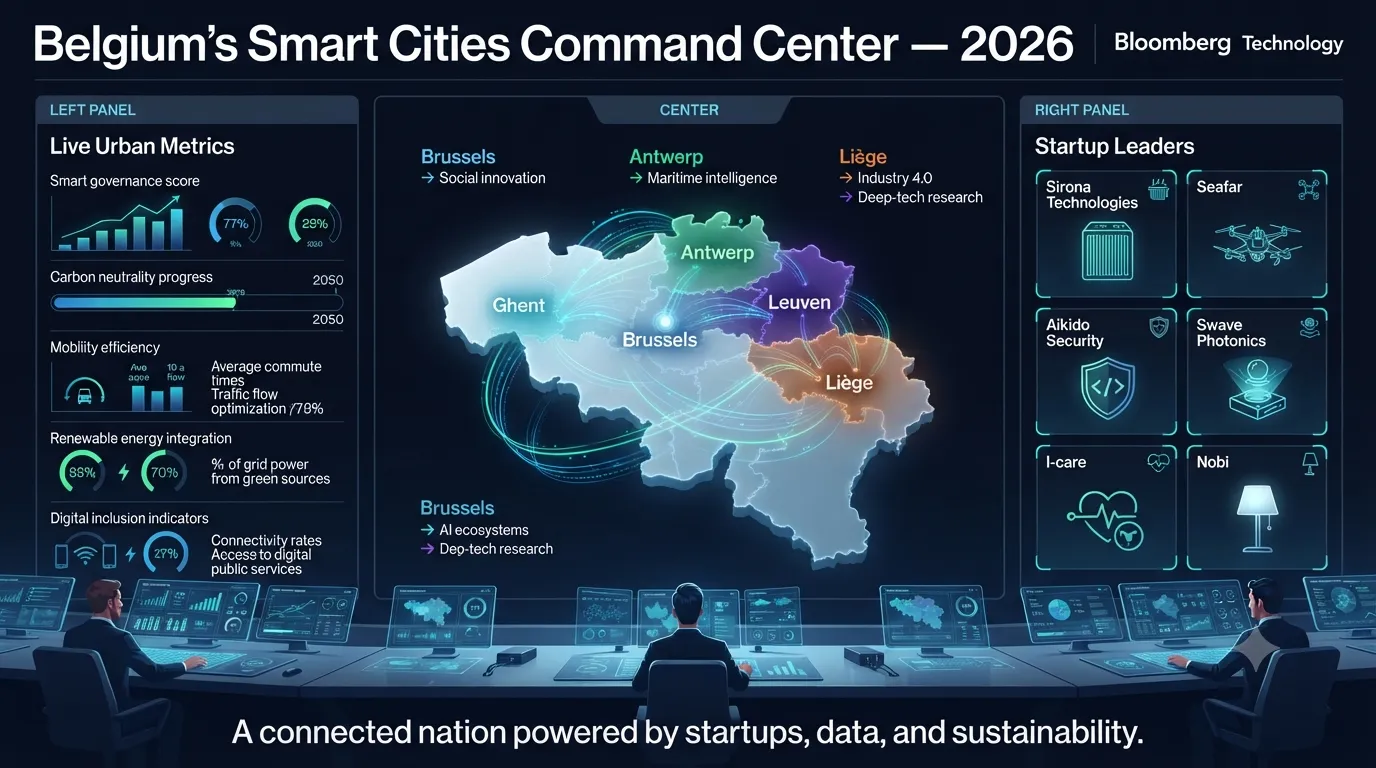
Regional specializations—such as Brussels' focus on social and digital inclusion, Antwerp's maritime and industrial tech dominance, Leuven's deep-tech excellence, Ghent's SaaS leadership, and Liège's Industry 4.0 transition—have created a balanced and diversified national landscape. This diversity is unified by a strong network of accelerators and a collaborative governance mindset that allows talent and resources to flow across regional boundaries.
While challenges remain in scaling pilot projects and ensuring data trust, the consistent funding trends and the expansion of the "unicorn club" signal strong confidence in the Belgian model. As Belgium continues to integrate advanced digital twins, holographic computing, and decentralized energy systems into its urban fabric, it provides a compelling blueprint for the future of European smart cities. The startups detailed in this report are not merely building products; they are constructing the foundational infrastructure of a resilient, connected, and carbon-neutral urban future.
Protect Your Future: The Precision Vesting Calculator
Don't let a "handshake deal" complicate your exit. Map out your ownership journey with our Vesting Calculator
Calculate Your Vesting Schedule →