Belgium Is Attractive for International Founders
March 14, 2026 by Harshit Gupta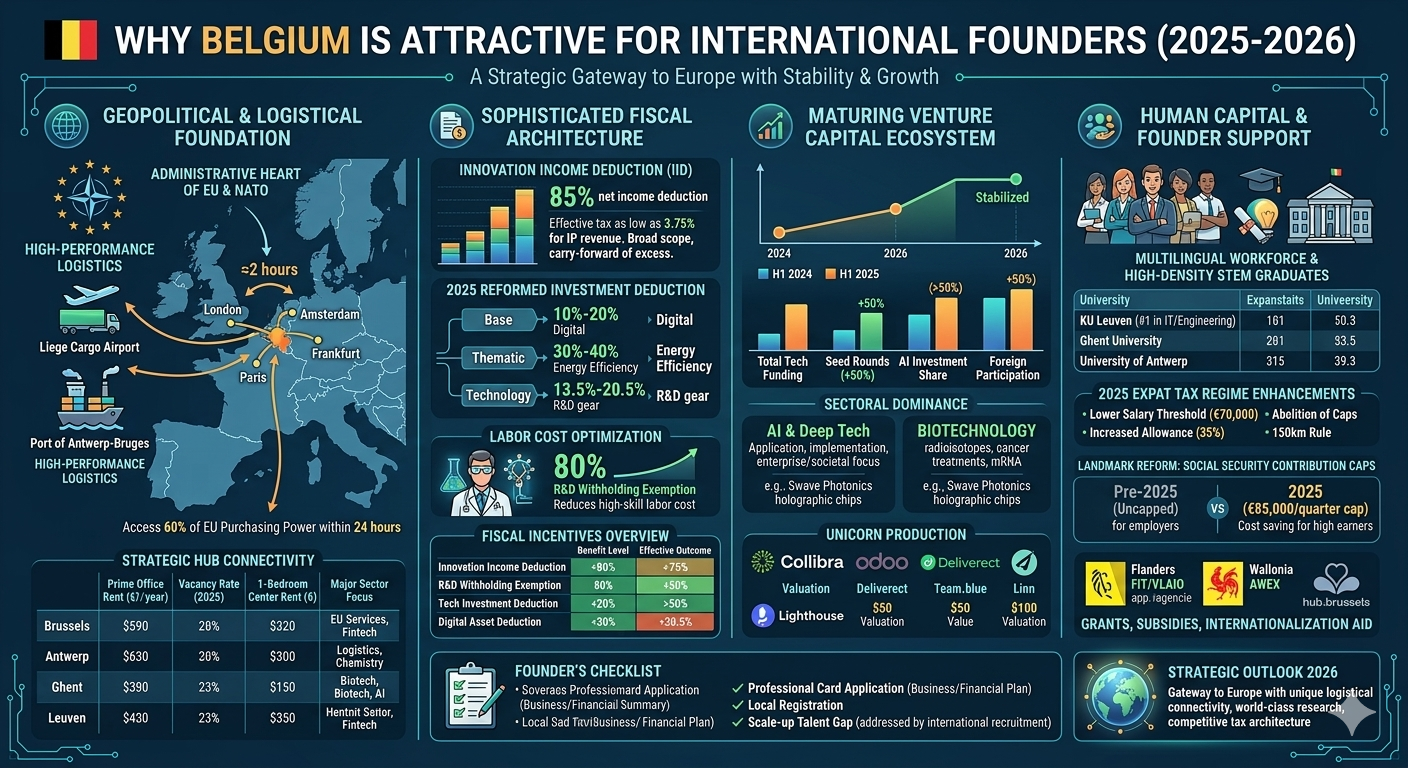
The global landscape of venture capital and foreign direct investment underwent a significant recalibration between 2024 and 2026, characterized by high interest rates, geopolitical instability, and a cautious approach to late-stage funding across the European continent. Amidst this volatile environment, Belgium has emerged as a distinct anomaly of stability and growth. While broader European trends in 2024 indicated a 5% decline in foreign direct investment projects and a 16% drop in associated job creation, the Belgian market demonstrated profound resilience, securing 210 investment projects and achieving a 10% increase in job creation. This performance is not a result of isolated economic factors but is the culmination of a multi-tier governance strategy that leverages geographic centrality, aggressive fiscal innovation, and a maturing technological ecosystem. For international founders, Belgium represents a strategic "Gateway to Europe," offering a sophisticated nexus where logistical connectivity, world-class research institutions, and a highly competitive tax architecture converge to support the scaling of high-impact ventures.
The Geopolitical and Logistical Foundation of the Belgian Advantage
The primary appeal for international founders remains Belgium’s role as the administrative heart of the European Union and NATO. This unique positioning provides founders with immediate, frictionless access to the EU Single Market and a dense concentration of international decision-makers, embassies, and non-governmental organizations. Since the post-WWII era, successive Belgian governments have prioritized foreign direct investment as the cornerstone of national commercial policy, fostering an open economy that is deeply integrated into global trade networks.
Strategic Connectivity and Urban Hubs
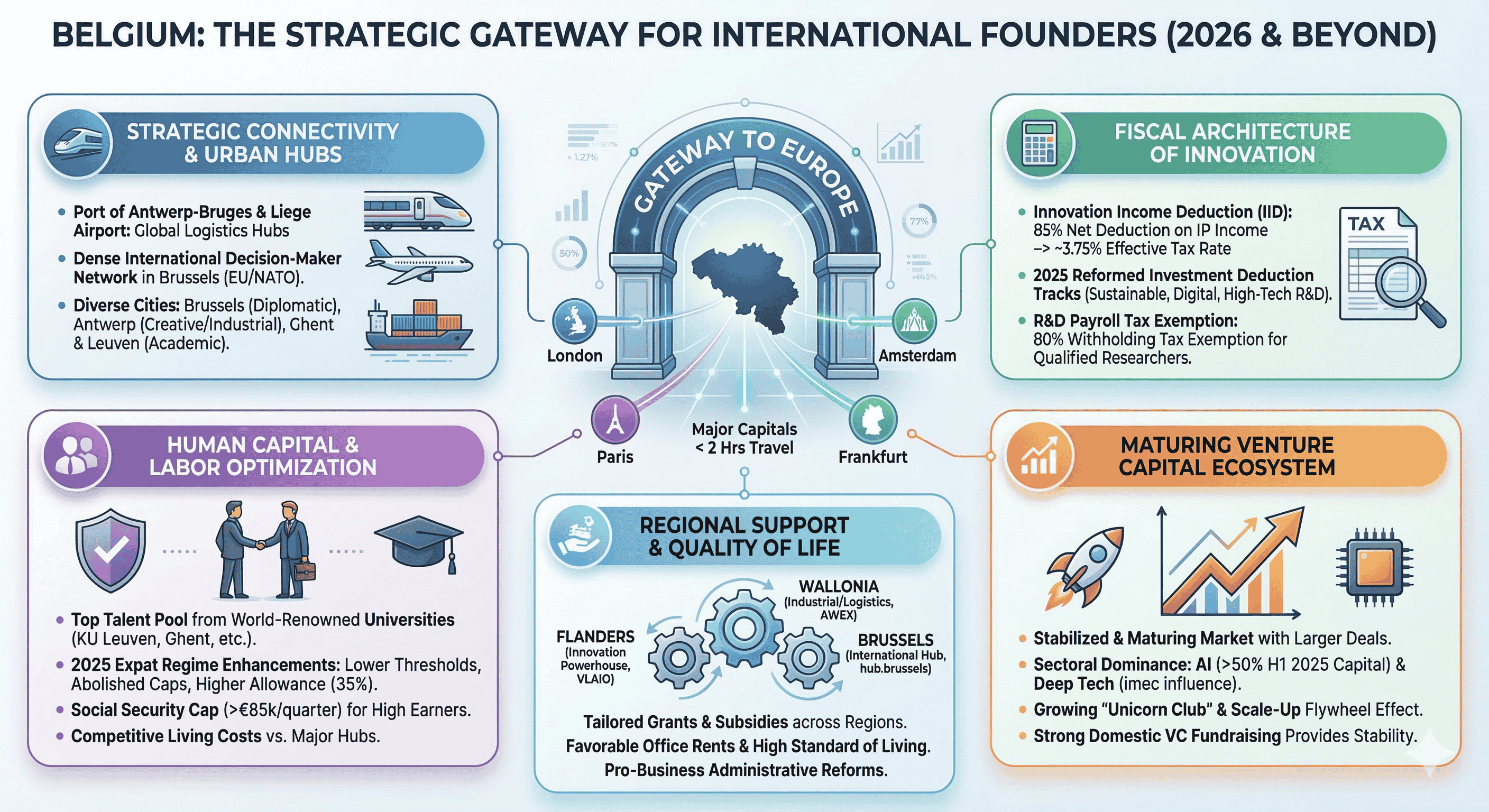
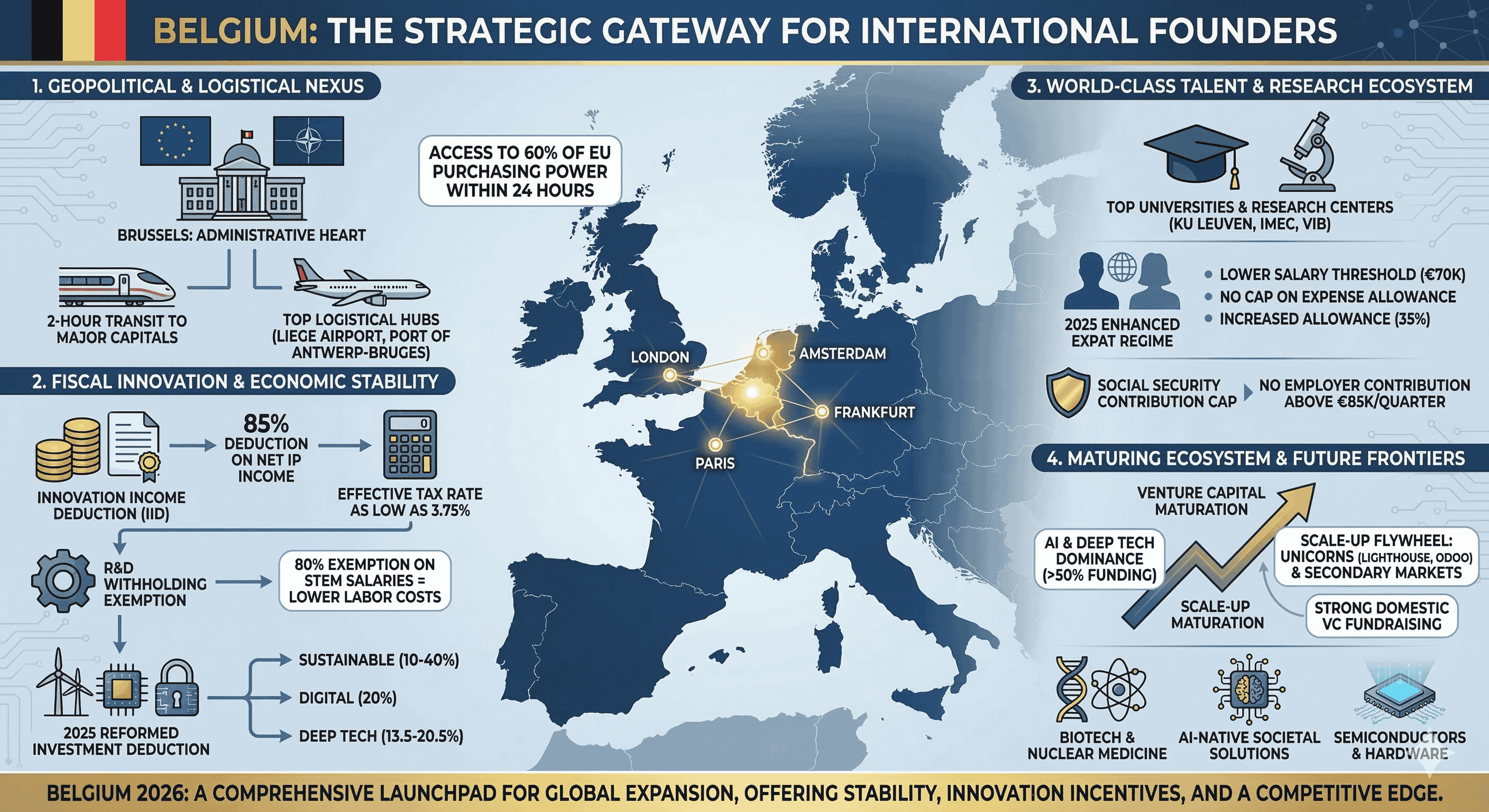
The central location of Brussels allows for transit to major European business capitals—such as Paris, London, Amsterdam, and Frankfurt—within approximately two hours. This connectivity extends beyond rail and road networks to high-performance logistical hubs. Liege Airport has solidified its standing as one of Europe’s top cargo airports, facilitating rapid global distribution for sectors such as biotechnology and high-tech manufacturing. Furthermore, the Port of Antwerp-Bruges serves as a vital maritime gateway, ensuring that companies based in Belgium are situated at a junction that accesses 60% of the European Union’s total purchasing power within a 24-hour radius.
The urban landscape of Belgium offers a diverse range of environments for founders, from the international and diplomatic atmosphere of Brussels to the creative and industrial strengths of Antwerp and the academic hubs of Ghent and Leuven. Brussels, in particular, continues to attract international attention, with Rue de Flandres being recognized for its cultural vibrancy and the city itself designated as a primary destination for 2026 by global media outlets. This cultural appeal is matched by an international ecosystem that supports an agile business environment, making it easier for founders to coordinate cross-border operations.
Metric | Brussels | Antwerp | Ghent |
Prime Office Rent (€/sqm/year) | 400 | 200 | 170 |
Vacancy Rate (2025) | 7.8% | 4.4% | Stable |
1-Bedroom Center Rent (€) | 1,118 | 886 | 825 |
Major Sector Focus | EU Services, Fintech | Logistics, Chemistry | Biotech, AI |
The Fiscal Architecture of Innovation and Growth
For international founders, the most compelling technical reason to select Belgium is the country’s sophisticated fiscal regime, which is specifically engineered to incentivize the creation and commercialization of intellectual property (IP). The Belgian tax system provides a layered series of deductions and exemptions that significantly lower the effective corporate tax rate for innovative firms.
The Innovation Income Deduction (IID)
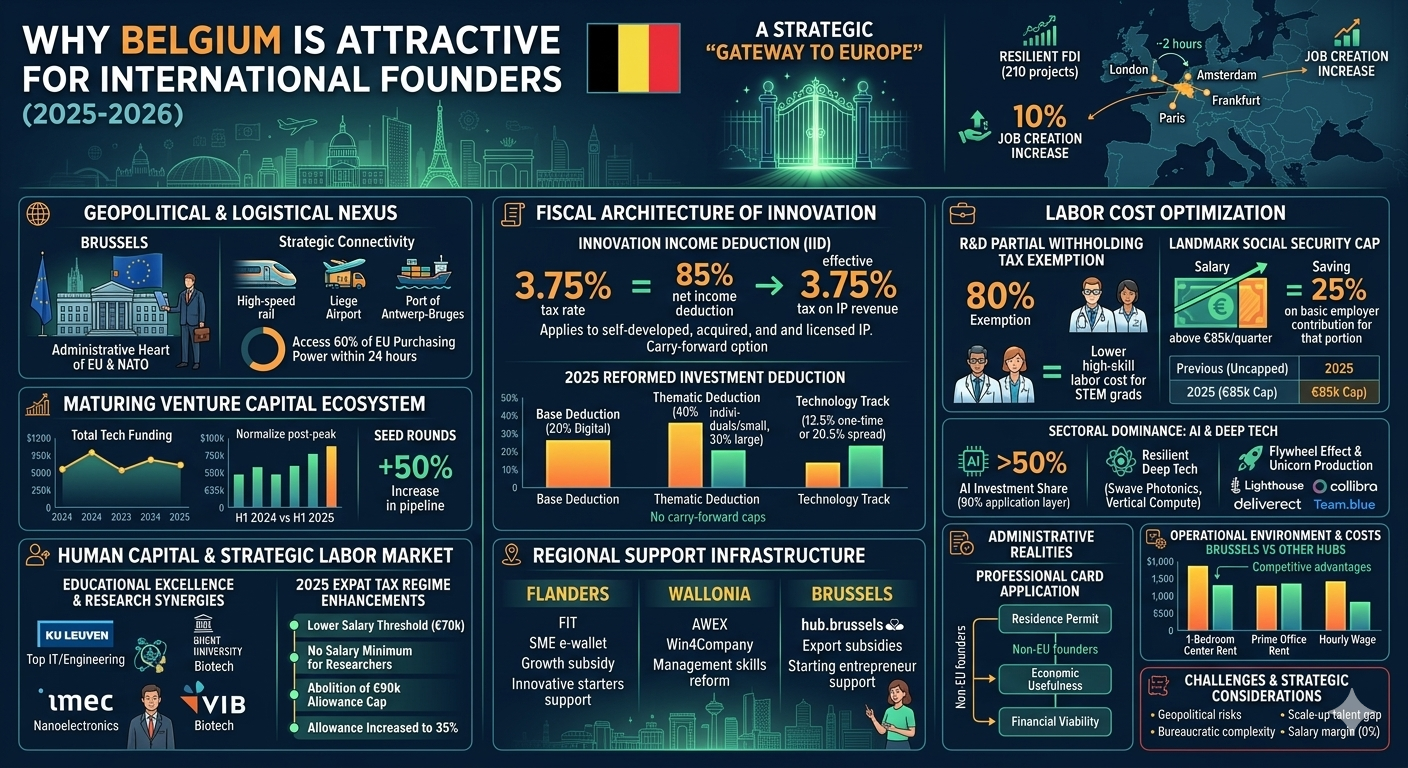
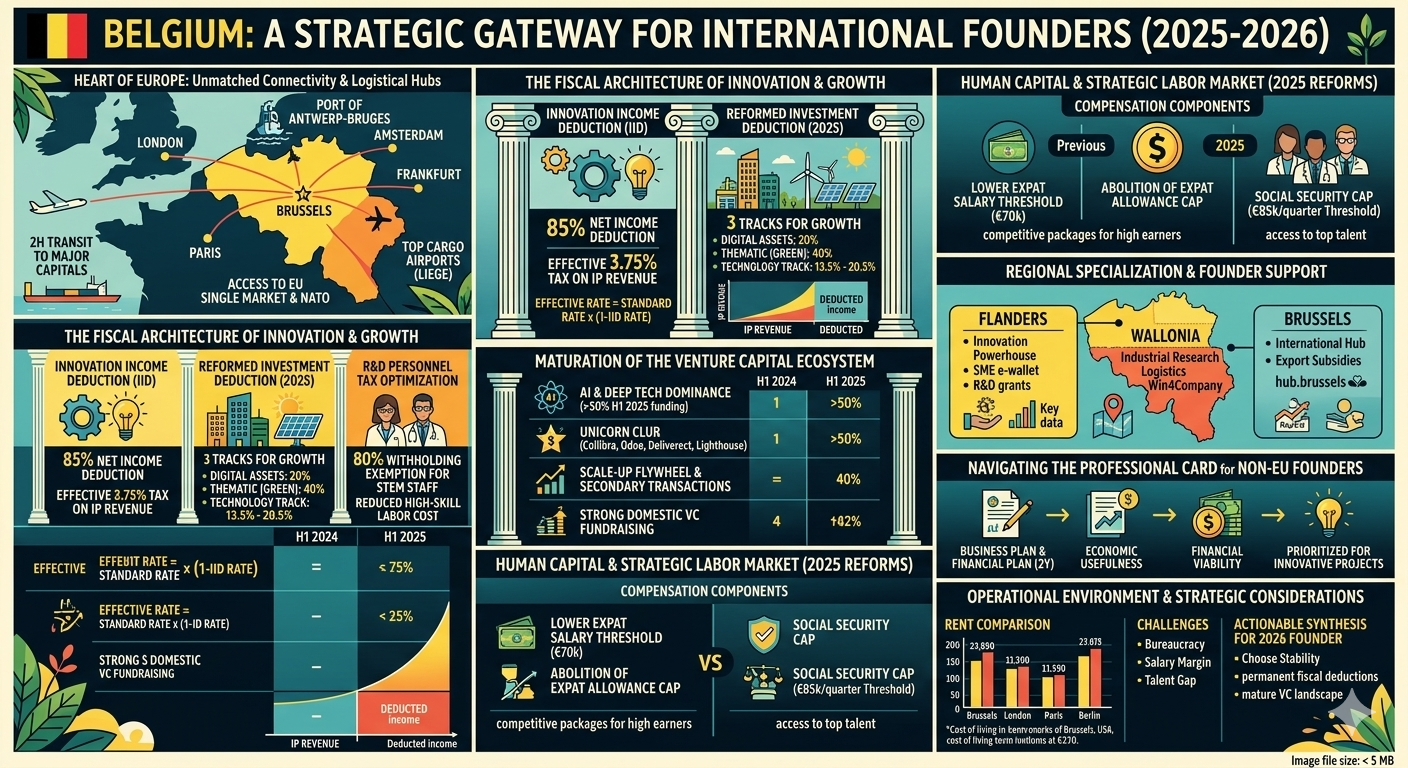
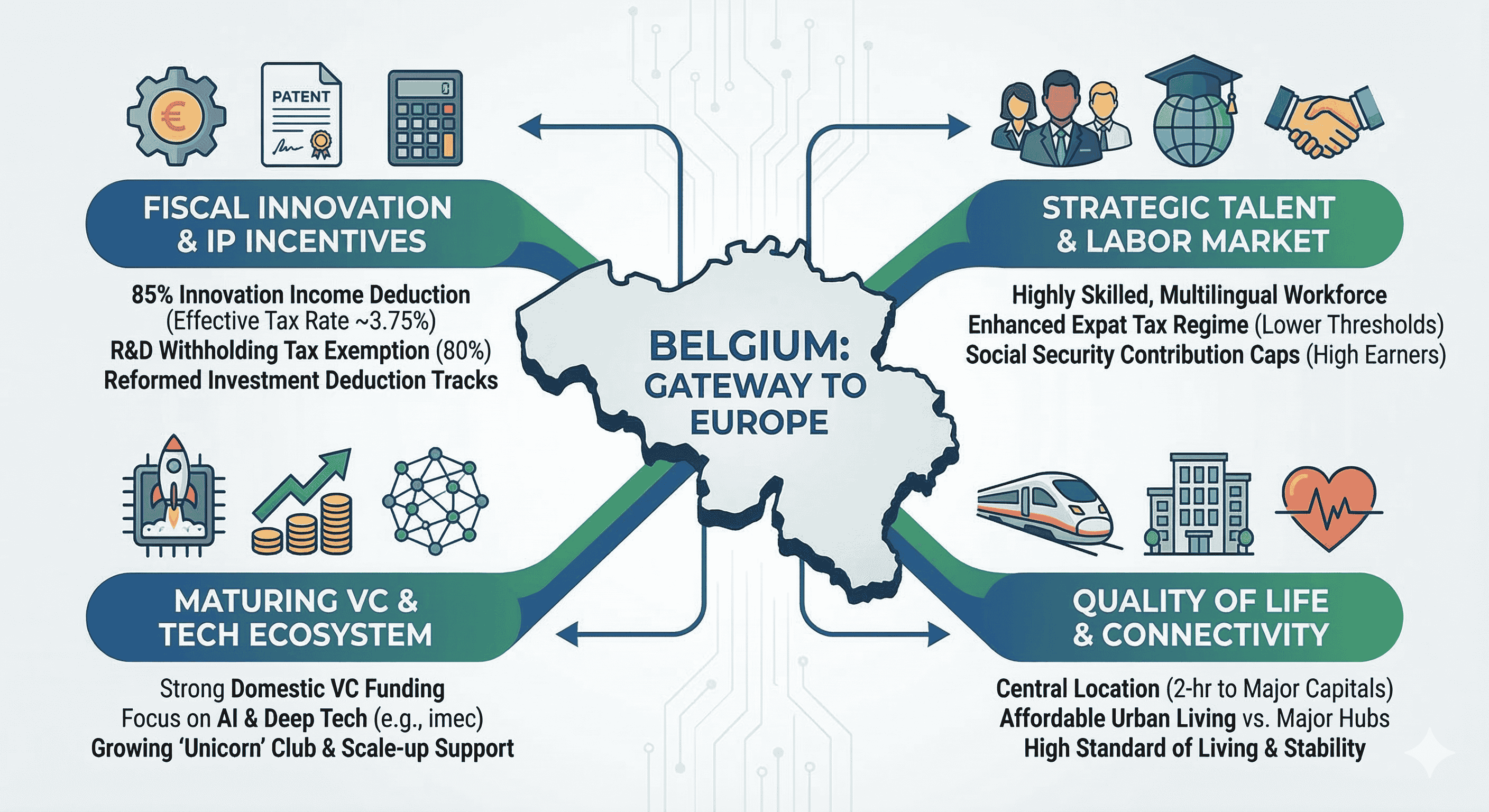
The centerpiece of the Belgian fiscal offer is the Innovation Income Deduction, which replaced the previous patent income deduction regime. As of 2025, the IID allows Belgian companies and foreign companies with a permanent establishment in Belgium to deduct 85% of their net qualifying innovation income from their taxable base. This net income is calculated on a net basis after the deduction of R&D expenses, resulting in an effective tax rate as low as 3.75% for income derived from patents, copyrighted software, and other qualifying IP.
The IID is particularly attractive due to its broad scope. It applies to IP rights that are self-developed, as well as those acquired or licensed from third parties, provided the assets undergo further development in a qualifying R&D center. A significant refinement introduced for the 2025 assessment year allows companies that do not have sufficient profit to utilize the deduction in a given year to convert the excess into a non-refundable tax credit that can be carried forward indefinitely. This provides founders with long-term fiscal predictability, ensuring that the benefits of early-stage R&D can be realized as the company moves toward profitability.
The 2025 Reformed Investment Deduction Regime
In January 2025, Belgium modernized its investment deduction regime to align with broader climate and digital objectives. The new system is organized around three specific "tracks," allowing founders to choose the most advantageous path for their specific asset acquisitions.
The Base Deduction Track: This track offers a 10% deduction for sustainable investments. For individuals and small companies, an increased rate of 20% is available for digital assets, including e-commerce platforms, digital accounting systems, and cybersecurity infrastructure designed to enhance resilience.
The Thematic Deduction Track: Targeted at energy efficiency, renewable energy, and zero-emission transport, this track provides a 40% deduction for individuals and small companies and 30% for larger entities.
The Technology Track: This track is specifically designed for high-tech ventures, offering a 13.5% one-time deduction or a 20.5% spread deduction for investments in patents and tangible fixed assets used for the R&D of future-oriented technologies.
A critical update passed in late 2025 removed the caps on the carry-forward of these deductions, allowing large-scale investments to be fully utilized without the pressure of annual expirations. Furthermore, the "thematic deduction" rate is scheduled to be generalized to 40% for all companies starting from the 2027 assessment year, signaling a long-term commitment to subsidizing green and technological transitions.
Labor Cost Optimization for Research Teams
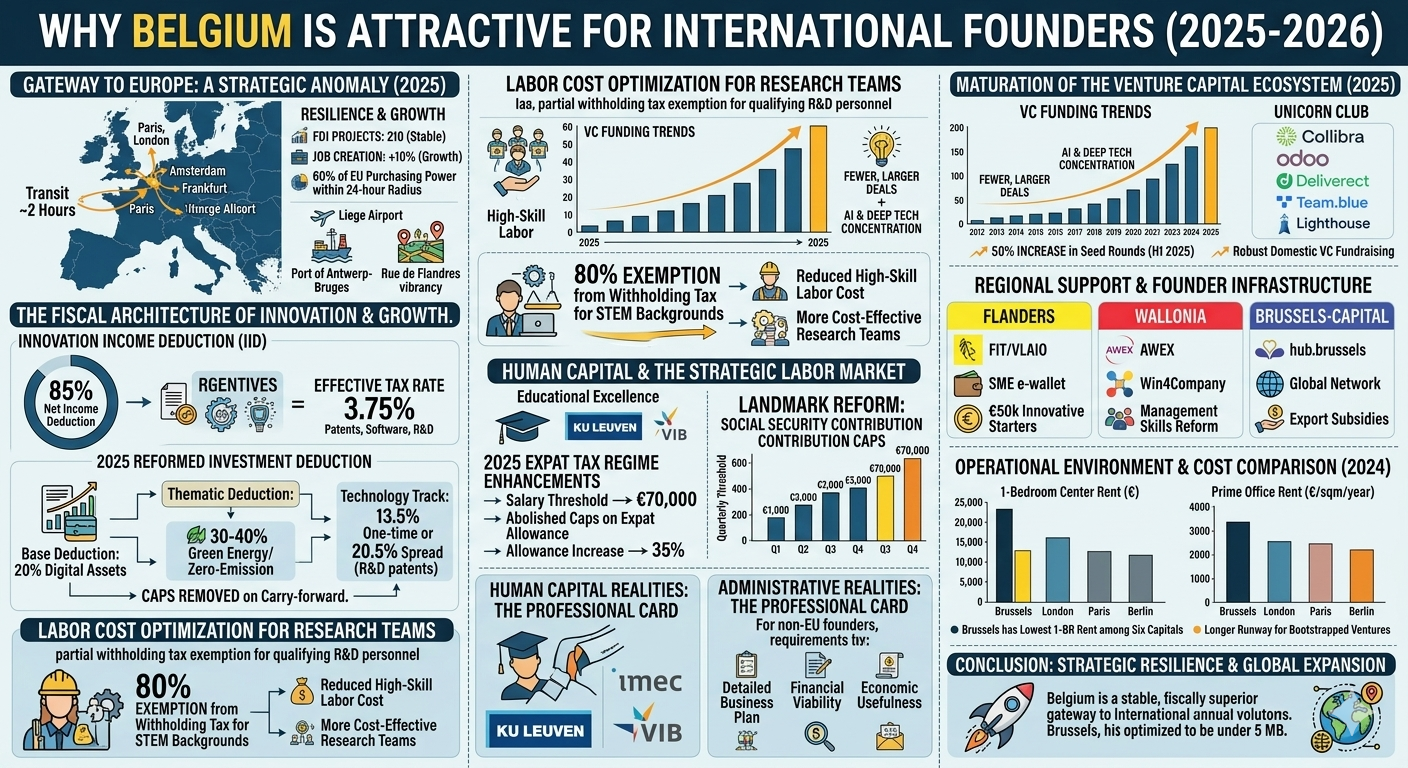
Recruiting and maintaining high-level engineering and scientific talent is often the primary expense for international founders. Belgium mitigates this cost through the partial withholding tax exemption for qualifying R&D personnel. Employers are entitled to an 80% exemption from the payment of withholding tax on the salaries of employees with STEM backgrounds who are engaged in research projects. This incentive reduces the total cost of employment for the founder without diminishing the net take-home pay for the employee, making Belgian research teams more cost-effective than those in the United States or many other European nations.
Incentive | Benefit Level | Effective Outcome |
Innovation Income Deduction | 85% net income deduction | 3.75% tax on IP revenue |
R&D Withholding Exemption | 80% of withholding tax | Reduced high-skill labor cost |
Tech Investment Deduction | 13.5% - 20.5% | Lower CAPEX for R&D gear |
Digital Asset Deduction | 20% (from 2025) | Permanent digital boost |
Maturation of the Venture Capital Ecosystem
The Belgian startup ecosystem entered a phase of stabilization and maturation in 2025. While the total volume of funding fell by approximately 50% in the first half of 2025 compared to the record-breaking H1 2024, the market remains soundly in a maturation phase, releasing fewer but larger deals that indicate a maturing investment landscape.
Sectoral Dominance: AI and Deep Tech
The allocation of venture capital in Belgium has become increasingly concentrated in frontier technologies. Artificial Intelligence (AI) has emerged as the leading vertical, attracting over 50% of all capital raised in H1 2025—a figure that places Belgium on par with the broader European average for AI investment. Within the AI sector, 90% of funding is concentrated in the application and implementation layer, where founders are focused on solving specific enterprise and societal problems.
Deep tech ventures have also demonstrated significant resilience. Large-scale funding rounds for companies such as Swave Photonics, which develops holographic extended reality chips, and Vertical Compute, focused on foundational computing solutions, have prevented the ecosystem's funding totals from dipping further. This concentration on complex, high-barrier-to-entry technologies reflects the influence of Belgium’s research institutions, particularly imec, which plays a pivotal role in the global semiconductor chips industry.

The Scale-Up "Flywheel" and Unicorn Production
Belgium’s ability to produce globally competitive scale-ups has improved significantly. By 2024, the country added Lighthouse to its "unicorn club" after the travel tech firm raised a €351 million Series C round. Lighthouse joins other established Belgian unicorns such as Collibra, Odoo, Deliverect, and Team.blue. A critical trend in 2025 is the rise of large secondary transactions, with companies like Odoo and Team.blue facilitating liquidity for early investors and founders, which in turn fuels the next generation of startups.
This "flywheel effect" is evident in the 50% increase in recorded seed rounds in H1 2025 compared to H1 2024. As successful founders exit or secondary markets mature, capital and mentorship are being recycled back into the early-stage ecosystem, creating a resilient cycle of entrepreneurial growth.
Investment Landscape and VC Fundraising
Despite the pullback from non-Belgian investors in 2025—where foreign participation dipped below 50% for the first time in recent years—domestic VC fundraising has remained exceptionally strong. The first half of 2025 saw the third-highest capital raised by funds in Belgian history, driven by leaders such as Smartfin, imec.xpand, Junction Growth Investors, and Tioga Capital. This domestic capital pool provides a stabilizing force for founders, ensuring that early- and mid-stage ventures have access to local support even when global market sentiment is cautious.
Indicator | H1 2024 | H1 2025 | Trend Implication |
Total Tech Funding | ~€420M | >€210M | Normalization post-peak |
Seed Rounds | Baseline | +50% | Strong early-stage pipeline |
AI Investment Share | N/A | >50% | Strategic sectoral pivot |
Foreign Participation | >50% | <50% | Shift to domestic VC strength |
Human Capital and the Strategic Labor Market
Belgium’s workforce is recognized as one of its primary competitive trumps. The combination of multilingualism, a high density of STEM graduates, and a favorable tax regime for international transferees makes the country an attractive destination for founders who need to build high-performance, international teams.
Educational Excellence and Research Synergies
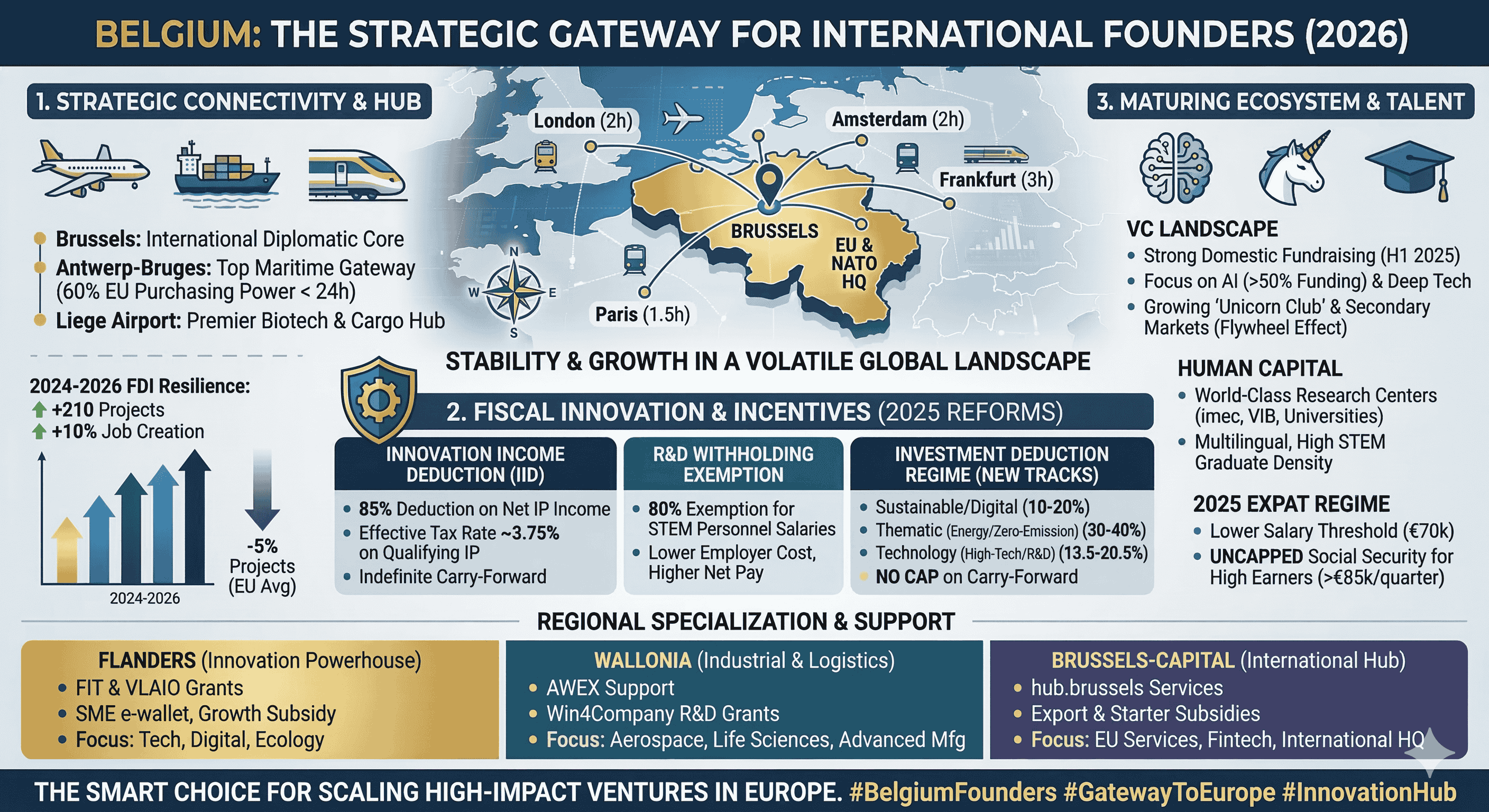
The Belgian academic landscape is anchored by world-renowned research centers and universities that consistently rank among the world's top 200 institutions. KU Leuven, for instance, is frequently cited as the top institution in Belgium and a global leader in IT and engineering, supported by 38 leading scientists in engineering and technology. Ghent University and the University of Antwerp also provide deep talent pools in life sciences and business management, respectively.
In Wallonia, over 40% of young graduates come from STEM programs, a figure that highlights the region's commitment to providing the human capital necessary for advanced technology sectors. Furthermore, research hubs such as imec (nanoelectronics) and VIB (biotechnology) provide founders with a unique interface between academic research and commercial application, often serving as the initial home for deep tech startups.
The 2025 Expat Tax Regime Enhancements
Effective retroactively from January 1, 2025, Belgium introduced several enhancements to its special tax regime for inbound taxpayers (BBIB) and inbound researchers (BBIO) to attract international talent more aggressively.
Lower Salary Thresholds: The minimum gross annual salary required to qualify for the inbound taxpayer regime was reduced from €75,000 to €70,000, broadening the eligible talent pool. For inbound researchers, no minimum salary is required, provided they meet educational or experience criteria.
Abolition of Caps: The previous €90,000 cap on the tax-free expense allowance was abolished. Furthermore, the allowance itself was increased from 30% to 35% of gross pay.
The 150km Rule: To ensure the regime targets truly international talent, eligible employees must have lived more than 150km from the Belgian border for the 60 months prior to their Belgian assignment and must not have earned Belgian taxable income during that period.
These reforms significantly reduce the effective income tax rate for mid-career managers and C-suite executives, allowing Belgian startups to offer net compensation packages that are competitive with those in higher-salary jurisdictions like London or Seattle.
Landmark Reform: Social Security Contribution Caps
One of the most significant changes for employers in 2025 was the introduction of a cap on social security contributions. Historically, Belgian social security contributions were uncapped, which significantly inflated the cost of employing high earners. As of July 1, 2025, employers are no longer required to pay the basic employer social security contribution (approximately 25%) on the portion of an employee’s salary that exceeds €85,000 per quarter.
This measure is specifically designed to reinforce Belgium’s competitiveness for high-paying knowledge jobs and to prevent the transition of high-earning employees to self-employed status. While the employee's 13.07% contribution and certain special employer contributions (around 3%) still apply to the full salary, the €85,000 quarterly threshold provides a substantial cost saving for founders hiring top-tier executive or research leadership.
Compensation Component | Previous Rule (Pre-2025) | New Rule (2025) | Impact |
Expat Salary Threshold | €75,000 | €70,000 | Wider talent access |
Expat Allowance Cap | €90,000 | No Cap | Higher net for C-suite |
Expat Allowance % | 30% | 35% | Reduced tax burden |
Social Security Cap | Uncapped | €85,000/quarter | Lower cost for high earners |
Regional Specialization and Founder Support Infrastructure
Belgium’s federal structure grants significant economic autonomy to its three regions—Flanders, Wallonia, and Brussels-Capital—each of which has developed specialized support systems for international founders.
Flanders: The Innovation Powerhouse
Flanders remains the dominant region for tech investment, attracting nearly three-quarters of all funding in 2024 and 2025. The Flanders Investment & Trade (FIT) agency, in partnership with VLAIO, offers an extensive range of grants and services:
SME e-wallet: Annual subsidies of up to €7,500 to support the development of SMEs through external training and advice.
SME Growth Subsidy: Up to €50,000 per year for hiring strategic staff or engaging external service providers for internationalization or digitalization trajectories.
Innovative Starters Support: Targeted financial support and guidance for companies less than two years old, providing up to €50,000.
Ecology Premium Plus: Investment aid for pioneering ecological technologies, supporting founders who are focused on the green transition.
Wallonia: Industrial Research and Logistics
The Wallonia Export & Investment Agency (AWEX) has focused on leveraging the region’s strong industrial base and aerospace/life science clusters.
Win4Company: A research and development grant for industrial research or experimental development projects conducted by companies with a presence in Wallonia.
Management Skills Reform: As of October 1, 2025, Wallonia abolished the "basic management skills" requirement for starting a business, simplifying the administrative path for both domestic and foreign entrepreneurs.
Investment Allowances: Wallonia offers tailored investment aids co-financed by European funds, specifically targeting SMEs in the manufacturing sector that are focused on innovation or digital transformation.
Brussels-Capital: The International Hub
hub.brussels provides a range of free services for companies looking to establish an international headquarters in the capital. This includes access to a global network of 84 economic and commercial attachés and participation in international trade missions.
Export Subsidies: Brussels provides financial aid for prospecting trips, participation in trade shows, and the development of export-related communication materials.
Subsidies for Starting Entrepreneurs: Includes personalized advice and grants for training required during the initial phase of business creation.
Administrative Realities and the Professional Card
For non-European founders, the path to establishing a presence in Belgium involves the "professional card" application process. This card is mandatory for any non-EU citizen wishing to exercise a self-employed activity.
The Professional Card Application
The application is typically submitted to the region where the activity will be based. It requires a detailed business plan (maximum 20 pages) and a financial plan for at least two years. The criteria for granting the card include:
Right of Residence: Verification of a valid residence permit or the application for a long-stay D-visa.
Economic Usefulness: The administration assesses the project's potential for job creation, productive investment, and economic spin-offs. Projects that are innovative or highly specialized are prioritized.
Financial Viability: Applicants must demonstrate sufficient financial capacity to complete the project. For certain innovative activities, the standard starting capital requirement of €22,838 may be waived.
The professional card is generally granted for a probationary period of one to two years and can be renewed for up to five years. The initial cost is €140 at the time of application, with an additional €90 per year of validity.
Operational Environment and Cost Comparison
While Belgium is not a low-cost launchpad, it remains competitive when compared to other high-tier European startup hubs such as Paris or London. Brussels offers the lowest rent for city-center one-bedroom apartments among six major European capital cities in 2024.
Metric | Brussels | London | Paris | Berlin |
Startup Cost Score (max 100) | 10th Place | 5th Place | 4th Place | 6th Place |
Avg. Hourly Wage (€) | 36.30 | 27.00 | 28.70 | 31.60 |
Prime Comm. Rent (€/sqm/mo) | Moderate | 83.00 | 89.00 | 42.00 |
Standard standard of living | Baseline | +€1,158/mo | High Rent | Rising |
For founders, this translates into a longer runway for bootstrapped or early-stage ventures. Earning the average net monthly salary of €2,939 in Brussels allows for a higher standard of living than an equivalent salary in London. Furthermore, healthcare and public transit costs in Belgium are significantly lower than in typical U.S. cities, freeing up more of a founder’s monthly budget.
Challenges and Strategic Considerations
Despite its advantages, Belgium presents specific challenges that international founders must consider. The business environment is often described as bureaucratic, particularly regarding the registration with local communes and the declaration of taxes.
Geopolitical Risks and CEO Sentiment
In 2025, Belgian CEOs expressed increasing concern over geopolitical instability and the complexity of European over-regulation. The "Year of Cassandra" trend in CEO communication reflects a sober assessment of European competitiveness, with leaders calling for urgent changes to industrial policy to maintain the welfare state and economic sovereignty.
Founders must also navigate a "salary margin" of 0% for the 2025-2026 period. This federal mandate prevents employers from increasing the total average salary cost per employee beyond mandatory indexations, which can limit the ability to offer individual wage increases to top performers without creative compensation restructuring.
The Scale-Up Talent Gap
While Belgium is excellent at producing early-stage talent, founders identify a shortage of leadership talent familiar with the "1 to 100" scale-up phase. This is often addressed by recruiting international talent, which is where the 2025 expat regime enhancements and social security caps play a vital role. Furthermore, some founders have pointed to a perceived lack of global ambition in the local talent pool compared to major hubs like Silicon Valley, though this is changing as the unicorn club expands.
Sectoral Outlook: The 2026 Innovation Frontier
Looking toward 2026, several key industries are poised for significant growth, providing clear opportunities for international founders.
Biotechnology and Nuclear Medicine
Belgium has long been a global leader in radioisotope production. Startups such as PanTera are capitalizing on this expertise to develop actinium-225 (Ac-225) for targeted cancer treatments, aiming to make the global supply more reliable. The "Biotope by VIB" incubator continues to produce high-impact ventures, with biotech startups often securing significant Series A and B rounds from global VC firms.
AI-Native Societal Solutions
A new generation of startups is leveraging AI to address societal challenges. Examples include Maurice & Nora, an Antwerp-based startup using AI-driven platforms to connect seniors with non-medical care providers, and Nobi, which uses smart lighting to detect falls in elderly care. These "societal unicorns" represent a growing trend where Belgian founders are focusing on the intersection of AI and human welfare.
Semiconductors and Hardware
The presence of imec ensures that Belgium remains at the forefront of the global semiconductor industry. Swave Photonics is developing holographic chips that enable advanced augmented reality experiences without the need for bulky glasses. These "deep tech" hardware companies are a testament to the country's ability to translate complex laboratory research into market-ready products.
Conclusion and Actionable Synthesis
Belgium’s attractiveness for international founders is not defined by a single metric but by a cohesive ecosystem of "strategic resilience." The country has successfully leveraged its geographic centrality and institutional density to create a gateway that is fiscally superior to most of its neighbors.
The combination of the 85% Innovation Income Deduction and the 2025 Labor reforms—specifically the social security cap and the enhanced expat regime—provides founders with a globally competitive environment for high-skill, high-margin activities. While the operational environment requires navigating a degree of bureaucracy and a strict wage margin, the value-to-cost ratio of office space and talent remains one of the best in Northern Europe.
For founders, the strategic choice of Belgium in 2026 is a choice for stability in a volatile continent. It is a location that rewards innovation through permanent fiscal deductions rather than temporary grants, and it offers a maturing venture capital landscape that is increasingly capable of supporting a company from seed to exit. In the "Gateway to Europe," international founders find not just a base, but a comprehensive launchpad for global expansion.
The Real Startup Playbook: Ideas, Growth, Funding, and Founder Psychology
Building a startup is exciting, chaotic, and often misunderstood. If you’ve ever wondered how founders actually validate ideas, find co-founders, raise funding, and survive the emotional rollercoaster, these articles explore the realities behind the startup world.
Start with How to Validate Your Startup Idea in 48 Hours for $0 to understand how founders test ideas quickly before wasting months building the wrong product. Once you have an idea, the next challenge is building it—From Idea to MVP: A Step-by-Step Guide for Solo Founder walks through the journey from concept to a real product.
Many founders struggle with partnerships and team decisions. Should your co-founder live in the same city? Explore Remote vs. Local: Does Your Co-Founder Need to Live in the Same City? and learn the risks hidden in partnerships in 5 Red Flags to Look for When Choosing a Startup Partner. If you’re searching for technical help, How to Find a Technical Co-Founder (Without a Six-Figure Salary) explains how founders actually do it.
The startup journey isn’t just about building products—it’s also about mindset and decision-making. Articles like Decision Fatigue: The Silent Startup Killer, Fear vs Logic: How Founders Actually Make Decisions, and How Overthinking Destroys Early Momentum reveal the psychological battles founders face behind the scenes.
Growth is another misunderstood part of startups. Learn why strategy matters more than hype in Ideas Don’t Scale. Systems Do. and why discipline matters in Why Your Startup Doesn’t Need Growth — It Needs Focus. Discover the importance of early traction in How the First 100 Users Decide Your Startup’s Fate and understand team building through The First Hire That Actually Matters.
Funding is often romanticized, but reality is more complex. Why First-Time Founders Should Avoid Big Funding challenges common assumptions about venture capital, while Revenue Solves More Problems Than Funding explains why sustainable businesses matter more than investor money.
The startup ecosystem also varies by geography. If you're curious about India’s startup scene, explore The New Playbook for Raising in Bangalore, Why Raising Pre-Seed in Bangalore Is Harder Than Ever, and Why B2B SaaS from Bangalore Scales Faster.
But startups are not just about strategy and growth—they’re also about people and emotions. Articles like The Hidden Burnout of Bangalore Founders, Comparison Culture in India’s Startup, and The Loneliness of First-Time Founders in Bangalore reveal the personal struggles founders rarely talk about publicly.
And finally, if you want a deeper perspective on the startup journey itself, explore Lessons Learned Too Late by First-Time Founders and The Myth of the “Overnight Success” Startup—because the truth behind startup success is far more complex than it appears.