AI and Data Startups Growing in Belgium
March 14, 2026 by Harshit Gupta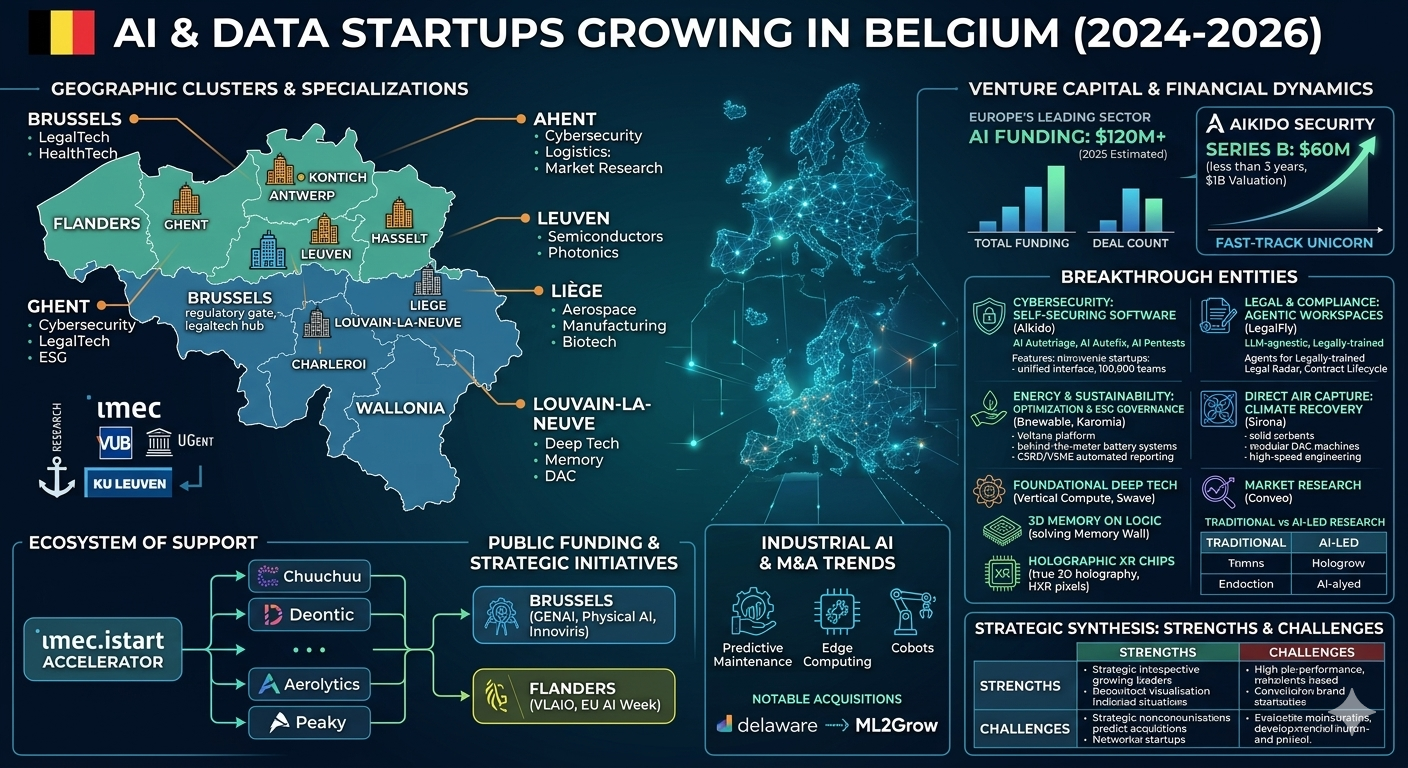
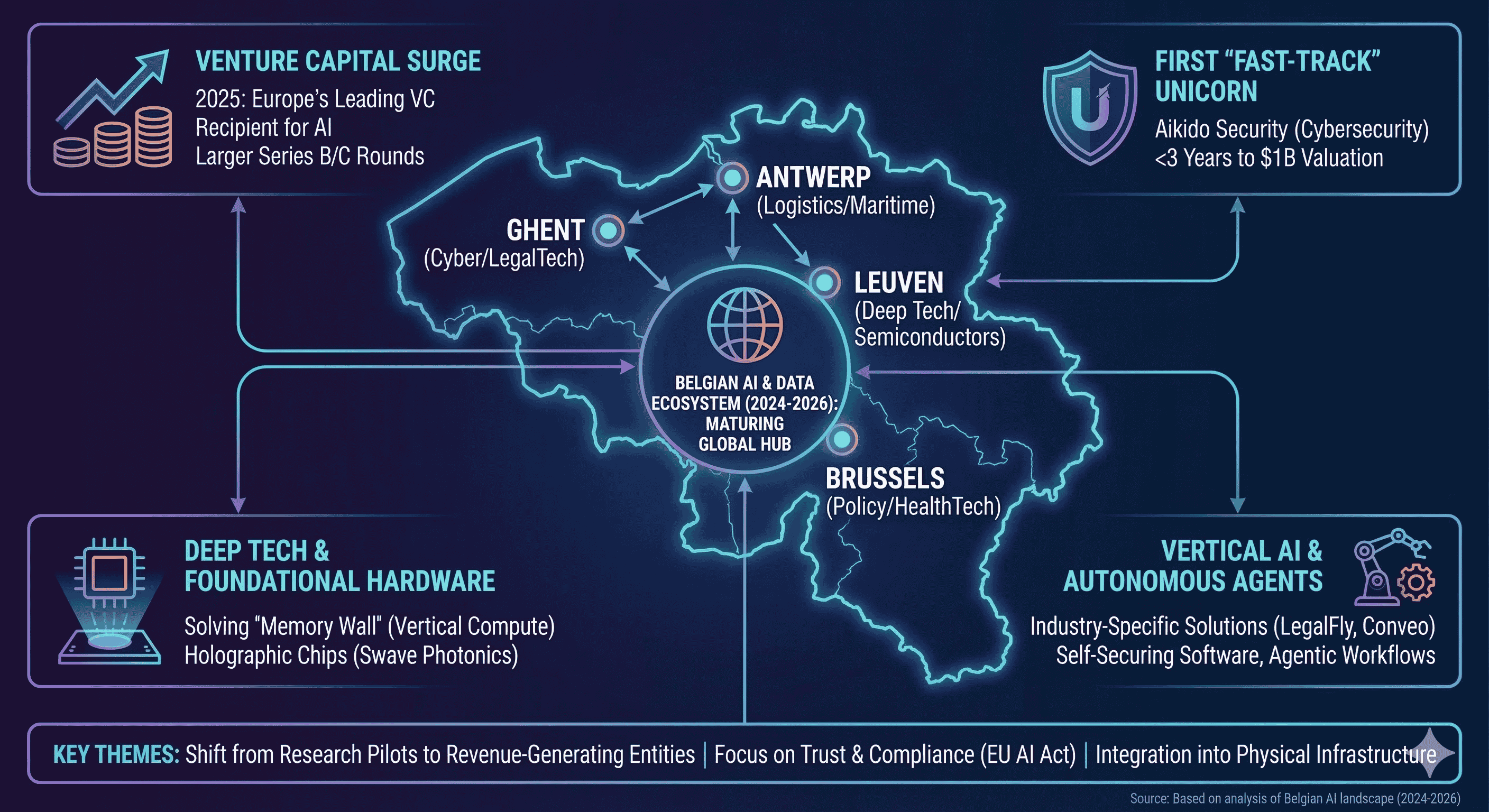
The Belgian artificial intelligence and data science landscape has undergone a profound structural transformation between 2024 and 2026, evolving from a regional research-focused environment into a competitive global hub for deep tech and specialized enterprise solutions. This evolution is characterized by a significant surge in venture capital participation, the emergence of the first "fast-track" cybersecurity unicorn, and a sophisticated integration of AI into foundational hardware and infrastructure. The presence of over 744 identified AI startups signifies a maturing ecosystem where the focus has shifted from experimental pilots to revenue-generating, high-growth entities that leverage machine learning for data analysis, workflow automation, and natural language generation.
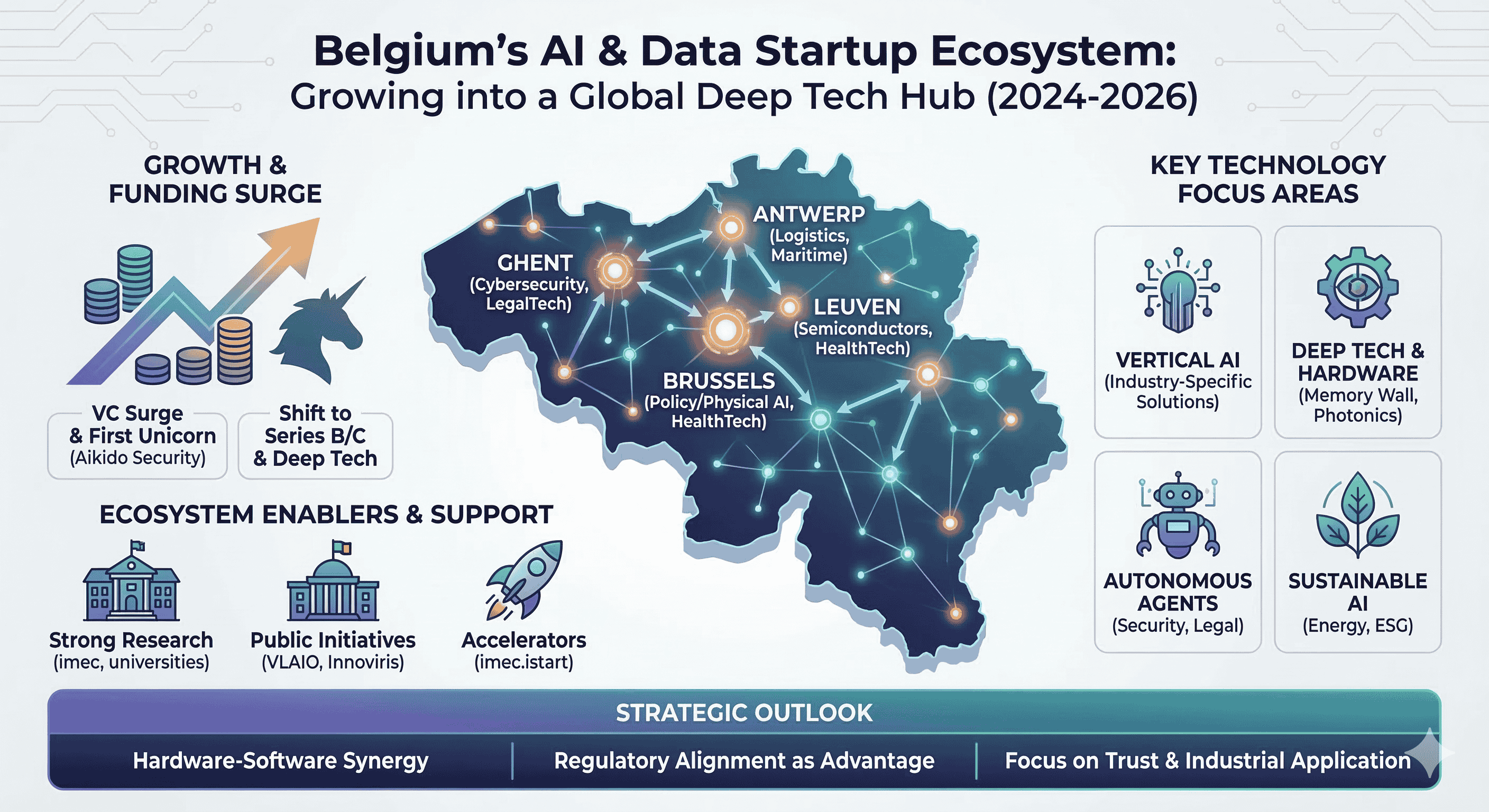
The Belgian AI sector is no longer defined merely by its proximity to the European Union's regulatory seat in Brussels; rather, it has established itself through a decentralized network of innovation clusters. These clusters, situated in Ghent, Antwerp, Leuven, and Louvain-la-Neuve, leverage the gravitational pull of world-class research institutions and the strategic investment of both private and public funds. As the global technology market grapples with the shift from generalized large language models to agentic, industry-specific applications, Belgian startups have positioned themselves at the vanguard of this "Vertical AI" movement.
Geographic Concentration and the Urban Knowledge Nexus
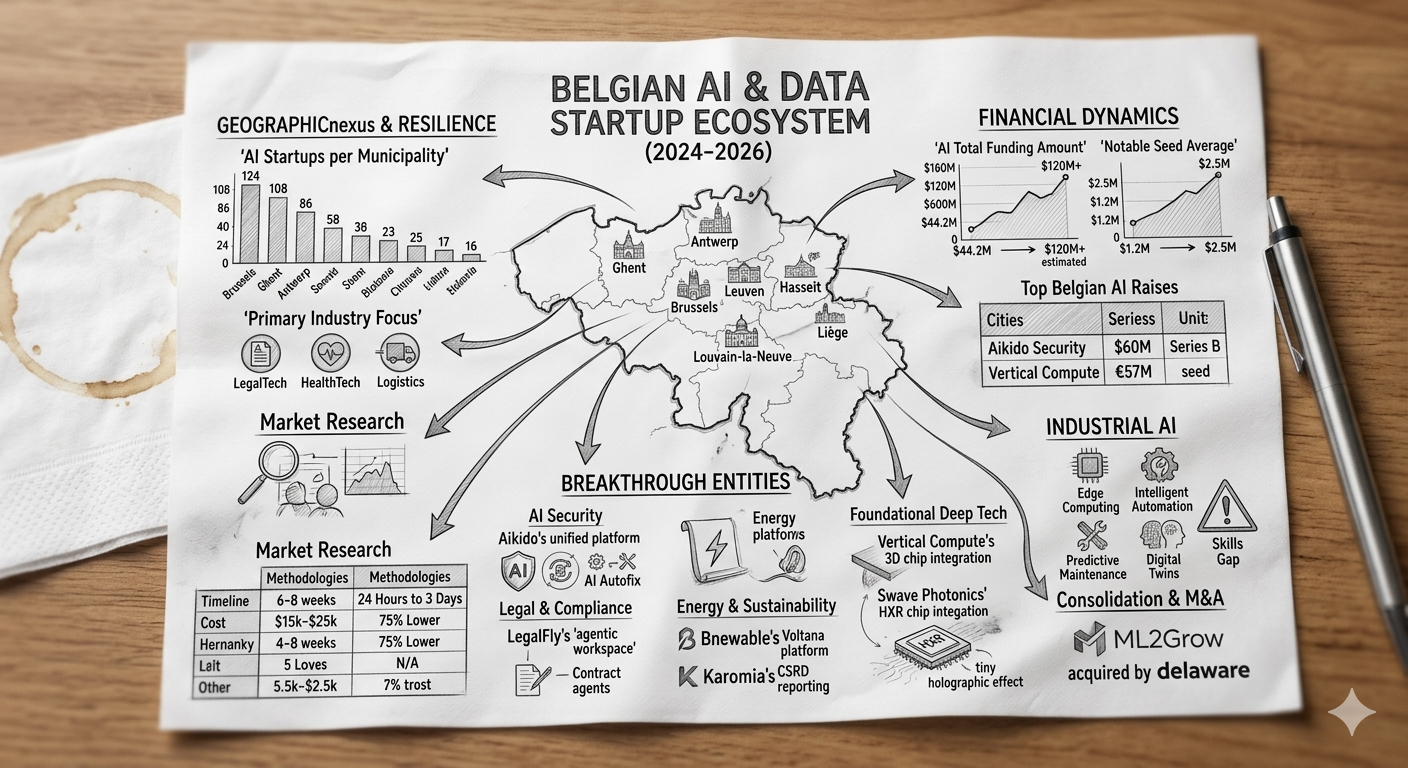
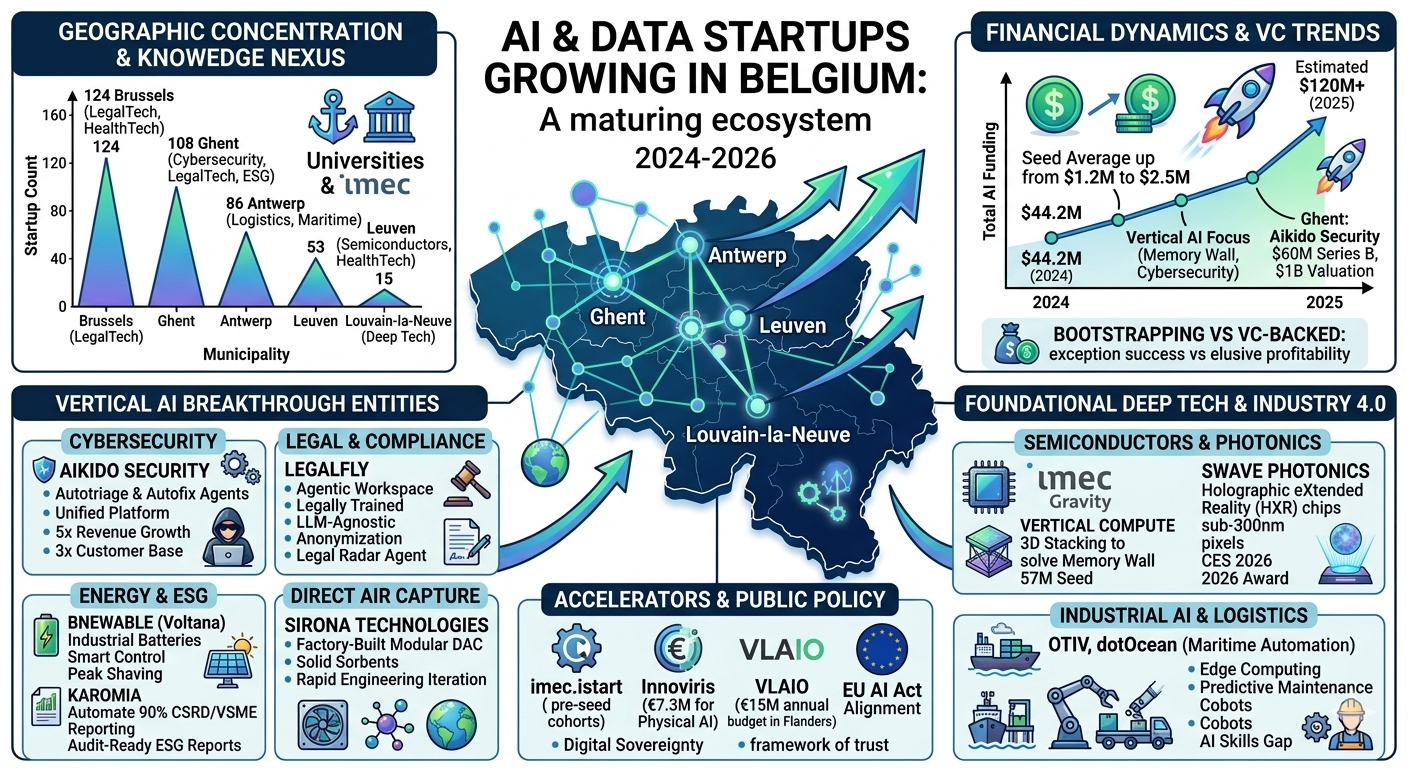
The proliferation of Belgian AI startups is not uniformly distributed but is instead anchored in specific urban centers that provide proximity to world-class research institutions, universities, and technical colleges. This clustering effect fosters a dense exchange of talent and intellectual property, particularly within the Flanders and Brussels-Capital regions. The Federal Planning Bureau notes that this concentration is a critical driver of the ecosystem's resilience, as it allows for the rapid dissemination of academic breakthroughs into commercial ventures.
Distribution of AI and Data Startups by Municipality
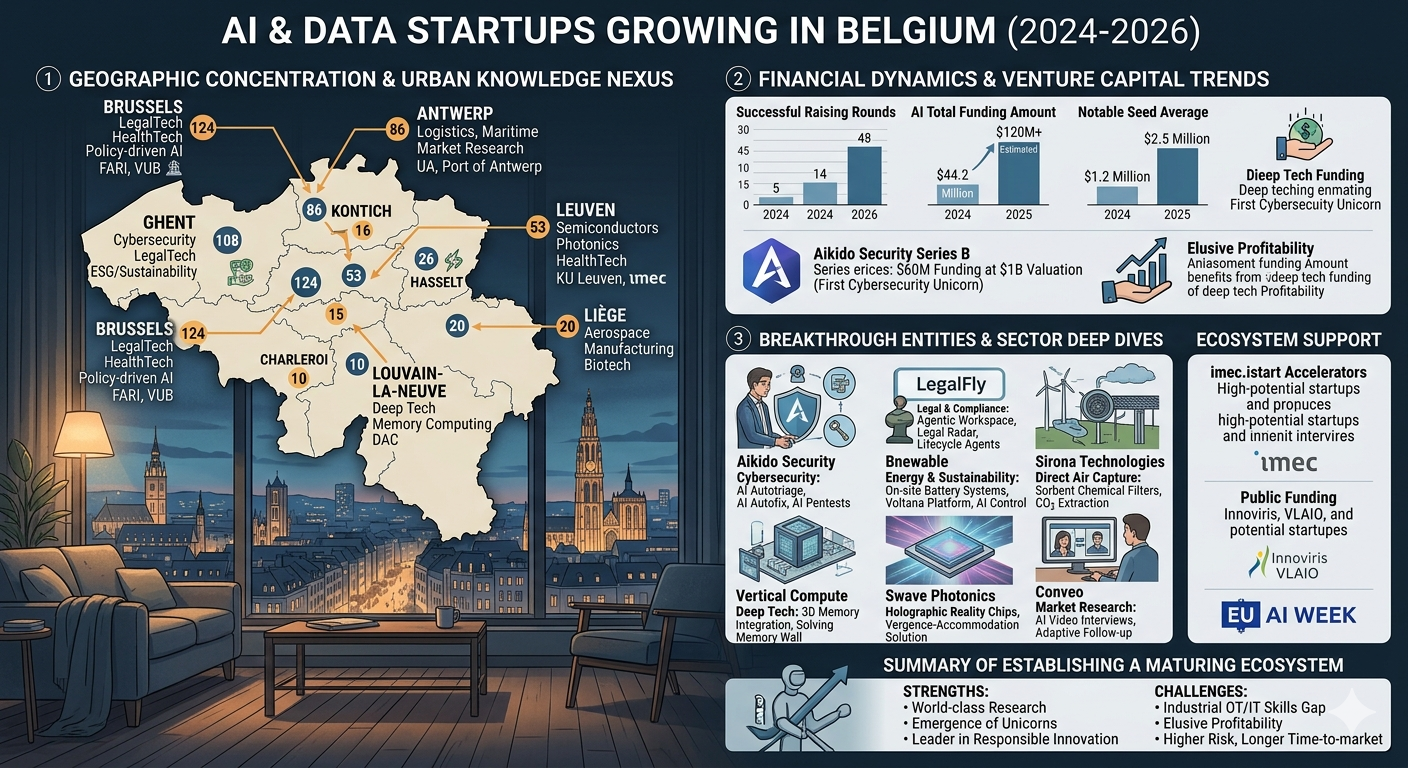
Municipality | Number of AI Startups | Primary Industry Focus | Key Research Anchor |
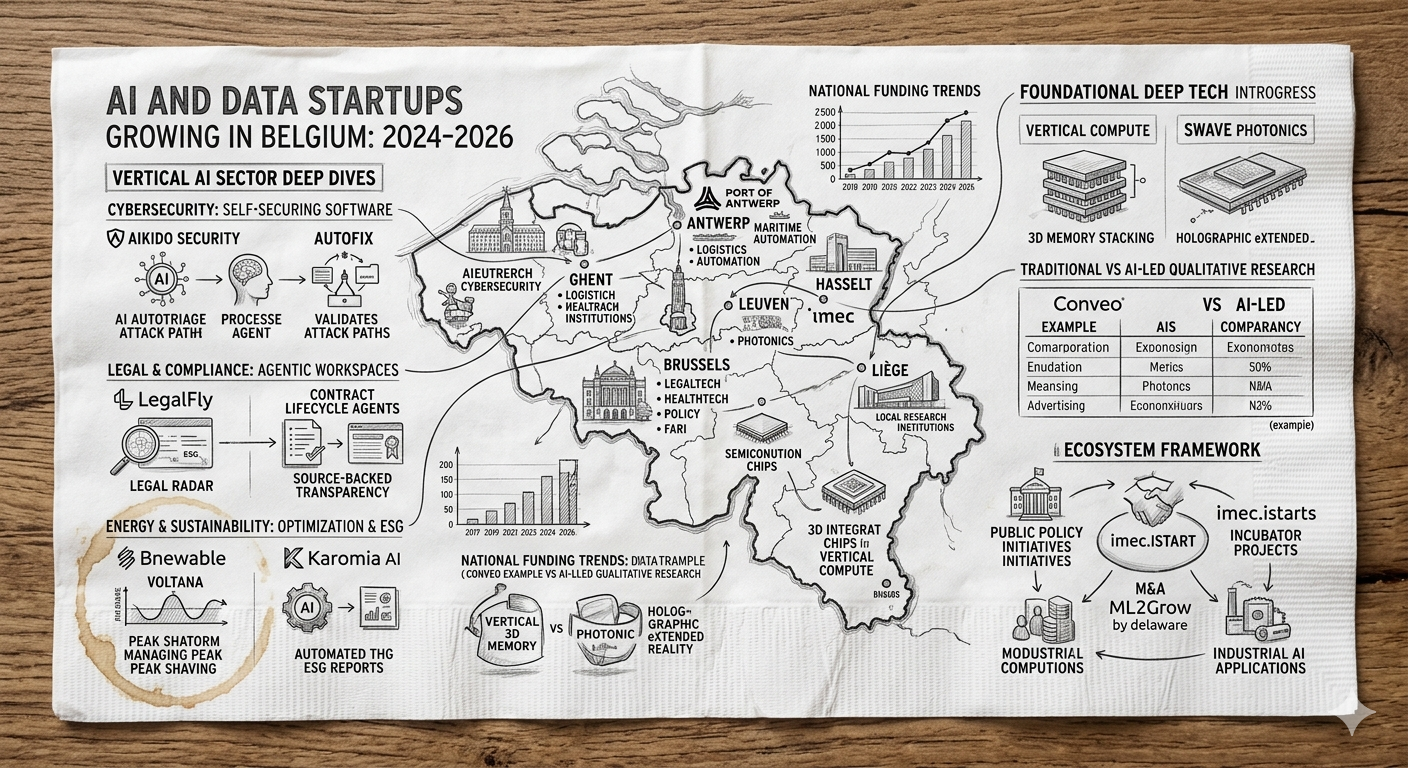
Brussels | 124 | LegalTech, HealthTech, Policy-driven AI | VUB AI Experience Centre, FARI |
Ghent | 108 | Cybersecurity, LegalTech, ESG/Sustainability | Ghent University, imec |
Antwerp | 86 | Logistics, Maritime, Market Research | University of Antwerp, Port of Antwerp |
Leuven | 53 | Semiconductors, Photonics, HealthTech | KU Leuven, imec |
Hasselt | 26 | Community, FinTech, EnergyTech | UHasselt, LRM |
Liège | 20 | Aerospace, Manufacturing, Biotech | University of Liège, S.R.I.W. |
Kontich | 16 | Niche Enterprise Software | Commercial Hub |
Louvain-la-Neuve | 15 | Deep Tech, Memory Computing, DAC | UCLouvain |
Charleroi | 10 | Industrial Automation, MedTech | BioPark Charleroi |
Brussels serves as the primary gateway for international collaboration and regulatory alignment, housing the highest number of startups distributed across its various municipalities. The city has become a focal point for the "Physical AI" initiative, which aims to bridge the gap between digital intelligence and physical infrastructure. Ghent has emerged as a high-density specialized hub, representing approximately 15% of the national total and producing notable leaders such as Aikido Security and LegalFly. The "Ghent model" is characterized by a "no-nonsense" engineering culture and a focus on developer-first tools.
Antwerp leverages its position as a global logistics center to foster startups focused on supply chain optimization, maritime automation, and consumer behavior analysis. The presence of startups like OTIV and dotOcean in the Antwerp-Bruges corridor demonstrates the region's commitment to integrating AI into legacy industries. Leuven, meanwhile, remains the intellectual heart of the Belgian semiconductor industry. It benefits from the gravity of imec, the global research center for nanoelectronics, which serves as a progenitor for hardware-intensive AI firms like Swave Photonics. The synergy between Leuven's academic rigor and venture capital appetite has made it a premier destination for "hard tech" investment.
Financial Dynamics and Venture Capital Trends
The year 2025 marked a definitive turning point for AI investment in Europe, with the sector emerging as the region's leading recipient of venture capital for the first time. In Belgium, this trend mirrored the broader European shift toward deep tech and hardware-driven innovation. The transition from speculative SaaS platforms to companies solving the "Memory Wall" or the "Cybersecurity False Positive" crisis reflects a maturing investor base that prioritizes technical validation over superficial metrics.
National Funding Overview and Sector Prominence
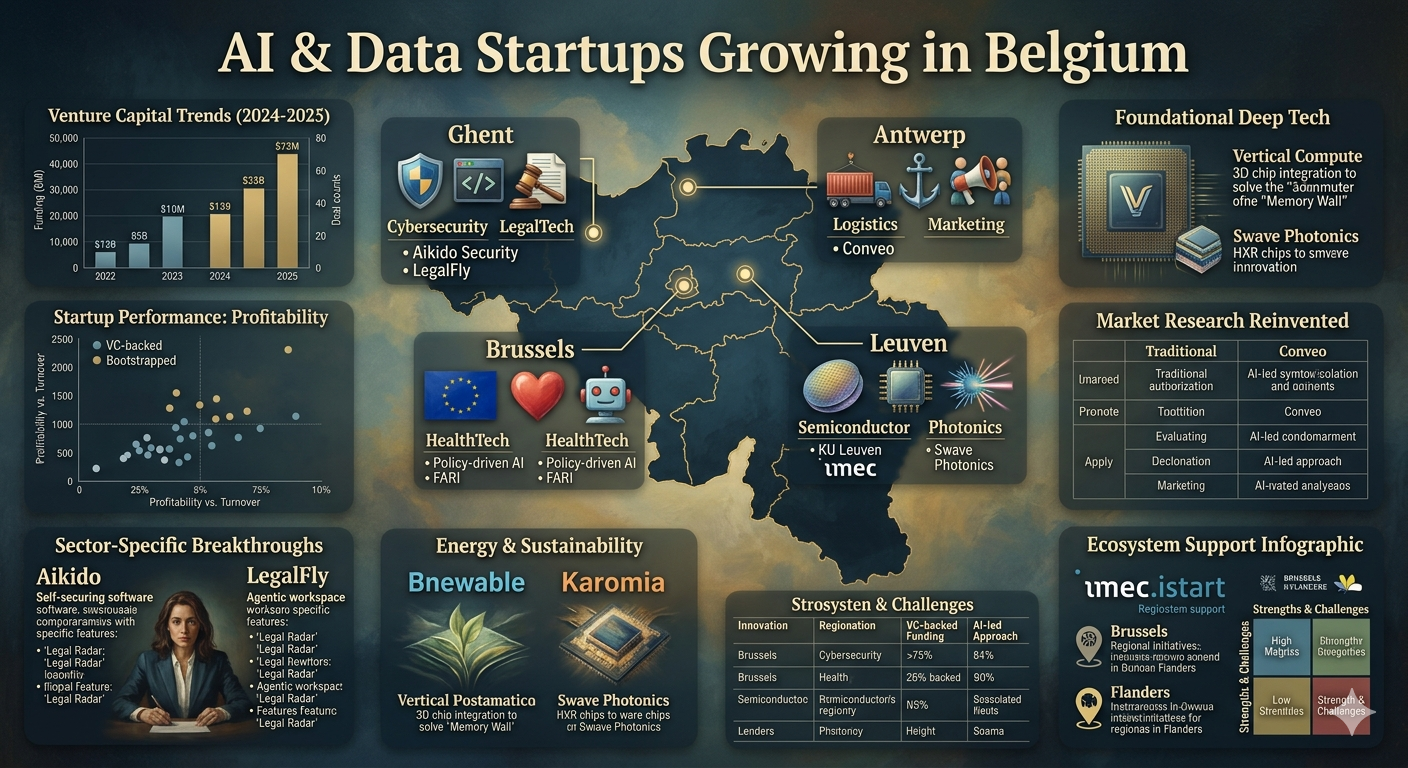
The Belgian ecosystem has successfully maintained venture investment levels well above pre-COVID benchmarks, with a renewed focus on science-based startups. The average funding for a subset of 26 top-tier Belgian AI startups reached $136.8 million, highlighting the presence of heavyweights that are beginning to dominate their respective niches.
Metric | 2024 Data | 2025 Data (To Date) | Strategic Significance |
Successful Raising Rounds | 63 | 44 | Sustained deal flow despite macro headwinds |
AI Total Funding Amount | $44.2 Million | $120M+ (Estimated) | Shift toward larger Series B/C rounds |
AI Deal Count Rank | 1st (7 Deals) | 1st | AI remains the primary innovation driver |
Biotechnology Funding | $97.3 Million | High (Competes for 1st) | Convergence of AI and Bio (e.g., Spica) |
Notable Seed Average | $1.2 Million | $2.5 Million | Growing appetite for ambitious early rounds |
A landmark moment for the ecosystem was the Series B funding of Ghent-based Aikido Security, which raised $60 million at a $1 billion valuation. This event signaled that Belgian companies could achieve unicorn status in record time—less than three years in Aikido's case—by targeting global pain points in the software development lifecycle. Furthermore, the infusion of capital into deep tech startups like Vertical Compute, which raised a total of €57 million in its seed round, underscores a willingness to fund long-term infrastructure projects that address the "memory bottleneck" of AI.
Despite high expectations for revenue growth, the financial health of the sector remains complex. The Federal Planning Bureau notes that profitability remains elusive for many AI startups as they prioritize rapid turnover and employee acquisition. An increasing proportion of AI startups suffer losses as they invest heavily in R&D and market expansion. Interestingly, companies that achieve high turnover and profitability without venture capital are overrepresented in the "exceptionally successful" category, suggesting that bootstrapped firms in Belgium may follow more sustainable and disciplined paths to maturity than their VC-backed counterparts.
Breakthrough Entities and Sector-Specific Deep Dives
The Belgian AI sector is increasingly defined by "Vertical SaaS" and industry-specific tech. Startups are moving away from horizontal tools that attempt to serve everyone and are instead delivering laser-focused solutions that address unique challenges across legal, energy, cybersecurity, and market research sectors.
Cybersecurity: The Emergence of Self-Securing Software
Aikido Security, founded in 2022, represents the vanguard of the Belgian "No Bullsh*t" security movement. The company's core technology addresses the fragmentation of modern security tooling, which often overwhelms engineering teams with thousands of low-priority findings and false positives. By unifying code, cloud, and runtime security into a single interface, Aikido allows developers to prioritize vulnerabilities that are actually exploitable in real-world conditions.
The technological mechanism underpinning Aikido is its "AI Autotriage" and "AI Autofix" capabilities. These systems act as autonomous agents that deploy "AI Pentests" to hunt for vulnerabilities such as IDORs and real attack paths, validating their exploitability like human hackers, and implementing remediations automatically. This shift from reactive to autonomous security is essential as software build cycles collapse from months to minutes, rendering manual review processes designed for slower development cycles obsolete.
The company's rapid growth—five-times revenue growth and a three-times increase in its customer base within a year—is a testament to the global demand for "security-as-engineering". With over 100,000 teams using the platform, including organizations like the Premier League and SoundCloud, Aikido has proven that European cybersecurity firms can compete and win on a global stage.
Legal and Compliance: Agentic Workspaces and Automation
The Belgian LegalTech scene has experienced a surge in maturity, led by Ghent-based LegalFly. Founded in 2023 by former product experts from Tinder, LegalFly has secured over €17 million in funding to build an "agentic workspace" for in-house legal and compliance teams. The company's founders recognized the inefficiencies and pressures within legal teams and saw an opportunity to apply their AI expertise to the legal sector.
Unlike generalist models like ChatGPT or Microsoft Copilot, which are prone to "hallucinations" and privacy risks, LegalFly utilizes a legally-trained, LLM-agnostic platform that cites credible sources and anonymizes documents on-premise before processing. This is critical in the legal industry, where data privacy is paramount and confidential information must be protected at all times.
Key technical features and agents include:
Legal Radar: An AI agent that performs "horizon scanning," monitoring upcoming legislation across 10 jurisdictions and 50 official sources to provide tailored impact assessments for businesses.
Contract Lifecycle Agents: Specialized agents for contract review, redlining, redrafting, and due diligence, designed to automate repetitive tasks and enhance productivity.
Source-Backed Transparency: Ensuring every AI-generated insight is linked to a verifiable legal framework or internal document, reducing the time teams spend verifying results.
Other notable players in this space include Alice, which secured €1 million in pre-seed funding to scale AI-powered legal workflows, and Jurimesh, which raised $1.7 million for its AI-driven legal solutions. The recent acquisition of ML2Grow by delaware further emphasizes the growing importance of AI in professional services.
Energy and Sustainability: Optimization and ESG Governance
As Belgium accelerates its path toward Net Zero, startups are leveraging AI to manage the volatility of renewable energy sources and the complexity of regulatory reporting. The integration of battery storage systems with smart control platforms has become the heart of the solution for industrial energy efficiency.
Bnewable specializes in on-site "behind the meter" battery systems and energy management for businesses. Its proprietary platform, Voltana, uses data-driven algorithms and machine learning to balance local energy consumption with market opportunities. By intelligently controlling battery storage, Voltana performs "peak shaving" to reduce grid costs and "battery trading" to sell stored energy during periods of high market prices. Bnewable's financing model, which requires no investment from the customer, accelerates the adoption of these technologies in sectors like logistics and manufacturing.
The company's ambition to manage one gigawatt-hour of storage capacity in Belgium by 2030—equivalent to the capacity of two gas-fired power stations—underscores the critical role of AI in stabilizing the electricity grid while maximizing returns for industrial customers.
Karomia addresses the administrative burden of the Corporate Sustainability Reporting Directive (CSRD) and the Voluntary Small and Medium-Sized Enterprise (VSME) standards. Its AI-driven platform can automate up to 90% of the reporting work, transforming raw data like policies, invoices, and Excel files into audit-ready ESG reports in a matter of hours. This capability is critical for SMEs that are increasingly being asked for ESG data by banks, investors, and large buyers but lack dedicated sustainability departments. Karomia's technology also underpins the new Febelfin-Isabel platform, enabling companies to share verified data directly with financial institutions to unlock better financing rates.
Direct Air Capture: Engineering the Climate Recovery
Sirona Technologies, founded in 2023 by former Tesla engineer Thoralf Gutierrez, is pioneering Direct Air Capture (DAC) technology in Belgium. Sirona uses solid sorbents as chemical filters to extract CO2 directly from the atmosphere. These sorbents are heated until they release CO2 in a gaseous state, which is then compressed and stored permanently in geological formations like basalt or saline aquifers.
The company's strategy is fundamentally different from traditional carbon removal approaches. It leverages the exponential growth and falling costs of solar energy to power "simple machines" with low capital expenditure, rather than optimizing for absolute energy efficiency. This modular technology is built in factories, allowing for a steeper learning curve and quicker cost reductions. Sirona's ability to iterate from a first prototype to a third-generation model—improving efficiency 100-fold in just six months—demonstrates the application of high-speed hardware engineering to global climate challenges.
Foundational Deep Tech: Semiconductors and Photonics
Belgium's historical strength in nanoelectronics through imec has paved the way for startups that address the physical limitations of current AI hardware, focusing on memory density and holographic visualization.
Overcoming the "Memory Wall"
Vertical Compute, based in Louvain-la-Neuve, has raised €57 million in seed funding to solve the "memory bottleneck" in high-performance computing and AI accelerators. Conventional 2D memory architectures force data to travel centimeters across a circuit board, leading to latency and excessive energy consumption—a phenomenon often described as the "memory wall".
Vertical Compute's 3D integration approach stacks memory directly on top of compute logic within a single 300mm wafer. This reduces the data commute from centimeters to nanometers, fundamentally changing how data flows inside a chip. The company's CTO, Sébastien Couet, compares this to using a skyscraper instead of a single-story home: it allows for orders of magnitude more data (people) to reside much closer to the logic (work). This redefines the size and power envelope required to run agentic and physical AI models, especially in edge environments.
The Holographic Revolution in Spatial Computing
Swave Photonics is commercializing "Holographic eXtended Reality" (HXR) chips that use the world's smallest pixels (sub-300nm) to create true 3D holography. By utilizing non-volatile phase change materials (PCM) and standard CMOS semiconductor processes, Swave can steer lightwaves to create lifelike images that the human eye and brain process naturally.
This technology addresses several critical challenges in the AR and smart glasses market:
Vergence-Accommodation Conflict: By creating true holograms, Swave eliminates the mismatch between where the eye focuses and where the brain perceives an image, reducing the nausea and fatigue common in traditional VR/AR.
Form Factor: The HXR chip removes the need for bulky waveguides and varifocal lenses, enabling high-resolution displays in comfortable, small-form-factor glasses.
Power Consumption: The stable states of phase change materials allow the chip to be powered off between frame changes, significantly extending battery life.
The company's recognition with the CES 2026 Innovation Award underscores the transformative potential of its NanoPixel technology in the emerging "spatial and AI era".
Market Research and Consumer Intelligence
The democratization of qualitative research is being driven by Antwerp-based Conveo, which has built an AI-powered platform for conducting and analyzing video interviews with real participants. Conveo's AI interviewer acts as a sophisticated moderator, asking adaptive follow-up questions and capturing multimodal signals that traditional surveys miss.
Comparative Analysis of Qualitative Research Methodologies
Feature | Traditional Qualitative Research | Conveo AI-Led Research |
Timeline | 6 to 8 weeks | 24 Hours to 3 Days |
Cost Structure | $15,000 - $25,000 per study | 75% Lower Total Cost |
Scale Capacity | Small Focus Groups (e.g., 20 people) | Hundreds of Simultaneous Interviews |
Data Depth | Manual transcripts and notes | Multimodal (Video, Audio, Text) |
Analysis Speed | 40-60 hours of manual coding | Instant Theme & Sentiment Tagging |
Follow-up Logic | Fixed Interview Guide | Dynamic, AI-driven Probing |
Conveo's platform allows teams to conduct 200 interviews overnight and deliver actionable insights within 12 hours, as demonstrated in case studies with companies like Unilever and Orange. By understanding tone, pace, and emotional cues, the AI identifies not just what people say, but what they mean, providing insights that "speak human" and are backed by video proof. This capability allows enterprises to shift from "fewer, bigger" studies to many rapid, compounding projects that accelerate strategic impact.
The Ecosystem of Support: Accelerators and Public Policy
The Belgian government and regional authorities have implemented aggressive strategies to foster AI innovation, ensuring that "digital sovereignty" remains a priority by reducing dependency on non-European tech giants.
The Critical Role of imec.istart
As a leading European accelerator, imec.istart provides critical pre-seed funding, coaching, and mentorship. Its recent cohorts demonstrate the shift in AI usage: it is no longer just a "headline feature" but a practical engine driving smarter, faster solutions behind the scenes.
High-Potential imec.istart Startups (2025-2026):
Chuuchuu (Mobility): Acts as the "Waze of train travel," using AI to predict delays and cancellations, helping passengers choose sustainable transport with confidence.
Deontic (Mobility): Enables safe and scalable autonomy by helping self-driving vehicle developers test and validate their systems faster.
E-Torch (Supply Chain): Transforms logistics for food and beverage events, using AI to streamline deliveries and reduce waste.
Bimefy (Construction): Provides an AI-powered platform for real-time progress monitoring and collaboration in building projects.
Aerolytics (AgriTech): Uses indoor autonomous drones to monitor greenhouse crops, increasing yields while reducing pesticide usage.
Peaky (FinTech): Transforms financial planning with real-time AI insights and advanced forecasting for businesses.
NextSDS (Business Services): Uses AI to transform complex chemical Safety Data Sheets into actionable insights for safer supply chain handling.
Public Funding and Strategic Initiatives in Brussels and Flanders
The Brussels-Capital Region, through Innoviris, has invested €7.3 million to accelerate AI adoption, with a specific focus on "Physical AI"—systems capable of interacting with the real world, such as infrastructure, water management, and construction. The "GENAI" program supported 40 projects with grants of up to €56,000 each, targeting high-impact areas for the city.
Notable Innoviris Project | Organization | Focus Area |
HEALTH-GEN | Innovation Sprint | GenAI-driven lifestyle behavioral change |
EuroSafe AI | Kimani Group | AI for cyber awareness and defense |
NewsAI-as-a-Service | Belga News Agency | Accelerating journalistic product development |
Appointment Assistant | The Campfire | Virtual assistant for medical appointment booking |
SmartReport | Coboma | Automated business reporting and analysis |
iCISO | CAPYX | Intelligent cybersecurity governance and compliance |
In Flanders, the VLAIO agency manages an annual budget of €15 million to support AI innovations and the implementation of AI in the business community. These efforts are bolstered by the "EU AI Week," which facilitates collaboration across the three regions and emphasizes the importance of anchoring innovation in a framework of trust and ethical governance. Initiatives like the "Vlaamse AI Academie" (VAIA) and the "FARI AI Institute for the Common Good" further strengthen the research and education pipeline.
Industrial AI and the Fourth Industrial Revolution
Belgium's manufacturing and logistics sectors are increasingly integrating Industrial IoT (IIoT) and edge computing to enhance productivity and competitiveness. By the end of 2025, manufacturing is projected to be the second-largest adopter of IoT technologies globally.
Key Trends in Belgian Industrial AI
Edge Computing Deployment: Processing data directly on industrial devices reduces latency and bandwidth requirements, allowing quality control systems to identify defects and adjust parameters within milliseconds.
Intelligent Automation: Robots are evolving beyond repetitive tasks into "Cobots" that navigate dynamic environments and collaborate safely with humans, adapting to product changes without extensive reprogramming.
Predictive Maintenance: Advanced algorithms analyze equipment sensor data to detect subtle patterns of wear, allowing maintenance teams to address issues before they cause costly downtime.
Digital Twins and Simulation: Virtual replicas of physical machines allow industries to simulate performance and optimize production without physical intervention.
The primary challenge facing these industrial implementations is the "AI skills gap." There is a significant disconnect between operational technology (OT) staff and IT/AI specialists, necessitating a massive focus on upskilling the existing workforce to manage end-to-end AI deployments.
Strategic Consolidation: M&A and Partnerships
As the Belgian AI market matures, established corporations and IT consultancies are increasingly seeking to acquire specialized firms to bolster their technology stacks and talent pools.
Acquisition of ML2Grow by delaware
In early 2026, the international IT consultancy delaware completed a bolt-on acquisition of ML2Grow, a Ghent University spin-off specializing in AI and machine learning services. This acquisition integrated ML2Grow's expertise in computer vision, NLP, and MLOps into delaware's broader service offering, bringing delaware's total AI team in Belgium to approximately 85 specialists.
Strategic Aerospace and Mobility Deals
Sonaca acquires Aciturri Aerostructure: This deal combined Sonaca's metallic expertise with Aciturri's composite mastery to create a new pan-European dual-use civil and defense leader.
Arrive acquires Be-Mobile: In a €175 million deal, the mobility solution provider Arrive (formerly Easypark) acquired Be-Mobile, the Benelux market leader in driver companion apps and traffic data services.
Sofindev exits Companyweb: The acquisition of Companyweb by Altares Dun & Bradstreet highlights the consolidation in the Belgian SME data and business intelligence market.
These transactions indicate that AI and data capabilities have become the primary currency of strategic growth in the Belgian corporate landscape.

Economic Outlook and the Impact of the AI Act
The implementation of the EU AI Act has introduced a dual dynamic to the Belgian ecosystem. While the regulation aims to ensure safety and transparency—qualities that Belgian startups like LegalFly and Aikido emphasize as core value propositions—it also necessitates a pragmatic approach to experimentation. The Brussels-Capital Region confirms its ambition to lead in responsible innovation, positioning Belgium as a leader in anchoring AI within a framework of trust.
Despite the "elusive" nature of profitability for many venture-backed firms, the productivity of AI startups is increasing faster than that of non-AI firms. This productivity gain, coupled with high levels of liquidity, positions the Belgian AI sector as a resilient component of the national economy. The Federal Planning Bureau notes that policymakers consider a strong AI presence crucial for future economic growth and productivity.
Summary of Ecosystem Strengths and Challenges
Aspect | Strength / Opportunity | Challenge / Risk |
Talent Pipeline | World-class research (imec, universities) | Significant skills gap in industrial OT/IT |
Capital Flow | Emergence of unicorns (Aikido) | Elusive profitability for young firms |
Regulatory Environment | Leader in responsible innovation | Compliance costs for smaller SMEs |
Technology Focus | Deep tech, hardware, vertical AI | Higher risk and longer time-to-market |
Infrastructure | Edge computing and 5G deployment | Modernizing legacy industrial systems |
Strategic Synthesis and Outlook
The data suggests that Belgium has successfully carved out a niche as a high-density, specialized AI ecosystem that prioritizes depth, security, and industrial application over speculative horizontal growth. The rapid success of firms like Aikido Security and LegalFly demonstrates that Belgian startups are particularly effective when they target specific enterprise "pain points" where trust and data privacy are paramount.
Key Strategic Pillars for 2027 and Beyond
Hardware-Software Synergy: The presence of imec ensures that Belgium remains at the forefront of the "Physical AI" and "Spatial Computing" revolution. Solving the foundational hardware bottlenecks—such as the memory wall and display resolution—is critical for the next phase of global AI scaling.
Regulatory Alignment as a Value Proposition: Rather than viewing the EU AI Act as a hurdle, Belgian startups are increasingly embedding compliance, anonymization, and transparency directly into their technology stacks. This turns regulatory alignment into a competitive advantage for global enterprise clients seeking "audit-ready" solutions.
Autonomous Agent Integration: The shift from AI as a "chatbot" to AI as an "autonomous agent" is a dominant theme. Whether it is self-securing software, legal radar agents, or automated energy management platforms, the Belgian ecosystem is moving toward systems that actively solve problems without human intervention.
Regional Hub Specialization: The distinct identities of Ghent (Cyber/Legal), Antwerp (Logistics/Marketing), and Leuven (Deep Tech/Semiconductors) provide a robust multi-nodal network that attracts diverse international investment while fostering deep local expertise.
For investors and corporate partners, the Belgian AI landscape offers a unique combination of world-class academic research and a disciplined, "engineering-first" startup culture. While the path to profitability remains a primary challenge, the rapid growth in turnover and the successful scaling of foundational technology firms indicate that the ecosystem is well-prepared to lead the next generation of industrial and enterprise AI innovation in Europe. The continued focus on sustainable energy, foundational hardware, and secure agentic workflows will likely secure Belgium's position as a critical node in the global digital economy for the remainder of the decade.
The Real Startup Playbook: Ideas, Growth, Funding, and Founder Psychology
Building a startup is exciting, chaotic, and often misunderstood. If you’ve ever wondered how founders actually validate ideas, find co-founders, raise funding, and survive the emotional rollercoaster, these articles explore the realities behind the startup world.
Start with How to Validate Your Startup Idea in 48 Hours for $0 to understand how founders test ideas quickly before wasting months building the wrong product. Once you have an idea, the next challenge is building it—From Idea to MVP: A Step-by-Step Guide for Solo Founder walks through the journey from concept to a real product.
Many founders struggle with partnerships and team decisions. Should your co-founder live in the same city? Explore Remote vs. Local: Does Your Co-Founder Need to Live in the Same City? and learn the risks hidden in partnerships in 5 Red Flags to Look for When Choosing a Startup Partner. If you’re searching for technical help, How to Find a Technical Co-Founder (Without a Six-Figure Salary) explains how founders actually do it.
The startup journey isn’t just about building products—it’s also about mindset and decision-making. Articles like Decision Fatigue: The Silent Startup Killer, Fear vs Logic: How Founders Actually Make Decisions, and How Overthinking Destroys Early Momentum reveal the psychological battles founders face behind the scenes.
Growth is another misunderstood part of startups. Learn why strategy matters more than hype in Ideas Don’t Scale. Systems Do. and why discipline matters in Why Your Startup Doesn’t Need Growth — It Needs Focus. Discover the importance of early traction in How the First 100 Users Decide Your Startup’s Fate and understand team building through The First Hire That Actually Matters.
Funding is often romanticized, but reality is more complex. Why First-Time Founders Should Avoid Big Funding challenges common assumptions about venture capital, while Revenue Solves More Problems Than Funding explains why sustainable businesses matter more than investor money.
The startup ecosystem also varies by geography. If you're curious about India’s startup scene, explore The New Playbook for Raising in Bangalore, Why Raising Pre-Seed in Bangalore Is Harder Than Ever, and Why B2B SaaS from Bangalore Scales Faster.
But startups are not just about strategy and growth—they’re also about people and emotions. Articles like The Hidden Burnout of Bangalore Founders, Comparison Culture in India’s Startup, and The Loneliness of First-Time Founders in Bangalore reveal the personal struggles founders rarely talk about publicly.
And finally, if you want a deeper perspective on the startup journey itself, explore Lessons Learned Too Late by First-Time Founders and The Myth of the “Overnight Success” Startup—because the truth behind startup success is far more complex than it appears.
Protect Your Future: The Precision Vesting Calculator
Don't let a "handshake deal" complicate your exit. Map out your ownership journey with our Vesting Calculator
Calculate Your Vesting Schedule →