Why More IIT/NIT Students Are Skipping Placements to Build Startups
June 29, 2026 by Harshit Gupta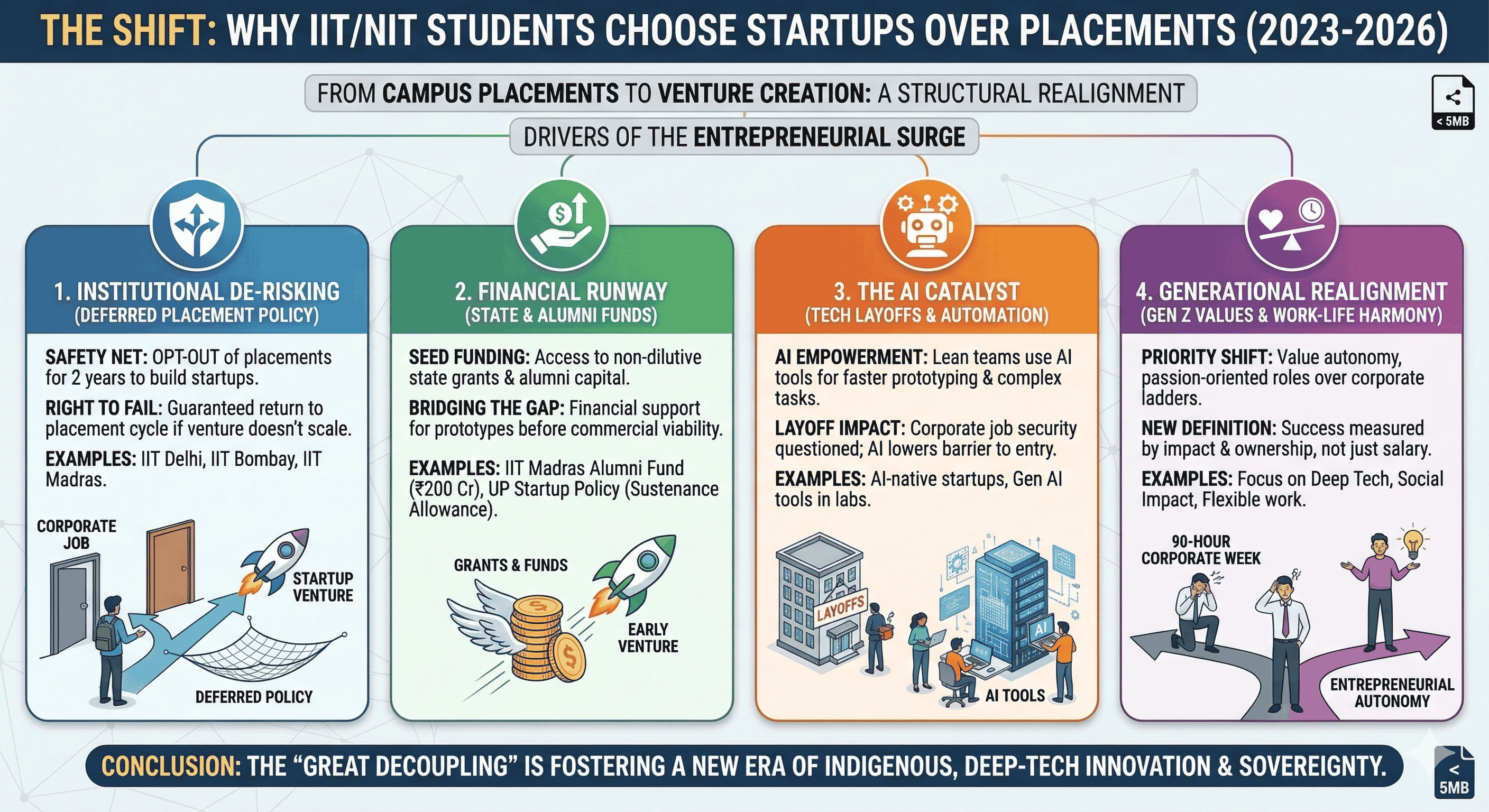
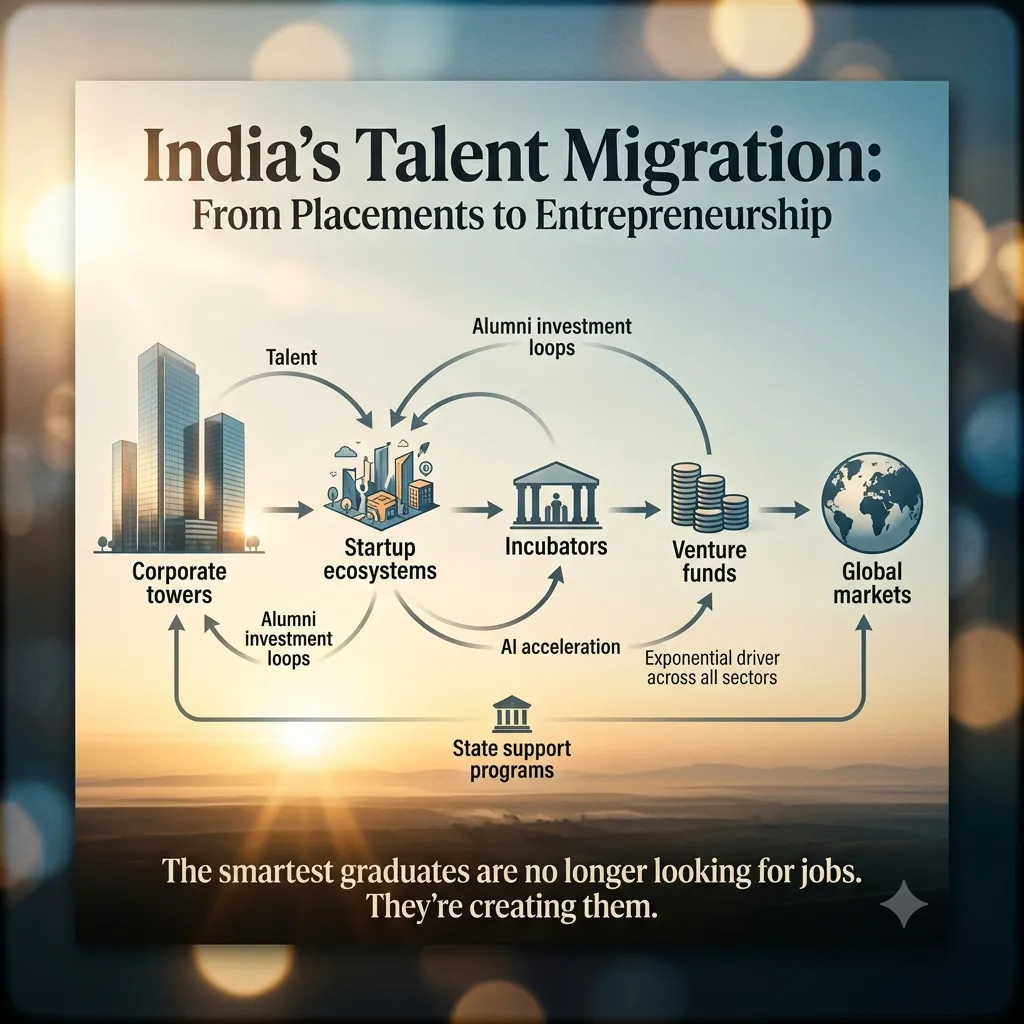
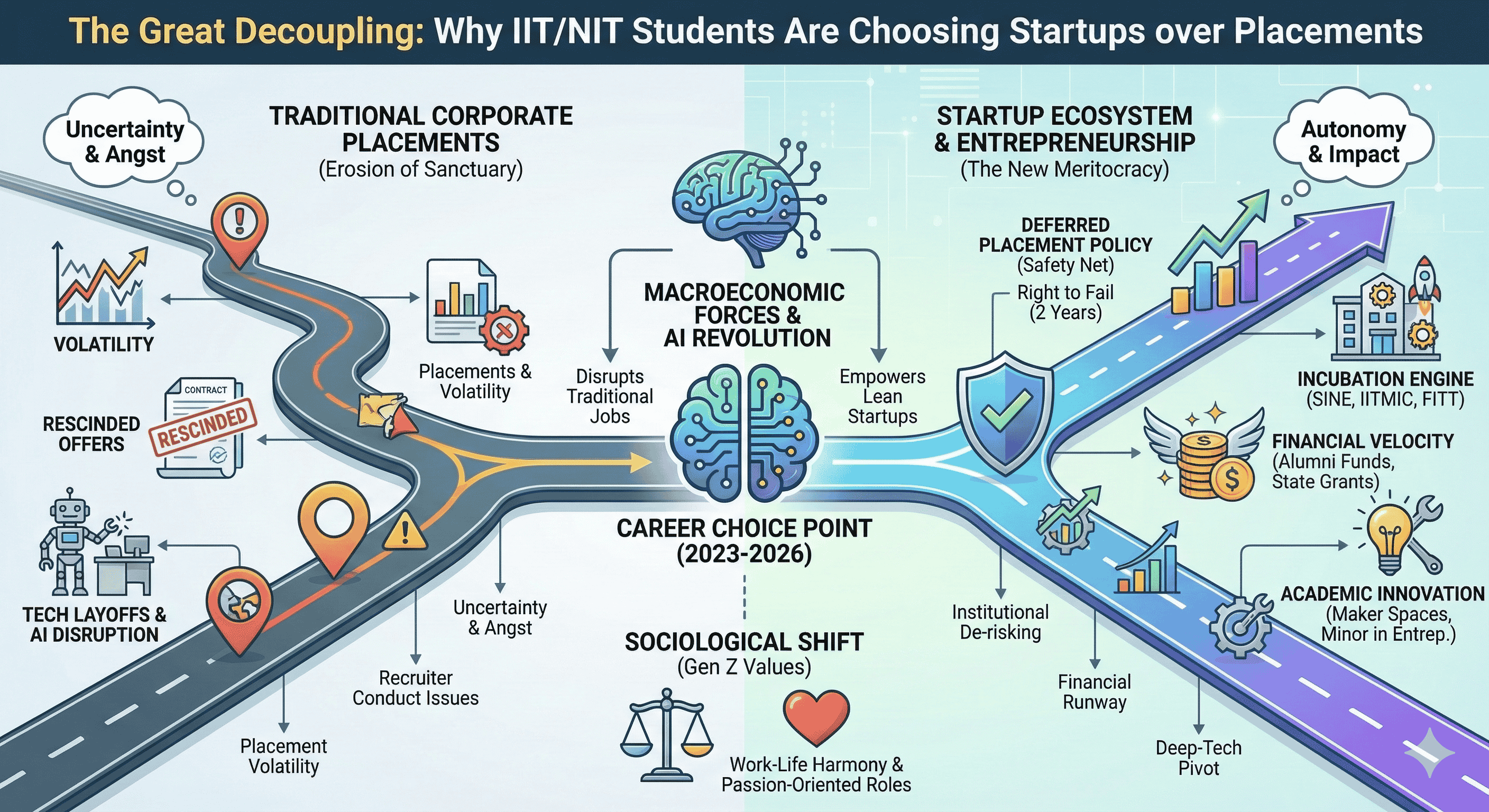
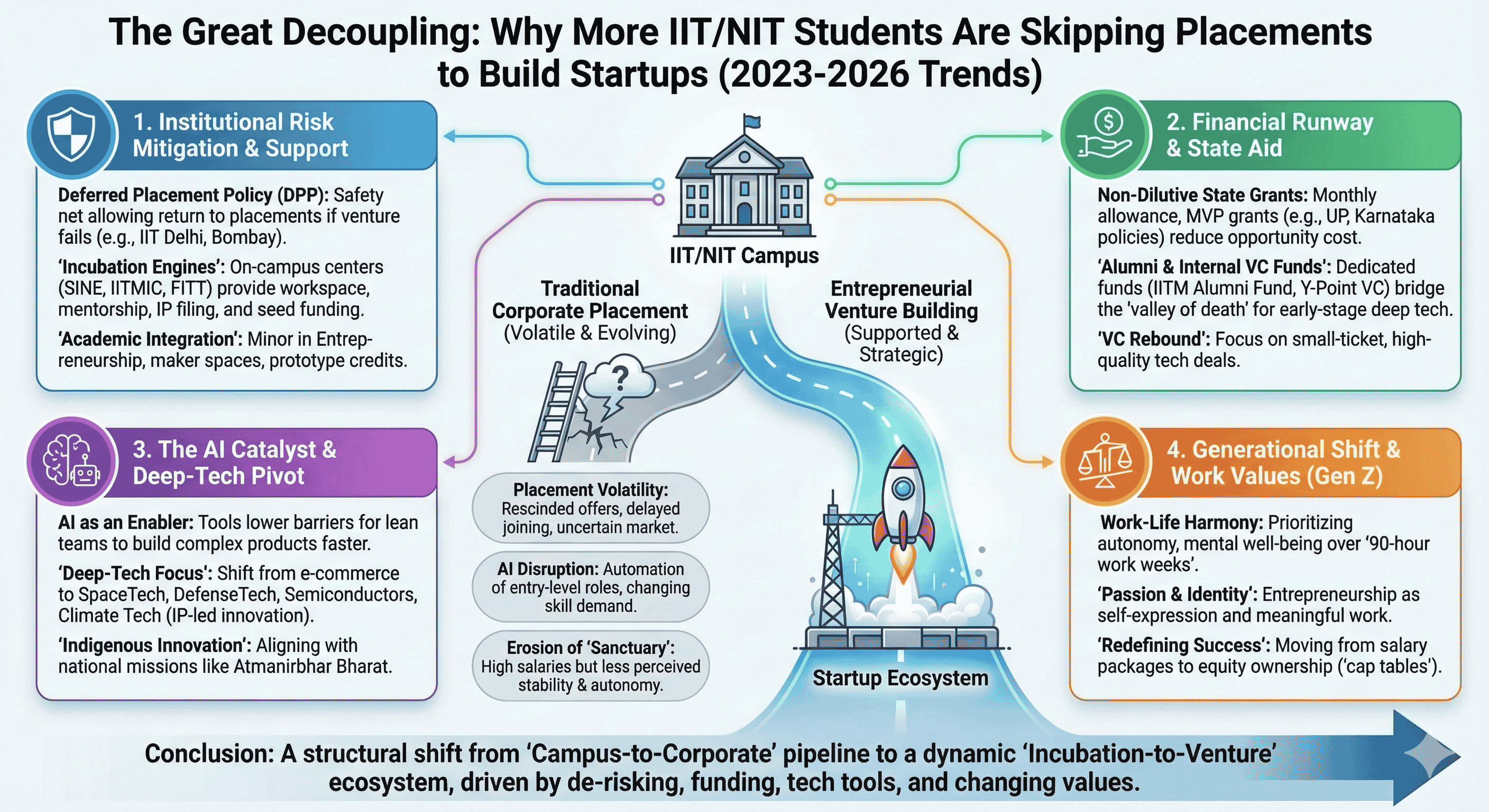
The professional ecosystem of India’s premier technical institutions—the Indian Institutes of Technology (IITs) and the National Institutes of Technology (NITs)—is currently undergoing a profound structural realignment. Traditionally, the value proposition of these elite institutions was inextricably linked to the "campus placement" model, a high-stakes, high-visibility recruitment cycle that served as a primary conduit for global corporate talent. However, data and observational trends from the 2023–2026 period indicate a significant "decoupling" of student aspirations from this traditional corporate path. An increasing volume of graduates is now consciously bypassing lucrative placement offers to build independent startups. This shift is not a singular phenomenon but is driven by a convergence of macroeconomic volatility, institutional risk-mitigation policies, a rapid expansion of state-led financial support, and a fundamental generational shift in workplace priorities, all of which are occurring against the backdrop of an artificial intelligence (AI) revolution that is simultaneously disrupting established career paths and lowering the barriers to entrepreneurial entry.
The Erosion of the Corporate Sanctuary: Placement Volatility and Recruiter Conduct
The primary external catalyst for the surge in student entrepreneurship is the perceived erosion of the "corporate sanctuary." For decades, a job offer from a top-tier multinational or a prestigious consulting firm was viewed as a terminal achievement. Recent placement cycles, however, have introduced a level of instability that has fundamentally altered this perception. The 2024–2025 placement season was characterized by significant "angst," as many students across top-tier campuses remained unplaced even toward the conclusion of the academic year. While high-profile international offers—such as a record Rs 3.7 crore package at IIT Bombay—continue to capture headlines, the underlying reality for the broader student body is one of heightened uncertainty.
This uncertainty was significantly magnified by a series of high-profile "rescinded offers." More than 20 firms were banned from participating in the IIT placement process after revoking job offers as late as June or July, often just days before the scheduled joining dates. These cancellations, affecting students at institutions including IIT Bombay and IIT Madras, were not limited to small startups but involved established data analytics and software-based firms. Because many IITs do not allow students with existing offers to participate in further rounds of interviews, these late-stage withdrawals effectively stranded graduates in a stagnant job market, severely impacting their career prospects and mental well-being. This breach of trust has led to a collective re-evaluation among students, who now view entrepreneurial ventures as a way to control their own professional destinies rather than being subject to the strategic whims of corporate restructuring.
Furthermore, the sectoral composition of recruitment is shifting in ways that inadvertently favor entrepreneurship. Traditional major recruiters, particularly in the consulting sector, have seen a significant contraction in their campus presence. Conversely, there has been a 50% increase in recruitment from proprietary trading firms and quant companies, accompanied by salary hikes of 25% to 40%. These roles demand extreme proficiency in mathematics, programming, and statistics—the same skill sets required to build deep-tech startups. As students develop these high-level technical competencies, the allure of applying them to their own ventures often outweighs the benefits of high-salaried but "mundane" corporate roles.
Quantitative Overview of Campus Placements (2025–2026)
Institution | Placement Metric | Statistical Value |
IIT Bhubaneswar (B.Tech) | Overall Placement Rate | 90.07% |
IIT Bhubaneswar (CSE) | Average CTC | Rs 23.2 Lakhs |
IIT Bhubaneswar (CSE) | Median CTC | Rs 14 Lakhs |
IIT Bhubaneswar (CSE) | Maximum Domestic CTC | Rs 67.6 Lakhs |
IIT Kanpur (Day 1) | Total Job Offers (2025) | 672 (16% increase YoY) |
IIT Kanpur (PPOs) | Pre-Placement Offers | 253 (27% increase YoY) |
IIT Delhi | Total Offers (Dec 2025) | 1,275 (including PPOs) |
IIT Delhi | Unique Students Placed | 1,140+ |
IIT Delhi | PPO Surge | 33% increase over previous year |
IIT Hyderabad (B.Tech) | Phase 1 Placement Rate | 62.42% |
IIT Hyderabad (AI/CSE) | Average CTC | ~Rs 40 Lakhs |
The data suggests a bifurcated market: while the highest-performing students at institutions like IIT Kanpur and IIT Delhi are seeing record-breaking "Day 1" offers, the overall placement rates at other elite institutions like IIT Hyderabad (62.42% in Phase 1) reflect a more cautious hiring environment. This volatility reinforces the narrative that the corporate path is no longer a guaranteed "gold-plated" ticket, encouraging students to explore the high-risk, high-reward alternative of entrepreneurship.
Institutional De-risking: The Mechanics of the Deferred Placement Policy
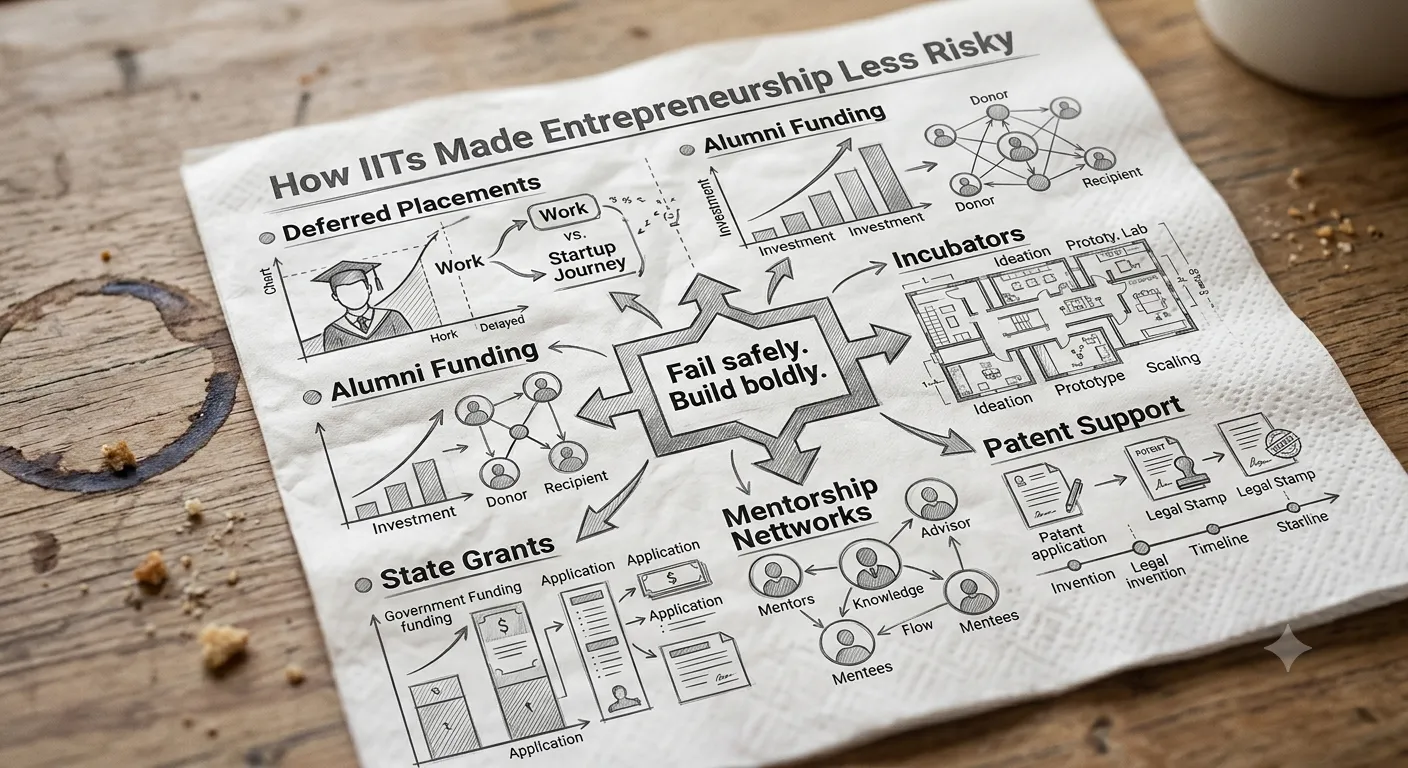
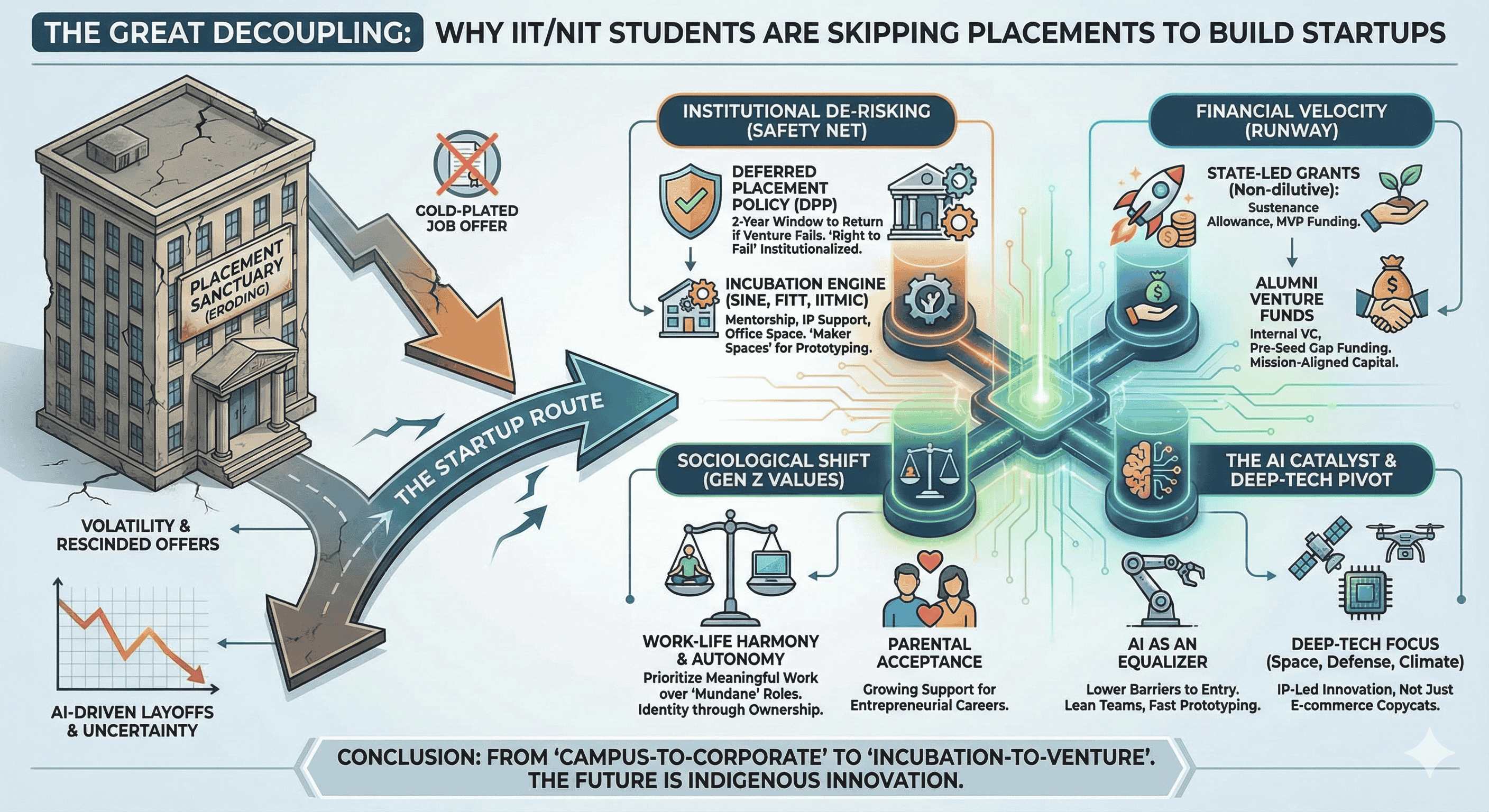
To facilitate this transition without exposing students to catastrophic professional risk, many IITs and some NITs have institutionalized the "Deferred Placement Policy" (DPP). This mechanism serves as a critical safety net, allowing final-year students to opt out of the current placement cycle to focus on their startups, with a guarantee that they can return to participate in campus placements if their venture fails within a specified window—typically two years.
At IIT Delhi, the DPP is a structured program designed to "mitigate the risk involved with failure". Students apply in their pre-final year, submitting a detailed startup proposal to a selection panel of internal and external experts. Once approved, the student must pursue the venture full-time, with progress monitored by the institute. If the venture does not achieve viability, the student is allowed to re-enter the placement process for a single season within the two-year deferral period. IIT Bombay operates a similar policy, though it limits the number of participants—for instance, capping the number of students at 15 for certain cycles to maintain a balance between entrepreneurial drive and placement stability.
Comparative Framework of Deferred Placement Programs
Institution | Deferral Window | Key Eligibility/Constraints | Support Mechanism |
IIT Delhi | 2 Years | Proposal evaluated by expert panel | Mentoring by Innovation Cell |
IIT Bombay | 1-2 Years | 15-student cap; social deferral options | Managed by SINE/Placement Cell |
IIT Madras | 1-2 Years | Open for higher studies or startups | Subject to one-job rule upon return |
NIT Warangal | 1 Semester / 1 Year | IEP credits for innovative prototypes | Integrated into Startup Policy |
IIIT Bangalore | 2 Years | Part of institutional innovation policy | Support from IIITB Innovation Centre |
While the number of students formally utilizing the DPP can appear small—eight students at IIT Bombay in a single year—the psychological impact of the policy is far-reaching. It institutionalizes the "right to fail," which is a cornerstone of any vibrant startup ecosystem. Furthermore, anecdotal evidence suggests that many students who formally defer do not return to the placement cycle precisely because their ventures have achieved a level of market establishment that makes corporate employment unattractive.
Academic Architectures for Innovation: Beyond the Traditional Curriculum
The shift toward entrepreneurship is further supported by significant revisions to the academic curriculum and the creation of "maker spaces" that allow students to experiment during their studies. IITs are no longer just centers of technical education; they are "productive startup factories". For example, IIT Bombay offers a "B.Tech Minor in Entrepreneurship," and new courses like "Proof of Concept" allow students to bring their ideas to an "Ignition Lab" to develop tangible prototypes using campus facilities.
At IIT-BHU, curriculum reform has reached the stage where a full semester is now dedicated to industrial or startup internships, allowing students to build prototypes or join early-stage companies without delaying their graduation. This integration of "practical innovation" into the formal degree path has resulted in 10% to 15% of IIT-BHU graduates choosing entrepreneurial roles over traditional placements.
NIT Warangal has also modified its rules to allow students to work on startups as part of their academics using Innovation and Entrepreneurship (IEP) credits. B.Tech students in their final semester are permitted to engage in full-time entrepreneurship journeys if they have completed their credits, and they are even allowed to take semester or year breaks to focus on their ventures. This academic flexibility is crucial in a competitive market where "speed to market" often determines a startup's success.
The Incubation Engine: SINE, FITT, and the IITMIC Milestone
The structural support for student startups is primarily funneled through specialized incubation centers. These centers provide not just office space but also access to seed funding, legal advice, intellectual property (IP) filing support, and an extensive network of mentors and investors.
IIT Madras is perhaps the most prominent example of this "incubation-led growth." In the 2024–2025 financial year, the IIT Madras Incubation Cell (IITMIC) nurtured a record-breaking 104 startups—averaging one new startup every third day. More than half of these new ventures were founded by IIT Madras members, including faculty, staff, and students. The institute’s "Startup 100 Mission" reflects a deliberate institutional strategy to scale entrepreneurship, moving from an annual average of 60 startups to over 100.
Similarly, IIT Bombay’s Society for Innovation and Entrepreneurship (SINE) has supported over 250 technology ventures over the past two decades. SINE’s portfolio includes notable successes like ideaForge (drones), Atomberg (energy-efficient appliances), and ImmunoACT (CAR-T cell cancer therapy). A unique trend at IIT Bombay is the rise of "Professor-Led Companies," where approximately 70 faculty members have launched startups, often with PhD students leading the day-to-day operations. This model leverages the "deep research" expertise of the faculty while providing students with high-level operational experience.
Portfolio and Performance of Major Campus Incubators
Incubator / Center | Associated Institute | Successes / Notable Metrics | Focus Areas |
SINE | IIT Bombay | 250+ ventures; IdeaForge, Atomberg | DeepTech, Materials, CleanTech |
IITMIC | IIT Madras | 457 startups; Ather Energy, Uniphore | AI, Robotics, SpaceTech, HealthTech |
FITT | IIT Delhi | 150+ faculty and alumni startups | Green Tech, Fabless Semiconductors |
FTBI | NIT Rourkela | 100+ startups; 35+ patents filed | Tech-driven ventures for Tier 2/3 |
SIIC | IIT Kanpur | 500+ startups; 22 states active | Defense, MedTech, Cybersecurity |
TIDES | IIT Roorkee | 130+ startups supported | Drones, Mobility, Sustainability |
The "IP-led approach" is a defining characteristic of this new wave of entrepreneurship. IIT Madras filed 417 patents in the 2024–2025 financial year, and the institute expects to reach 500 filings annually in the near future. This focus on indigenous innovation ensures that the startups emerging from these campuses are not merely "copycats" of Western business models but are built on unique technical assets.
Macroeconomic Forces: The AI Reckoning and the Tech Layoff Surge
The pivot toward entrepreneurship is also a survival strategy in a job market fundamentally transformed by Artificial Intelligence. The year 2025 has been described as a "reckoning with reality" for the technology sector, with over 89,000 workers laid off from more than 200 companies globally. Large-scale workforce reductions at companies like Intel (27,159 roles), Microsoft (15,387 roles), and Amazon (14,709 roles) have signaled a shift away from a "growth-at-any-cost" mentality toward efficiency and automation.
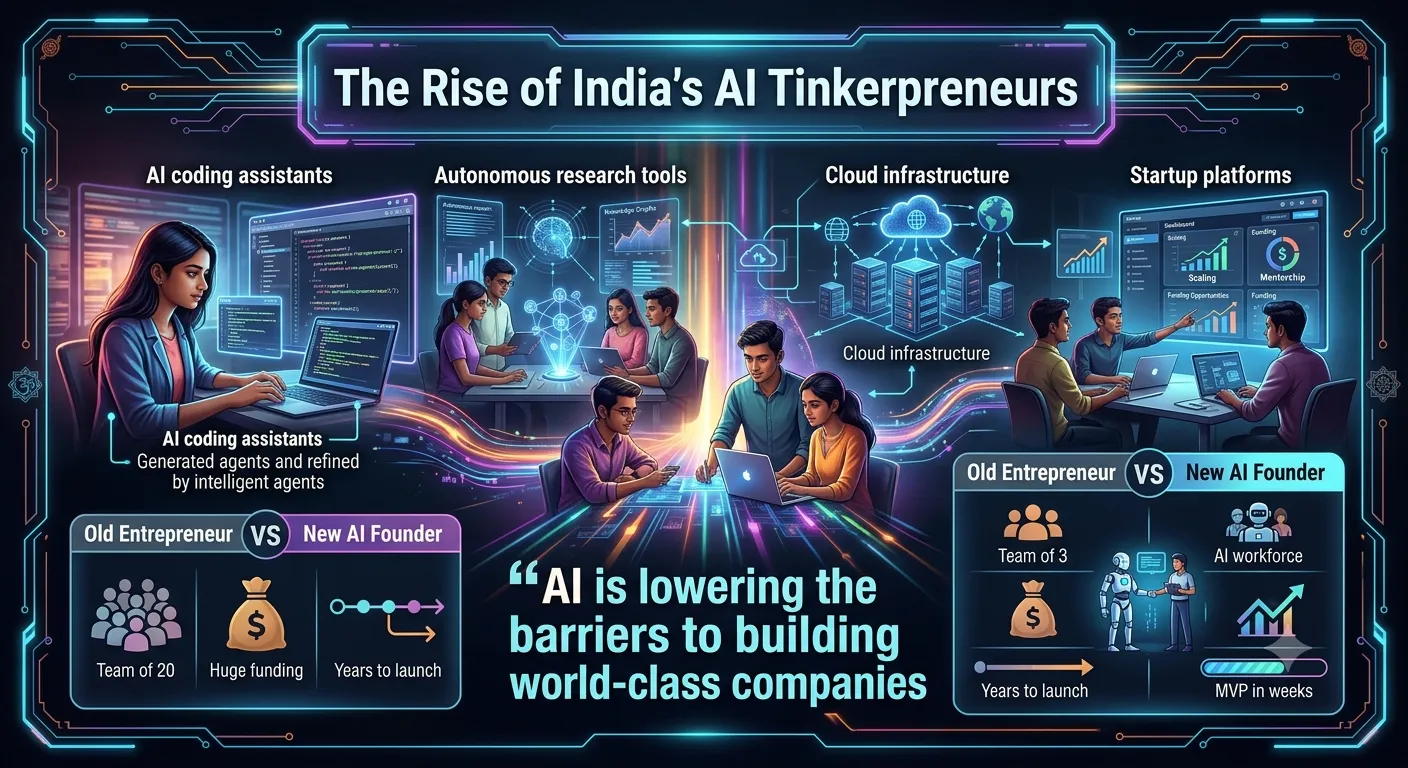
For IIT and NIT students, these layoffs represent two distinct trends. First, they have tarnished the reputation of the tech sector as a "safe harbor" for high-paying jobs, leading to more disillusioned views of traditional corporate careers. Second, many companies are explicitly citing AI and automation as the catalysts for these layoffs, replacing routine engineering and customer service tasks with algorithms. However, this same technology is also empowering student entrepreneurs. AI tools allow lean student teams to optimize complex tasks—such as lab experiments at IIT Delhi—in minutes rather than days, significantly lowering the capital and labor requirements for building a tech-heavy startup.
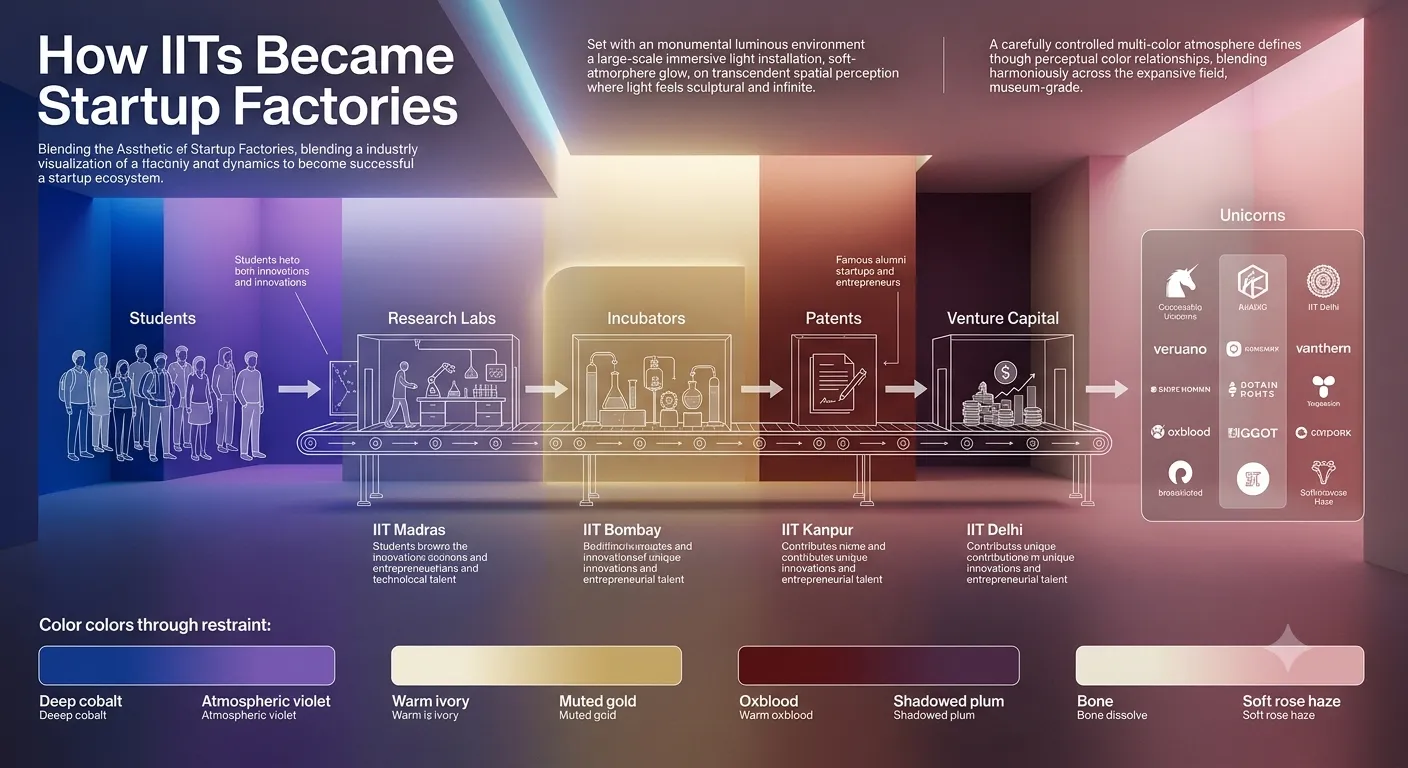
Impact of Global Tech Layoffs (2024–2025)
Metric | 2023 | 2024 | 2025 (Projected/Reported) |
U.S.-Based Tech Layoffs | ~191,000 | ~95,000 | ~127,000 |
Global Tech Layoffs (Early Yr) | — | — | 89,000+ (200+ firms) |
AI-Driven Headcount Declines | — | ~45% (per employer survey) | Increasing focus on "Lean AI Ops" |
Re-employment Rate (AI Layoffs) | — | — | 36.9% within 3 months |
The "AI Paradox" is thus central to the student's decision-making process: while AI makes traditional entry-level jobs more vulnerable, it makes the act of building a specialized, AI-native startup more feasible than ever before. This environment encourages students to become "owners of the algorithm" rather than "employees of the automated."
State-Led Interventions: A Comparative Analysis of Startup Policies
The shift from campus to company is further accelerated by aggressive financial and regulatory support from state governments. These policies are designed to decentralize innovation and provide fresh graduates with the "runway" necessary to survive the initial stages of venture building.
Karnataka, consistently ranked as the leader in India's startup ecosystem, recently approved the "Startup Policy 2025–2030" with an allocation of Rs 518.27 crore. The policy aims to support the creation of 25,000 new startups over five years, with a specific focus on "Deep Tech" through the "Elevate NxT" initiative, which provides grants of up to Rs 1 crore for frontier technologies like Quantum Computing and SpaceTech.
Uttar Pradesh has also emerged as a significant player, offering a "sustenance allowance" of Rs 17,500 per month for one year to startups at the idea stage, explicitly targeting "financially needy" student founders. The state also provides "Seed Capital/Marketing Assistance" of up to Rs 7.5 lakh to help startups launch their Minimum Viable Product (MVP).
Fiscal Incentives for Student Startups by State (2025)
State / Program | Sustenance Allowance | MVP / Prototype Grant | Patent Support |
Uttar Pradesh | Rs 17,500 / month (1 yr) | Rs 7.5 Lakhs | Rs 2L (Dom) / Rs 10L (Intl) |
Kerala (KSUM) | Up to Rs 2 Lakhs (Student) | Rs 5 - 12 Lakhs | Rs 2L (Dom) / Rs 10L (Intl) |
Karnataka (Elevate) | PF/ESI Reimbursement | Up to Rs 50 Lakhs | Subsidies for R&D/Cloud |
Odisha | Interest Subsidies | Rs 10 - 20 Lakhs | Odisha Innovation Fund access |
Chandigarh | Rs 7.5 Lakh (Incubator OpEx) | Rs 7 Lakhs (Seed Stage) | Rs 10,000 fee support |
These state-level grants are often "non-dilutive," meaning they do not require the founder to give up equity in their company. This is a critical factor for student founders who want to retain control over their intellectual property during the formative years of the venture. Furthermore, the inclusion of monthly sustenance allowances acknowledges that for many IIT and NIT graduates, the alternative to a startup is a high-salaried job that supports their family; by providing a basic financial floor, the state reduces the "opportunity cost" of choosing entrepreneurship.
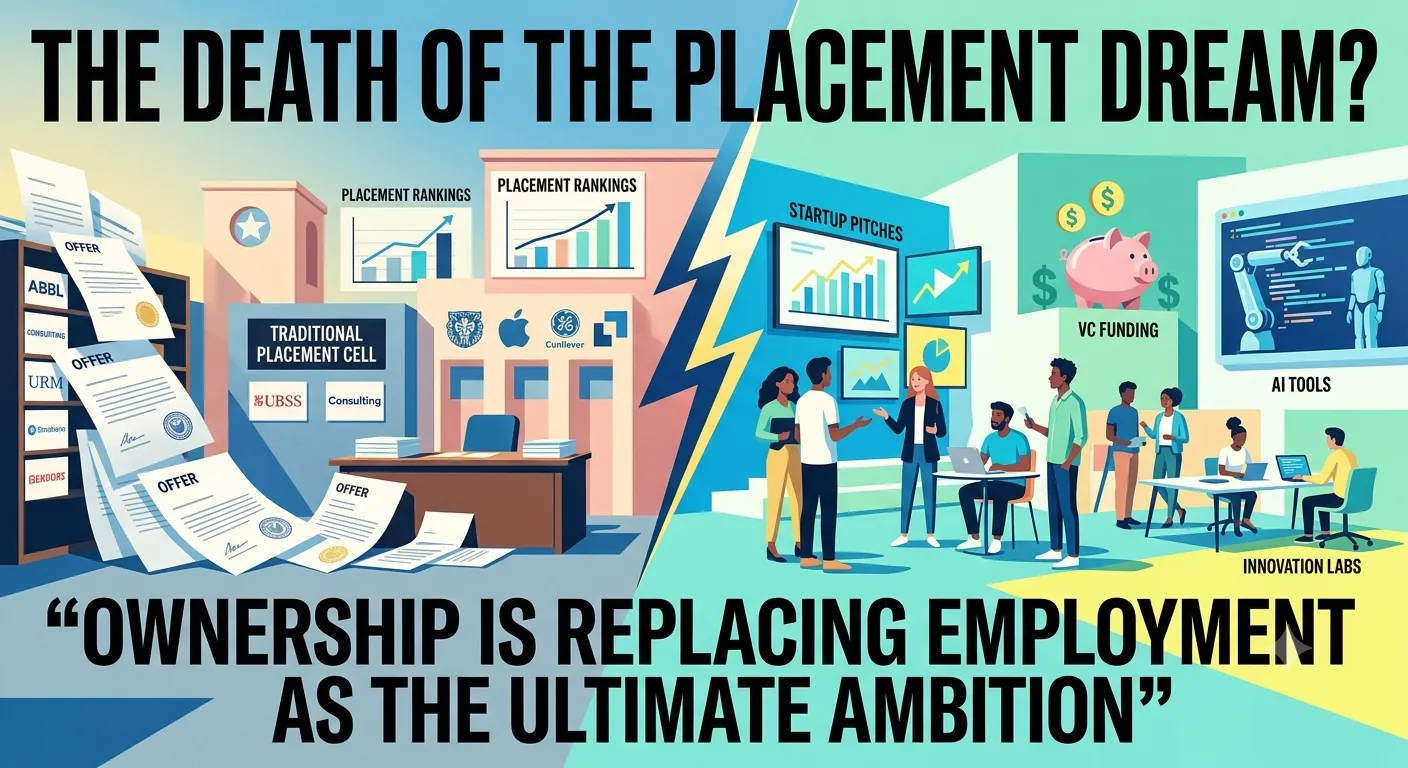
Financial Velocity: Alumni Funds and the Venture Capital Ecosystem
The maturation of the "virtuous cycle"—where successful alumni reinvest their wealth and expertise back into their alma mater—is perhaps the most significant structural change in the financing of student startups. IITs are now creating their own "internal" venture capital funds to bypass the limitations of external seed financing.
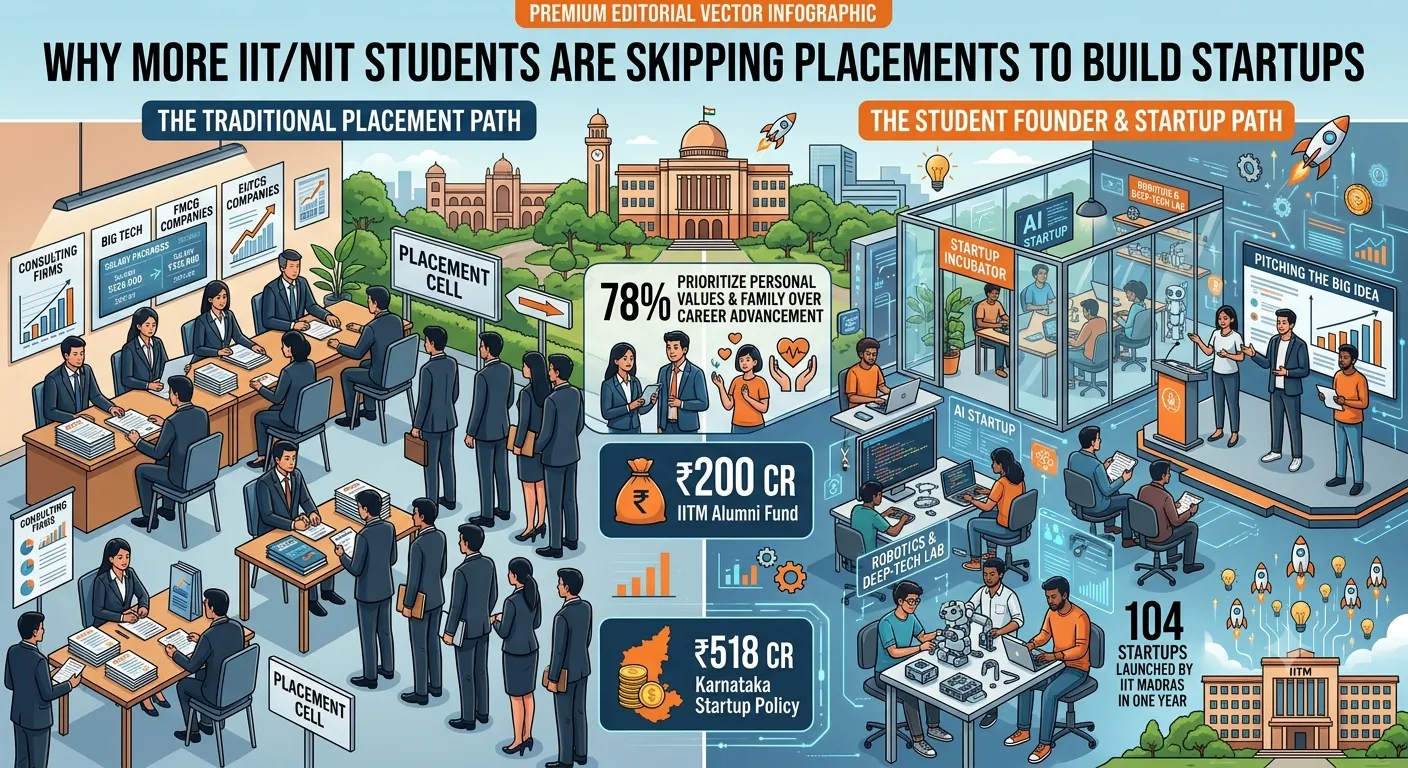
IIT Madras recently launched a Rs 200-crore "IITM Alumni Fund" to provide pre-Series A and Series A funding to its incubated startups. This fund is designed to bridge the "valley of death"—the gap between an early prototype and a commercially viable product. The fund has seen significant participation from the institute's vast alumni network, which contributed Rs 513 crore in the 2023–2024 financial year alone.
Similarly, the "Y-Point Venture Capital Fund" associated with IIT Bombay has a corpus of Rs 250 crore ($28 million) to invest in university spinouts focusing on advanced computing, climate tech, and defense. These funds are significant because they are "mission-aligned"; unlike traditional VC funds that may demand rapid scaling at the expense of technical depth, these university-linked funds understand the long gestation periods required for deep-tech innovation.
Major Institutional Investment Vehicles (2025–2026)
Fund Name | Associated Institution | Corpus / Targeted Raise | Primary Focus Areas |
IITM Alumni Fund | IIT Madras | Rs 200 Crore | Pre-Series A, DeepTech, AI, Mobility |
Y-Point Venture Capital Fund | IIT Bombay | Rs 250 Crore ($28M) | Advanced Manufacturing, SpaceTech |
Impact RISE Venture Fund | IIT Kharagpur | Undisclosed (Launched Jan 2026) | Social Impact, Sustainability, Rural Dev |
SIDBI UP Startup Fund | Uttar Pradesh / SIDBI | Part of State Fund of Funds | AI, Fintech, CleanTech in UP |
Kerala Fund of Funds | KSUM | Rs 1,000 Crore | Multi-sector startups across Kerala |
The broader venture capital landscape in India has also shown resilience, with funding rebounding to $13.7 billion in 2024, a 1.4× increase over 2023 levels. Small and medium-ticket deals (under $50 million) accounted for 95% of these transactions, providing a fertile ground for student founders who typically raise smaller seed rounds. The emergence of five new "unicorns" in 2024 further underscores the growing appetite for high-quality, tech-first assets in sectors like SaaS, Fintech, and Consumer Tech.
The Sociological Shift: Gen Z Values and the New Work-Life Harmony
The movement toward entrepreneurship is not solely an economic decision; it is rooted in a fundamental shift in the values of the "Gen Z" demographic entering the workforce. A landmark 2025 survey by Indeed revealed that 78% of Indian employees now prioritize "family time" over "career advancement". This prioritization of work-life harmony—seeking less stress and more mental well-being—is increasingly at odds with the "90-hour work week" culture often expected in high-growth corporate environments.
For the modern graduate, entrepreneurship is ironically seen as a path to a more "balanced" life—not in terms of fewer hours worked, but in terms of "passion-oriented roles" and autonomy over one's work. Graduates are increasingly rejecting "mundane" roles in traditional consulting or IT firms that do not align with their ideas of meaningful work. Entrepreneurship offers an "identity" that the family business or a corporate cubicle cannot; for many, the family business is seen as an inheritance rather than a choice, with only 7% of Indian heirs feeling a sense of obligation to take over.
Generational Aspirations and Workforce Priorities (2025 Survey Data)
Employee Metric | Percentage / Value | Insight on Student Mindset |
Priority: Family over Career | 78% | Shift away from corporate "ladder climbing" |
Top Resolution: Increase Earnings | 27% | Financial ambition remains, but via independence |
Confidence in New Industries | 55% | Optimism for startups in AI and emerging tech |
Focus on Skills over Degrees | 59% | Validation of hands-on startup experience |
Part-time Gigs for Income | 41% | Normalization of non-traditional career paths |
This sociological shift is accompanied by a change in parental attitudes. In urban centers, the traditional emphasis on stable professions like engineering or government jobs is giving way to an acceptance of entrepreneurial careers, driven by the role-model success of companies like Zomato and Flipkart. While 44% of parents are still heavily involved in "career co-piloting"—sometimes to the point of writing resumes or participating in salary discussions—there is a growing recognition that "security" in the 21st century lies in ownership and adaptability rather than just tenure at a single firm.
The Deep-Tech Pivot: Space, Defense, and Climate Innovation
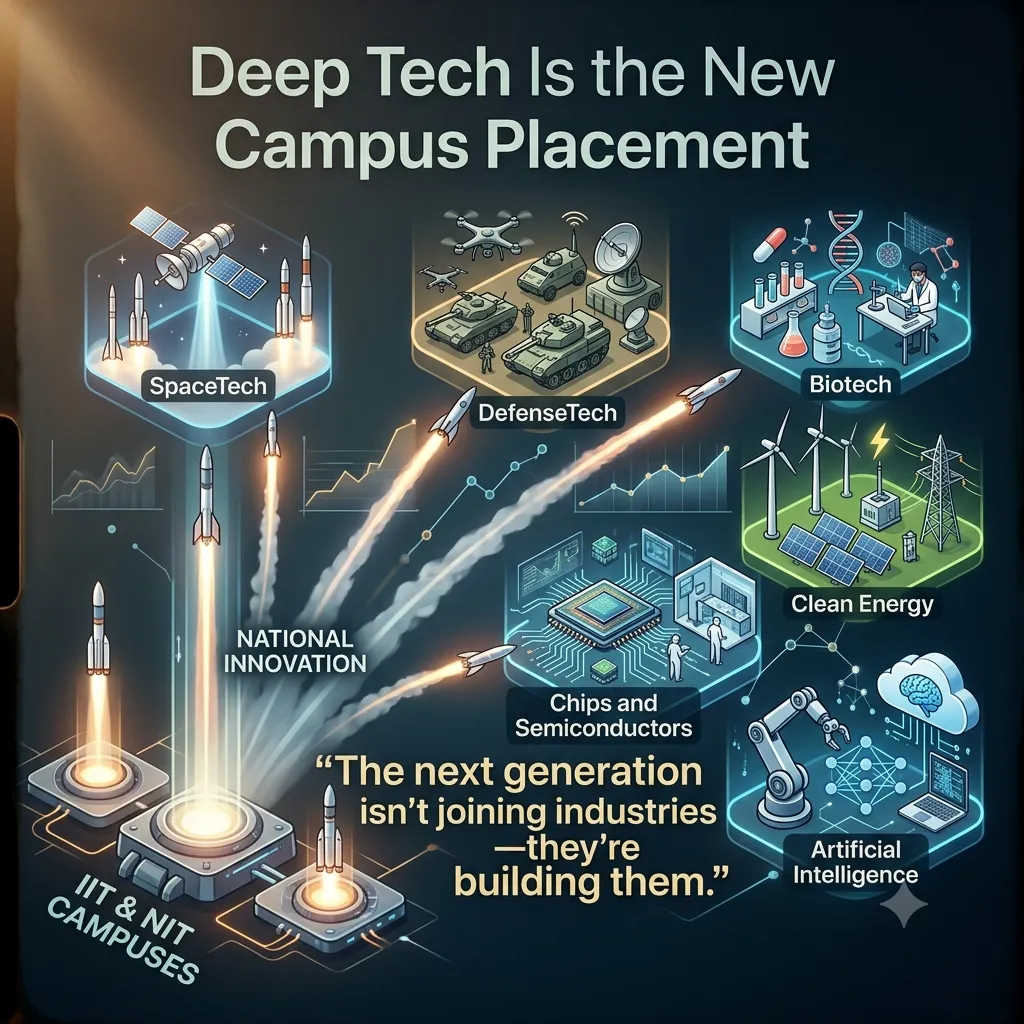
Perhaps the most significant qualitative shift in the 2023–2026 period is the nature of the startups being built. Unlike the e-commerce wave of the previous decade, the current generation of IIT and NIT founders is focused on "Deep Tech"—complex, science-led innovations in sectors that are critical to national security and global sustainability.
IIT Madras, for instance, is a leader in the "SpaceTech" sector, incubating ventures like Inbound Aerospace and Galaxeye. The institute’s focus on manufacturing, robotics, and quantum computing reflects a move toward hardware-heavy, IP-protected industries. Similarly, IIT Kanpur has become a hub for "DefenseTech" and "MedTech," with startups like DGRakshak and Dream Aerospace leveraging the institute’s premier research infrastructure to develop indigenous military and aerospace solutions.
At NIT Durgapur and IIEST Shibpur, students have achieved a breakthrough in semiconductor design, contributing four out of the first 33 "made-in-India" chips unveiled at SEMICON India 2025. This participation in the "Chip-to-Startup" program highlights how even students outside the "Old IITs" are tackling high-entry-barrier industries such as fabless semiconductor design.
Strategic Deep-Tech Clusters at Premier Institutes (2025)
Focus Sector | Leading Institutions | Specific Technological Output / Goal |
Space & Aerospace | IIT Madras, IIT Roorkee | Compact VTOL UAVs; Space manufacturing |
Defense & Security | IIT Kanpur, IIT Bombay | Precision gimbals; AI for security |
Health & Biotech | IIT Bombay, IIT Madras | CAR-T therapy; Zentor Medtech laser surgery |
Semiconductors | NIT Durgapur, IIT Delhi | 16-bit Read-Write FIFO; Fabless design |
Clean Energy | IIT-BHU, IIT Roorkee | Energy-efficient appliances; Sustainable tools |
This focus on deep tech is inherently linked to India’s "Atmanirbhar Bharat" (Self-Reliant India) and "Viksit Bharat" (Developed India) schemes. The IITs have decided to emphasize startups promoted under these schemes during their placement seasons, effectively creating a "internal market" where the institute's placement cells actively encourage their own graduates to join startups incubated on campus.
Conclusion: The New Meritocracy and the Future of the Indian Engineer
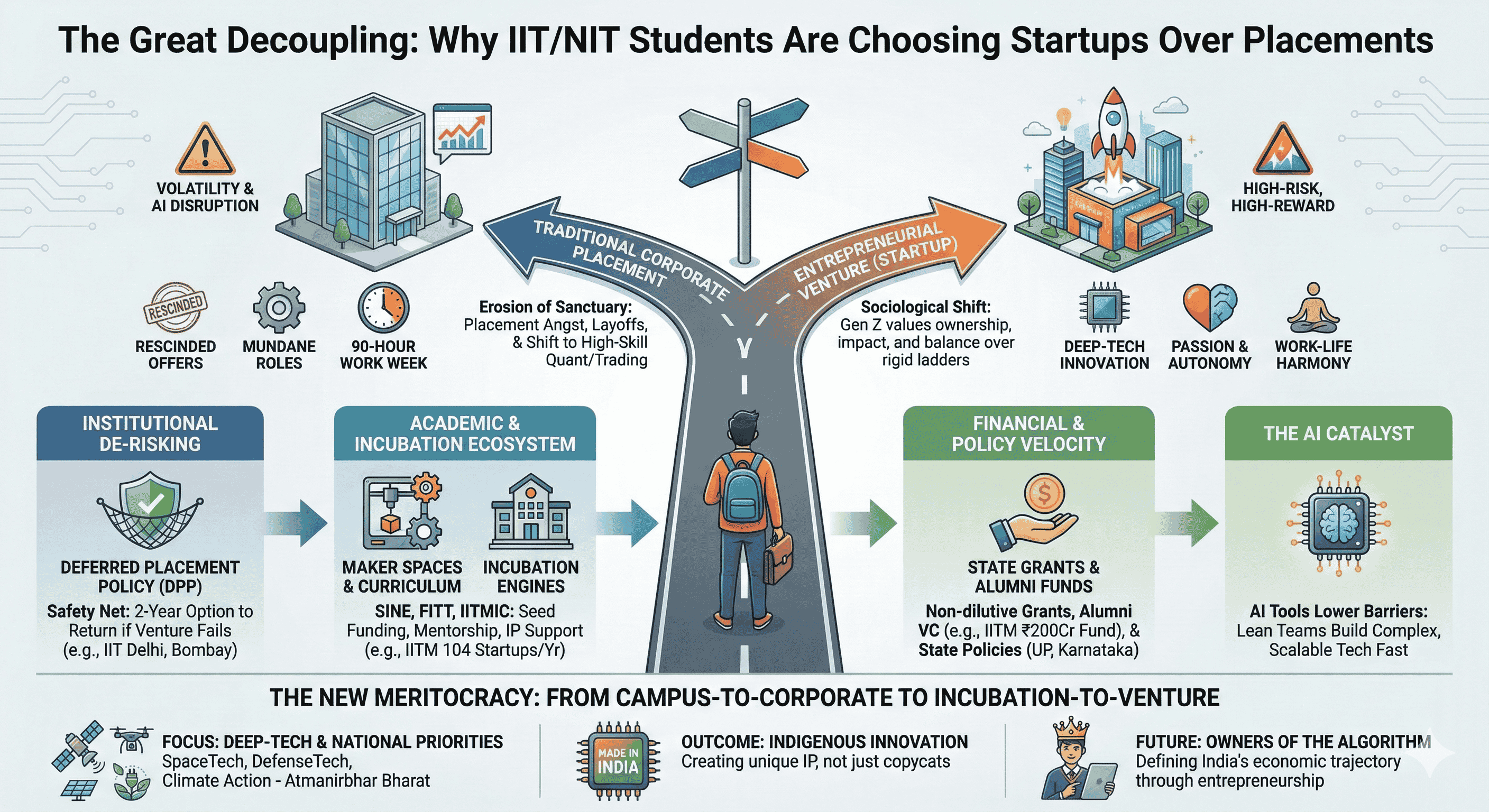
The trend of more IIT and NIT students skipping placements to build startups is the result of a permanent structural shift in India’s high-talent economy. The traditional "campus-to-corporate" pipeline is being replaced by a more complex and dynamic "incubation-to-venture" ecosystem. This transition is underpinned by four critical pillars:
Risk Management: The institutionalization of the Deferred Placement Policy has transformed entrepreneurship from a "career-ending risk" into a "two-year exploration." By providing a safety net, the institutes have essentially lowered the cost of failure to near zero.
Financial Runway: The emergence of non-dilutive state grants and alumni-led venture funds has solved the "pre-seed gap." Fresh graduates no longer need personal wealth to start a company; they can rely on institutional capital that values their technical potential over immediate profitability.
The AI Catalyst: AI is acting as the great equalizer. While it makes the entry-level corporate ladder more unstable, it provides student teams with the tools to build complex, scalable products with minimal labor. The rise of the "AI Tinkerpreneur" represents the birth of a new class of engineers who are masters of automation.
Generational Realignment: A fundamental shift in values among Gen Z—prioritizing work-life harmony, identity, and social impact—has made the traditional corporate structure seem rigid and outdated. For this generation, building a company is the ultimate form of self-expression.
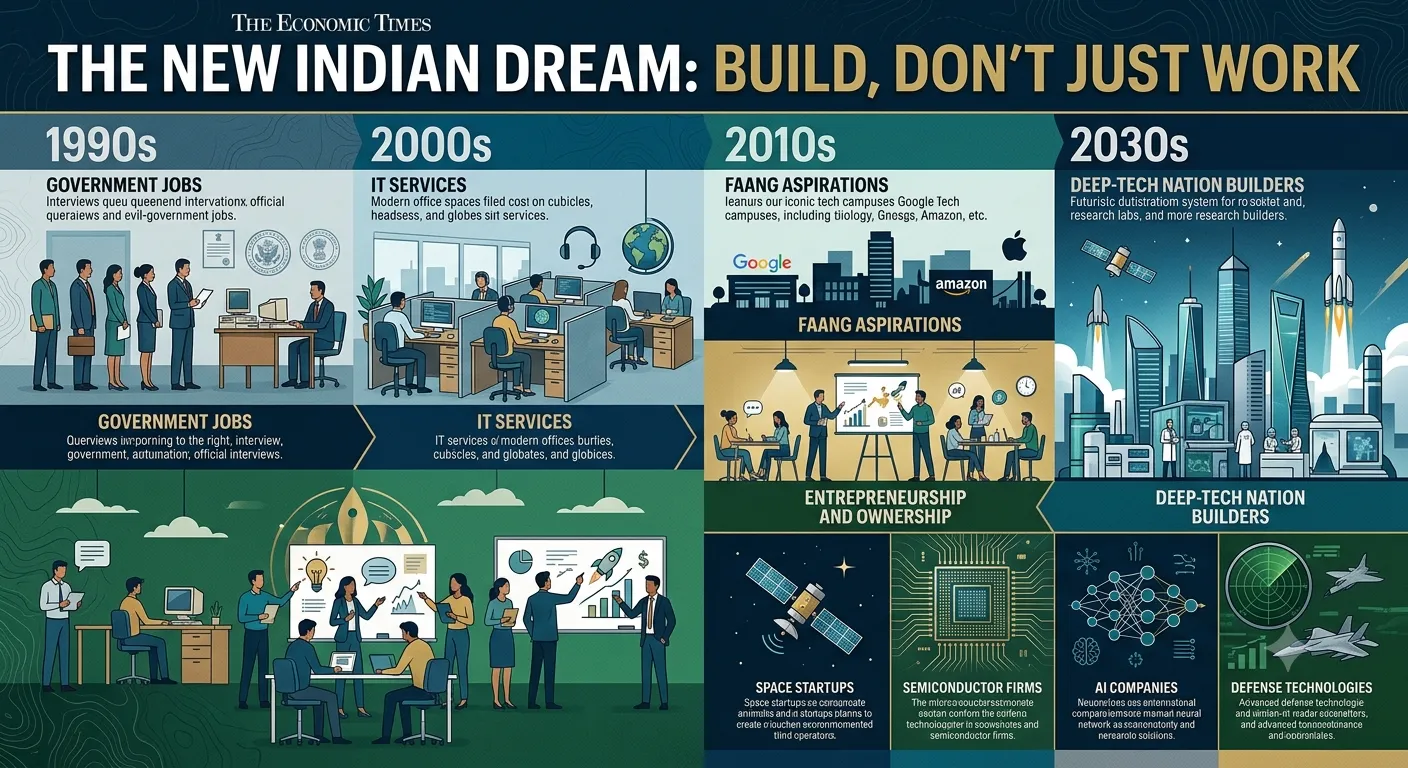
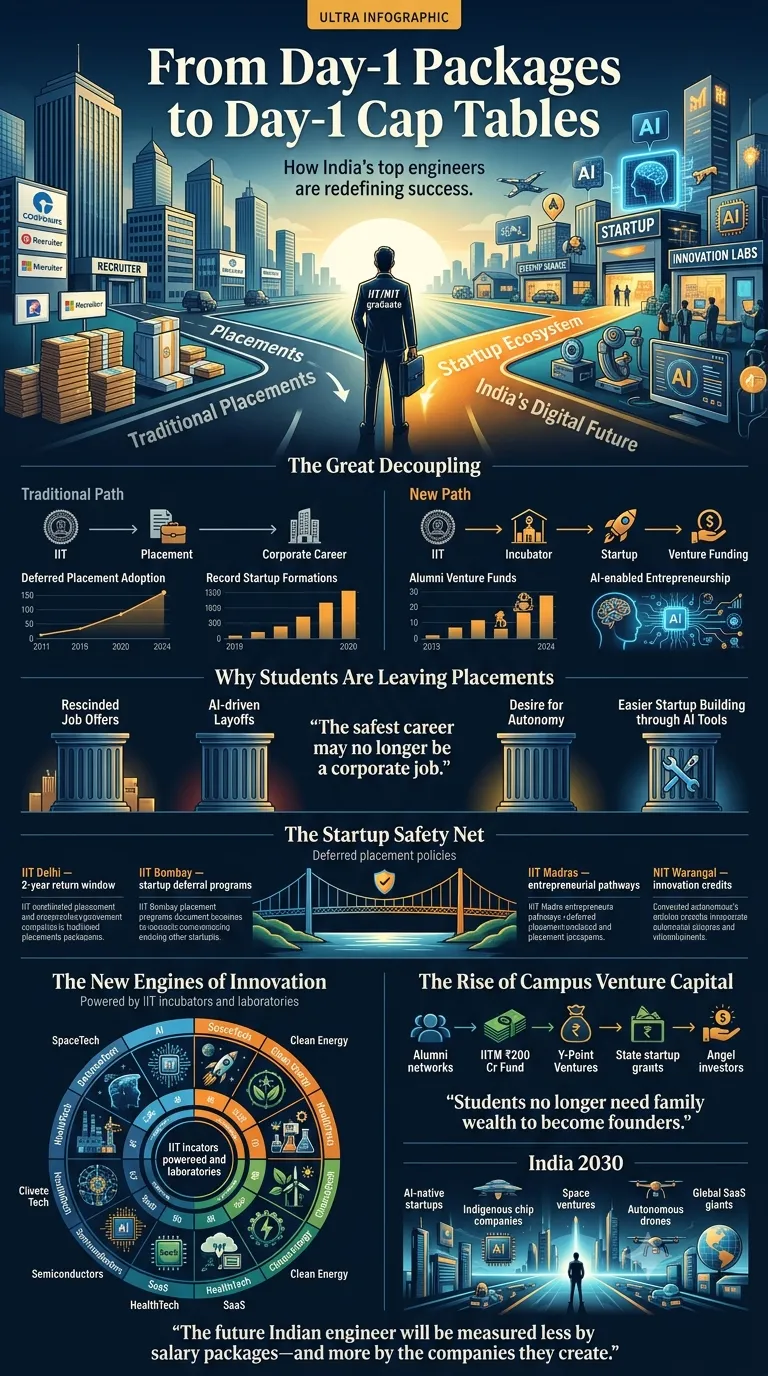
As we move toward 2030, the success of India’s technical elite will no longer be measured by "Day 1" salary packages, but by "Day 1" cap tables. The role of institutions like the IITs and NITs is evolving from being "centers of education" to becoming "engines of sovereignty," where the next generation of global technology leaders is born. The "Great Decoupling" is not a temporary fluke of the job market; it is the beginning of a new era of indigenous, deep-tech innovation that will define India’s economic trajectory for the next century.
Want to calculate the equity for your cofounder?
Nail your cap table before you sign. Whether you're splitting equity with a co-founder or planning your next funding round, our Equity Calculator gives you precision in seconds
Equity calculator →