Why College Is the Best Time to Fail as a Founder
March 8, 2026 by Harshit Gupta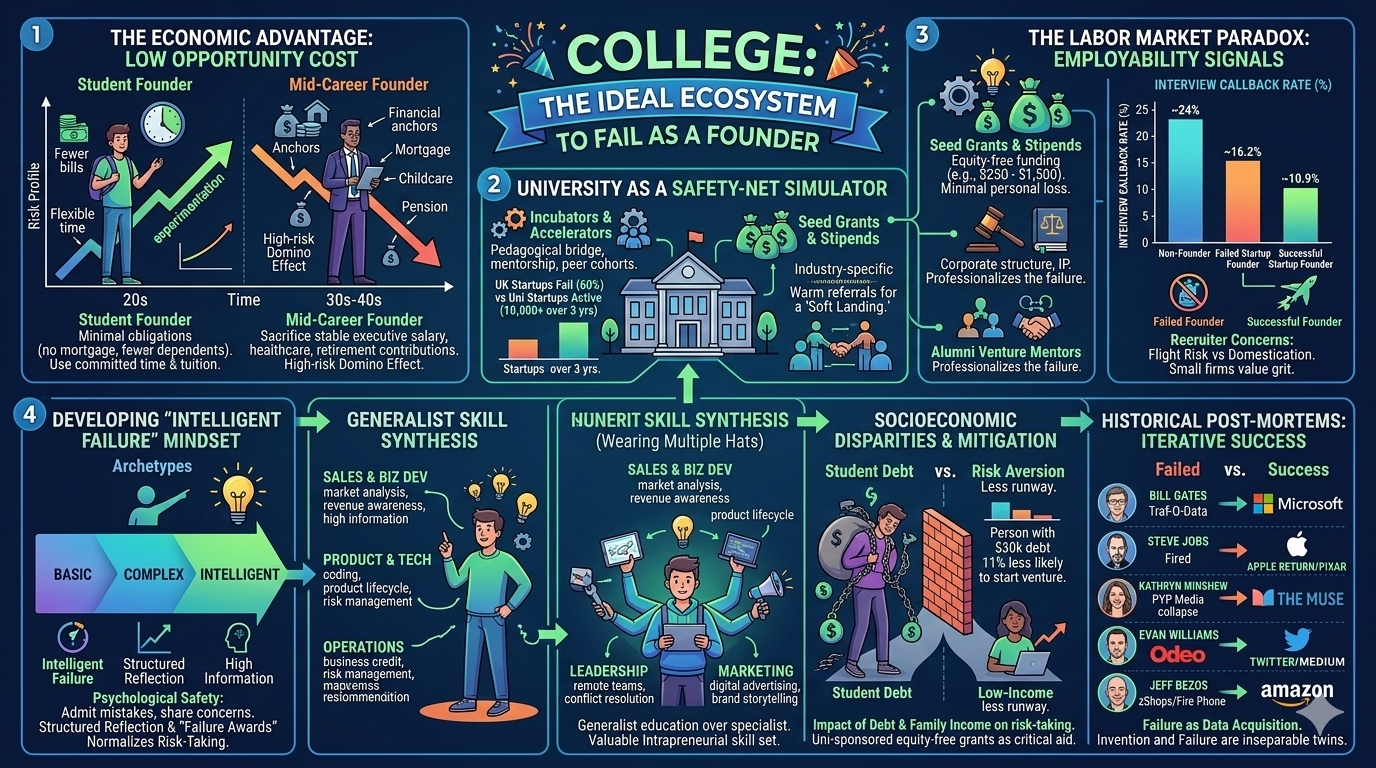
The transition from a traditionally structured academic path to the volatile landscape of early-stage entrepreneurship represents one of the most significant pivots a young professional can undertake. Within the contemporary discourse on venture creation, a persistent emphasis is placed on the "dorm-room billionaire" archetype, yet this narrow focus overlooks the most potent advantage of the collegiate environment: its capacity to function as a low-fidelity, high-safety simulator for failure. The collegiate years offer a unique intersection of low opportunity cost, dense institutional infrastructure, and psychological safety that is rarely, if ever, replicated in the post-graduate professional world. This report examines why failing as a student founder is not merely a risk to be managed, but a strategic asset to be leveraged. By analyzing the economic foundations of risk, the institutional support mechanisms of modern universities, the nuances of labor market re-entry for former founders, and the longitudinal career benefits of early-stage venture setbacks, this analysis provides a comprehensive framework for understanding failure as a prerequisite for institutionalized entrepreneurial success.
The Economic Foundations of Risk: Opportunity Cost and Financial Baselines
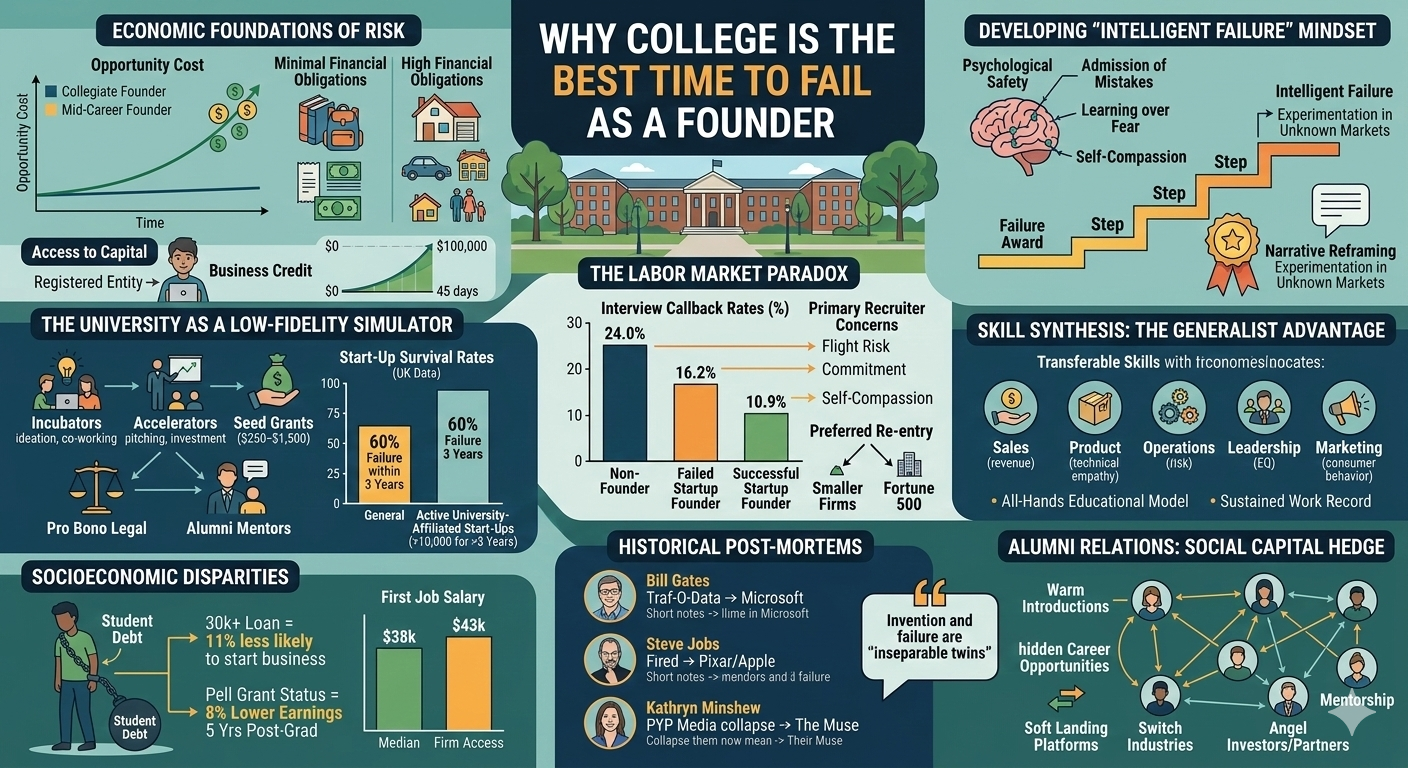
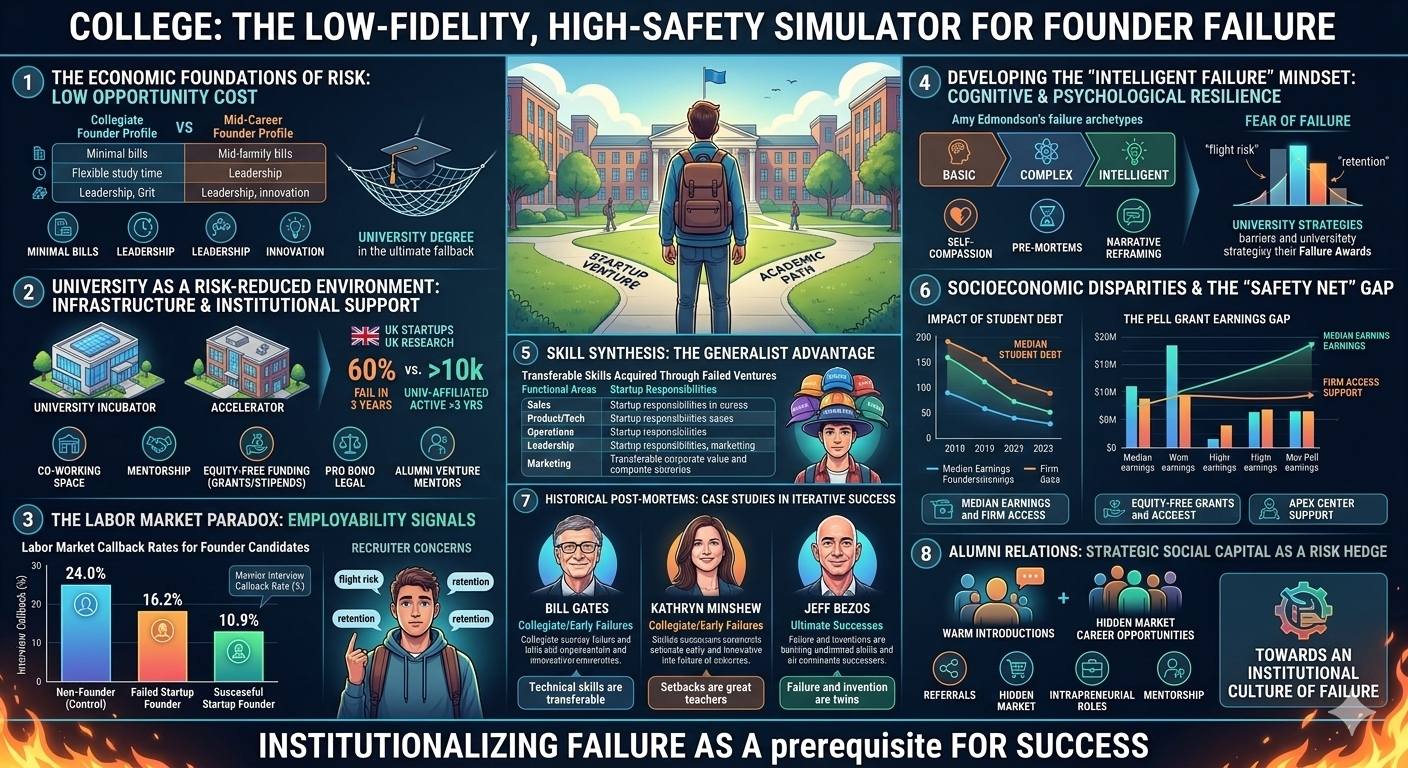
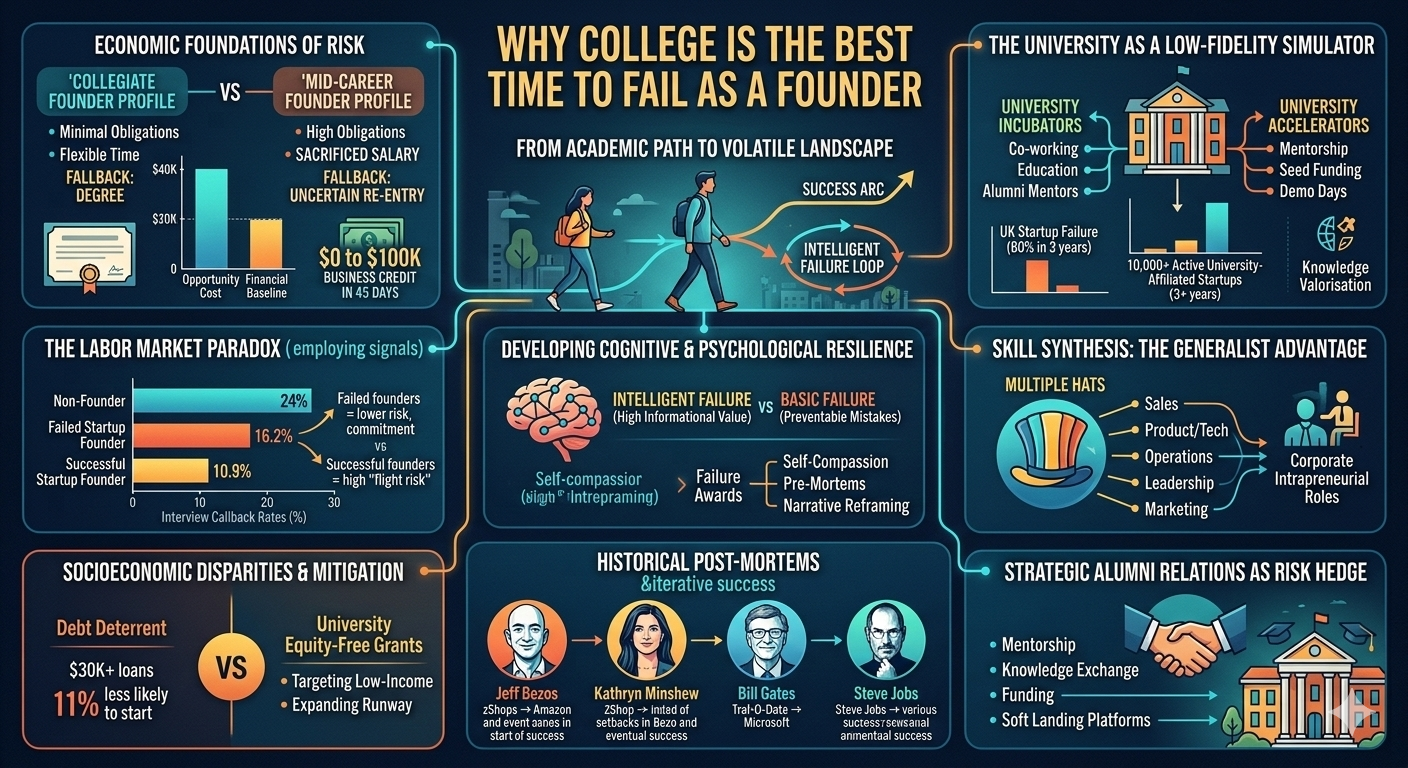
The concept of opportunity cost—defined as the value of the next best alternative foregone when a choice is made—is the primary driver of entrepreneurial timing. For a mid-career professional, the decision to launch a startup involves the sacrifice of a stable executive salary, accrued pension benefits, healthcare for dependents, and the momentum of a specialized career trajectory. For an undergraduate student, however, this cost is fundamentally transformed. The student operates from a baseline where primary financial obligations, such as mortgage payments or the support of a family, are typically absent. Consequently, the "real-world" cost of a failed venture in college is primarily measured in time and tuition—assets that are already committed to the pursuit of knowledge and personal development.
While a mid-career professional faces a "domino effect" where job interruptions can permanently alter future financial projections and retirement readiness, a student founder utilizes flexible time that would otherwise be allocated to lower-wage part-time employment or standard extracurricular activities. This baseline risk profile allows for a level of experimentation that is statistically prohibitive later in life. Furthermore, the collegiate environment offers a built-in safety net; if a venture fails, the founder does not face the stigma of a "career gap" but rather returns to the productive status of a degree-seeking student.
Comparative Risk Profiles Across Career Stages
Risk Factor | Collegiate Founder Profile | Mid-Career Founder Profile |
Primary Opportunity Cost | Entry-level salary / Flexible study time | Executive salary / Retirement contributions |
Financial Obligations | Minimal (Few bills, no mortgage) | High (Mortgage, childcare, insurance) |
Safety Net | Institutional, parental, and peer networks | Personal savings and home equity |
Resume Interpretation | Leadership, grit, and innovation | Flight risk or specialized skill gap |
Fallback Position | Completion of degree | Difficult re-entry into seniority |
The financial leverage available to student founders also differs significantly from traditional views of "bootstrapping." Some advisors suggest that college is an ideal time to build business credit, noting that a student with a registered entity can potentially scale from $0 to $100,000 in business credit within 45 days. This access to capital, coupled with the ability to manage remote teams using low-cost digital tools, makes the barrier to entry lower than in previous decades. By treating college as a "risk-reduced environment," students can market-test ideas with a fallback that remains socially and professionally prestigious: the university degree.
The University as a Low-Fidelity Simulator: Infrastructure and Institutional Support
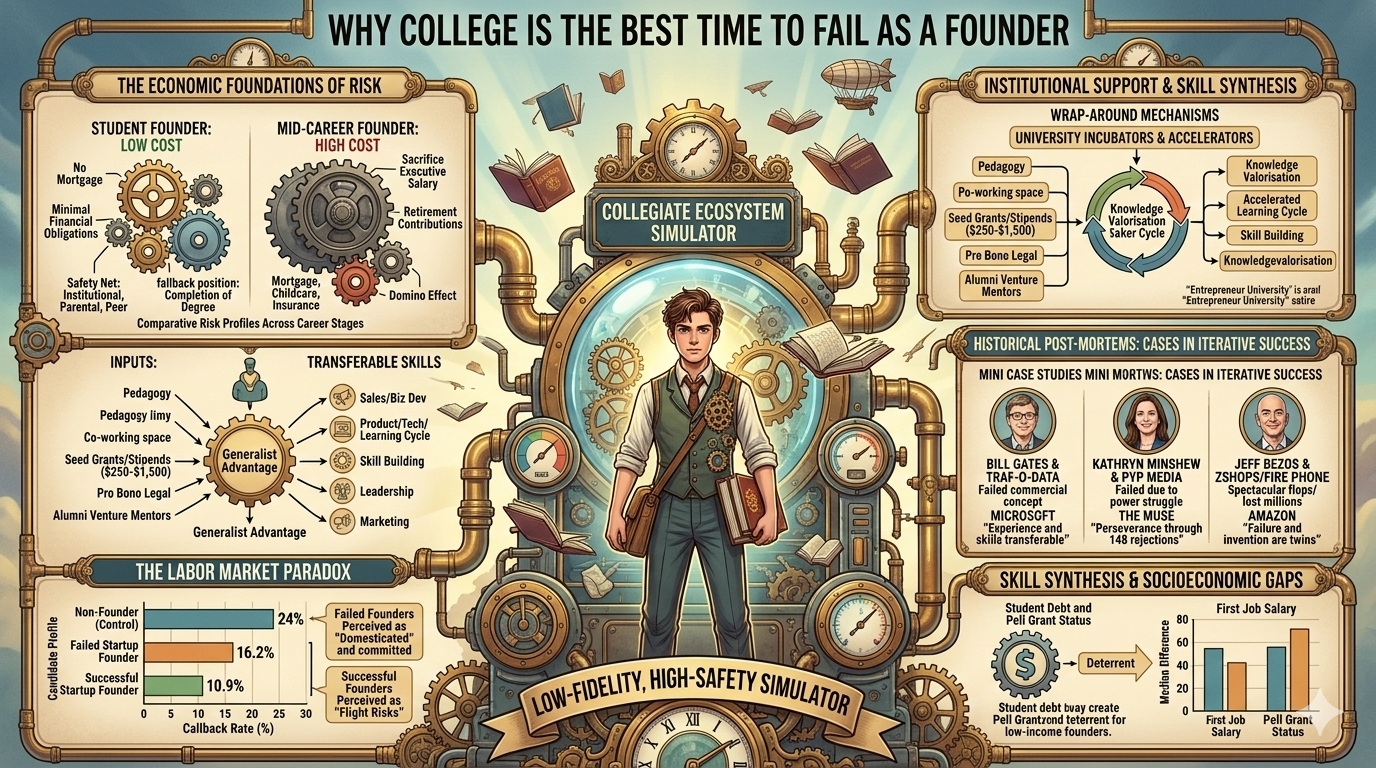
The modern university has evolved into a robust entrepreneurial ecosystem, providing resources that are often prohibitively expensive for independent founders. These institutional advantages act as a "wrap-around" support system that not only increases the likelihood of venture survival but also softens the landing of an eventual failure. University-based incubators and accelerators serve as pedagogical bridges between theory and practice, allowing students to apply classroom knowledge to real-world market stressors in a controlled setting.
Incubators and Accelerators as Pedagogy
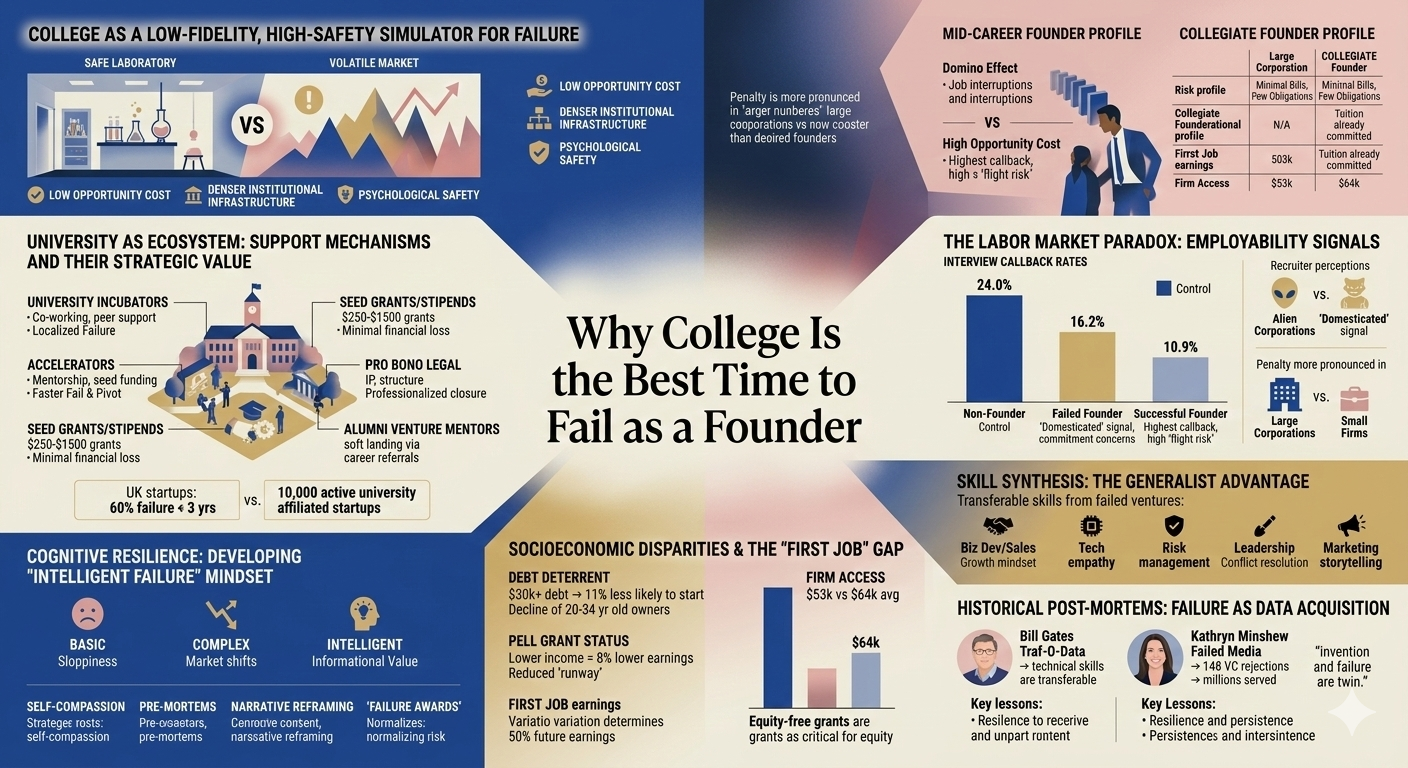
University incubators assist founders at the earliest stages of ideation, helping them develop products, build initial teams, and navigate the difficult transition from a concept to a viable entity. These programs typically offer office space, business education, and mentorship from seasoned alumni. Accelerators, while operating on a shorter and more intense timeline, focus on investment readiness and preparing startups to pitch to venture capitalists. Research from the United Kingdom demonstrates the efficacy of these systems, noting that while 60% of UK startups fail within three years, over 10,000 university-affiliated startups were active for more than three years in the 2022-2023 period.
These programs facilitate what researchers call "knowledge valorisation"—the process of transforming intellectual capital into societal and economic value. Crucially, for the student founder, the primary value of these programs may not be the successful launch of a company, but rather the skills acquired during the process of a venture's failure. University accelerators offer a specific trade-off: students might sacrifice the aggressive, equity-driven growth of private incubators in exchange for mentoring and skill-building from professors and dedicated staff.
Institutional Support Mechanisms and Their Strategic Value
Resource Category | Function for Student Founders | Impact of Failure |
University Incubators | Provides co-working space, peer networks, and business education | Failure is localized; peer cohorts provide emotional support |
University Accelerators | Intense mentorship, seed funding, and investor demo days | Accelerated learning cycle; faster "fail" means faster pivot |
Seed Grants/Stipends | Equity-free funding (e.g., $250 - $1,500 grants) | Minimal personal financial loss; teaches budget management |
Pro Bono Legal Services | Guidance on corporate structure and IP | Professionalizes the failure; provides legal closure skills |
Alumni Venture Mentors | Industry-specific feedback and networking | Provides "soft landing" through career referrals |
Despite these resources, many university programs are critiqued for "over-preparation," where students spend more time perfecting their storytelling and slide decks than testing market realities. This satirical view of "Entrepreneur University" highlights the danger of grandiosity and the crushing reality check that occurs when a polished pitch meets an unpredictable market. However, even this disillusionment is a critical learning outcome, tempering the "rock star" aspirations of students with the grit required for actual business operation.
The Labor Market Paradox: Employability Signals of Successful vs. Unsuccessful Founders
One of the most profound anxieties regarding student entrepreneurship is the potential for a "founder penalty" upon re-entering the traditional labor market. Empirical research reveals a nuanced landscape where the perceived value of a candidate is heavily influenced by the outcome of their venture and the aspirations of the recruiter evaluating them.
The Success vs. Failure Paradox
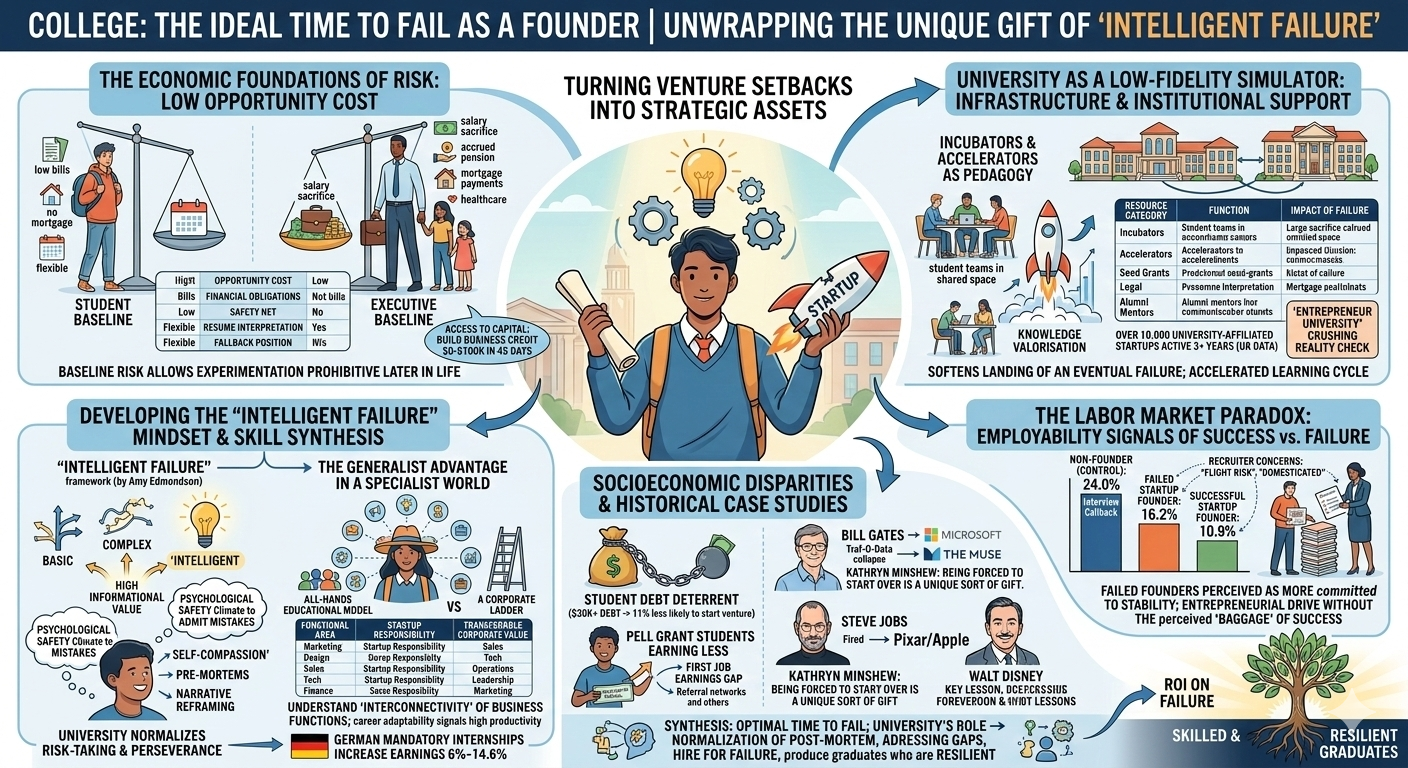
In a series of field experiments conducted by researchers at Yale SOM and the University of Toronto, a counter-intuitive "success paradox" was identified. Candidates who successfully founded and exited a startup were often viewed less favorably by corporate recruiters than those who founded a venture that eventually failed. In a study of 2,400 entry-level applications, non-founders received a 24% callback rate, while failed founders received a 16.2% rate, and successful founders received the lowest callback rate at 10.9%.
Recruiters expressed significant concerns that successful founders were "flight risks" who would likely get bored, leave the company within a few months to start another project, or poach talent for their next venture. Failed founders, by contrast, were perceived as being more "domesticated" or committed to the stability of a traditional role, having already experienced the taxing nature of the entrepreneurial grind. For a student founder, this means that the "failure" of their venture can actually be a positive signal of labor market readiness, demonstrating entrepreneurial drive without the perceived baggage of a "flighty" successful entrepreneur.
Labor Market Callback Rates for Founder Candidates
Candidate Profile | Interview Callback Rate (%) | Primary Recruiter Concern |
Non-Founder (Control) | 24.0% | Low risk; standard cultural fit |
Failed Startup Founder | 16.2% | Moderate risk; "commitment" concerns balanced by skills |
Successful Startup Founder | 10.9% | High "flight risk"; too independent; retention concerns |
This "founder penalty" is more pronounced in large corporations than in small firms. Large organizations prioritize bureaucratic alignment and long-term retention, viewing founders as "aliens" who may struggle with established norms. Recruiters at smaller firms (under 50 employees) are often more sympathetic to the entrepreneurial journey, particularly if they have harbored entrepreneurial aspirations themselves. This suggests that a student founder who fails is better suited to a "soft landing" in the startup ecosystem or a mid-sized growth firm than in a Fortune 500 conglomerate.
Cognitive and Psychological Resilience: Developing the "Intelligent Failure" Mindset
The university environment serves as an ideal laboratory for developing "psychological safety"—a climate where individuals feel comfortable admitting mistakes and sharing concerns without fear of judgment. In the context of entrepreneurship, this safety is critical for distinguishing between "bad failure" (preventable mistakes due to sloppiness) and "intelligent failure" (smart experimentation in unknown markets).
The Framework of Intelligent Failure
Harvard Professor Amy Edmondson identifies three archetypes of failure: basic, complex, and intelligent. For the student founder, the goal of the university ecosystem is to maximize exposure to intelligent failure—those "flubs" that yield high informational value despite a lack of commercial success. When a team operates in an environment of psychological safety, they are less likely to hide mistakes, which prevents small errors from snowballing into catastrophic collapses.
However, the "fear of failure" remains a potent psychological barrier for many students. Research among university students in Indonesia indicates a significant negative correlation between fear of failure and entrepreneurial intention. Specific aspects of this fear, such as "fear of shame and embarrassment" or "fear of devaluing one’s self-estimate," act as deterrents even when the physical and financial risks are low. Universities counter this through structured reflection sessions and "failure awards". These awards, modeled after corporate practices at organizations like Tata and NASA, recognize "sincere attempts" at innovation that fell short, thereby normalizing risk-taking and perseverance.
Psychological Impacts and Resilience Strategies
Self-Compassion: Research indicates that individuals who approach failure with self-compassion can more quickly reduce negative emotions and re-engage with the learning process.
Pre-Mortems: This structured simulation of failure allows teams to brainstorm potential reasons for collapse before they occur, providing a safe space to discuss risks.
Narrative Reframing: Student founders who view their failed startup as a "next step" rather than a final destination reported a reaffirmed love for entrepreneurship and a deeper understanding of business operations.
While the "dorm-room billionaire" image persists in marketing brochures, the reality of the student founder journey is often one of struggle and grind. For those who "fall short," the strength of the experience is often found in the "fire that tempers the entrepreneur’s steel".
Skill Synthesis: The Generalist Advantage in a Specialist World
The process of founding and subsequently failing at a business venture provides a "generalist" education that is rarely achieved through traditional internships or specialized coursework. While most corporate positions demand deep specialization, the entrepreneurial journey requires a student to wear "multiple hats," fostering a sense of versatility and adaptability.
The "All-Hands" Educational Model
In a startup, a business intern might be tasked with marketing and finance, but find themselves learning design tools like Figma or assisting with product testing to meet urgent deadlines. This multidisciplinarity allows students to understand the "interconnectivity" of various business functions—a perspective that is often missing in siloed corporate internships. This "intrapreneurial" mindset makes the former founder a valuable asset for companies looking to build new products internally.
Transferable Skills Acquired Through Failed Ventures
Functional Area | Startup Responsibility | Transferable Corporate Value |
Sales/Biz Dev | Lead generation and market analysis | Growth mindset and revenue awareness |
Product/Tech | Coding, debugging, and UI/UX | Technical empathy and product lifecycle knowledge |
Operations | Building business credit and legal structure | Financial literacy and risk management |
Leadership | Managing remote teams and conflict resolution | Emotional intelligence and project management |
Marketing | Digital advertising and brand building | Consumer behavior and storytelling skills |
Longitudinal data supports the long-term financial benefits of this "career adaptability." Studies on German university graduates found that mandatory firm internships increased earnings by 6% to 14.6%, with the effect being most pronounced for students in humanities or social sciences who traditionally have a weaker labor market orientation. While entrepreneurship is self-directed, it functions as a "sustained work record" that signals high productivity to potential employers.
Socioeconomic Disparities: Debt, Pell Grants, and the "First Job" Gap
While college is an ideal time for entrepreneurial failure, the "safety net" is not equally accessible to all students. Socioeconomic background and student debt significantly influence the risk-taking capacity of the student founder.
The Debt Deterrent
Student debt acts as a primary deterrent to both the initiation and the success of new businesses. Research indicates that a person with $30,000 in student loans is 11% less likely to start a business than a debt-free peer. High monthly payments (sometimes exceeding $1,000) prevent founders from investing in essential equipment, marketing, or website development, forcing them into "risk aversion". This has contributed to a decline in young entrepreneurship; the share of new business owners aged 20 to 34 dropped from 35% in 1996 to approximately 25% by 2016.
The "First Job" Earnings Gap
The impact of family income persists long after graduation. Students who received Pell Grants (targeted at lower-income families) earn approximately 8% less in their fifth year after college than graduates with similar academic profiles but higher-income backgrounds. This disparity is largely driven by the quality of the "first job". Higher-income graduates are more likely to have secured their first post-college role through referrals and at higher-paying firms prior to graduation.
Impact of Socioeconomic Factors on Early Career Outcomes
Factor | Impact on Low-Income/Debt-Laden Students | Consequences for Entrepreneurship |
Student Debt ($30k+) | 11% less likely to start a venture | Higher barriers to startup financing |
Pell Grant Status | 8% lower earnings 5 years post-grad | Reduced "runway" for entrepreneurial pivots |
First Job Salary | Median: $38k vs $43k for higher-income peers | Half of the variation in future earnings is tied to this |
Firm Access | Work at lower-paying firms ($53k avg vs $64k avg) | Weaker referral networks for "soft landings" |
For the low-income student, the "opportunity cost" of failure is not merely a delay in entry-level salary, but a potential compounding of debt that hampers future social mobility. This makes university-sponsored, equity-free seed grants and stipends (such as those offered by Virginia Tech's Apex Center) critical for ensuring that entrepreneurial opportunity is distributed equitably.
Historical Post-Mortems: Case Studies in Iterative Venture Success
The narrative of "the successful dropout" often elides the critical period of failure that precedes their fame. Many of the world’s most successful entrepreneurs failed in college or in their immediate post-collegiate ventures, using those setbacks as the experimental basis for their eventual success.
Kathryn Minshew: Failing into The Muse
Kathryn Minshew’s journey provides a masterclass in resilient pivoting. Her first venture, PYP Media, collapsed due to a "disturbing power struggle" and a disagreement between co-founders that resulted in Minshew being locked out of her own website and losing her life savings. Rather than retreating from entrepreneurship, Minshew and her core team transitioned the lessons from PYP to launch The Daily Muse (now The Muse). Despite facing 148 rejections during her seed round of investing, Minshew’s perseverance—fueled by the "gift" of having been through failure—led to a company that now serves millions of users and partners with 60 of the world's largest firms.
Bill Gates and Traf-O-Data
Before the ubiquity of Microsoft, Bill Gates and Paul Allen launched Traf-O-Data in 1972, a system designed to measure traffic information for government authorities. The business ultimately failed as a commercial venture, yet Gates has consistently emphasized that Traf-O-Data provided the "experience and skills" necessary to create Microsoft's first line of software products a few years later. For Gates, college-age failure was a "road bump" that provided a specialized education in microcomputer software that no traditional curriculum could offer.
Summary of Notable Founder Setbacks and Successes
Founder | Venture/Event | The "Failure" | The Ultimate Success | Key Lesson |
Bill Gates | Traf-O-Data | Failed commercial concept | Microsoft | Technical skills are transferable |
Steve Jobs | Apple (Early) | Fired at age 30 | Apple (Return) / Pixar | Setbacks are the greatest teachers |
Walt Disney | Laugh-O-Gram | Bankruptcy / Lost Oswald rights | Disney Empire | Persistence through rejection |
Richard Branson | Student Magazine | Business failure at age 17 | Virgin Group | "Paved the way" for Records |
Evan Williams | Odeo | Outcompeted by iTunes | Twitter / Medium | Pivot side projects into giants |
Jeff Bezos | zShops / Fire Phone | Spectacular flops/lost millions | Amazon | Failure and invention are twins |
These cases illustrate that "failure" is often a misnomer for "data acquisition." Jeff Bezos famously wrote to investors that Amazon is "the best place in the world to fail," noting that invention and failure are "inseparable twins". For student founders, this mindset shift is crucial: the venture might fail, but the entrepreneur does not.
Alumni Relations: Strategic Social Capital as a Risk Hedge
When a student venture reaches its conclusion, whether through exit or dissolution, the university's alumni network serves as the primary mechanism for a "soft landing." Alumni associations offer "warm introductions," mentorship, and access to "hidden" career opportunities that are never advertised on traditional job boards.
Referrals and the "Hidden Market"
Referrals convert at significantly higher rates than cold applications, and alumni networks often serve as a bridge to organizations that value entrepreneurial traits. For a failed founder, an alum who has "walked the same path" can provide the necessary credibility and brand association to overcome the "founder penalty". Alumni mentors can open doors to their extensive professional networks, leading to "intrapreneurial" roles where the founder's generalist skill set—including the ability to navigate ambiguity and manage cross-functional teams—is seen as a competitive advantage.
Mechanisms of Alumni-Driven Career Support
Mentorship: SEASONED graduates provide "candid feedback" on resumes and career choices, helping former founders narrate their failure as a series of acquired strengths.
Knowledge Exchange: Alumni networks facilitate peer-to-peer learning, where graduates can draw inspiration from the successes and failures of other network members.
Funding and Partnerships: For those who choose to pivot rather than enter the corporate world, alumni with financial resources act as angel investors or business partners for "qualifying" new concepts.
Soft Landing Platforms: Some universities host workshops and webinars specifically to help graduates remain competitive and "switch industries" after a venture folds.
Ultimately, the university alumni network functions as a "springboard" that reduces the time-to-re-employment and increases the long-term job satisfaction of former founders.
Synthesis and Future Directions: Towards an Institutional Culture of Failure
The analysis of the collegiate entrepreneurial ecosystem reveals that the optimal time to fail as a founder is during the university years. This period is characterized by a unique "safety-net" architecture that integrates low opportunity costs with high institutional support. However, for universities to truly maximize the "ROI on failure," a cultural shift is required.
Institutions must move beyond the "billionaire" brochures and embrace a "failure-positive" pedagogy. This includes:
Normalization of the Post-Mortem: Integrating reflection sessions as a standard part of incubator and accelerator participation.
Addressing Socioeconomic Gaps: Expanding equity-free grants to ensure that students with debt or from lower-income backgrounds have the same "runway" to fail and learn.
Hiring for Failure: Communicating the "Special Mix" of skills possessed by former founders to recruiters, particularly those in large organizations who may harbor "flight risk" biases.
By institutionalizing failure as a valued educational outcome, universities can produce graduates who are not only skilled but resilient—ready to navigate a volatile global economy with the grit and adaptability that only a failed venture can provide. As Kathryn Minshew’s journey shows, being forced to start over is a "unique sort of gift," providing the confidence that once an entrepreneur has survived the collapse of their first venture, "nothing is going to stop us". The collegiate environment is the only place where this gift can be unwrapped with minimal risk and maximum informational gain.

Read More -
1. From Idea to MVP: A Step-by-Step Guide for Solo Founder
🔗 https://findnstart.com/blogs/from-idea-to-mvp-a-step-by-step-guide-for-solo-founder
2. How to Validate Your Startup Idea in 48 Hours for $0
🔗 https://findnstart.com/blogs/how-to-validate-your-startup-idea-in-48-hours-for-0
3. Remote vs. Local: Does Your Co-Founder Need to Live in the Same City?
🔗 https://findnstart.com/blogs/remote-vs-local-does-your-co-founder-need-to-live-in-the-same-city
4. The 2026 Startup Landscape: What Has Fundamentally Changed (and Why Founder Skills Matter More Than Ever)
5. The Most In-Demand Skills for Startup Founders in 2026
🔗 https://findnstart.com/blogs/the-most-in-demand-skills-for-startup-founders-in-2026
6. How to Find a Technical Co-Founder (Without a Six-Figure Salary)
🔗 https://findnstart.com/blogs/how-to-find-a-technical-co-founder-without-a-six-figure-salary
7. 5 Red Flags to Look for When Choosing a Startup Partner
🔗 https://findnstart.com/blogs/5-red-flags-to-look-for-when-choosing-a-startup-partner
8. How to Pitch Your Idea to Potential Co-Founders
🔗 https://findnstart.com/blogs/how-to-pitch-your-idea-to-potential-co-founders
9. How to Build a Portfolio that Attracts High-Growth Startup Founders
🔗 https://findnstart.com/blogs/how-to-build-a-portfolio-that-attracts-high-growth-startup-founders
10. Equity vs. Salary: How to Split Ownership with Your First Teammate
🔗 https://findnstart.com/blogs/equity-vs-salary-how-to-split-ownership-with-your-first-teammate
11. Why Joining an Early-Stage Startup is Better Than a Corporate Job
🔗 https://findnstart.com/blogs/why-joining-an-early-stage-startup-is-better-than-a-corporate-job
12. The Future of EdTech: Why Developers and Educators Need to Team Up Now
🔗 https://findnstart.com/blogs/the-future-of-edtech-why-developers-and-educators-need-to-team-up-now
13. The Architecture of Symbiosis: Analytical Perspectives on the Five Habits of Successful Startup Duos
14. Finding a Co-Founder in the AI Space: What Skills Should You Look For?
🔗 https://findnstart.com/blogs/finding-a-co-founder-in-the-ai-space-what-skills-should-you-look-for
15. Overcoming Analysis Paralysis and the Strategic Path to Execution
🔗 https://findnstart.com/blogs/overcoming-analysis-paralysis-and-the-strategic-path-to-execution
16. From College Project to Company: How to Find Your Student Co-Founder
🔗 https://findnstart.com/blogs/from-college-project-to-company-how-to-find-your-student-co-founder
17. How to Start a Startup While Working a Full-Time Job
🔗 https://findnstart.com/blogs/how-to-start-a-startup-while-working-a-full-time-job
18. How to Build a HealthTech Startup Without a Medical Degree
🔗 https://findnstart.com/blogs/how-to-build-a-healthtech-startup-without-a-medical-degree
19. The Solitary Architect: Executive Isolation in Entrepreneurship
20. The 2026 Guide to Launching a SaaS as a Solo Developer
21. What Sustainable Growth Actually Looks Like
🔗 https://findnstart.com/blogs/what-sustainable-growth-actually-looks-like
22. The Early Warning Signs Your Startup Is in Trouble
🔗 https://findnstart.com/blogs/the-early-warning-signs-your-startup-is-in-trouble
23. How to Grow Without Burning Out
🔗 https://findnstart.com/blogs/how-to-grow-without-burning-out
24. The Truth About “Runway” Most Founders Ignore
🔗 https://findnstart.com/blogs/the-truth-about-runway-most-founders-ignore
25. Revenue Solves More Problems Than Funding
🔗 https://findnstart.com/blogs/revenue-solves-more-problems-than-funding
26. What No One Tells You About Being a Solo Founder
🔗 https://findnstart.com/blogs/what-no-one-tells-you-about-being-a-solo-founder
27. Why Smart People Quit High-Paying Jobs to Build Startups (And Why Most Regret It)
28. Why Most Startup Advice on Twitter Is Dangerous
🔗 https://findnstart.com/blogs/why-most-startup-advice-on-twitter-is-dangerous
29. Decision Fatigue: The Silent Startup Killer
🔗 https://findnstart.com/blogs/decision-fatigue-the-silent-startup-killer
30. Fear vs Logic: How Founders Actually Make Decisions
🔗 https://findnstart.com/blogs/fear-vs-logic-how-founders-actually-make-decisions
31. How Overthinking Destroys Early Momentum
🔗 https://findnstart.com/blogs/how-overthinking-destroys-early-momentum
32. Ideas Don’t Scale. Systems Do.
🔗 https://findnstart.com/blogs/ideas-dont-scale-systems-do
33. The First Hire That Actually Matters
🔗 https://findnstart.com/blogs/the-first-hire-that-actually-matters
34. How the First 100 Users Decide Your Startup’s Fate
🔗 https://findnstart.com/blogs/how-the-first-100-users-decide-your-startups-fate
35. Why Your Startup Doesn’t Need Growth — It Needs Focus
🔗 https://findnstart.com/blogs/why-your-startup-doesnt-need-growthit-needs-focus
36. Why Most Startups Die Quietly
🔗 https://findnstart.com/blogs/why-most-startups-die-quietly
37. Lessons Learned Too Late by First-Time Founders
🔗 https://findnstart.com/blogs/lessons-learned-too-late-by-first-time-founders
38. The Myth of the “Overnight Success” Startup
🔗 https://findnstart.com/blogs/the-myth-of-the-overnight-success-startup
Protect Your Future: The Precision Vesting Calculator
Don't let a "handshake deal" complicate your exit. Map out your ownership journey with our Vesting Calculator
Calculate Your Vesting Schedule →