The Rise of AI Startups in Montreal
July 2, 2026 by Harshit Gupta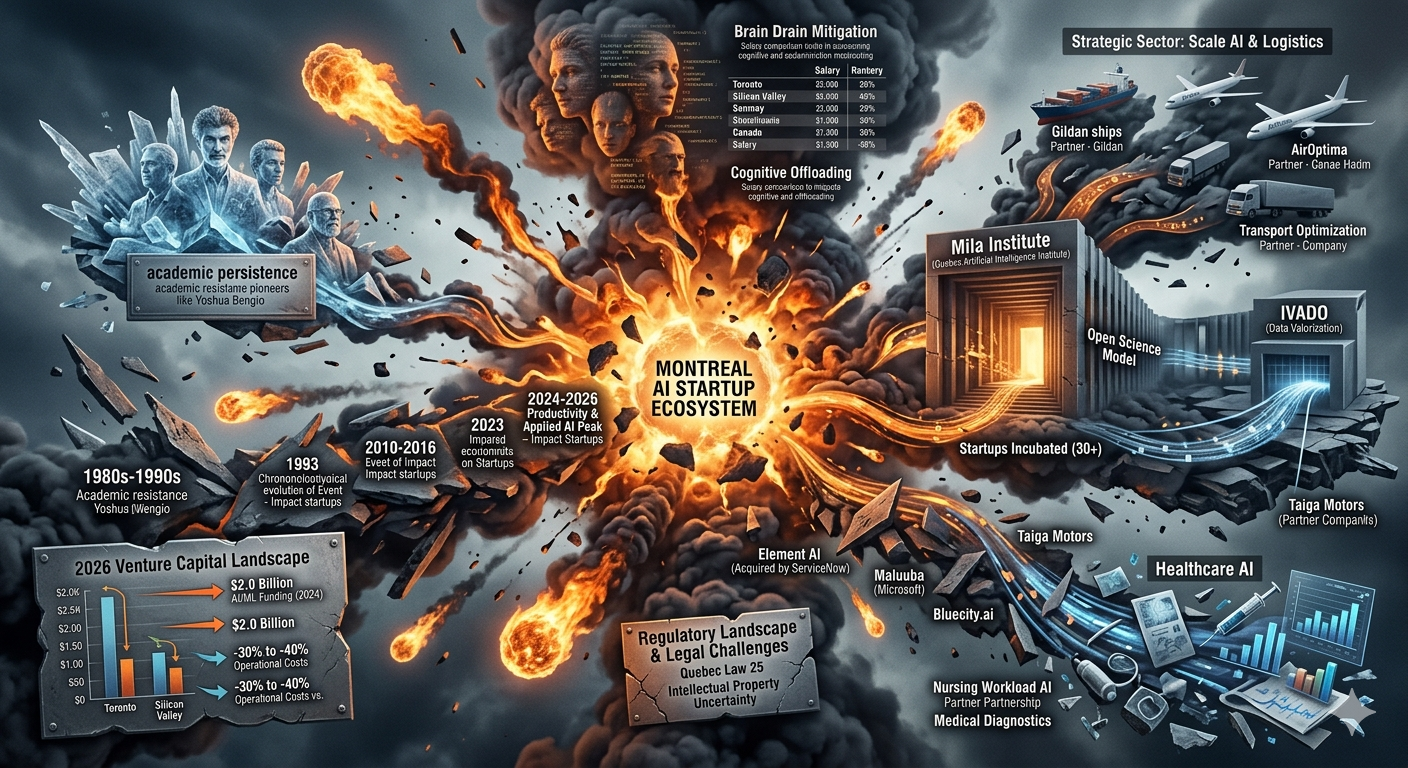
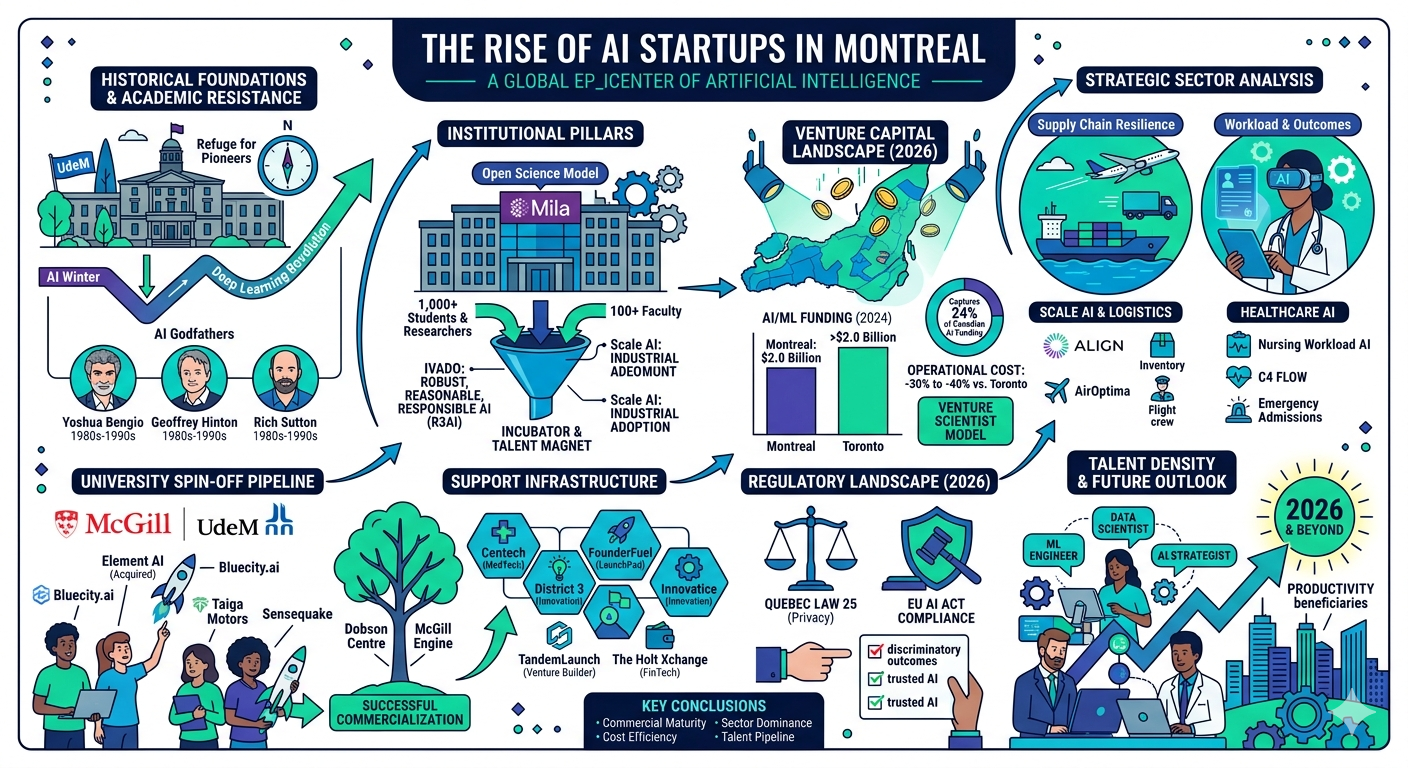
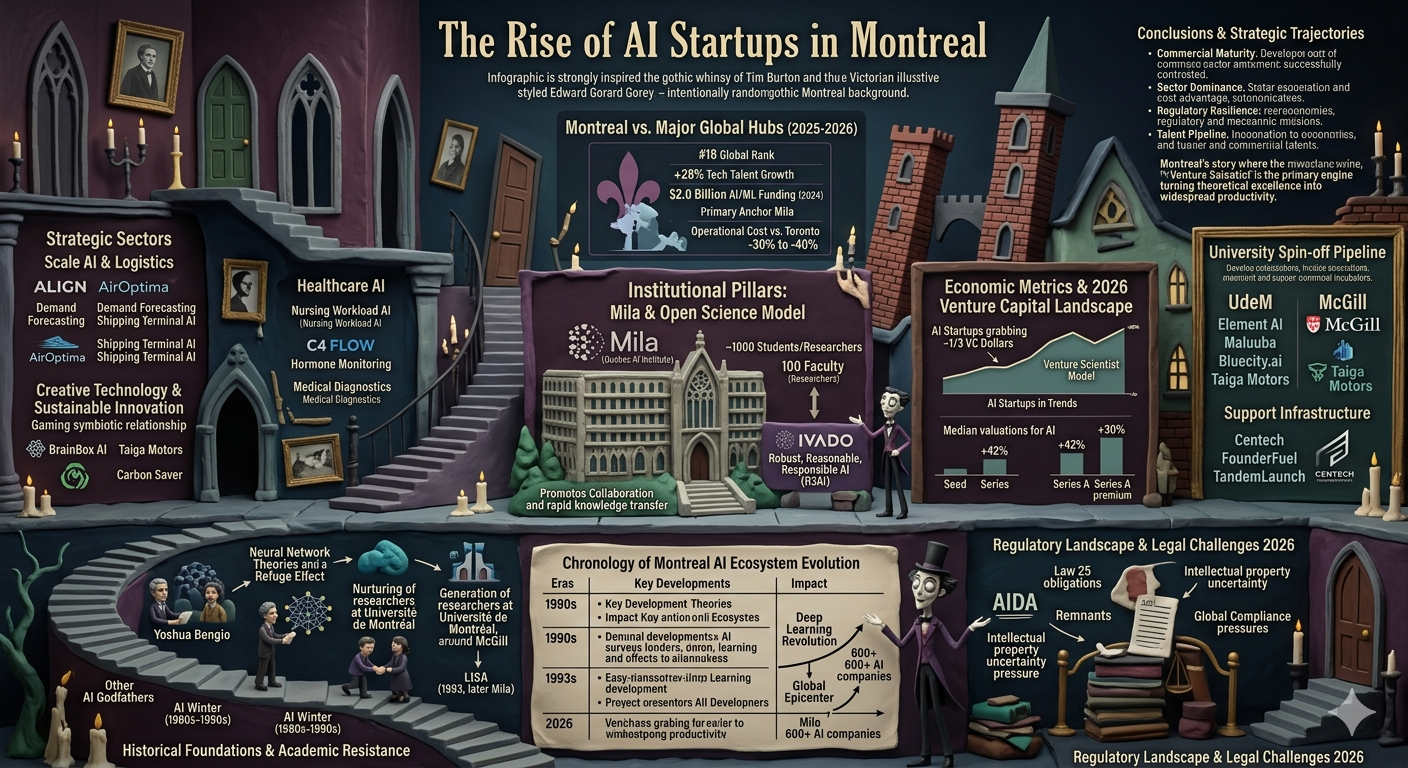
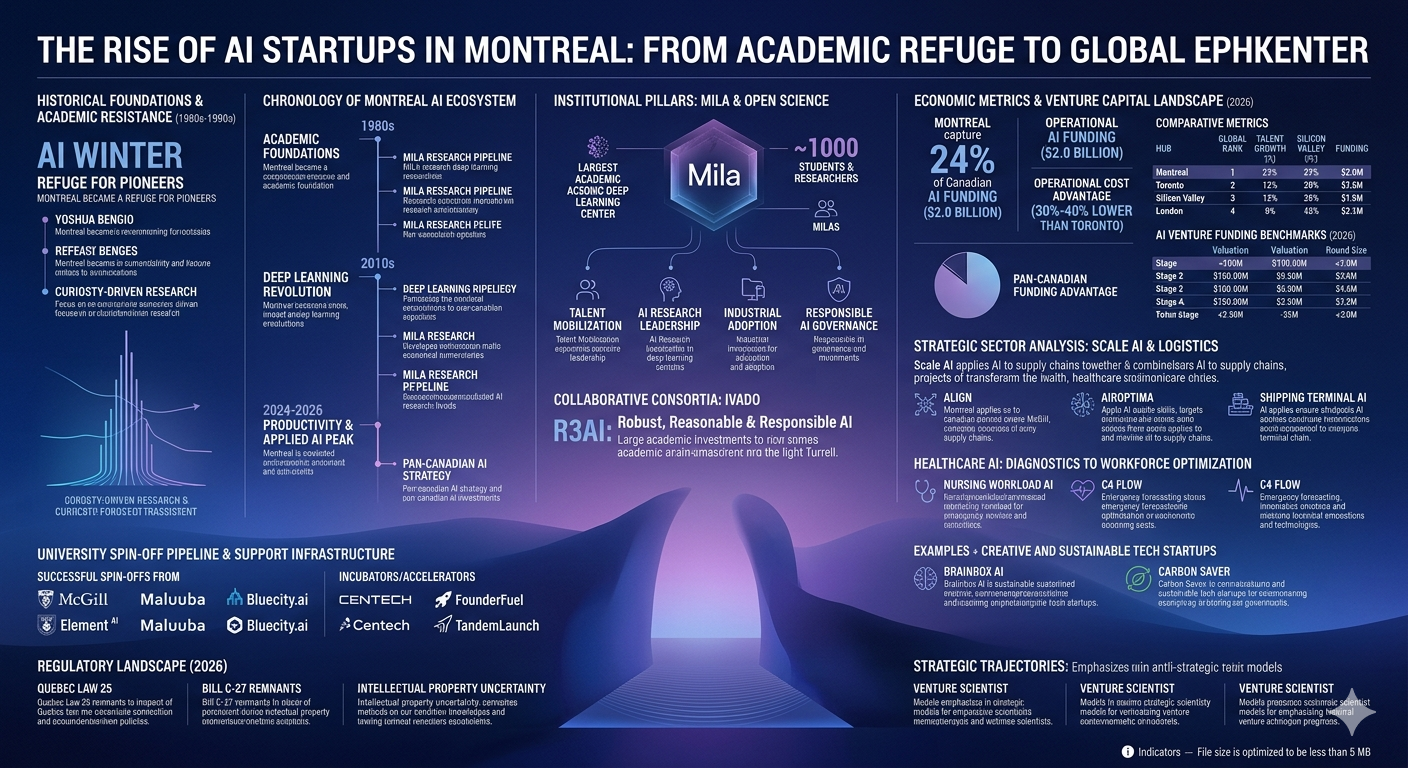
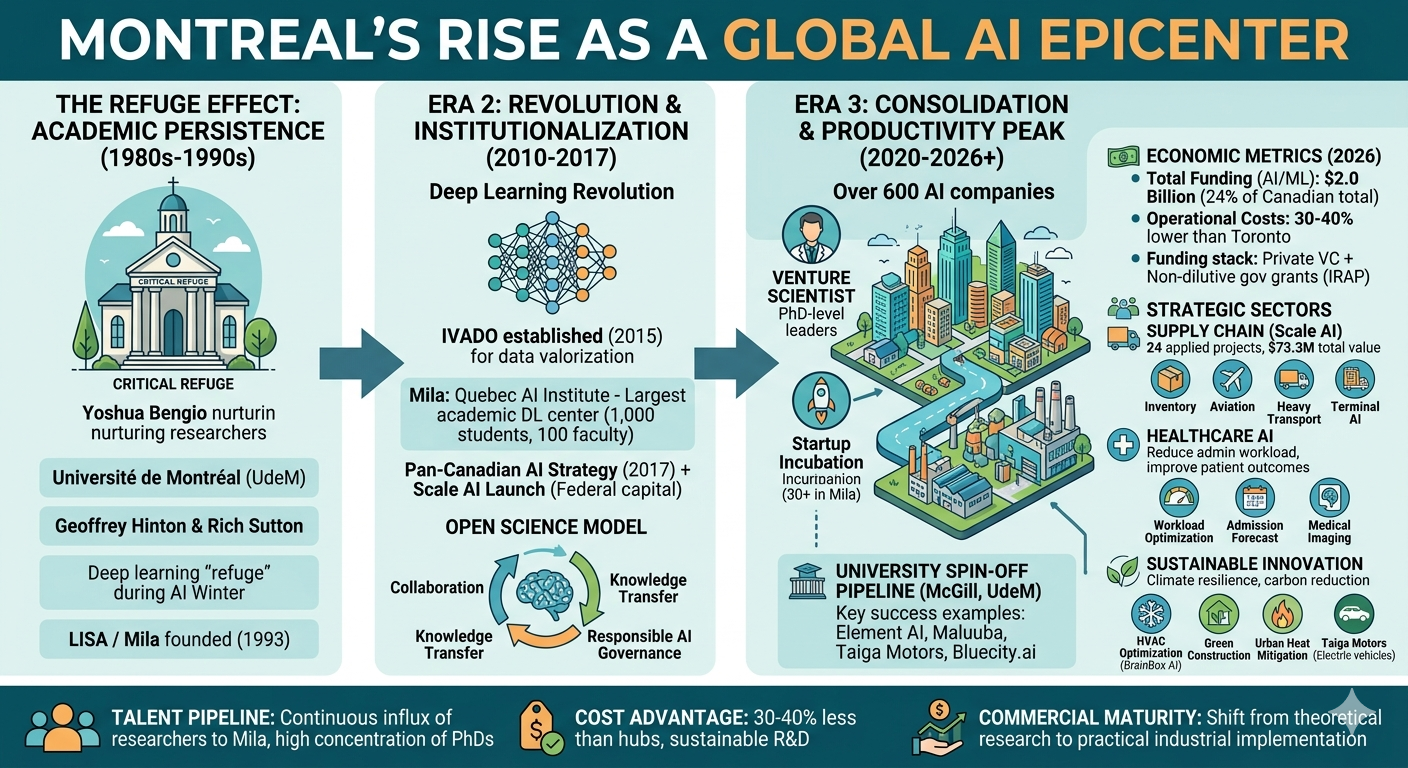
The evolution of Montreal from a traditional industrial center to a global epicenter of artificial intelligence represents one of the most successful instances of cluster development in the twenty-first century. This transformation was not a result of a sudden technological breakthrough but rather the culmination of four decades of academic persistence, strategic public investment, and a unique cultural commitment to open science. In the late 1980s and 1990s, when the global research community entered the "AI Winter," characterized by a freezing of financial support and a skepticism toward neural network theories, Montreal became a critical sanctuary for researchers. This "refuge effect" allowed the city to cultivate a concentration of expertise that would eventually lead to the deep learning revolution of the 2010s. By 2026, Montreal has solidified its position as a world leader in deep learning, reinforcement learning, and generative models, anchored by the Mila research institute and a vibrant ecosystem of over 600 AI-related companies.
Historical Foundations and the Academic Resistance
The genesis of Montreal’s current dominance lies in the academic decisions made during the 1980s. While many nations moved away from artificial intelligence due to the failure of early systems to meet practical applications, Canada became a refuge for pioneers disillusioned by international environments. Yoshua Bengio, returning to Montreal in the late 1980s, began nurturing a new generation of researchers at the Université de Montréal (UdeM). Along with Geoffrey Hinton in Toronto and Rich Sutton in Edmonton, Bengio formed the "AI godfathers" network, developing the core deep learning techniques that would define the modern era.
A defining characteristic of this period was the commitment of top talent to remain in Montreal’s academic circles despite lucrative offers from global technology giants in the United States. This decision established a culture of "curiosity-driven research" that kept elite talent local and attracted global doctoral candidates. In 1993, the founding of what would become the Montreal Institute for Learning Algorithms (Mila) provided the structural vessel for this research. The early foundations were bolstered by the Computer Research Institute of Montreal (CRIM), which has acted as a bridge between university research and business needs since 1985.
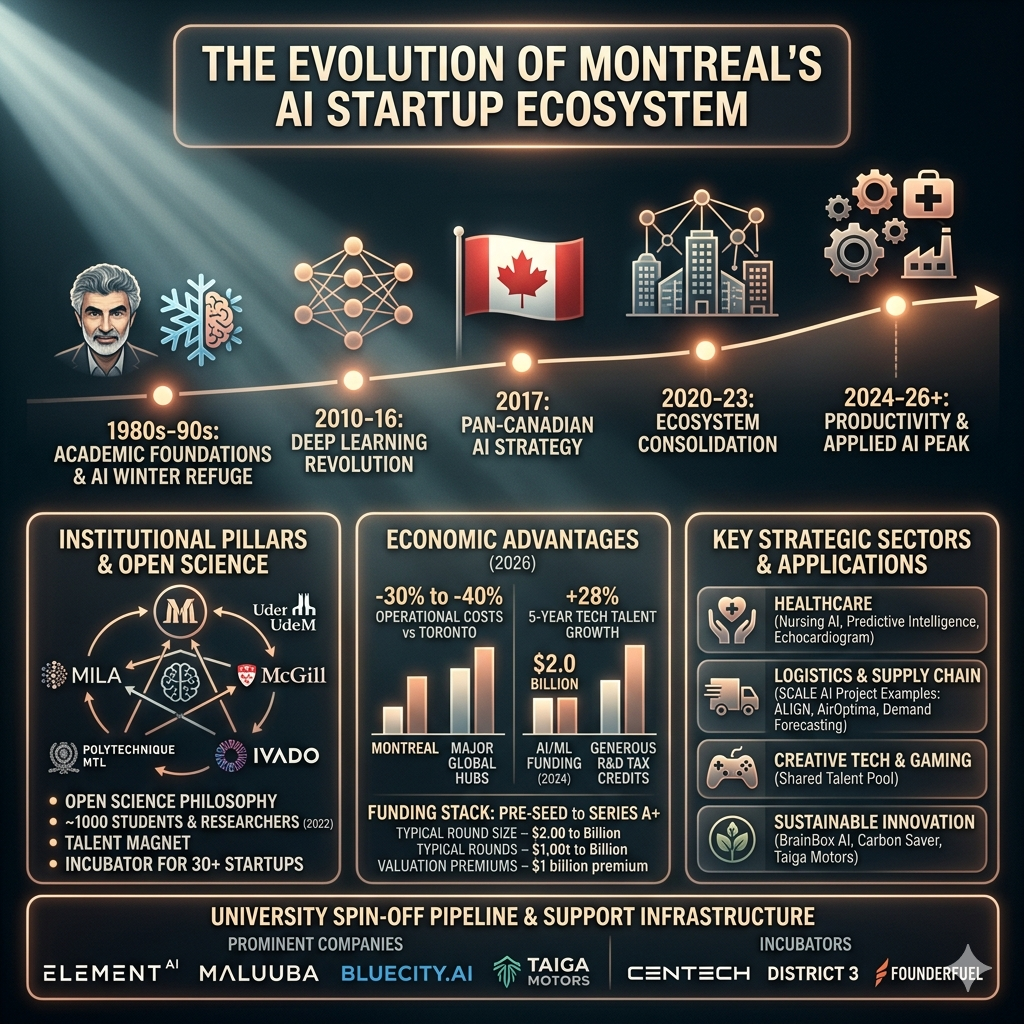
Chronology of the Montreal AI Ecosystem Evolution
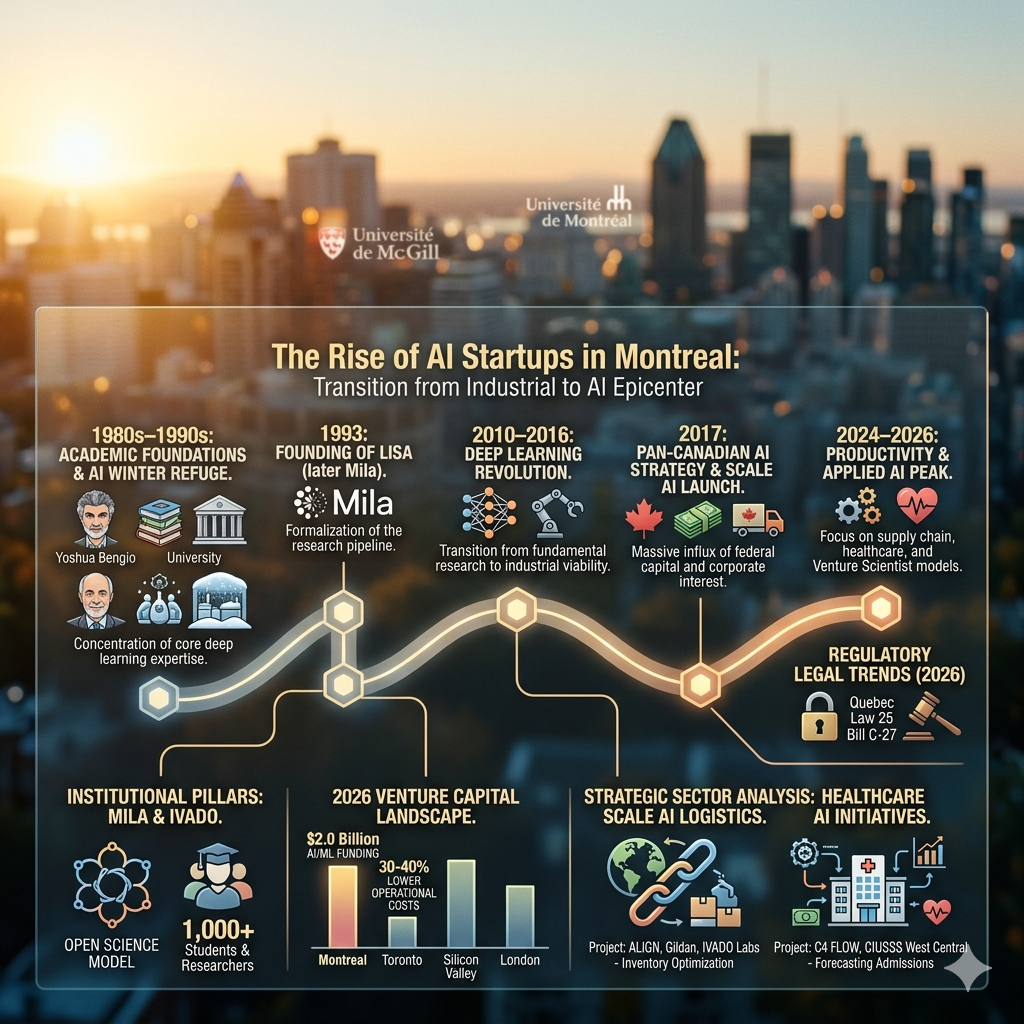
Era | Key Developments | Impact on Startup Ecosystem |
1980s–1990s | Academic Foundations & AI Winter Refuge | Concentration of core deep learning expertise |
1993 | Founding of LISA (later Mila) | Formalization of the research pipeline |
2010–2016 | Deep Learning Revolution | Transition from fundamental research to industrial viability |
2015 | Establishment of IVADO | Institutionalization of data valorization and industry transfer |
2017 | Pan-Canadian AI Strategy & Scale AI Launch | Massive influx of federal capital and corporate interest |
2020–2023 | Ecosystem Consolidation | Triple increase in Mila researchers; expansion of corporate R&D labs |
2024–2026 | Productivity & Applied AI Peak | Focus on supply chain, healthcare, and "Venture Scientist" models |

Institutional Pillars: Mila and the Open Science Model
The Montreal AI model is built on the concept of "Open Science," a philosophy that promotes collaboration and fosters rapid knowledge transfer. Mila, the Quebec Artificial Intelligence Institute, stands as the central pillar of this model, representing a unique partnership between the Université de Montréal and McGill University, in collaboration with Polytechnique Montréal and HEC Montréal. By 2022, Mila hosted approximately 1,000 students and researchers and 100 faculty members, making it the largest academic deep learning research center in the world.
Mila’s success is predicated on its mission to deliver advances that benefit all of society, with core research areas in health, environment, and ethics. This mission is supported by four strategic pillars: talent and community mobilization, cutting-edge AI research leadership, industrial adoption and innovation, and global reach through responsible AI governance. For the startup ecosystem, Mila acts as both an incubator and a talent magnet, hosting over 30 startups and 120 industry partners. The "Mila Startup" status provides emerging companies with privileged deal flow and access to the world’s most cited AI researchers.
Collaborative Research Consortia
IVADO (Institute for Data Valorization) complements Mila by focusing on the training and knowledge mobilization needed to create "Robust, Reasonable and Responsible AI" (R3AI). IVADO was established with a $93.5 million grant from the Canada First Excellence Research Fund in 2016, marking one of the largest academic investments in Montreal’s history. This funding allowed UdeM and its partners to scale their data science and AI capacity, ensuring that the theoretical breakthroughs occurring at Mila could be applied to industrial challenges in finance, healthcare, and transportation.
Economic Metrics and the 2026 Venture Capital Landscape
As of 2026, Montreal occupies a unique position in the global tech hierarchy. While Silicon Valley remains the absolute center of gravity for executive hiring and platform development, Montreal has become a premium destination for engineering and research-driven startups. Montreal captured 24% of all Canadian AI/ML funding in 2024, totaling approximately $2.0 billion. This investment is concentrated in startups focusing on deep learning, reinforcement learning, and applications in the gaming and supply chain sectors.
One of Montreal's most significant competitive advantages is its cost structure. Operational expenses for AI startups in Montreal are consistently 30% to 40% lower than in Toronto and significantly lower than in United States tech hubs. This lower burn rate, combined with Quebec’s generous R&D tax credits, allows founders to build more sustainable businesses and maintain longer runways without the immediate need for the astronomical valuations seen in Silicon Valley.
Comparative Metrics: Montreal vs. Major Global Hubs (2025–2026)
Metric | Montreal | Toronto | Silicon Valley | London (UK) |
Global Rank (Startup Ecosystem) | #18 | #4 | #1 | #3 |
5-Year Tech Talent Growth | +28% | +44% | Mature Density | High Density |
AI/ML Funding (2024) | $2.0 Billion | >$2.0 Billion | High Billions | High Billions |
Primary AI Anchor | Mila | Vector Institute | Stanford/OpenAI | DeepMind/Oxford |
Operational Cost vs. Toronto | -30% to -40% | Baseline | +50% or higher | +20% to +30% |
The concentration of capital in 2026 is visible in the emergence of the "Venture Scientist" model, where PhD-level researchers lead startups that prioritize deep technical innovation. In response to community surveys identifying funding as a primary barrier to venture creation, mechanisms like Mila AI Ventures have been evaluated to provide dedicated support to research-intensive firms.
Startup Funding Trends and Valuation Benchmarks
The AI startup fundraising landscape in early 2026 has shown a trend of extreme capital concentration. Globally, AI startups now grab roughly one-third of all venture capital dollars. This is mirrored in Montreal, where seed and Series A rounds for AI companies command significant premiums over their non-AI counterparts.
AI Venture Funding Benchmarks (2026)
Funding Round | Median Valuation (AI) | Valuation Premium vs. Non-AI | Median Round Size (Global Trends) |
Pre-Seed | $2M–$5M | N/A | Varies |
Seed | $3M–$8M | +42% | $2.6B total sector |
Series A | $50M+ | +30% | $13.1B total sector |
Series B | $143M | Expanding Gap | High selective growth |
In Montreal, the presence of alternative capital structures, such as debt financing and grant funding, plays a meaningful role for startups in regulated domains like healthcare. Government programs like the Industrial Research Assistance Program (IRAP) provide non-dilutive funding ranging from $10,000 to $10 million, which is integral to the "funding stack" for Canadian deep-tech startups.
Strategic Sector Analysis: Scale AI and Logistics
Montreal serves as the headquarters for Scale AI, Canada’s AI-focused Innovation Supercluster. With up to $284 million in total funding, Scale AI’s primary objective is to take AI out of the laboratory and apply it to real-world supply chains. This cluster-driven approach has been instrumental in addressing the historical gap between Canadian AI research and its industrial adoption.
As of December 2025, Scale AI announced its largest funding round to date, supporting 24 applied AI initiatives in Quebec representing a total project value of $73.3 million. These projects demonstrate the breadth of Montreal’s applied AI capabilities, focusing on operational productivity and supply chain resilience.
Notable Scale AI Logistics Projects in Montreal
Project Name | Lead Partners | Focus Area |
ALIGN | Gildan, IVADO Labs, Groupe Ingeno | Advanced logistics and inventory for global networks |
AirOptima | Nolinor Aviation, Airudi, P3F | Flight crew scheduling optimization in aviation |
Transport Optimization | Fuel Transport, CRIM, Vooban | Enhancing heavy transport efficiency |
Demand Forecasting | Soleno, Vooban | Production and transport optimization |
Shipping Terminal AI | Pointe-Noire S.E.C, SimWell | Intelligent iron ore terminal operation |
These initiatives highlight how Montreal’s startups are not merely developing abstract algorithms but are deeply integrated into the physical economy. The Scale AI model incentivizes large multinational enterprises (MNEs) to partner with local startups, providing these young companies with their first commercial buyers and accelerating market adoption.
Healthcare AI: From Diagnostics to Workforce Optimization
Montreal’s healthcare technology sector benefits from the integration of world-class hospitals with university research labs. Projects funded in 2025 and 2026 emphasize the use of AI to reduce administrative workloads and improve patient outcomes. The focus has shifted toward "predictive intelligence" to manage hospital capacity and prioritize medical requests.
Healthcare AI Initiatives and Partnerships
Project | Key Collaborators | AI Application |
Nursing Workload AI | Montreal General, MUHC, Airudi | Automating shift reports and optimizing assignments |
C4 FLOW | CIUSSS West Central, McGill, AlayaCare | Forecasting emergency admissions and home-care risks |
Echocardiogram AI | McGill Health Centre, IVADO Labs | Prioritization of medical imaging requests |
Hormone Monitoring | Eli Health (Startup) | Real-time salivary hormone insights for women's health |
Medical Diagnostics | Beeta Biomed (McGill Spin-off) | Faster, lower-cost diagnostic instruments |
The emergence of companies like Perceiv AI, which uses machine learning to diagnose and provide prognoses for age-related disorders, underscores the city's strength in medical AI. Furthermore, MEDTEQ+, an industry-led medtech consortium, provides specific funding and partnerships for healthcare startups, ensuring that research breakthroughs are validated in clinical settings.
Creative Technology and Sustainable Innovation
Montreal's history as a hub for the gaming industry (Ubisoft, Warner Bros., Behaviour Interactive) has created a symbiotic relationship with its AI sector. Gaming companies were early adopters of AI for procedural content generation, NPC behavior, and performance-intensive graphics. This has created a "shared talent pool" where engineers move between gaming and AI-first companies, reinforcing the city's cluster effects.
In 2026, sustainable technology has become a prominent vertical. Startups are increasingly focused on climate resilience and carbon reduction.
BrainBox AI: Uses generative AI to optimize HVAC operations and property management, aiming for decarbonization and energy efficiency.
Carbon Saver: Helps construction professionals reduce the carbon footprint of their projects through intelligent analysis.
ConstellIA: Develops AI tools for municipalities to mitigate urban heat islands and strengthen climate resilience.
Taiga Motors: A sustainable mobility success story producing 100% electric powersport vehicles, often using AI for battery management.
The University Spin-off Pipeline: McGill and UdeM
Montreal's two major research universities, McGill and UdeM, are prolific sources of AI-enabled ventures. These spin-offs often emerge from specialized labs and are supported by campus-based innovation engines like the Dobson Centre or the McGill Engine.
Prominent University-Affiliated Spin-offs and Successes
Startup | University Origin | Sector | Key Achievement/Focus |
Element AI | UdeM / Mila | Enterprise AI | Acquired by ServiceNow; founded by Yoshua Bengio |
Maluuba | (Waterloo Origin, Mtl Hub) | NLP | Acquired by Microsoft; world's largest NLP lab in Montreal |
McGill | Smart City | Acquired by Velodyne Lidar; real-time traffic monitoring | |
Sensequake | McGill | Engineering | Structural analysis and health monitoring for buildings |
Kuiper AutonomI | McGill | Robotics | Shared autonomy for industrial human-robot teaming |
Taiga Motors | McGill | CleanTech | Electric vehicles; successful commercialization and growth |
These spin-offs leverage national tax credits and local community builders like Centech and Real Ventures to accelerate their growth. The "non-predatory" model of research in Montreal ensures that academic faculty can remain in their roles while still supporting the commercial success of these ventures.
Support Infrastructure: Incubators, Accelerators, and Co-working
Montreal offers a tiered support system for startups, from ideation to global scaling. Accelerators like FounderFuel provide rapid growth and investor readiness, having launched over 100 companies that collectively raised over $600 million.
Centech: Based at ÉTS, Centech is a world-class deep-tech incubator focusing on hardware, medtech, and advanced technology. It provides specialized lab equipment and expertise in regulation and clinical trials.
District 3 Innovation: Located at Concordia University, District 3 supports multi-sector innovation and scientific entrepreneurs, providing a collaborative community for early-stage founders.
TandemLaunch: Acts as a venture builder, partnering with entrepreneurs to spin out university research—particularly in AI and computer vision—into consumer tech companies.
The Holt Xchange: A specialized accelerator for FinTech startups, leveraging AI for banking, insurance, and financial services innovation.
CEIM (Centre d'entreprises et d'innovation de Montréal): One of Canada's longest-running incubators (est. 1996), reporting a 76% survival rate for incubated companies over 18 years.
Regulatory Landscape and Legal Challenges in 2026
The rapid rise of AI has outpaced the development of clear regulatory frameworks in Canada, creating a climate of "legislative uncertainty" for Montreal startups. The tabling of the Artificial Intelligence and Data Act (AIDA) was Canada's first large-scale attempt to regulate the industry, focusing on high-impact systems that could produce discriminatory outcomes or economic harm.
However, AIDA faced widespread criticism for its vague scope and exclusionary consultation process, and it was ultimately not enacted, leaving the federal framework in flux. Despite this, startups in 2026 must navigate a complex terrain defined by existing laws and provincial regulations.
Critical Regulatory and Legal Trends for Montreal AI Firms
Quebec Law 25: Currently in full force, this provincial law imposes rigorous obligations on data privacy and automated decision-making. Organizations must notify individuals when AI makes decisions affecting them and can face minimum fines of $15,000 for confidentiality failures.
Bill C-27 and AIDA Remnants: Although not enacted, the proposed framework signaled a focus on "high-impact" systems, including those used for employment, biometric identification, and behavior influencing.
Intellectual Property Uncertainty: Canadian law in 2026 offers no clear-cut answer as to who owns the inputs or outputs of generative AI technology, leading to ongoing legal challenges in patents and copyright.
Digital Sovereignty Framework: Released in late 2025, this framework requires organizations to demonstrate legal authority and access control over Canadian data.
Global Compliance Pressure: Montreal firms expanding internationally must reconcile Canadian standards with more stringent regimes like the EU AI Act, which classifies systems by risk category and includes explicit prohibitions.
Talent Density and the Behavioral Shift Toward AI
The "Montreal AI Boom" has fundamentally changed the career landscape. Institutions like Mila and Scale AI anchor global leadership, but the competitive advantage in 2026 is driven by "behavioral adaptation" rather than technical mastery alone. Professionals who integrate AI tools into their workflows reduce mental workload and increase productivity—a psychological principle known as cognitive offloading.
Montreal's talent density is a major draw for employers, continuously replenished by top-tier universities. The city offers a structure where machine learning specialists, automation consultants, and AI-enabled marketing strategists are in high demand, while routine administrative and manual data processing roles are in decline.
AI Talent Cost and Demand (2026 Projections)
Role | Median Annual Compensation (CAD) | Typical Contractor Rate (USD) | Core Skill Requirements |
ML Engineer | $140K–$180K+ | $120–$150/hr | Model training, deployment, re-learning |
Data Scientist | $120K–$160K | $120–$150/hr | Predictive modeling, insight discovery |
AI Strategist | $160K+ | $160–$190/hr | Governance, strategic leadership, architecture |
LLM Expert | $180K+ | $200–$250/hr | Strategy, novel architectures, scale optimization |
The Global Talent Stream visa and other immigration-friendly policies accelerate AI hiring in Montreal, though a persistent concern remains the "brain drain" to the United States due to higher salary rivalries. However, the lower housing costs and operational expenses in Montreal relative to Vancouver and Toronto help mitigate this pressure.
Future Outlook: The Maturation of the Montreal Cluster
As Montreal moves through 2026, the AI ecosystem is entering a stage of consolidation and specialization. The "gold rush" of infrastructure spending by hyperscalers is beginning to rotate toward "productivity beneficiaries"—companies that can show tangible ROI from AI implementation. For Montreal startups, this means the most successful ventures will be those that address specific industrial pain points, such as the logistics projects led by Scale AI or the medical diagnostic tools emerging from university spin-offs.
The city's structural advantage is reinforced by ongoing infrastructure projects, such as the REM network expansion and the Blue Line extension, which improve access to innovation hubs like Mile-Ex. Furthermore, the sustained investment in ethical and responsible AI positions Montreal as a trusted partner on the world stage, particularly as global regulatory environments become more complex.
Conclusions and Strategic Trajectories
The rise of AI startups in Montreal is a testament to the power of persistent, curiosity-driven research combined with proactive government support. The ecosystem has transitioned from a collection of academic labs into a dense industrial cluster capable of competing with the world's largest tech hubs.
Key conclusions for the 2026 landscape include:
Commercial Maturity: The acquisition of early leaders like Element AI and Maluuba has not weakened the ecosystem but has instead redistributed elite talent and established Montreal as a premier location for global R&D centers.
Sector Dominance: Montreal’s leadership in deep learning is being successfully applied to the physical economy, specifically in supply chain resilience (Scale AI) and healthcare workforce optimization.
Cost and Efficiency: The 30% to 40% cost advantage over Toronto and US hubs remains a critical driver for early-stage startup formation and sustained R&D activity.
Regulatory Resilience: Despite the uncertainty surrounding AIDA, the provincial enforcement of Law 25 and the regional commitment to ethics provide a framework for the development of "trusted AI" that can compete in global markets.
Talent Pipeline: The continuous influx of researchers to Mila and the high concentration of AI PhDs ensure that Montreal remains at the forefront of fundamental research even as the market shifts toward applied solutions.
Montreal's AI story is far from over; it is entering a decade where the "Venture Scientist" will be the primary engine of economic value, turning the city's theoretical excellence into widespread industrial productivity..
Protect Your Future: The Precision Vesting Calculator
Don't let a "handshake deal" complicate your exit. Map out your ownership journey with our Vesting Calculator
Calculate Your Vesting Schedule →