Regulation as a Startup Advantage, Not a Barrier
June 27, 2026 by Harshit Gupta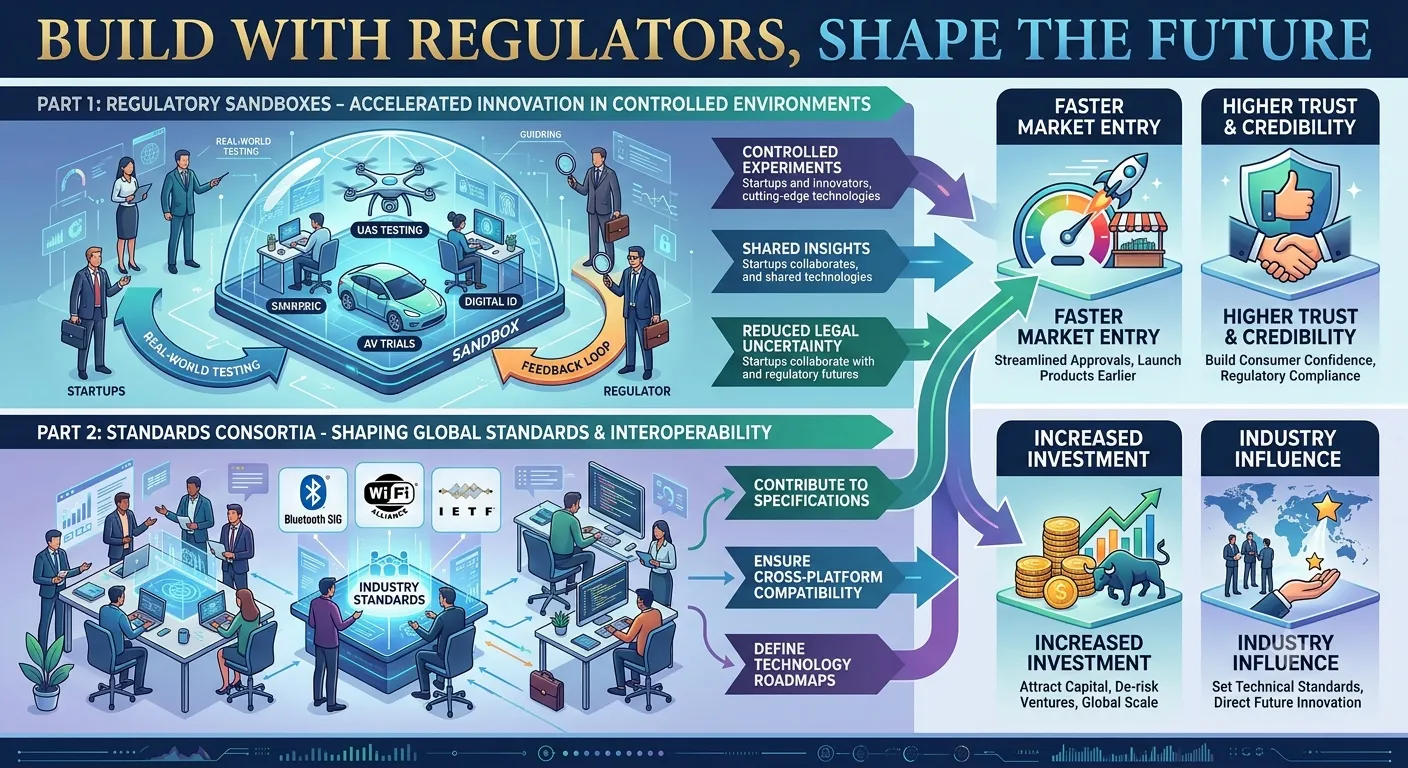
The Theoretical Framework of Regulatory Defensibility
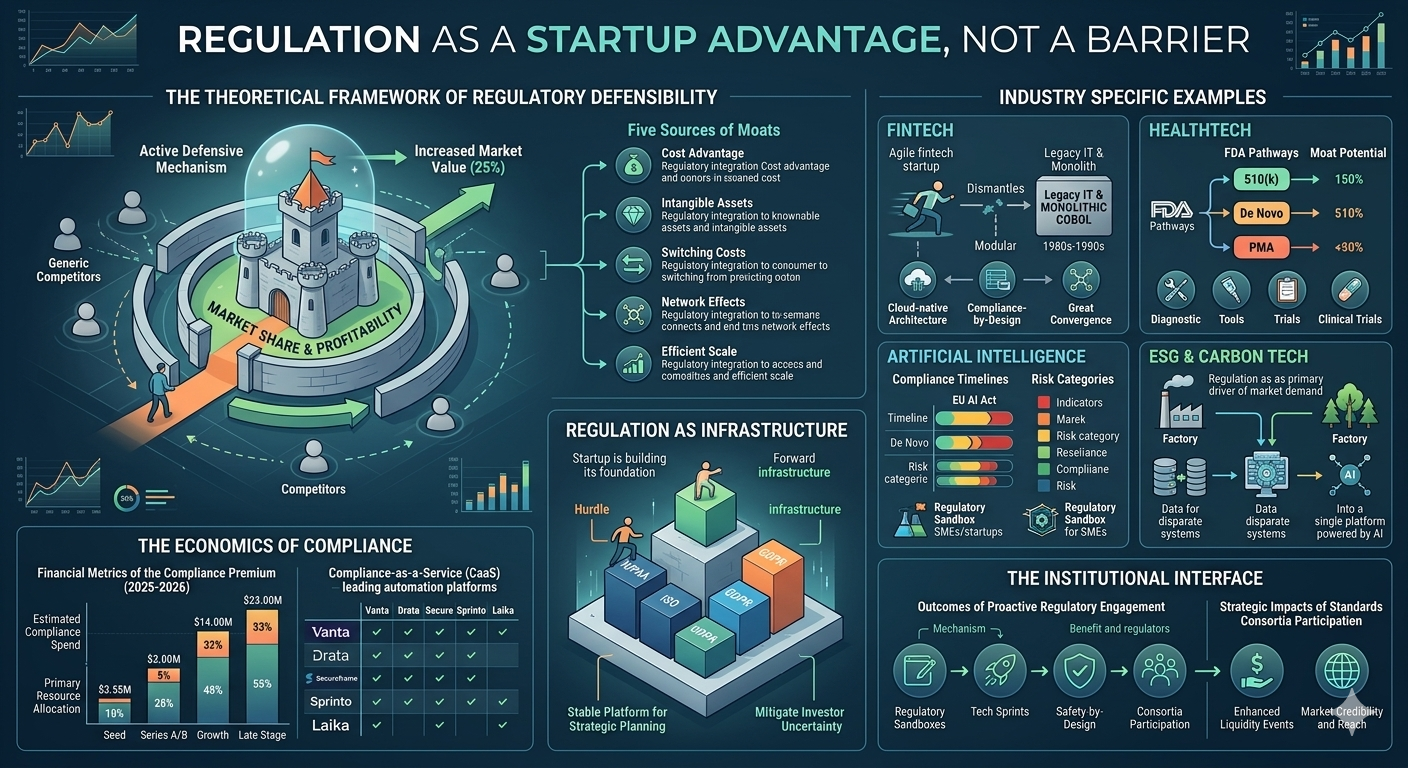
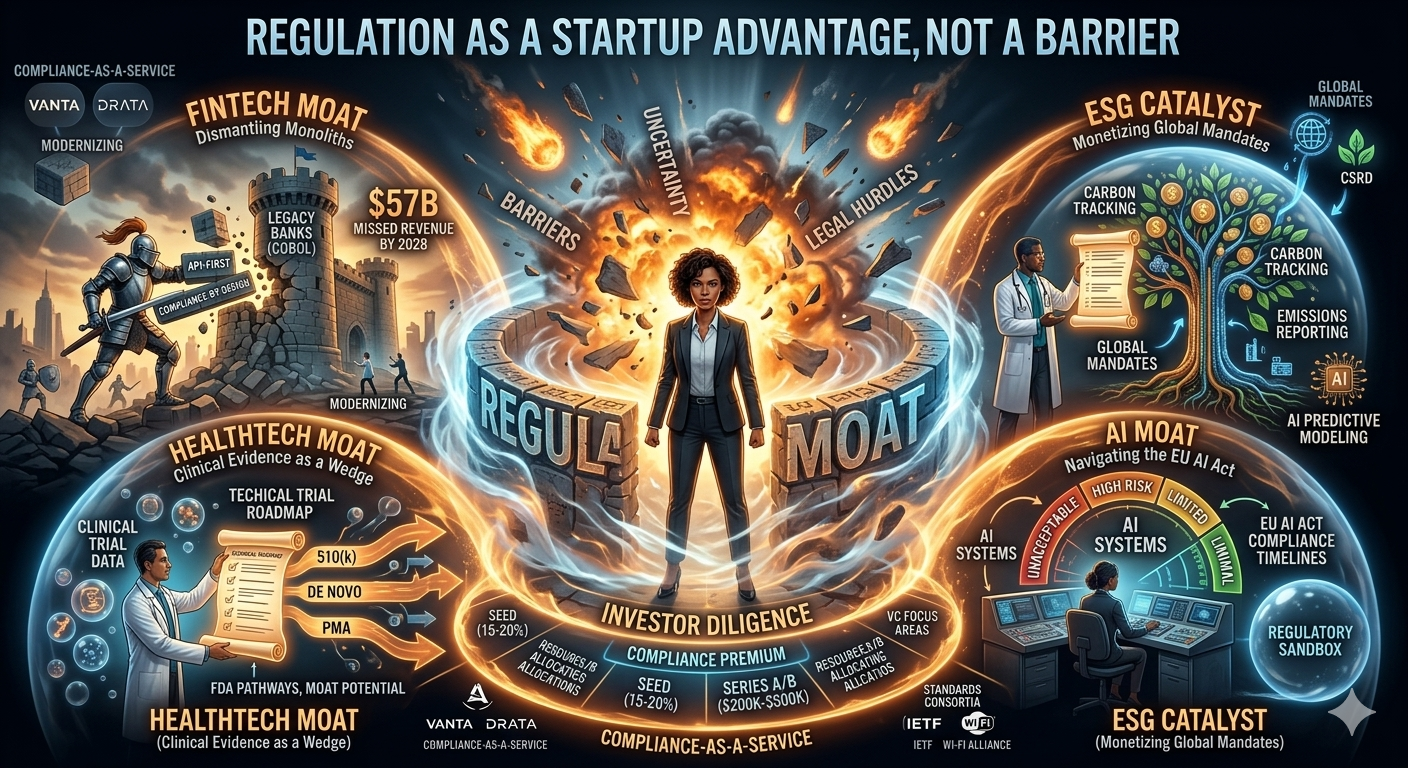
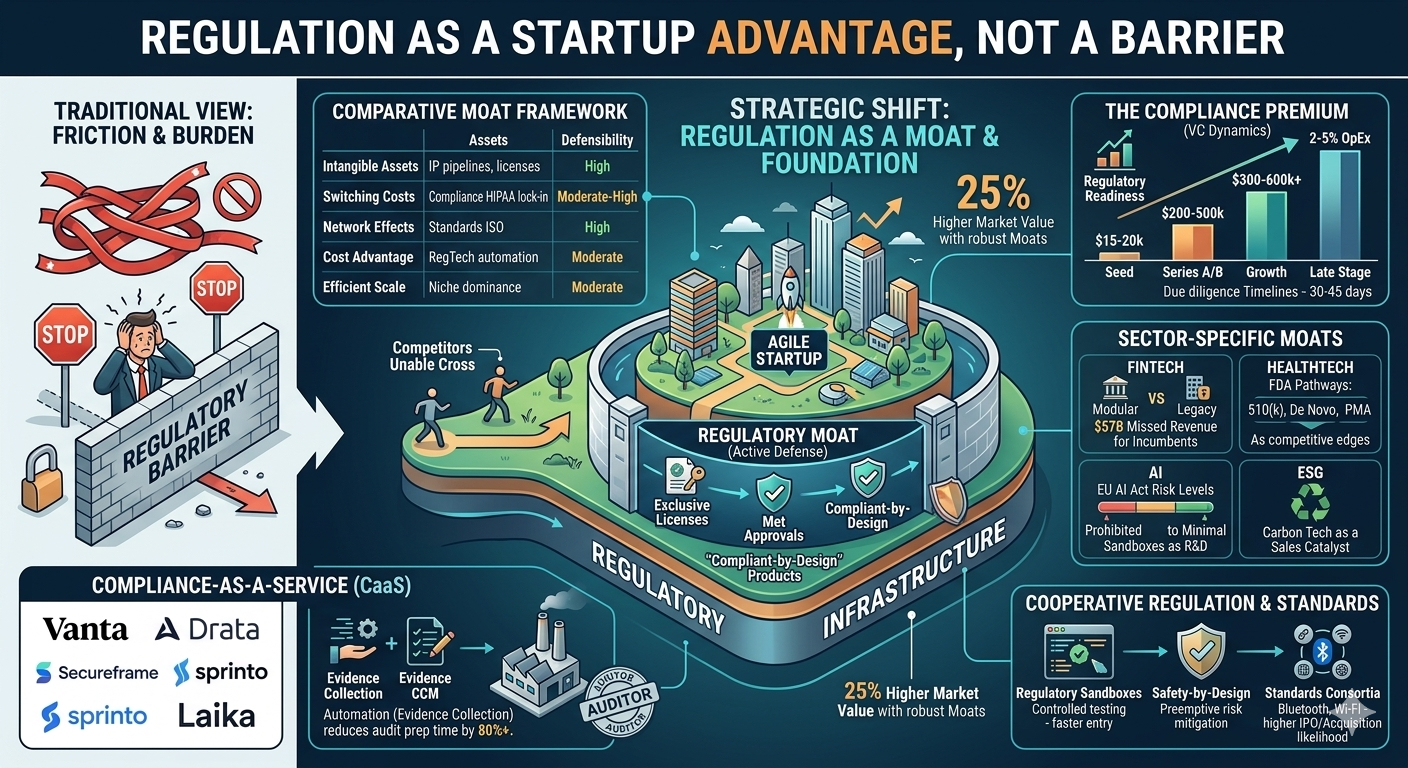
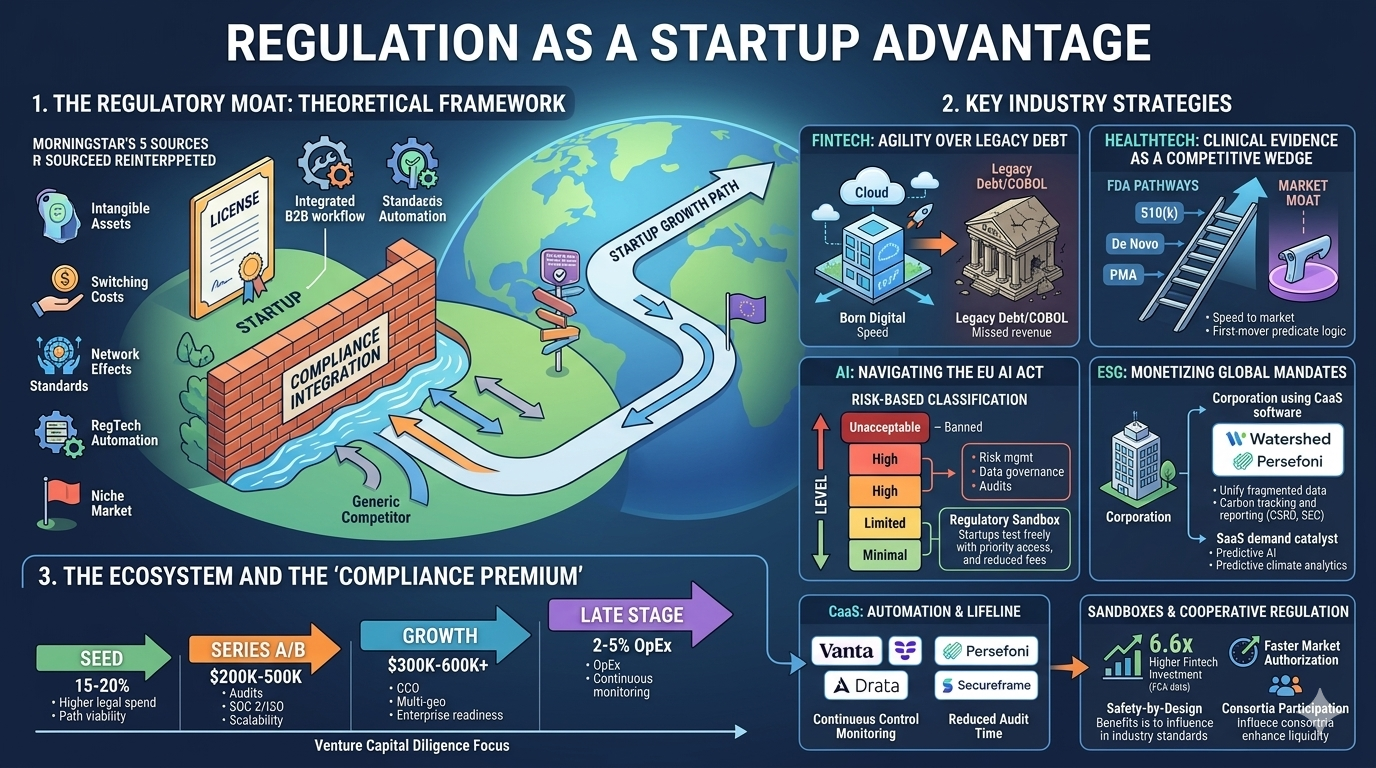
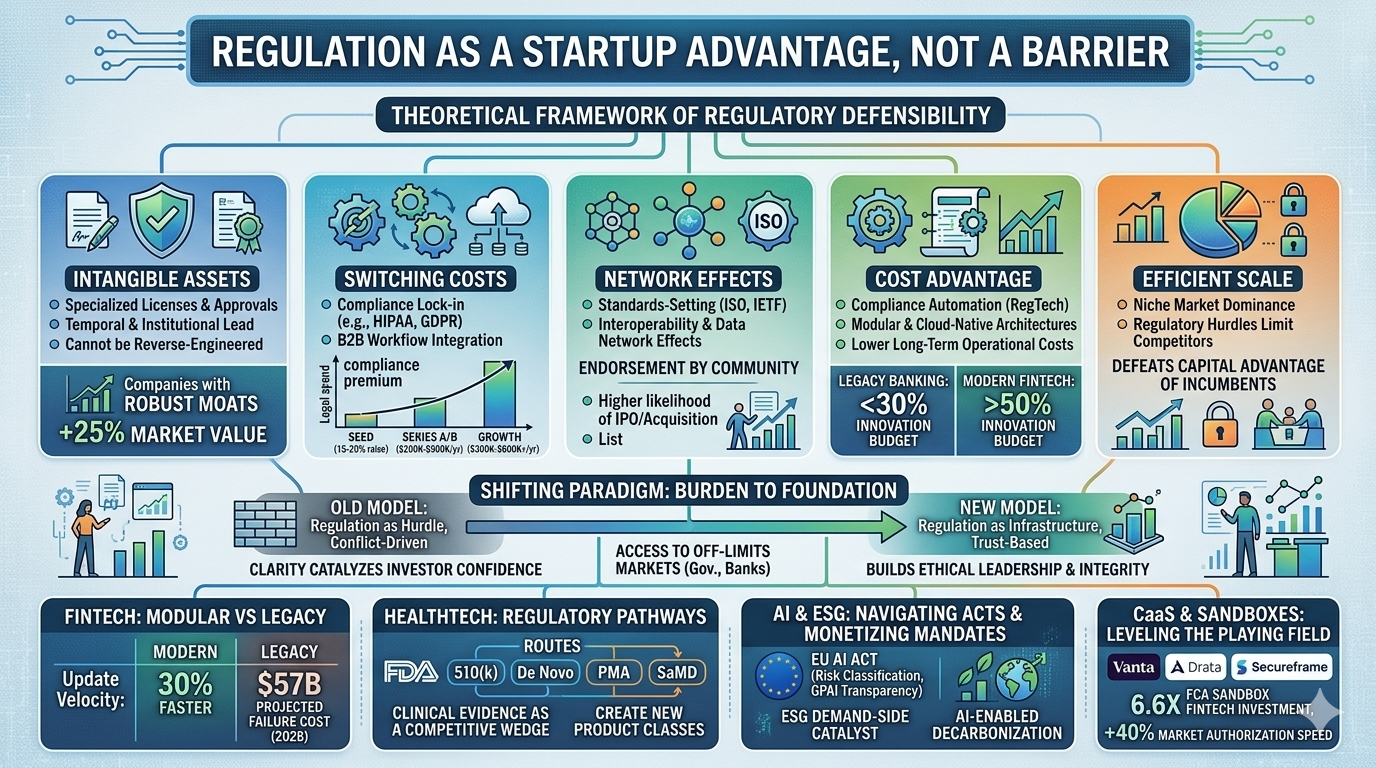
In the contemporary venture landscape, the conceptualization of a competitive "moat"—a structural barrier protecting a firm’s market share and profitability—has undergone a fundamental transformation. For early-stage startups, where brand equity is often nascent and economies of scale are yet to be fully realized, the regulatory environment presents an unconventional but potent opportunity to establish a defensible market position. Traditionally, entrepreneurs and investors viewed regulation as a friction-heavy barrier to entry. However, a more nuanced analysis reveals that for the agile startup, regulation functions as a "regulatory moat," an active defensive mechanism where the early and deep integration of complex legal requirements creates a hurdle that subsequent competitors find prohibitively expensive or time-consuming to replicate.
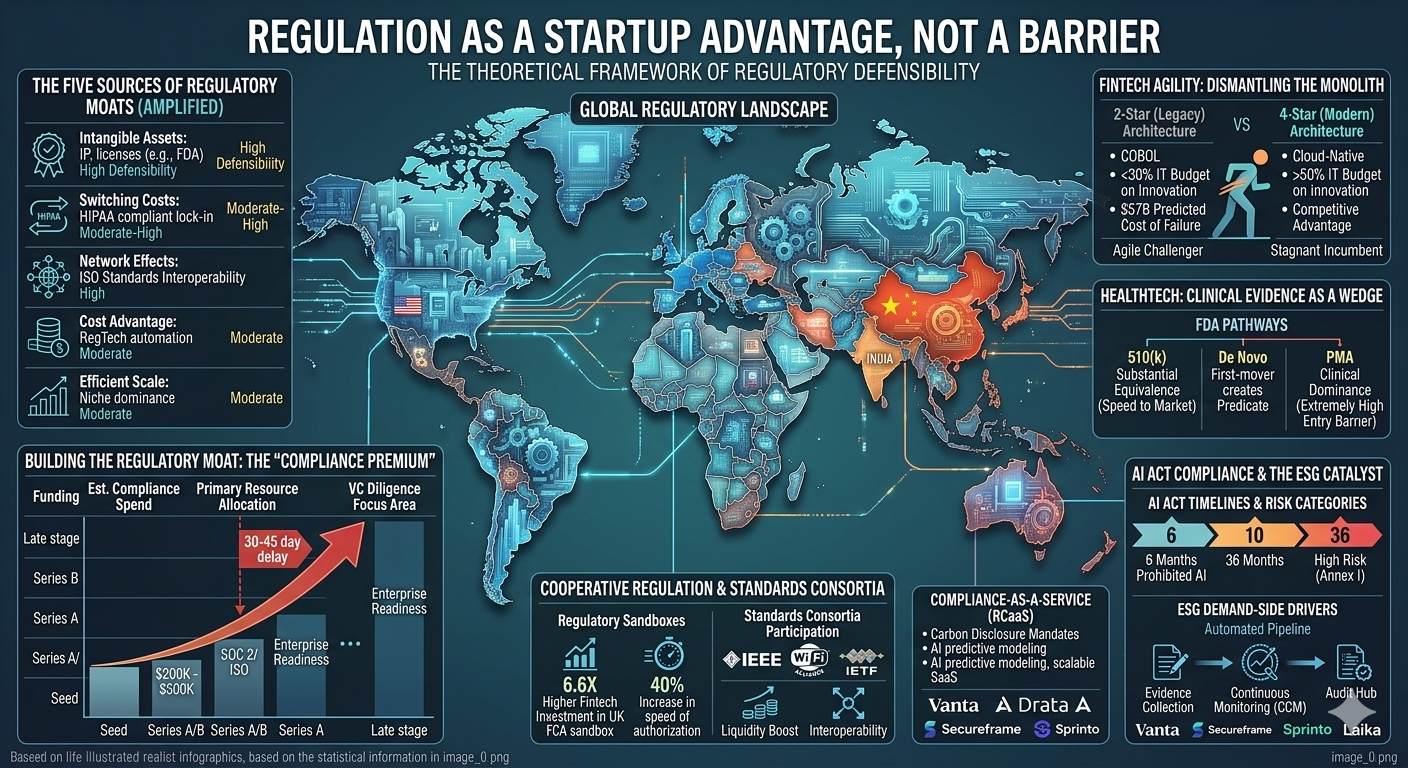
The framework for this defensibility is rooted in the five sources of economic moats popularized by Morningstar: cost advantage, intangible assets, switching costs, network effects, and efficient scale. When viewed through a regulatory lens, these sources are amplified. A startup that secures exclusive licenses or meets stringent regulatory approvals early in its lifecycle possesses an intangible asset that functions as a legal shield against new entrants. In highly regulated sectors such as utilities, telecommunications, and financial services, these moats deter competition by raising the capital and expertise requirements for participation. The strategic advantage lies in the temporal and institutional lead; while technology can be reverse-engineered, a regulatory certification or a history of transparent engagement with oversight bodies represents a lead that cannot be easily bypassed through mere capital expenditure.
The financial implications of building such a moat are significant. Recent research indicates that companies with robust competitive moats are likely to achieve a 25% higher market value than their peers. For early-stage companies, establishing this defensibility is critical for attracting investors who prioritize lower risk and higher potential returns. Investors increasingly view structural barriers—such as regulatory approvals, exclusive partnerships, or data network effects—as indicators of long-term sustainability and efficient scaling. Thus, the pursuit of a regulatory moat is not merely a defensive maneuver but a strategic foundation for driving valuation and ensuring market leadership in a crowded ecosystem.
Comparative Framework of Competitive Moats in Early-Stage Ventures
Moat Type | Startup Mechanism | Regulatory Interface | Defensibility Level |
Intangible Assets | IP pipelines, trademarks, and specialized licenses | Patents and regulatory approvals act as legal shields | High |
Switching Costs | Integration into B2B workflows and data migration friction | Compliance requirements (e.g., HIPAA) create lock-in for data-sensitive clients | Moderate-High |
Network Effects | Organic user growth and increased value per new node | Standards-setting (e.g., ISO) ensures interoperability, strengthening the network | High |
Cost Advantage | Proprietary tech and unique supply chains | Automation of compliance (RegTech) lowers long-term operational costs | Moderate |
Efficient Scale | Niche market dominance with limited room for rivals | Regulatory hurdles limit the number of viable competitors in niche zones | Moderate |
Regulation as Infrastructure: Shifting Paradigms from Burden to Foundation
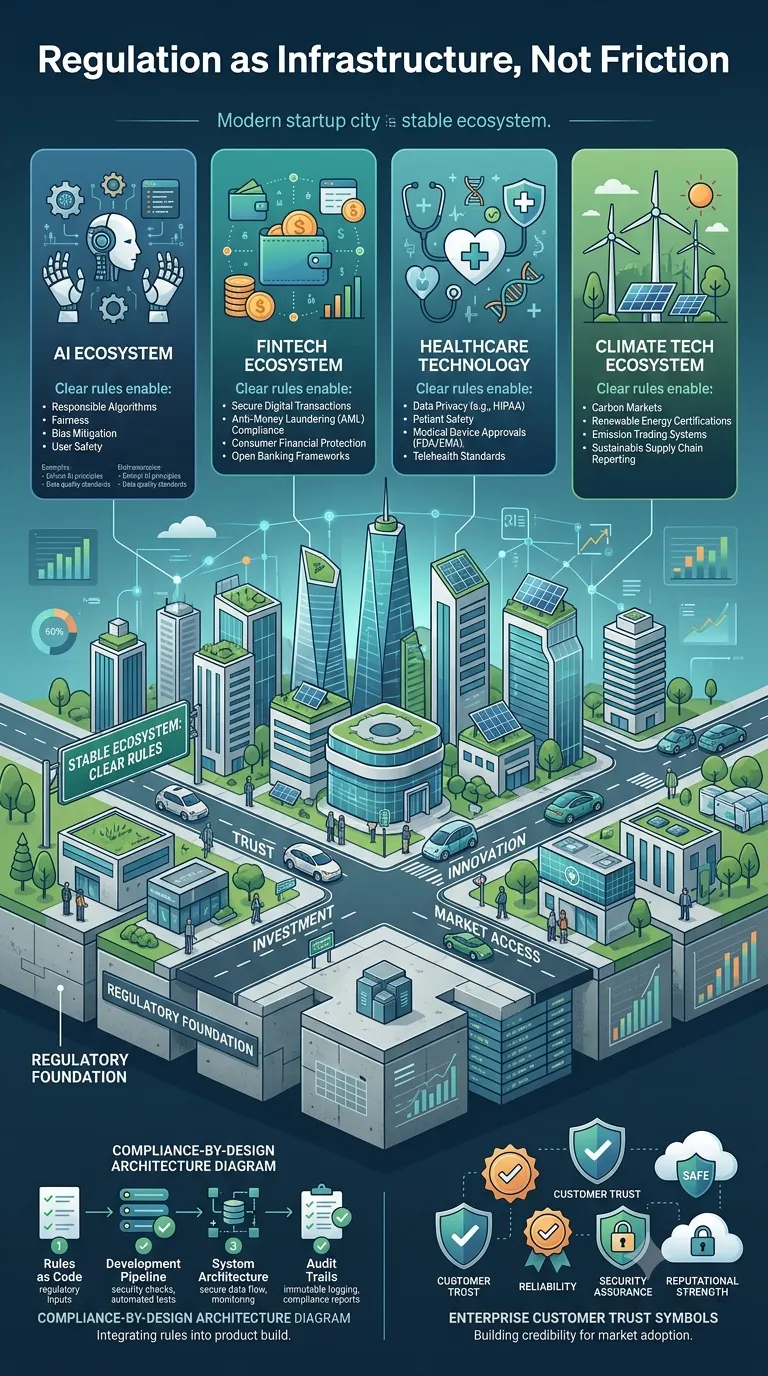
The traditional perspective of regulation as a "hurdle" to be routed around is being superseded by a model where regulation serves as "infrastructure". This paradigm shift posits that clear, well-defined rules do not stifle innovation; rather, they eliminate guesswork and provide a stable platform for long-term strategic planning. When laws clearly define the boundaries of permissible activity, startups can innovate with heightened confidence, secure in the knowledge that their business model will not be upended by sudden shifts in the legal landscape. This clarity is a direct catalyst for investor confidence, as it significantly mitigates the uncertainty that typically plagues high-growth ventures in emerging sectors such as Fintech and AI.
Startups that embrace compliance as a strategic asset rather than a burden can differentiate themselves as ethical leaders. In an era characterized by frequent data breaches and concerns regarding algorithmic bias, the ability to signal that a firm meets or exceeds the industry’s strictest regulatory standards is a powerful differentiator. This adherence acts as a proxy for integrity, helping to win over skeptical enterprise customers, such as banks or healthcare providers, who cannot afford the reputational or legal risks of partnering with non-compliant vendors. By building "compliant-by-design" products, startups unlock access to market segments—such as government agencies or global financial institutions—that are strictly off-limits to less rigorous competitors.
Moreover, regulatory frameworks often create entirely new ecosystems for services. Environmental regulations, open banking APIs, and carbon credit markets function as public infrastructure upon which new businesses can build revenue. The emergence of sectors like Climate-Tech and Fintech is inextricably linked to the regulatory mandates that require carbon disclosures or standardized financial data exchange. In these instances, the regulation is not merely a rulebook but the very market mechanism that allows for monetization and impact. Startups agile enough to integrate these rules early surge ahead while slower competitors struggle with the complexities of retroactive compliance.
The Strategic Utility of Regulatory Infrastructure
The benefits of treating regulation as infrastructure extend beyond mere legal adherence. It fosters a consistent legal environment, which is essential for startups aiming to plan several years ahead without the fear of sudden rule changes. Markets with well-defined rules, such as the European Union’s fintech and AI guidelines, offer a level of stability that gives both investors and customers peace of mind. Furthermore, being "compliant by design" allows startups to serve customer segments that others cannot, functioning as a launchpad into regions or sectors where compliance is non-negotiable.
The Economics of Compliance: The "Compliance Premium" and Investor Dynamics
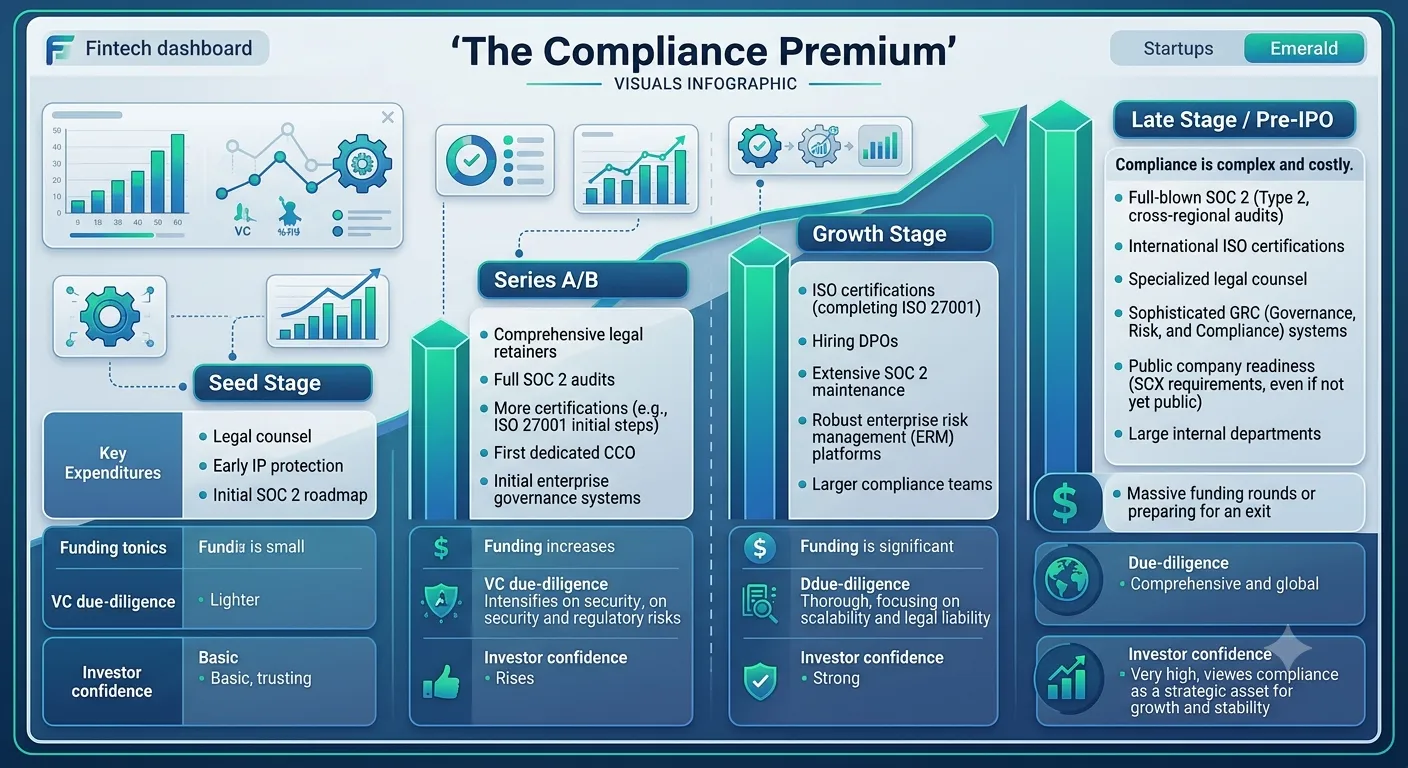
The relationship between startups and venture capital (VC) is increasingly governed by the "compliance premium." This term describes the additional cost, time, and scrutiny that founders must navigate to secure funding in a highly regulated environment. Investors no longer view regulatory preparedness as a secondary issue or a late-stage chore; it is now a core determinant of valuation and a critical filter used to separate promising startups from potential regulatory liabilities. A startup that demonstrates "regulatory readiness" signals maturity and foresight, whereas one with significant blind spots in its compliance framework risks losing credibility before it even reaches the growth stage.
The financial burden of this premium is quantifiable and varies significantly by the funding stage of the company. Seed-stage founders now face 15–20% higher legal expenses even before generating revenue, simply to meet the baseline requirements for operation. As a company progresses to Series A and B, annual compliance expenses can range from $200,000 to $500,000, covering audits, data protection impact assessments (DPIAs), and risk management frameworks. At the growth stage, scaling companies typically require dedicated compliance officers, which adds another $150,000 to $300,000 to the annual burn rate, plus the cost of additional support staff.
Beyond direct financial costs, the compliance premium manifests in extended due diligence timelines. Funding rounds in 2026 are expected to take 30–45 days longer as investors bring in third-party legal and technical experts to audit a startup’s governance and data handling systems. Consequently, founders are increasingly advised to reserve 10–20% of their total raise specifically for compliance-related expenditures. This shift necessitates more conservative financial modeling and a deeper understanding of the regulatory landscape from the outset of the venture’s lifecycle.
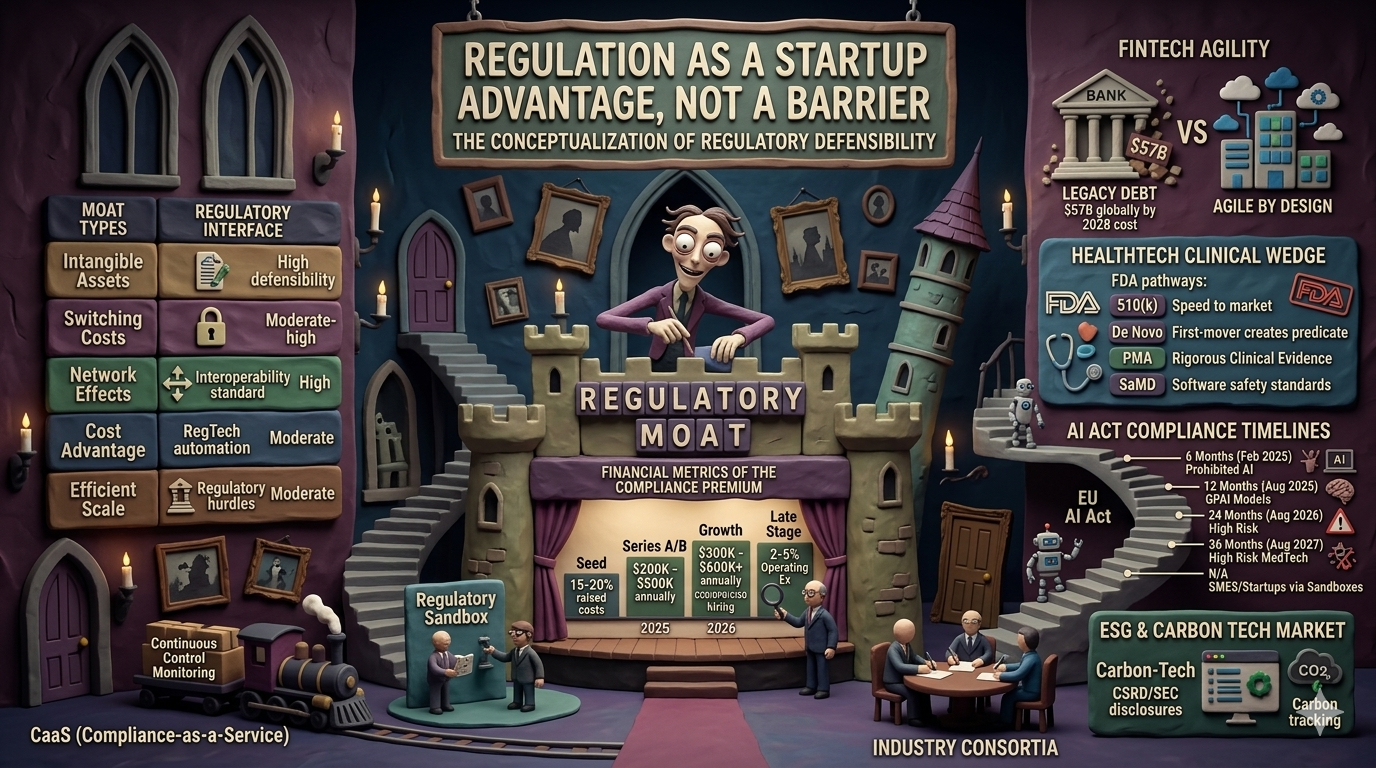
Financial Metrics of the Compliance Premium (2025-2026 Projections)
Funding Stage | Est. Compliance Spend | Primary Resource Allocation | VC Diligence Focus Area |
Seed | 15–20% of raising costs | Baseline IP, Data Privacy & Legal Counsel | Regulatory Path Viability |
Series A/B | $200K – $500K annually | Audits, SOC 2/ISO certifications, DPIAs | Scalability of Controls |
Growth | $300K – $600K+ annually | CCO, DPO, CISO & Multi-geo compliance | Enterprise Readiness |
Late Stage | 2–5% of Operating Ex. | Continuous monitoring & Enterprise GRC | Global Regulatory Harmony |
Fintech: Dismantling Monoliths through Regulatory Agility
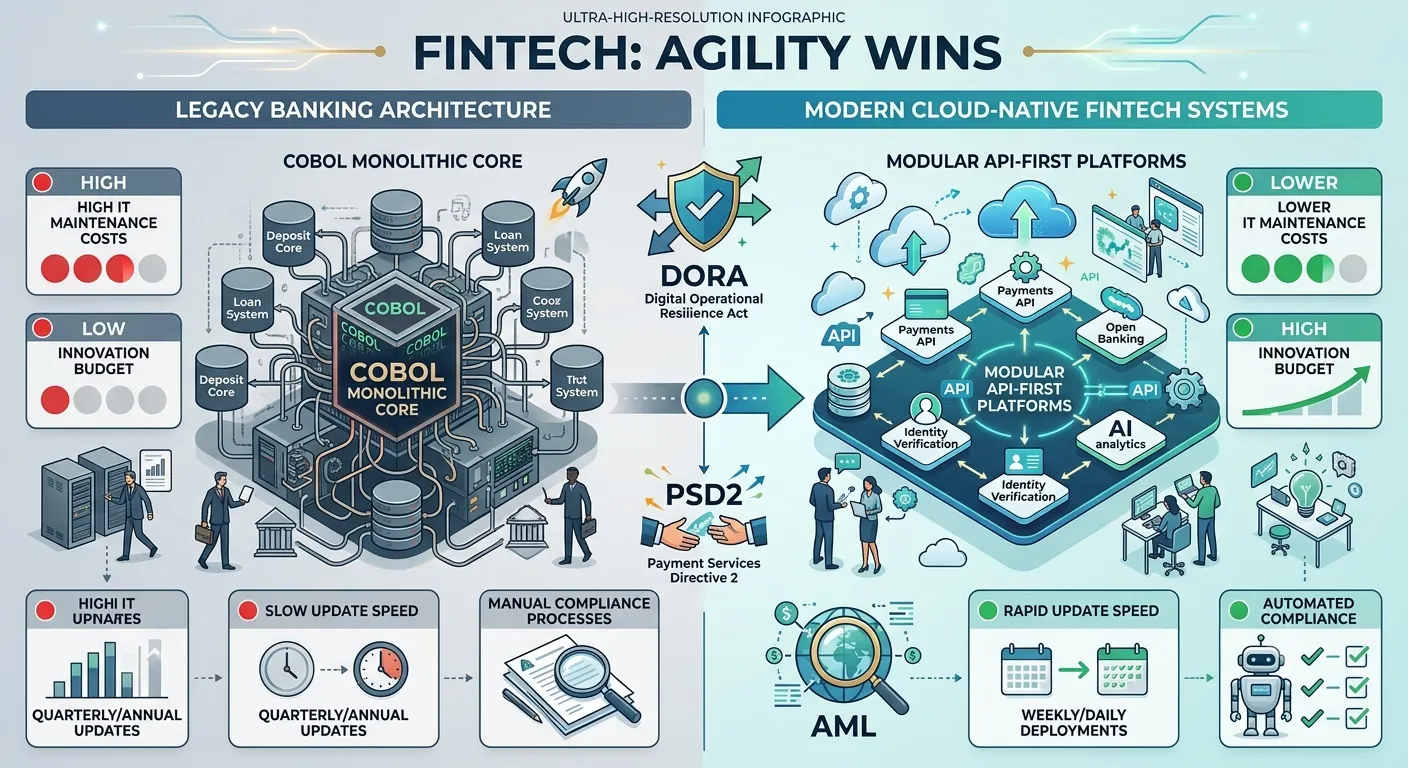
The financial technology (Fintech) sector serves as the preeminent example of how regulatory agility can be used to disrupt incumbent institutions. Traditional banks are burdened by "legacy debt"—decades-old, monolithic IT infrastructures that were often built in the 1980s and 1990s using programming languages like COBOL. These systems are not only prohibitively expensive to maintain, consuming up to 70% of a bank's total IT budget, but are also inherently rigid, making it extremely difficult for incumbents to integrate modern technologies or respond quickly to new regulatory requirements. By 2028, the failure to modernize is estimated to cost traditional banks over $57 billion in missed revenue and operational inefficiencies.
Fintech startups, by contrast, are "born digital" and "agile by design". They utilize modular, cloud-native architectures that allow for the rapid deployment of new features and the embedding of compliance directly into the product’s core code. This "compliance-by-design" approach enables Fintechs to offer superior customer experiences, such as real-time transaction processing and personalized financial insights, which legacy systems struggle to deliver. Furthermore, new regulatory frameworks like the European Union's Digital Operational Resilience Act (DORA) impose strict operational resilience standards that firms with fragile legacy cores will find increasingly difficult and costly to meet, further widening the gap between agile challengers and stagnant incumbents.
However, the narrative is not one of simple replacement but of a "great convergence." Incumbents are attempting to deconstruct their monoliths into modular, API-first architectures to "leapfrog" their legacy constraints. Simultaneously, early Fintechs are discovering that they are not immune to their own form of legacy debt; many built their platforms by stitching together disparate third-party services that have accumulated technical debt over time. The winners in the 2026 landscape will be those who can maintain a modern, resilient architecture while navigating the same complex regulatory landscape that traditionally protected the "Too Big To Fail" banks.
Financial Impact of Legacy vs. Modern Banking Architectures
Performance Metric | 2-Star (Legacy) Architecture | 4-Star (Modern) Architecture |
Update Velocity | 40% slower than market average | 30% faster than market average |
IT Budget on Innovation | < 30% (70% on maintenance) | > 50% |
Projected Cost of Failure | $57B globally by 2028 | N/A (Competitive Advantage) |
Missed Revenue (Payments) | 42% potential loss | Market Capture Opportunity |
Annual Maintenance Cost | ~€2.25M additional per system | Optimized through automation |
Healthtech: Clinical Evidence as a Competitive Wedge
In the Healthtech and MedTech space, the regulatory process is not merely a safety requirement but a vital component of a startup’s technical defensibility. Investors in 2026 prioritize companies that present a believable regulatory plan tied to specific FDA pathways, such as the 510(k), De Novo classification, or Premarket Approval (PMA). A startup’s ability to map its technical roadmap to these regulatory milestones is viewed as a primary indicator of commercial viability and market maturity.
The 510(k) premarket notification is the most common route for moderate-risk devices (Class II), requiring the firm to demonstrate that its product is "substantially equivalent" to a "predicate device" already on the market. For novel devices with no predicate but low-to-moderate risk, the De Novo pathway allows the FDA to establish new special controls and a new classification. High-risk or life-sustaining innovations require the PMA process, which involves extensive clinical trials and is the most rigorous regulatory hurdle. Strategic startups use these pathways to create moats: for instance, obtaining a De Novo authorization for a first-of-its-kind AI diagnostic tool essentially creates a new product class, making the original startup the reference point for all future competitors.
Furthermore, the convergence of Fintech and Healthtech is creating new efficiencies in the healthcare ecosystem. The integration of mobile payment systems, blockchain technology, and crowdfunding platforms into healthcare settings is improving operational efficiency and patient outcomes. Blockchain, in particular, is being leveraged to mitigate billing inaccuracies, reduce financial fraud, and ensure the secure recording of sensitive medical transactions. By adopting these technologies early and aligning them with regulatory expectations for data security and transparency, Healthtech startups build a formidable moat that protects them from both traditional incumbents and less technically rigorous challengers.
FDA Regulatory Pathways and Moat Potential
Pathway | Device Risk Profile | Regulatory Requirement | Strategic Moat Logic |
510(k) | Class II (Moderate) | Substantial Equivalence to Predicate | Speed to market; leverages existing classes |
De Novo | Novel (Low-Moderate) | Establishes new "special controls" | First-mover creates the predicate for rivals |
PMA | Class III (High) | Rigorous Clinical Evidence & Approval | Extremely high entry barrier; clinical dominance |
SaMD | Software specific | Adherence to IEC 62304 & security | Defensibility through software safety standards |
Artificial Intelligence: Navigating the EU AI Act
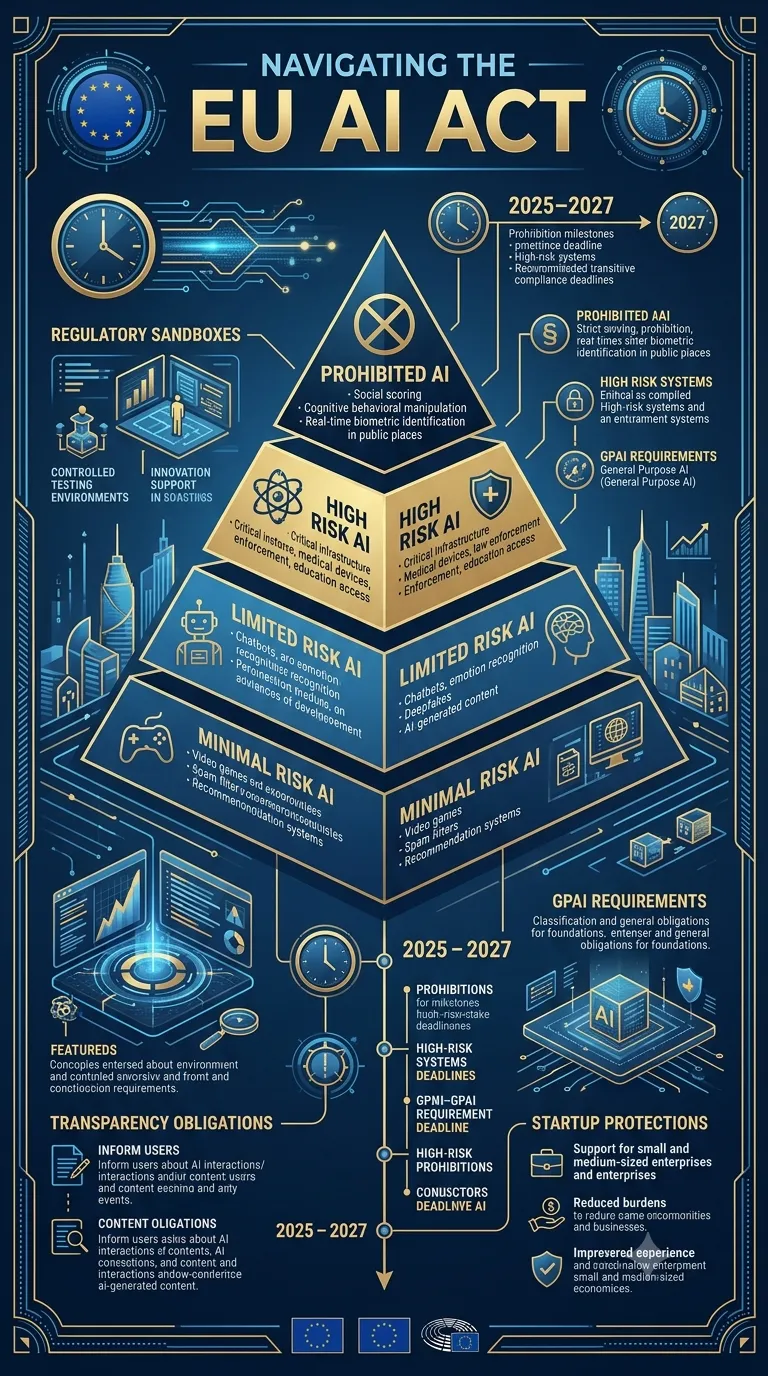
The European Union's AI Act represents the first comprehensive legal framework for artificial intelligence, establishing a risk-based classification system that profoundly impacts startup strategy. AI systems are categorized into four levels of risk: Unacceptable (which are banned), High, Limited, and Minimal. For startups, the majority of the regulatory burden falls on the developers of "high-risk" systems—those used in critical infrastructures, recruitment, credit scoring, or essential public services. These providers must implement a robust risk management system, ensure high-quality training datasets that are representative and free of errors, and maintain exhaustive technical documentation.
A critical component of the AI Act is its focus on General Purpose AI (GPAI) models. These models, which can perform a wide range of tasks, are subject to transparency requirements, including the disclosure of AI-generated content and the publication of summaries of copyrighted data used for training. While these requirements are stringent, the Act offers a "presumption of conformity" for companies that adhere to the finalized Code of Practice. This creates a strong incentive for startups to align with these standards early, as deviating from the established Code may introduce significant regulatory uncertainty and place the entire burden of proof for compliance on the company.
To mitigate these pressures, the Act mandates that all EU Member States establish at least one "regulatory sandbox". These sandboxes provide a controlled environment where SMEs and startups can test innovative AI systems under the guidance of regulators before they are placed on the market. Participation is free for SMEs, and startups receive priority access. Crucially, if a startup follows its sandbox plan in good faith, it is protected from administrative fines during the testing phase, although it remains liable for any third-party damages. This framework allows startups to build and validate their products in close collaboration with the ultimate arbiter of their legality, effectively turning the regulatory process into an R&D partnership.
AI Act Compliance Timelines and Risk Categories
Risk Level / Entity | Examples | Key Deadline for Compliance | Core Obligations |
Prohibited AI | Social scoring, manipulative AI | 6 Months (Feb 2025) | Full Ban in the EU market |
GPAI Models | LLMs, Image generators | 12 Months (Aug 2025) | Transparency & copyright disclosure |
High Risk (Annex III) | Recruitment, Credit, Education | 24 Months (Aug 2026) | Risk mgmt, data governance, audits |
High Risk (Annex I) | MedTech, Aviation, Autos | 36 Months (Aug 2027) | Detailed conformity assessment |
SMEs/Startups | All categories | N/A (Priority Access) | Regulatory Sandboxes & reduced fees |
The ESG Catalyst: Monetizing Global Mandates
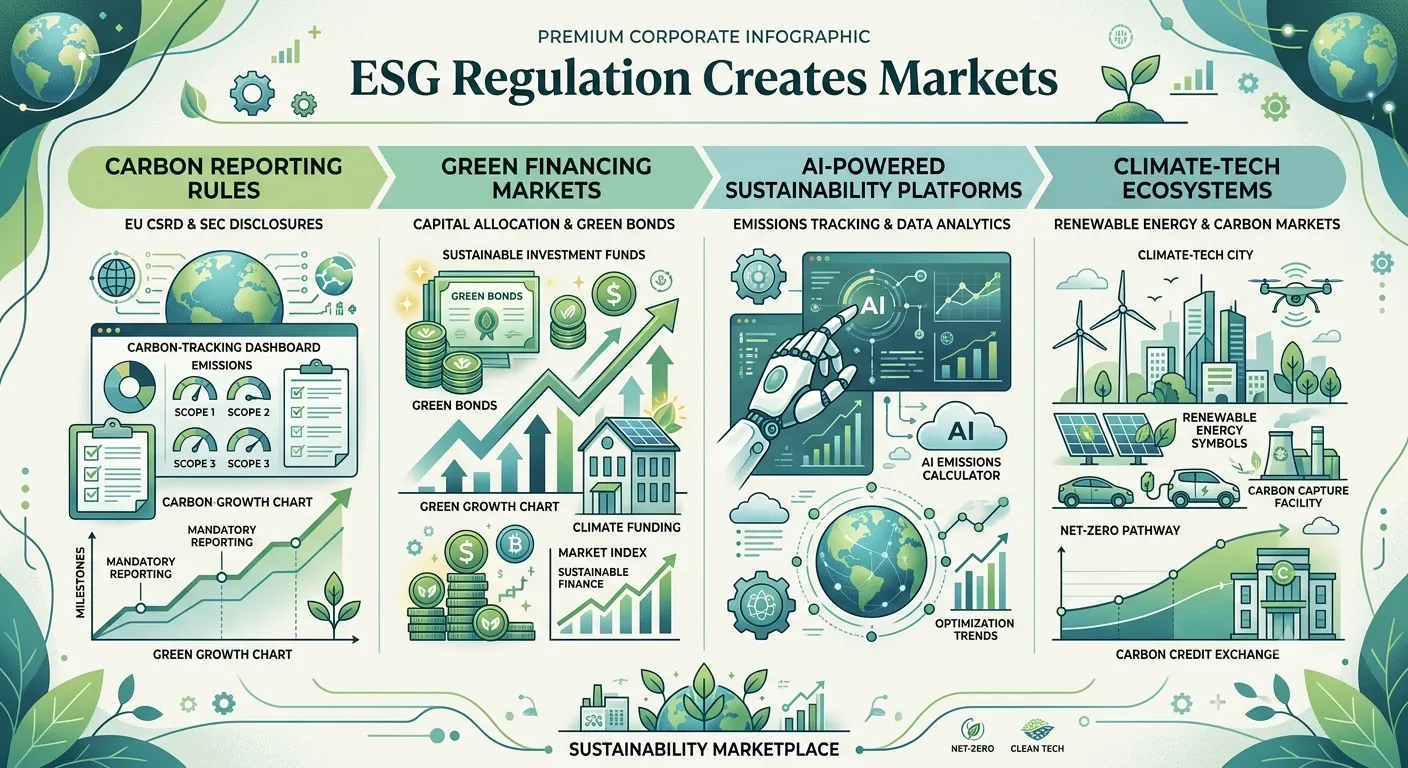
In the Environmental, Social, and Governance (ESG) sector, regulation is not a constraint but the primary driver of market demand. Increasing regulatory pressure, such as the EU’s Corporate Sustainability Reporting Directive (CSRD) and evolving SEC disclosure requirements in the US, is forcing organizations to adopt sophisticated software for carbon tracking and environmental impact reporting. This has created a massive market for "Carbon-Tech" startups like Watershed and Persefoni, which provide the digital infrastructure necessary for large corporations to comply with these non-discretionary legal mandates.
These platforms solve the fundamental challenge of data fragmentation by unifying environmental data from disparate finance, operations, and supply chain systems into a single source of truth. In doing so, they transform sustainability from a reactive "late-stage chore" into a proactive strategic priority. For many enterprises, ESG compliance is now a prerequisite for attracting institutional capital and maintaining a competitive advantage in a global market that is increasingly prioritizing decarbonization. The expansion of carbon markets and green financing mechanisms is further accelerating this transition, making sustainability a core business imperative rather than just a compliance goal.
The convergence of AI and sustainability software further enhances this value proposition. Predictive AI is being integrated into climate-aligned investment platforms and risk modeling tools, providing real-time climate risk scoring and automated carbon reduction strategies. For the startup, the strategic advantage lies in the "demand-side" nature of the regulation: by mandating that corporations report on their Scope 1, 2, and 3 emissions, governments have effectively mandated the purchase of the very software these startups produce. The result is a highly scalable SaaS model where regulation serves as the ultimate sales catalyst.
Key Drivers in the ESG and Carbon Tech Market
Accelerating Decarbonization Mandates: Governments setting net-zero deadlines are driving the transition from reactive reporting to proactive climate strategy.
Data Fragmentation as an Opportunity: Startups that can unify data from disparate systems—finance, operations, and supply chain—into a single platform capture the highest value.
AI as a Decarbonization Catalyst: Predictive modeling and real-time analytics are transforming static ESG reports into actionable intelligence.
Policy Alignment (IRA & EU Green Deal): Startups in regions benefiting from these massive subsidies and mandates see significantly higher investor interest and faster scaling.
Scalable SaaS Models: Investors prioritize software-first solutions that can be implemented quickly and require less upfront capital than hardware-heavy climate tech.
Compliance-as-a-Service (CaaS): The Tech-Enabled Leveling of the Playing Field
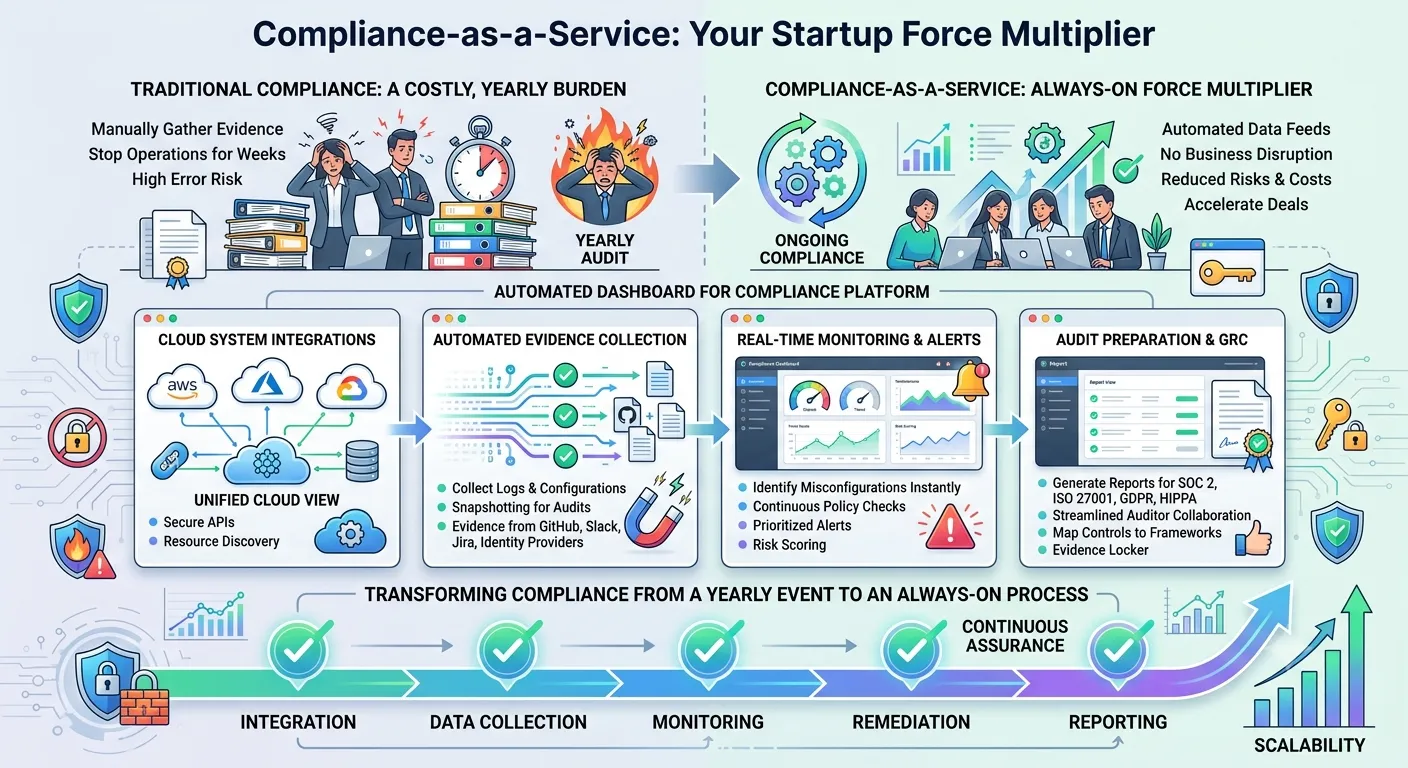
As the global regulatory landscape becomes increasingly complex and fragmented, a new category of technology has emerged to bridge the gap: Compliance-as-a-Service (CaaS), also known as Regulatory Compliance as a Service (RCaaS). These platforms automate the repetitive, manual tasks associated with compliance—such as evidence collection, continuous control monitoring, and audit preparation—allowing startups to achieve and maintain stringent certifications like SOC 2, ISO 27001, and HIPAA with significantly less manual effort. For a lean startup, CaaS functions as a "lifeline," providing access to the level of expertise and technological sophistication usually reserved for large corporations, at a predictable and affordable subscription cost.
Leading platforms in this space, such as Vanta, Drata, and Secureframe, integrate directly into a startup’s tech stack (e.g., AWS, GCP, GitHub, Okta) to automatically gather evidence and check security controls continuously. These tools run hourly or daily tests to ensure that critical controls—such as encryption, access restrictions, and password policies—remain effective. If a control falls out of alignment, the platform alerts the team, enabling them to remediate the issue before it leads to a security incident or a failed audit. This "continuous control monitoring" (CCM) shifts compliance from a point-in-time audit event to an always-on operational standard.
Furthermore, these platforms streamline the interaction between startups and auditors through features like "Audit Hubs" or centralized evidence repositories. By providing auditors with a organized, real-time view of the company’s compliance status, CaaS solutions can reduce audit preparation time by over 80%, allowing founders to focus their engineering resources on product innovation rather than documentation. In the highly competitive world of enterprise sales, the ability to quickly and confidently demonstrate trust through these reports is a critical differentiator that allows startups to win deals that would otherwise be closed to them.
Comparison of Leading Compliance Automation Platforms (2025)
Platform | Core Strategy | Automation Depth | Audit Readiness Approach | Target User Profile |
Vanta | Simplicity & speed to value | 1,200+ tests; Hourly monitoring | Bundled auditor relationships | Early-stage; First-time seekers |
Drata | Precision & advanced CCM | Daily tests; adaptive logic-based tests | Real-time Audit Hub collaboration | Technical teams; Scaling firms |
Secureframe | White-glove service & guidance | 35+ frameworks; deep integrations | Guided support & partner network | Mature GRC functions; Complex needs |
Sprinto | Integrated Risk & Infosec | 99% automation in evidence collection | Stress-free, automated reports | Startups with complex multi-compliance |
Laika | Budget-friendly AI Copilot | Lightweight automation; task checklists | Wrapped package of audit support | Pre-seed or seed-stage startups |
The Institutional Interface: Sandboxes and Cooperative Regulation
Regulatory sandboxes have emerged as a critical instrument for balancing the need for innovation with the necessity of public safety. These oversight frameworks allow organizations to experiment with emerging technologies—such as blockchain, generative AI, and autonomous vehicles—in a controlled environment under the supervision of a regulatory body. For the regulator, sandboxes provide firsthand exposure to technological developments, building institutional capacity and informing the creation of more adaptive, forward-looking regulations. For the startup, sandboxes reduce legal uncertainty and time to market, allowing them to position themselves as forerunners in their respective sectors.
The empirical evidence of sandbox effectiveness is compelling. In the United Kingdom, startups that participated in the Financial Conduct Authority’s (FCA) sandbox saw 6.6 times higher fintech investment and a 40% increase in the speed of market authorization compared to those that did not. In Brazil, the use of a sandbox approach enabled the rapid iteration and deployment of the "Pix" payment system, which has since transformed the country's financial landscape by reducing costs and enhancing inclusion. These "decision accelerator labs" allow public agencies to test and refine policy ideas based on real-world data, reducing the risk of implementing rigid or outdated rules.
Furthermore, a proactive approach to regulatory engagement is becoming a strategic necessity for founders. Rather than treating regulation as something to "route around," savvy entrepreneurs engage with regulators early and often, sharing their plans and risks transparently. This cooperative relationship transforms regulation into a credibility signal that can accelerate distribution with investors and partners. By adopting a "safety-by-design" posture—anticipating misuse cases, data abuse, and second-order effects before they are forced by a regulator—startups create a more sustainable and resilient business model that is better prepared for the inevitable intersection with formal oversight at scale.
Outcomes of Proactive Regulatory Engagement
Engagement Mode | Mechanism | Benefit for Startup | Benefit for Regulator |
Regulatory Sandbox | Controlled testing with real data | Reduced legal risk; faster market entry | First-hand tech exposure; data-driven policy |
Tech Sprints | Hackathon-style problem solving | Direct access to supervisory tooling | Collaborative learning environment |
Safety-by-Design | Preemptive risk mitigation in code | Higher trust from enterprise buyers | Proactive risk mitigation |
Consortia Participation | Standards-setting collaboration | Influence on industry-wide rules | Unified stakeholder alignment |
Standard Setting and the Power of Industry Consortia
Startups that participate in industry standard-setting consortia—such as the Bluetooth Special Interest Group, the Wi-Fi Alliance, or the Internet Engineering Task Force (IETF)—gain a unique strategic advantage by influencing the technical rules that govern their entire sector. These collaborations allow competitors to come together to tackle shared technical challenges, drive innovation, and establish the specifications that promote interoperability. For the startup, being part of the group that writes the rules is a powerful form of market positioning that ensures their own technology is at the center of the industry’s future roadmap.
The economic impact of this participation is measurable. Research on venture-funded startups in the networking and data communications sectors reveals that those participating in open standards communities like the IETF have a significantly greater likelihood of achieving an IPO or an acquisition. This "liquidity boost" is driven by several factors: the endorsement of the startup’s technology by the broader community, the credibility gained through collaboration with established industry leaders, and the ability to steer the standard in a direction that aligns with the startup’s own patent portfolio.
Moreover, standards consortia serve as a mechanism for reducing the cost of development by eliminating wasteful R&D duplication. By settling conflicts of interest upfront and coordinating standard-related research, these alliances streamline the development process and accelerate the market adoption of new technologies. For a startup, this means their solutions can be built on a foundation of recognized industry norms, making them more readily accepted by potential users and reducing the friction of entering new markets. In an era where innovation cycles are accelerating, the ability to leverage the collective strength of a consortium is often the "missing piece" that allows a small player to achieve widespread adoption and market leadership.
Strategic Impacts of Standards Consortia Participation
Influence on Industry Direction: Startups gain a seat at the table where industry-wide specifications and best practices are drafted.
Enhanced Liquidity Events: Community endorsement increases the probability of high-valuation IPOs or acquisitions.
Market Credibility and Reach: The combined strength of a consortium adds legitimacy to a startup’s technology, widening its customer base through established networks.
Reduced R&D Waste: Collaborative problem-solving and shared resources allow for more ambitious projects and faster innovation cycles.
Interoperability and Ecosystem Lock-in: By ensuring that their technology aligns with (or defines) the standard, startups make it easier for partners to integrate their solutions, creating a natural network effect moat.
Conclusion: Orchestrating Regulation as a Competitive Advantage
The evidence synthesized across the Fintech, Healthtech, AI, and ESG sectors suggests that the next generation of industry leaders will be defined by their ability to orchestrate regulation as a strategic asset. The shift from a reactive, compliance-as-a-chore mindset to a proactive, regulation-as-infrastructure philosophy is a fundamental differentiator in the current venture ecosystem. While regulation can indeed be a barrier for those who ignore it until it becomes mandatory, for the agile and strategic startup, it serves as a powerful "regulatory moat" that protects market share, enhances investor trust, and accelerates enterprise adoption.
The emergence of the "compliance premium" in venture capital highlights that regulatory readiness is no longer optional; it is a core determinant of valuation. However, the rise of Compliance-as-a-Service platforms and the institutionalization of regulatory sandboxes have provided startups with the tools and frameworks necessary to clear these hurdles more efficiently than ever before. Simultaneously, the profound "legacy debt" of incumbent institutions creates a unique window of opportunity for startups to use their regulatory agility to dismantle traditional monopolies. Ultimately, the startups that thrive in 2026 and beyond will be those that integrate "safety-by-design" into their core product, engage transparently with regulators, and actively participate in shaping the global standards that will govern the future of the digital economy.
Want to calculate the equity for your cofounder?
Nail your cap table before you sign. Whether you're splitting equity with a co-founder or planning your next funding round, our Equity Calculator gives you precision in seconds
Equity calculator →