Geopolitics Is Now a Startup Risk Factor
March 11, 2026 by Harshit Gupta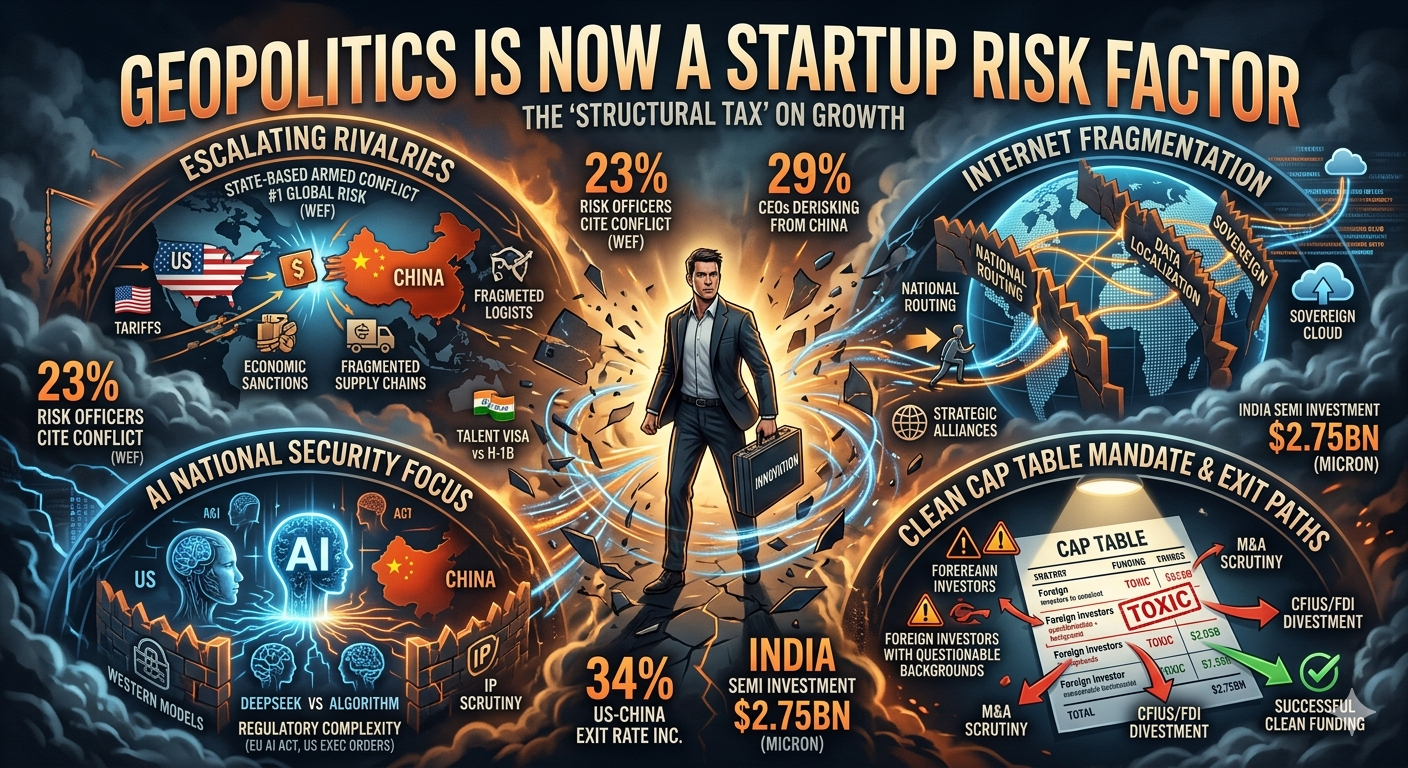
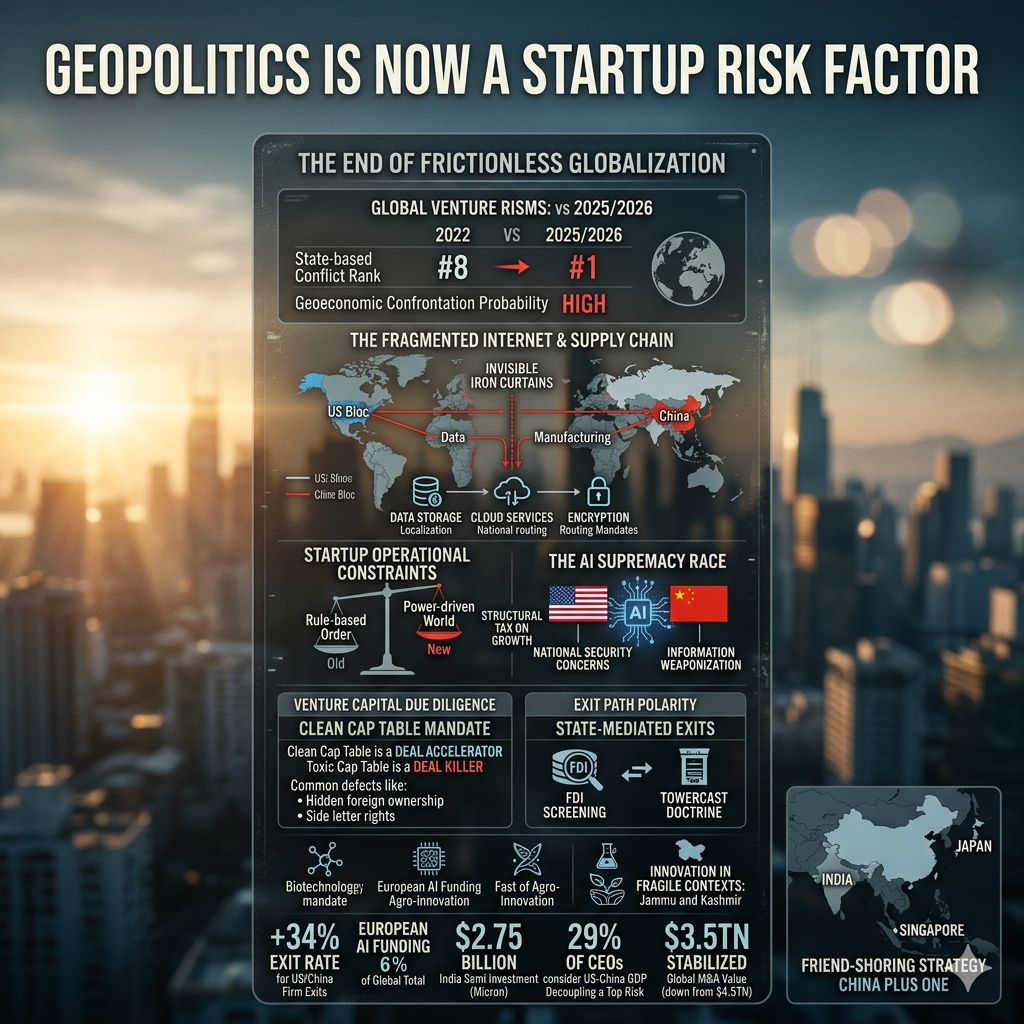
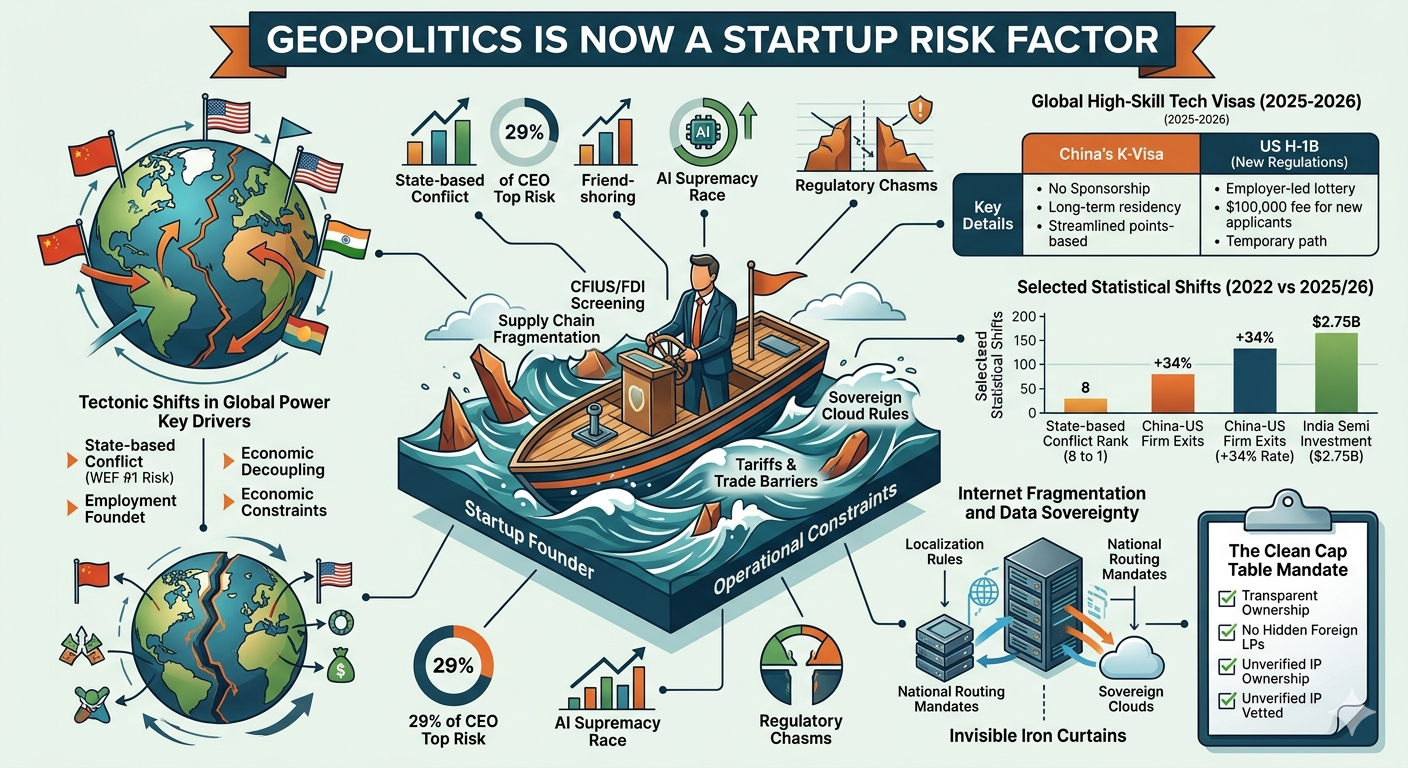
The historical period defined by frictionless globalization and the relative neutrality of technological infrastructure has concluded, replaced by an era where geopolitical risk is a primary determinant of startup success or failure. In 2025 and 2026, the landscape of global venture capital and entrepreneurship is being reshaped by tectonic shifts in power, economic centers, and trade alliances. For the modern startup founder and investor, the macro-environment is no longer a background variable but a central operational constraint that influences everything from cap table composition to the physical location of server infrastructure. The transition from a rules-based order to a fragmented, power-driven world has introduced a "structural tax" on growth, forcing companies to navigate a patchwork of legally connected but politically incompatible networks.
The Macro-Geopolitical Landscape and Emerging Threats (2025-2027)
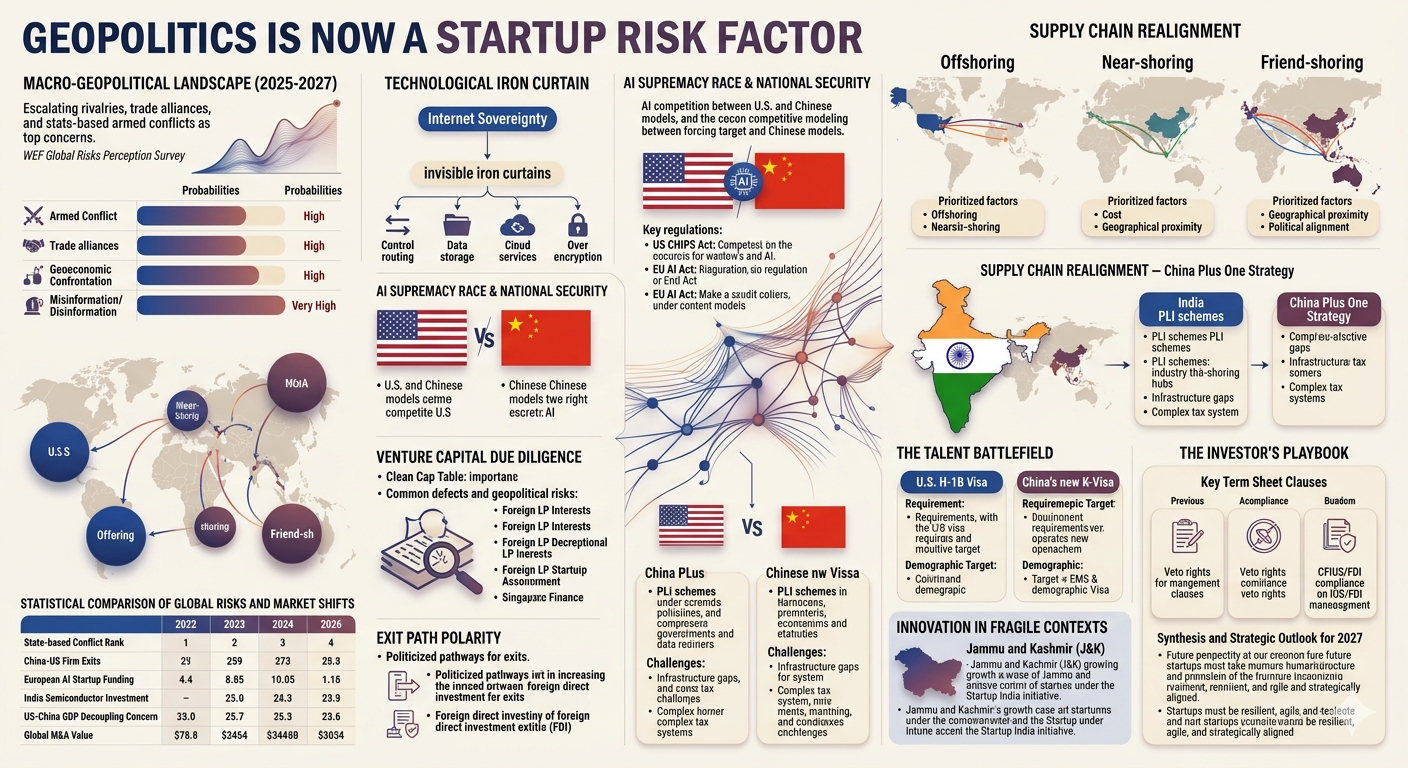
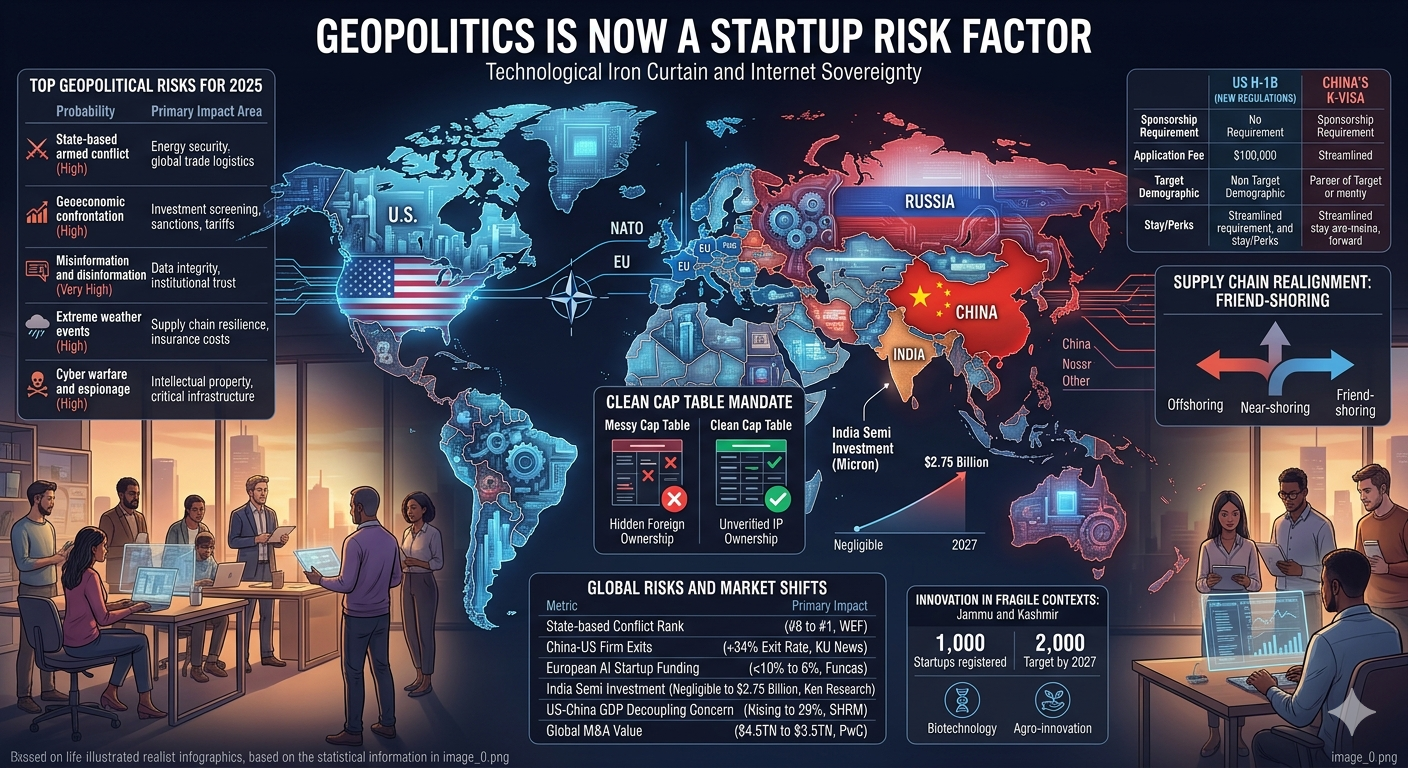
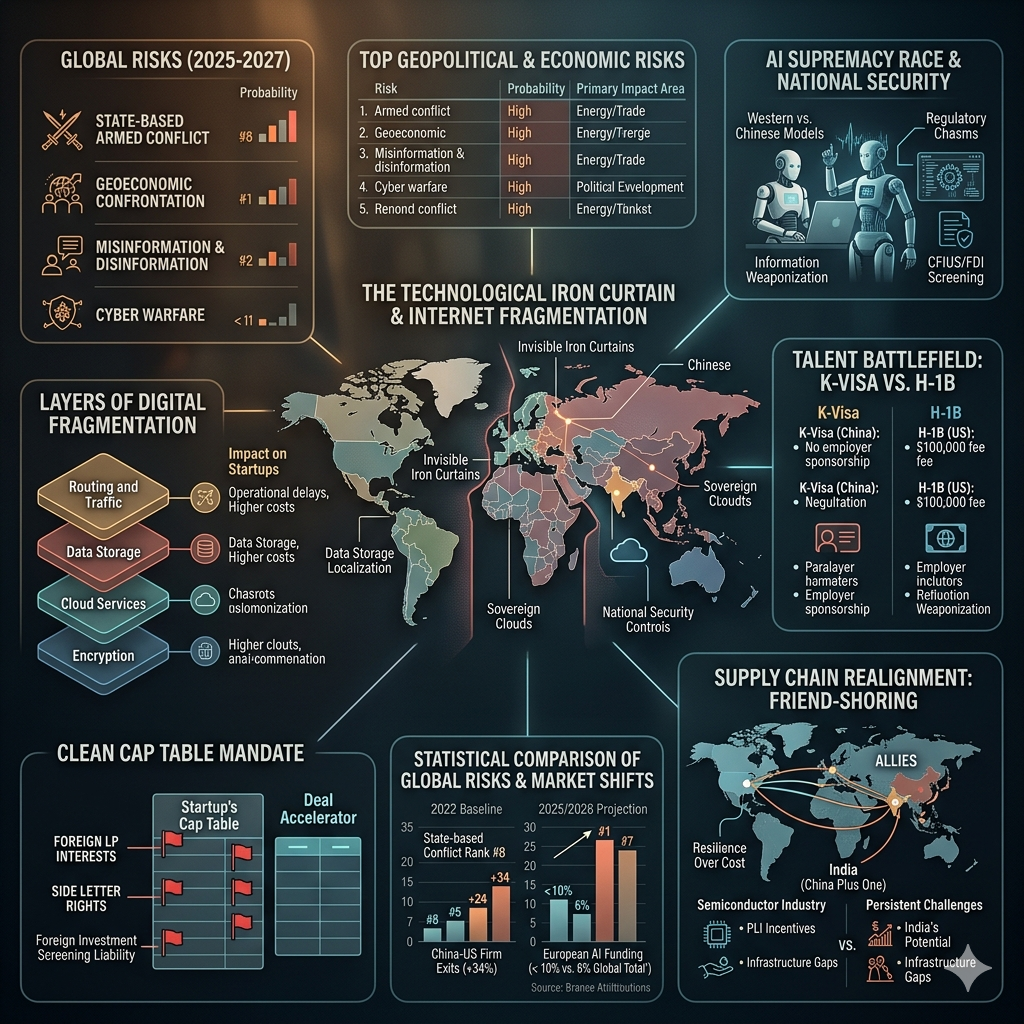
The current geopolitical climate is characterized by escalating international rivalries and a marked decline in cooperation between the world’s major economic powers, particularly the United States and China. According to the World Economic Forum's Global Risks Perception Survey 2024-2025, geopolitical risks have ascended to the top of the immediate concern list for global risk officers. Close to one-quarter (23%) of survey respondents identified state-based armed conflict—including proxy wars, civil wars, and terrorism—as the top risk for 2025, representing a significant jump from its eighth-place ranking the previous year. These conflicts, notably the ongoing wars in Ukraine, the Middle East, and Sudan, create persistent instability that disrupts global trade and complicates long-term corporate strategy.
This instability is not expected to be a short-term phenomenon. Analysts project that geopolitical and social instability will remain among the top three global risks through at least 2027. The implications for businesses are multifaceted, encompassing uncertainty over international partnerships, the potential for retaliatory trade policies, and the fragmentation of global supply chains. As the U.S. and China battle for economic dominance, startups are increasingly caught in a crossfire of tariffs, trade restrictions, and cybersecurity crackdowns.
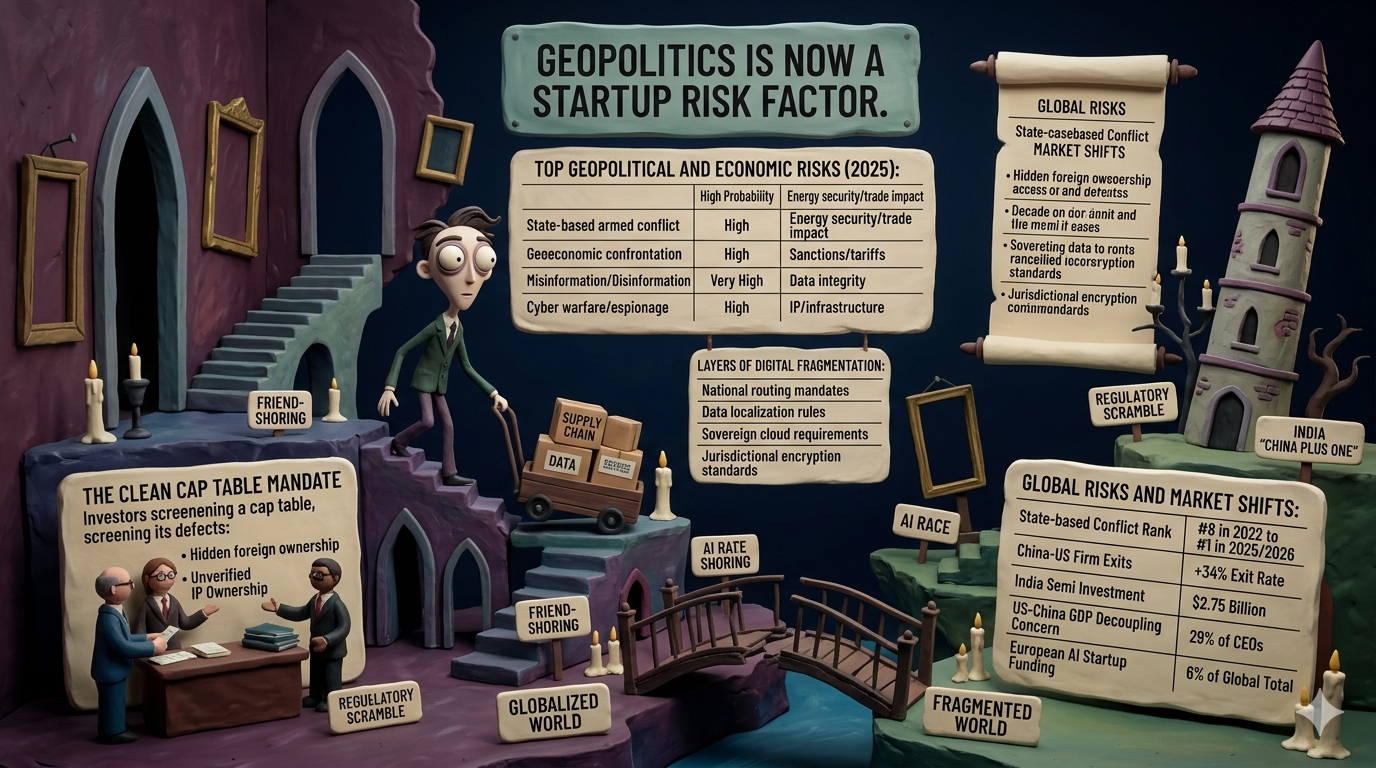
Top Geopolitical and Economic Risks for 2025 | Probability | Primary Impact Area |
State-based armed conflict | High | Energy security, global trade logistics |
Geoeconomic confrontation | High | Investment screening, sanctions, tariffs |
Misinformation and disinformation | Very High | Data integrity, institutional trust |
Extreme weather events | High | Supply chain resilience, insurance costs |
Cyber warfare and espionage | High | Intellectual property, critical infrastructure |
The rise of nationalism and protectionism has led to a fundamental reassessment of globalization’s benefits. While businesses remain interested in cross-border engagement, the anti-globalization movement poses a substantial threat to international relations and economic growth. This environment forces startups to rethink their sourcing strategies and production locations, as nearly 29% of CEOs now rank decoupling or derisking from China as a top economic risk to their operations.
The Technological Iron Curtain and Internet Fragmentation
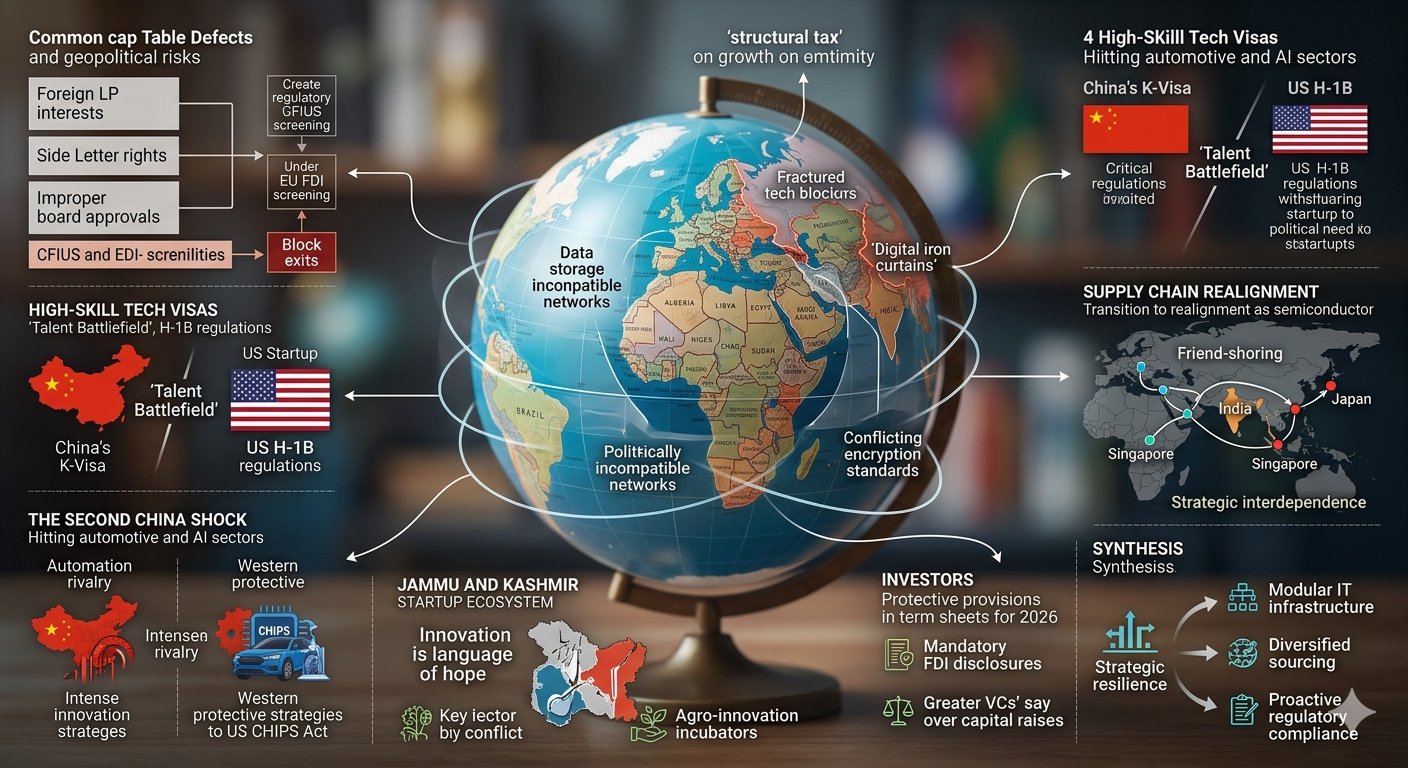
The vision of a borderless digital world has given way to the reality of "internet sovereignty," where the internet is treated as a strategic national infrastructure equivalent to energy grids or maritime ports. This shift is not merely technological but political, reflecting the desire of nations to control data movement, content, and routing within their jurisdictions. For global startups, this fragmentation manifests as a series of "invisible iron curtains" that dictate where data can live, how it crosses borders, and which technology providers are permitted in specific markets.
Infrastructure teams must now address these physical and legal constraints upfront, as decisions once driven by cost or performance are now dictated by local rules that change frequently. This environment imposes a structural tax on growth; instead of selecting the most efficient or innovative technology, companies are often forced to choose what is legally permitted within a particular political bloc.
Layers of Digital Fragmentation | Mechanism of Control | Impact on Startups |
Routing and Traffic | National routing mandates | Operational delays, loss of network efficiency |
Data Storage | Localization rules | Higher infrastructure costs, complex data logic |
Cloud Services | Sovereign cloud requirements | Restricted vendor choice, increased compliance burden |
Encryption | Jurisdictional standards | Global product inconsistency, security vulnerabilities |
To mitigate these risks, startups are advised to build modular, adaptable IT infrastructures that separate data, logic, and infrastructure. By using loosely connected components, teams can adjust regional deployments without breaking the entire global system. Furthermore, startups must move away from over-centralization; relying on a single cloud vendor or geographic region creates a significant vulnerability in an era where alliances can shift rapidly.
The AI Supremacy Race and National Security
Artificial intelligence has transitioned from a commercial opportunity to a matter of national security and global influence. The "AI race" is seen as providing economic advantages and a strategic edge in global competition. The emergence of cost-efficient AI models from Chinese startups, such as DeepSeek, has sparked intense concern among Western policymakers regarding the continued dominance of U.S. models. This competition is creating distinct technological blocs around the U.S. and China, potentially jeopardizing international cooperation on safety standards and regulatory harmonization.
As governments ramp up investment in AI, the potential for information weaponization grows. Misinformation and disinformation, amplified by AI capabilities, are expected to become more widespread and harder to detect, topping the two-year outlook for global risks. Startups in the AI sector must navigate a complex regulatory landscape where rules regarding transparency, bias, and data usage vary wildly between the EU, the U.S., and China. In the U.S., executive orders have targeted global AI dominance, while the EU's AI Act seeks to establish a framework that prioritizes human rights and safety.
The "second China shock" is hitting high-value sectors like automotive and AI, where rapid innovation and state-backed investment from China are challenging established Western firms. In response, Western nations are implementing strategies to safeguard their technological advantages, including the U.S. CHIPS Act and increased scrutiny of intellectual property theft. Startups caught in this rivalry must be prepared for the possibility that their technology partners or suppliers may be restricted due to national security concerns.
Venture Capital Due Diligence and the Clean Cap Table Mandate
In the current geopolitical environment, capital is no longer neutral. Foreign investment screening regimes, such as CFIUS in the U.S. and the updated EU FDI Regulation, have turned the cap table into a strategic liability or asset. A "clean cap table"—defined by transparent ownership and the absence of unknown or undocumented foreign interests—is now a "deal accelerator," while a messy or "toxic" cap table can be a "deal killer".
VC firms in 2025 and 2026 are conducting more rigorous vetting of startups' geopolitical exposure. This includes scrutinizing not only the founders and employees but also the limited partners (LPs) in the funds that invest in them. For deep-tech startups in sectors like semiconductors, quantum computing, and sensitive personal data, identifying risks related to cap table composition is critical early in the lifecycle.
Common Cap Table Defects and Geopolitical Risks | Primary Driver | Potential Consequence |
Improper Board Approvals | Missing formal consents | Invalidated stock issuances, legal disputes |
Misclassified Advisors | Unsigned IP assignments | IP ownership disputes, security vulnerabilities |
Foreign LP Interests | Hidden foreign ownership | CFIUS/FDI screening delays, blocked exits |
Side Letter Rights | Non-standard veto rights | Triggering "control" status under national security laws |
Unverified IP Ownership | Founders retaining core tech | Inability to scale or secure later-stage funding |
The financial health of a startup is now inextricably linked to its legal and regulatory compliance. Diligence checklists have expanded to include cybersecurity audits, data governance reviews, and assessments of whether a startup’s numbers are realistic given the potential for geopolitical disruption. VCs are looking for "execution signals" that show a team can navigate these complexities, prioritizing founder credibility and team cohesion over product strength alone.
Exit Path Polarity: Divestment, FDI, and the Towercast Doctrine
The pathways to a successful exit for startups have become state-mediated and increasingly politicized. M&A deals that once required only standard antitrust review are now subject to intense scrutiny from foreign direct investment (FDI) screening bodies. In the EU, 2025 was a landmark year as mandatory FDI screening mechanisms were implemented across all member states, with a focus on "hyper-critical technologies" such as AI, quantum, and semiconductors.
The U.S. has shown a willingness to unwind deals years after closing. For example, CFIUS ordered the Chinese-controlled Suirui Group to divest its acquisition of the tech firm Jupiter five years after the transaction was finalized, subsequently suing the firm for failing to meet the divestment deadline. Such cases highlight the "tail risk" associated with foreign ownership in sensitive sectors, where the requirement to destroy or divest source code and IP developed under foreign ownership can effectively dismantle a company's value.
Furthermore, regulators are exploring "call-in" powers that allow them to review transactions even when the target does not meet traditional revenue thresholds. This "Towercast doctrine" approach allows authorities to pursue ex post scrutiny of non-notifiable mergers if they perceive risks of "killer acquisitions" in sectors with strong network effects or data-driven business models. For dealmakers, this means transaction planning must account for a wider range of strategic effects beyond simple market share metrics.
Supply Chain Realignment: Friend-shoring and the Semiconductor Power Shift
The COVID-19 pandemic and subsequent geopolitical shocks exposed the vulnerabilities of over-reliance on single-source production hubs, leading to the rise of "friend-shoring" or "ally-shoring". This strategy involves the deliberate relocation of manufacturing and sourcing to geopolitical allies, prioritizing trust, reliability, and shared regulatory standards over the lowest cost. This movement represents a seismic rebalancing from "efficiency at all costs" to "stability at any cost".
Friend-shoring vs. Near-shoring vs. Offshoring | Priority | Primary Risk Mitigated |
Offshoring | Lowest cost, efficiency | High operating expenses |
Near-shoring | Geographic proximity | Logistics costs, lead times |
Friend-shoring | Political alignment, trust | Geopolitical instability, IP theft |
The semiconductor industry is at the forefront of this reconfiguration. With advanced chips underpinning over 20% of global manufacturing, the trade of semiconductors has shifted from a supply-chain function to a national security instrument. While Taiwan remains a critical hub, countries like Japan, Singapore, and India are emerging as vital nodes in the value chain. Singapore, despite its high costs, has become a preferred hub because it minimizes geopolitical risk compared to Taiwan or Hong Kong and offers an extensive air cargo network for rapid movement of high-value goods.
The U.S. and its allies have pledged over $200 billion in semiconductor incentives between 2022 and 2025, aiming for "technological sovereignty" through the "Chip 4 Alliance". However, full autonomy is economically unattainable; the sector is instead evolving toward "strategic interdependence," where nations seek to balance sovereignty with cooperative innovation.
India's "China Plus One" Strategy and the Cost of Resilience
India has positioned itself as a primary beneficiary of the "China Plus One" strategy, leveraging its massive domestic market and government incentives like the Production Linked Incentive (PLI) schemes. By June 2023, these schemes had already yielded a production value of Rs. 3,30,612 crore. India’s strategic location and expanding middle class make it an enticing "plus one" destination for multinational companies seeking to diversify away from China.
However, the transition is not without hurdles. Startups and MNCs in India face significant infrastructure gaps, complex tax systems, and regulatory red tape. A notable example of regulatory volatility was the 28% GST rule applied to the gaming industry, which served as a reminder of the challenges in navigating India's policy framework. To succeed, companies must engage in deep localized planning and understand regional workforce dynamics.
Indian Startup Ecosystem: Sectors and Drivers | Potential Opportunities | Persistent Challenges |
Manufacturing | Large workforce, PLI incentives | Poor infrastructure, logistics costs |
Technology/IT | R&D investment, global collaboration | Skill mismatch, high competition |
Agriculture | Processing potential, global food demand | Climate change impacts, fragmented supply |
Digital Services | E-commerce, digital education | Cybersecurity laws, data localization |
Despite these challenges, India’s sheer size and its government’s commitment to business-friendly reforms have fostered a dynamic entrepreneurial ecosystem. India's ability to navigate the geopolitical landscape while prioritizing national security—evidenced by the ban on over 100 Chinese applications since 2020—demonstrates a proactive approach to managing the risks of the new global order.
The Talent Battlefield: K-Visa, H-1B, and the STEM Race
The competition for highly skilled STEM talent has become a core component of the geopolitical rivalry between the U.S. and China. As the U.S. has tightened restrictions on foreign talent—most notably through the introduction of a $100,000 fee for new H-1B visas in 2025—China has responded with the "K-Visa". This new immigration category is designed specifically for professionals in science and technology, allowing them to self-petition for residency without a pre-arranged job offer.
The K-Visa program highlights China’s ambition to become a global hub for innovation at a time when Western nations are becoming more protective. It targets "young productive forces" in AI, semiconductors, biopharma, and robotics, offering perks such as tax benefits, housing support, and streamlined procedures. However, analysts remain skeptical of China's appeal due to language barriers, internet restrictions, and a different political culture.
Comparison of High-Skill Tech Visas (2025-2026) | China's K-Visa | US H-1B (New Regulations) |
Sponsorship Requirement | No employer sponsorship needed | Employer-led, lottery-based |
Application Fee | Streamlined, points-based | $100,000 for new applicants |
Target Demographic | Young STEM talent, researchers | Highly skilled workers, majorly Indian |
Stay/Perks | Long-term residency, housing support | Temporary, complex renewal path |
The talent race is a zero-sum game in a labor market where only strong ecosystems succeed. For startups, this means that hiring is no longer just an HR function but a strategic maneuver in a global battle for human capital. Leaders are encouraged to invest in talent ecosystems rather than just pipelines, building partnerships with universities and supporting immigration reforms that unlock access to global talent.
Innovation in Fragile Contexts: The Case of Jammu and Kashmir
The startup ecosystem in Jammu and Kashmir (J&K) illustrates how entrepreneurship can survive and even thrive in regions marked by long-standing conflict and geopolitical instability. Across the valley, a generation shaped by turmoil is turning toward innovation as a "language of hope," with nearly 1,000 startups registered under the Startup India initiative by the end of 2024. The newly notified J&K Start-up Policy 2024-27 aims to double this number to 2,000 by 2027.
However, the "Valley of Death"—the phase where startups have a product-market fit but lack the capital to scale—is particularly acute in J&K. Founders struggle with a lack of risk-tolerant funding, connectivity disruptions, and regulatory friction that can stretch approval timelines to 12 months. Furthermore, there is a systemic misalignment between publicly funded research institutions and the needs of independent startups.
To address these barriers, policy recommendations include establishing sector-specific incubators for biotechnology and agro-innovation, as well as formalizing partnerships between startups and national laboratories like CSIR and ICMR. The Symbolic value of a successful startup in Kashmir is immense, representing an "act of defiance" against stereotyping and hopelessness.
The Investor's Playbook: Protective Provisions and Risk Modeling
For venture capitalists, the goal is no longer just identifying high-growth potential but conducting long-term risk management in an unpredictable environment. Geopolitics is now a "central calculation of tail risk" that cannot be diversified away. Term sheets in 2026 have evolved to include more robust protective provisions that allow investors to veto critical actions such as M&A, asset sales, or incurring debt above specific thresholds.
Key Term Sheet Clauses for Geopolitical Risk | Purpose | Strategic Value |
Veto Rights | Say over capital raises and exits | Protects against "toxic" buyers |
Anti-dilution | Adjusts conversion price in down rounds | Protects VC stake during economic shifts |
Liquidation Preference | Preference in proceed distribution | Secures returns in low-valuation exits |
Protective Provisions | Veto over charter amendments | Prevents governance shifts due to politics |
CFIUS/FDI Compliance | Mandatory disclosure of foreign LP | Avoids regulatory unwinding of deals |
Investors are increasingly using "tranching"—disbursing funds in parts linked to concrete milestones—and "use-of-proceeds covenants" to maintain spend discipline in volatile markets. For deep-tech startups crossing "regulatory chasms," these structures are essential to balance risk while keeping founders focused on execution. The traditional venture model of 18–24 months of runway is being supplemented with larger buffers to account for the slower pace of regulatory approvals.
Synthesis and Strategic Outlook for 2027
The convergence of global conflict, technological fragmentation, and state-mediated competition has made geopolitics the defining risk factor for the next generation of startups. The era of the "neutral" tech company is over; every startup is now a political entity by virtue of its supply chain, its data, and its investors. The successful startup of 2027 will not be the one that ignores geopolitics, but the one that builds resilience into its foundation through modular infrastructure, diversified sourcing, and a cap table that can survive the most rigorous national security scrutiny.
As the divisions between "friend" and "foe" grow increasingly blurred, the only certainty is uncertainty itself. For business leaders and policymakers, lasting prosperity will depend not on seeking the cheapest supplier but on building resilient partnerships capable of weathering any geopolitical storm. The future of entrepreneurship lies in the ability to innovate within the constraints of a divided world, turning the "structural tax" of geopolitics into a competitive advantage through agility and strategic alignment.
The global economy is currently undergoing a painful but necessary reorganization. While the costs of decoupling and derisking are high, they also present opportunities for new hubs like India, Southeast Asia, and Mexico to emerge as essential nodes in a more resilient, if more fragmented, global value chain. The task for the startup community is to navigate this "Age of the Customer" and "Age of the State" simultaneously, ensuring that innovation continues to bloom even as the rules of the game are rewritten by the forces of history.
Statistical Comparison of Global Risks and Market Shifts
The following table synthesizes data regarding the economic and geopolitical shifts that have occurred between 2022 and 2026, highlighting the velocity of change in the risk environment.
Metric | 2022 Baseline | 2025/2026 Projection | Primary Source |
State-based Conflict Rank | #8 | #1 | WEF |
China-US Firm Exits | Moderate | +34% Exit Rate | KU News |
European AI Startup Funding | < 10% | 6% of Global Total | Funcas |
India Semi Investment (Micron) | Negligible | $2.75 Billion | Ken Research |
US-China GDP Decoupling Concern | Rising | 29% of CEO Top Risk | SHRM |
Global M&A Value (approx.) | $4.5TN (Peak) | $3.5TN (Stabilized) | PwC |
This data underscores the reality that the "trust premium" once granted to globalized firms has evaporated. Startups must now earn that trust through transparency and a rigorous commitment to navigating the complex legal and political landscapes of the 21st century. The path forward requires a blend of technological excellence and geopolitical savvy, ensuring that the innovation of tomorrow is not sacrificed to the conflicts of today.

Read More -
1. From Idea to MVP: A Step-by-Step Guide for Solo Founder
🔗 https://findnstart.com/blogs/from-idea-to-mvp-a-step-by-step-guide-for-solo-founder
2. How to Validate Your Startup Idea in 48 Hours for $0
🔗 https://findnstart.com/blogs/how-to-validate-your-startup-idea-in-48-hours-for-0
3. Remote vs. Local: Does Your Co-Founder Need to Live in the Same City?
🔗 https://findnstart.com/blogs/remote-vs-local-does-your-co-founder-need-to-live-in-the-same-city
4. The 2026 Startup Landscape: What Has Fundamentally Changed (and Why Founder Skills Matter More Than Ever)
5. The Most In-Demand Skills for Startup Founders in 2026
🔗 https://findnstart.com/blogs/the-most-in-demand-skills-for-startup-founders-in-2026
6. How to Find a Technical Co-Founder (Without a Six-Figure Salary)
🔗 https://findnstart.com/blogs/how-to-find-a-technical-co-founder-without-a-six-figure-salary
7. 5 Red Flags to Look for When Choosing a Startup Partner
🔗 https://findnstart.com/blogs/5-red-flags-to-look-for-when-choosing-a-startup-partner
8. How to Pitch Your Idea to Potential Co-Founders
🔗 https://findnstart.com/blogs/how-to-pitch-your-idea-to-potential-co-founders
9. How to Build a Portfolio that Attracts High-Growth Startup Founders
🔗 https://findnstart.com/blogs/how-to-build-a-portfolio-that-attracts-high-growth-startup-founders
10. Equity vs. Salary: How to Split Ownership with Your First Teammate
🔗 https://findnstart.com/blogs/equity-vs-salary-how-to-split-ownership-with-your-first-teammate
11. Why Joining an Early-Stage Startup is Better Than a Corporate Job
🔗 https://findnstart.com/blogs/why-joining-an-early-stage-startup-is-better-than-a-corporate-job
12. The Future of EdTech: Why Developers and Educators Need to Team Up Now
🔗 https://findnstart.com/blogs/the-future-of-edtech-why-developers-and-educators-need-to-team-up-now
13. The Architecture of Symbiosis: Analytical Perspectives on the Five Habits of Successful Startup Duos
14. Finding a Co-Founder in the AI Space: What Skills Should You Look For?
🔗 https://findnstart.com/blogs/finding-a-co-founder-in-the-ai-space-what-skills-should-you-look-for
15. Overcoming Analysis Paralysis and the Strategic Path to Execution
🔗 https://findnstart.com/blogs/overcoming-analysis-paralysis-and-the-strategic-path-to-execution
16. From College Project to Company: How to Find Your Student Co-Founder
🔗 https://findnstart.com/blogs/from-college-project-to-company-how-to-find-your-student-co-founder
17. How to Start a Startup While Working a Full-Time Job
🔗 https://findnstart.com/blogs/how-to-start-a-startup-while-working-a-full-time-job
18. How to Build a HealthTech Startup Without a Medical Degree
🔗 https://findnstart.com/blogs/how-to-build-a-healthtech-startup-without-a-medical-degree
19. The Solitary Architect: Executive Isolation in Entrepreneurship
20. The 2026 Guide to Launching a SaaS as a Solo Developer
21. What Sustainable Growth Actually Looks Like
🔗 https://findnstart.com/blogs/what-sustainable-growth-actually-looks-like
22. The Early Warning Signs Your Startup Is in Trouble
🔗 https://findnstart.com/blogs/the-early-warning-signs-your-startup-is-in-trouble
23. How to Grow Without Burning Out
🔗 https://findnstart.com/blogs/how-to-grow-without-burning-out
24. The Truth About “Runway” Most Founders Ignore
🔗 https://findnstart.com/blogs/the-truth-about-runway-most-founders-ignore
25. Revenue Solves More Problems Than Funding
🔗 https://findnstart.com/blogs/revenue-solves-more-problems-than-funding
26. What No One Tells You About Being a Solo Founder
🔗 https://findnstart.com/blogs/what-no-one-tells-you-about-being-a-solo-founder
27. Why Smart People Quit High-Paying Jobs to Build Startups (And Why Most Regret It)
28. Why Most Startup Advice on Twitter Is Dangerous
🔗 https://findnstart.com/blogs/why-most-startup-advice-on-twitter-is-dangerous
29. Decision Fatigue: The Silent Startup Killer
🔗 https://findnstart.com/blogs/decision-fatigue-the-silent-startup-killer
30. Fear vs Logic: How Founders Actually Make Decisions
🔗 https://findnstart.com/blogs/fear-vs-logic-how-founders-actually-make-decisions
31. How Overthinking Destroys Early Momentum
🔗 https://findnstart.com/blogs/how-overthinking-destroys-early-momentum
32. Ideas Don’t Scale. Systems Do.
🔗 https://findnstart.com/blogs/ideas-dont-scale-systems-do
33. The First Hire That Actually Matters
🔗 https://findnstart.com/blogs/the-first-hire-that-actually-matters
34. How the First 100 Users Decide Your Startup’s Fate
🔗 https://findnstart.com/blogs/how-the-first-100-users-decide-your-startups-fate
35. Why Your Startup Doesn’t Need Growth — It Needs Focus
🔗 https://findnstart.com/blogs/why-your-startup-doesnt-need-growthit-needs-focus
36. Why Most Startups Die Quietly
🔗 https://findnstart.com/blogs/why-most-startups-die-quietly
37. Lessons Learned Too Late by First-Time Founders
🔗 https://findnstart.com/blogs/lessons-learned-too-late-by-first-time-founders
38. The Myth of the “Overnight Success” Startup
🔗 https://findnstart.com/blogs/the-myth-of-the-overnight-success-startup