Climate & EV Startups in Karnataka
March 8, 2026 by Harshit Gupta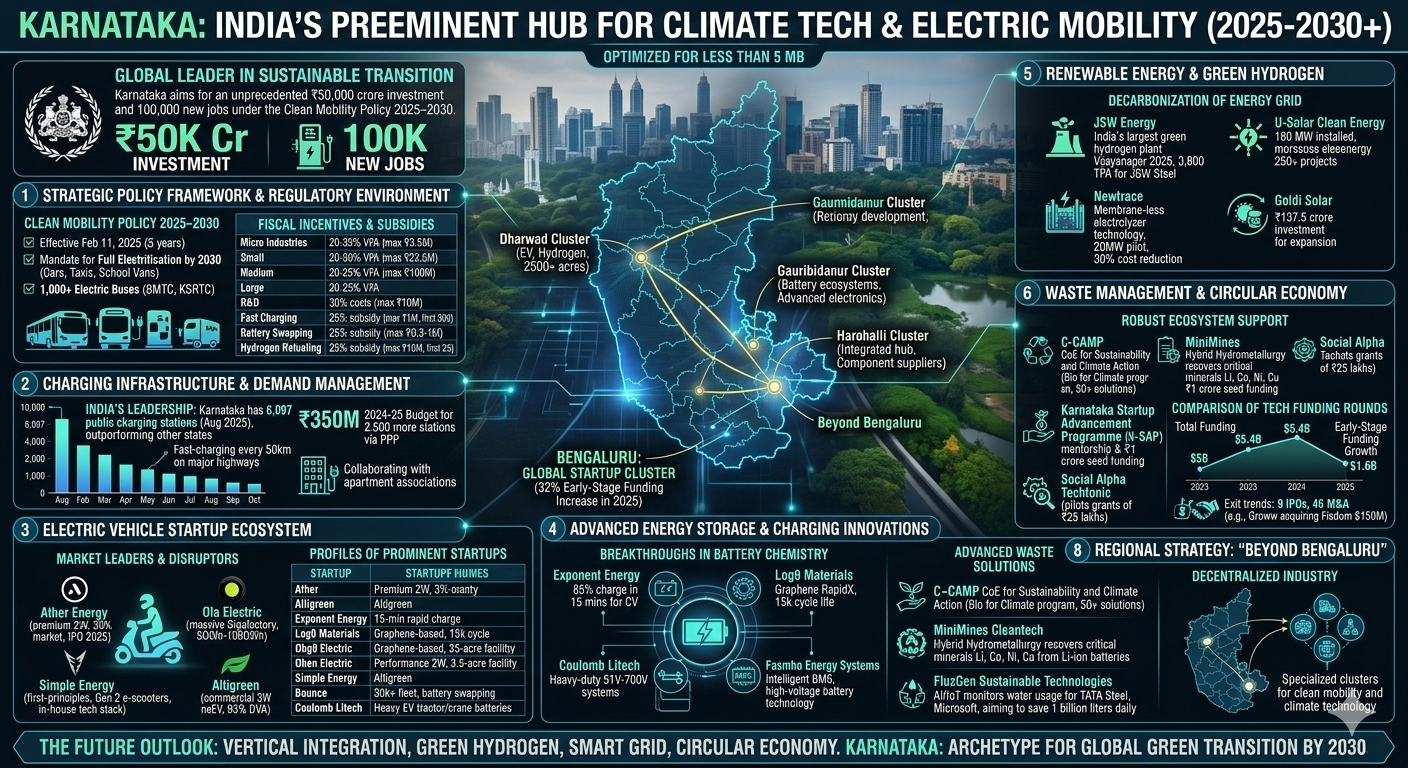
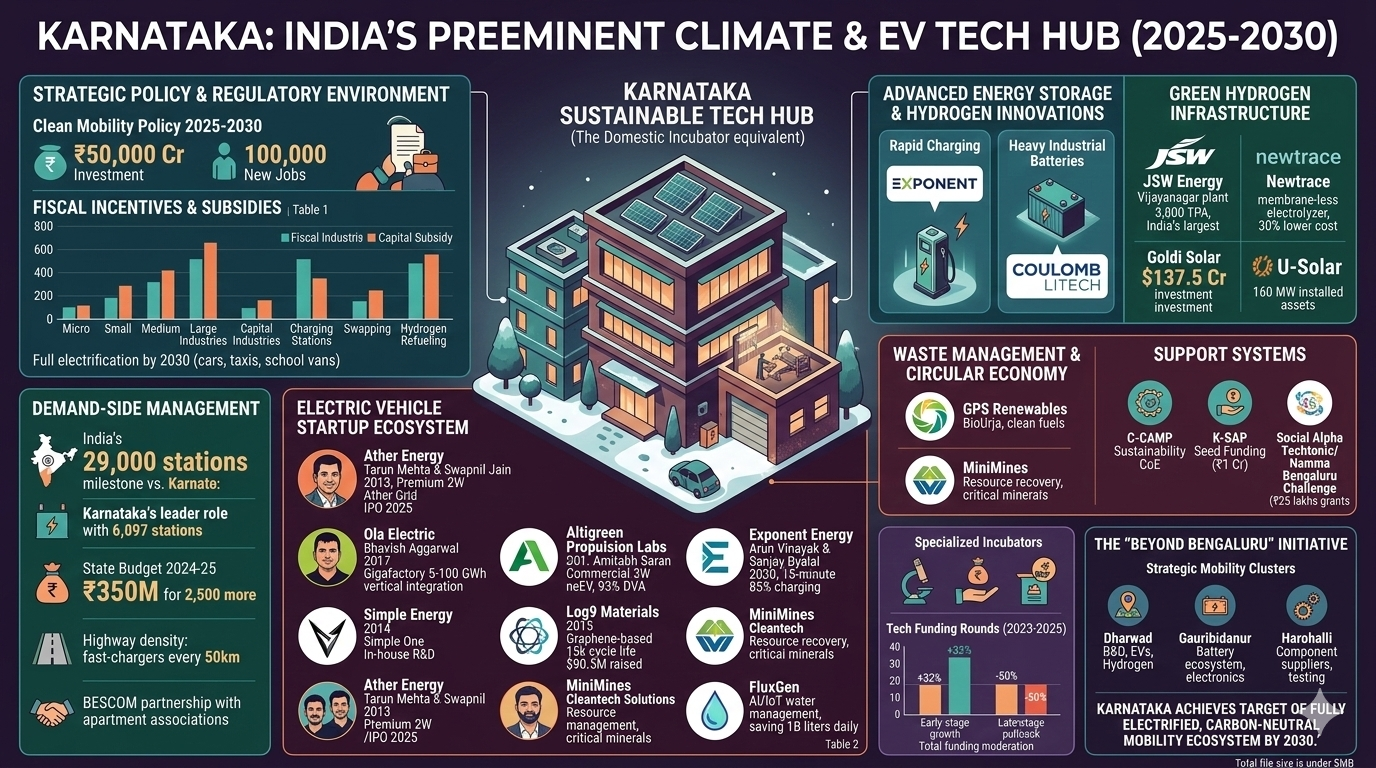
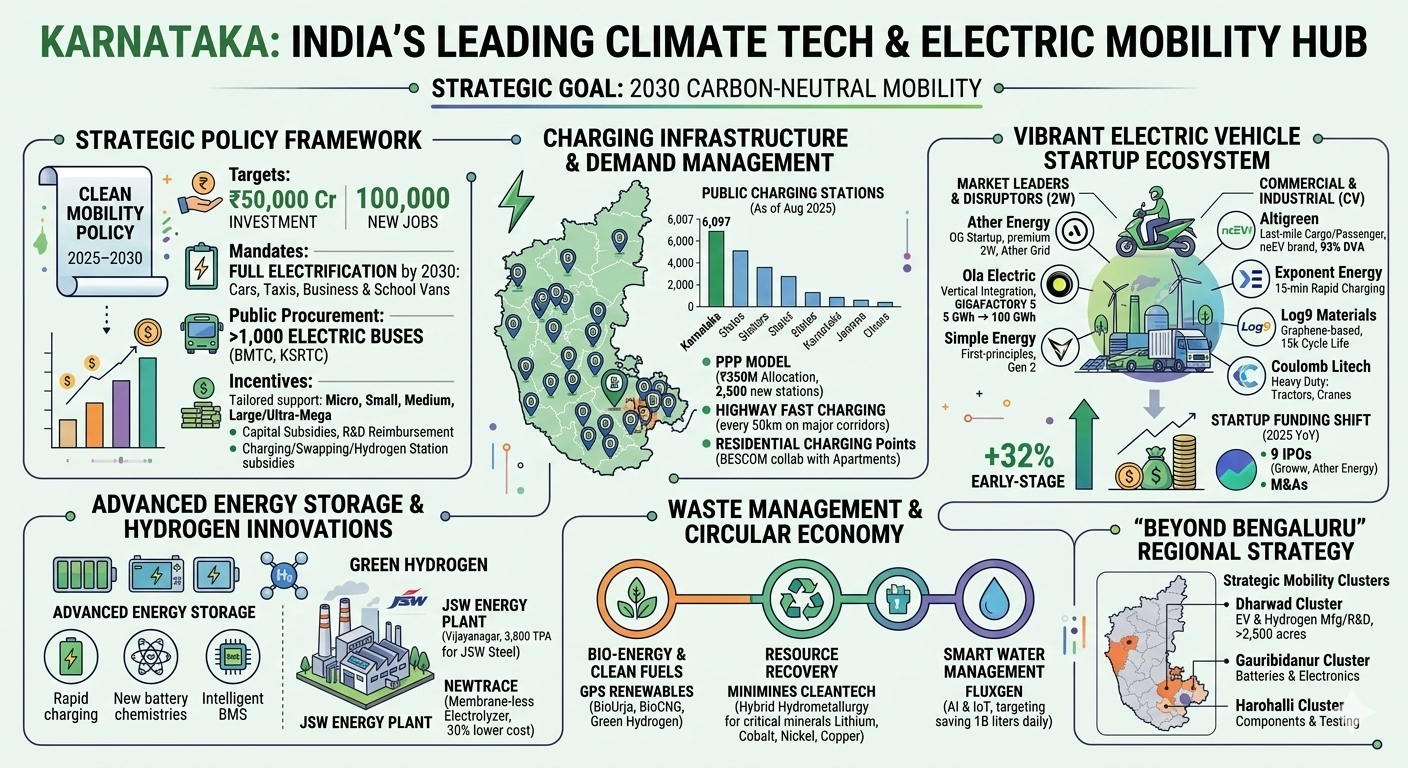
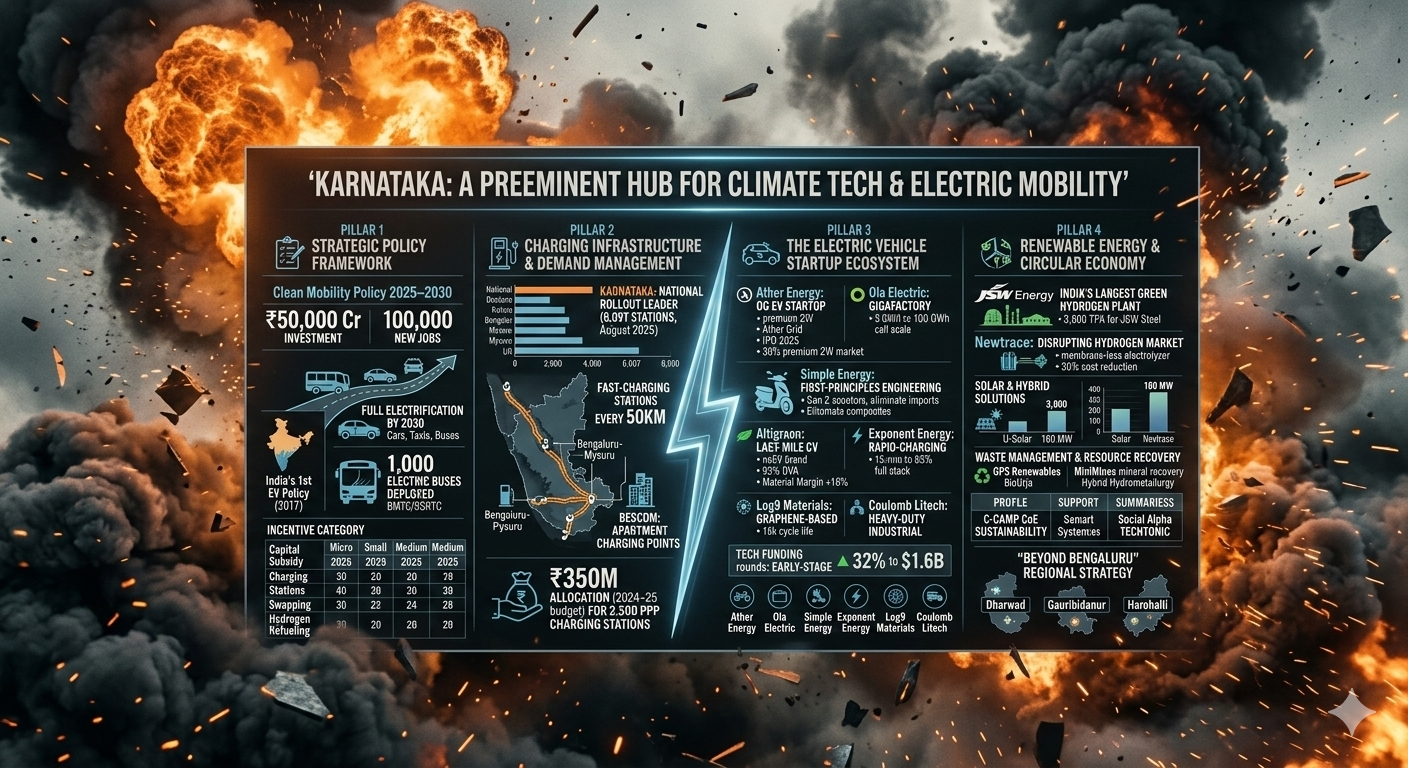
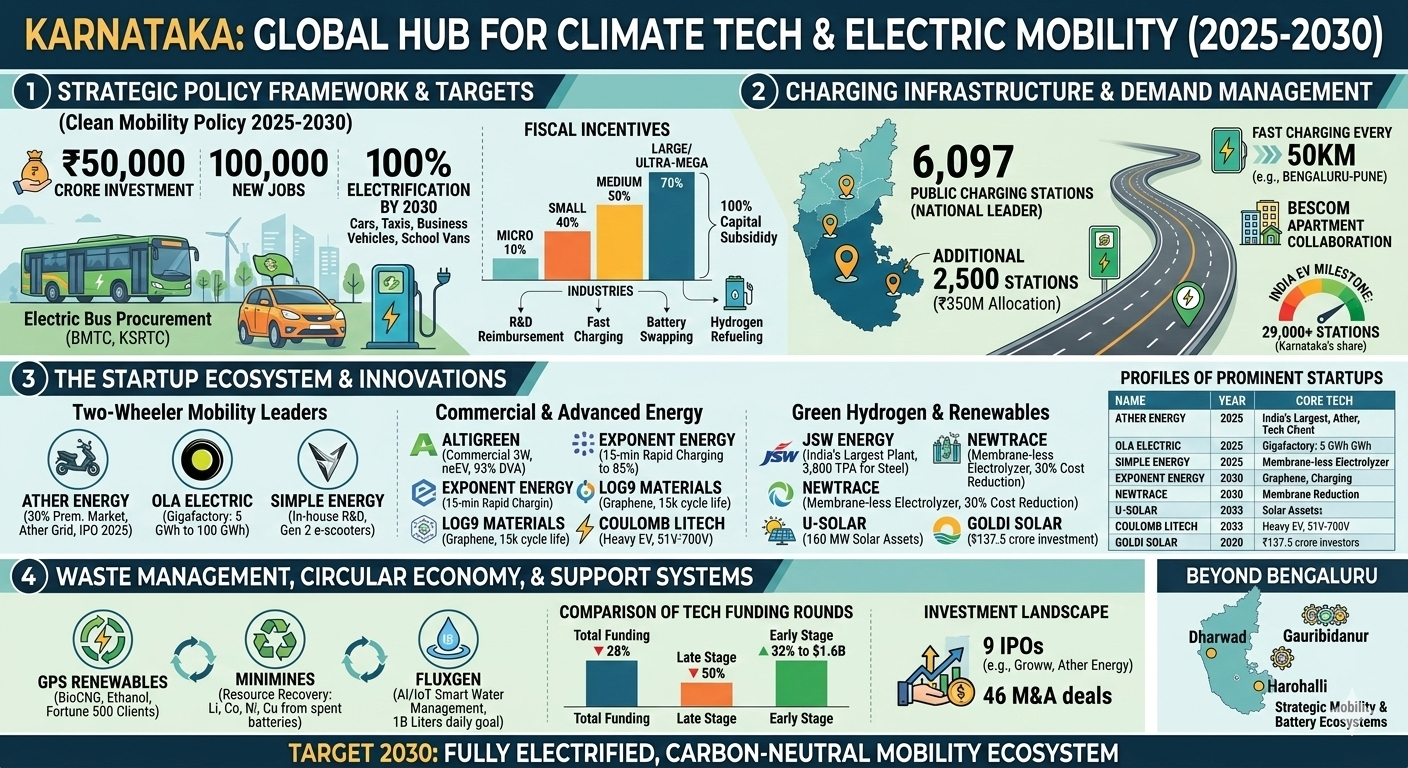
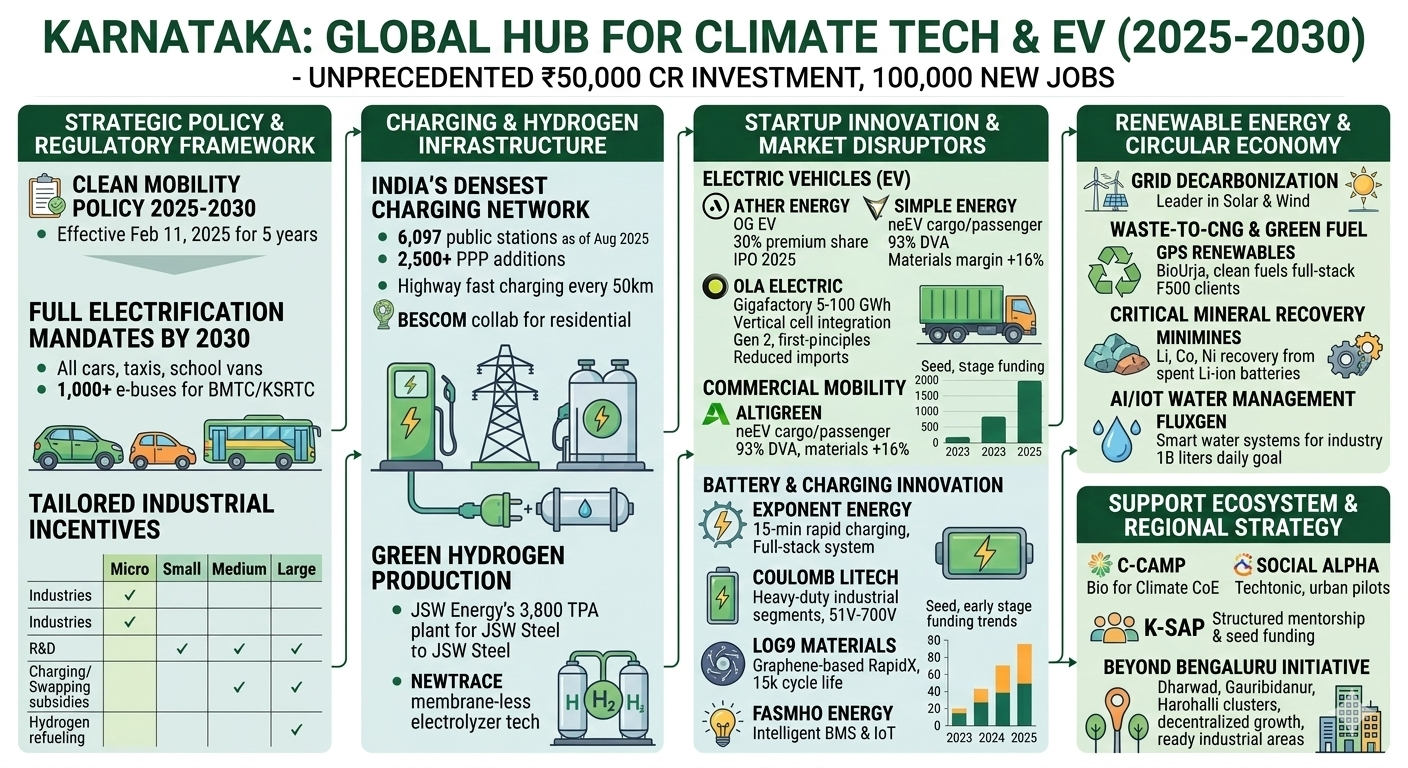
The state of Karnataka has emerged as a preeminent hub for climate technology and electric mobility within the Indian subcontinent, strategically positioning itself as a global leader in the transition toward a sustainable, low-carbon economy. This transformation is underpinned by a robust policy framework, a dense concentration of research and development institutions, and a vibrant startup ecosystem that spans the entire value chain—from mineral recovery and advanced battery chemistry to high-performance electric vehicles and green hydrogen production. As of 2025, the state’s commitment to this sector is exemplified by the introduction of the Clean Mobility Policy 2025–2030, which targets an unprecedented ₹50,000 crore in investment and the creation of 100,000 new jobs.
Strategic Policy Framework and the Regulatory Environment
The evolution of Karnataka’s regulatory landscape reflects a sophisticated understanding of the interdependencies between manufacturing, infrastructure, and consumer adoption. The state was the first in India to introduce a dedicated Electric Vehicle and Energy Storage Policy in 2017, which laid the foundational infrastructure for what has now become one of the world's most dense startup clusters.
The Clean Mobility Policy 2025–2030
The Clean Mobility Policy 2025–2030 represents a significant expansion of the state’s earlier mandates. Effective from February 11, 2025, for a period of five years, this policy moves beyond simple fiscal incentives to address systemic barriers in the clean energy transition. The policy covers the entire manufacturing value chain, including assembly, battery pack production, hydrogen fuel cells, battery recycling centers, and vehicle testing facilities.
One of the most ambitious components of this framework is the mandate for full electrification of specific transport segments. By 2030, the policy requires that all cars, taxi fleets, business vehicles, and school vans within the state be fully electrified. This is supported by a large-scale public procurement strategy, including the deployment of over 1,000 electric buses across various state transport corporations such as the BMTC and KSRTC.
To support the industrial base, the state has categorized incentives based on the scale of investment, ensuring that both micro-enterprises and ultra-mega industrial projects receive tailored support. These incentives are often backend-loaded, linked to milestones such as project completion, commencement of commercial production, and job creation.
Incentive Category | Target Beneficiary | Quantum of Support |
Capital Subsidy (VFA) | Micro Industries | 20% to 35% of Value of Fixed Assets (max ₹3.5M) |
Capital Subsidy (VFA) | Small Industries | 20% to 30% of VFA (max ₹22.5M) |
Capital Subsidy (VFA) | Medium Industries | 20% to 25% of VFA (max ₹100M) |
Large/Ultra-Mega Subsidy | Strategic Enterprises | 20% to 25% on VFA for up to 50 acres |
R&D Reimbursement | Innovative Enterprises | 30% of R&D costs (max ₹10M) |
Charging Stations | Fast Charging Units | 25% capital subsidy (max ₹1M) for first 500 units |
Battery Swapping | 2W/3W Stations | 25% subsidy (max ₹0.3M to ₹1M depending on type) |
Hydrogen Refueling | First-movers | 25% subsidy (max ₹10M) for first 25 stations |
Table 1: Fiscal Incentives and Subsidies under the Clean Mobility Policy 2025–2030.
Demand-Side Management and Charging Infrastructure
Karnataka has successfully addressed the "chicken-and-egg" dilemma of EV adoption by prioritizing the densification of charging networks. As of August 2025, India crossed the milestone of 29,000 public charging stations, with Karnataka leading the national rollout with 6,097 stations. This leadership is further bolstered by the 2024–25 state budget, which allocated ₹350 million to establish an additional 2,500 charging stations under a public-private partnership (PPP) model.
The state's infrastructure strategy is also geographically targeted. Fast-charging stations are mandated every 50 kilometers on high-traffic highways such as the Bengaluru-Pune and Bengaluru-Mysuru corridors. Furthermore, the Bangalore Electricity Supply Company (BESCOM) has been tasked with collaborating with apartment associations to install charging points in residential spaces, addressing a critical barrier for urban EV owners who lack dedicated parking infrastructure.
The Electric Vehicle Startup Ecosystem
The startup density in Bengaluru has created a competitive environment that favors high-conviction, deep-tech business models. In 2024 and 2025, the ecosystem saw a marked shift in funding patterns, with a 32% increase in early-stage funding reflecting an investor preference for fundamental technological innovation over simple capital-intensive scale.
Market Leaders and Disruptors in Two-Wheeler Mobility
Ather Energy remains the "OG EV startup" of the region, having successfully transitioned from a battery research laboratory to a major OEM. Founded by Tarun Mehta and Swapnil Jain, Ather commands approximately 30% of the premium electric two-wheeler market as of 2025. The company's success is rooted in its focus on the "Ather Grid"—an interoperable fast-charging network—and a commitment to in-house R&D that includes proprietary battery packs and vehicle software. Ather’s IPO in 2025 signaled a significant maturation of the sector, providing a liquidity pathway for early investors and setting a benchmark for other climate tech ventures.
Ola Electric, led by Bhavish Aggarwal, continues to pursue a strategy of massive industrial scale. The company’s announcement of a "Gigafactory" with a planned capacity scaling from 5 GWh to 100 GWh represents one of the world's most ambitious battery manufacturing projects. Ola's ability to vertically integrate cell manufacturing with vehicle assembly is designed to disrupt the cost structure of electric mobility in India and beyond.
Simple Energy, another Bengaluru-based innovator, has distinguished itself through "first-principles engineering," launching its "Gen 2" e-scooters in early 2026. By developing its technology stack from the ground up, Simple Energy aims to eliminate the industry's reliance on imported components, particularly from China, thereby enhancing the long-term resilience of the domestic supply chain.
Commercial and Industrial Electric Mobility
The commercial vehicle (CV) segment represents only 10% of India’s vehicle fleet but consumes 70% of the energy used in mobility, making it a critical target for decarbonization. Altigreen Propulsion Labs, founded by Dr. Amitabh Saran, focuses on the "last-mile" cargo and passenger segments with its neEV brand. Altigreen’s approach is characterized by high domestic value addition (over 93%), utilizing proprietary motors and transmissions specifically designed for Indian road conditions. The company operates a 300,000 sq. ft. facility in Malur, Karnataka, and has achieved a material margin of +16% in FY25 through value engineering.
Startup | Founding Year | Core Segment | Key Technology/Funding |
Ather Energy | 2013 | Premium 2W | Ather Grid, 30% Market Share, Public (2025) |
Altigreen | 2013 | Commercial 3W | neEV brand, $48.9M Total Funding, 93% DVA |
Exponent Energy | 2020 | Charging/CV | 15-minute rapid charging (85% capacity) |
Log9 Materials | 2015 | Battery Tech | Graphene-based, 15k cycle life, $90.5M raised |
Oben Electric | 2020 | Performance 2W | Rorr EZ motorcycle, 3.5-acre Bengaluru facility |
Simple Energy | 2014 | 2W | Simple One, In-house R&D focus |
Bounce | 2014 | 2W/Swapping | 30k+ scooter fleet, acquisition of 22Motors |
Coulomb Litech | 2020 | Heavy EV | 51V-700V battery systems for tractors/cranes |
Table 2: Profiles of Prominent EV and Battery Tech Startups in Karnataka.
Advanced Energy Storage and Charging Innovations
The success of electric mobility in Karnataka is increasingly tied to breakthroughs in battery chemistry and charging protocols. Startups in this sub-sector are moving away from commodity cells toward specialized chemistries that offer superior thermal stability and cycle life.
Rapid Charging and High-Duty Batteries
Exponent Energy has emerged as a global pioneer in rapid-charging technology. Co-founded in 2020 by Arun Vinayak and Sanjay Byalal, the company has developed a full-stack system—comprising the battery pack, charging station, and connector—capable of charging a vehicle to 85% in just 15 minutes. This technology is particularly transformative for commercial fleets, where reducing downtime is the primary driver of operational efficiency. Exponent’s inclusion in the World Economic Forum’s Top 100 Technology Pioneers for 2025 underscores the global significance of its innovation.
Coulomb Litech, founded by IIT Kanpur alumni Ameya Sathe and Darshil Dharod, addresses the heavy-duty industrial segment. Their battery platforms operate across a wide voltage range (51V to 700V) and are designed for demanding applications such as electric tractors, cranes, and material-handling equipment. By focusing on these high-duty cycles, the company targets a market segment that requires significant torque and long-term durability, often overlooked by consumer-centric battery firms.
New Chemistry and Management Systems
Log9 Materials is at the forefront of graphene-based battery development. Their "RapidX" battery packs offer a 15,000-cycle life warranty, which is significantly higher than industry standards for lithium-ion cells. This longevity drastically reduces the total cost of ownership (TCO) for fleet operators, making the transition to electric more economically compelling.
Complementing these hardware innovations are firms like Fasmho Energy Systems, which specializes in intelligent Battery Management Systems (BMS) and IoT connectivity. By providing high-voltage battery technology and advanced analytics, Fasmho enables battery manufacturers to transition into the electric mobility era with increased safety and efficiency.
Renewable Energy and Green Hydrogen
Karnataka’s decarbonization strategy extends beyond mobility to encompass the entire energy grid. The state is a leader in solar and wind capacity, and it is now positioning itself as a major producer of green hydrogen.
Green Hydrogen Infrastructure
The National Green Hydrogen Mission has catalyzed significant activity in Karnataka. JSW Energy commissioned India’s largest green hydrogen manufacturing plant in Vijayanagar in November 2025. This plant supplies 3,800 tons per annum (TPA) of green hydrogen to JSW Steel, marking a critical step in decarbonizing the hard-to-abate steel sector.
At the startup level, Newtrace is disrupting the hydrogen production market with its proprietary membrane-less electrolyzer technology. By eliminating the need for expensive membranes and rare-earth metals, Newtrace reduces manufacturing costs by 30%. The company, founded in 2020, operates a 20MW pilot facility and is scaling toward 1MW, 5MW, and 10MW capacity products to serve industrial customers like refineries and fertilizer plants.
Solar and Hybrid Solutions
U-Solar Clean Energy has been a staple of the Bengaluru solar market since 2010, executing over 250 projects with 160 MW of installed solar assets. Their end-to-end solutions help commercial and industrial clients reduce operational costs while transitioning to renewable sources. In the manufacturing space, Goldi Solar received a significant investment of ₹137.5 crore from Nikhil Kamath in 2025 to expand its solar PV module production, aiming to position India as a global manufacturing hub.
Waste Management and Circular Economy
The rapid growth of Karnataka’s urban centers and industrial zones has created an urgent need for advanced waste management and resource recovery solutions. The 2026 Namma Bengaluru Challenge specifically targeted innovations in solid waste processing, wastewater treatment, and construction waste recycling.
Bio-Energy and Waste-to-Power
GPS Renewables, founded in 2012 by IIM Bangalore graduates Mainak Chakraborty and Sreekrishna Sankar, has transformed from a biogas startup into a "full-stack" clean fuels company. Their flagship product, the BioUrja, is an anaerobic digestion system that converts organic waste into clean biogas for captive use. By 2025, the company had expanded into BioCNG, ethanol, and green hydrogen, managing massive waste streams for Fortune 500 clients like Microsoft, Intel, and the Taj Group.
Resource Recovery and Circularity
MiniMines Cleantech Solutions addresses the "end-of-life" challenge for the EV industry. Their Hybrid Hydrometallurgy method allows for the recovery of critical minerals—Lithium, Cobalt, Nickel, and Copper—from spent Li-ion batteries. This not only prevents environmental contamination but also provides a sustainable source of raw materials for new battery production, closing the loop in the EV value chain.
In the realm of water technology, FluxGen Sustainable Technologies leverages AI and IoT to monitor water usage for industrial giants like TATA Steel and Microsoft. Their smart water management systems aim to save one billion liters of water daily, a mission that won them the Microsoft Entrepreneurs for Positive Impact Global Cup 2024.
Support Systems: Incubators, Accelerators, and Investment Trends
The resilience of Karnataka’s startup ecosystem is supported by a robust network of government-backed and private incubators. These institutions provide more than just office space; they offer critical technical validation, regulatory support, and access to seed funding.
Specialized Incubators and Challenges
The Centre for Cellular and Molecular Platforms (C-CAMP) has expanded its mandate beyond biosciences to launch the Centre of Excellence (CoE) for Sustainability and Climate Action in partnership with Ashraya Hastha Trust. Their "Bio for Climate" program identifies deep biology-led solutions for environmental challenges, leveraging C-CAMP’s infrastructure to support over 50 climate solutions. The Karnataka Startup Advancement Programme (K-SAP) further supports early-stage life sciences and clean tech startups through structured mentorship and seed funding of up to ₹1 crore.
Social Alpha’s "Techtonic" platform acts as a mission-driven scout for startups solving sustainability challenges. Their programs, such as the Namma Bengaluru Challenge '26, provide grants of up to ₹25 lakhs for pilot deployments in real-world urban settings, helping startups navigate the "valley of death" between prototype and commercialization.
Investment Landscape and Funding Dynamics
In 2025, Karnataka raised a total of $3.8 billion in tech funding, a moderation from previous years but marked by a significant "structural shift" toward early-stage ventures. While late-stage funding experienced a 50% pullback, early-stage funding grew by 32% to $1.6 billion. This suggests that investors are increasingly focused on high-conviction technologies and the next generation of potential unicorns.
Funding Stage | 2023 | 2024 | 2025 | 2025 YoY Change |
Seed Stage | $472M | $520M | $434M | ▼ 17% |
Early Stage | $1.1B | $1.2B | $1.6B | ▲ 32% |
Late Stage | $3.4B | $3.6B | $1.8B | ▼ 50% |
Total Funding | $5.0B | $5.4B | $3.8B | ▼ 28% |
Table 3: Comparison of Tech Funding Rounds in Karnataka (2023–2025).
Exit trends in 2025 were also notable, with nine IPOs recorded, including major listings for Groww and Ather Energy. Mergers and acquisitions remained active with 46 deals, the largest being Groww’s $150 million acquisition of Fisdom. This liquidity provides capital for reinvestment into the ecosystem, further fueling the growth of climate and EV startups.
Regional Strategy: The "Beyond Bengaluru" Initiative
A critical component of Karnataka's long-term strategy is the decentralization of industry. The "Beyond Bengaluru" initiative aims to develop Tier-2 and Tier-3 cities as specialized hubs for clean mobility and climate technology.
Strategic Mobility Clusters
The state has identified three dedicated clusters to drive this regional growth:
Dharwad Cluster: Spanning over 2,500 acres, this cluster is designed to host large-scale manufacturing and R&D for EVs and hydrogen technology.
Gauribidanur Cluster: Focused on the development of battery ecosystems and advanced electronics.
Harohalli Cluster: Positioned as an integrated hub for component suppliers and testing facilities.
These clusters provide "ready-to-occupy" land, built factories, and incubation facilities, reducing the entry barriers for MSMEs and startups that might otherwise be priced out of the Bengaluru market.
Inclusive and Equitable Development
The state's industrial policy for 2025–2030 places a special emphasis on equitable growth, offering sustainability-linked incentives to investors who set up operations in these tier cities. This strategy not only mitigates the infrastructure stress on Bengaluru but also creates high-value employment opportunities across the state, ensuring that the benefits of the green revolution are broadly distributed.
Future Outlook and Strategic Conclusions
The trajectory of Karnataka’s climate and EV ecosystem indicates a shift toward deep integration between energy, mobility, and digital infrastructure. The next phase of growth (2026–2030) will likely be defined by the following trends:
Vertical Integration of Battery Manufacturing: Following the lead of Ola Electric’s Gigafactory, more OEMs will seek to produce cells domestically to mitigate supply chain risks and take advantage of state capital subsidies.
The Rise of Green Hydrogen for Heavy Industry: As companies like Newtrace and JSW Energy scale their operations, green hydrogen will move from pilot projects to a primary energy source for Karnataka’s industrial base, particularly in steel and refining.
Smart Grid and Interoperability: The expansion of charging infrastructure will require sophisticated grid management software. Companies like ElectricPe and Kazam are already building the digital layer that enables interoperability and real-time energy balancing.
Circular Economy as an Economic Driver: The recovery of critical minerals will transition from an environmental necessity to a profitable industry, providing a localized source of raw materials for the battery sector.
Karnataka has successfully navigated the initial phases of the green transition through proactive policy and a relentless focus on innovation. The state now stands as a global archetype for how a regional economy can pivot toward sustainability while maintaining its status as a competitive technology powerhouse. By continuing to support early-stage R&D, densifying infrastructure, and fostering regional clusters, Karnataka is well-positioned to achieve its target of a fully electrified, carbon-neutral mobility ecosystem by 2030.

Read More -
1. From Idea to MVP: A Step-by-Step Guide for Solo Founder
🔗 https://findnstart.com/blogs/from-idea-to-mvp-a-step-by-step-guide-for-solo-founder
2. How to Validate Your Startup Idea in 48 Hours for $0
🔗 https://findnstart.com/blogs/how-to-validate-your-startup-idea-in-48-hours-for-0
3. Remote vs. Local: Does Your Co-Founder Need to Live in the Same City?
🔗 https://findnstart.com/blogs/remote-vs-local-does-your-co-founder-need-to-live-in-the-same-city
4. The 2026 Startup Landscape: What Has Fundamentally Changed (and Why Founder Skills Matter More Than Ever)
5. The Most In-Demand Skills for Startup Founders in 2026
🔗 https://findnstart.com/blogs/the-most-in-demand-skills-for-startup-founders-in-2026
6. How to Find a Technical Co-Founder (Without a Six-Figure Salary)
🔗 https://findnstart.com/blogs/how-to-find-a-technical-co-founder-without-a-six-figure-salary
7. 5 Red Flags to Look for When Choosing a Startup Partner
🔗 https://findnstart.com/blogs/5-red-flags-to-look-for-when-choosing-a-startup-partner
8. How to Pitch Your Idea to Potential Co-Founders
🔗 https://findnstart.com/blogs/how-to-pitch-your-idea-to-potential-co-founders
9. How to Build a Portfolio that Attracts High-Growth Startup Founders
🔗 https://findnstart.com/blogs/how-to-build-a-portfolio-that-attracts-high-growth-startup-founders
10. Equity vs. Salary: How to Split Ownership with Your First Teammate
🔗 https://findnstart.com/blogs/equity-vs-salary-how-to-split-ownership-with-your-first-teammate
11. Why Joining an Early-Stage Startup is Better Than a Corporate Job
🔗 https://findnstart.com/blogs/why-joining-an-early-stage-startup-is-better-than-a-corporate-job
12. The Future of EdTech: Why Developers and Educators Need to Team Up Now
🔗 https://findnstart.com/blogs/the-future-of-edtech-why-developers-and-educators-need-to-team-up-now
13. The Architecture of Symbiosis: Analytical Perspectives on the Five Habits of Successful Startup Duos
14. Finding a Co-Founder in the AI Space: What Skills Should You Look For?
🔗 https://findnstart.com/blogs/finding-a-co-founder-in-the-ai-space-what-skills-should-you-look-for
15. Overcoming Analysis Paralysis and the Strategic Path to Execution
🔗 https://findnstart.com/blogs/overcoming-analysis-paralysis-and-the-strategic-path-to-execution
16. From College Project to Company: How to Find Your Student Co-Founder
🔗 https://findnstart.com/blogs/from-college-project-to-company-how-to-find-your-student-co-founder
17. How to Start a Startup While Working a Full-Time Job
🔗 https://findnstart.com/blogs/how-to-start-a-startup-while-working-a-full-time-job
18. How to Build a HealthTech Startup Without a Medical Degree
🔗 https://findnstart.com/blogs/how-to-build-a-healthtech-startup-without-a-medical-degree
19. The Solitary Architect: Executive Isolation in Entrepreneurship
20. The 2026 Guide to Launching a SaaS as a Solo Developer
21. What Sustainable Growth Actually Looks Like
🔗 https://findnstart.com/blogs/what-sustainable-growth-actually-looks-like
22. The Early Warning Signs Your Startup Is in Trouble
🔗 https://findnstart.com/blogs/the-early-warning-signs-your-startup-is-in-trouble
23. How to Grow Without Burning Out
🔗 https://findnstart.com/blogs/how-to-grow-without-burning-out
24. The Truth About “Runway” Most Founders Ignore
🔗 https://findnstart.com/blogs/the-truth-about-runway-most-founders-ignore
25. Revenue Solves More Problems Than Funding
🔗 https://findnstart.com/blogs/revenue-solves-more-problems-than-funding
26. What No One Tells You About Being a Solo Founder
🔗 https://findnstart.com/blogs/what-no-one-tells-you-about-being-a-solo-founder
27. Why Smart People Quit High-Paying Jobs to Build Startups (And Why Most Regret It)
28. Why Most Startup Advice on Twitter Is Dangerous
🔗 https://findnstart.com/blogs/why-most-startup-advice-on-twitter-is-dangerous
29. Decision Fatigue: The Silent Startup Killer
🔗 https://findnstart.com/blogs/decision-fatigue-the-silent-startup-killer
30. Fear vs Logic: How Founders Actually Make Decisions
🔗 https://findnstart.com/blogs/fear-vs-logic-how-founders-actually-make-decisions
31. How Overthinking Destroys Early Momentum
🔗 https://findnstart.com/blogs/how-overthinking-destroys-early-momentum
32. Ideas Don’t Scale. Systems Do.
🔗 https://findnstart.com/blogs/ideas-dont-scale-systems-do
33. The First Hire That Actually Matters
🔗 https://findnstart.com/blogs/the-first-hire-that-actually-matters
34. How the First 100 Users Decide Your Startup’s Fate
🔗 https://findnstart.com/blogs/how-the-first-100-users-decide-your-startups-fate
35. Why Your Startup Doesn’t Need Growth — It Needs Focus
🔗 https://findnstart.com/blogs/why-your-startup-doesnt-need-growthit-needs-focus
36. Why Most Startups Die Quietly
🔗 https://findnstart.com/blogs/why-most-startups-die-quietly
37. Lessons Learned Too Late by First-Time Founders
🔗 https://findnstart.com/blogs/lessons-learned-too-late-by-first-time-founders
38. The Myth of the “Overnight Success” Startup
🔗 https://findnstart.com/blogs/the-myth-of-the-overnight-success-startup