Canadian Startups and the “Brain Drain” Problem
June 30, 2026 by Harshit Gupta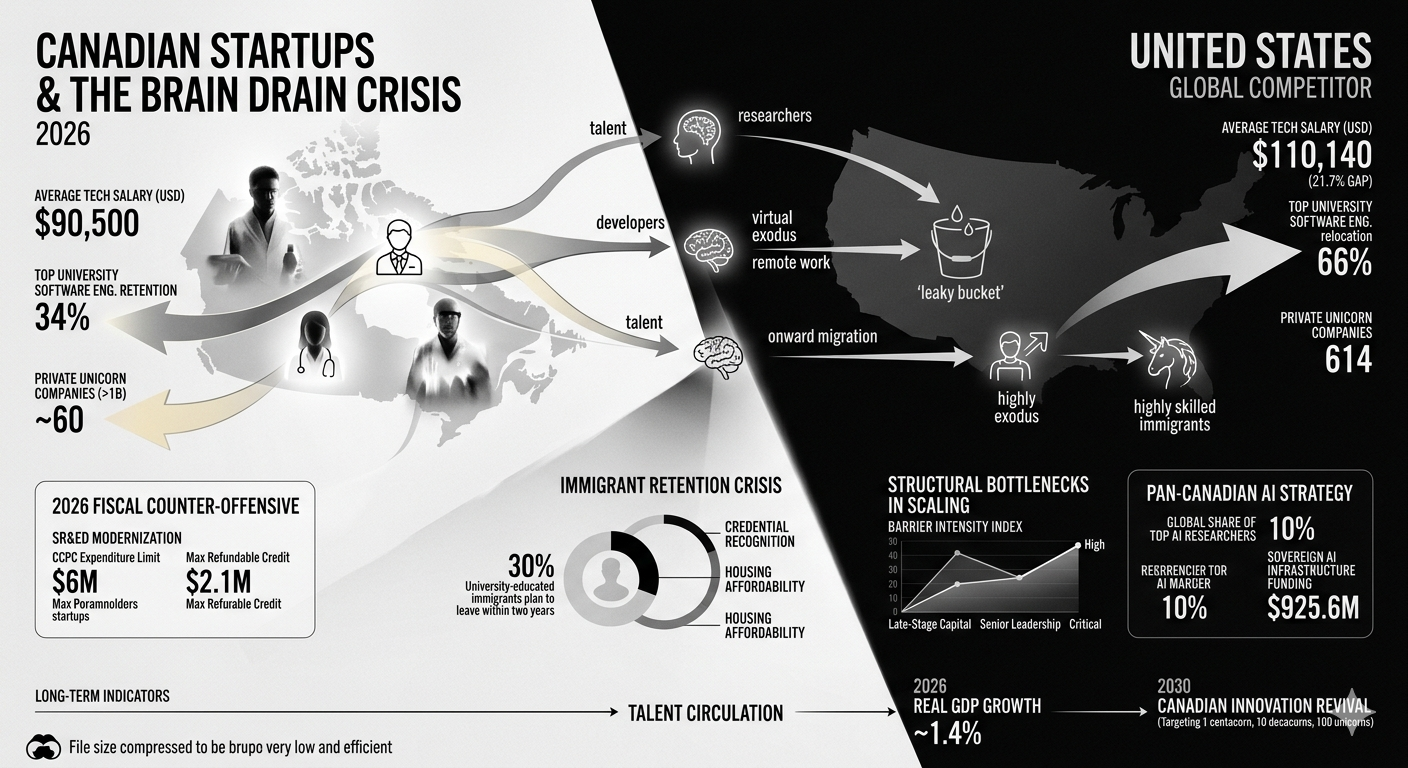
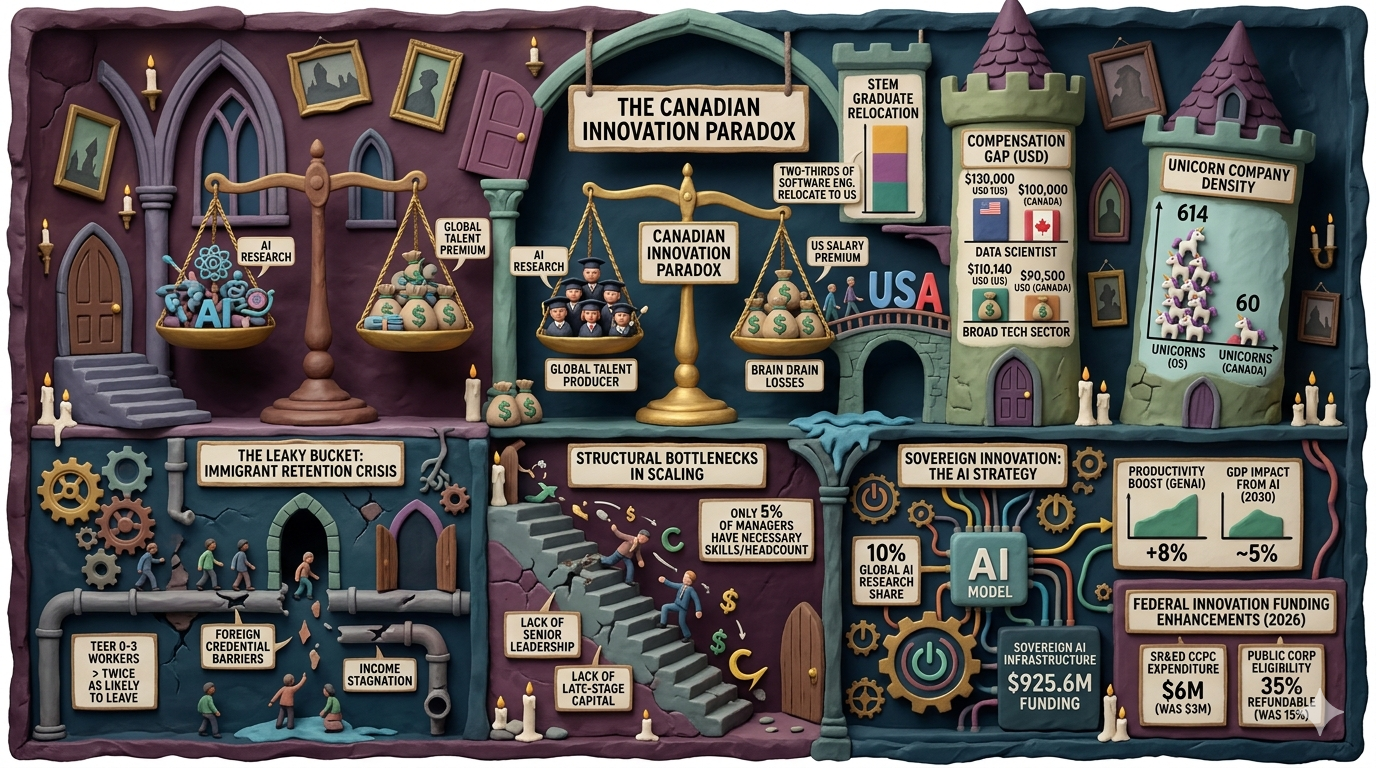
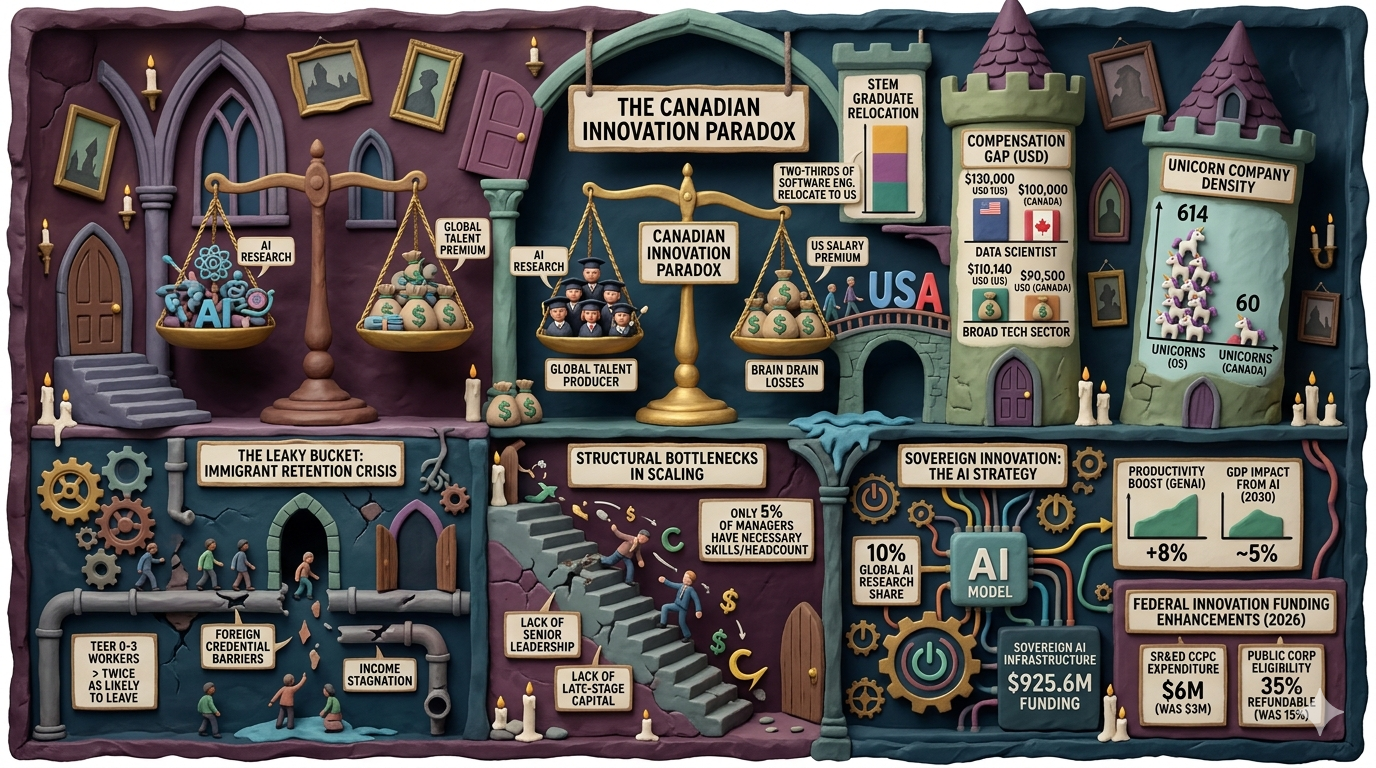
The Canadian innovation economy in 2026 is defined by a profound structural paradox. While the nation maintains a global reputation as a primary producer of high-tier technical talent and artificial intelligence research, it continues to struggle with the systematic "drain" of its most valuable human capital to the United States and other global competitors. This phenomenon has evolved beyond the traditional narrative of graduating students seeking higher salaries in Silicon Valley; it now encompasses a "virtual exodus" facilitated by cross-border remote work, a "leaky bucket" in the immigration system regarding the retention of highly skilled newcomers, and a critical "scaling gap" that prevents domestic startups from maturing into global champions. As the geopolitical landscape shifts toward protectionism and sovereign technological capability, the ability of Canada to not only attract but effectively anchor and scale its talent has become the central challenge for national economic resilience and productivity.
The Quantitative Landscape of Technical Talent Migration
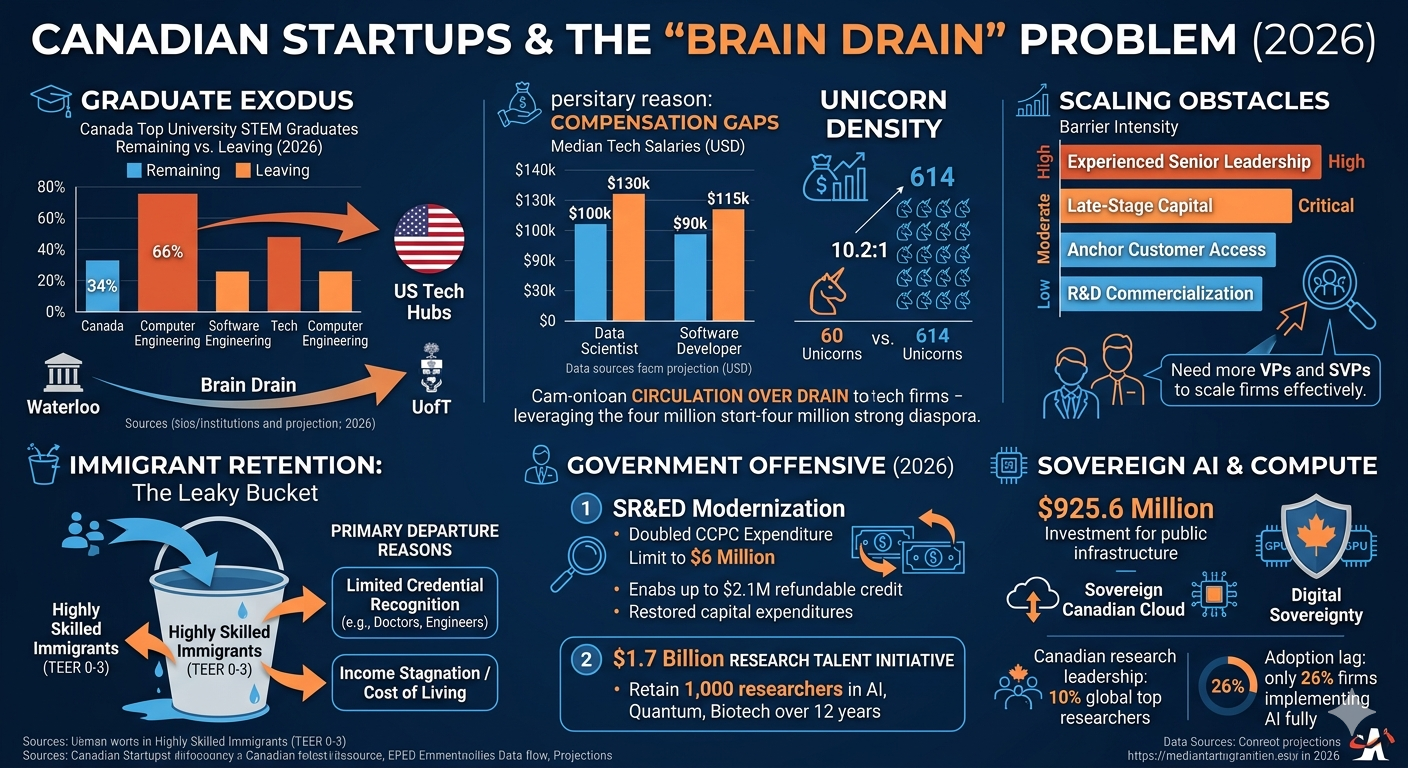
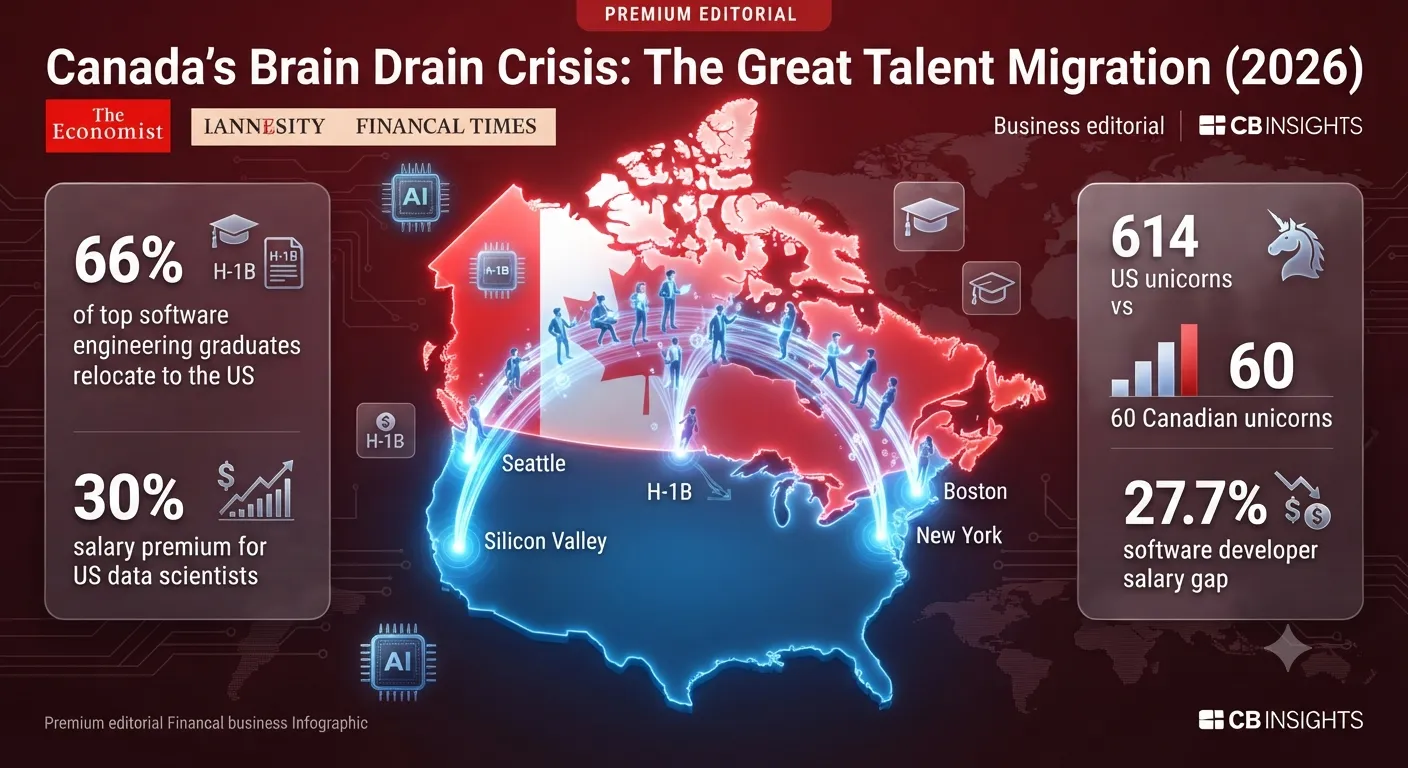
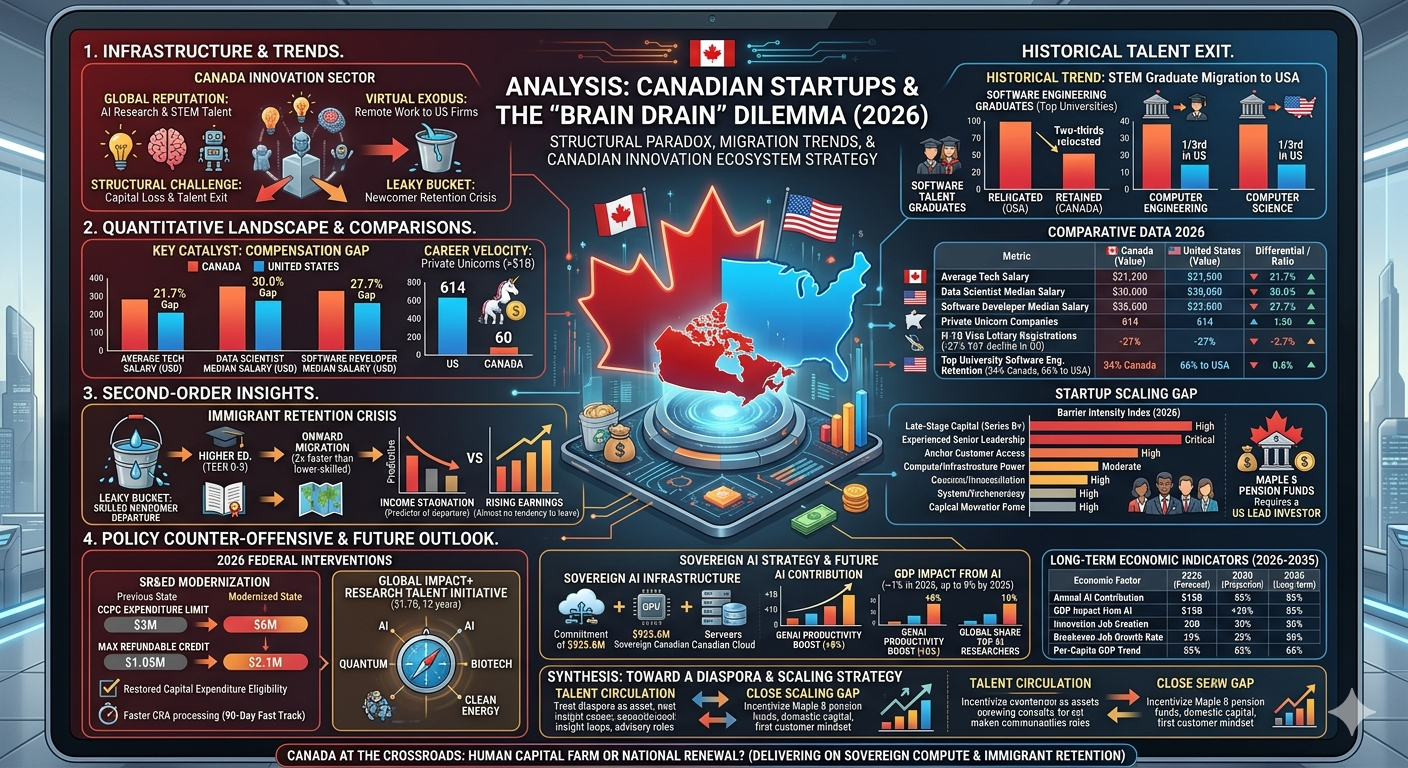
The historical trend of Canadian-educated Science, Technology, Engineering, and Mathematics (STEM) graduates migrating to the United States remains a foundational concern. Data entering 2026 suggests that the exodus is most acute among elite graduates from specialized disciplines. A definitive study on STEM talent migration revealed that two-thirds of software engineering graduates from Canada’s top universities relocated to the United States shortly after completing their degrees. Similarly, approximately one-third of graduates in computer engineering and computer science programs are currently employed south of the border. This concentrated loss of specialized labor creates a structural deficit in the domestic labor market, where the supply of "Highly Qualified Personnel" (HQP) is sufficient at the entry level but diminishes rapidly as individuals reach the professional stages where they can drive significant innovation.
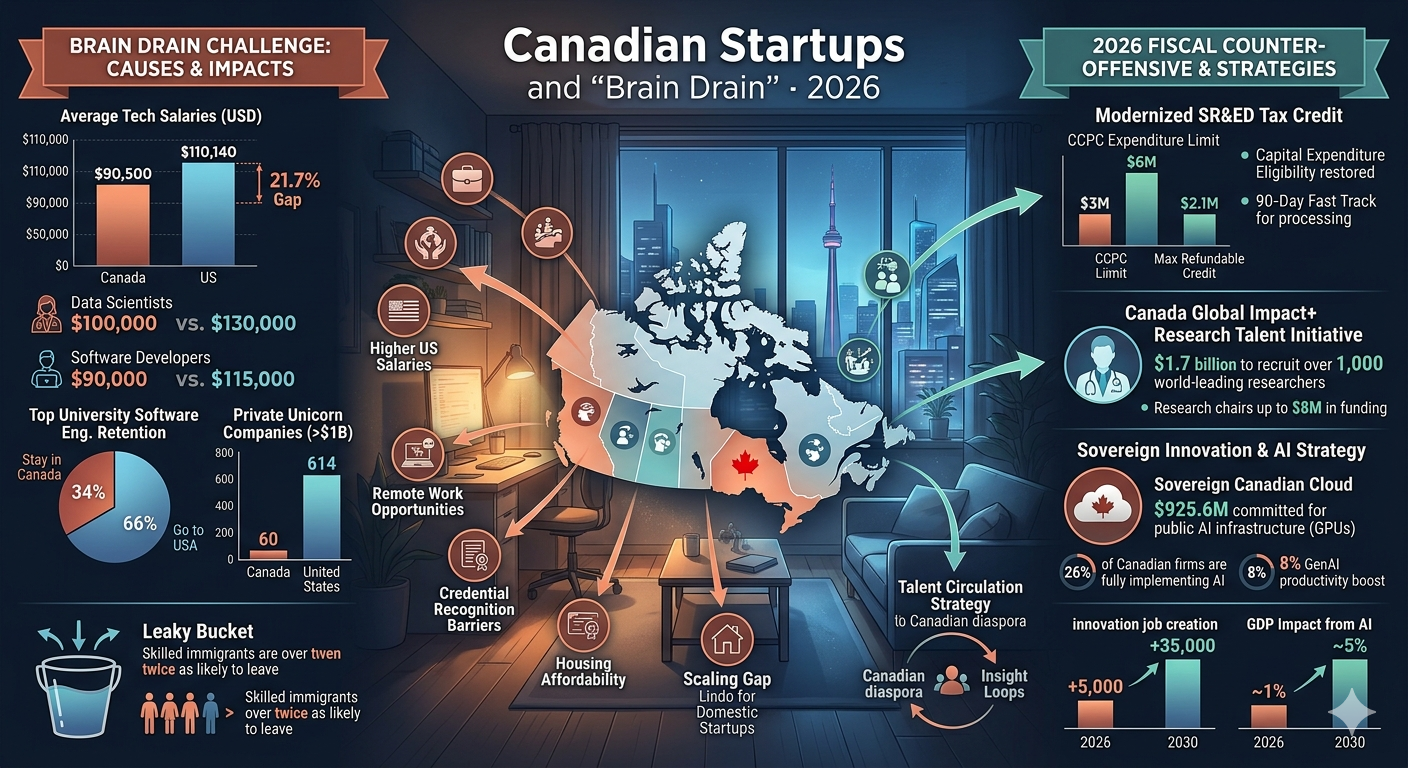
The primary catalyst for this migration is a persistent and widening compensation gap. In 2026, the United States continues to offer significantly higher rewards for high-skilled labor across almost every tech-related occupation. The average salary for a data scientist in the US is approximately $130,000 USD, compared to $100,000 USD in Canada, representing a 30% premium. Across the broader tech sector, average salaries in the US sit at roughly $110,140 USD, while Canadian averages linger near $90,500 USD. When combined with the higher density of "unicorn" companies—private firms valued at over $1 billion—the US market offers a level of career velocity and financial upside that the Canadian ecosystem struggles to match. As of recent reporting, the US hosts 614 such companies, whereas Canada has roughly 60.
Comparative Compensation and Market Density Indicators (2026)
Occupation / Metric | Canada (Value) | United States (Value) | Differential / Ratio |
Average Tech Salary (USD) | $90,500 | $110,140 | 21.7% Gap |
Data Scientist Median Salary (USD) | $100,000 | $130,000 | 30.0% Gap |
Software Developer Median Salary (USD) | $90,000 | $115,000 | 27.7% Gap |
Private Unicorn Companies (>$1B) | 60 | 614 | 10.2:1 Ratio |
H-1B Visa Lottery Registrations (2026) | N/A | -27% (YoY) | Decline |
Top University Software Eng. Retention | 34% | 66% (to USA) | Majority Loss |
This migration pattern is further influenced by shifting US immigration policies. While the "H-1B lottery" registrations fell by 27% in 2026 due to increased filing fees and restrictive policies, the US remains the "destination of choice" for those seeking work abroad. Canada, by contrast, has adopted a more "surgical approach" to work permits, selectively scaling back on certain categories while attempting to maintain pathways for high-priority sectors such as healthcare and trades. However, the perceived "uncertainty" in Canadian policy—including caps on international students and adjustments to the Post-Graduate Work Permit (PGWP) eligibility—has begun to dampen Canada’s attractiveness as a global talent hub.

The Immigrant Retention Crisis: Analysis of the "Leaky Bucket"
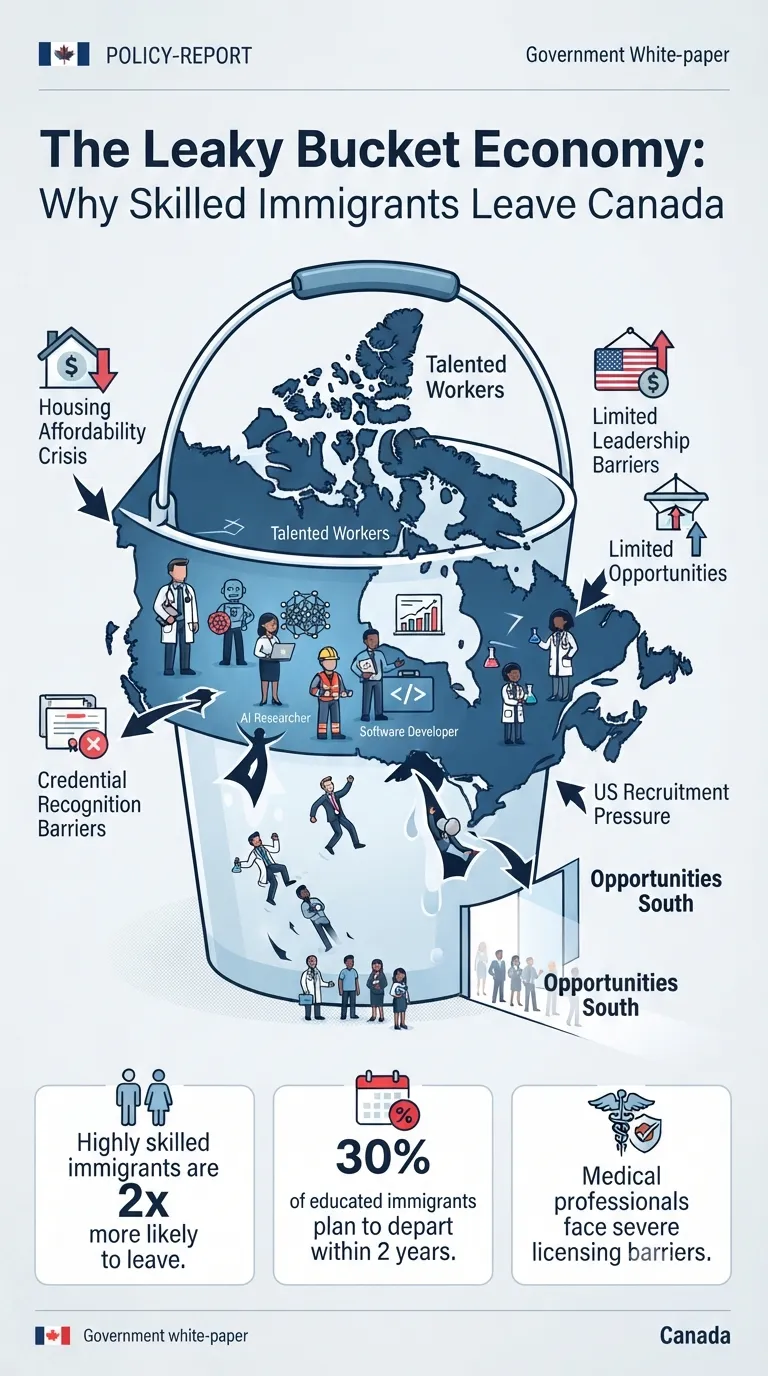
A critical second-order insight into the brain drain problem is the emergence of a retention crisis among highly skilled immigrants. Canada’s economic strategy has historically relied on a high-volume immigration model to offset demographic aging and labor shortages. However, the "Leaky Bucket 2025" study highlights a troubling acceleration in the rate at which highly educated newcomers depart the country. Highly skilled immigrants (classified under TEER 0–3) are more than twice as likely to leave Canada as lower-skilled workers, with the most significant departures occurring within the first few years after arrival.
This "onward migration" is driven by several structural failures in the Canadian labor market. Limited recognition of foreign credentials remains a primary obstacle, particularly for physicians and engineers who find themselves underemployed or working in fields unrelated to their expertise. Furthermore, income stagnation is a powerful predictor of departure; doctoral and master's degree holders who do not see significant earnings growth in their early years are the most likely to relocate to the US or other jurisdictions where their expertise is better compensated. Conversely, immigrants who experience rising earnings show almost no tendency to leave, suggesting that the "brain drain" of newcomers is fundamentally an issue of economic integration rather than a lack of loyalty to the host nation.
Retention Risks and Occupation-Specific Attrition (2025-2026)
High-Growth Occupation Sector | Retention Strength | Primary Reason for Departure |
Information & Communications Tech (ICT) | Weak | High Global Mobility / Income Gaps |
Software Development | Very Weak | US Recruitment / Salary Arbitrage |
Engineering (Manufacturing/Architecture) | Weak | Credential Recognition Barriers |
Business & Financial Management | Moderate | Lack of Senior Leadership Paths |
Natural Sciences Research | Weak | Funding Scarcity / US Lab Access |
Medical Doctors | Fragile | Regulatory Hurdles / US Streamlining |
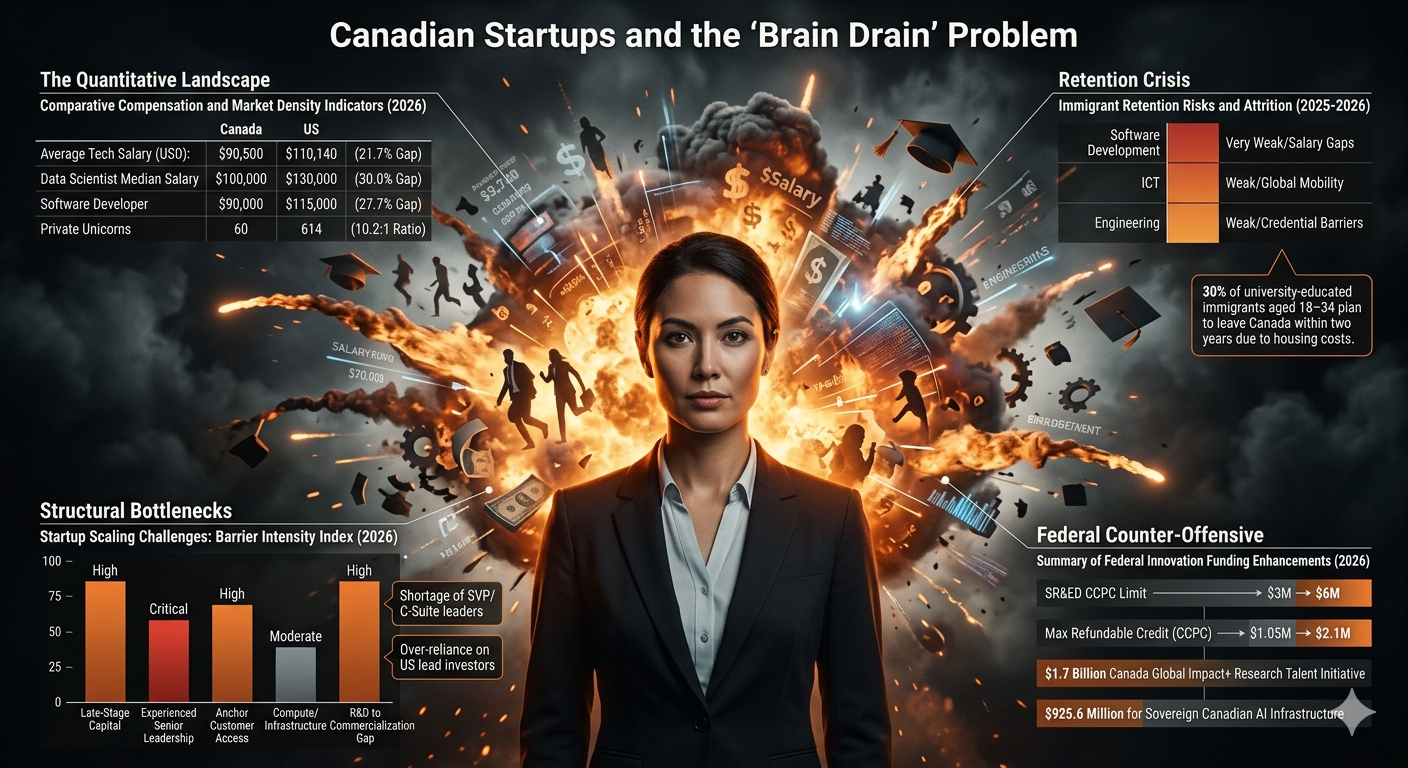
The implications of this retention failure are profound for the startup ecosystem. As domestic firms struggle to find senior talent, they often look to the immigrant pool to fill critical gaps. When these highly skilled individuals leave, it depletes the "talent bench" required for scaling companies. Moreover, the rising cost of living and the housing affordability crisis in Canada’s major innovation hubs—Toronto, Vancouver, and Montreal—act as a secondary push factor. Surveys indicate that 30% of university-educated immigrants aged 18–34 plan to leave Canada within two years, citing housing costs as a primary concern. This suggests that the brain drain is increasingly a symptom of broader macroeconomic pressures that make Canada less competitive for the global "creative class."
Structural Bottlenecks in Scaling: The Leadership and Capital Gap
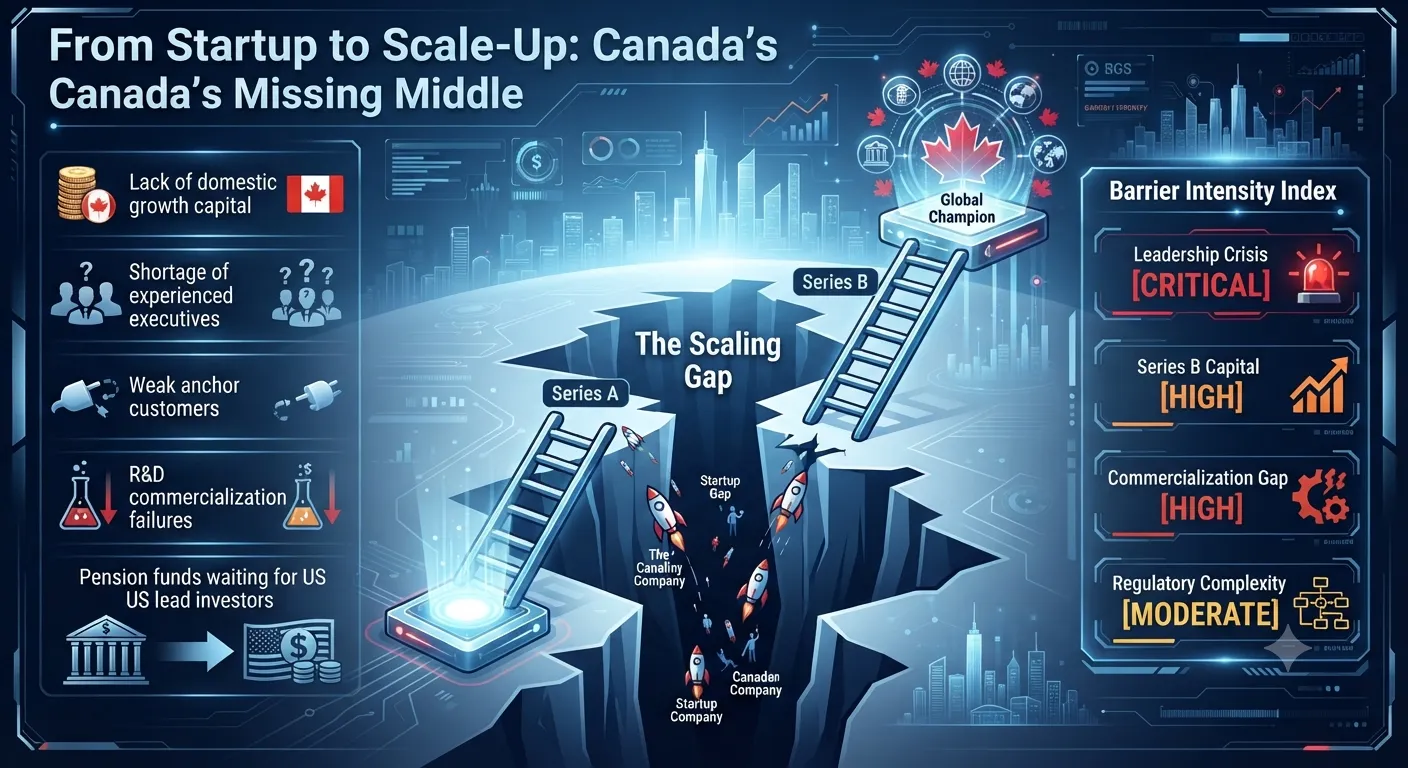
The most critical failure of the Canadian innovation ecosystem is its inability to support companies as they transition from early-stage startups to mid-sized scale-ups and eventual global champions. This "scaling gap" is characterized by a lack of late-stage investment capital and a chronic shortage of experienced senior leadership. In 2026, only 5% of technology and IT hiring managers report having the necessary headcount and skills on their teams to accomplish their strategic goals. This talent deficit is not found at the junior level, where there is an "abundance" of general-purpose talent, but at the Senior Vice President (SVP) and C-suite levels.
This shortage of "leadership capacity" has significant downstream effects on technology development. Evidence suggests that the absence of experienced leaders leads to "over-engineering" or "under-engineering" of products, as technology architectures are not aligned with real user needs. Without leaders who have successfully navigated the "B, C, and D+" rounds of funding, many Canadian firms fail to reach adoption thresholds and are eventually acquired by foreign entities or forced to relocate their headquarters to the United States to access more sophisticated talent pools and capital markets.
Startup Scaling Challenges: Barrier Intensity Index (2026)
Barrier Category | Intensity | Manifestation in Ecosystem |
Late-Stage Capital (Series B+) | High | Lack of domestic growth equity funds |
Experienced Senior Leadership | Critical | Shortage of VPs who have scaled firms |
Anchor Customer Access | High | Gov/Corp reluctance to buy "Canadian" |
Compute/Infrastructure Power | Moderate | Scarcity of GPU/AI Factory access |
Regulatory Complexity | Moderate | Burden on innovation in resource/SME sectors |
R&D to Commercialization Gap | High | Failure to turn research into products |

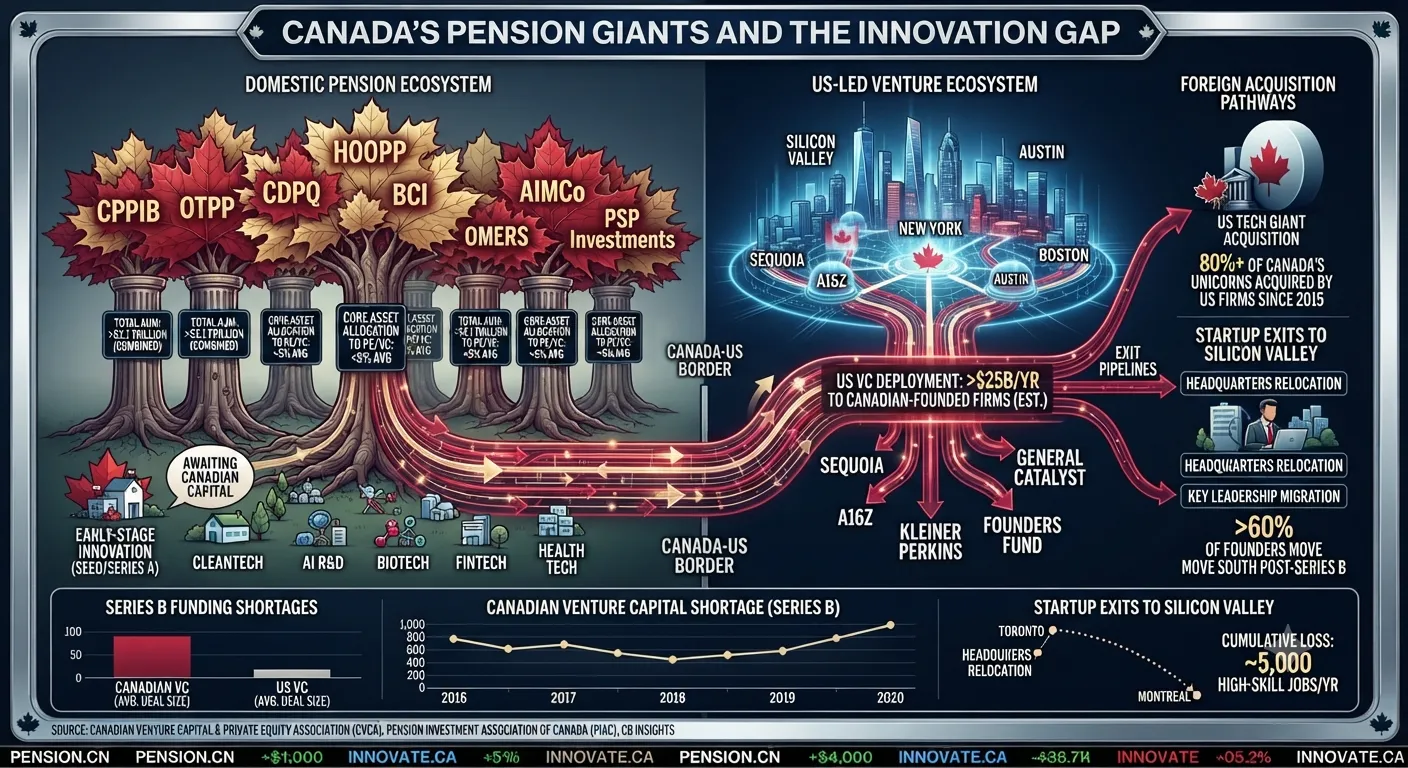
The capital formation issue is exacerbated by the behavior of Canada’s largest institutional investors. The "Maple 8" pension funds, including CPPIB, are among the most sophisticated in the world, yet they rarely lead investment rounds in Canadian scale-ups. Instead, they often require a US lead investor before participating, effectively outsourcing the decision-making on Canada’s future champions to foreign venture capitalists. This reliance on US-led rounds often results in the eventual "Americanization" of the company’s leadership and strategic direction, further fueling the brain drain as the most senior roles are moved to New York or San Francisco to be closer to the investors.
The 2026 Fiscal Counter-Offensive: SR&ED and Talent Attraction
Recognizing these structural threats, the Canadian federal government has implemented a suite of policy interventions in 2026 aimed at reversing the flow of talent and capital. The centerpiece of this effort is the modernization of the Scientific Research and Experimental Development (SR&ED) tax credit. As of February 2026, the annual expenditure limit for the 35% enhanced refundable SR&ED credit for Canadian-Controlled Private Corporations (CCPCs) has been doubled to $6 million. This change allows growing firms to earn up to $2.1 million in refundable cash back per year, providing a vital source of non-dilutive capital that helps retain companies within Canada during their most capital-intensive scaling phases.
Furthermore, the government has introduced "Public Corporation Access" to the enhanced refundable rate, allowing even larger domestic firms to benefit from R&D incentives as long as they meet specific revenue and capital thresholds. The restoration of capital expenditures—allowing firms to claim deductions on specialized R&D machinery and prototyping tools purchased after late 2024—represents a strategic shift toward supporting "hard tech" and manufacturing innovation, sectors that had previously felt neglected by software-focused incentives.
Summary of Federal Innovation Funding Enhancements (2026)
Program / Measure | Previous State (Pre-2025) | 2026 Modernized State |
SR&ED CCPC Expenditure Limit | $3 Million | $6 Million |
Max Refundable Credit (CCPC) | $1.05 Million | $2.1 Million |
Capital Expenditure Eligibility | Excluded since 2014 | Restored for R&D Property |
Taxable Capital Phase-out Band | $10M – $50M | $15M – $75M |
Public Corp Eligibility | 15% Non-refundable | 35% Refundable (Capped) |
CRA Processing Goal (Pre-approved) | Standard Audit | 90-Day Fast Track |
In tandem with financial incentives, the government launched the $1.7 billion "Canada Global Impact+ Research Talent Initiative". This 12-year program is specifically designed to recruit and retain over 1,000 world-leading researchers, including expatriate Canadians working abroad. By funding research chairs with up to $8 million over eight years and providing dedicated infrastructure support through a $400 million fund, the initiative seeks to counter the "prestige gap" that often lures top academics to US Ivy League institutions. The program targets research areas critical to national sovereignty, such as AI, quantum computing, biotechnology, and clean energy, signaling a move toward a more "mission-driven" industrial policy.
Sovereign Innovation: The AI Strategy and the Compute Frontier
Artificial intelligence represents the primary frontier in the global race for talent, and Canada’s leadership in this field is both a source of strength and a target for foreign recruitment. As of 2026, Canada hosts approximately 10% of the world’s leading AI researchers, anchored by globally respected institutes such as Mila (Montreal), the Vector Institute (Toronto), and Amii (Edmonton). These institutions have helped Canada rank among the top five globally for highly cited AI research and venture capital investment in AI startups.
However, the "Innovation Paradox" remains: Canada excels at research but lags in commercialization and enterprise adoption. Only 26% of Canadian firms report having fully implemented AI solutions, compared to roughly one-third globally. To address this, the 2026 renewal of the Pan-Canadian AI Strategy focuses on "Sovereign AI Infrastructure". The government has committed $925.6 million over five years for large-scale sovereign public AI infrastructure and the development of a "Sovereign Canadian Cloud". This is intended to provide domestic firms with the high-performance compute (GPUs) and data accessibility needed to train large-scale models without relying on foreign-controlled infrastructures, which often comes with high licensing fees and data sovereignty risks.
AI Strategy and Research Ecosystem Metrics (2026)
Metric / Indicator | Value | Ecosystem Implication |
Global Share of Top AI Researchers | 10% | High Academic Standing |
Organizations Fully Implementing AI | 26% | Adoption Lag vs. Global 33% |
Sovereign AI Infrastructure Funding | $925.6M | Focus on Digital Sovereignty |
Research to Commercialization Gap | High | Deep "Innovation Paradox" |
Productivity Boost (GenAI) | +8% | Potential Standard of Living Gain |
Startup Valuation (Open Source) | Higher | Open models signal credibility |
A key theme in the 2026 AI strategy is the promotion of "Open Source AI" to lower barriers to adoption for Small and Medium Enterprises (SMEs). Open models allow businesses to experiment and customize AI solutions without committing prematurely to a single vendor, which is particularly important in a capital-constrained environment. Furthermore, the strategy emphasizes "AI literacy" across the workforce, moving beyond technical training to include senior management and boardroom-level understanding of AI governance and strategy. This is intended to solve the "leadership gap" by ensuring that non-technical managers can effectively lead data-driven initiatives.

The Virtual Brain Drain: Remote Work and Cross-Border Employment
The rise of cross-border remote work has created a "virtual brain drain" that is harder to quantify than physical emigration. In 2026, thousands of Canadian tech workers are employed by US firms while remaining physically present in Canada. This arrangement allows professionals to access US-level salaries while living in a lower-cost environment (relative to Silicon Valley), but it creates significant challenges for domestic startups who cannot compete on compensation. Moreover, it introduces complex legal and fiscal implications for both workers and employers.
Canadian remote workers for US firms generally do not require a US work visa as long as they perform their duties entirely from Canada. However, their immigration status and labor rights are governed by Canadian rules, and they are required to report their worldwide income to the Canada Revenue Agency (CRA). For US employers, hiring Canadians can lead to the creation of a "Permanent Establishment" (PE) in Canada, triggering corporate tax obligations and local payroll withholding requirements. To mitigate this, many US firms utilize "Employers of Record" (EOR) providers like Borderless or Oyster, which handle payroll, benefits, and tax compliance, effectively institutionalizing the export of Canadian labor.
Remote Work Preferences and Productivity Impacts (2026 Data)
Remote Work Statistic | Value | Source / Context |
Tech Workers Who Would Leave for RTO | 46% | High demand for flexibility |
Tech Salary Cut for Remote Work | Up to 25% | Willingness to sacrifice pay for WFH |
Hybrid Productivity Boost | ~5% | Stanford/Trip.com Study |
Reduction in Quit Rates (Hybrid) | 35% | Significant retention benefit |
Average Commute Time Saved | >1 Hour | Reallocated to work/leisure |
Employers with Skills Gap (2026) | 57% | Worsening talent shortage |
This virtual exodus has far-reaching effects on municipal and provincial tax revenues. While the workers still pay income tax, the mass shift to telework has decimated the demand for downtown office space, leading to plummeted municipal business tax revenues. In the National Capital Region and major hubs like Toronto, the office vacancy rate remains high—downtown office availability was 18.7% in late 2025—forcing a "flight to experience" where landlords must offer high-end amenities to attract returning workers. The mass layoff spillovers and the decline in urban foot traffic have created a fiscal "perfect storm," where revenues fall just as the demand for social services and housing support surges.
Regional Divergence and the Rebirth of Secondary Hubs
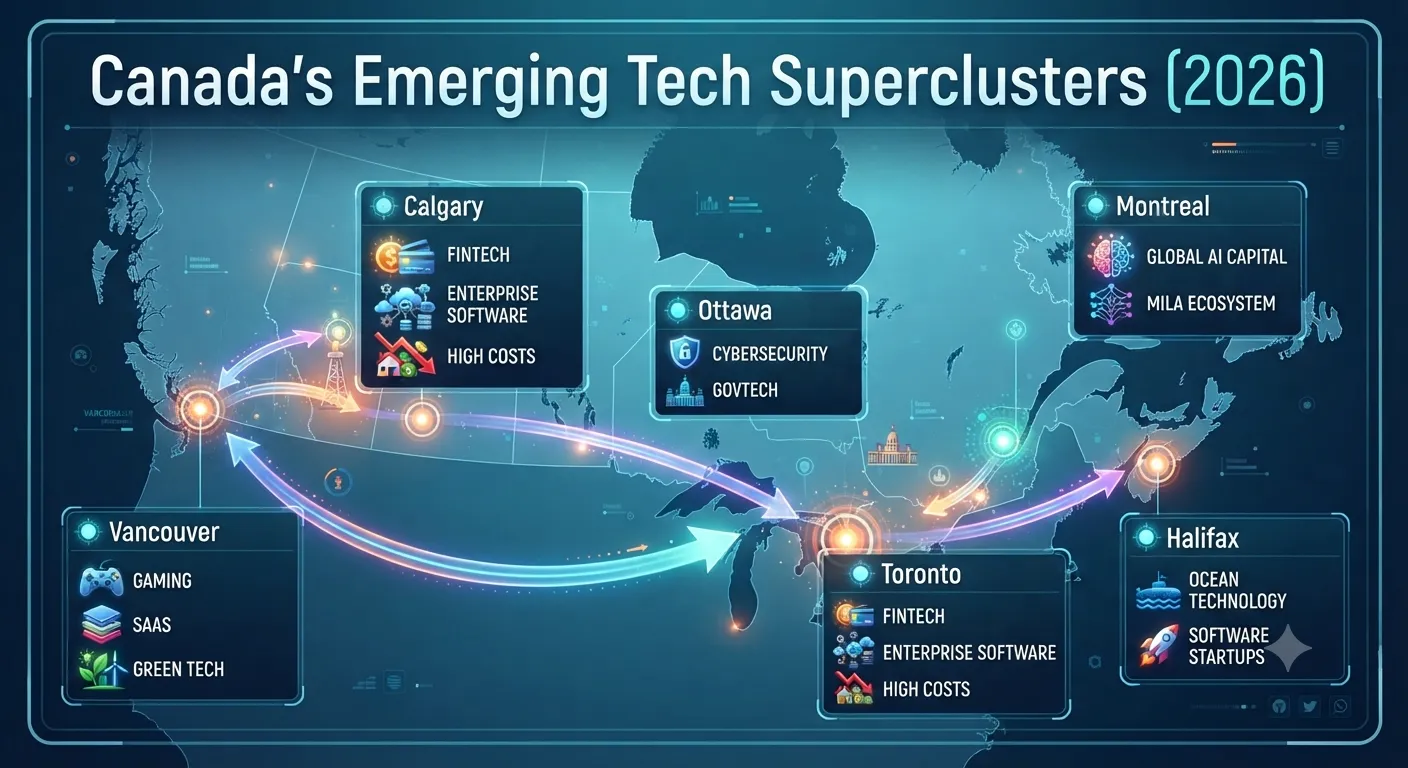
The talent landscape in 2026 is also defined by a significant geographical redistribution. While Toronto, Vancouver, and Montreal remain the primary engines of the tech economy, high costs of living and the flexibility of remote work have fueled the rise of "secondary hubs". Calgary, in particular, has emerged as a high-growth alternative, attracting senior professionals from the coast with its lower cost of living and a burgeoning tech sector integrated with energy and logistics. Ottawa continues to solidify its status in software and cybersecurity, while Montreal remains the global epicenter for AI research.
However, this redistribution is not uniform. Southwestern Ontario has felt the brunt of trade shocks and US protectionism, while other regions are more "trade-insulated". The Canadian labor market is becoming increasingly fragmented, with "very good" outlooks for information systems specialists in Ontario, while certain technical roles like testing technicians face potential surplus conditions due to AI automation. This regional divergence suggests that the "brain drain" is not just a national issue but a regional one, with internal "graduate brain drain" from smaller cities to London or Toronto compounding the loss to the United States.
Regional Tech Employment and Remote Work Capacity (2026)
Region / City | Primary Tech Strength | Remote/Hybrid Trend | Outlook |
Toronto | Fintech / Enterprise Software | 45% Hybrid/Remote | Strong but High-Cost |
Montreal | AI / Research (Mila) | 45% Hybrid/Remote | Global Epicenter |
Vancouver | SaaS / Gaming / Green-tech | High US Remote Comp. | Fragile Retention |
Calgary | Energy-tech / Logistics | Rising In-office (67%) | High Growth / Low Cost |
Ottawa | Cybersecurity / Gov-tech | 38% Hybrid/Remote | Stable / Lucrative |
Halifax | Ocean-tech / Software | 34% Hybrid/Remote | Emerging Hub |
The "Return to Office" (RTO) trend in 2026 is also regionally variable. Major banks and government bodies have instituted stronger in-office mandates—with RBC, Scotiabank, and BMO requiring four days per week starting in late 2025—which has begun to stabilize downtown cores. However, the tech sector remains the most resistant to full RTO, with 47% of remote-capable employees in tech working fully remote and 45% hybrid, leaving only 9% fully on-site. This tension between corporate mandates and worker preference remains a primary driver of attrition, as 46% of workers indicate they would likely leave their current role if remote work options were eliminated.
Comparative Global Perspectives and the US Protectionist Swerve
Canada’s competitive advantage in 2026 must be understood within the context of global shifts in immigration and trade policy. While Canada has historically "reversed the US immigration playbook" by being more welcoming to foreign talent, recent years have seen a tightening across all major competitors. Australia has strengthened its "Genuine Student" test and maintained the world’s highest minimum wage, while the UK has restricted dependent visas and seen mixed results in its "brain circulation" since Brexit.
The Human Flight and Brain Drain Index (HFBDI) provides a quantitative measure of this competition. As of 2026, Australia maintains the lowest (best) score at 0.3, while Canada sits at 0.7—a very low score globally but indicative of a persistent trickle of talent loss compared to the absolute retention of the Australian system. Europe, by contrast, suffers from significant talent shortages due to taxation, regulation, and bureaucratic inertia, with the EU Blue Card scheme failing to match the speed and transparency of the Canadian or Australian fast-track systems.
Comparative Migration Policy and Brain Drain Metrics (2026)
Factor | Canada | Australia | United Kingdom | Germany / EU |
Brain Drain Index (0-10) | 0.7 | 0.3 | N/A (Mixed) | 1.4 (Germany) |
Post-Study Work Visa | 1–3 Years | 2–4 Years | 2 Years | 18 Months |
Fast-Track Tech Visa | Global Talent Stream | Points System | Global Talent Visa | EU Blue Card |
PR Pathway Difficulty | Moderate (CRS) | High (Points) | High (Employer) | Moderate |
Citizenship Timeline | 3 Years (after PR) | 4 Years | 5-6 Years | 8 Years (Standard) |
A significant factor in the 2026 landscape is the "US swerve to protectionism". New US trade restrictions and the renegotiation of CUSMA (USMCA) have reduced economic efficiency and increased uncertainty for Canadian businesses. While this hurts the Canadian economy broadly, it also makes the US a more difficult environment for foreign talent, as seen in the plummeting international student arrivals (down 19% in August 2025) and the "quiet collapse" of the STEM category draws in US immigration. Canada has an opportunity to capture this "displaced talent," but only if it can fix its internal "scaling gap" so that these individuals have high-growth companies to join.
Macroeconomic Outlook and Long-Term Projections (2026-2030)
The long-term economic consequences of the brain drain are reflected in Canada’s productivity deficit and declining standard of living. The Bank of Canada notes that structural changes—including the rise of AI, demographic shifts, and the end of rules-based open trade—are transforming the economic landscape. Real GDP growth is projected to be a modest 1.4% in 2026, hampered by trade tensions and a stagnant labor force. The "breakeven rate" of job creation is expected to fall to zero or lower, meaning the economy will struggle to absorb new entrants even as it faces chronic shortages in high-skilled niches.
By 2030, however, there is a path to recovery if the nation can successfully pivot toward "Global Champions." The implementation of a national "1-10-100" strategy—targeting 1 centacorn ($100B+), 10 decacorns ($10B+), and 100 unicorns ($1B+)—could unlock $100 billion in innovation-driven growth. Achieving this will require the federal government to move beyond its role as a grantor and become an "investor, a first customer, and a talent magnet". The success of the "Canada Global Impact+" initiative and the sovereign AI compute strategy will be the primary metrics of this transition.
Long-Term Economic Indicators and AI Impacts (2026-2035)
Economic Factor | 2026 (Forecast) | 2030 (Projection) | 2035 (Long-term) |
Annual AI Contribution | ~$15B | $180 Billion | N/A |
GDP Impact from AI | ~1% | ~5% | 9% |
Innovation Job Creation | +5,000 | +35,000 | N/A |
Breakeven Job Growth Rate | ~0 | Recovering | N/A |
Per-Capita GDP Trend | Stabilizing | Rising (if productive) | N/A |
The potential for AI to raise worker productivity by 8% provides a rare "silver bullet" for Canada’s aging demographics. But this productivity gain will only materialize if Canadian firms can move from "AI experimentation to full-scale integration". If the talent required for this integration continues to be drained to the US—either physically or virtually—the benefits of publicly funded AI research will be captured elsewhere, leaving Canada with "minimal long-term labor" and the fiscal burden of supporting an aging population without a corresponding increase in the tax base.
Synthesis and Conclusion: Toward a Diaspora and Scaling Strategy
The "brain drain" problem in 2026 is a multifaceted structural challenge that requires more than simple salary increases or immigration tweaks. It is a symptom of an ecosystem that is world-class at the "start" but laggard at the "scale." To reverse this trend, Canada must move toward a strategy of "Talent Circulation," where its four-million-strong diaspora is treated as a strategic asset rather than a permanent loss. This involves creating "insight loops"—short-term secondments, sectoral advisory roles, and structured return pathways—that allow global expertise to flow back into Canadian institutions.
Simultaneously, the "scaling gap" must be closed by incentivizing domestic capital pools—specifically the Maple 8 pension funds—to invest in growth-stage Canadian firms. The enhancements to SR&ED and the sovereign AI infrastructure are necessary foundations, but they must be coupled with a cultural shift in both the private and public sectors toward being "first customers" for domestic innovation. If Canada can successfully anchor its "Global Champions," the brain drain will naturally subside as the domesticcosystem begins to offer the same prestige, compensation, and career velocity as its southern neighbor.
The road to 2030 is defined by a choice: either Canada remains a "human capital farm" for the US tech giants, or it builds the institutional infrastructure to turn its talent into national renewal. The 2026 policy shifts suggest a movement toward the latter, but the execution risk remains high, particularly in the face of rising protectionism and a global race for AI supremacy. The ability of the "Carney government" or its successors to deliver on sovereign compute and immigrant retention will define the economic sovereignty of the nation for decades to come.
Protect Your Future: The Precision Vesting Calculator
Don't let a "handshake deal" complicate your exit. Map out your ownership journey with our Vesting Calculator
Calculate Your Vesting Schedule →