Best 3D printers to buy in 2026 : The last guide you will ever need
July 12, 2026 by Sheikh MohammadBuying a 3d printer can be challenging for many, but it all comes down to understanding what you want to make and matching the machine's architecture to those goals.
There are two main printer technologies, but the actual hardware and movement mechanics decide what they can make.
Here’s what to look for before you choose:
Choose Your Technology: FDM vs. Resin
Your first step is picking how the printer builds objects.FDM (Filament): Melts and stacks plastic wire layer by layer. This is the standard choice for large, structural, or mechanical parts like robotics.
Resin (SLA/DLP): Uses UV light to harden liquid resin. It is unmatched for tiny, ultra-detailed items like miniatures or jewelry. Note: Resin is messy and requires handling toxic chemicals, washing, and UV curing.
FDM Movement Mechanics
Cartesian: Cheap and easy, but the heavy moving bed makes it slower.
CoreXY: The modern standard for speed and precision, but more complex to build and maintain.
Delta: Tall and visually cool, but difficult to calibrate and takes up too much room.
Material Hardware Requirements
Basic plastics (PLA/PETG): Work on almost any standard printer with a heated bed.
Strong/UV plastics (ABS/ASA): Require the printer to be fully enclosed to trap heat.
Flexible plastics (TPU): Require a Direct Drive extruder to push the material without tangling.
Abrasive/Industrial plastics (Carbon Fiber/Nylon): Require high-end components (300°C+ hotend, steel nozzles) and heat enclosures.
Here are 5 standout 3D printers that deliver exceptional value across the specific motion systems, technologies, and material categories evaluated:
1. Bambu Lab A1:
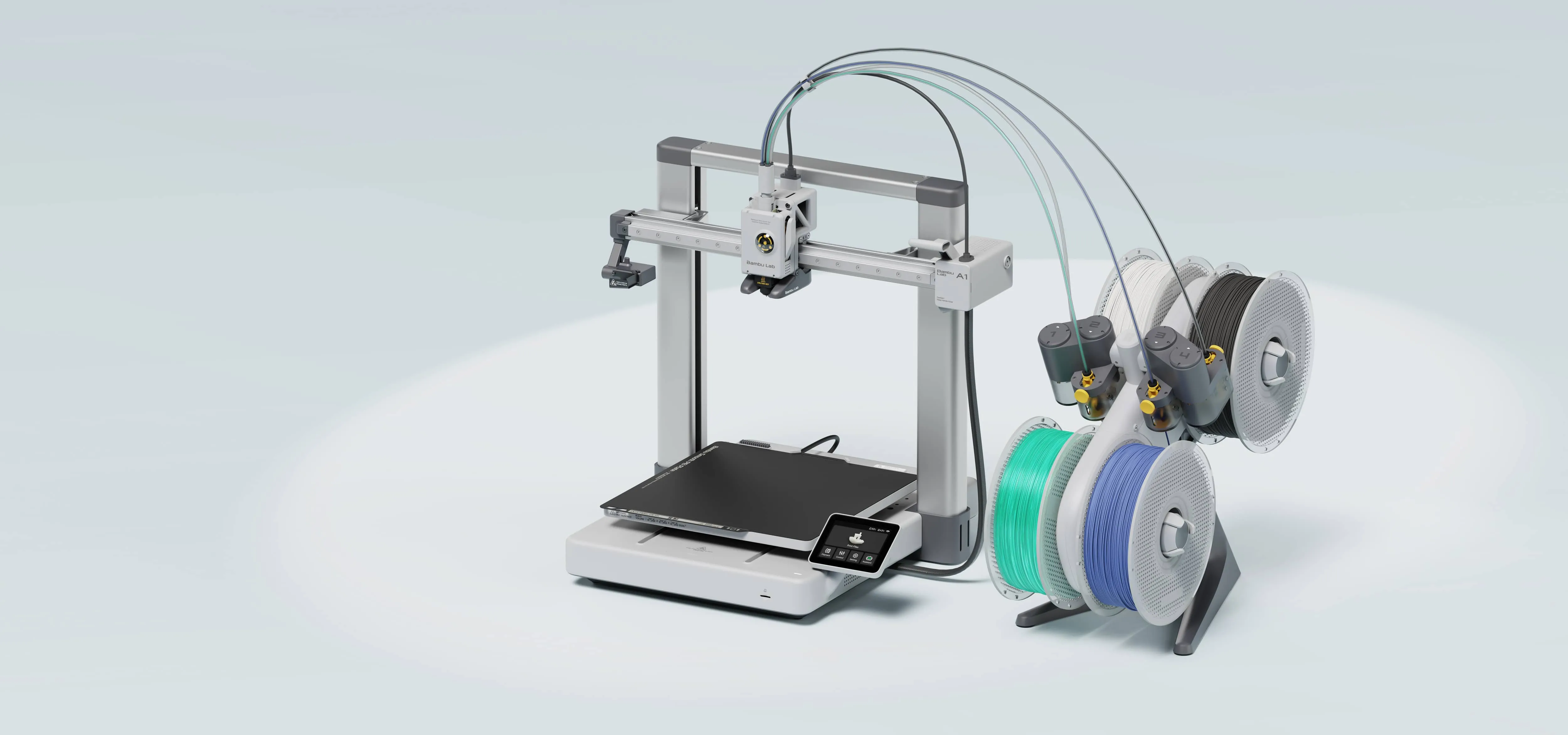
The Bambu Lab A1 redefines the traditional "bedslinger" (Cartesian) design by pushing the limits of what a moving bed can achieve without compromising print quality. It features a standard 256 × 256 × 256 mm build volume but operates at an impressive maximum speed of 500 mm/s and 10,000 mm/s² acceleration. What makes the A1 unique is its sophisticated sensor suite, running on a Dual-Core Cortex M4 motion controller. It utilizes high-frequency eddy current sensors in the all-metal hotend (capable of reaching 300°C) to actively measure nozzle pressure and adjust flow rate in real-time. This eliminates the usual tuning headaches required for smooth PLA, PETG, and TPU prints. Additionally, active motor noise canceling makes it remarkably quiet for a machine moving this fast.
2. Elegoo Centauri Carbon:
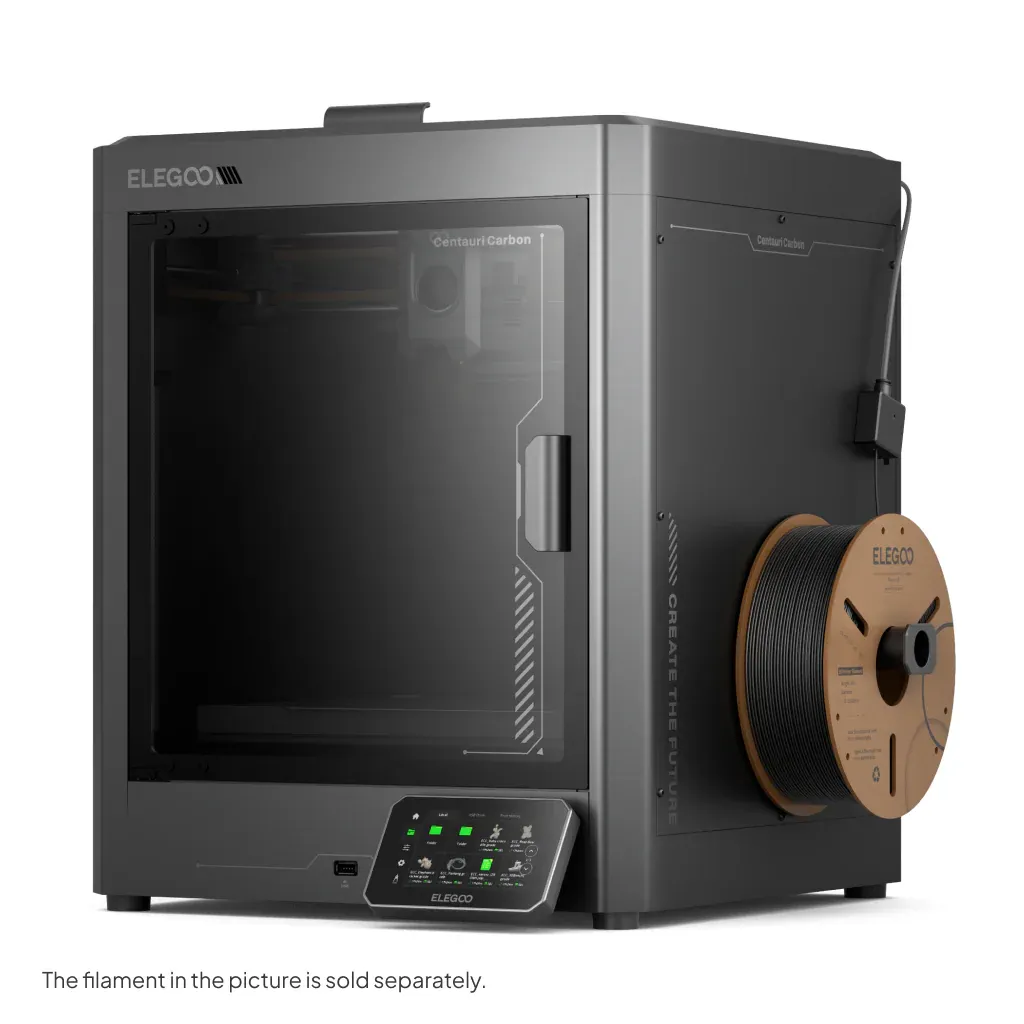
The Centauri Carbon is a robust entry into the enclosed CoreXY market, offering a rigid die-cast aluminum frame reinforced with carbon elements to maintain perfect squareness—a critical requirement for CoreXY kinematics. It features a 256 × 256 × 256 mm build volume and leverages its lightweight dual-gear direct drive extruder to hit blazing speeds of 500 mm/s and 20,000 mm/s² acceleration. Designing a CoreXY system requires a controller capable of handling intense mathematical calculations to coordinate the stationary motors and complex belt routing; the Centauri handles this flawlessly. It also includes an integrated AI chamber camera for real-time monitoring and a 320°C all-metal hotend, making it highly capable of running engineering materials right out of the box while remaining accessible in price.
3. Elegoo Mars 5 Ultra:
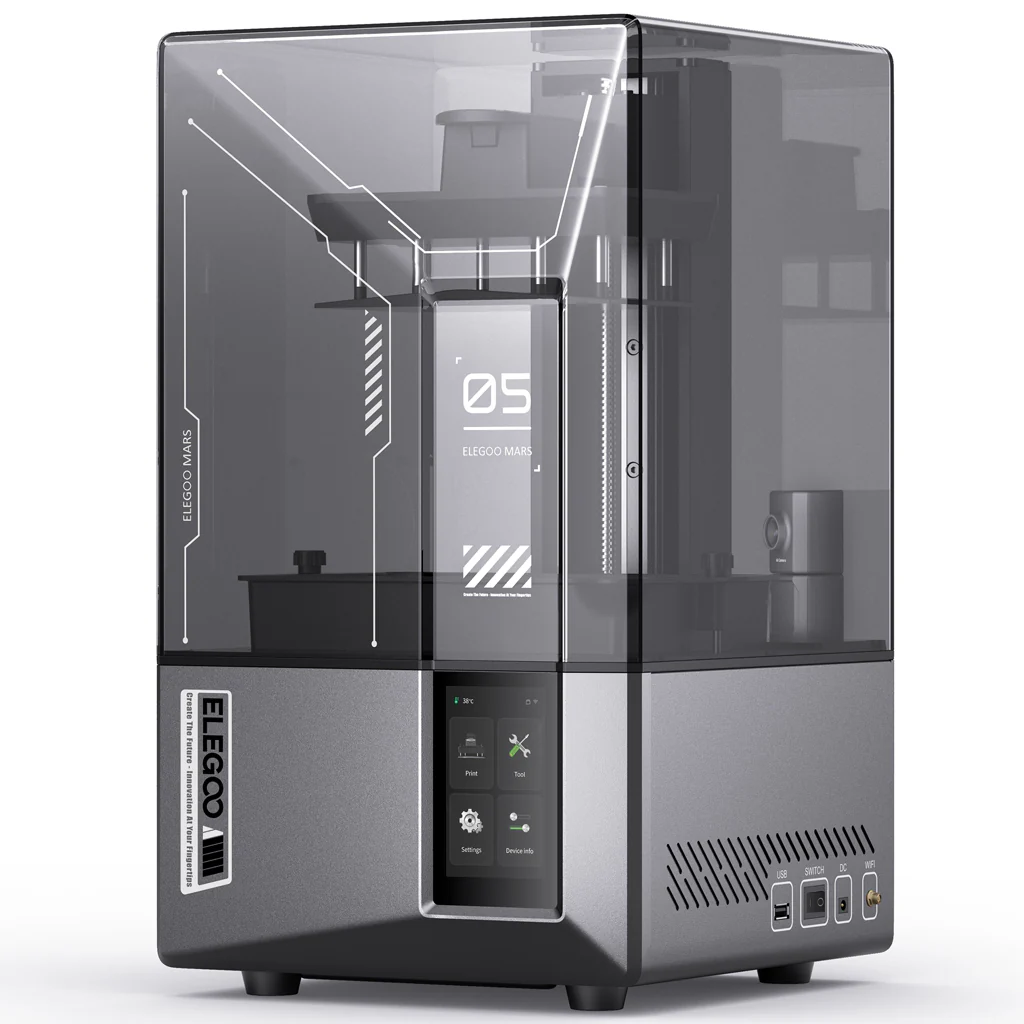
When extreme micro-detail is required over mechanical strength, the Mars 5 Ultra utilizes MSLA (Masked Stereolithography) to achieve what FDM cannot. It is built around a 7-inch monochrome LCD with a stunning 9K resolution (8520 x 4320 pixels), resulting in a microscopic XY resolution of just 18 microns. The build volume is smaller at 153.36 x 77.76 x 165 mm, which is standard for precision resin printing. It stands out by removing the typical friction of resin printing with built-in intelligent features like automatic one-click mechanical leveling and an innovative tilt-release technology that gently peels layers off the FEP film. This tilt mechanism allows the printer to achieve highly reliable prints at speeds up to 150 mm/h.
4. Bambu Lab P1S:
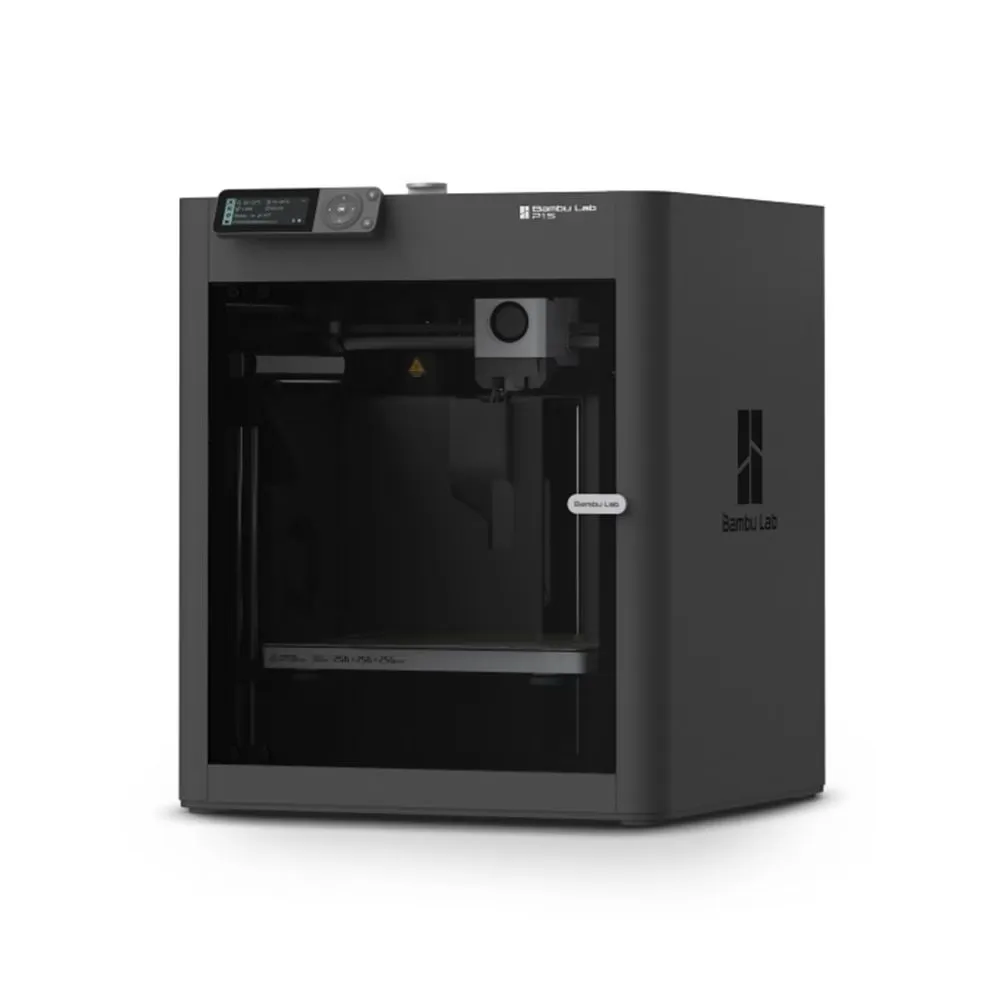
The Bambu Lab P1S takes the high-speed CoreXY architecture and encloses it entirely, making it an absolute workhorse for temperature-sensitive materials like ABS and ASA. It shares the 256 × 256 × 256 mm build volume of the A1 but utilizes a stationary bed (moving only on the Z-axis) and a lightweight toolhead to print at 500 mm/s with zero tall-print wobbling. The enclosure traps the heat radiating from the 100°C bed to prevent structural parts from warping as they cool. Under the hood, its motion system is incredibly tightly tuned, showcasing exactly how well-calibrated belts and linear rods can perform when driven by advanced resonance compensation algorithms
5. Creality K1C:

The Creality K1C is a fully enclosed CoreXY machine engineered specifically to process challenging and abrasive materials like Carbon Fiber (CF), Nylon (PA), and flexible TPU. It features a 220 × 220 × 250 mm build volume and reaches 600 mm/s top speeds. The "C" in its name stands for Carbon, highlighting its specialized all-metal direct drive extruder paired with a hardened steel nozzle and a heatbreak designed to prevent jamming. Pushing flexible or abrasive filaments requires extreme grip and a constrained filament path to prevent the material from buckling; the K1C's extruder assembly handles this perfectly. It also features hands-free auto-leveling and a built-in air purifier to filter the micro-particles and odors generated when melting heavy-duty industrial plastics
Conclusion:
Choosing the right 3D printer ultimately comes down to what you want to make and the materials you need to use. If you want to build strong, functional, or large parts, an FDM printer is your best bet, with standard models being great for budgets and CoreXY models offering higher speeds. On the other hand, if you need to create tiny, highly detailed items like miniatures, a resin printer is the way to go, though you will have to handle a messier cleanup process. The most important thing is to ensure your chosen printer has the right hardware, such as fully sealed enclosures or nozzles capable of extreme heat, to handle the specific plastics you plan to melt. By simply asking yourself what you are building and what material it requires, picking the perfect machine becomes an easy choice.
Want to calculate the equity for your cofounder?
Nail your cap table before you sign. Whether you're splitting equity with a co-founder or planning your next funding round, our Equity Calculator gives you precision in seconds
Equity calculator →Co-Founder Equity Split Calculator
Answer 10 weighted questions objectively to determine a fair equity distribution baseline for your startup.
Calculate Equity Split →Read Next

How the 3D printing industry in india is Reshaping Manufacturing
The manufacturing landscape is undergoing a monumental shift. For decades, traditional production relied heavily on subtractive processes, massive...
Read Article →
FDM vs. SLA vs. SLS: Which 3D Printing Technology Is Right for You in India?
Comparing FDM, SLA, and SLS for 3D printing in India: costs, materials, and use cases to help hobbyists, engineers, and businesses choose right. ...
Read Article →The 3D Printing Industry in India: Market Size, Growth, and Adoption Numbers
The 3D printing industry in India is scaling fast. See market size, growth rates, prototyping trends, and adoption data for 2025 and beyond. Ten...
Read Article →
Why Are D2C businesses thriving in Bangalore : Case study and more
Bangalore didn't set out to become India's direct-to-consumer capital. It became one because the ingredients that made it "India's Silicon Valley"...
Read Article →
Silicon Valley No Longer Has a Monopoly on Innovation
The historical epoch defined by the geographic and capital concentration of the technology industry within a seventy-seven-square-mile corridor of...
Read Article →
Why Sales Is the Ultimate Founder Skill
The traditional narrative of the startup founder often emphasizes the "builder"—the visionary engineer or the creative genius working in isolation to...
Read Article →
Founder-Led Media as a Distribution Strategy
The contemporary commercial landscape is witnessing a fundamental reconfiguration of the relationship between corporate entities and their target...
Read Article →
What Sustainable Growth Actually Looks Like
The conceptualization of sustainable growth has evolved from a nascent environmental concern into the definitive framework for 21st-century global...
Read Article →
Solo Founders with Leverage Are Winning
The historical narrative of industrial progress has long been defined by the accumulation of labor and capital within centralized, hierarchical...
Read Article →