The Hidden Cost of Keeping the Wrong Teammate
February 15, 2026 by Harshit GuptaThe decision to retain a teammate who is fundamentally misaligned with organizational objectives, cultural values, or performance standards is often perceived as a path of least resistance. However, a comprehensive analysis of workforce dynamics reveals that this "path of least resistance" is, in reality, a high-interest credit line of organizational debt. The hidden cost of keeping the wrong teammate is not merely a localized performance issue; it is a systemic liability that erodes financial capital, drains managerial resources, stifles innovation, and catalyzes the departure of top-tier talent. As organizations move toward 2025 and 2026, the complexity of these costs is escalating due to skills gaps, the rapid rise of Gen Z's high-turnover expectations, and the magnifying effect of digital transparency on employer branding.
The Financial Architecture of the Mis-hire
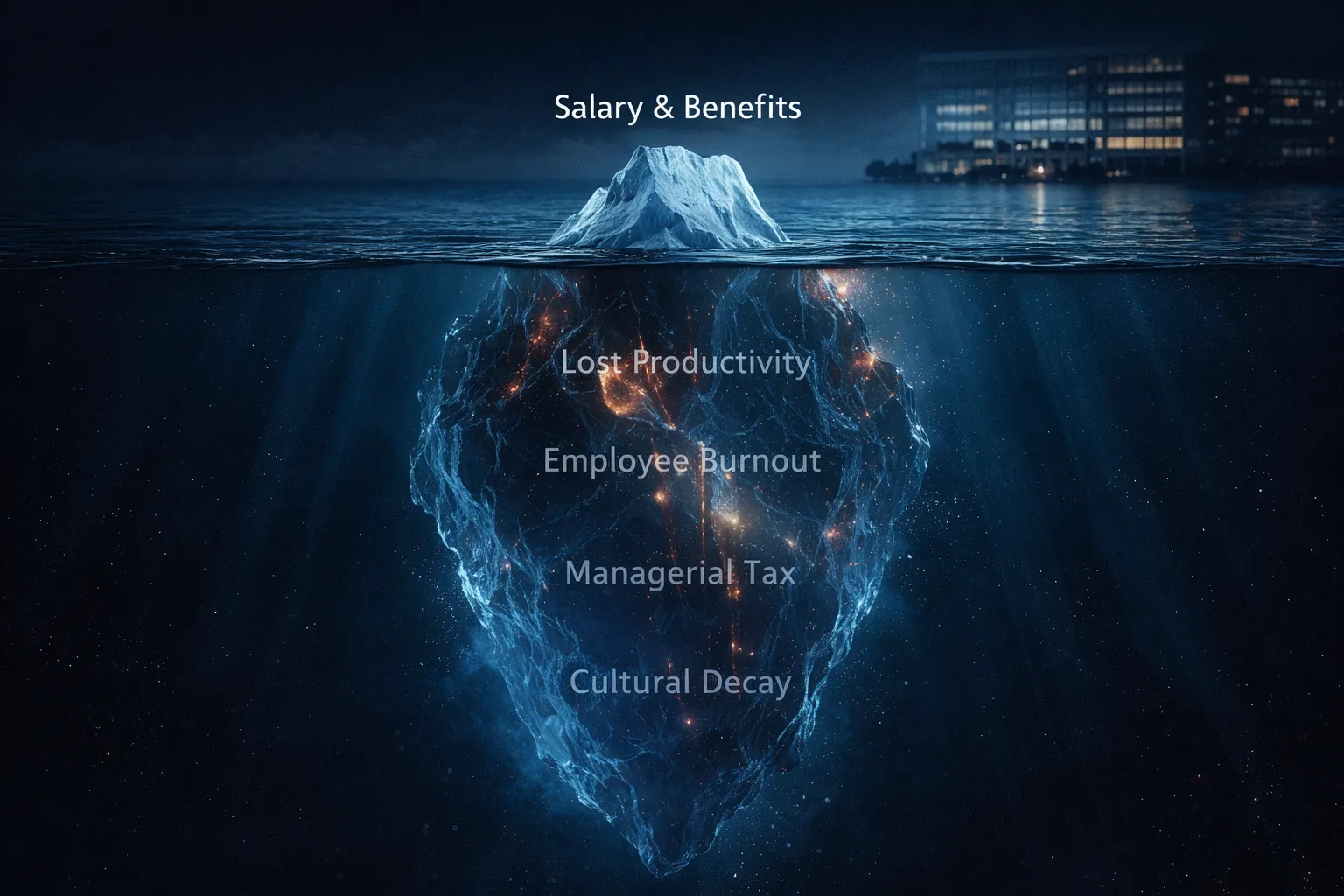
The financial burden of a poor hiring decision is often described through the "Iceberg Effect," where the visible costs—recruitment fees and base salary—represent only a small fraction of the total economic impact. Underneath the surface lies a compounding series of indirect expenses that can reach up to 200% of an individual's annual salary, and for executive or highly specialized roles, the impact can escalate to $840,000 or even 27 times the base salary.
Quantifying the Direct Capital Outlay
Direct costs begin the moment a vacancy is identified. The Society for Human Resource Management (SHRM) estimates the average cost-per-hire for a typical role at $4,129 to $4,700, a figure that surges to over $28,000 for executive-level positions. These investments cover the machinery of recruitment: job board advertising, third-party agency commissions (often 20-30% of the first-year salary), internal HR administrative hours, and background screening.
Once a hire is onboarded, the organization invests approximately $1,400 in initial training and integration. If that individual is a "bad hire"—defined as someone who fails to meet performance expectations or departs within the first six to twelve months—this entire capital outlay is forfeited. The organization then enters a state of "double-spending," as it must re-allocate the same amount of capital for a replacement while simultaneously bearing the operational costs of a vacancy.
The Productivity Deficit and Breakeven Analysis
A critical component of the hidden cost is the time it takes for a new hire to reach full productivity. Forbes and SHRM indicate that it typically takes six months for a company to break even on a new hire. During this ramp-up period, the employee is a net-consumer of organizational resources. When an organization keeps the wrong teammate, this breakeven point is never reached. Instead, the firm experiences a permanent productivity drag.
Research from the National Business Research Institute (NBRI) suggests that the cost of a bad hire can equal at least 30% of the employee's first-year earnings in lost productivity alone. Employers have reported that bad hires result in 36% less productivity, not only from the individual in question but from the collective team. When a poor performer is retained, teammates are forced to pick up the slack, leading to a "domino effect" of missed deadlines and subpar work quality that tarnishes the organization's output.
Revenue per Employee Benchmarking
To determine the true cost of underperformance, organizations utilize Revenue per Employee (RPE) as a baseline metric. This calculation provides a stark representation of the value lost when a weak performer produces results below the corporate average.
Metric | Calculation / Formula | Example (e.g., Sears) |
Average Revenue per Employee | TotalNumberofEmployeesTotalCorporateRevenue | $138,200 |
Weak Performer Differential | AverageRPE×30% | $41,460 |
High Performer Addition | AverageRPE×10% | $13,820 |
Cost of Keeping Weak Performer | Differential×TimeinPosition | Significant annual loss |
In the case of a retail giant like Sears, an employee performing 30% below the average results in a loss of over $41,000 annually compared to an average peer. This gap is even more pronounced in "high-variance" roles—those requiring creativity, innovation, or specialized technical skills—where the performance differential between a superstar and a poor hire can approach a 10-to-1 ratio.
The Managerial Tax: The Opportunity Cost of Leadership
One of the most profound but least measured costs of retaining the wrong teammate is the "managerial tax"—the disproportionate amount of leadership time and emotional energy diverted toward remediating performance issues. Leadership capacity is a finite resource; when it is consumed by the management of underperformance, the organization sacrifices its ability to pursue strategic growth.
The 210-Hour Administrative Sink
Research from the Corporate Executive Board (CEB) and other HR benchmarks indicates that managers spend an average of 17% of their time—nearly one full work day per week—managing underperforming employees. Over the course of a year, this equates to over 210 hours of managerial overhead per underperformer.
The financial cost of this diverted time is substantial. Assuming a standard hourly rate for mid-to-senior management, the direct loss in leadership capacity is calculated as follows:
CostManagerialWaste=HoursManagement×RateHourly
At a conservative rate of $75 per hour, this equals $15,750 per year, per manager, just in the time spent on formal performance management activities like data gathering, writing narratives, and holding corrective meetings. This figure does not account for the "shadow time" spent on informal conflict resolution, correcting errors, and managing the psychological fallout within the team.
The Opportunity Cost of Strategic Neglect
The true danger of the managerial tax is not the hourly rate of the manager, but the value of the work they fail to do while focused on a poor performer. This is the essence of "Opportunity Cost Neglect," a cognitive bias where leaders fail to compare the option of keeping a teammate with the alternative of what could be achieved if that time were spent elsewhere.
When a manager is occupied with a bad hire, they are not:
Coaching and developing high-potential "Star" performers who contribute 2-3 times more output.
Identifying new market opportunities or refining product strategy.
Improving operational efficiencies or technical infrastructure.
Engaging in innovation projects that could increase revenue by 20% or more.
In large enterprises, this administrative burden scales to catastrophic levels. Deloitte’s internal analysis revealed that their previous, backward-looking performance review system consumed approximately 2 million firm-wide hours annually. By moving toward a continuous feedback model and prioritizing the removal of misaligned talent, they achieved massive time savings, effectively recovering 50% of that lost capacity for value-added activities.
Psychological Contagion and Cultural Decay
The presence of the wrong teammate acts as a biological contaminant within the workplace ecosystem. Through mechanisms of "behavioral contagion" and "emotional contagion," the negativity or incompetence of a single individual can erode the engagement and mental well-being of an entire department.
The Ripple Effect of Toxicity
Research from Harvard and Cornerstone OnDemand, analyzing data from over 58,000 workers, found that toxicity is highly infectious. When an employee is exposed to teammates who engage in misconduct—such as fraud, harassment, or chronic blame-shifting—they are significantly more likely to adopt those behaviors themselves. This is not always a conscious choice; it is often a subconscious adjustment to a "new normal" where standards have been lowered and boundaries have been blurred.
The impact on team dynamics is quantifiable. The presence of just one "bad apple" can cause a team's performance to drop by 30% to 40%. High-performing teams rely on a foundation of trust and psychological safety. When a teammate consistently fails to deliver, or worse, creates a hostile environment through bullying or sarcasm, that foundation crumbles.
Burnout and the Conservation of Resources (COR)
Working alongside the wrong teammate accelerates burnout among top performers. According to the Conservation of Resources (COR) theory, employees possess a limited pool of psychological and emotional energy. When an employee must constantly compensate for a colleague’s errors, navigate their interpersonal friction, or manage the stress of a toxic environment, their resource base becomes depleted.
Behavioral Signs of Cultural Decay | Impact on the Workforce |
Withdrawal & Silence | Fear of retaliation or futility leads to a lack of ideas in meetings. |
Increased Absenteeism | High performers call in sick to avoid toxic interactions. |
Normalization of Deviance | Gossip and corner-cutting become the standard operating procedure. |
Passive Compliance | Employees stop challenging flawed decisions, leading to strategic errors. |
Toxic cultures create a state of chronic stress, which keeps the human body in a "fight-or-flight" state. This leads to physical and cognitive signs such as chronic fatigue, trouble concentrating, and sleep issues among the good employees, further reducing the organization's overall capacity for excellence.
The Attrition of Excellence: Driving Away the Best
Perhaps the most devastating hidden cost of keeping the wrong teammate is the voluntary exit of high-performing "Star" employees. A-players have the most options in the labor market; they stay because of the mission and the quality of their peers. When management tolerates mediocrity or toxicity, they effectively choose the underperformer over the superstar.
The Standard of Mediocrity
When an underperformer is retained without consequence, it sends a powerful message that the organization values tenure or avoidance of conflict over results. This erodes the "High Performance Culture" that star employees require to thrive. Eagle Hill’s survey of 1,700 professionals found that 54% felt low performers contribute to a culture where mediocrity is accepted.
Star performers are 54% more likely to resign when they work with a toxic teammate, even if that teammate represents as little as 5% of the team. This is a "Talent Exchange" that is mathematically ruinous for the firm: the organization loses the employee who produces 3x the output to keep the employee who produces 0.7x the output and creates $15,000 in managerial waste.
The Functional vs. Dysfunctional Turnover Ratio
Turnover is not always negative. HR theory distinguishes between "Functional Turnover"—the departure of poor performers which improves the organization—and "Dysfunctional Turnover"—the loss of high performers which damages the organization.
Turnover Type | Impact on Performance | Financial Outcome |
Functional (Low Performer Leaves) | Positive; improves talent density. | ROI recovered through increased productivity. |
Dysfunctional (High Performer Leaves) | Negative; loss of institutional knowledge. | Loss of 1.5x to 2x salary in replacement costs. |
When organizations fail to address underperformance, they inadvertently promote dysfunctional turnover. In workplaces with high turnover, employers are 9% less likely to take steps to address low performance compared to low-turnover workplaces (29% vs 38%). This creates a "death spiral" where the departure of good people increases the workload on those remaining, which further accelerates the exodus.
Strategic Stagnation and Innovation Failure
In a global economy where innovation is the primary engine of growth, the retention of the wrong teammate acts as a heavy drag on a company's agility. McKinsey & Company research indicates that leading innovators outperform their peers in economic profit, yet many companies are stuck in a "fear-based" cycle that prevents breakthrough progress.
The Innovation Gap
Top economic performers are 63% more likely to innovate at scale compared to their lower-performing peers. However, innovation requires a high degree of psychological safety and a culture of "empowered collaboration". The wrong teammate—particularly one who is resistant to change or lacks the ability to adapt—can paralyze these efforts.
McKinsey reveals that 85% of innovation practitioners report that fear holds back innovation, yet fewer than 11% of organizations are doing anything to address it. When an organization keeps a teammate who lacks "Energy" or the "Ability to Energize" others (two of Jack Welch’s 4Es), they stifle the "positive energy, creativity, and optimism" that define leading innovators.
The Revenue Cost of Underperformance
The financial ripple effects of poor performance in product development or strategy are devastating. A Harvard Business Review study found that companies experience a revenue decline of up to 20% within the first year of consistent underperformance.
Impact on Strategy | Mechanism | Consequence |
Project Delays | Incompetent managers or developers miss critical milestones. | 3% drop in profits and 5% decline in sales. |
Innovation Lag | Fear of criticism from toxic peers prevents "Big Bets." | Stagnation in market share and brand value. |
Resource Misallocation | Funds are spent on "Money Pits" (low value/high effort). | Wasted capital that could have fueled growth. |
Consider a mid-sized tech firm that ignores performance gaps in its product team: over two years, this can lead to a 15% decline in market share, translating to millions in lost revenue—staggering figures that far exceed the cost of a severance package.
Institutional Risk: Legal, Reputation, and External Relationships
The hidden costs of a bad hire extend beyond the internal walls of the office, affecting the company’s standing with customers, suppliers, and the legal system.
Legal Liability and Settlements
Retaining a toxic teammate—especially one prone to harassment, discrimination, or bullying—exposes the firm to significant legal risk. In 2024, hostile work environment settlements averaged over $53,000, with egregious cases reaching $1 million or more.
The EEOC recovered $229.8 million for sexual harassment victims over a recent three-year period, averaging $28,000 per victim. These figures represent the "hard costs" of legal fees and settlements, but they do not account for the "soft costs" of damaged brand legitimacy and the loss of customer trust.
Lawsuit Category | Average/Sample Settlement | Key Driver |
Sexual Harassment | $275,000 - $900,000 | Pervasive hostile environment. |
Race Discrimination | $650,000 - $1,000,000 | Systemic bias or retaliation. |
Whistleblower Retaliation | $640,000 | Punitive damages for silencing employees. |
Erosion of Partner and Supplier Trust
The "wrong teammate" in a procurement or partner-facing role can destroy inter-firm relationships that take years to build. Trust is the foundation of supply chain resilience; without it, organizations face operational disruptions, inflated costs, and quality failures.
Forbes reports that 47% of supplier collaborations fail, often due to a "loss of trust" or "unethical practices" perpetrated by individual actors within the buying firm. A single dishonest or unreliable partner-manager can create an atmosphere of mistrust that causes suppliers to exit the relationship, leading to production halts that cost manufacturers thousands or millions per hour.
Customer Churn and Brand Damage
In customer-facing roles, the impact of a bad hire is immediate. Research shows that 32% of customers will stop doing business with a brand after just one bad experience. A bad hire who fails to understand customer needs or displays unprofessional behavior can lead to negative Glassdoor reviews and a tarnished reputation that makes it harder to attract both customers and future talent.
Frameworks for Decisive Talent Management
To mitigate these hidden costs, expert organizations utilize specific frameworks to evaluate performance, culture fit, and "talent density." These tools move management from subjective "gut feelings" to objective, data-driven decisions.
The Jack Welch Matrix: 20-70-10
Jack Welch, former CEO of General Electric, famously utilized the "20-70-10" system, also known as the "Vitality Curve". This system categorized the workforce to ensure continuous improvement:
The Top 20% (A-players): High performers who share company values. They should be rewarded, invested in, and given autonomy.
The Middle 70% (B-players): The stable core of the company. They require coaching and a clear path to becoming A-players.
The Bottom 10% (C-players): Worthless workers who do not share values and show low results. Welch’s advice was to "dismiss them as soon as possible".
A crucial nuance of this matrix is the treatment of the "Terrorist"—the employee with high productivity but low culture fit. Welch argued these individuals are the most dangerous because they "power-trip" and can destroy an open system of trust in the blink of an eye. They must be removed quickly, regardless of their sales numbers or technical skill.
The 4Es and a P of Leadership
Welch also defined the "4Es and a P" framework to identify true leaders and high performers:
Energy: The ability to thrive on action and relish change.
Energize: The ability to get others revved up to take on the impossible.
Edge: The courage to make tough "yes or no" decisions.
Execute: The unique skill of getting the job done despite obstacles.
Passion: A deep, authentic excitement about work and the success of others.
By evaluating teammates against these traits, managers can identify the "hidden" potential of a B+ player or the fatal flaws of a C player before they cause long-term cultural damage.
The Netflix "Keeper Test"
Netflix's "Keeper Test" serves as a brutal litmus test for talent density. Managers are encouraged to regularly ask themselves: "If X told me they were leaving for a similar job at a competitor, would I fight hard to keep them?".
If the answer is no, the employee is given a "proactive severance" package. This approach treats the workplace as a "Dream Team" rather than a family, prioritizing performance and team synergy over tenure and unconditional loyalty. While controversial, this test forces managers to be honest about whether an employee is truly contributing or merely "occupying a seat" that could be filled by a star.
Conclusion: The ROI of Decisive Action
The hidden cost of keeping the wrong teammate is an escalating liability that no modern organization can afford. Between the direct financial losses, the "managerial tax" on leadership time, the contagion of toxicity, and the departure of star performers, the retention of a misaligned hire is a mathematical and strategic failure.
Avoiding a toxic hire has twice the ROI of hiring a "superstar". Furthermore, addressing performance management failures can unlock a 5-10% increase in productivity and a 30% higher return for the organization. The ultimate strategic imperative for leadership is to "Hire Slowly and Fire Fast". This is not a matter of cruelty, but of organizational stewardship—protecting the 90% of the workforce that is committed, competent, and productive from the 10% that is destroying value.
In an increasingly transparent and competitive labor market, the companies that win will be those that have the "Edge" to make tough talent decisions, the "Energy" to build a culture of excellence, and the wisdom to know that the most expensive teammate is the one who shouldn't be there at all.
Want to calculate the equity for your cofounder?
Nail your cap table before you sign. Whether you're splitting equity with a co-founder or planning your next funding round, our Equity Calculator gives you precision in seconds
Equity calculator →