Mistakes First-Time Founders Make When Hiring Developers
February 11, 2026 by Harshit GuptaThe transition from a conceptual framework to a functional technology enterprise is primarily governed by the quality and alignment of the initial engineering core. For the first-time founder, this phase is often characterized by a profound cognitive dissonance between the urgency of product development and the rigorous demands of organizational building. The empirical evidence suggests that the majority of early-stage failures are not a result of market rejection or insufficient capital, but are rather the downstream effects of recursive errors made during the initial hiring of developers. These errors manifest in various forms, from the tactical mismanagement of the interview process to the strategic misallocation of equity and the premature adoption of complex technical architectures.
The Recruitment Paradigm: Underestimation of Temporal and Cognitive Load
A foundational mistake identified across early-stage ventures is the failure to recognize recruitment as a primary, continuous executive function rather than a secondary administrative task. Founders frequently operate under the illusion that hiring can be toggled on and off in response to immediate development needs. This "just-in-time" approach inevitably leads to recruitment panic, where the pressure to meet a product roadmap milestone forces a compromise on candidate quality. The research indicates that the most successful founders dedicate significant weekly bandwidth—often exceeding five hours—to networking and pipeline development long before a formal hiring requirement exists.
This lack of preparation creates a reactive posture, where the founder is forced to rely on a "practiced, generic sales pitch" during first interviews, rather than tailoring the opportunity to the specific motivations of high-caliber talent. When the recruitment process is rushed, the vetting of cultural alignment and technical depth is often superficial, leading to the "racing through the vetting process" pathology that introduces long-term organizational instability.
Temporal Allocation and Recruitment Efficiency Metrics
Recruitment Activity | Typical Founder Allocation (Reactive) | Recommended Strategic Allocation | Long-Term Organizational Impact |
Active Networking | < 1 Hour/Week | 5+ Hours/Week | Robust pipeline; reduced time-to-hire |
Candidate Sourcing | Outsourced/Passive | Founder-led/Proactive | Higher alignment with core values |
Interview Preparation | Minimal/Ad hoc | Structured/Question-based | Consistent evaluation; better candidate experience |
Post-Interview Feedback | Delayed/Inconsistent | Immediate/Transparent | Stronger employer brand; high candidate NPS |
The failure to maintain a professional candidate experience—characterized by interviewers who have not reviewed profiles or who ask redundant questions—signals a lack of internal organization to prospective hires. In a competitive market where top-tier developers have multiple options, these "candidate nightmares" lead to the loss of the most desirable talent to more structured competitors.
The Structural Dilemma: Technical Co-Founders and the Sasquatch Hunt
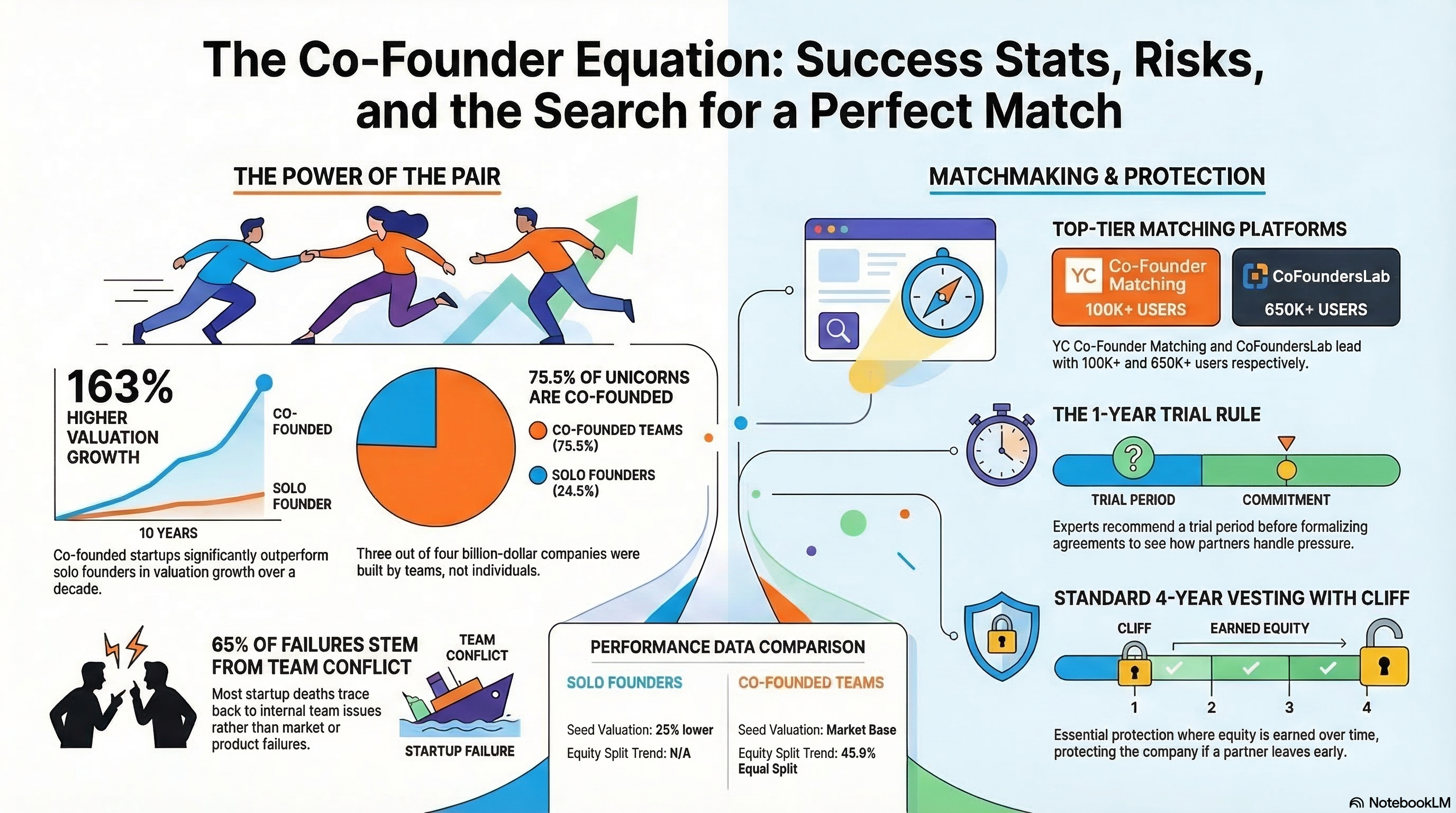
For non-technical founders, the search for a technical co-founder frequently becomes a paralyzing obsession, often described in venture circles as "chasing the Sasquatch". The error lies in the assumption that a co-founder title is a prerequisite for high-level technical commitment. This mindset often reflects a perceived "laziness" or lack of commitment, where the founder seeks someone to build their idea for free in exchange for equity. In reality, high-caliber engineers are rarely motivated by building someone else's idea without existing traction or capital.
A more effective strategy often involves hiring a "founding engineer". While a co-founder joins at the "zero stage" to share existential risk and shape the company's fundamental trajectory, a founding engineer typically joins once initial momentum is established. The founding engineer role requires a hybrid skillset: full-stack capability, the ability to build architecture from scratch, and a strong product intuition that allows them to talk to customers and test assumptions. Misunderstanding this distinction leads to the "lofty title" trap, where founders grant C-level titles prematurely, creating downstream effects that complicate future leadership hiring and internal promotion paths.
Equity and Compensation Architecture for Early Technical Hires
Role Category | Typical Equity Range (%) | Median Salary (2025/2026) | Strategic Incentive Focus |
Technical Co-Founder | 20.0%−50.0% | Low (Pre-funding) | Long-term ownership; existential risk |
Founding Engineer (#1) | 1.0%−5.0% | $147,000 (Seed Stage) | Architecture; product DNA; early culture |
Senior Early Engineer | 0.5%−2.0% | $189,000 | Execution; scaling; mentoring juniors |
Junior Early Engineer | 0.1%−0.5% | $112,833 | Tactical velocity; learning and growth |
Founders must also avoid the "zero salary as a flex" mistake. While taking no salary might seem to signal commitment, investors often view it as a sign of poor planning or a risk that the founder will be distracted by side work to meet personal expenses. Setting a "reasonable" salary that prevents burnout while maintaining a 24-month runway is considered the "sweet spot" for seed-stage leadership.
Talent Identification Pathologies: Pedigree vs. Practicality
A pervasive mistake in early-stage hiring is the overvaluation of "pedigree," such as experience at FAANG companies or elite academic institutions. While these credentials indicate intelligence and the ability to operate within high-scale environments, they do not necessarily translate to the "scrappy," high-ambiguity requirements of a startup. An engineer who has spent years optimizing a specific backend service at Google may lack the experience needed to build a complete product architecture from nothing.
The research emphasizes hiring for "execution" over mere credentials. "Green flags" include previous startup experience, clear communication of complex technical concepts, and a proactive approach to problem-solving. Conversely, "red flags" include an inability to explain the "why" behind technical decisions, resistance to learning new technologies, and a tendency to bad-mouth previous employers.
Technical Assessment Red Flags and Detection Strategies
Red Flag Symptom | Underlying Risk | Detection Strategy |
Vague Technical Explanations | Lack of deep understanding or overstatement of role | "Probing" questions on specific hurdles and solutions |
Lack of Passion for Learning | Inflexibility; reliance on outdated "comfort zones" | Ask about emerging trends or recent tech discoveries |
Ignoring Edge Cases | Sloppiness; lack of attention to detail | Practical coding tasks that require handling input constraints |
Poor Communication | Difficulty collaborating with non-technical stakeholders | Require explanation of technical concepts in plain language |
Negative Speak of Past Roles | Attitude problems; lack of accountability | Behavioral questions regarding past conflicts and failures |
The reliance on generic "LeetCode-style" coding challenges is often criticized as a significant mistake. These tests may filter for candidates who are good at competitive programming but fail to assess how an engineer actually works within a team's codebase or makes real-world trade-offs. The most effective vetting involves a three-stage process: a general screening, a technical deep dive (often aided by a consultant for non-technical founders), and a small, paid practical task that reflects the day-to-day work of the startup.
Architectural Governance and the "Hype-Stack" Trap
First-time founders frequently succumb to the "hype" surrounding new programming languages or frameworks, often at the urging of early developers who want to build their resumes with trendy technology. This "Resume-Driven Development" (RDD) introduces significant risk, as unproven technologies may have "undocumented failure modes" or lack a robust talent pool for future hiring.
The strategic alternative is the "Boring Stack" advantage, which prioritizes mature, stable, and well-documented tools like PHP, MySQL, or Postgres. These technologies follow the "Lindy Effect," where their future life expectancy is proportional to their current age. Using boring technology minimizes "accidental complexity," allowing the startup to focus its limited "innovation tokens" on the product's unique value proposition rather than on wrestling with infrastructure.
Comparative Impact of Technical Stack Choices
Metric | "Hype" Stack (e.g., Complex Microservices) | "Boring" Stack (e.g., Modular Monolith) |
Development Velocity | Slower; days to weeks for infra configuration | Faster; hours to days for feature deployment |
Maintenance Cost | Higher; frequent framework shifts and updates | Lower; stable ecosystem with extensive support |
Hiring Pool | Niche; competitive; expensive | Broad; easier to vet and hire |
Scalability | Theoretical "hyper-scale" benefits early on | Practical vertical and horizontal scaling paths |
The buildup of technical debt is an inevitable byproduct of the "speed-first" startup environment, but failing to manage it is a critical error. Research indicates that developers spend up to 42% of their week managing technical debt, which can consume 20−40% of a startup's IT budget. Founders who ignore non-functional requirements like security, performance, and logging in the early stages often find that retrofitting these features later is far more expensive and risky.
Organizational and Cultural Pathologies
A common mistake in the early "heads-down" phase is building a team before establishing clear cultural values. Without a cultural "north star," the team may lack alignment in communication, decision-making, and conflict resolution, leading to retention issues as the company grows. This drift is exacerbated by "lofty titles," which set a tone of hierarchy rather than the "we're all owners" mentality necessary for early-stage success.
Furthermore, founders often misunderstand the "Wrong Economy" of seniority ratios. Hiring multiple junior engineers to save on costs often backfires, as senior engineers spend their time reviewing junior work rather than building new features. This setup leads to a loss of motivation among seniors and a codebase that lacks automated tests and scalability.
The Evolution of Organizational Debt
Debt Category | Early Symptom | Long-Term Consequence |
Technical Debt | Quick patches; lack of testing | Innovation slowdown; high maintenance costs |
Cultural Debt | Values not defined; "hero culture" | Burnout; lack of collective accountability |
Management Debt | Title inflation; lack of feedback | Difficulty hiring senior leaders later; power struggles |
Knowledge Debt | Tribal knowledge; lack of documentation | Onboarding bottlenecks; knowledge loss on turnover |
The transition from "Hero Culture"—where a single engineer saves the day through late-night efforts—to a collaborative, "Collective Reliability" model is essential for long-term health. Heroism does not scale; it creates single points of failure and increases the "bus factor" risk. Mature organizations reward collaboration, mentorship, and documentation over individual heroic outbursts.
The Onboarding Crisis and Enthusiasm Deflation
Founders often assume that an experienced developer can succeed from day one with minimal guidance—a fair expectation for skill, but unfair regarding the specific context of the startup. The lack of a structured onboarding process is a primary cause of "enthusiasm deflation". New hires who are met with a lack of preparation—missing gear, unclear goals, or "information overload"—spend their first days guessing rather than working.
The "unstructured culture" of many startups is often a mask for disorganization. Effective onboarding requires "pre-boarding" (handling paperwork before day one), clear 30/60/90-day success outcomes, and an assigned "onboarding buddy" to facilitate knowledge transfer. Failure to document technical setup, core workflows, and decision-making records results in time wasted "rediscovering" information that should have been documented.
Onboarding Success Framework
Phase | Core Objective | Critical Documentation/Actions |
Pre-boarding | Remove administrative friction | Tax forms; benefits enrollment; equipment setup |
Day One | Establish belonging and context | Team introductions; access to internal wiki/ATS |
Week One | Tactical momentum | Simple task completion; technical setup guide |
Day 30/60/90 | Strategic alignment | Defined success outcomes; regular feedback loops |
Strategic Missteps in External Talent Management
The dilemma of "hiring vs. outsourcing" often leads founders to the mistake of prioritizing cost over risk. While agencies can save time during rapid market entry, core proprietary features should ideally be built in-house to protect intellectual property and ensure long-term maintenance. A common mistake when using external teams is treating them as "task machines"—giving them a spec and expecting execution without inviting them to question assumptions or flag risks.
Founders who do not verify who is actually building their product often fall victim to the "sales bait-and-switch," where senior engineers lead the sales pitch but junior developers execute the code. Without clear definitions of "done" (e.g., tested, deployed, documented), misunderstandings pile up, and progress slows. Furthermore, relying on freelancers for a core product is risky because they lack the "long-term commitment" of an in-house team and may "disappear overnight" with their files.
Risks of External Development Models
Model | Primary "Hidden" Cost | Mitigation Strategy |
App Dev Agency | Rework due to minimal planning | Optimize for risk over price; weekly demos |
Freelancer (Project-based) | Technical debt; lack of long-term support | Limit to non-core, one-off features |
Outsourced "Beta" | Tech stack mismatch; "house of cards" code | Hire a technical consultant to oversee build |
Task-based Execution | Loss of critical thinking from developers | Encourage pushback and risk flagging |
Compensation Trends and the 2025/2026 Market Context
In the 2025-2026 market cycle, startup compensation has moved beyond the "salary wars" of the previous boom. Salary growth for software engineers has stabilized at approximately 1.6% to 2.2% year-over-year, regardless of the funding stage. This stabilization suggests a shift toward strategic positioning based on "total compensation," including equity and cultural benefits.
The "AI Founder Premium" is a notable trend, with AI founders and their early hires commanding significantly higher salaries (5.4%−9.1% higher for engineers) due to the intense demand for foundational model expertise. However, the gender pay gap, while shrinking, remains a reality that early-stage founders must actively address to build equitable and resilient organizations.
Tech Talent Compensation Benchmarks (National Averages 2025/2026)
Role / Title | Salary Range (Low - High) | Median Pay | Top Skills Increasing Pay |
Chief Technology Officer (CTO) | $190,000−$310,000 | $245,000 | AI/ML; Cloud Architecture; Cybersecurity |
Senior Software Engineer | $180,000−$270,000 | $225,000 | Kubernetes; Docker; Microservices |
AI Research Engineer | $124,000−$210,000 | $160,000 | ML Frameworks; Python; Data Science |
Solutions Architect | $118,000−$184,000 | $148,000 | High-availability Architecture; AWS/GCP |
Note: Compensation varies significantly by industry, with "Frontier AI labs" paying an average of $210,000 for entry-level talent, compared to $105,000 in Enterprise SaaS.

Conclusion: Mitigating the Foundational Recruitment Deficit
The analysis of early-stage recruitment errors reveals that the primary failure mode for first-time founders is a lack of "Research Thinking"—the ability to speed up discovery and validation before committing to a hire or a technology. To navigate the complexities of 2025 and beyond, founders must move away from "cargo culting" (copying the practices of larger firms) and embrace the scrappy, iteration-focused realities of a seed-stage venture.
The path forward requires a transition from "Hiring for Today" to "Hiring for Tomorrow". This involves not just filling a gap in the Jira board, but building a core team of "generalists" who can handle ambiguity, own entire problem areas, and treat the company's resources as their own. By establishing cultural values before headcounts, prioritizing execution over pedigree, and choosing "boring" technology to maximize velocity, first-time founders can build the technical and organizational foundation necessary to scale into a successful enterprise. The most successful founders are not those who hire the fastest, but those who build the most resilient systems—both in code and in people.
Want to calculate the equity for your cofounder?
Nail your cap table before you sign. Whether you're splitting equity with a co-founder or planning your next funding round, our Equity Calculator gives you precision in seconds
Equity calculator →