Why Technical Founders Must Learn Marketing
February 24, 2026 by Harshit GuptaThe contemporary technology landscape has entered an era where the architectural integrity of a product, while necessary, is no longer a sufficient condition for commercial viability or market dominance. For the technical founder, the transition from an individual contributor focused on code and system architecture to a strategic leader requires a fundamental shift in perception regarding the role of marketing. This report explores the systemic necessity of marketing literacy for technical founders, deconstructing the psychological barriers that impede this transition, and detailing the strategic frameworks—ranging from product-market fit to founder-led storytelling—that define successful high-growth ventures. The analysis demonstrates that marketing is not an auxiliary function to be outsourced once the "real work" of building is complete, but is instead an essential engineering-adjacent discipline that governs the lifecycle of innovation from discovery to scale.
The Psychological Architecture of the Build It and They Will Come Fallacy
One of the most pervasive and destructive myths within the entrepreneurial ecosystem is the notion that a superior product will inherently find its audience without deliberate distribution efforts, a concept frequently termed the "Build It and They Will Come" fallacy. This mindset often finds its origins in the "Field of Dreams" cinematic narrative, but when applied to complex digital presences or SaaS platforms, it inevitably results in fragmented rollouts and commercial stagnation. For the technical founder, this fallacy is not merely a tactical error but a psychological defense mechanism that allows them to remain within the comfort of a controlled, predictable development environment while avoiding the messy, high-rejection reality of market engagement.
The path of least resistance for those with deep engineering talent is to continue iterating on functionality, a phenomenon known as the Product Trap. This trap is characterized by the belief that the best use of time is always improving the product, leading founders to add features that users never requested while failing to validate whether a market actually exists for the core solution. Statistics provided by organizations such as CB Insights and Harvard Business School underscore the severity of this misalignment, noting that 35% of startups fail due to a lack of market need, and approximately 95% of new products vanish because they were developed in total isolation from the end-user.
Psychological Barrier | Mechanism of Failure | Strategic Consequence |
Path of Least Resistance | Avoiding sales/marketing because they are unfamiliar and unpredictable. | Misallocation of capital toward unused features. |
The Perfectionism Loop | Delaying launch until the product is "fully baked" or perfect. | Missed opportunities for early feedback and iteration. |
Cognitive Bias (Expert Gap) | Believing that product managers or founders see the future better than domain experts. | Building solutions for non-existent or secondary problems. |
Fear of Rejection | Using "one more feature" as an excuse to avoid talking to potential users. | Building a "Frankenstein" product disconnected from reality. |
The long-term impact of this psychological isolation is the creation of a "Frankenstein's monster" of a digital presence, where various slices of the system are poorly connected and stakeholders are not meaningfully involved in defining the product's utility. This lack of buy-in creates a cascade of inefficiencies, as early adopters—who are often the most sophisticated and valuable users—find ammunition to stay out of the new platform because their specific business needs were ignored during the build phase. For the technical founder, learning marketing is the only mechanism to break this cycle, moving from a mindset of invention to one of solution adoption.
The Analytical Spectrum of Product-Market Fit
Product-market fit (PMF) serves as the primary metric for determining whether a startup has identified a viable path to scale. Rather than a binary state, PMF is a continuous spectrum that measures the alignment between demand, solution, and distribution. Technical founders must view PMF through this multidimensional lens to avoid the fatal mistake of scaling an unvalidated product.
The Dimensions of Demand, Solution, and Distribution
A robust understanding of PMF requires an analysis of its three core dimensions. Demand is characterized by the number of people who share an unmet need and the severity of the pain point they experience. The solution dimension measures how well the product addresses that need and the willingness of the customer to pay for it. Distribution, often the most overlooked dimension by technical founders, describes the Go-To-Market motion and the channels through which customers discover the product.
The interaction between these dimensions determines the growth trajectory. When supply matches demand and distribution is frictionless, companies experience "hypergrowth," where growth occurs rapidly with minimal effort. Conversely, poor PMF requires significant effort to achieve even marginal growth. The strategic advantage of focusing on PMF is the ability to achieve organic distribution; as noted by industry experts, if users love a product, they will recommend it to others without the need for a formal referral mechanism.
Quantifying the Fit Spectrum
To move beyond qualitative assumptions, founders must utilize frameworks to measure their level of fit. One widely accepted indicator is the "disappointment score," which asserts that a company has achieved a baseline level of PMF if at least 40% of its users report they would be "very disappointed" if the product were discontinued. Furthermore, the transition from one level of fit to another dictates the company's operational priorities.
PMF Level | Intensity of Fit | Growth Characteristics | Strategic Priority |
Level 0 | Non-existent | No signals or market presence. | Discovery and JTBD research. |
Level 1 | Light | Some users find value; retention is unstable. | Iterating on the core value proposition. |
Level 2 | Moderate | Consistent interest; revenue starts to materialize. | Identifying the Ideal Customer Profile (ICP). |
Level 3 | Strong | High inbound interest; retention curves flatten. | Scaling distribution and removing bottlenecks. |
Level 4 | Intense | Demand outstrips supply; organic virality. | Operational scaling and adjacent segment entry. |
Achieving "Intense" PMF requires a shift from pushing the product into the market to responding to the market's "pull". For technical founders, this shift is critical because it lowers the Customer Acquisition Cost (CAC) by attracting users who are already seeking the solution, thereby increasing the Lifetime Value (LTV) relative to acquisition expenses. If the LTV/CAC ratio is not optimized, no amount of technical depth can sustain the business's financial viability.
Engineering the Distribution Funnel: Data-Driven Marketing and Automation
The modern marketing discipline is increasingly becoming a branch of data science and systems engineering, providing a unique advantage to technical founders who can apply their existing skills to the commercial side of the business. Data-driven marketing automation allows founders to move beyond guesswork, leveraging unified customer data to optimize strategies in real-time.
The Unified Customer View and CDP Architecture
The foundation of a technical approach to marketing is the integration of data across all touchpoints to create a 360-degree view of the customer. This involves the deployment of a Customer Data Platform (CDP) that consolidates information from CRM systems, website analytics, transaction logs, and social platforms into a centralized, actionable database. For the technical founder, this is a data architecture problem; eliminating data silos prevents the fragmentation of the user experience, such as marketing a product to a customer who has already made a purchase.
Effective data automation allows for personalization at scale, where context-specific content and recommendations are delivered automatically based on real-time behavior. This efficiency allows small teams to compete with larger organizations by delegating repetitive tasks to software, freeing the founder to focus on creative strategy and high-level decision-making.
Technical SEO and Systemic Visibility
Technical SEO represents another domain where engineering expertise provides a significant marketing advantage. Automating technical SEO audits—using tools like Screaming Frog, SEMrush, or Ahrefs—allows for the rapid identification of crawl errors, broken links, and duplicate content. Furthermore, the automation of structured data and schema markup helps search engines understand content more effectively, potentially boosting visibility through rich snippets.
Integrating these SEO efforts with broader business systems via APIs ensures that ranking data and traffic metrics flow seamlessly into marketing reports. This allows for tactical analytics, such as A/B testing of ad creatives or real-time bidding adjustments based on daily sales data. By treating SEO as a technical system to be maintained and optimized, founders can drive sustainable organic traffic, reducing reliance on expensive paid acquisition channels.
Founder-Led Marketing: The Trust Economy and the Art of Storytelling
In the current market environment, consumers and B2B buyers increasingly favor transparency and authenticity over corporate messaging. Founder-led marketing has emerged as a critical strategy for building trust, where the founder's personal brand and voice serve as the primary marketing tool. This approach is particularly effective for technical founders who can demonstrate deep expertise and passion for the problem they are solving.
The Narrative Strategy of David Cancel and Drift
David Cancel, a five-time founder and former software engineer/CTO, provides a definitive case study in the transition from a technical role to a storytelling-focused leader. Despite his background in computer science, Cancel recognized that storytelling was a vital internal and external center of gravity for scaling his company, Drift. He applied an engineering mindset to the problem, studying human decision-making, cognitive biases, and social psychology to understand how narrative influences behavior.
Cancel's approach emphasizes that as a company grows, initiatives and projects often get misinterpreted without a strong underlying story. To counter this, he treats storytelling as a muscle that must be trained internally through specific techniques:
Asynchronous Communication: Using video and audio messages to communicate with leadership allows for more thoughtful articulation and creates a shareable "artifact" of the founder's vision.
The Editor's Pen: Adopting the role of an editor who "painfully prunes" the company's messaging to ensure clarity and focus.
The Hero's Journey: Framing the product’s role in the customer's world through narrative structures like starting at the end and focusing on the user as the hero.
Building in Public as a Growth Driver
The concept of "building in public" has become a powerful mechanism for technical founders to generate organic leads and lower acquisition costs. By sharing revenue figures, internal processes, and the challenges of the growth journey, founders like Adam Robinson at RB2B and Tyler Denk at Beehiiv have scaled their SaaS companies rapidly. This transparency builds a narrative that inspires people to take the leap with the product, transforming a technical tool into a shared mission.
Founder/Company | Key Marketing Strategy | Outcome/Impact |
David Cancel (Drift) | Obsessive internal/external storytelling. | Shifted the market toward "Conversational Marketing." |
Adam Robinson (RB2B) | Building in public on LinkedIn; sharing revenue. | Zero to $20M ARR in under two years. |
Tyler Denk (Beehiiv) | Active audience engagement; social feedback loop. | Integrated social interactions into product roadmap. |
Jimmy Kim (Sendlane) | "Beef marketing" against larger competitors. | High engagement by positioning against the status quo. |
The implication for the technical founder is that their voice is an asset that must be deployed relentlessly. Success in the trust economy requires showing up regularly, targeting a specific audience rather than trying to appeal to everyone, and maintaining a consistent angle or "beef" that distinguishes the company from the competition.
Product-Led Growth: Integrating Marketing into the Technical Architecture
Product-led growth (PLG) represents the ultimate synergy between engineering skills and marketing objectives. In a PLG model, user acquisition, conversion, and expansion are driven primarily by the product itself. This approach shifts the focus from aggressive sales tactics to crafting seamless user experiences that convert occasional users into brand advocates.
The Engineering Foundations of PLG
Technical founders are uniquely qualified to implement PLG because its success depends on features that reduce friction and deliver immediate value. This includes the engineering of self-service models, where 81% of customers prefer to discover and use a product on their own without human intervention.
PLG Mechanism | Engineering Implementation | Marketing Result |
Freemium Pricing | Multi-tenant architecture with feature gating. | Value demonstration before capital extraction. |
Network Effects | Collaborative features (invites, shared workspaces). | Adoption rate increases with each new user. |
The "Eureka!" Moment | Instrumentation to track key value actions. | Conversion from occasional to committed user. |
Virality Loops | Automated referral triggers and incentives. | Sustainable, low-cost organic growth. |
PLG also relies on the identification of Product-Qualified Leads (PQLs)—users who have already experienced value through a free trial or freemium account. For the technical founder, this involves building the telemetry necessary to identify when a user has reached their "aha!" moment, allowing marketing teams to target them for upsells or expansion revenue based on actual engagement data rather than speculative personas.
Case Study: Stripe and the Developer-First Growth Engine
Stripe's ascent to a multibillion-dollar valuation is primarily attributed to its focus on the developer experience (DX) as a core marketing strategy. Founders Patrick and John Collison recognized a significant gap in the payment processing market: while e-commerce was booming, the underlying technology was decades old and required weeks of negotiation with banks.
Stripe's marketing was effective because it avoided traditional B2B tactics like analyst reports and pushy sales teams, which developers often dislike. Instead, they focused on:
The Seven Lines of Code: They simplified complex financial infrastructure into a "copy and paste" solution that could be integrated instantly.
The Collison Installation: In the early days, if a developer expressed interest, the founders would not send a link; they would take the developer's laptop and set up the software for them on the spot.
Technical Documentation as Marketing: They treated documentation as a product, ensuring it was clear, comprehensive, and allowed for a hands-on experience without a hard pitch.
Strategic Pricing for Feedback: Stripe initially charged higher rates to ensure their users were motivated by product quality rather than cost, forcing the team to build a superior product to justify the premium.
The success of Stripe demonstrates that for a technical audience, the "product" and the "marketing" are indistinguishable. If the integration makes the user's life 1,000x easier, the developer becomes the loudest advocate and a key decision-maker within their organization.
Recruitment Marketing and the Battle for Talent Density
A technical founder's ability to market the company is as critical for recruitment as it is for customer acquisition. High-growth environments often face a "messy middle" where the team must transition from generalists to specialists. Maintaining talent density—a concentration of truly excellent people—is a force-multiplier that depends on the founder's ability to articulate the company’s vision and culture.
Employer Branding as a Strategic Asset
75% of job seekers consider an organization's employer brand before they apply. For a technical founder, recruitment marketing involves building a narrative around who the company is and what it offers beyond a paycheck. This can be achieved through:
Transparency as a Magnet: Sharing the internal workings of the product team or making the company handbook public drives interest from mission-aligned individuals.
Content Strategy for Applicants: Creating blogs, tutorials, and videos that highlight the company's engineering challenges and the impact of the work.
Founder-Led Recruiting: Even as the company scales to 50 employees, founders should remain involved in the final hiring rounds to validate values-fit and the "hiring bar".
The Link Between Funding and Hiring Strategy
The recruitment marketing strategy must evolve in tandem with the funding cycle. Newly funded companies represent superior prospects for recruitment because hiring urgency is high. Seed-stage marketing should emphasize the founder's vision and the ability for hires to wear multiple hats, while Series A and B stages require marketing aimed at specialists who can drive operational scaling.
Funding Stage | Recruitment Marketing Focus | Primary Hiring Goal |
Seed | Founder vision, versatility, and equity. | Core team and PMF validation. |
Series A | Growth trajectory and operational scaling. | Customer acquisition and product refinement. |
Series B+ | Market leadership and specialized expertise. | Market expansion and technical specialization. |
By being "super vocal" on social channels and relentlessly blogging about engineering challenges, technical founders activate inbound recruitment channels. This allows potential candidates to map their own motives to the company's work before they even apply, serving as a natural filter for alignment.
The Venture Capital Perspective: Evaluating Commercial Instinct
Venture capitalists do not evaluate technical founders on their engineering depth alone; they look for a combination of technical talent and commercial product judgment. Founders who can translate customer pain directly into product specifications—and see the product end-to-end before it exists—are significantly more likely to secure pre-seed and seed investment.
Behavioral Diligence and Market Direction
VCs often employ "behavioral diligence" to test a founder's Go-To-Market (GTM) instinct. This involves having the founder pitch to members of the investor's network to observe how they handle objections, educate users, and adapt to feedback in real-time. The signal investors are looking for is whether the founder is a "customer-oriented builder" who connects technical decisions to buyer value from day one.
Furthermore, investors prioritize market direction over static Total Addressable Market (TAM). A technical founder who can identify tailwinds—such as regulatory shifts, technological inflections, or workflow changes—that expand the pool of buyers over time is perceived as more strategic than one who anchors on today’s market size.
Differentiating Depth from "AI Theater"
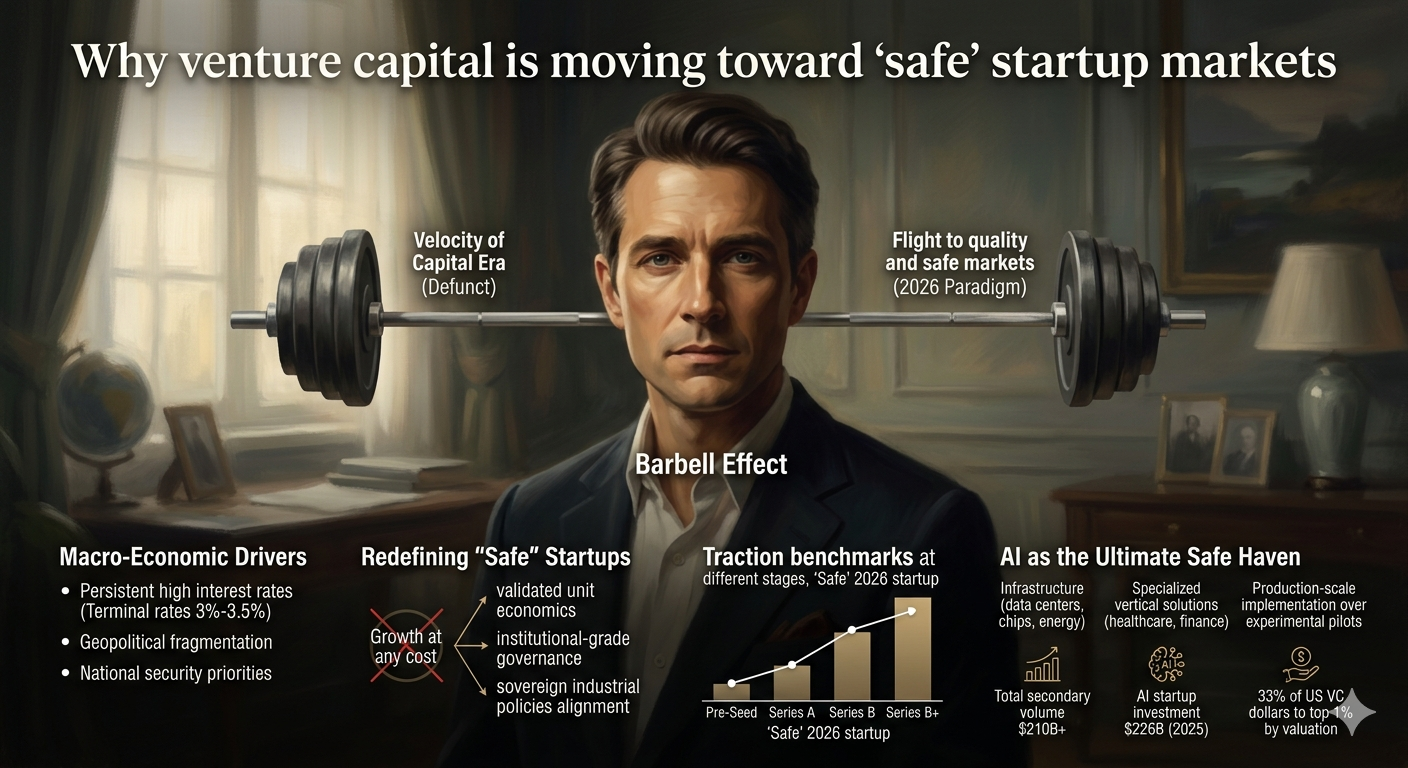
In the current investment climate, particularly regarding artificial intelligence, technical founders face the hurdle of differentiating their product from "AI theater"—positioning that lacks durability or differentiated value. Marketing literacy allows the founder to articulate the "moat" of their technical architecture in a way that resonates with the commercial requirements of the fund. Valuation, from a VC's perspective, is a fund construction decision; a founder who lacks commercial instincts and accepts an inflated valuation without a clear path to returning the fund may be a poor investment despite their technical brilliance.
Strategic Leadership Lessons from Veteran Entrepreneurs
The transition to entrepreneurship is often compared to a mission, requiring leadership, perseverance, and critical thinking—qualities inherently possessed by military veterans. For technical founders, the veteran perspective provides a structured approach to the "daunting and lonely" journey of founding a business.
Veterans thrive in entrepreneurship because they view their military experience as a valuable asset for navigating the business world, leveraging skills such as problem-solving and cultural competency. The "mission-driven" approach to business involves:
Clarifying the Mission: Identifying a community problem that their training can solve.
Strategic Planning: Creating a roadmap that outlines goals, market analysis, and financial projections.
Team Building: Identifying individuals whose skills complement their own and who share the vision.
Veteran-led businesses often leverage marketing tools to highlight their status, as many consumers prefer supporting veteran-owned companies. This serves as a reminder to technical founders that their personal history and values—when properly marketed—can be a significant competitive differentiator in a crowded marketplace.
Synthesis and Strategic Outlook
The convergence of engineering and marketing is the defining characteristic of the most successful technology companies of the twenty-first century. For the technical founder, the mandate to learn marketing is not an abandonment of their craft but its ultimate fulfillment. A product that remains unadopted is a solution that has failed its purpose. By mastering the spectrum of product-market fit, leveraging the power of storytelling to build trust, and engineering the product for growth, founders can ensure their technical innovations achieve the scale they deserve.
The transition from Chief Building Officer to Chief Inspiration Officer is the final stage of a founder's evolution. This journey requires accepting a measure of chaos and being willing to "throw away" temporary equilibria in favor of adaptation. Ultimately, marketing provides the instrumentation necessary to guide the company to its next milestone, ensuring that the plane is not being flown blind. Technical founders who embrace this reality transform their products into powerful marketing tools, driving sustained success with every user interaction.

Want to calculate the equity for your cofounder?
Nail your cap table before you sign. Whether you're splitting equity with a co-founder or planning your next funding round, our Equity Calculator gives you precision in seconds
Equity calculator →