The Myth of the Perfect Startup Idea
June 27, 2026 by Harshit Gupta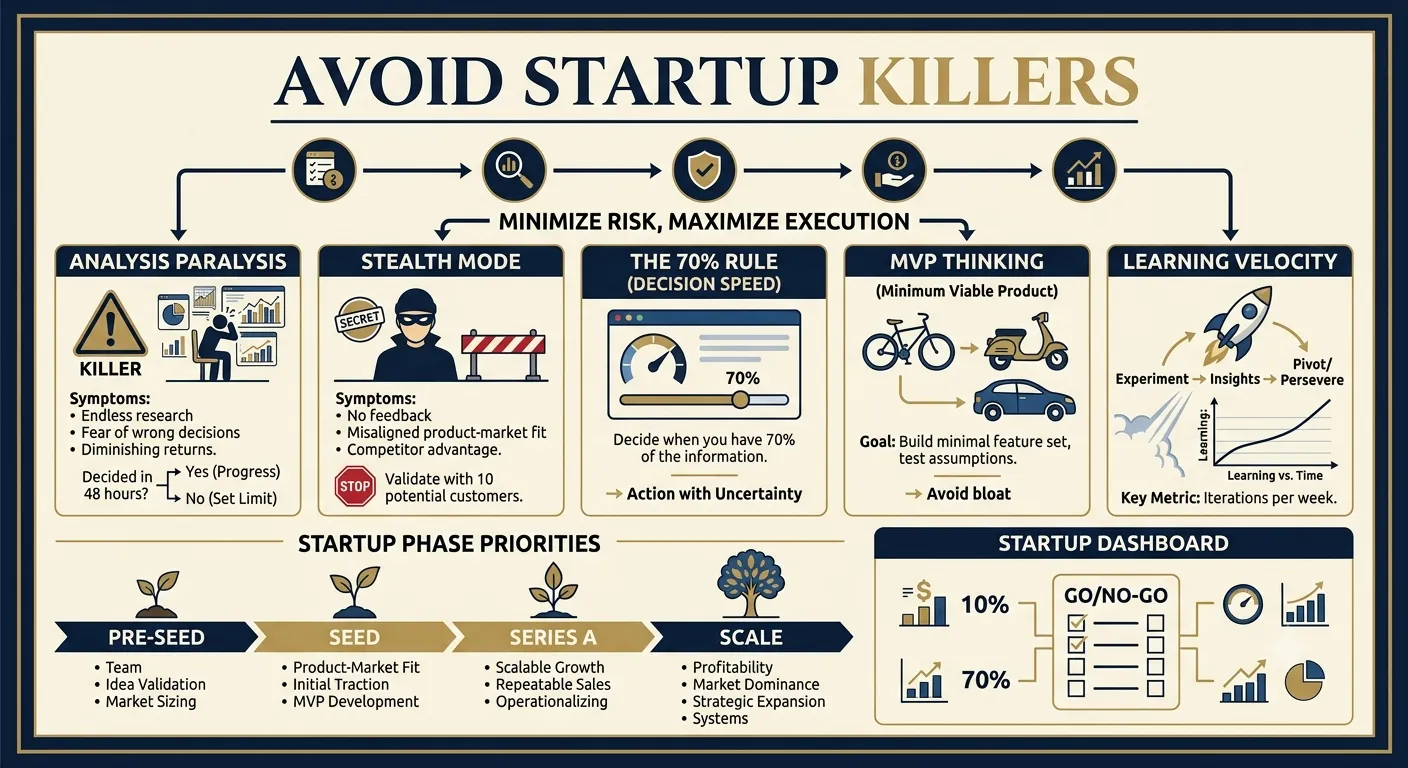
The prevailing narrative within the global venture ecosystem has long been characterized by a profound tension between the sanctity of the original business concept and the cold utility of tactical execution. For decades, the "eureka" moment—the singular flash of inspiration that ostensibly birthed giants like Google or Airbnb—has been fetishized in popular media and entrepreneurial folklore. However, institutional research and the lived experience of high-growth founders suggest that this "perfect idea" is a statistical and strategic myth. In reality, the initial premise of a startup serves as little more than a "blob" of potential that must be aggressively shaped, tested, and often discarded in favor of insights gleaned through market friction. The trajectory from a nascent hypothesis to a multi-billion-dollar "unicorn" is not a straight line of preordained success but a chaotic journey through what strategic analysts term the "Idea Maze".
The Fallacy of Intellectual Primacy and the Execution Narrative
A significant portion of the startup community has pivoted toward the mantra that "execution is everything," often dismissing the idea as entirely worthless. This counter-narrative posits that since everyone has "great" ideas, value only resides in the capacity to build and sell. Yet, this perspective is increasingly viewed as an oversimplification that may inadvertently stifle true innovation. While a powerful idea does not require perfect execution to initiate, it necessitates a coherent, problem-solving vision that challenges the status quo. The emphasis on execution over ideas can reinforce a system that benefits established players with existing resources, as newcomers are told they need a "perfect" background or specific technical co-founders before their vision is deemed valid.
The rise of no-code and low-code tools has begun to dismantle these technical barriers, shifting the locus of power back toward the visionary. When the cost of building a prototype drops below $1,000, the merit of the underlying idea and its capacity to solve a "hair-on-fire" problem becomes the primary differentiator. Consequently, execution should not be viewed as the cause of success but as its byproduct—a tool used to validate or invalidate the fundamental learning that a startup must undergo. The graveyard of startups is littered with companies like Juicero and Quibi that executed flawlessly on engineering and marketing but failed because they were operating on assumptions that did not align with market reality.
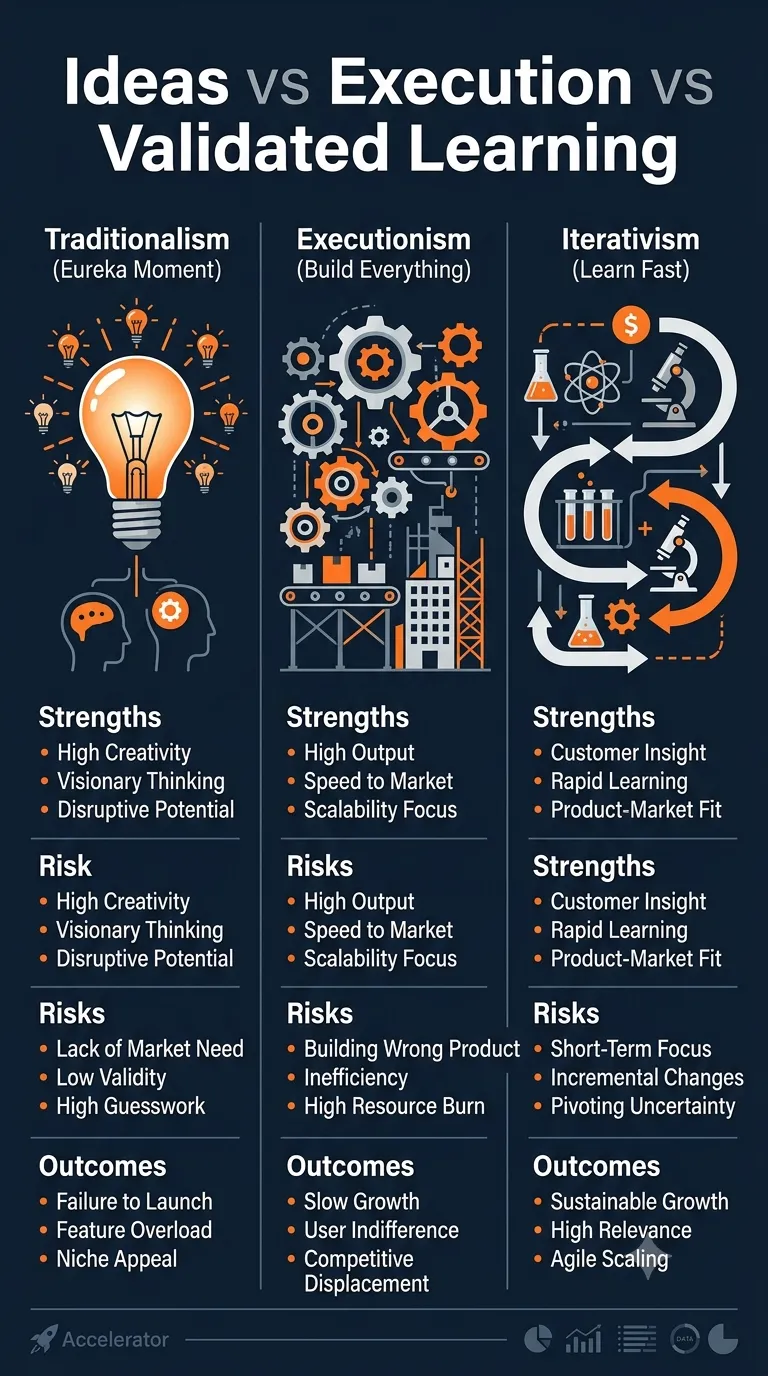
Conceptual Framework | Focus | Core Philosophy | Risk Factor |
Traditionalism | The "Eureka" Idea | Success is preordained by the brilliance of the initial concept. | Analysis paralysis and fear of market contact. |
Executionism | Tactical Output | Ideas are worthless; only building and selling matter. | "Building for building's sake" without a valid problem. |
Iterativism | Validated Learning | The idea is a starting point; success is the result of rapid adaptation. | Over-pivoting or failing to commit to a vision. |
Navigating the Idea Maze: A Strategic Requirement
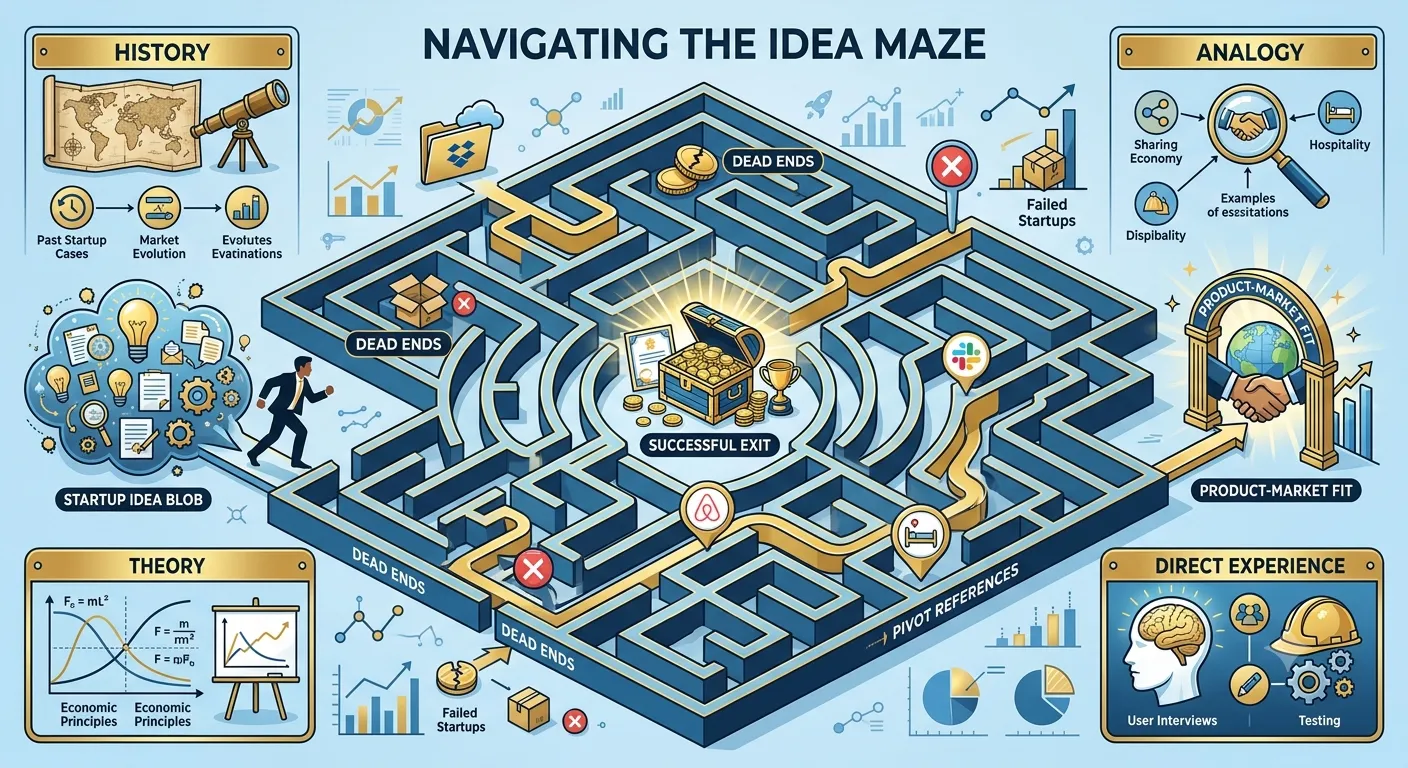
The "Idea Maze" is a metaphor for the complex industry landscape that a founder must navigate. It suggests that a startup idea is not a static point but a multi-year plan contemplating various paths based on shifting global conditions. A successful founder is not merely an executor but a navigator who anticipates which turns lead to "treasure" and which lead to "certain death". This navigation requires an obsessive understanding of industry history, key players, and past casualties. Founders who enter the maze without a sense of why previous iterations of their idea failed—such as the dozens of cloud storage companies that preceded Dropbox—are essentially running blind into the entrance.
To construct a map of this maze, founders must look toward four primary sources of intelligence: history, analogy, theory, and direct experience. History reveals why similar attempts failed, such as the technical limitations or market conditions of the past. Analogy allows founders to apply successful models from one industry to another, such as applying Airbnb’s marketplace dynamics to a new service sector. Theories, developed by both academics and practitioners, provide a generalized framework for data, such as Clayton Christensen’s theories on disruptive innovation. Finally, direct experience, often gained through years of domain expertise, provides the "founder-market fit" necessary to see walls that an outsider might miss.
The complexity of this maze explains why "stealth mode" is frequently a strategic error. The benefits of vetting an idea with potential customers, mentors, and experts far outweigh the risk of intellectual property theft. By staying in stealth, a founder isolates themselves from the very feedback loops required to map the maze accurately. Most good ideas have been tried before; the value lies in the unique insights the current founder brings to the "maze" in the current technological and economic climate.
The Primacy of Market Dynamics in Venture Outcomes
Institutional analysis from firms like Sequoia Capital and Andreessen Horowitz consistently identifies market quality as the most critical determinant of startup success. Marc Andreessen argues that in a "great" market—one with a vast number of potential customers desperate for a solution—the market literally pulls the product out of the startup. In this scenario, the market needs to be fulfilled and will be fulfilled by the first viable product that emerges, regardless of whether the team is flawless or the product is a "masterpiece".
This "Market is King" philosophy suggests that while a great team meeting a great market leads to "something special," a mediocre team in a great market will still likely succeed, whereas the best team in a "comatose" market will inevitably fail. This is because markets that do not exist do not care how smart the founder is or how well they execute. Consequently, the primary objective of an early-stage company is to reach Product-Market Fit (PMF)—a state where the market’s demand exceeds the company’s current ability to satisfy it.
PMF Archetype | Market Perception | Strategy for Success | Notable Examples |
Hair on Fire | Customers have a clear, urgent need and are actively seeking a solution. | Rapid go-to-market and best-in-class differentiation. | Wiz, Rippling |
Hard Fact | The problem is viewed as an unchangeable reality of life. | Market education and overcoming force of habit. | Square, HubSpot |
Future Vision | The solution sounds like science fiction or a "pipe dream". | Long-term talent attraction and finding commercial "pit stops". | Nvidia, OpenAI |
Achieving PMF is a binary experience for most startups. Before PMF, the founder’s life is defined by a desperate push: customers aren't quite getting the value, usage isn't growing, and sales cycles are long and fruit-less. After PMF, the experience shifts to a frantic pull: money piles up in the checking account, usage grows as fast as servers can be added, and the organization often "breaks" repeatedly under the weight of its own growth. Andreessen advises founders to be willing to "do whatever is required" to reach this fit, including changing people, rewriting products, or pivoting into entirely different markets.
The Lean Methodology: Execution as a Scientific Experiment
If the "perfect idea" is a myth, then the methodology of the "Lean Startup" is the ritual for its replacement. Developed by Eric Ries, this approach treats a startup as a human institution designed to create something new under conditions of extreme uncertainty. The core unit of progress in this environment is not the completion of tasks or the building of features, but "validated learning"—a rigorous method for demonstrating progress through scientific experimentation.
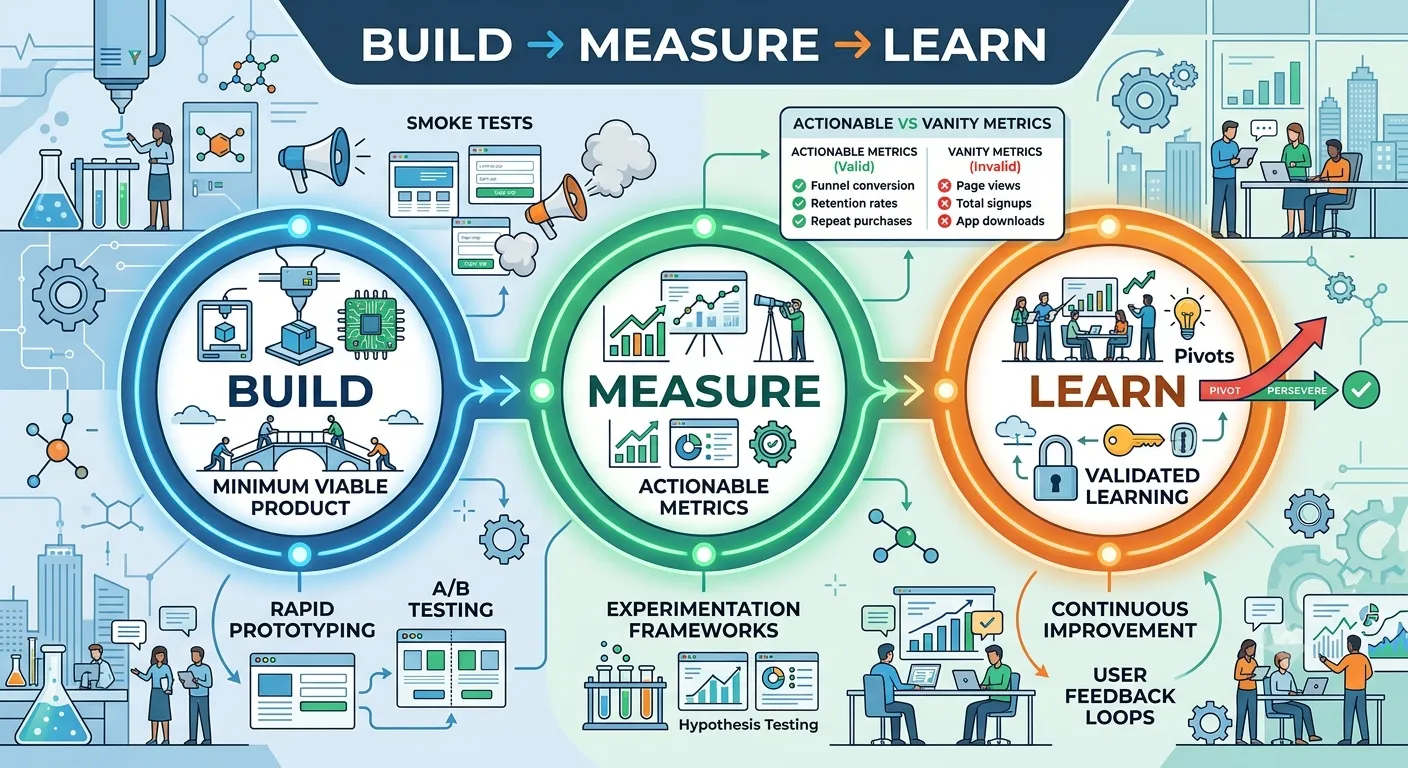
The "Build-Measure-Learn" feedback loop is the operational engine of this methodology. It starts by identifying a problem and building a Minimum Viable Product (MVP), which is the simplest version of the solution that allows for maximum learning with minimum effort. This MVP is not a scaled-down version of the final product but a strategic tool to test fundamental business hypotheses. For example, the founder of Zappos tested the hypothesis that people would buy shoes online by taking photos of inventory at local shoe stores and shipping them himself, rather than building a complex supply chain from day one.
The Mechanics of Validated Learning
Validated learning requires a shift from "vanity metrics"—such as total registered users or press coverage—to "actionable metrics" that demonstrate cause and effect. This involves:
Establishing a Baseline: Using an MVP to gauge current market interest through "smoke tests" or early sign-ups.
Tuning the Engine: Making isolated changes to the product or business model and measuring their impact on core metrics, such as conversion or retention.
Pivot or Persevere: Based on the data, deciding whether to continue with the current strategy or make a fundamental shift in direction.
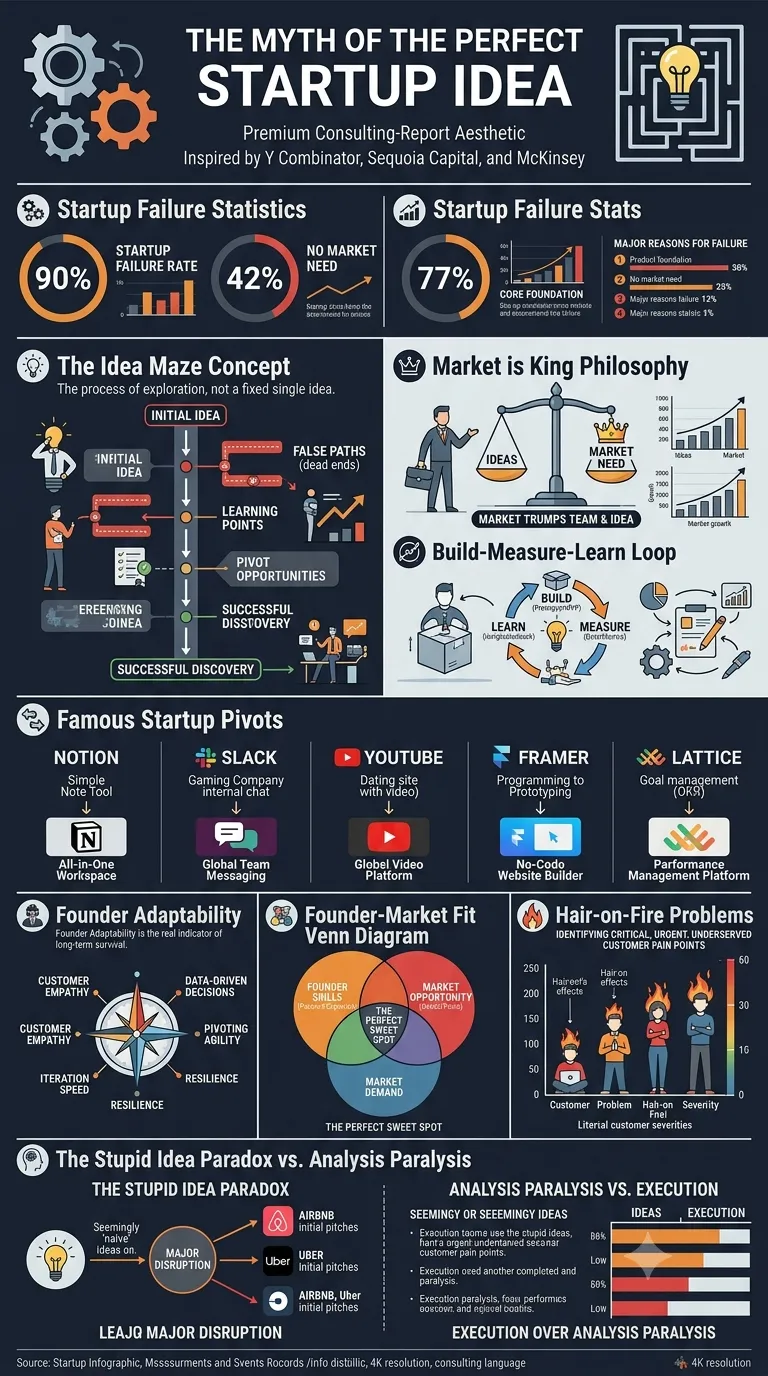
A pivot is not a failure but a "structured course correction" designed to test a new fundamental hypothesis about the product, strategy, and engine of growth. Startups typically fail when they skip these steps and scale prematurely, throwing resources at a product that has not yet found its footing in the market. In fact, 42% of startups fail simply because they build a product that the market does not actually need, a tragedy that the Lean methodology aims to prevent through early and constant market contact.
Case Studies in Evolutionary Success: The Power of the Pivot
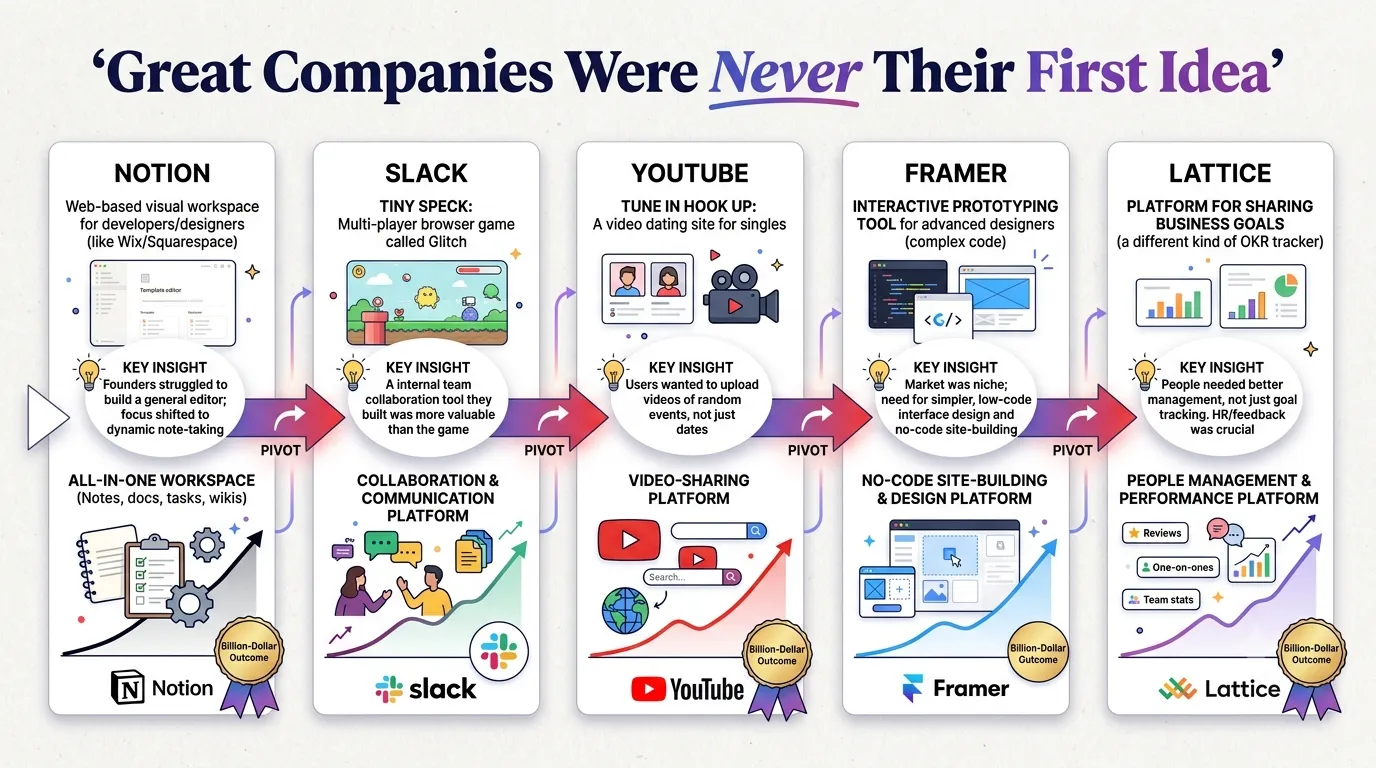
The histories of some of the most successful technology companies illustrate that their "perfect" ideas were actually the third or fourth iteration of a struggling initial concept. These pivots often involve moving from a "vitamin" (a nice-to-have tool) to a "painkiller" (an essential business requirement).
Notion: From No-Code Builder to Productivity Superapp
Notion’s co-founders, Simon Last and Ivan Zhao, originally set out to democratize software creation by building a programming application for non-coders. However, the initial product suffered from poor user retention; people found that building an app—even with no-code tools—was "extra work" rather than a solution to their daily problems. Compounded by a technical stack (Google’s Web Component) that was unstable and caused data loss, the founders reached a breaking point. They fired their team, moved to Kyoto, and rebuilt the product from scratch, shifting the focus to an integrated workspace for notes, wikis, and tasks. This pivot allowed them to keep the "building blocks" of their original vision while addressing a more immediate and universal need for better productivity tools.
Lattice: From OKR Planning to Performance Management
Lattice co-founder Jack Altman initially focused on the pain of quarterly OKR (Objectives and Key Results) planning. While the product worked, it lacked natural retention—employees and leaders only engaged with it once a quarter and viewed it as a chore. By talking directly to customers, the team realized that while OKR software was a "nice-to-have," performance management was a "must-have" for people leaders. Nine months into their journey, they pivoted to a performance management platform, transforming Lattice into a "painkiller" that integrated into the daily and weekly workflows of human resources departments.
Framer: From Designer Handoff to Web Publishing
Framer originally existed in the "Figma-like" design space, helping designers create prototypes to hand off to developers. However, growth slowed as the market for handoff tools became saturated. The Framer team recognized a deeper pain point: designers wanted to ship their work directly to the web without waiting for developer cycles. By building a feature that allowed one-click publishing, Framer differentiated itself from Figma and captured a new segment of the market—designers who wanted to be builders.
Company | Initial Idea (The "Blob") | Turning Point / Insight | Post-Pivot Outcome |
Notion | No-code app builder for everyone. | Building apps is "work"; users just want to solve problems. | $10B valuation; 30M+ users. |
Lattice | Dedicated OKR planning software. | OKRs are seasonal; performance management is constant. | Leading "people success" platform. |
Framer | Prototype handoff tool for developers. | Designers want to ship without "dev handoff". | High-growth web publishing platform. |
YouTube | Video-based dating site. | Users wanted to share general videos, not just for dating. | Primary global video distribution network. |
Slack | Internal tool for a gaming company (Glitch). | The game failed, but the communication tool was revolutionary. | $27B acquisition by Salesforce. |
The Human Lifeline: Founder Adaptability and Ego Management
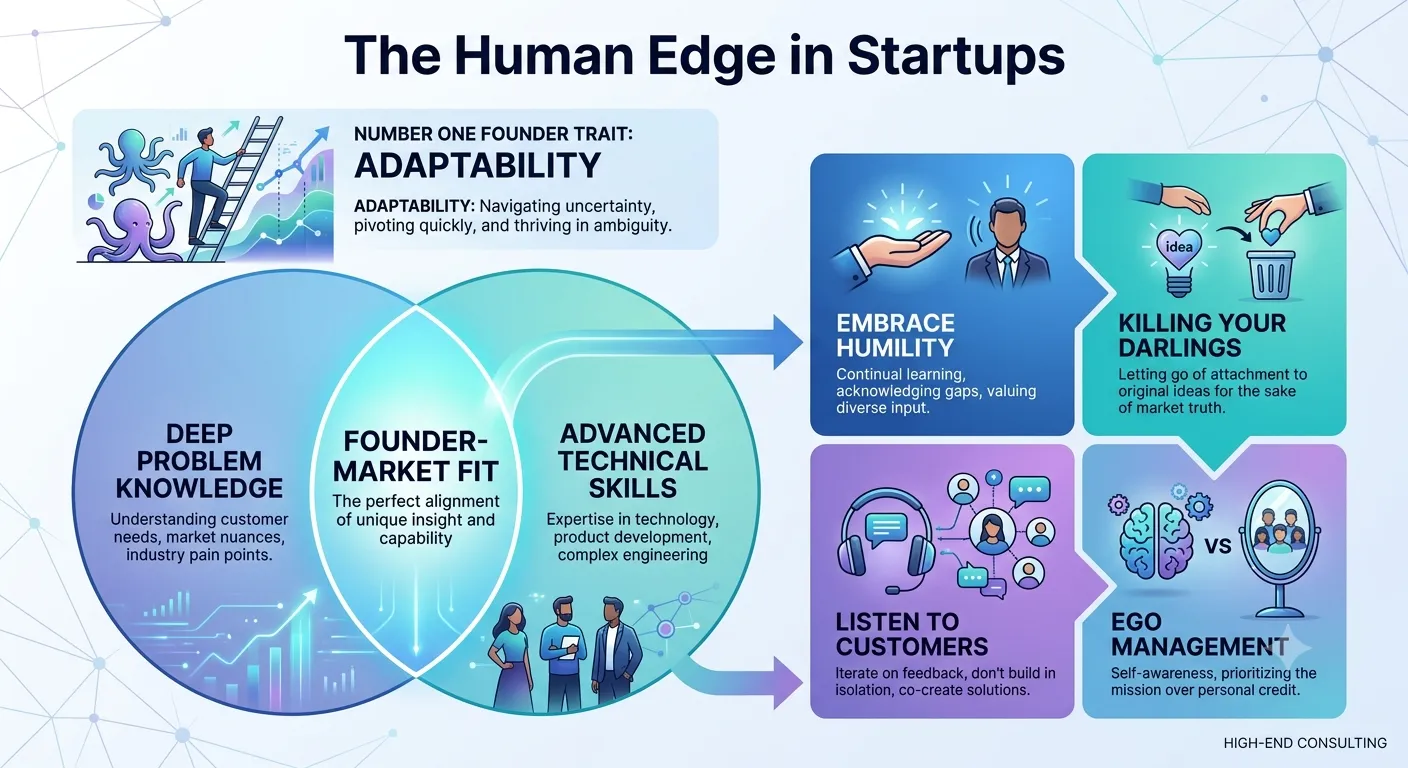
Research conducted on 122 founders suggests that adaptability is the single most critical psychological trait for success. Founders who lead "unicorns" or achieve 10x returns (MOIC) demonstrate a significantly higher willingness to learn, iterate, and change their own leadership styles compared to their less successful peers. Adaptability in this context is defined by a founder’s ability to listen to feedback and look at facts rather than defending their ego's need to be right.
Stubbornness is often mistaken for vision. A founder who dismisses customer complaints or clings to an initial concept despite mounting evidence of market indifference is not "visionary"—they are stubborn. The most successful leaders practice "killing their darlings," which involves the willingness to tear down even their most brilliant ideas if the market demands it. This humility allows the team to leverage the "wisdom of those around them," including employees and investors who may see signals that the founder’s "visionary blinders" have obscured.
Founder-Market Fit and the "Edge"
While adaptability is crucial, it must be anchored by "Founder-Market Fit." This framework suggests that the best founders work at the intersection of deep problem knowledge and advanced technical skills.
Deep Problem Knowledge: Usually acquired through 5+ years of experience in a specific industry, allowing the founder to provide "shocking" or "surprising" insights that an outsider would not know.
Advanced Skills: The technical or operational ability to out-execute others in that specific niche.
For instance, the Collison brothers built Stripe based on their personal knowledge of the "pain" of integrating payments, while Larry Page and Sergey Brin leveraged their Stanford PhD research to build the first version of Google. Without this "edge," a founder is just another person in the maze without a compass.
Identifying the "Hair-on-Fire" Problem: The Art of Pain Point Discovery
The quest for the "perfect idea" is better framed as a search for a "perfect problem". When a startup focuses on a specific, high-intensity pain point, customers shift from being wary and rejecting to being curious and enthusiastic. In many cases, customers will even prepay for a solution to a problem that has caused them significant distress.
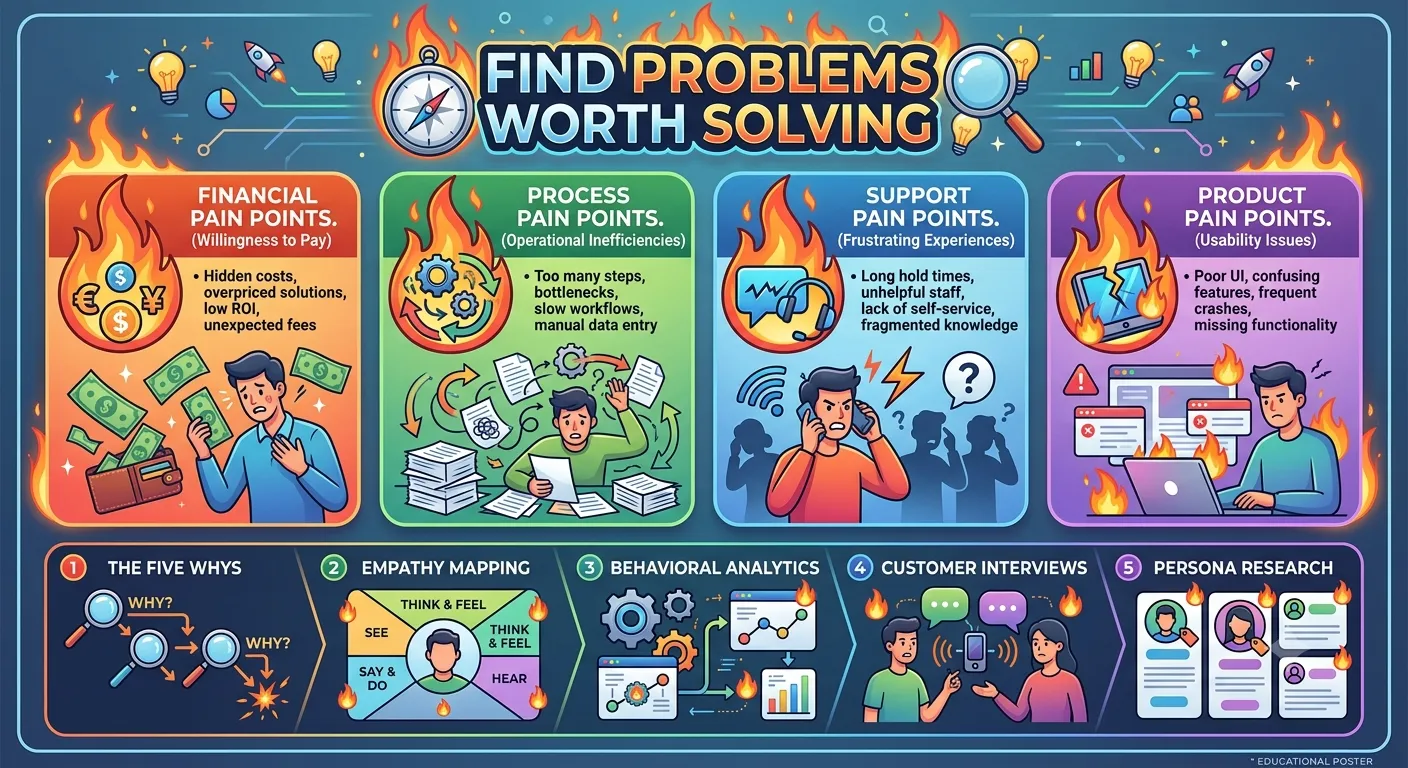
Taxonomy of Market Pain Points
Effective startups categorize pain points to better tailor their value proposition:
Financial Pain Points: Customers are losing money or overpaying for current, inefficient solutions.
Process Pain Points: Tasks are too complicated, time-consuming, or manual (e.g., manual data entry in logistics).
Support Pain Points: Existing providers offer poor customer service or unresponsive help.
Product Pain Points: Current tools are hard to use, lack essential features, or do not meet expectations.
A case study on the startup "Pitstop" illustrates this discovery process. Through primary research and the development of "persona-based" discussion guides, Pitstop identified that their logistics customers were spending a significant portion of their time on manual data processes. By refining their messaging to specifically address this manual labor "pain," Pitstop was able to expand their value proposition and achieve better product-market fit.
Techniques for Discovery
Domain experts recommend several "low-cost, high-insight" methods for identifying these issues:
Direct Contact: Simply asking users, "What is your biggest challenge?" in onboarding emails or support chats.
Behavioral Data Analysis: Using heatmaps, click tracking, and session recordings to see where users actually "get stuck" rather than what they say they want.
The "Five Whys": A technique borrowed from lean manufacturing where founders dig through five layers of "why" a problem exists to find the systemic root cause (e.g., an engineer failing because of lack of training, which was caused by a manager being "too busy").
Empathy Mapping: Categorizing what users "say, think, do, and feel" to uncover needs that customers might not realize they have.
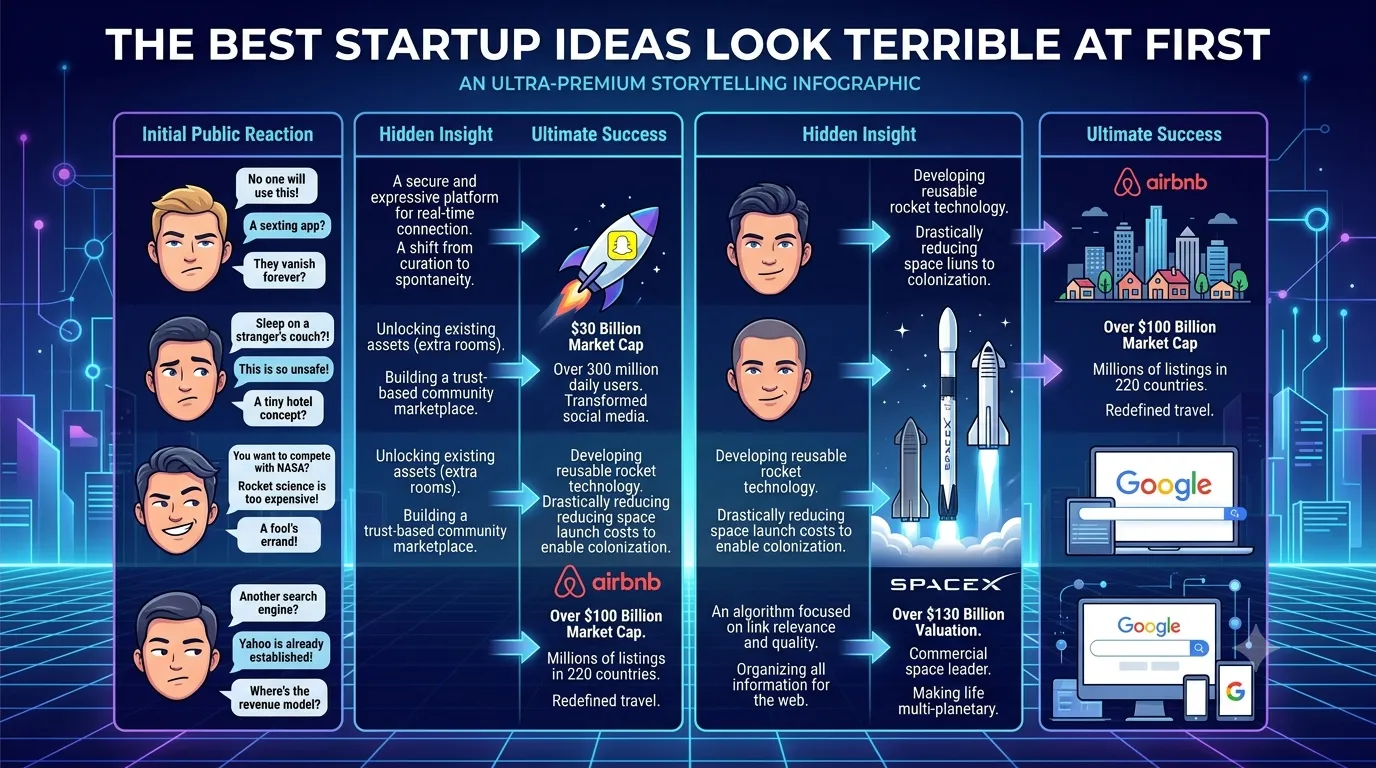
The "Stupid Idea" Paradox: Why Vision Often Looks Like Folly
One of the most profound contradictions in the startup world is that many of the most successful ideas were initially mocked as "stupid". This occurs because truly disruptive ideas often solve problems that people have "accepted as hard facts of life" or create markets that didn't exist.
Company | Initial Reaction | The Counter-Intuitive Insight |
Snapchat | "Terrible idea; only for sexting". | Ephemeral communication mimics real-life conversation better than permanent records. |
Airbnb | "Dumb idea; no one will sleep in a stranger's home". | Trust can be engineered through reviews, verified IDs, and professional photography. |
SpaceX | "Irrational expectation; NASA is the only one who can do this". | Vertical integration and reusable rockets could slash costs by 50% or more. |
"Irrelevant; the world already has 20 search engines". | Quality of search results matters more than the number of "portals" on a homepage. |
The takeaway for founders is that "innovation doesn't come from copying". If everyone thinks an idea is good, it likely already has significant competition and low margins. The "stupid" ideas are often those that exploit a "secret" or a "truth" that the rest of the world has not yet recognized. Paul Graham, co-founder of Y Combinator, noted that they funded Airbnb not because they liked the idea (they thought it was "bad"), but because they "really liked the founders" and their ability to iterate and sell even cereal boxes to keep their dream alive.
Overcoming Structural Hurdles: Analysis Paralysis and Stealth Mode
The search for the "perfect" idea often leads to two terminal conditions for a startup: Analysis Paralysis and the isolation of Stealth Mode. Startups win not by avoiding mistakes, but by learning from them faster than anyone else. Velocity and momentum are often more valuable than the "perfect" decision.
Analysis Paralysis: The Anti-Pattern of Success
Analysis Paralysis occurs when a team becomes so obsessed with making a perfect decision that they fail to make any decision at all. This drains capital, destroys team morale, and allows faster-moving competitors to capture the market.
The 70% Rule: Jeff Bezos popularized the notion that decisions should be made with 70% of the information one wishes they had. Waiting for 90% or 100% is too slow.
Decision Deadlines: Establishing clear timeframes for key decisions to force market contact within 2-7 days.
The Mirage of Stealth Mode
Many founders hide their ideas because they believe they are so "special" that others will copy them. However, execution is significantly harder than ideation. A successful startup is about "execution way more than the idea". Stealth mode makes it harder to hire the best talent (who want transparency), harder to raise money (investors need to trust the vision), and nearly impossible to get the customer feedback required to evolve the idea into a "must-have" solution.
Conclusion: Toward a New Paradigm of Startup Strategy
The "Myth of the Perfect Startup Idea" is ultimately a psychological barrier that prevents founders from engaging with the messy, iterative reality of the market. The evidence suggests a clear hierarchy of importance for entrepreneurial success: the Market is the most critical factor, followed by the Team’s adaptability, with the initial Product Idea serving merely as the entry ticket to the "Idea Maze".
For professional practitioners and founders, the strategic implications are twofold. First, one must prioritize "learning velocity" over "execution speed." Executing perfectly on the wrong thing is a colossal waste of resources. Second, one must embrace the "blob" of the initial idea, knowing that its final, successful form will likely be unrecognizable from its starting point. The "perfect idea" is not a discovery made in isolation; it is a hard-won prize awarded only to those who survive the maze, listen to their customers, and possess the humility to "kill their darlings" in pursuit of a genuine solution to a human problem.
By shifting the focus from the search for intellectual brilliance to the mastery of the Build-Measure-Learn loop, founders can mitigate the risk of failure and increase their chances of building something that the world truly needs. In the end, the most powerful ideas are not those that start perfect, but those that are made perfect through the relentless pressure of reality.
Economic and Operational Statistics for Early-Stage Startups
Metric / Category | Data Point | Implication for Founders |
General Failure Rate | 90% of startups fail overall. | Resilience and risk management are mandatory. |
First Year Mortality | 10% fail within the first 12 months. | Early survival depends on cash management. |
Middle-Age Mortality | 70% fail between years two and five. | Long-term success requires sustainable unit economics. |
Primary Failure Driver | 42% cite "No Market Need". | Customer discovery must precede massive engineering. |
Competition Impact | 19% cite being outcompeted. | Sustainable competitive advantage is required for scaling. |
Profitability Rate | Only 40% of funded startups reach profitability. | VC funding is a bridge, not a destination. |
The "70% Rule" | Bezos' threshold for decision making. | Speed is the primary weapon against incumbents. |
MVP Threshold | Minimum effort for maximum validated learning. | Build only what is necessary to test the next hypothesis. |
Strategic Priorities by Startup Phase
Phase | Core Objective | Key Activities | Metric of Success |
Pre-Seed (Ideation) | Map the Idea Maze. | History research, competitive analysis, pain point discovery. | Number of validated customer pain points. |
Seed (Validation) | Find Product-User Fit. | MVP building, 1-on-1 customer interviews, 70% rule. | Cohort retention and "Very Disappointed" survey score. |
Series A (Growth) | Achieve Product-Market Fit. | Tuning the growth engine, hiring at scale, operational hardening. | Market "pull" (organic demand exceeds supply). |
Series B+ (Scaling) | Dominate the Market. | Defending competitive advantage, optimizing unit economics. | Net dollar retention and market share. |
The journey of the startup is the journey of the idea's refinement. Whether through the serendipitous discovery of a communication tool in a failed gaming company or the intentional rebuilding of a productivity app in Kyoto, the "perfect idea" remains the result of the process, never the starting line. Founders who accept this reality liberate themselves to take the "messy" first step toward meaningful innovation.
Protect Your Future: The Precision Vesting Calculator
Don't let a "handshake deal" complicate your exit. Map out your ownership journey with our Vesting Calculator
Calculate Your Vesting Schedule →