The Loneliness of Being a Founder (No One Prepares You for This)
July 1, 2026 by Harshit Gupta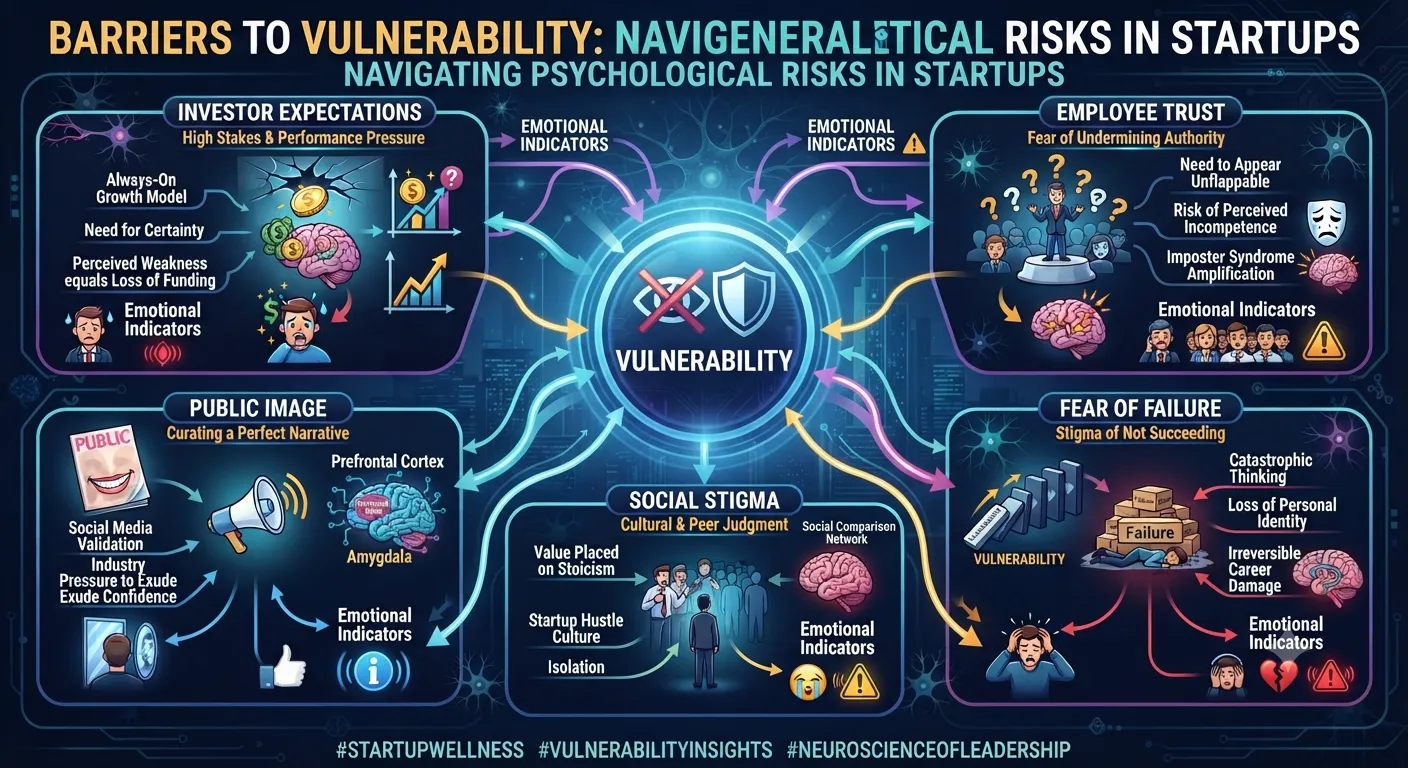
The phenomenon of loneliness in entrepreneurship represents a complex, multidimensional psychological state that significantly diverges from the conventional understanding of social isolation or leadership-related solitude. While the colloquialism "it is lonely at the top" has permeated corporate discourse for decades, the specific isolation experienced by founders is distinct in its etiology, intensity, and long-term implications for both individual health and venture sustainability. Entrepreneurship is characterized by acute levels of uncertainty, resource constraints, and a unique form of identity enmeshment where the distinction between personal self-worth and organizational performance becomes functionally nonexistent. Despite the romanticization of the "lone genius" in popular media, empirical evidence indicates that this isolation acts as a silent pathogen, eroding cognitive performance and contributing to a prevalence of mental health conditions that far exceeds that of the general population.
Theoretical Foundations and the Multidimensionality of Loneliness
Loneliness, in its fundamental psychological sense, is defined as a negative emotional state arising from a perceived discrepancy between an individual's desired and actual social connections. In the entrepreneurial context, this definition must be expanded to include the "boundaryless" nature of the work, where professional responsibilities permeate every aspect of existence, effectively isolating the individual not just from others, but from their own non-professional identity. Research into this intersection began in earnest with the work of Gumpert and Boyd in 1984, who established that over 50 percent of small-business owners reported persistent feelings of loneliness. Contemporary scholarship has since refined this into a multidimensional framework encompassing individual, social, and work-related factors.
The work-related dimension is particularly salient for founders. Unlike traditional employees who may experience isolation due to physical distance or poor team culture, founders experience an "occupational loneliness" driven by the weight of ultimate responsibility. The perceived lack of support, combined with high workloads and the potential absence of co-founders, creates a state of "extreme occupation" where loneliness is not merely a byproduct but an inherent feature of the role. Furthermore, the stability and durability of these loneliness factors fluctuate. While demographic attributes and certain personality traits remain stable (stability), the outcomes of loneliness, such as impaired cognitive processes or physical health issues, can have lasting, irreversible effects on the founder’s life and the company’s trajectory (durability).
The Stability-Durability Framework of Loneliness
To understand the trajectory of founder isolation, it is necessary to examine the consistency of its antecedents and the lasting impact of its outcomes. The following table provides a structured comparison of these factors, illustrating why loneliness is often resistant to simple social interventions.
Factor Category | Variable | Stability Profile | Durability of Impact |
Individual | Personality Traits (Extraversion/Neuroticism) | High Stability: Core traits remain constant over time. | High: Shapes long-term coping mechanisms and health. |
Social | Network Breadth vs. Depth | Variable: Networks can be expanded, but deep connections take time. | High: Social withdrawal can have long-term relational costs. |
Cognitive | Self-Efficacy and Passion | Low Stability: Fluctuates daily based on business performance. | Moderate: Can be rebuilt through success or external validation. |
Work Context | Job Uncertainty and Responsibility | High Stability: The nature of startup work is inherently uncertain. | Very High: Can lead to venture exit or permanent physical health decline. |
Health | Sleep and Stress Levels | Low Stability: Can change rapidly but tends toward chronic depletion. | High: Cardiovascular and psychological issues have long-term durability. |
This framework suggests that while a founder may attempt to mitigate loneliness through networking, the stable nature of the "work dimension"—the uncertainty and resource scarcity—ensures that the underlying pressure remains constant. This creates a situation where the founder is "running to stand still," attempting to foster connection while the job itself systematically dismantles those connections through time pressure and stress.
The Freeman Paradigm: Quantifying the Psychiatric Disparity
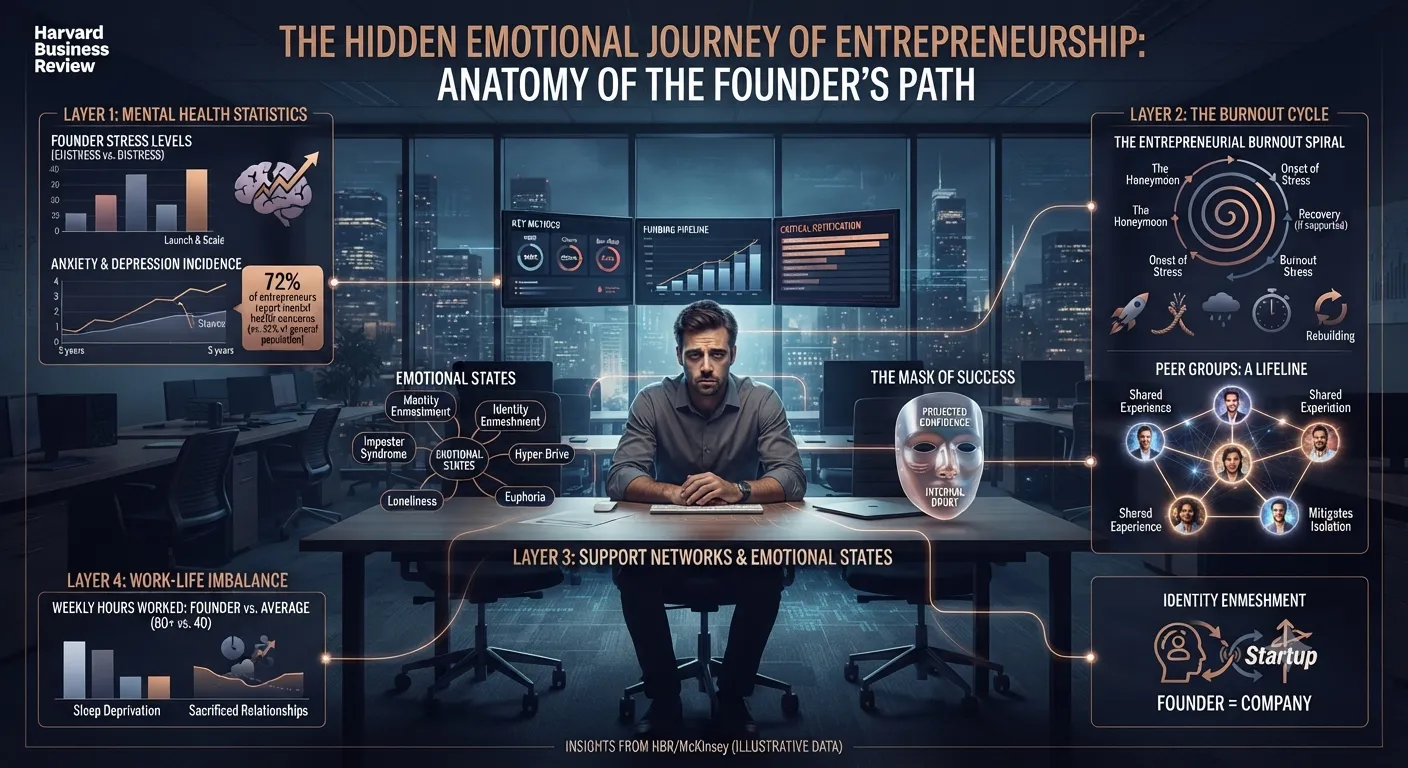
The most rigorous quantification of the mental health burden associated with entrepreneurship comes from the research of Dr. Michael Freeman. His studies have consistently demonstrated that founders are significantly more likely to experience mental health obstacles than the general population. In a study involving 242 entrepreneurs and a demographically matched comparison group, Freeman found that mental health differences directly or indirectly affected 72% of the entrepreneurs. This disparity suggests an underlying relationship between the entrepreneurial mindset and the affective, cognitive, and behavioral differences associated with psychiatric conditions.
Psychiatric Condition | Entrepreneur Prevalence (%) | Comparison Group Prevalence (%) | Relative Risk Factor |
Any Mental Health Concern | 72% | 48% (Approx.) | 1.5x |
Lifetime Depression | 30% | 15% | 2.0x |
ADHD | 29% | 5% | 5.8x |
Substance Use | 12% | 4% | 3.0x |
Bipolar Disorder | 11% | 1% | 11.0x |
Suicidal Thoughts | Reported Higher | Reported Lower | 2.0x |
Psychiatric Hospitalization | Reported Higher | Reported Lower | 2.0x |
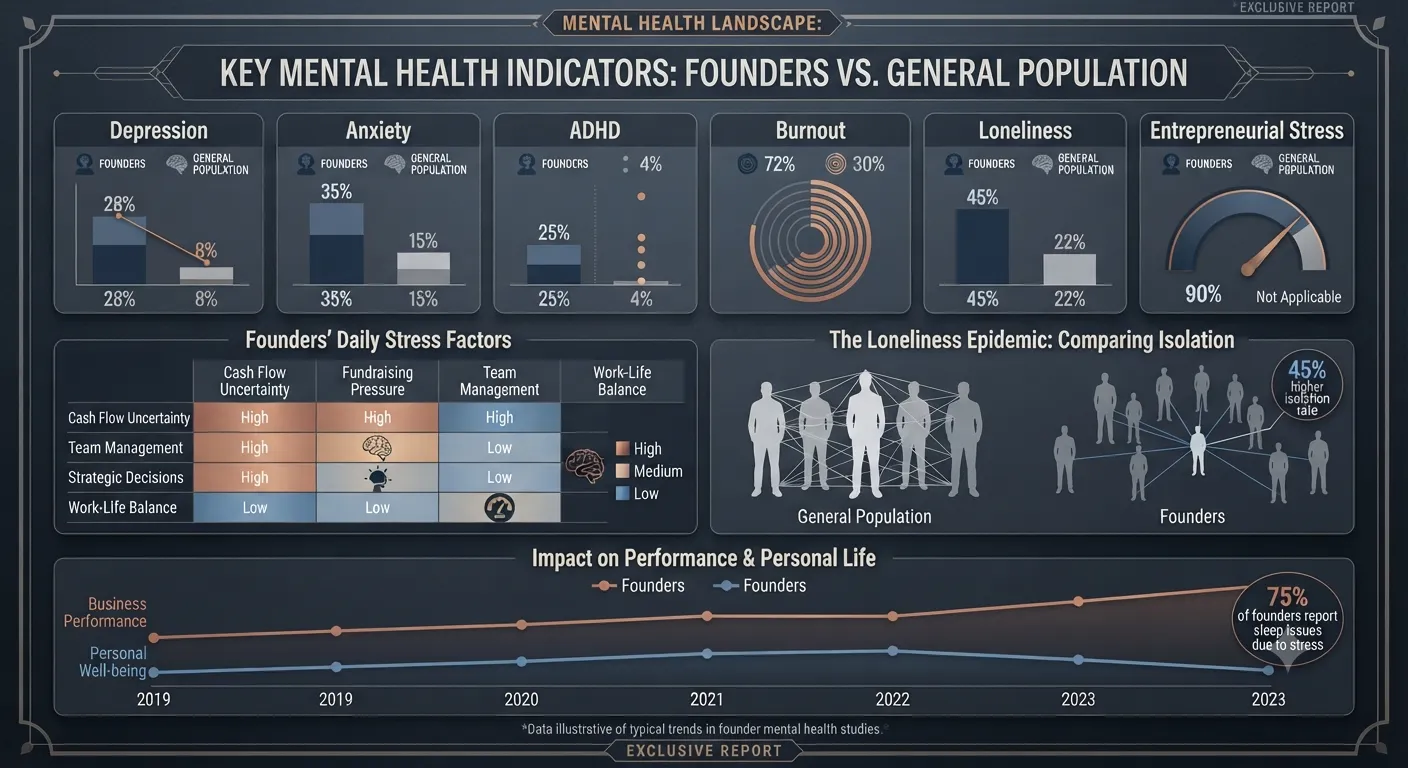
The implications of these statistics are profound. The high prevalence of ADHD and bipolar disorder suggests a "neurodiversity of innovation," where the traits required to "think different"—high energy, rapid ideation, and intense focus—are the same traits that predispose individuals to specific mental health challenges. However, the intensity of the struggle, particularly against the backdrop of a high-performance culture, can transform these adaptive traits into liabilities. For example, 32% of entrepreneurs in Freeman's sample reported having two or more mental health conditions, and 18% reported three or more, indicating a high level of comorbidity that can complicate recovery and isolation management.
Furthermore, the data reveals a familial link. Asymptomatic entrepreneurs (those who do not report conditions themselves) were twice as likely to report mental health conditions among their first-degree relatives compared to the comparison group. This suggests that entrepreneurship may be a behavioral expression of a genetic or familial temperament characterized by both high creativity and high psychological vulnerability.

The Psychological Crucible: Identity Enmeshment and the "Mask of Success"
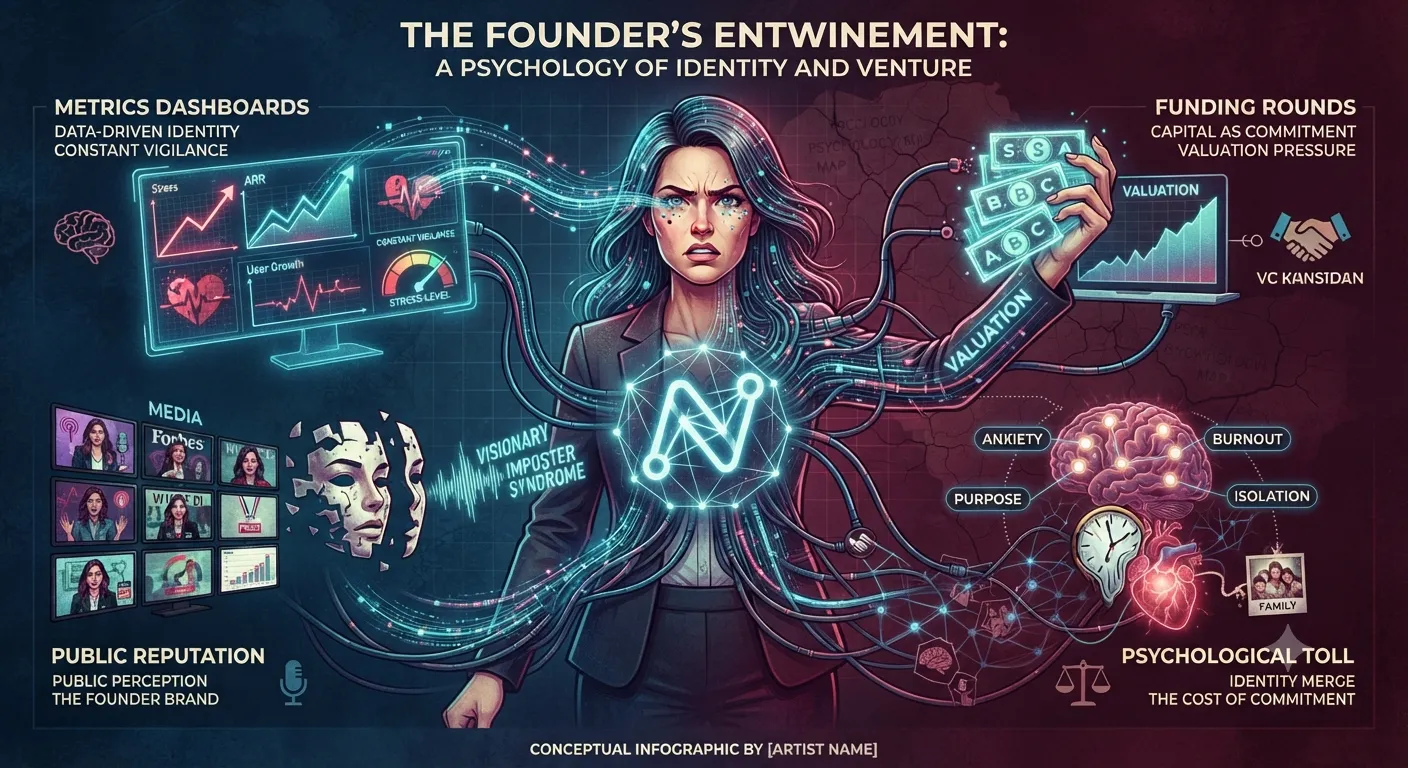
At the core of founder loneliness is a phenomenon known as "identity enmeshment," where the boundary between the individual's personal identity and the startup disappears. In this state, the startup does not merely represent a professional endeavor; it becomes the primary source of the individual’s self-worth. When a founder’s value as a human being is hinged entirely on business results, their emotions fluctuate wildly with every gain or setback. Success brings a state of euphoria that is often mistaken for healthy well-being, while failure or even mild criticism is experienced as a personal attack on the foundation of the founder's identity.
The Mechanism of Emotional Suppression
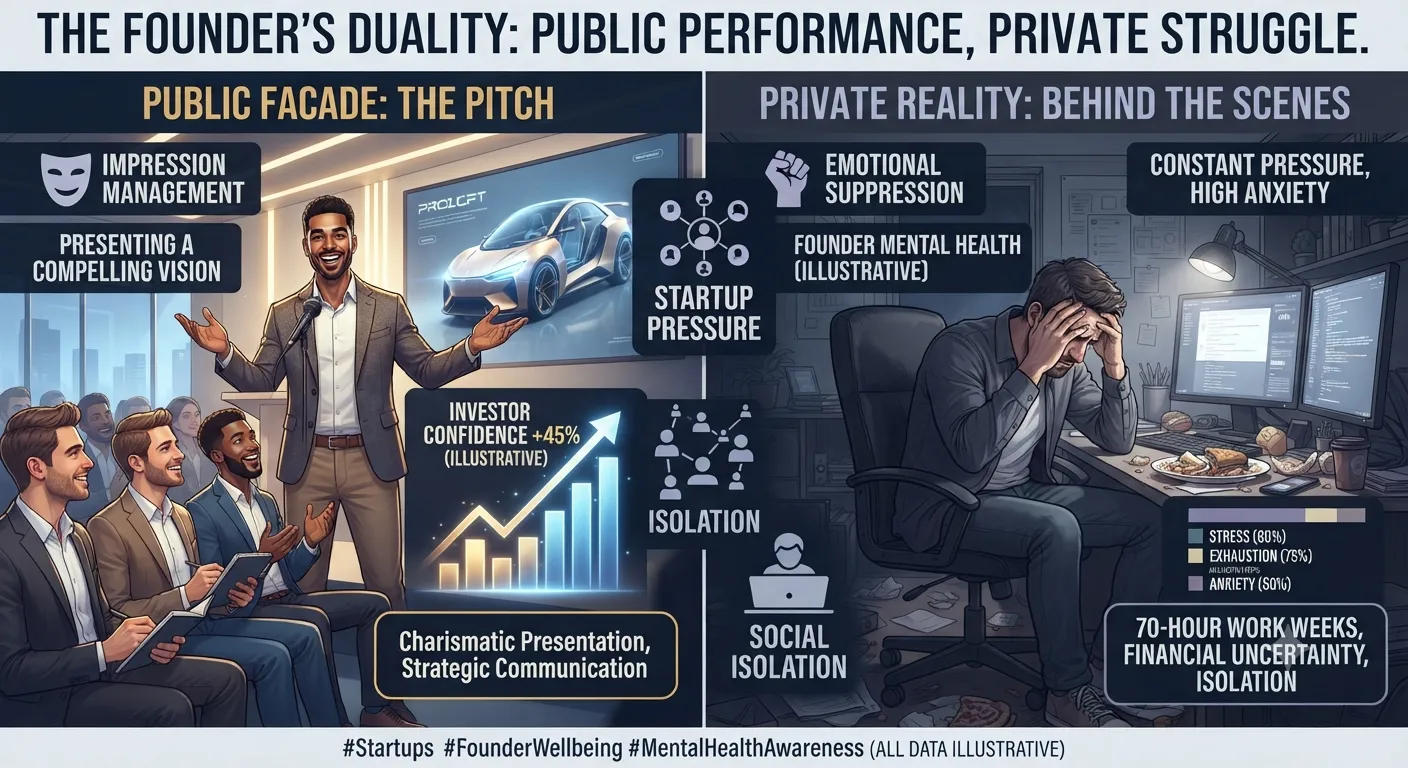
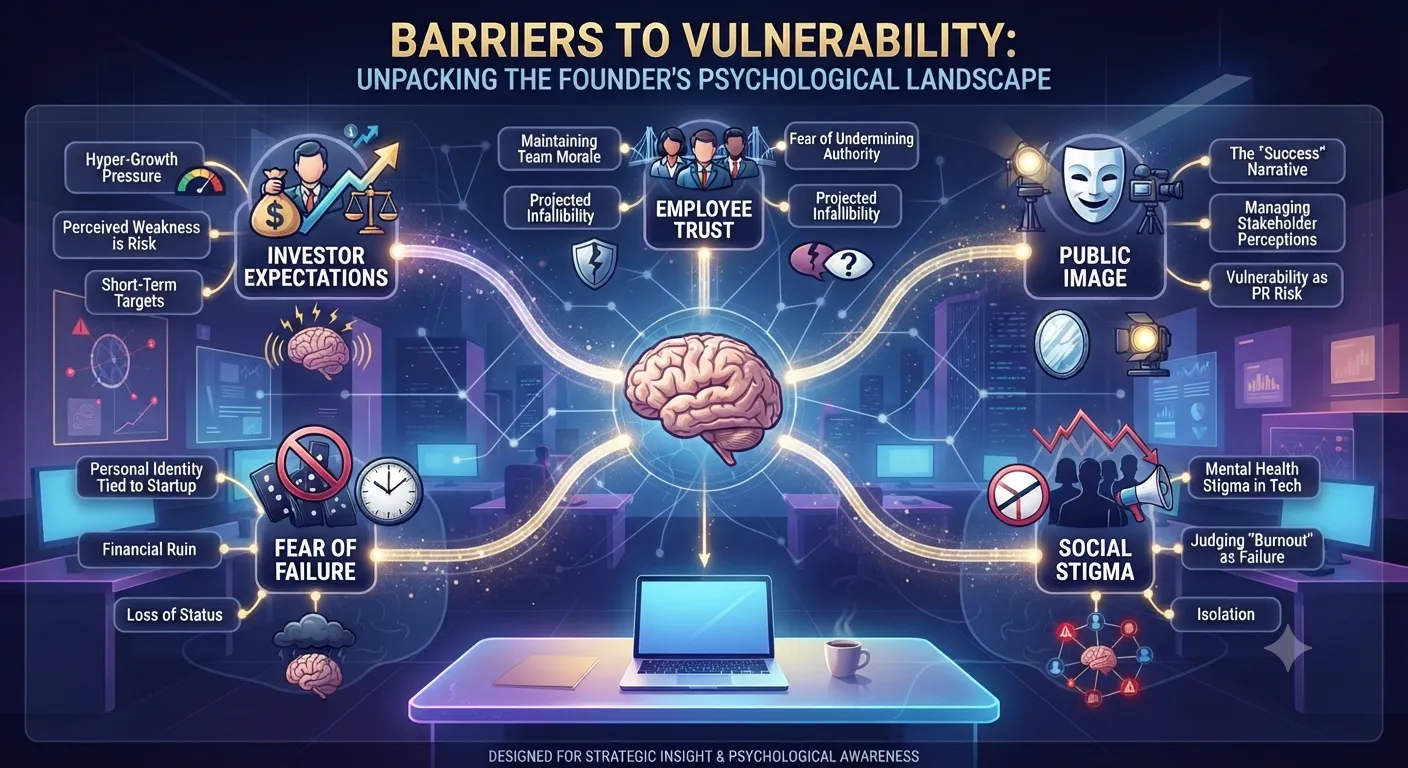
This enmeshment is enforced by an unspoken rule in startup culture: the "Mask of Success". Founders feel an immense pressure to project an image of unwavering confidence and control to investors, employees, and the public. Admitting to loneliness, fear, or vulnerability is frequently viewed as a sign of weakness that could tarnish the founder’s reputation or jeopardize the company's funding. This creates a "disconnect between personal experiences and what they share with the public," leading to a profound sense of confusion and insecurity.
The consequence of this facade is a state of "emotional bottling" or suppression. Founders often feel they cannot afford to process negative emotions, choosing instead to "suck it up" and grind away. Internally, this creates chronic stress and anxiety. Externally, it damages the very relationships that could provide relief. Because so much energy is devoted to hiding their struggles, founders often find it difficult to be fully present with family, partners, or friends, leading to a "support imbalance" where they are the recipients of others' problems but have no safe outlet for their own.

Psychological State | Manifestation in Founders | Long-term Implication |
Identity Enmeshment | Self-worth tied to KPIs and funding rounds. | Emotional fragility and inability to separate self from failure. |
Emotional Suppression | Hiding fear and doubt to maintain a "confident leader" image. | Internal stress, anxiety, and eventual burnout. |
Impression Management | Acting like everything is working even near failure. | Inability to seek help or build authentic connections. |
Affluenza/Stigma | Fear that wealth or success makes one's problems seem invalid. | Deepening isolation and untreated psychiatric conditions. |
This cycle is further exacerbated by the "addiction to movement." Founders often equate rest with weakness, trapped in a cycle of perpetual motion that prevents them from seeking the support they need. They may believe that "staying busy" is a defense against loneliness, but in reality, it often just masks deeper fears of failure or being forgotten.
Systemic Pathology: Hustle Culture as a Structural Barrier to Well-being
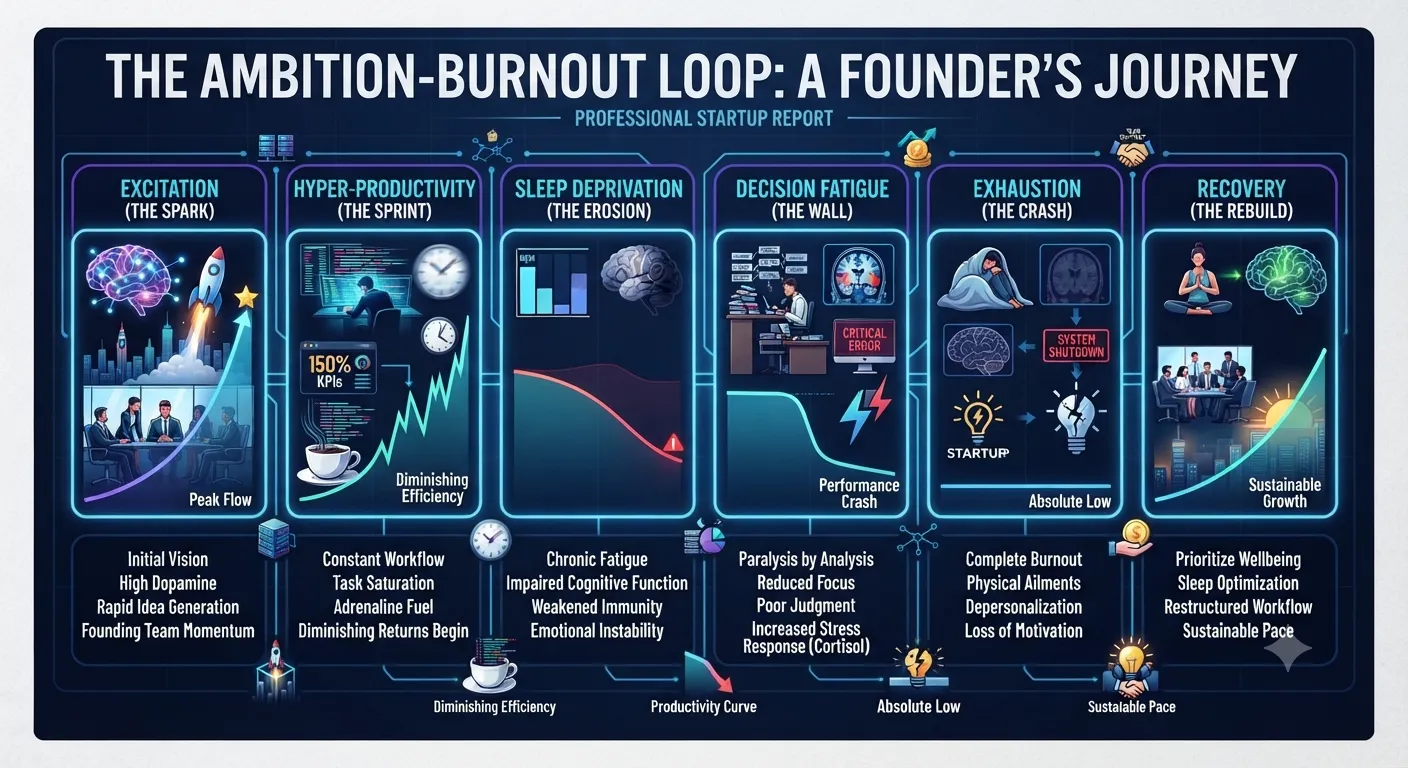
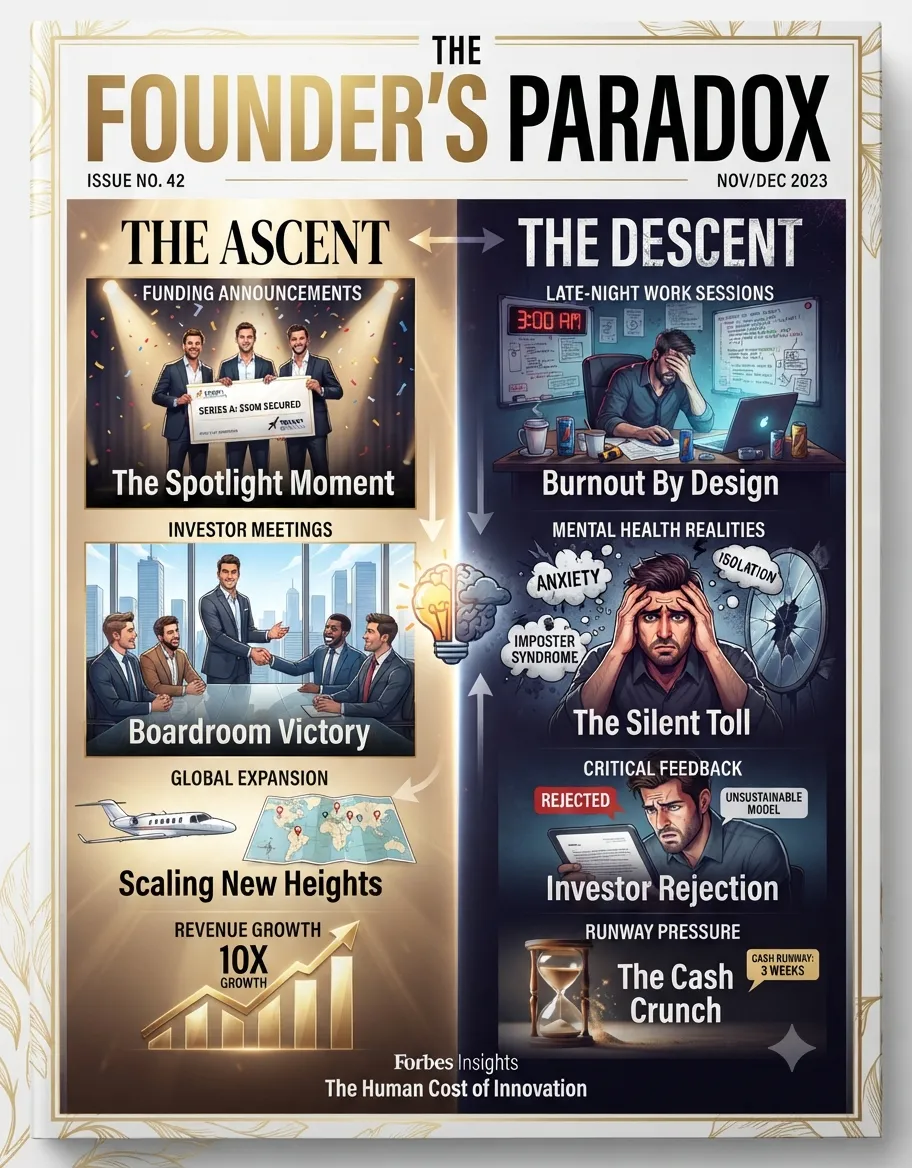
The loneliness of the founder is not merely an individual psychological issue but a systemic byproduct of startup culture. The glorification of "hustle culture"—characterized by 18-hour workdays, sleeping in offices, and sacrificing personal life for "the grind"—has become a silent killer of both founders and their companies. This culture celebrates exhaustion as a badge of honor, ignoring the fact that "motion doesn't always create momentum".
The Biological Reality vs. The Hustle Myth
Research consistently shows that extreme hustle is unscalable and counterproductive. Stanford research indicates that working over 50 hours per week leads to a drastic reduction in cognitive performance and decision-making quality. For a founder, whose primary value lies in strategic judgment, this "decision fatigue" is catastrophic. Exhausted founders make poor hiring decisions, approve misaligned marketing campaigns, and pivot their entire business models based on clouded reasoning.
Aspect of Performance | Impact of Excessive Hustle | Consequence for the Venture |
Decision Making | Quality deteriorates after making too many choices without rest. | Poor strategic moves and hiring mistakes. |
Creativity | Neuroscience shows best ideas come during downtime and rest. | Loss of innovation and inability to anticipate market shifts. |
Leadership | Fatigue leads to irritability and emotional distance from the team. | Toxic culture, increased churn, and communication breakdown. |
Scalability | You cannot replicate a business that relies on a single person's grind. | Growth plateaus when the founder "breaks". |
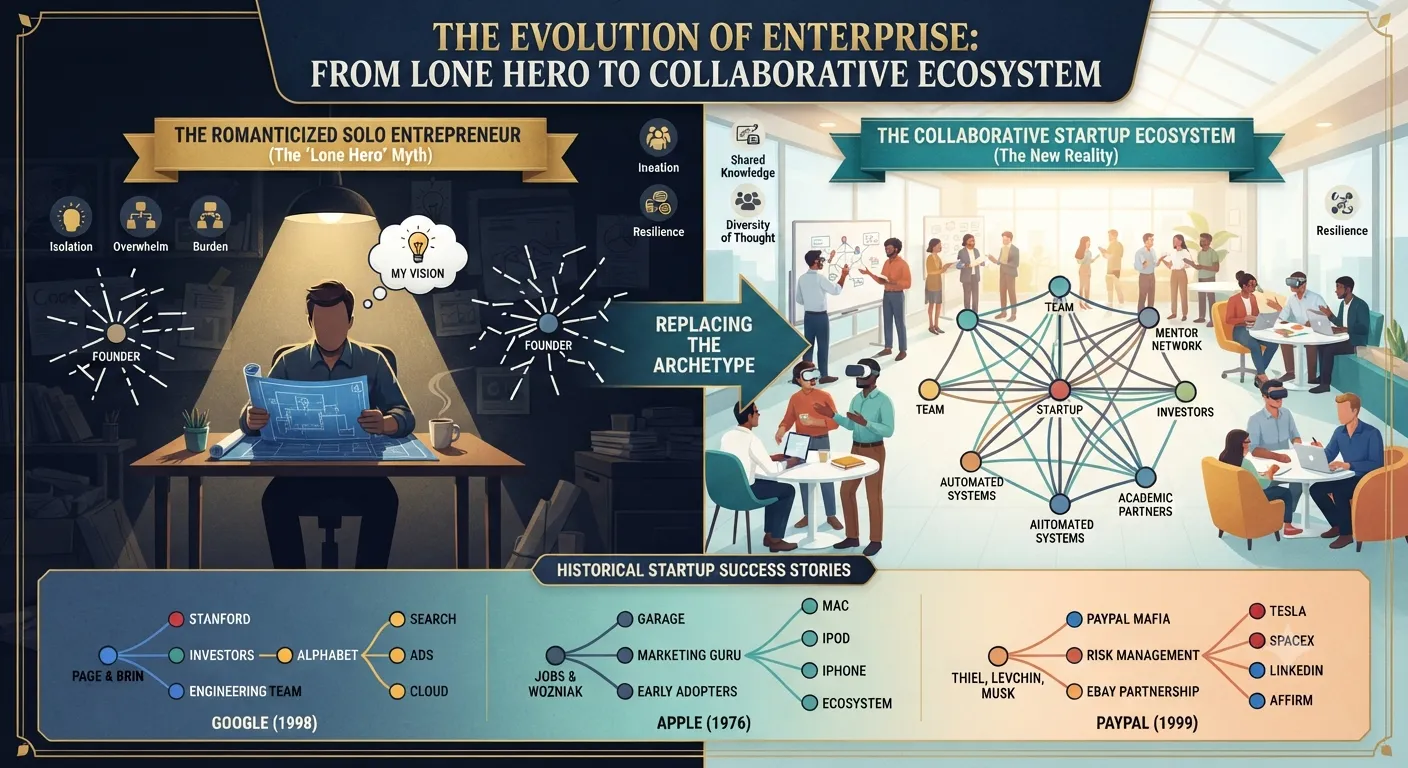
Furthermore, the "Solo Hero" myth—the idea of the lone founder willing a company into existence—glamorizes overwork and isolation. In reality, businesses with staying power are built by systems, teams, and networks of support. Growth is about designing these systems and empowering others, yet many founders remain trapped in the "hustle trap," believing that their personal sacrifice is the only thing keeping the company alive. This mindset ensures that "progress stops when you stop sacrificing," creating a perpetual state of isolation and fear.
The Investor Paradox: From Growth Mandates to Holistic Stewardship
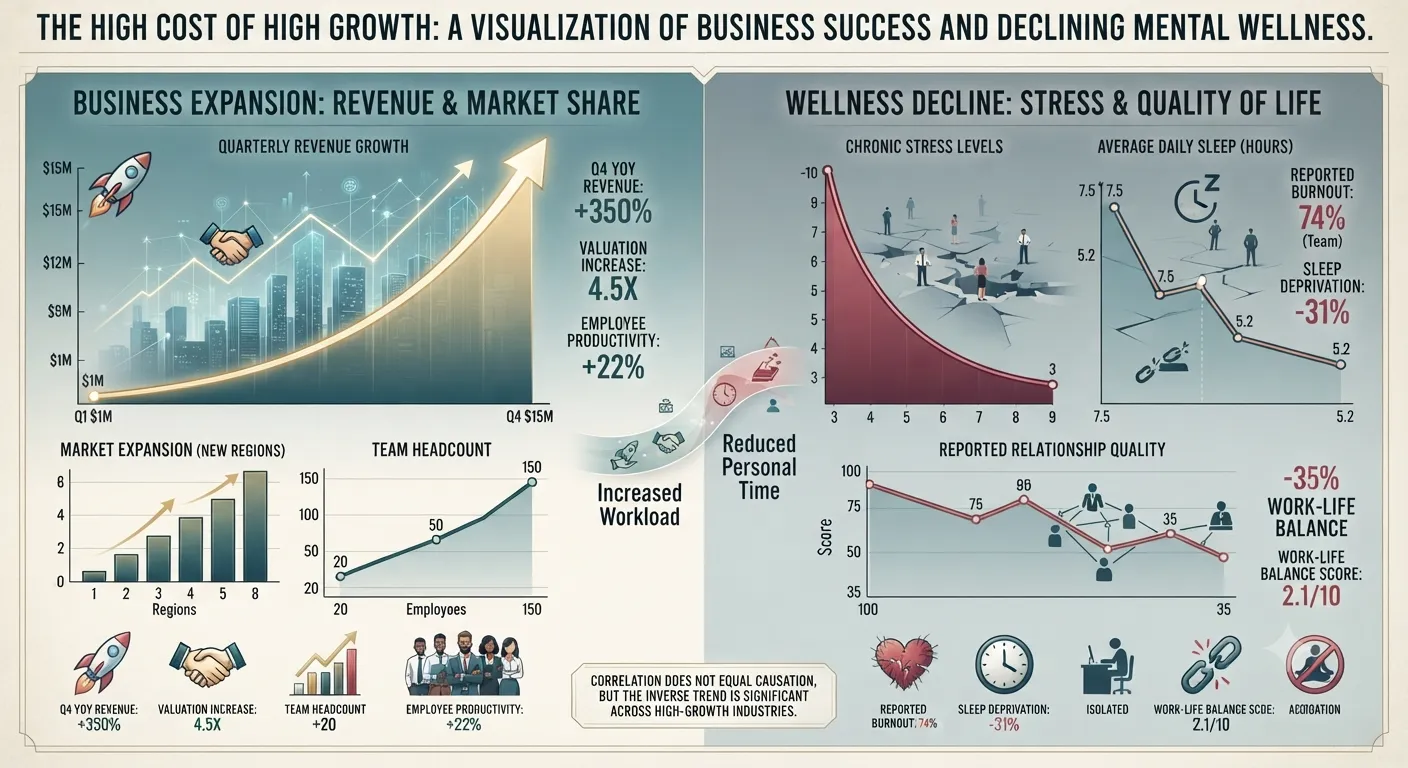
A significant contributor to founder loneliness is the perceived or actual expectation of the venture capital (VC) ecosystem. Founders frequently report that they cannot talk to their investors about mental health because the investors only care about growth metrics. There is a deep-seated fear that transparency regarding burnout or isolation will be interpreted as a lack of grit or "mental fortitude," potentially leading to the founder being replaced or the company losing its funding.
Data from Startup Snapshot indicates that 81% of founders do not openly share their stress, fears, or challenges, primarily because they worry it could affect their reputation or chances of success. Only 10% of founders report talking to their investors about their stressors, creating a "transparency gap" that leaves the founder navigating the most difficult moments of their journey in total isolation.
The Shifting Role of the Investor
There is, however, an emerging trend toward "holistic stewardship" in the investment community. Some progressive firms have begun to recognize that the mental health of the founder is a critical asset that must be protected, not just exploited.
Financial Earmarks for Care: Firms like Felicis Ventures have committed to adding a "1% founder development" fee on top of every investment check, specifically for coaching and mental health resources. Similarly, Freestyle Ventures underwrites 100% of the costs for programs like Meru Health for its portfolio founders.
Normalizing the Dialogue: There is a growing push for investors to lead by example, showing founders that it is acceptable to be vulnerable. This includes taking the "Investors Pledge," a public commitment to take an active role in the mental health of founders.
Integrating Professionals: Some investment funds are now including mental health professionals in their organizational ecosystem to serve as support systems for the leadership teams they fund.
Despite these improvements, the reality for many remains one of "cutthroat competitiveness." Until qualitative measures of mental health are included in the valuations of success alongside quantitative financial returns, the structural pressure to remain isolated will persist.
The Gendered and Racialized Dimensions of Professional Solitude
The experience of founder loneliness is not uniform; it is often compounded by the intersection of gender, race, and industry archetypes. In the tech industry, which remains predominantly male, women and minority founders face a "compounded isolation" that stems from being "the only" in the room.
Women in Tech and the Relatability Gap
Research indicates that 53% of women in the workplace experience loneliness, and this feeling tends to worsen as they advance in their careers. For female founders, this loneliness is driven by a "relatability gap." In an environment dominated by male perspectives, women often receive advice that does not resonate with their unique experiences. The lack of relatable role models or mentors makes it difficult for women to envision their own success, which in turn erodes their confidence and increases the emotional toll of the journey.
Dimension of Compounded Isolation | Manifestation in Female/Minority Founders | Psychological Consequence |
The "Mould" of Success | Pressure to assimilate into the "Steve Jobs" or "tech guy" archetype. | Suppression of authentic self, leading to alienation. |
The Stereotype Trap | Minority women expected to be "grateful" or "fully assimilated". | Treatment with suspicion and lack of psychological safety. |
Lack of Mentorship | Difficulty finding role models who have navigated similar social hurdles. | Feelings of alienation and reduced access to resources. |
Impression Management | Higher pressure to appear "unflappable" to overcome bias. | Increased risk of burnout and emotional exhaustion. |
For women of color, the "mould" of the tech industry is particularly narrow. Refusing to become "someone else" to make others comfortable can lead to being discredited or ignored, creating a "profoundly lonely" environment where the founder must learn every skill (coding, design, management) in a vacuum because they lack a supportive network. Furthermore, data from platforms like OkCupid—later discussed in a tech context—highlights that bias in technology and social algorithms can mirror and amplify the alienation experienced by women of color in the real world.

Solo Founders and Freelancers: The Isolation of One
While team-based startups have their own challenges, solo founders and freelancers face a unique "state of being alone". For these individuals, work is a "one-person show," lacking the built-in social support, formal learning opportunities, or the physical presence of coworkers found in traditional environments. Solo founders often feel that the entire burden of the company's future, employee livelihoods, and investor trust rests solely on them, with "no team to share the burden of ultimate responsibility".
Narrative Archetypes: Lessons from the Vanguard
The personal stories of prominent founders provide essential context for understanding how loneliness manifests and how it can be mitigated. These narratives serve as case studies in "strategic vulnerability."
Reid Hoffman: The Weight of the Unknown
Reid Hoffman, co-founder of LinkedIn, describes his first startup, SocialNet, as a "lonely and stressful journey". He identifies the primary driver of this loneliness as the "daily stress of the unknown." Because social networking didn't exist as a category yet, he was constantly in the position of persuading others to join a vision that had no external validation. This was exacerbated by personal isolation; during this period, he broke up with his girlfriend, and the company ultimately failed.
Hoffman's second venture, LinkedIn, was "substantially better," not because the work was easier, but because he had learned to build a "village" around himself. He emphasized the importance of surrounding himself with people who understood that "failure is possible but were confident in their ability to navigate challenges". A pivotal moment occurred when a key executive called to quit during a high-stakes crisis. Hoffman realized he couldn't ask anyone else to solve the problem, but he chose to "turn around and handle the situation personally," illustrating that the "lonely moment" is a permanent fixture of leadership that must be managed, not eliminated.
Alex Turnbull: Breaking the "Founder's Depression" Myth
Alex Turnbull, CEO of GrooveHQ, offers a raw account of the "darkest months" of 2017. During this time, the company’s growth had flatlined, the product was stagnating, and key personnel were leaving. Turnbull described sitting at his kitchen table, fighting back tears, telling his wife he couldn't even get excited about a company retreat.
His most important insight is the rejection of the term "founder's depression." He argues that adding the "founder" prefix makes depression seem like an acceptable, expected side effect of the job, which prevents founders from seeking the clinical help they need. He encourages founders to treat their brains with the same seriousness they treat their businesses: "You owe it to yourself—and the people around you—to keep it healthy". His recovery involved three key actions: seeking professional help, being open with his team about the company’s struggles, and "disconnecting" physically every night by turning off notifications.
Brad Feld: Normalizing the "Black Dog"
Brad Feld, co-founder of Techstars, has been a tireless advocate for mental health since his own extended depressive episode in 2013. He notes that founders are "programmed to never show weakness," but this denial is exactly what makes the situation worse. Feld describes depression as a "fiendishly challenging thing" (the "black dog") that can be triggered by physiological exhaustion, boredom, or major life changes.
Feld's "village" included his wife, his Ph.D. advisor, and his business partner, all of whom "showed up for him in profound ways". He advocates for "open conversations" as a way to destroy the stigma that surrounds founder mental health. He notes that "if I didn't continue to write openly... I'd be being deceitful," highlighting that authenticity is not just a moral choice but a survival strategy for a leader.
Structural Remediation: Peer Ecosystems and Professional Interventions
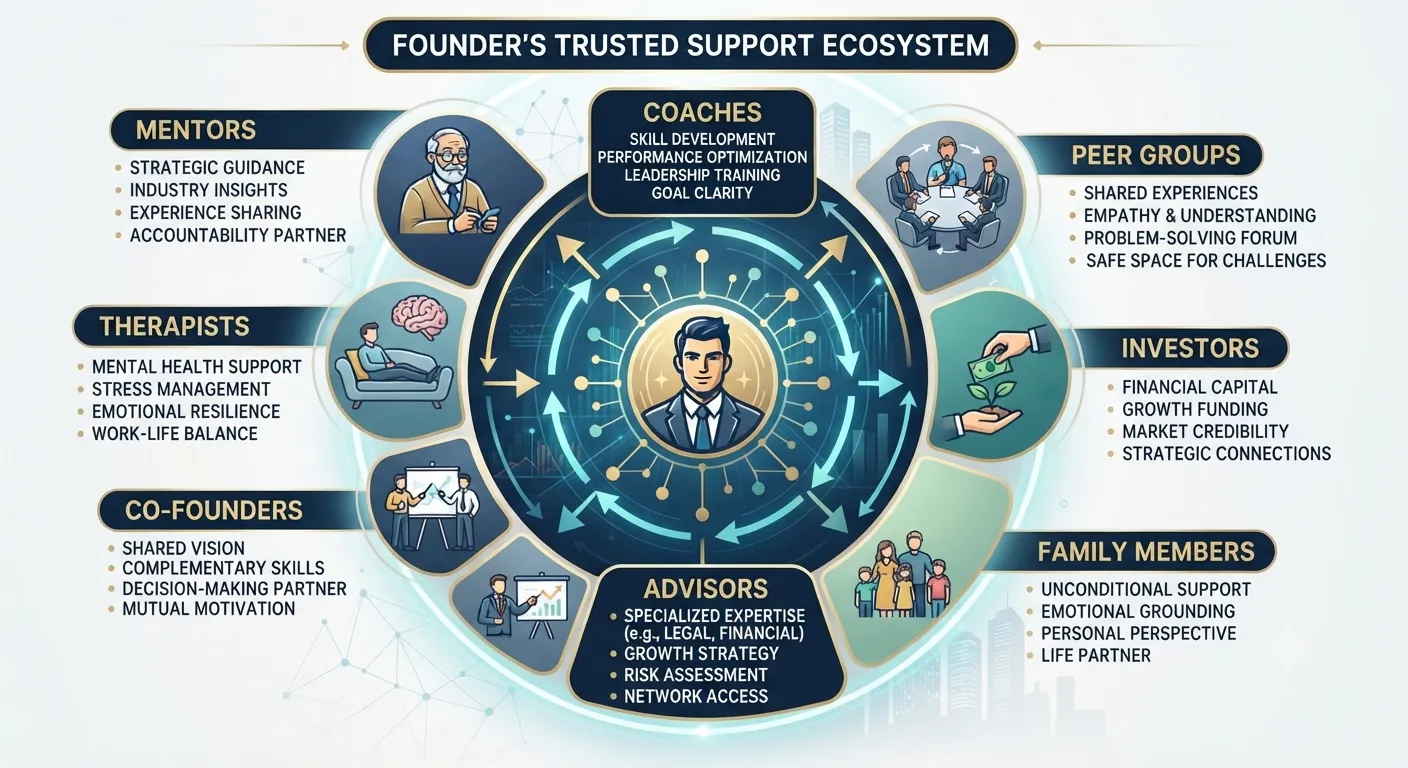
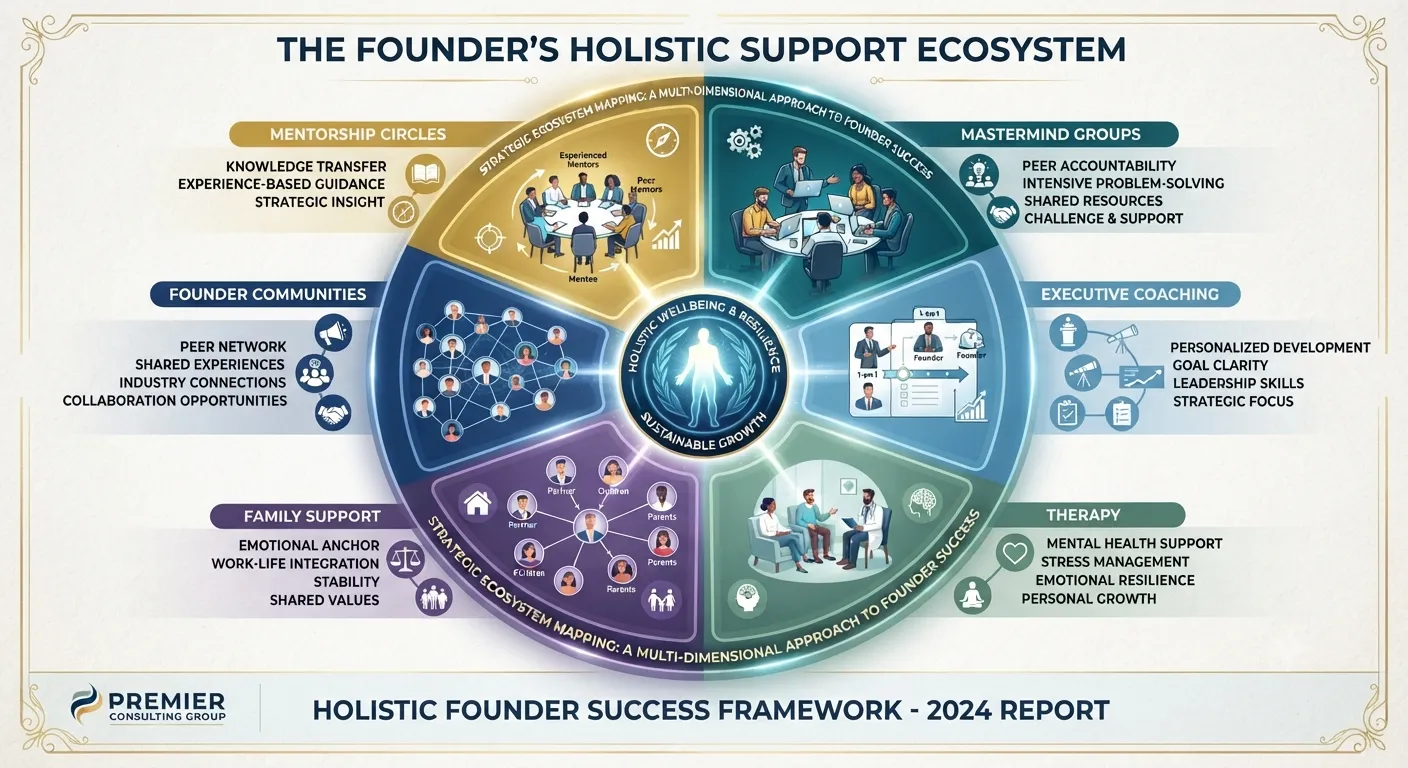
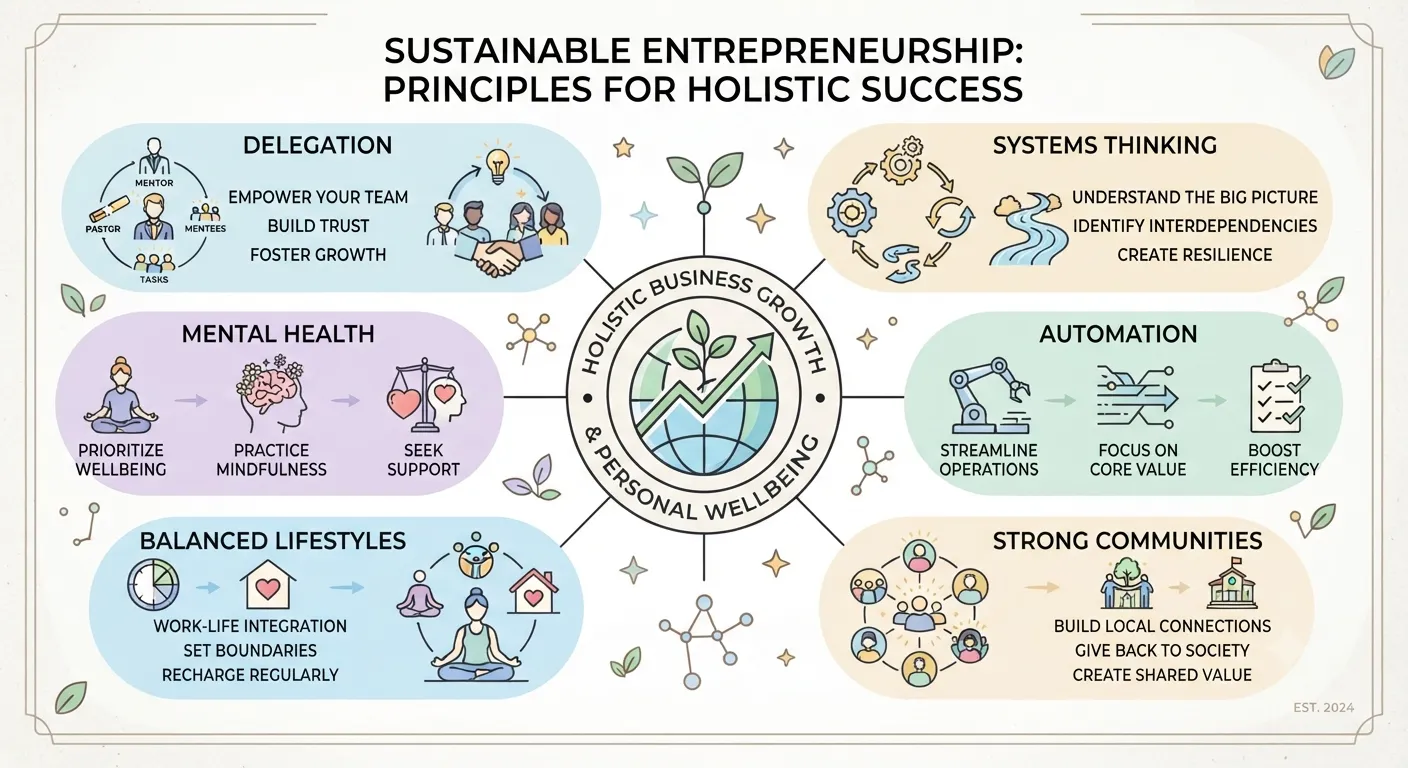
The "cure" for founder loneliness is not merely more social interaction, but the creation of "high-trust peer environments" where the "Mask of Success" can be safely removed.
The Personal Board of Directors
One of the most powerful strategies for mitigating isolation is the creation of a "Personal Board of Directors"—a small, trusted community of 4-6 founders who share similar values. This is not a formal organizational board; rather, it is a carefully selected group of advisors who have no direct stake in the founder's business. The value of this group lies in its ability to offer "unvarnished feedback" and emotional solidarity without judgment.
Peer Group Type | Revenue/Age Requirements | Core Model | Key Benefit |
Vistage | 5M+ Annual Revenue. | Local chapters of 12-16 CEOs with monthly day-long facilitated sessions. | Expert speaker workshops and 1-on-1 coaching from a "Chair". |
YPO | 15M+ Revenue; Must be under 45. | Small forums of 8-10 members that meet monthly for confidential sharing. | Global elite networking and "prestige" connections. |
EO | $1M+ Annual Revenue. | Local chapter forums of 8-10 members using a peer-driven format. | Focus on holistic development: business, personal, and family life. |
Modern Masterminds | Varies; Often no rigid revenue gates. | Intimate virtual cohorts (6-8 members) focused on "Radical Candor". | Fast-moving, results-driven, and virtual-first for geographic diversity. |
Offline | Top 10% of Tech Founders/CEOs. | Experiential "pods" and hyper-curated events. | Facilitating "honest, real conversations" in a high-trust environment. |
Professional Mental Health Support
Beyond peer groups, founders are increasingly utilizing executive coaching and specialized therapy. A coach provides an objective perspective and acts as a sounding board, helping leaders translate "vague anxiety into concrete action steps". Therapy for entrepreneurs specifically addresses "identity enmeshment," guiding founders to build a stable sense of self that exists beyond KPIs and funding rounds.
However, the digital landscape for mental health support is fraught with ethical complexities. Platforms like 7 Cups provide free emotional support through volunteer "listeners," which can be helpful for general stress and depression. Yet, the 2025 scrutiny of 7 Cups—revealing fake therapist profiles and a lack of verified credentials—serves as a critical warning. Founders must be discerning in their choice of professional help, ensuring they are receiving care from authorized providers who understand the specific "extreme occupational" context of entrepreneurship.
Digital Frontier: AI, Remote Work, and the Future of Connection
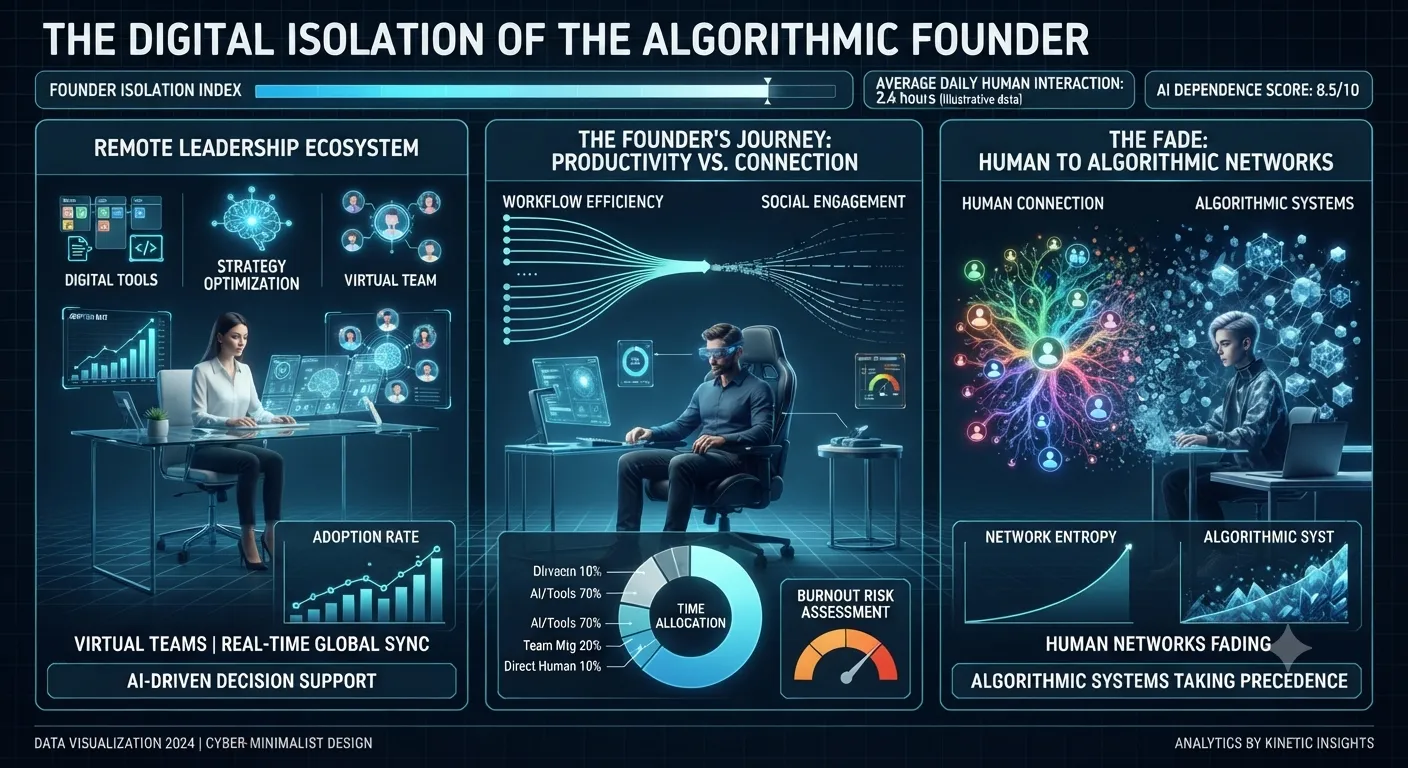
The evolution of work toward remote models and the integration of Artificial Intelligence (AI) present new challenges for founder isolation. Remote work policies, while offering flexibility, often result in "empty office buildings" that feel like "working in a building while it's closed". This lack of physical presence removes the "social cues"—facial expressions, eye contact, body postures—that human beings are biologically wired to need for connection.
The AI Loneliness Paradox
The efficiency of AI may actually be worsening the loneliness epidemic. Research indicates that the more employees collaborate with AI, the more they feel "socially deprived". For a founder, AI can replace many transactional human interactions (e.g., data analysis, basic drafting), but it cannot replace the "30-minute braindump" with an engineer or a peer that provides essential social stimulation. This leads to:
Increased Loneliness and Social Isolation: Working with AI throughout the day creates a void that "efficiency" cannot fill.
Higher Rates of Insomnia and Substance Use: Loneliness around increasing AI interactions can manifest as deep, unconscious distress.
Contagious Loneliness: Loneliness can be transmitted up to three people removed from one lonely person. If a founder is isolated by technology, this "affective state" can permeate the entire culture of the startup, leading to further withdrawal and detachment across the organization.
Synthesis and Strategic Outlook
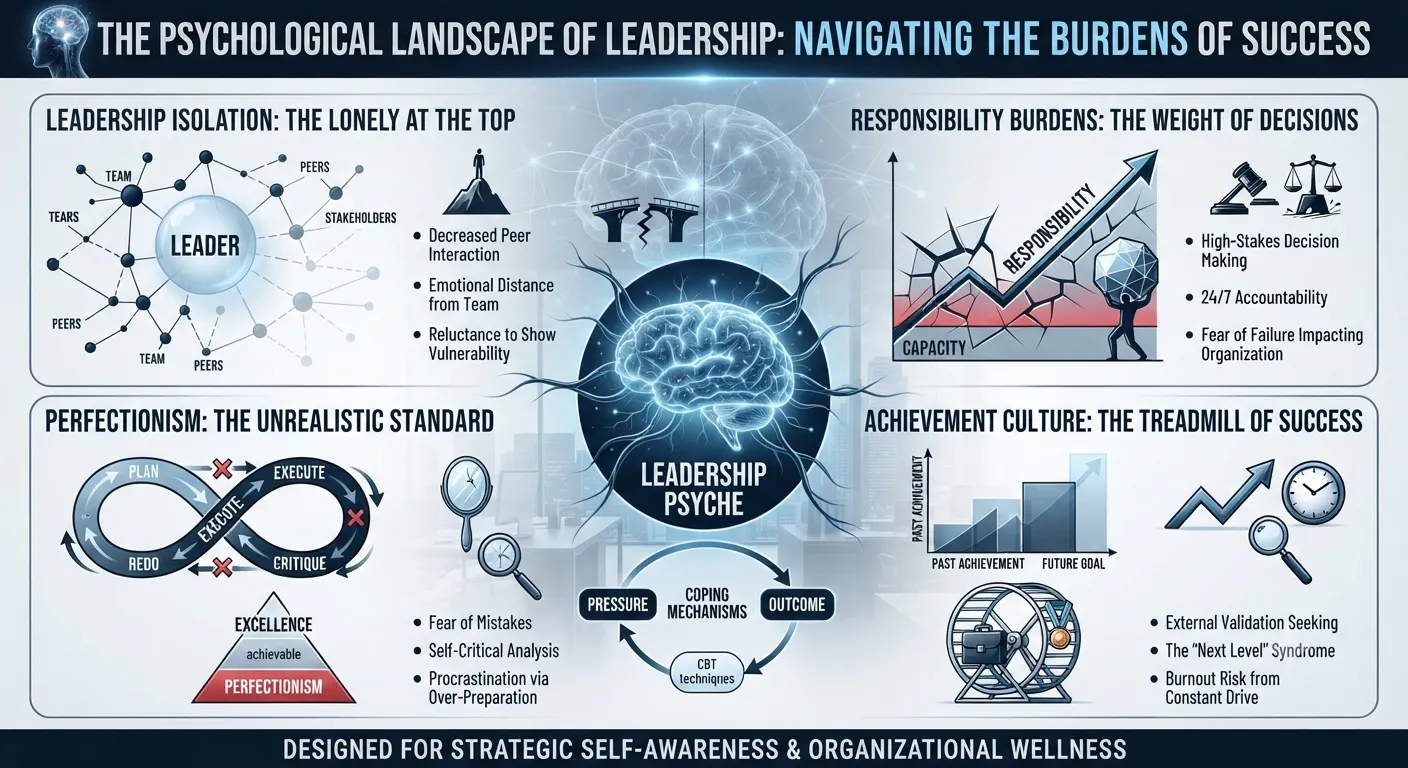
The loneliness of being a founder is an "unexpected demon" that most individuals are unprepared for, yet it is a predictable outcome of the current entrepreneurial ecosystem. It is a condition driven by the intersection of high psychiatric risk, identity enmeshment, toxic hustle culture, and investor pressure. The data suggests that this is not a "side effect" of entrepreneurship but a core feature of the "extreme occupation".
To navigate this, the entrepreneurial community must shift from an "individual resilience" model to a "structural support" model. This requires:
Destigmatization through Narrative: Following the lead of Feld, Turnbull, and Hoffman, founders must share their "dark moments" to normalize the struggle and permit others to seek help.
The Rejection of "Founder's Depression": Recognizing that depression is a clinical condition that requires professional treatment, not a normal part of the job description.
Active Investor Engagement: Investors must move beyond financial metrics and take responsibility for the well-being of their founders through direct funding for mental health resources.
Intentional System Design: Moving away from the "lone hero" and "hustle trap" toward automated systems and delegated leadership that allow the founder to maintain a separate identity and physical health.
Ultimately, the goal is to ensure that the "pathway to innovation" does not become a "tunnel that gets narrower and narrower". As the industry moves into an era of remote work and AI-human collaboration, the preservation of deep, authentic human connection will be the primary strategy for ensuring both founder well-being and venture longevity. Entrepreneurship is, by its nature, a lonely journey; there is no way around it. But by being proactive about mental self-care, strategic vulnerability, and the building of peer ecosystems, the journey can become sustainable. The most successful leaders of the future will not be those who grind the hardest, but those who are the most grounded in a supportive, human village.
Want to calculate the equity for your cofounder?
Nail your cap table before you sign. Whether you're splitting equity with a co-founder or planning your next funding round, our Equity Calculator gives you precision in seconds
Equity calculator →