Startup Exodus: Why Founders Are Relocating Overnight Due to War
March 20, 2026 by Harshit Gupta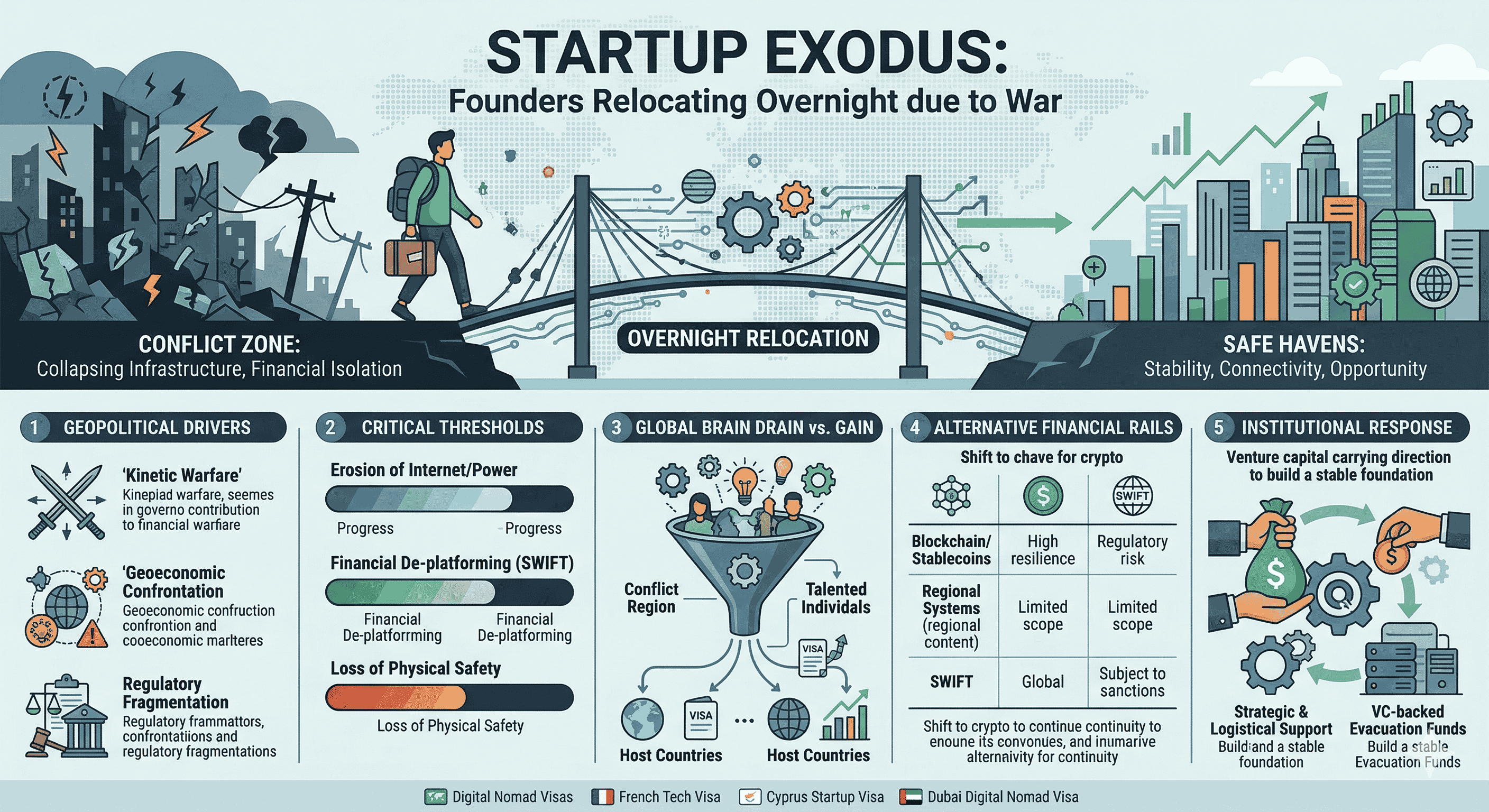
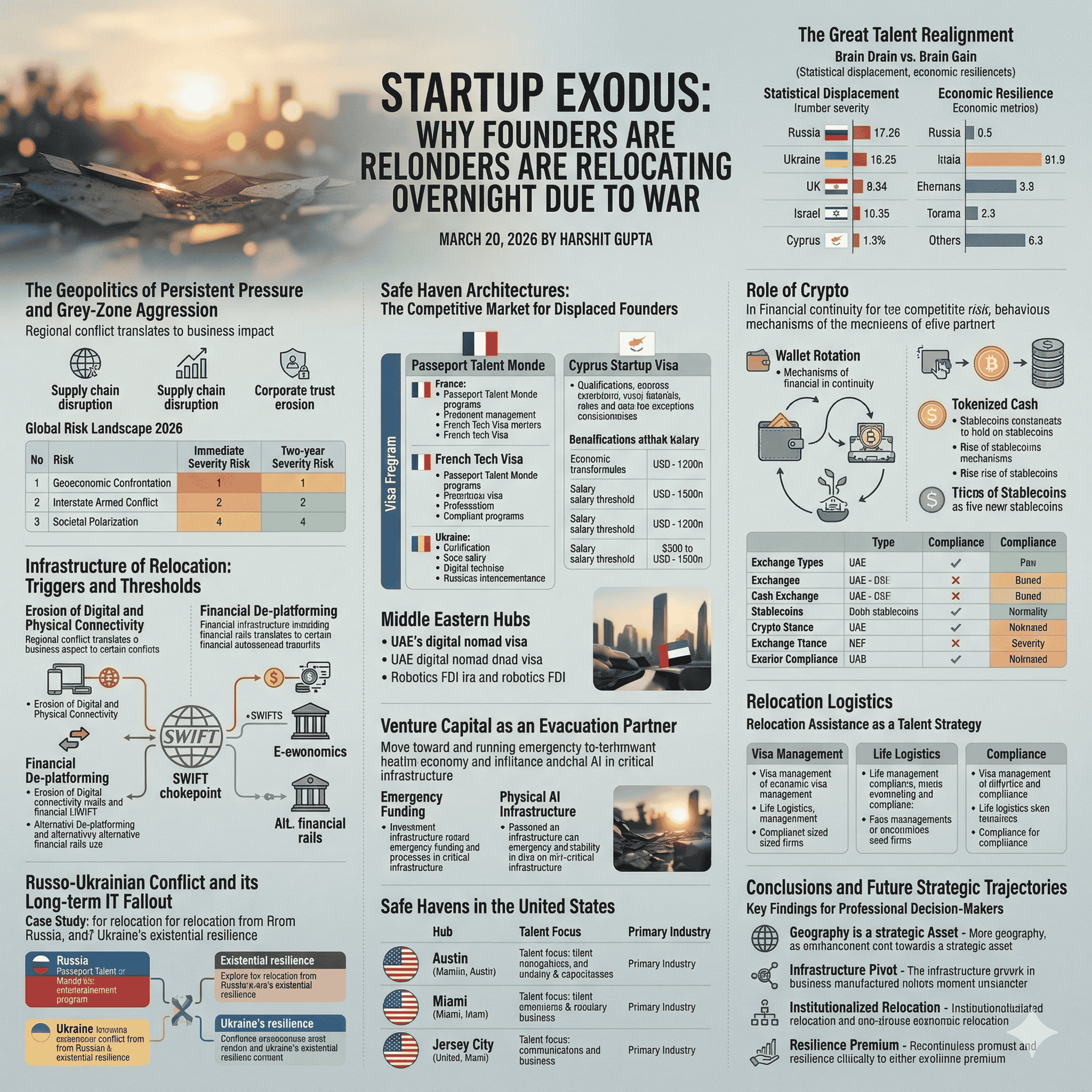
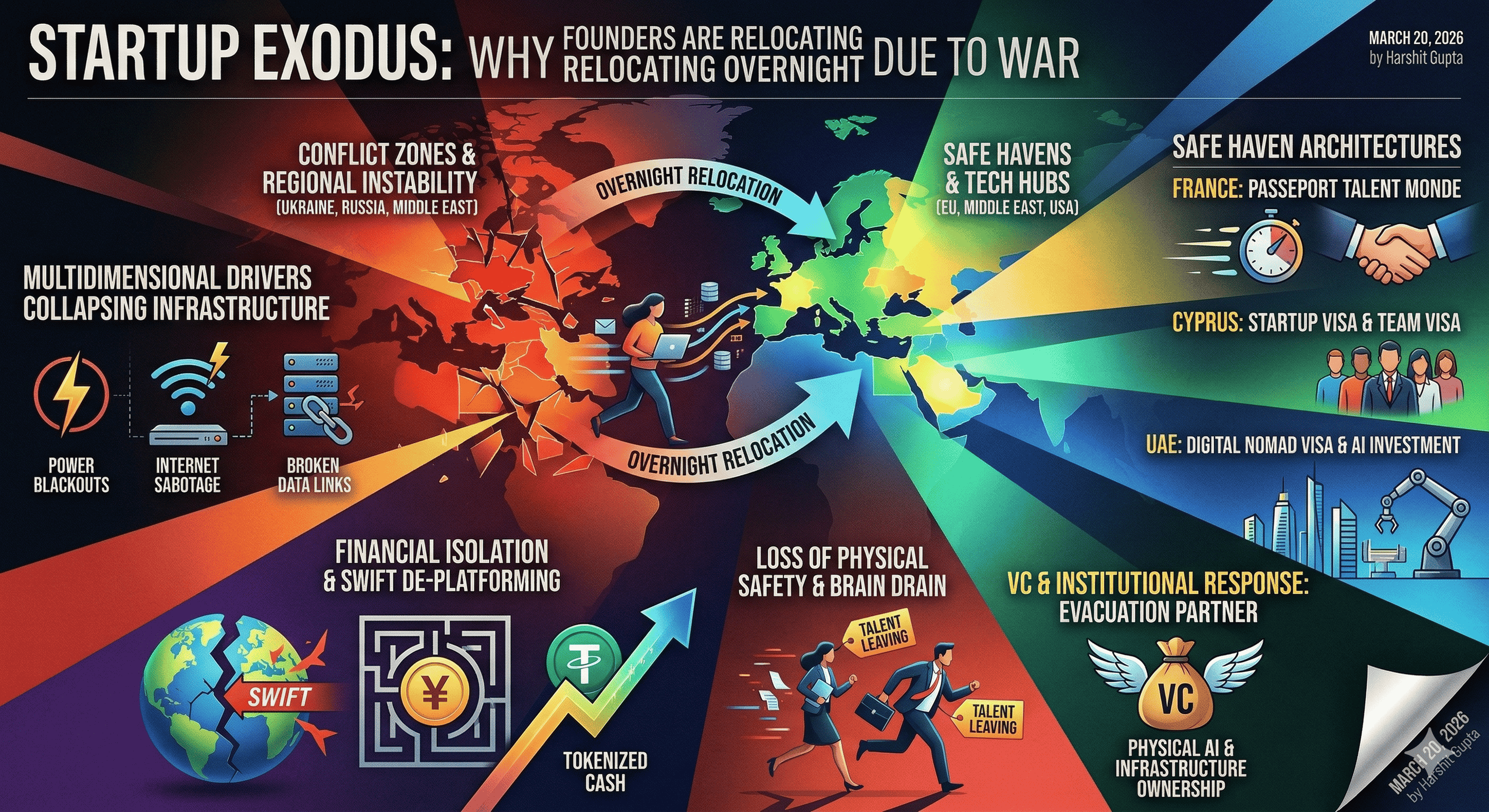
The global economic architecture of 2026 is characterized by a definitive transition from the era of hyper-globalization to one of geoeconomic confrontation, where the strategic weaponization of trade, technology, and financial systems has redefined the operational parameters for the technology sector. According to the World Economic Forum’s Global Risks Report 2026, geoeconomic confrontation has emerged as the foremost threat to global stability, surpassing traditional interstate conflict in its ability to disrupt supply chains and trigger systemic market volatility. In this environment, tech startups, once viewed as location-independent entities, have found themselves on the front lines of a "new competitive order" where physical geography and jurisdictional alignment are now matters of existential survival. This report analyzes the multi-dimensional drivers of the "startup exodus," a phenomenon where founders are forced to relocate teams and headquarters overnight due to the intersection of kinetic warfare, financial de-platforming, and the erosion of digital infrastructure.
The Geopolitics of Persistent Pressure and Grey-Zone Aggression
The nature of contemporary conflict has shifted from isolated events to sustained pressure, a dynamic that complicates long-term strategic planning for high-growth firms. The "grey-zone era" is defined by tactics that sit between formal peace and armed conflict, utilizing deniable methods such as state-sponsored cyber activity, economic retaliation, and infrastructure sabotage. For a technology firm, the distance between global tension and business impact has collapsed; a regional conflict in one part of the world now translates directly into brand impersonation, supply chain disruption, and misinformation campaigns that can erode corporate trust within hours.
Risk Hierarchy and the Macroeconomic Outlook
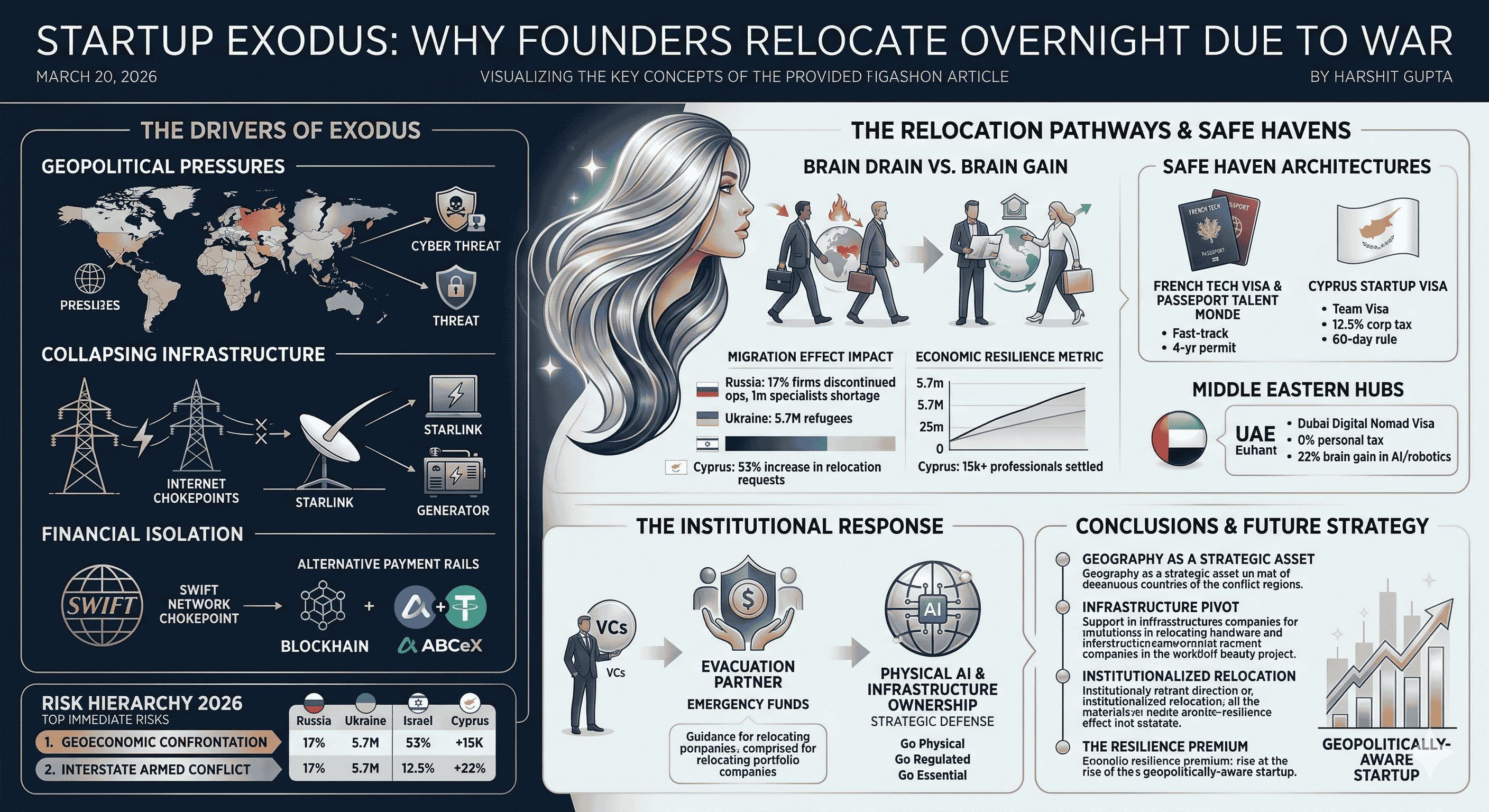
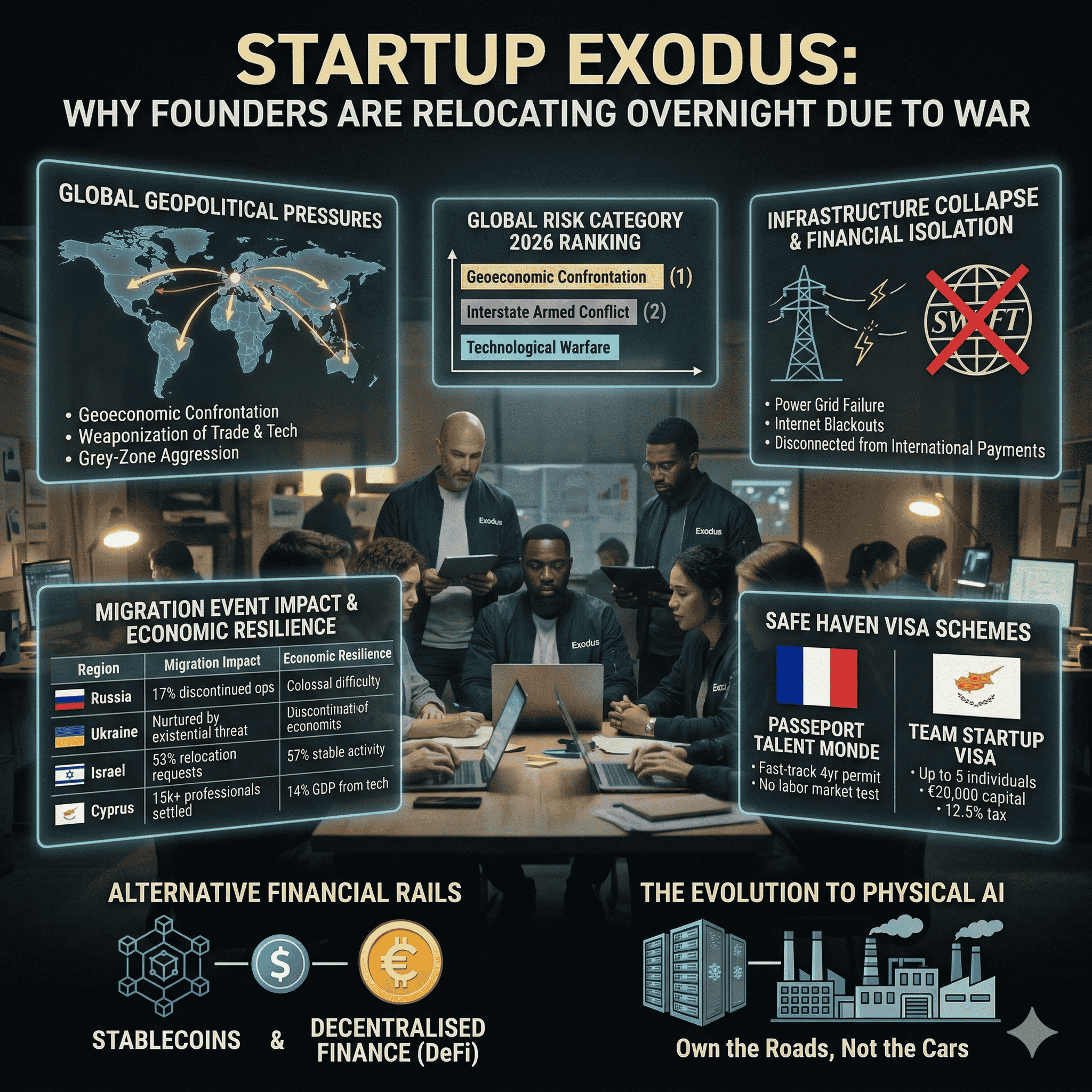
Expert surveys indicate a deep concern regarding the trajectory of global stability, with over 57% of leaders anticipating a turbulent or stormy world over the next decade. This instability is driven by the weaponization of economic tools, where major powers seek to secure their spheres of interest through sanctions and export controls. The following table illustrates the risk landscape for 2026, highlighting the severity of geoeconomic and conflict-related threats.
Global Risk Category | 2026 Ranking (Immediate) | Two-Year Severity Ranking | Long-Term (10-Year) Outlook |
Geoeconomic Confrontation | 1 | 1 | Fragmentation of Global Order |
Interstate Armed Conflict | 2 | 5 | Technological Warfare |
Societal Polarization | 4 | 3 | Labor Market Fragmentation |
Misinformation/Disinformation | 5 | 2 | Erosion of Institutional Trust |
Adverse Outcomes of AI | 30 | 5 | Displacement of Traditional Labor |
The emergence of a "multipolar or fragmented order" implies that startups can no longer rely on a unified global framework for data protection, financial messaging, or talent mobility. Instead, they must navigate a landscape of "regulatory fragmentation," where the rules of the US-shaped global architecture are being challenged or replaced by regional alternatives.
The Infrastructure of Relocation: Triggers and Thresholds
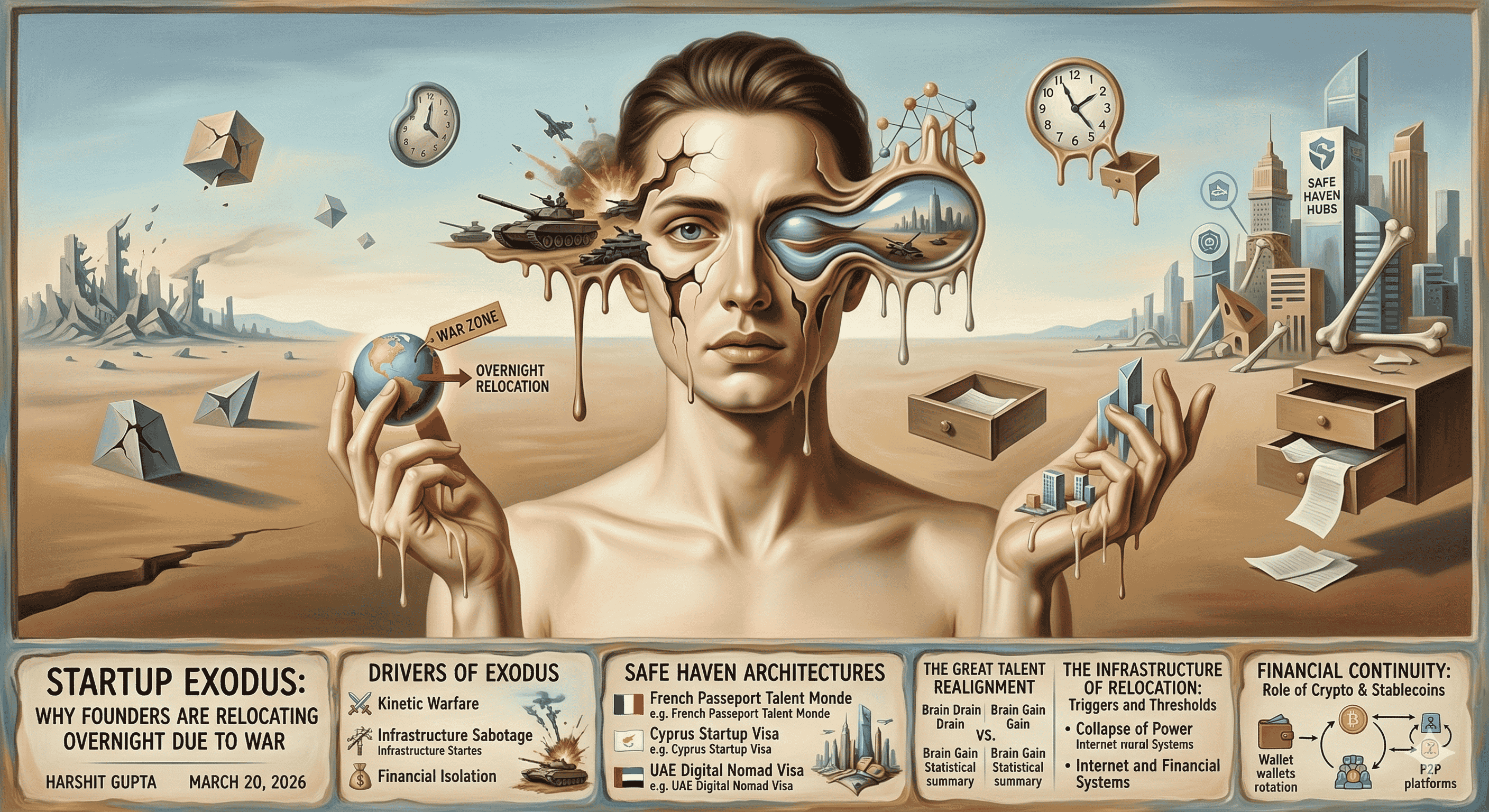
The decision to relocate a startup overnight is rarely the result of a single factor; rather, it is the culmination of collapsing infrastructure, financial isolation, and the loss of physical safety. In conflict zones such as Ukraine and Russia, the IT sector faced a "Ctrl-Alt-Delete moment" almost overnight following the 2022 invasion.
The Erosion of Digital and Physical Connectivity
For a tech firm, the baseline requirement for operations is a stable power grid and high-speed internet. In Ukraine, the war forced companies to adopt radical resilience measures, such as purchasing fuel-powered generators and Starlink terminals to combat frequent electricity blackouts caused by attacks on the energy grid. These contingency items require significant cash reserves, which are often deducted from the business's growth capital, leading to a "heavy" financial burden for smaller enterprises.
In Russia, the exodus was driven by the departure of Western tech giants including Microsoft, IBM, SAP, and Intel, which left local developers without access to essential cloud infrastructure and engineering software. This estrangement from Western technology stacks forced firms to seek "technological sovereignty," though analysts argue that self-sufficiency in core hardware like CPUs and 5G equipment remains unachievable in the foreseeable future.
Financial De-platforming and the SWIFT Chokepoint
The most immediate catalyst for overnight relocation is the threat of being disconnected from the SWIFT international payment messaging system. SWIFT dominance ensures lower trade costs and higher volumes; its displacement leads to inefficiencies, reconciliation errors, and heightened transaction costs. When seven major Russian banks were removed from SWIFT in 2022, it effectively denied local IT companies access to international markets.
Financial Rail | Access/Sovereignty Profile | Impact of Sanctions |
SWIFT | Global standard; high transparency | Total isolation from Western markets |
SPFS (Russia) | Domestic; reduced exposure | Limited to regional partners |
CIPS (China) | Strategic autonomy; RMB-focused | Moderate resilience; requires China’s support |
Blockchain/Stablecoins | Permissionless; borderless | High evasion potential; regulatory risk |
Startups that remain in sanctioned or conflict-affected regions are forced to utilize "workaround" infrastructures, such as using VPNs to access software and foreign bank cards to process payments. However, these are temporary measures that do not support long-term scalability, prompting a mass migration of talent to more stable jurisdictions.
The Great Talent Realignment: Brain Drain vs. Brain Gain
The startup exodus is fundamentally a movement of human capital. Even before the 2022 conflict, Russia’s IT sector faced a shortage of up to 1 million specialists; the subsequent departure of 50,000 to 70,000 workers in the early months of the war exacerbated this "brain drain". Conversely, host countries that offer stability and clear pathways for integration are experiencing a "brain gain" that bolsters their own innovation ecosystems.
Statistical Displacement and Economic Resilience
In Israel, the two-year war against militant groups led to a 53% increase in relocation requests from employees at multinational companies. This trend is particularly pronounced among senior executives and families, raising concerns about the "gradual erosion" of Israel’s local innovation engine. Despite this, the tech sector remains resilient, accounting for 20% of Israel’s GDP, with 21% of companies actually expanding operations during the conflict as they view the ecosystem through a long-term lens.
Region | Migration Event Impact | Economic Resilience Metric |
Russia | 17% of firms discontinued ops | Colossal difficulty in adaptation |
Ukraine | 5.7M refugees total | Nurtured by "existential threat" |
Israel | 53% increase in relocation requests | 57% stable business activity |
Cyprus | 15k+ professionals settled (3 yrs) | 14% direct/indirect GDP from tech |
The phenomenon of "beneficial brain drain" occurs when migration leads to the formation of distributed teams that maintain ties to the origin country while operating safely abroad. For instance, many Ukrainian IT specialists continue to work remotely for domestic companies while residing in the EU, creating a hybrid model of operational resilience.
Safe Haven Architectures: The Competitive Market for Displaced Founders
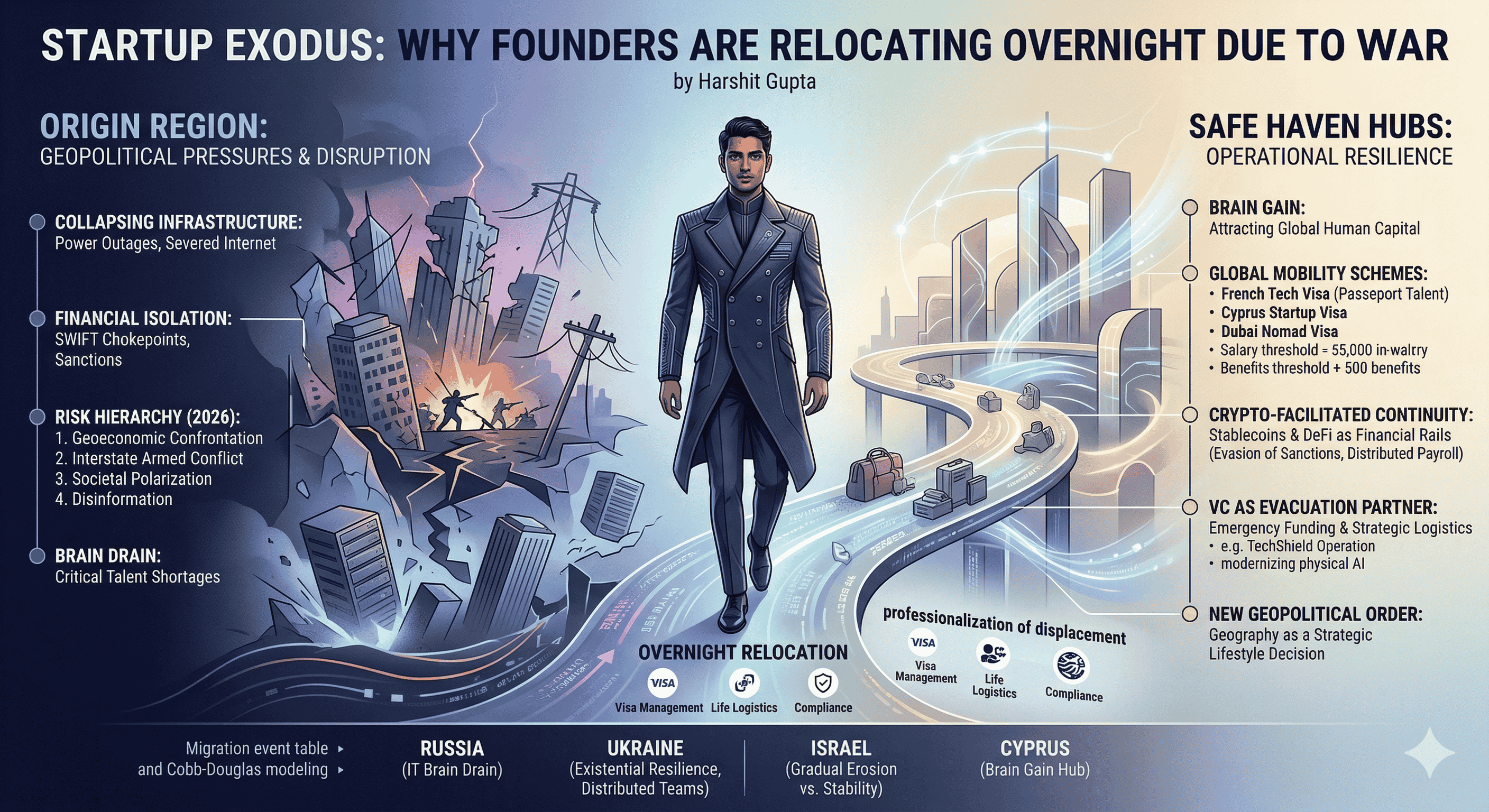
Governments across Europe and the Middle East are aggressively competing to attract displaced startup teams, offering specialized visa programs that treat "geography as a strategic lifestyle decision". These programs are designed to attract globally mobile professionals who bring spending power and entrepreneurship without competing for local jobs.
The French Tech Visa and Passeport Talent Monde
France has modernized its immigration framework to become a primary destination for tech talent. The 2025 reforms introduced the "Passeport Talent Monde," a fast-track, 4-year renewable permit for highly skilled professionals. This permit eliminates the traditional labor market test, reducing hiring timelines by up to 50%.
Category | 2026 Salary Threshold | Qualification Basis |
Qualified Employee | €39,582 | Master's degree or 5+ yrs experience |
EU Blue Card | €59,373 | Highly qualified professional |
Startup Founder | €21,876 (SMIC) | Endorsed innovative project |
Business Creator | €30,000 investment | Robust business plan |
To qualify for sponsoring employees under the French Tech Visa, companies must be recognized as "innovative" by the Ministry of Economy, a certification valid for three years. This system allows mid-sized firms to compete with multinationals for global talent by offering family inclusion and a path to permanent residency after five years.
The Cyprus Startup Visa and Regional Growth
Cyprus has emerged as a regional hub for fintech, gaming, and technology, with 440 companies establishing themselves in 2024 alone. The Cyprus Startup Visa scheme, valid until December 2026, allows talented entrepreneurs from non-EU/EEA countries to reside and work in Cyprus to develop high-growth startups.
The scheme is notable for its "Team Startup Visa," which permits up to five individuals (founders and senior executives) to relocate together, provided they have a minimum capital of €20,000. Cyprus offers a favorable corporate tax rate of 12.5% and a "60-day rule" for tax residency, making it one of the most attractive business environments in the EU.
Middle Eastern Hubs: The UAE’s Immigration Hotspot
The UAE has positioned itself as a leading immigration hotspot, ranking as the 12th most favored destination for prospective immigrants globally. The Dubai Digital Nomad Visa (Virtual Working Programme) requires a monthly income of $3,500 and offers 0% personal income tax, though it does not provide a path to citizenship. The UAE has seen a 303% increase in its youth population and a 22% "brain gain" due to its focus on FDI in robotics and AI.
Financial Continuity in Volatile Jurisdictions: The Role of Crypto
In environments where traditional banking rails are compromised by sanctions or war, displaced startups have increasingly turned to decentralized finance (DeFi) and stablecoins to maintain liquidity and operational continuity. By 2026, stablecoins have become a primary financial tool for entities under economic sanctions to move money across international borders.
Mechanism of Sanctions Evasion and Continuity
Sanctioned entities convert frozen fiat assets into cryptocurrencies through regional exchanges with variable compliance standards. These funds are then moved through a series of intermediary wallets—a process known as wallet rotation—to obscure their origin before being converted back into fiat in a less restrictive jurisdiction.
Exchange Type | Compliance Stance | Role in Sanctions Evasion |
Major Global (e.g., Binance) | Stringent KYC/AML | Low; act as regulated ramps |
Regional/Local (e.g., Bitpapa) | Weak compliance | High; intermediary hubs |
P2P/DEX Platforms | Minimal identity checks | Medium-High; final obfuscation |
Specifically, platforms like ABCeX facilitate ruble-to-crypto trading from offices in Moscow's Federation Tower, utilizing obfuscation strategies to prevent transactions from being linked to sanctioned services. Some services even offer virtual payment cards enabled for Apple Pay, allowing users to spend their USDT balances on foreign services like Airbnb or ChatGPT that are otherwise blocked in their home country.
The Shift to "Tokenized Cash" and Stablecoin Growth
Beyond evasion, stablecoins are being integrated into the legitimate global payments infrastructure. Payment giants like PayPal have expanded their stablecoin (PYUSD) to networks like Stellar to facilitate low-fee everyday payments and cross-border transfers in over 170 countries. By 2026, the market capitalization of stablecoins has reached $300 billion, with billions of low-value transfers occurring monthly. This shift allows businesses to pay suppliers on demand and make payroll for distributed freelancers without navigating the delays of the traditional 2-5 day SWIFT cycle.
The Institutional Response: Venture Capital as an Evacuation Partner
The role of venture capital has expanded from mere financial backing to providing strategic and logistical support for startup "evacuations." In the wake of regional conflicts, VC firms have launched emergency funds and offered hands-on operational guidance to ensure their portfolio companies can survive the transition to new hubs.
Emergency Funding and Strategic Resilience
In Israel, VCs launched the "TechShield Operation" in 2023, providing capital to startups directly impacted by the war. This fund assisted firms whose staff were called to military duty or who faced workforce shortages, offering up to $5 million per startup. This institutional support is critical, as access to traditional venture capital often becomes limited during conflict when investors perceive a "constant existential threat" to the business.
VC firms focused on logistics and physical industries, such as Eclipse Ventures and Dynamo VC, have become instrumental in helping founders modernize their operations to withstand geopolitical shifts. They provide guidance on "critical geopolitical issues," foster industry connections to secure international customers, and help startups integrate "Physical AI" to solve industrial problems.
The Evolution toward "Physical AI" and Infrastructure Ownership
A notable trend in 2026 is the movement toward "Industrial AI," where startups own their own infrastructure rather than renting it from cloud giants. This is a reaction to the "GPU poor" startups that spent 80 cents on cloud bills for every dollar of revenue. The safest investments in a world of war and sanctions are those that "own the roads, not the cars," securing water rights in Arizona or pouring concrete for data centers in Northern Virginia. This "go physical, go regulated, go essential" strategy provides a hedge against the volatility of the digital-only economy.
Relocation Logistics: The Professionalization of Displacement
The "overnight" nature of startup relocation has given rise to an ecosystem of service providers dedicated to global mobility. Moving a tech team is no longer a simple "paperwork exercise" but a complex coordination of visa planning, hiring timelines, and compliance responsibilities.
Relocation Assistance as a Talent Strategy
In 2026, companies that offer relocation packages—covering moving expenses, housing, and spousal support—are winning the talent game. These packages often include:
Visa Management: Handling the entire petition process through platforms like Jobbatical or Beyond Border.
Life Logistics: Arranging temporary housing, school searches for children, and even "IKEA meatballs" for a smoother transition.
Compliance: Managing the downstream responsibilities of work authorization tracking and reporting to prevent status gaps.
Relocation management platforms use services like "ALI," an AI-driven mobility assistant, to provide real-time support for new hires and their families, reducing the "headache" of international transitions.
The Impact on Mid-Sized Firms
Mid-sized organizations (50-500 employees) benefit most from streamlined relocation pathways, as it levels the playing field against larger multinationals. By using fast-track visas like the Passeport Talent Monde, these firms can reduce time-to-hire by up to 50% and fill critical gaps in AI, green tech, and biotech.
Case Study: The Russo-Ukrainian Conflict and its Long-term IT Fallout
The invasion of Ukraine serves as the definitive case study for the "Startup Exodus." Within the first weeks, 40,000 to 70,000 Russian IT specialists left the country, creating an atmosphere of safety concerns and political uncertainty.
Factors for Overnight Relocation from Russia
Export Controls: Restrictions on strategic technologies like semiconductors and telecommunications equipment.
Financial Barriers: Exclusion from SWIFT and blacklisting of tech institutions.
Atmosphere of Uncertainty: Workers reported that politics began to impact their everyday lives for the first time.
In contrast, the Ukrainian tech sector demonstrated a unique form of "existential resilience." Many firms relocated employees to safer areas in the west, such as Lviv, which became a staging ground for refugees heading to Poland and Romania. This migration "nurtured" a new quality of entrepreneurship, where founders became experts at navigating crisis while maintaining a global customer base.
The Long-term Economic Shift
The long-term outlook for Russia’s IT sector is characterized by President Vladimir Putin as one of "colossal" difficulty. To stem the brain drain, the Kremlin introduced benefits such as military service deferments and income tax exemptions, yet many workers found these insufficient compared to the fundamental concerns about the country's direction. Meanwhile, Ukraine's IT sector aims to become a leader in the "new technological order," exporting cybersecurity and drone tech platforms to global markets.
Safe Havens in the United States: The Reshaping of Domestic Hubs
For displaced founders looking beyond Europe and the Middle East, several US cities have emerged as "safe haven" hubs, each offering unique strengths to the American tech landscape in 2026.
US Tech Hub | Primary Industry Focus | Key Talent Pipeline |
San Francisco, CA | AI and Innovation Heart | Silicon Valley veterans |
New York City, NY | Fintech and Media | Wall Street and global media |
Austin, TX | Hardware and Dev Tools | Dell, Tesla, and Apple alumni |
Boston, MA | Biotech and Research | MIT and Harvard |
Miami, FL | Cross-border Business | Inflow from NYC and LatAm |
Jersey City, NJ | Fintech and Back-office | Proximity to NYC; lower cost |
Austin, Texas, has become one of the fastest-growing startup hubs this decade, offering a high density of AI and fintech founders supported by a deep engineering base from companies like Dell and Tesla. Similarly, Miami, Florida, has seen a "massive inflow" of founders from New York and San Francisco, driven by a "culture of hustle" and strong ties to Latin American markets.
Mathematical Modeling of Human Capital Redistribution
The economic impact of the tech exodus can be modeled through changes in the brain drain index and its effect on productivity. The relationship between productivity (A) and labor inputs can be assessed through the Cobb-Douglas production function:
Y=A⋅(L^α).(K^β)
Where Y is output, L is labor, and K is capital. In a conflict scenario, a significant reduction in L (highly skilled specialists) leads to a non-linear contraction in Y, as productivity (A) is often influenced by the concentration of elite talent.
The "brain drain index" is often calculated as:
Index=10−(WCY Brain Drain Variable)
Higher values indicate a failure to attract or retain foreign highly skilled personnel. For countries like Portugal and the UAE, the "potential net immigration score" is as high as 204%, indicating that the brain gain for these nations will significantly enhance their long-term economic growth.
Conclusions and Future Strategic Trajectories
The startup exodus of 2023-2026 reflects a fundamental shift in the global risk landscape, where geopolitical stability can no longer be assumed. Founders must now prioritize "operational sovereignty" by diversifying their team locations and financial rails.
Key Findings for Professional Decision-Makers
Geography as a Strategic Asset: The choice of jurisdiction is no longer about tax optimization alone but about access to hardware, digital continuity, and the physical safety of talent.
The Infrastructure Pivot: The most resilient firms in 2026 are those that own their infrastructure—"Physical AI"—reducing vulnerability to the weaponization of the cloud and global payment rails.
Institutionalized Relocation: Relocation has been professionalized, with VCs and specialized immigration platforms enabling "overnight" moves through fast-track visa schemes like the French Passeport Talent Monde and the Cyprus Team Startup Visa.
The Resilience Premium: Conflict-hardened ecosystems, particularly in Ukraine, are producing a new generation of founders whose experience navigating existential threats gives them a competitive edge in traditional startup challenges.
As the world remains fragmented into a multipolar order, the "startup exodus" is likely to become a permanent feature of the innovation landscape. Founders and investors who recognize these "constant pressures" early and build for flexibility rather than just scale will define the technological winners of 2030. The era of the "global" startup has been replaced by the era of the "geopolitically-aware" startup, where success is as much a function of jurisdictional strategy as it is of code and product-market fit.