Solo founder vs co-founder: What works better today?
July 1, 2026 by Harshit Gupta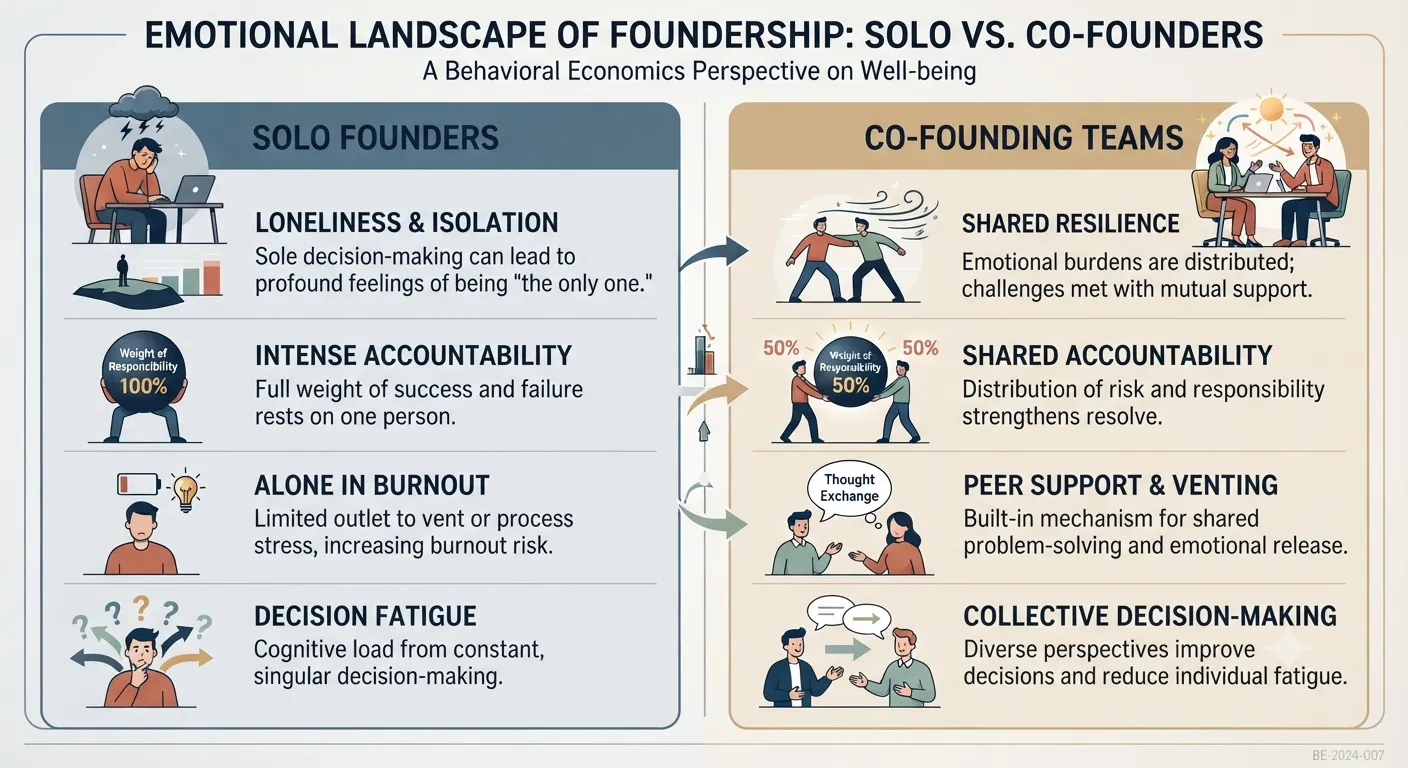
The foundational architecture of the startup ecosystem is currently experiencing its most significant metamorphosis since the institutionalization of venture capital in the mid-20th century. For decades, the prevailing consensus among investors, accelerators, and veteran entrepreneurs was that the multi-person founding team represented the only viable path to building a scalable enterprise. This "co-founder mandate" was built upon the necessity of distributed cognitive load, the requirement for diverse technical and commercial skill sets, and the perceived psychological resilience provided by a partnership. However, as of early 2026, this architectural orthodoxy is being challenged by a convergence of agentic artificial intelligence, a radical reduction in the cost of company creation, and a growing body of empirical evidence suggesting that the traditional co-founding model may harbor systemic risks—most notably co-founder conflict—that frequently outweigh its benefits.
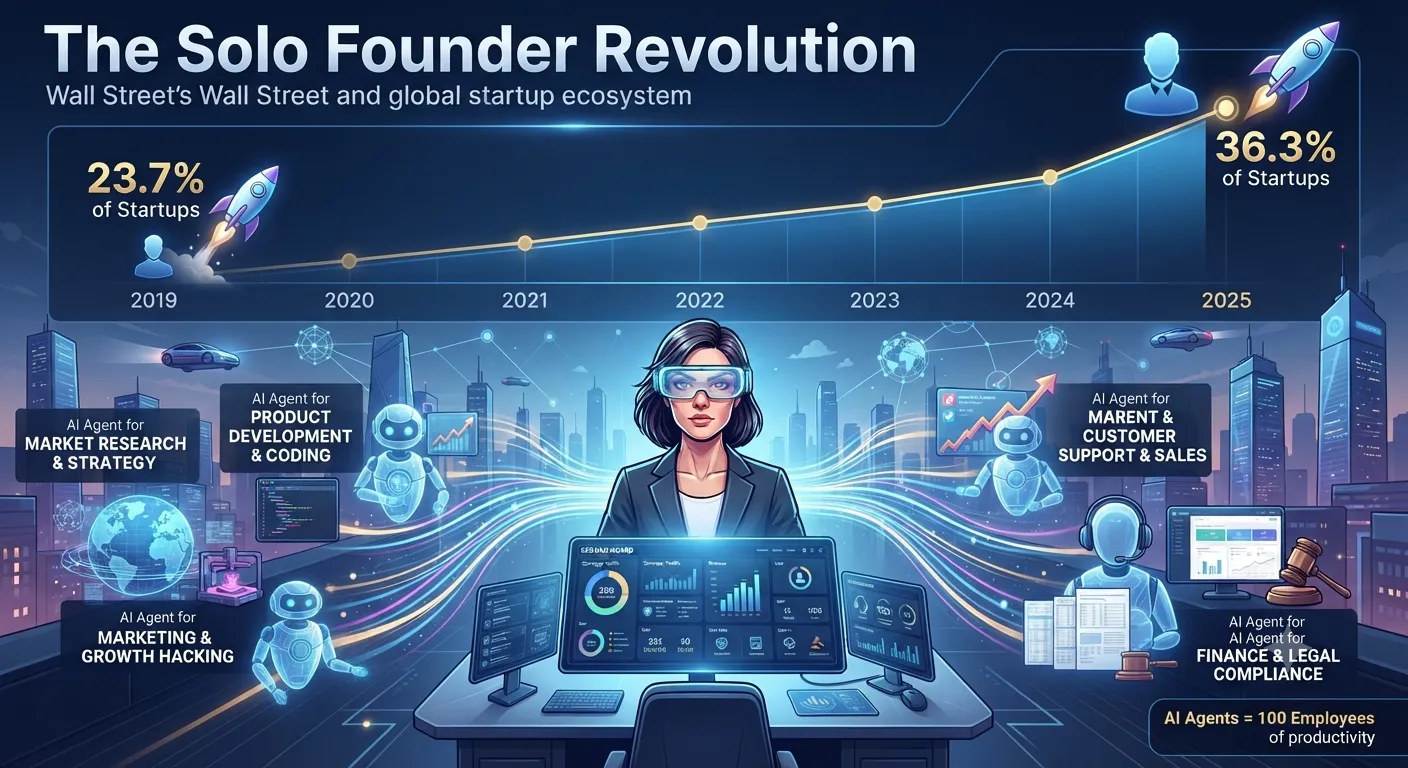
The emergence of the "solo founder" as a competitive force is not merely a lifestyle trend but a structural shift in how economic value is captured and scaled. Statistical data from major equity management platforms indicates that the share of new startups led by solo founders has risen from 23.7% in 2019 to 36.3% by the first half of 2025. This 13-point increase in a five-year span signals a profound environmental change, driven by the democratization of high-level execution through AI-driven productivity gains. While the venture capital community historically viewed solo founders with a suspicion akin to that once reserved for hardware or edtech companies, the success of category-defining, solo-led entities like Midjourney, Polymarket, and Vercel has begun to dismantle the "red flag" narrative.
The Macro-Economic Landscape of Founding Structures
The data surrounding startup formation in 2024 and 2025 reveals a bifurcated landscape where the barrier to entry for solo operations has collapsed, yet the path to institutional funding remains more frictionless for multi-founder teams. In 2024, although solo founders comprised 35% of all new incorporations, they accounted for only 17% of companies that successfully closed a venture capital round within their first year. This "funding gap" suggests that while technology has solved the problem of creation, the investor class is still catching up to the problem of underwriting solo-led risk.
Despite this gap, the capital efficiency of solo-founded ventures provides a compelling counter-narrative. Solo founders typically start their businesses with significantly less capital; nearly half launch with less than $5,000, compared to only 10% of employer businesses. This lean approach translates to a remarkable first-year profitability rate of 77%. The following table illustrates the survival and failure trajectories that define the modern startup lifecycle across all industries, providing a baseline for comparing founding team stability.
Table 1: Standard Startup Survival and Failure Rates (2020-2026)
Year of Operation | Survival Rate | Cumulative Failure Rate |
Year 1 | 90% | 10% |
Year 2 | 70% | 30% |
Year 5 | 50% | 50% |
Year 10 | 35% | 65% |
Year 15+ | 25% | 75% |
Data from the Bureau of Labor and various industry audits confirms that the risk of failure peaks between years two and five, precisely when initial funding tends to deplete and the core dynamics of the founding team are tested by the pressures of scaling.
The Agentic Catalyst: Replacing Headcount with Orchestration
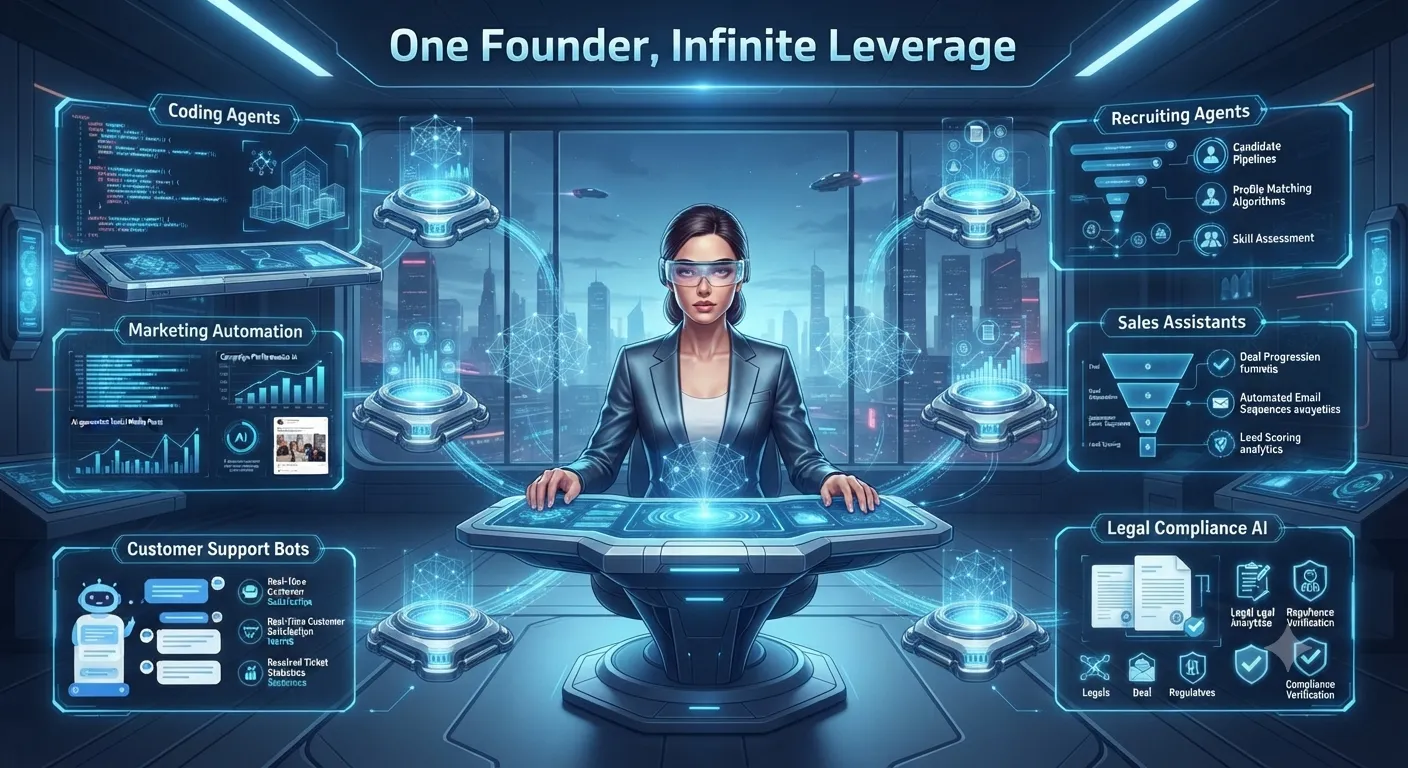
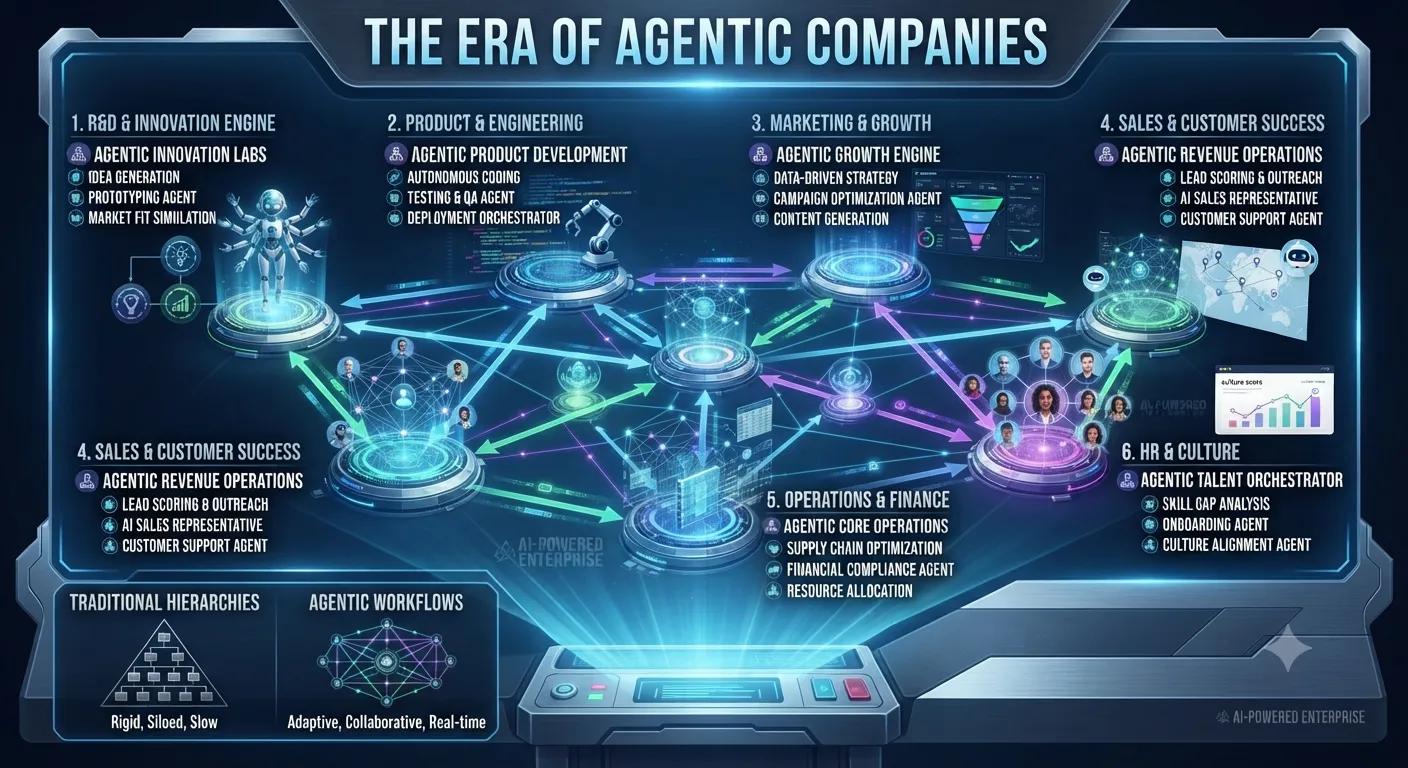
The pivot toward solo founding in 2026 is inextricably linked to the maturation of agentic AI. We have transitioned from an era where AI was a tool for "doing" to an era where AI is an agent for "executing." This shift allows a single strategic operator to manage what is increasingly referred to as a "virtual workforce." A solo founder today can deploy specialized AI agents for functions that previously required a mid-sized department, including coding, marketing, customer support, and legal compliance.
The concept of "agentic leverage" is central to this new paradigm. Sequoia Capital has notably adjusted its underwriting models to account for this leverage, recognizing that tiny teams—or even single individuals—can now produce outsized output using AI agent orchestration. This is perhaps best exemplified by Midjourney, which achieved $200 million in annual recurring revenue (ARR) with a skeleton crew of approximately 11 employees, translating to an unprecedented $18 million in revenue per employee.
The Shift from Prompting to Context Engineering
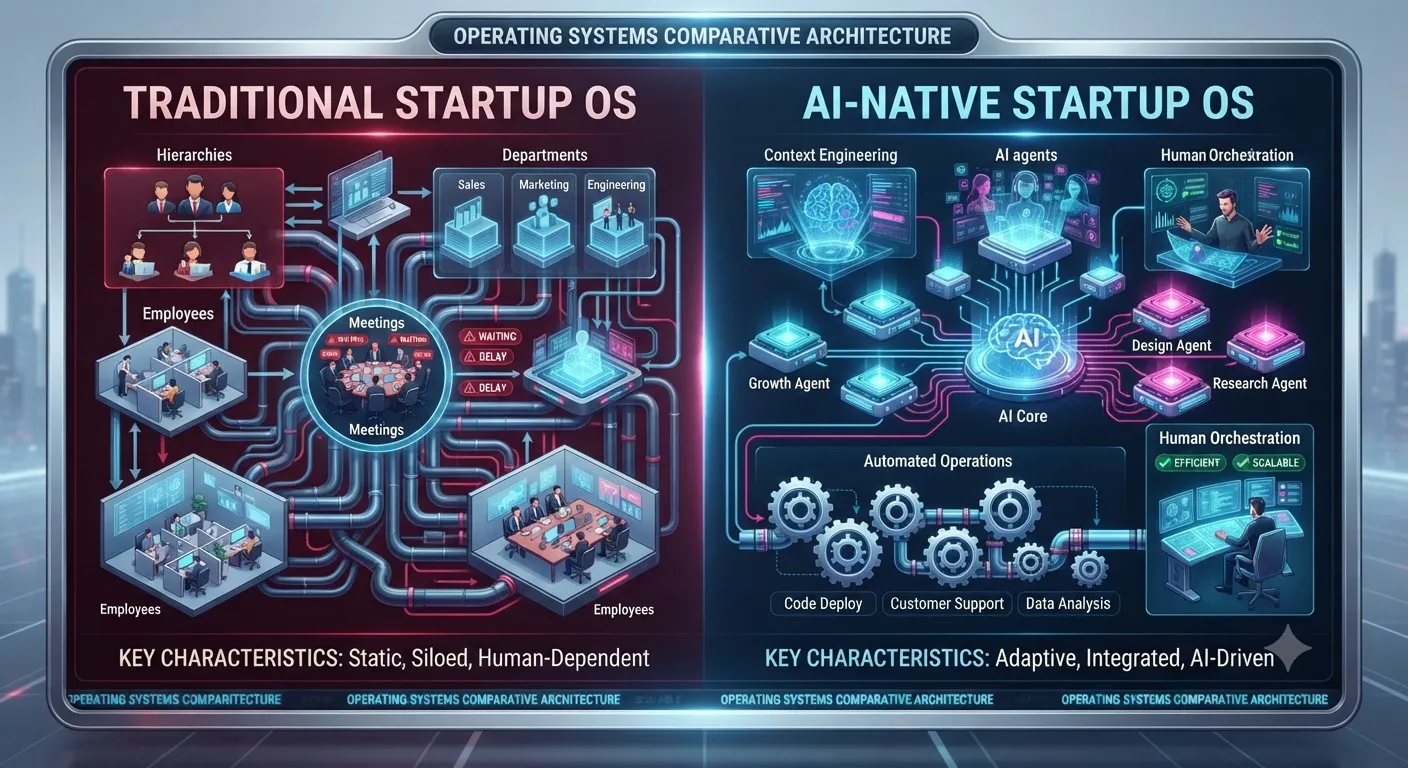
In the 2026 operational environment, the competitive advantage of a solo founder has shifted from "prompt engineering" to "context engineering." While prompt engineering focuses on crafting the right input for a single response, context engineering involves architecting an entire information ecosystem—including structured memory, RAG (Retrieval-Augmented Generation) pipelines, and MCP (Model Context Protocol) servers—that makes AI agents dramatically more reliable and capable.
Solo founders are increasingly adopting "vibe-everything" workflows, encompassing vibe coding, vibe marketing, and vibe design. This allows them to iterate weekly or even daily, whereas traditional startups with multi-person engineering teams often operate on monthly or quarterly shipping cycles. The following comparison highlights the operational leverage provided by these systems.
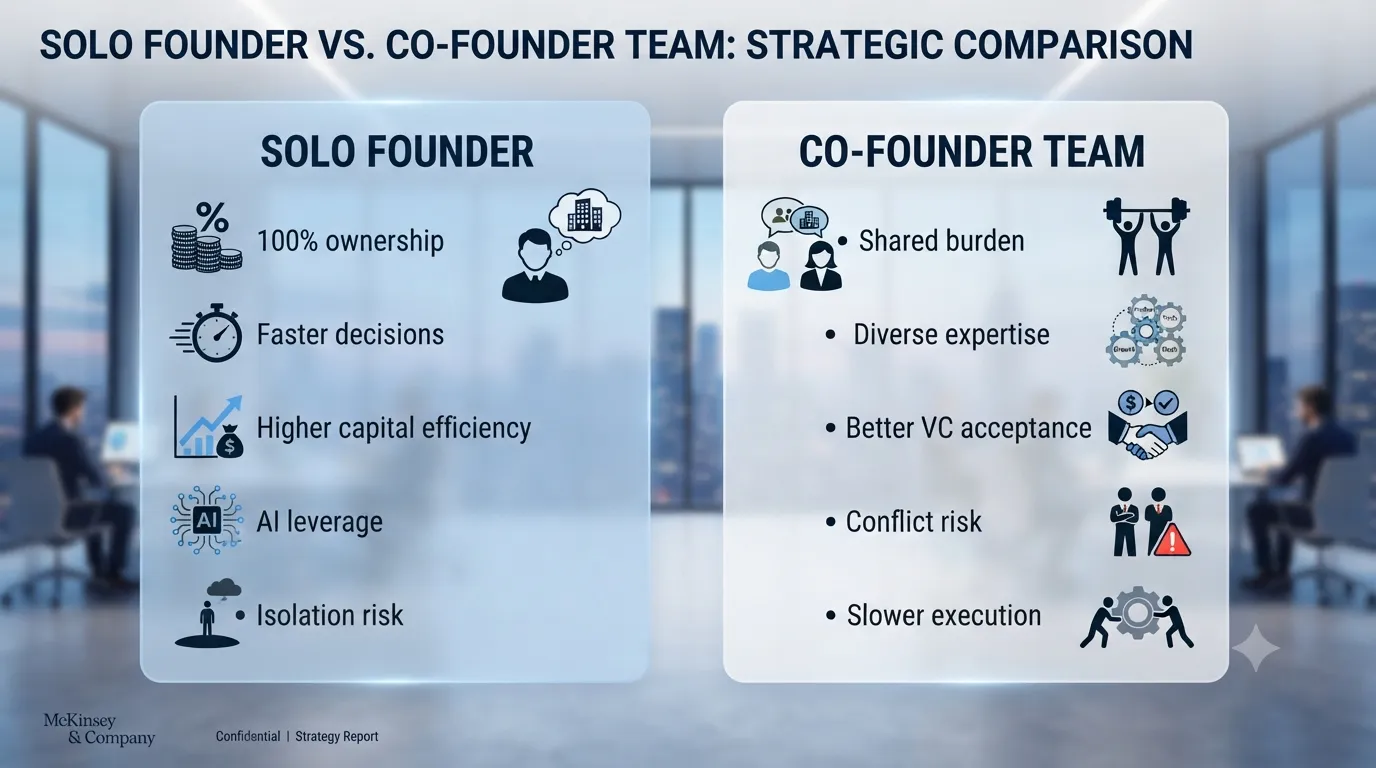
Table 2: Comparative Operational Efficiency: Solo (AI-Native) vs. Multi-Founder (Traditional)
Functional Area | Traditional Startup Requirements | AI-Native Solo Founder Capability | Capital Efficiency Gain |
Software Development | 3-5 Engineers ($400k-$750k/yr) | 1 Founder + Coding Agents | 20x - 50x |
Marketing Ops | 2-3 Marketers + Agencies | 1 Founder + 40 AI Agents | 10x - 30x |
Customer Support | 1-2 FTEs ($80k-$120k/yr) | Autonomous Support Agents | 15x - 25x |
Legal & HR | Outside Counsel / HR Manager | Custom Compliance Agents | 5x - 10x |
The 10-50x higher capital efficiency reported by solo founders in 2026 stems from replacing the 70-80% salary burn typical of traditional startups with $200-$500 monthly AI tool subscriptions. This eliminates not only payroll and office space but also the significant "coordination tax" inherent in managing human teams.
The Partnership Paradox: Analyzing Co-founder Conflict
While the potential benefits of a co-founder—accountability, complementary skills, and shared burden—are well-documented, the "silent killer" of the venture-backed world is co-founder conflict. Research from Harvard Business School indicates that a staggering 65% of high-potential startups fail because of unresolved tensions and disagreements among founding partners. This statistic is often overshadowed by market-driven failures, yet it represents a more preventable and often more catastrophic risk.
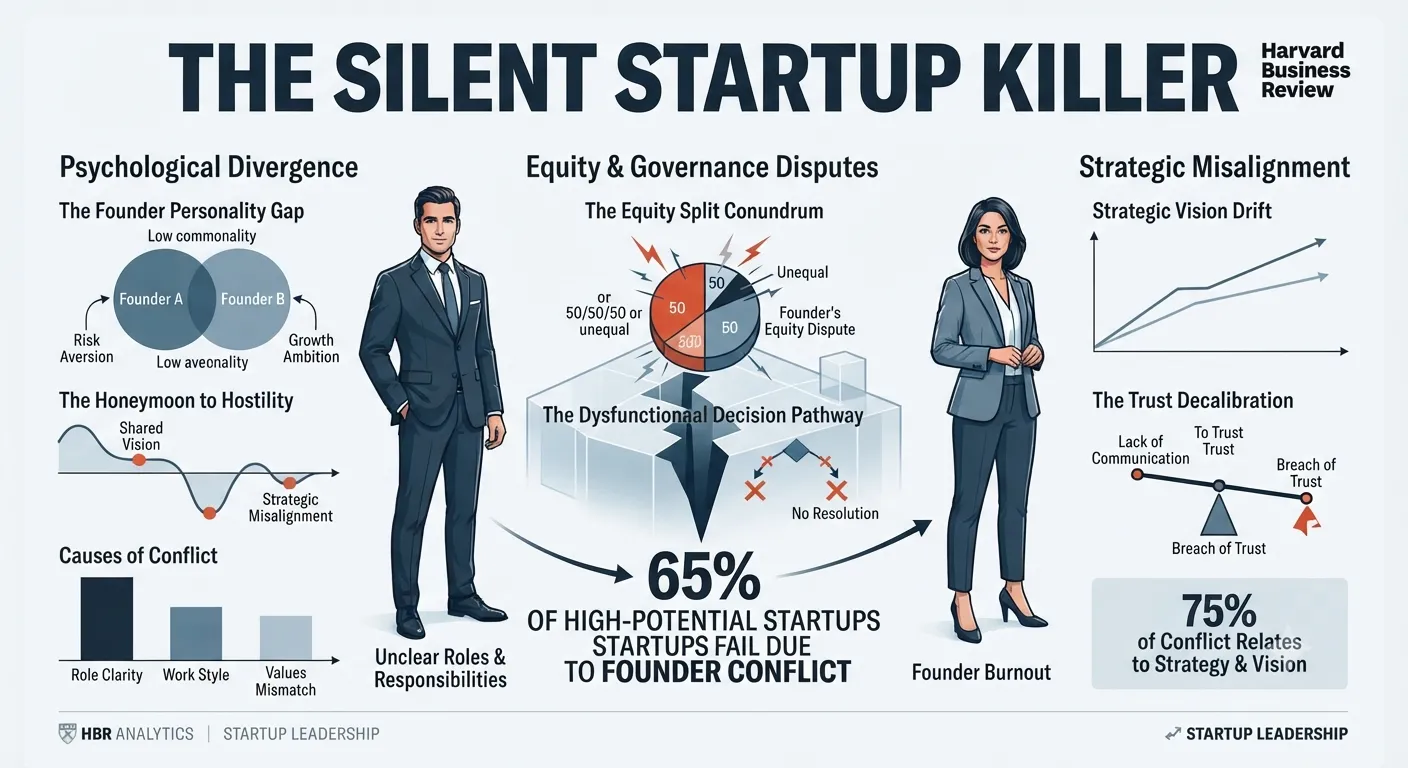
The Anatomy of Failure: Why Teams Dissolve
Co-founder breakups are not only frequent but appear to be accelerating in frequency. Data from Carta indicates that 23% of co-founders leave their company within the first three years, with that number climbing to 35% within seven years. The reasons for these dissolutions are remarkably consistent: unequal commitment, diverging definitions of success, and unresolved equity imbalances.
Unequal Commitment: Friction arises when one founder is "all-in" while the other maintains a secondary interest or lacks the same tolerance for the "ramen profitable" phase.
Diverging Success Metrics: Conflict occurs when one partner seeks a massive, venture-backed exit while the other prefers an independent, lifestyle-oriented business.
Equity Inequity: The common "co-founder of convenience" split (often a reflexive 50-50) frequently becomes a point of contention when one founder inevitably begins to contribute more than the other.
The following table categorizes the primary reasons for startup collapse, highlighting the significant role played by team and internal conflict.
Table 3: Primary Drivers of Startup Failure (2023-2026)
Reason for Failure | Percentage of Failed Startups | Root Cause Component |
No Market Need | 42% | Product/Market Strategy |
Ran Out of Funding | 29% | Financial Management |
Weak Founding Team/Team Issues | 23% | Human Capital/Conflict |
Outcompeted | 19% | Competitive Pressure |
Pricing/Cost Issues | 18% | Business Model |
Poor Product Quality | 17% | Technical Execution |
Internal/Team/Investor Conflict | 13% | Governance/Interpersonal |
The 23% of failures attributed directly to "weak founding teams" and the 13% attributed to "internal conflict" underscore the high organizational overhead of partnerships. Solo founders, by definition, eliminate the 65% risk of partnership dissolution, trading it for the risk of isolation—a risk that 2026 technology and community structures are better equipped to mitigate.
Equity Architecture and Wealth Concentration
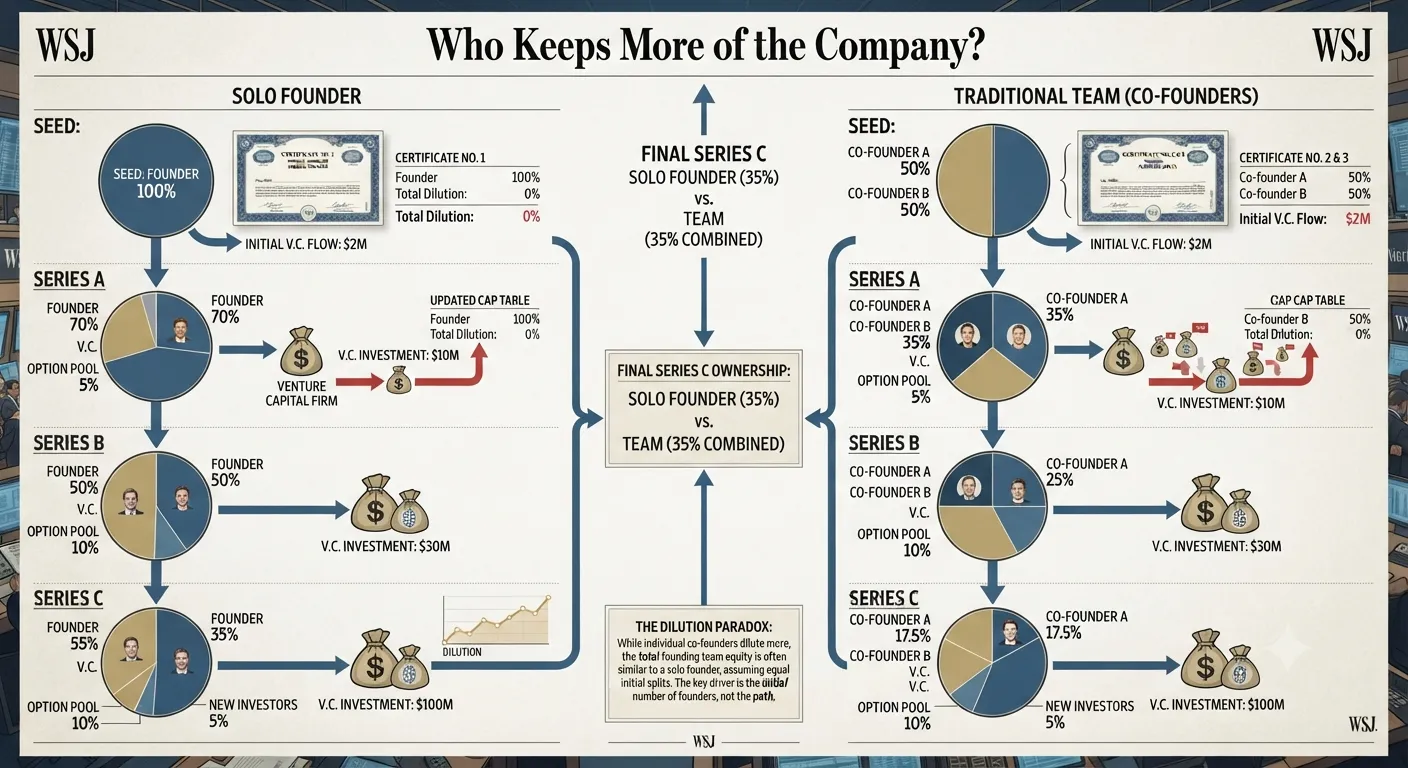
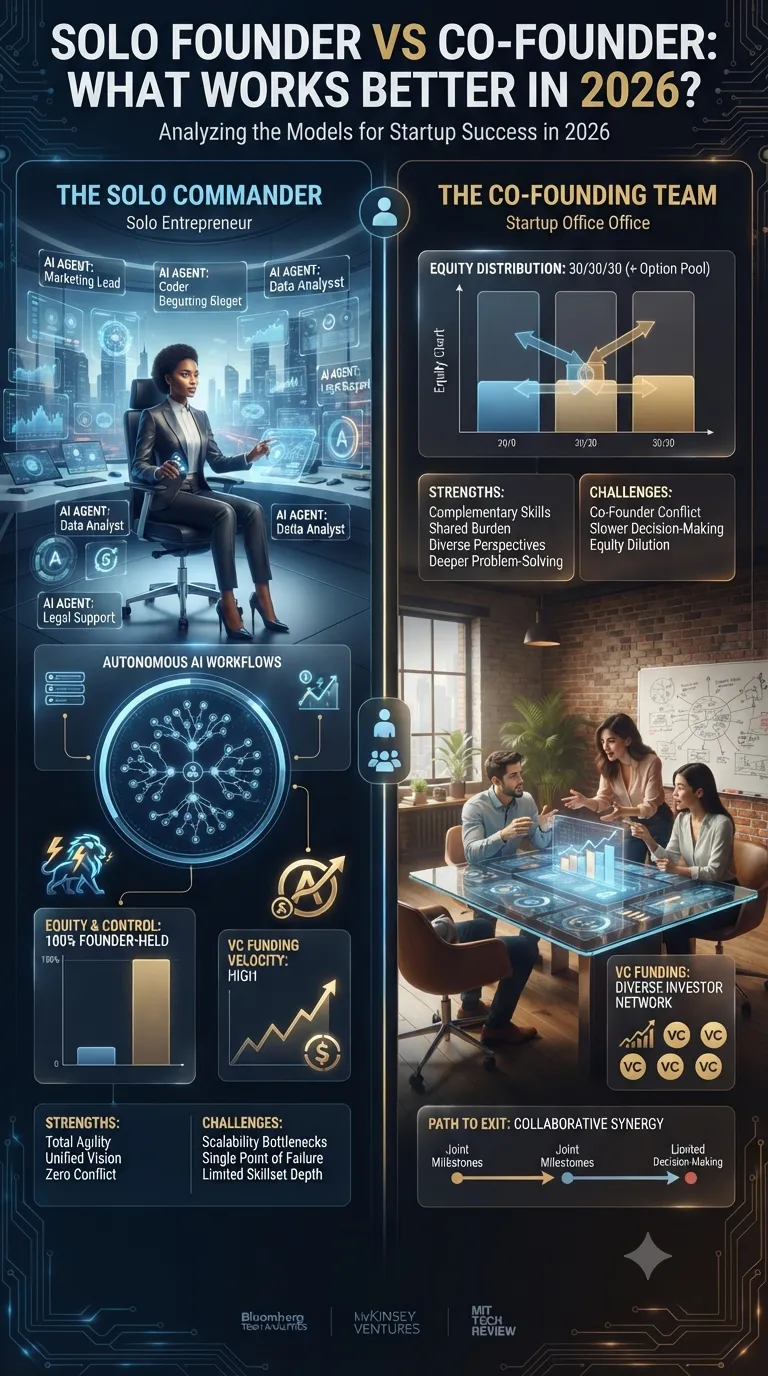
The structural advantages of solo founding extend into the long-term capitalization of the company. Equity is a startup’s most precious resource, and solo founders retain significantly more of it through later stages of growth. By Series B, the median AI founding team maintains 27.3% of their fully diluted equity, whereas solo founders typically maintain a personal stake roughly 50% larger than the lead founder of a multi-founder team.
The "Series C Flip" and Founder Dilution
A defining trend observed in the 2026 Founder Ownership Report is the "Series C Flip." At the seed stage, the median founding team maintains more than 50% of equity, while the employee pool sits at 12.1%. However, by Series C, the median employee equity pool (16.8%) actually outstrips median founder ownership (16.1%). This rapid dilution is more pronounced in non-AI sectors, where physical industry founders often retain as little as 30.5% by Series A.
Solo founders leverage their larger equity pool to attract high-tier talent without granting co-founder titles. By offering larger-than-average grants to "founding employees" (often 1% or higher for the first hire), they can recruit individuals with the same caliber as a co-founder while maintaining total strategic control and authorship.
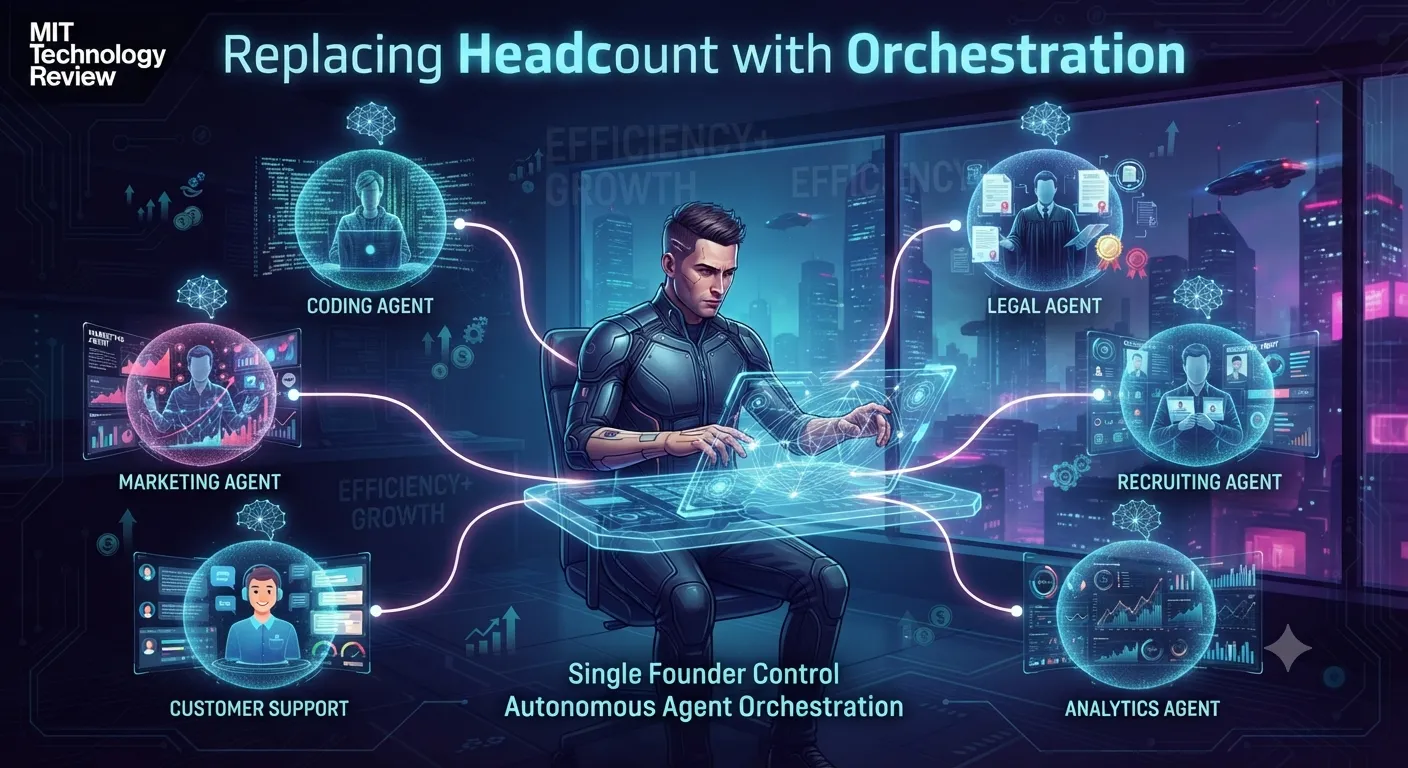
Table 4: Median Founder Equity Retention by Stage and Sector (2026)
Funding Stage | Digital/AI Sector Founders | Physical/Non-AI Founders | Solo Founder (Personal Stake) |
Seed Round | 56.0% | 52.0% | 80% - 100% |
Series A | 37.5% | 30.5% | 55% - 70% |
Series B | 27.3% | 21.8% | 35% - 50% |
Series C | 18.0% | 14.5% | 20% - 30% |
Data from Carta confirms that founders in software and AI typically retain a larger percentage of equity across all stages compared to their peers in physical industries. For solo founders, this retention is even higher, leading to a median ownership at exit that was 75% greater than that of lead founders in multi-founder teams between 2019 and 2025.
The Psychological Burden: Solo Autonomy vs. Team Resilience
Despite the economic and operational advantages, the solo founder path is fraught with psychological challenges. Solopreneurs report high stress levels at a rate of 35%, compared to 26% for business owners with employees. The "loneliness of command" is a tangible risk, with 13% of solo founders reporting significant feelings of isolation.
The mental health of the entrepreneurial community in 2026 is under severe strain; 46% of surveyed founders described their mental health as "bad" or "very bad," and 83% reported high stress levels. For solo founders, this stress is compounded by the lack of a partner to share the weight of consequential decisions. Financial instability also plays a role, with 72% of solo founders who consider abandoning their business citing inconsistent income as the primary driver.
The Rise of "Solo Together" Infrastructure
To combat these challenges, a new category of support infrastructure has emerged. Programs such as the Solo Founders Program (SFP) in San Francisco offer a residency model that allows solo founders to build their companies in the presence of other ambitious individuals. This "solo but not alone" philosophy provides the benefits of a peer network—often described as having "five other co-founders working on different things"—without the legal or equity complications of a partnership. This movement reflects a broader shift toward "authorship," where the cohesiveness of a single mental model permeates the product, while the isolation is mitigated through external communities and AI co-founder platforms like Tanka.
Sectoral Variations: Where the Co-founder Mandate Persists
The viability of solo founding is not uniform across all industries. A stark bifurcation exists between digital/SaaS sectors and deep-tech/biotech sectors. In sectors where PhD-level technical expertise must be paired with complex commercial or regulatory experience—such as pharmaceuticals and biotech—the multi-founder team remains the standard.
Analysis of Y Combinator’s 2025 and 2026 biotech cohorts reveals a complete absence of "truly solo" startups. Every listed entity in the life sciences space consists of at least two employees or a co-founding pair, often with backgrounds from prestigious institutions like MIT, Stanford, or the Broad Institute.
Table 5: Founding Team Composition by Industry (2025-2026)
Industry Sector | Solo Founder Prevalence | Multi-Founder Prevalence | Success Driver |
SaaS / Enterprise Software | 40% | 60% | Agentic Leverage / Speed |
Consumer Products/Mobile | 17% | 12% | Brand Authorship / Niche Focus |
Healthtech | 15% | 85% | Regulatory Compliance |
Biotech / Pharma | 5.3% | 94.7% | Deep Technical R&D |
Fintech | 12% | 88% | Security / Institutional Trust |
In Consumer Products and SaaS, solo founders are actually more likely to pursue "non-consensus" or passion-driven ideas that co-founder teams might avoid due to the need for internal alignment and investor fundability. Conversely, in Biotech, the "founding team" is often a prerequisite for the multi-million dollar Series A rounds required to begin human trials.
The 2026 Fundraising Narrative: From Skepticism to Agentic Underwriting
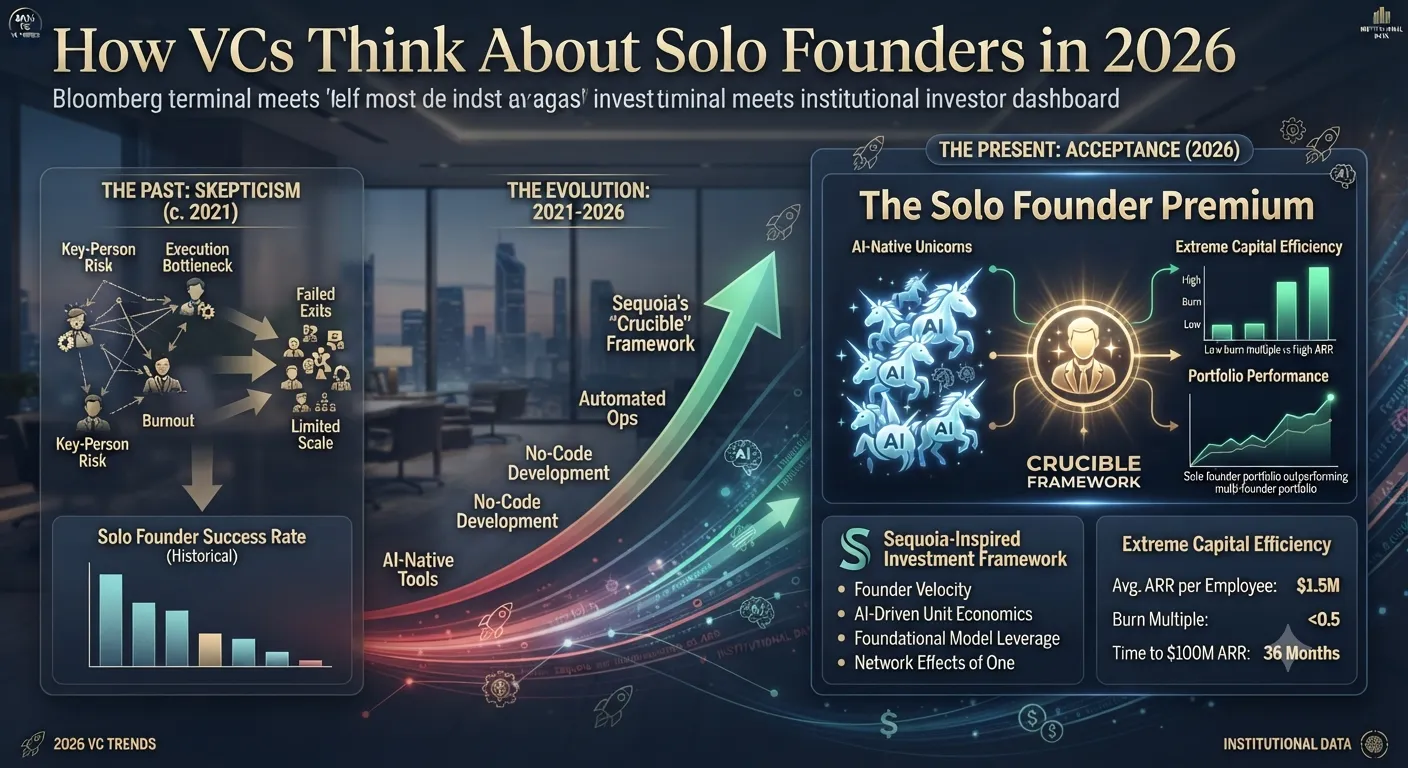
The venture capital market in 2026 is defined by differentiation and discipline. Following a period of volatility in 2025, capital is now clustering around scale, defensibility, and proximity to liquidity. For solo founders, this means the fundraising narrative has shifted from "Why are you alone?" to "How are you using agentic leverage to outperform teams ten times your size?".
The Emergence of the "$0 to $1B" Club
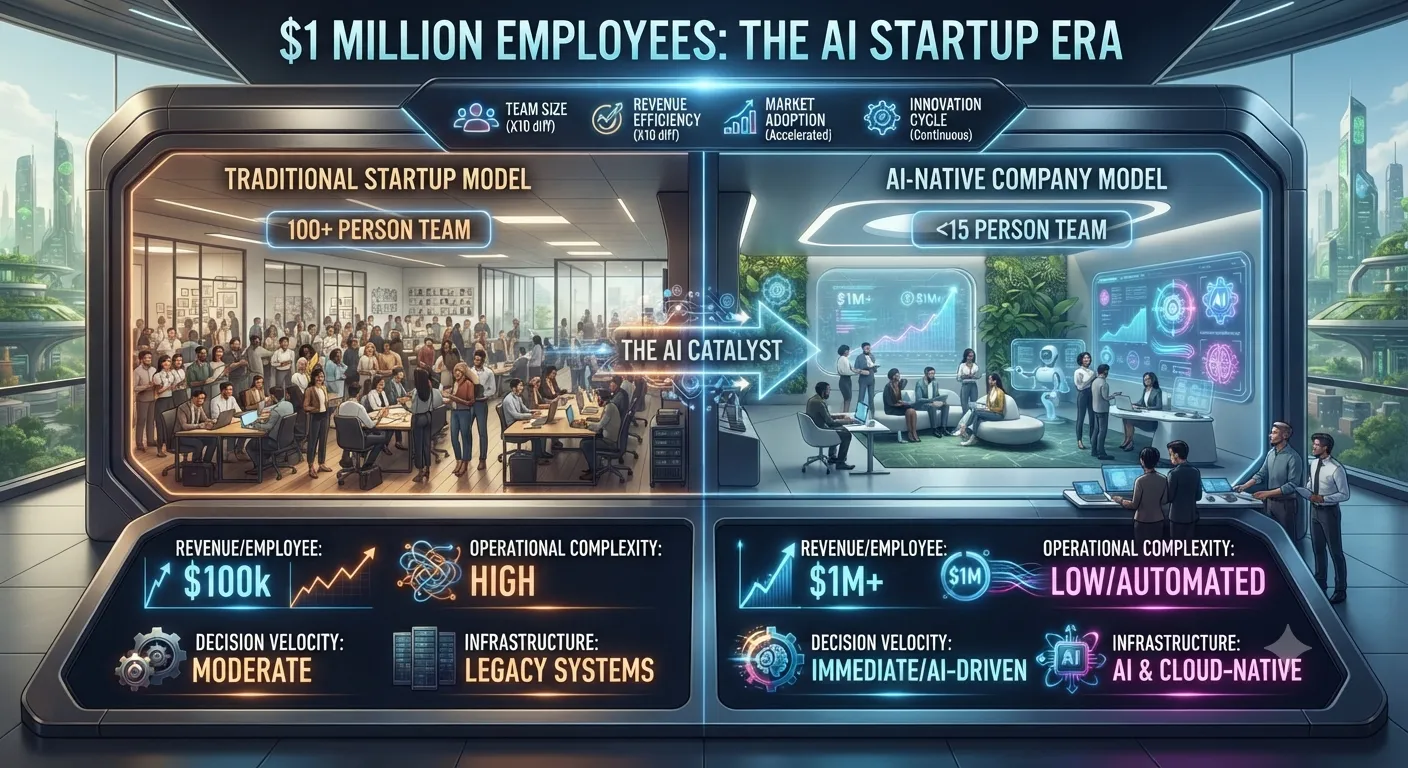
Venture leaders are now tracking the emergence of what Sequoia Capital calls the "$0 to $1B" club—rapidly scaling AI companies that reach unicorn status with minimal headcount. The defining characteristics of these companies include:
Extreme Revenue per Employee: Earning north of $1 million in revenue per FTE.
Self-Improving Systems: Utilizing AI agents for recruiting, legal, and sales from day one.
Market Pull vs. Push Sale: Achieving growth through product-market fit that "sells itself," reducing the need for massive human sales teams.
Investors like Charles Hudson and firms like Anthos Capital emphasize that while AI is rewiring the landscape, the fundamentals—insight, customer love, and team strength (whether that team is human or agentic)—remain paramount.
Case Studies: The Architecture of the "One-Person Unicorn"
The 2020-2026 period has produced several iconic solo-led successes that serve as blueprints for the modern entrepreneur. These founders demonstrate that "solo" does not mean "small," but rather "lean and strategic."
David Holz (Midjourney): Built a multi-billion dollar platform with a team of fewer than 15 people. The company exemplifies "agentic leverage," achieving over $200M in ARR with a focus on product excellence over organizational expansion.
Celine Halioua (Loyal): Views solo founding as empowering because it creates a "single source of failure." All strategic and hiring decisions trace back to a single mental model, making issues easier to identify and fix.
Pieter Levels (Levelsio): A pioneer of the "indie hacker" movement, running a portfolio of products (Nomad List, RemoteOK, PhotoAI) generating over $3M in ARR as a solo operator. He represents the "poster child" for solo-founder AI leverage.
Adeel Khan (MagicSchool): Draws from the education sector's model of single-person leadership, emphasizing that a single decision-maker with a clear vision provides a critical advantage in speed.
These case studies highlight a recurring success pattern: the transition from "vibe coding" (describing a product in natural language) to "vibe ops" (automating business processes through AI).
Conclusion: Synthesis of the Optimal Founding Strategy for 2026
The comparative analysis of solo founder vs. co-founder models in 2026 reveals that the "better" path is contingent upon the entrepreneur’s sector, their mastery of agentic tools, and their tolerance for specific risk profiles.
For the Solo Founder, the advantages are clear: 10-50x higher capital efficiency, 100% strategic "authorship," and the total elimination of co-founder conflict, which kills 65% of high-potential startups. The maturation of "context engineering" and "agentic leverage" allows a single individual to orchestrate a virtual workforce that can compete with venture-backed teams. However, they must actively manage the risks of isolation and the "solo tax" in institutional fundraising, which, while diminishing, still favors two-person teams.
For the Co-founding Team, the model remains essential in sectors requiring deep R&D, physical infrastructure, or complex regulatory navigation. The partnership model provides inherent checks and balances and continues to be the "gold standard" for Series A and B venture capital. However, these teams must be hyper-vigilant against the "accelerating co-founder breakup" trend, where nearly 1 in 4 partners leave within three years. They must prioritize clear vesting schedules, role clarity, and early alignment on success metrics to avoid becoming a statistic in the 65% failure bucket.
Ultimately, the most successful entrepreneurs of 2026 are those who view "team" not as a count of human bodies, but as a measure of "agentic capacity." Whether operating alone or in a partnership, the ability to build "self-improving" companies that earn $1M+ per employee is the defining metric of success in the modern economy. The structural bifurcation is complete: we have entered the era where a single vision, powered by a brilliant AI stack, can achieve what previously required a hundred-person organization.
Want to calculate the equity for your cofounder?
Nail your cap table before you sign. Whether you're splitting equity with a co-founder or planning your next funding round, our Equity Calculator gives you precision in seconds
Equity calculator →