How to Build a Startup Team When You Have No Money
July 2, 2026 by Harshit Gupta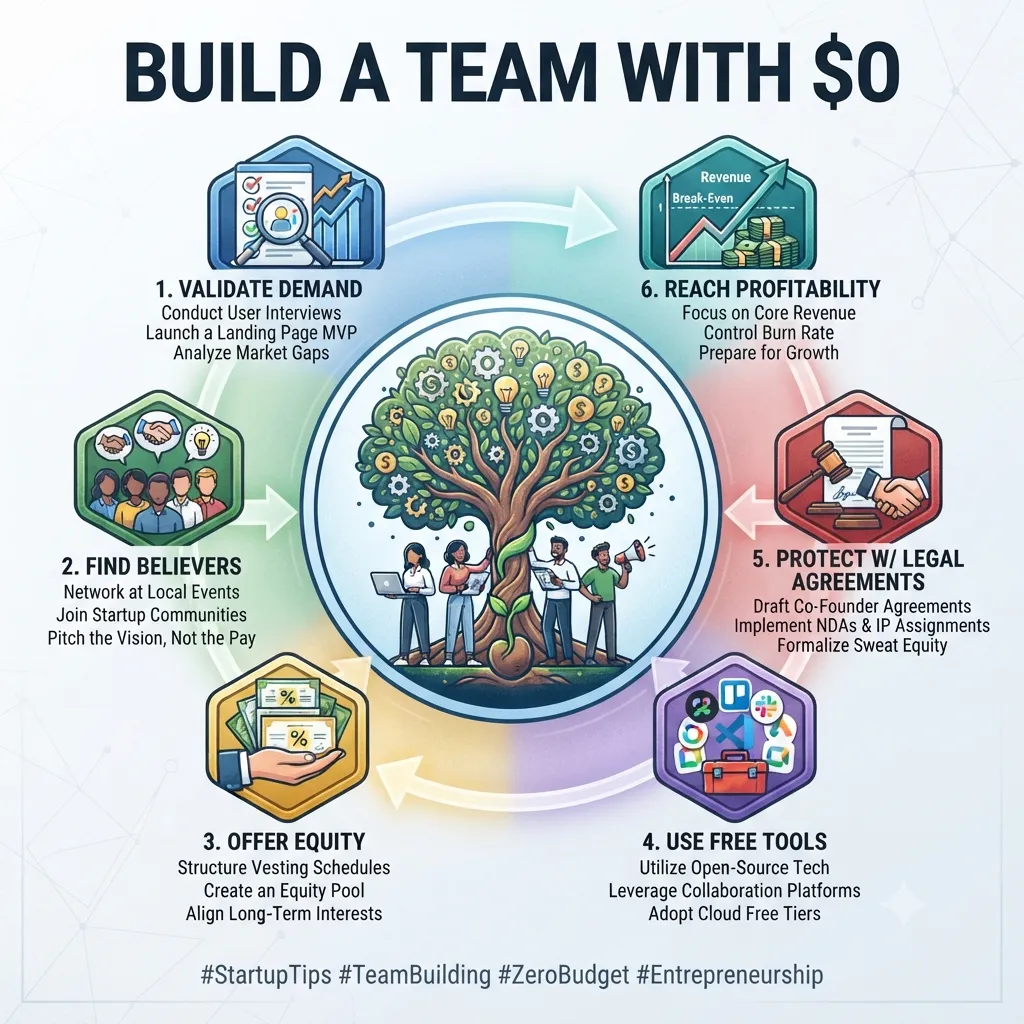
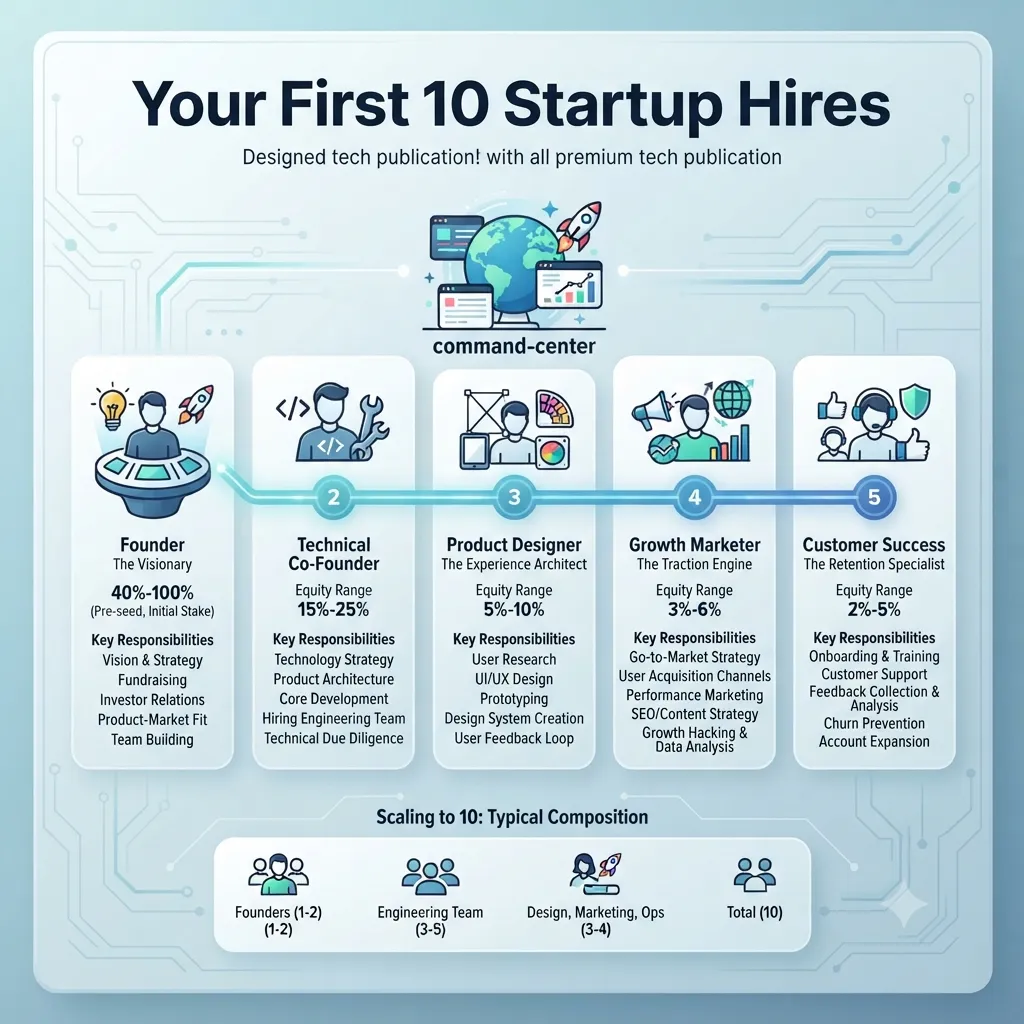
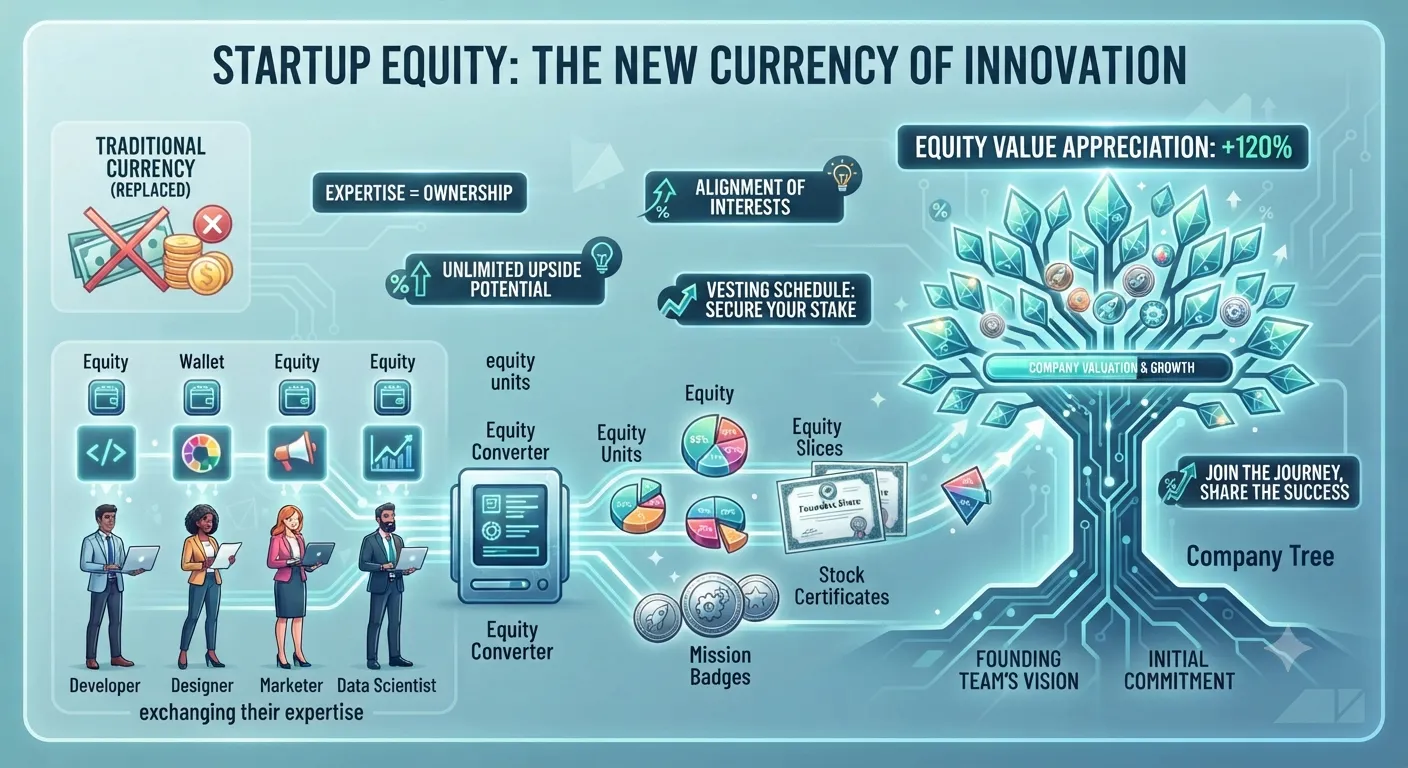
The fundamental architecture of early-stage venture formation is undergoing a paradigm shift, moving away from capital-intensive models toward a sophisticated reliance on "sweat equity"—the non-monetary contribution of time, expertise, and commitment that serves as the primary currency for cash-strapped founders. In an environment where liquidity is absent, the entrepreneur’s most precious commodity is ownership, and the strategic allocation of this equity determines not only the caliber of the team but also the long-term viability and investability of the enterprise. Building a team under these constraints requires an expert-level understanding of equity distribution models, legal safeguards, psychological vetting frameworks, and mission-led recruitment strategies that transcend traditional salary-based compensation.
The Economic Theory of Sweat Equity and Risk Allocation
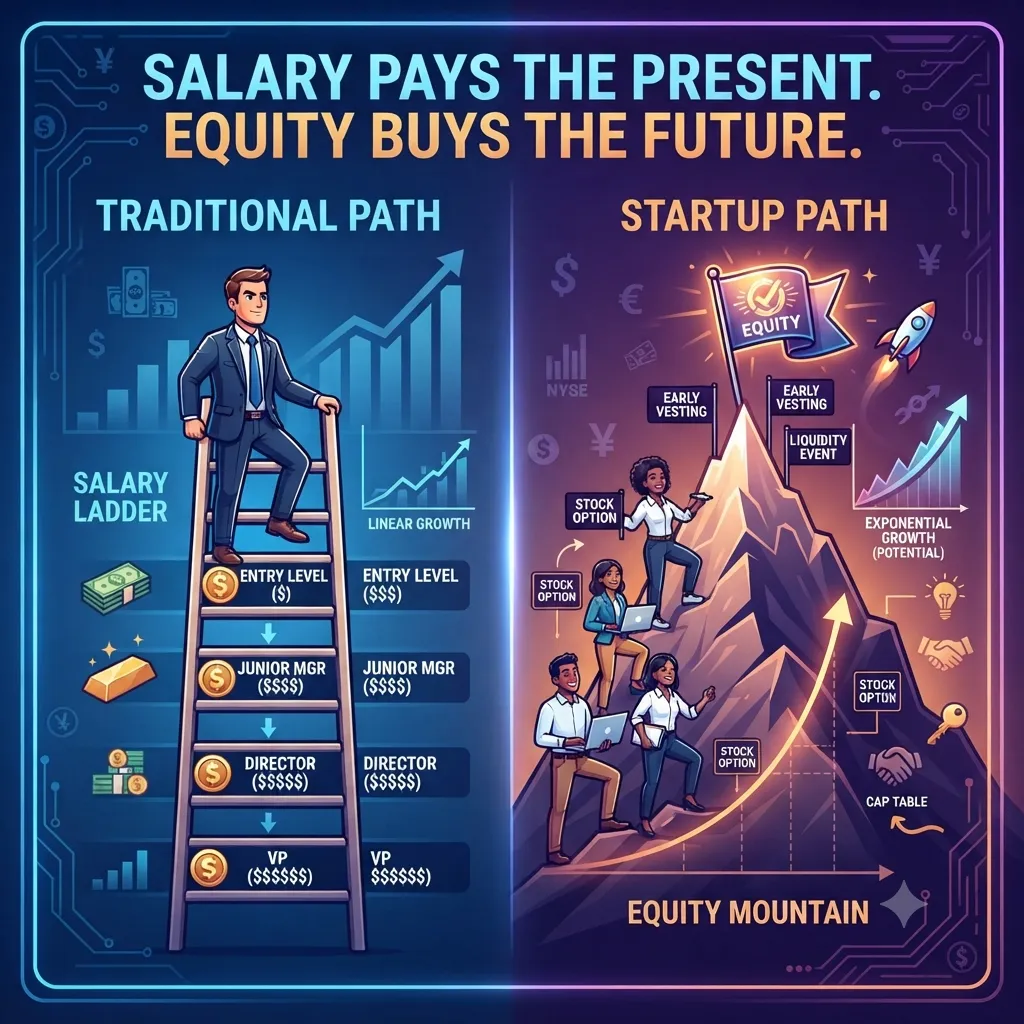
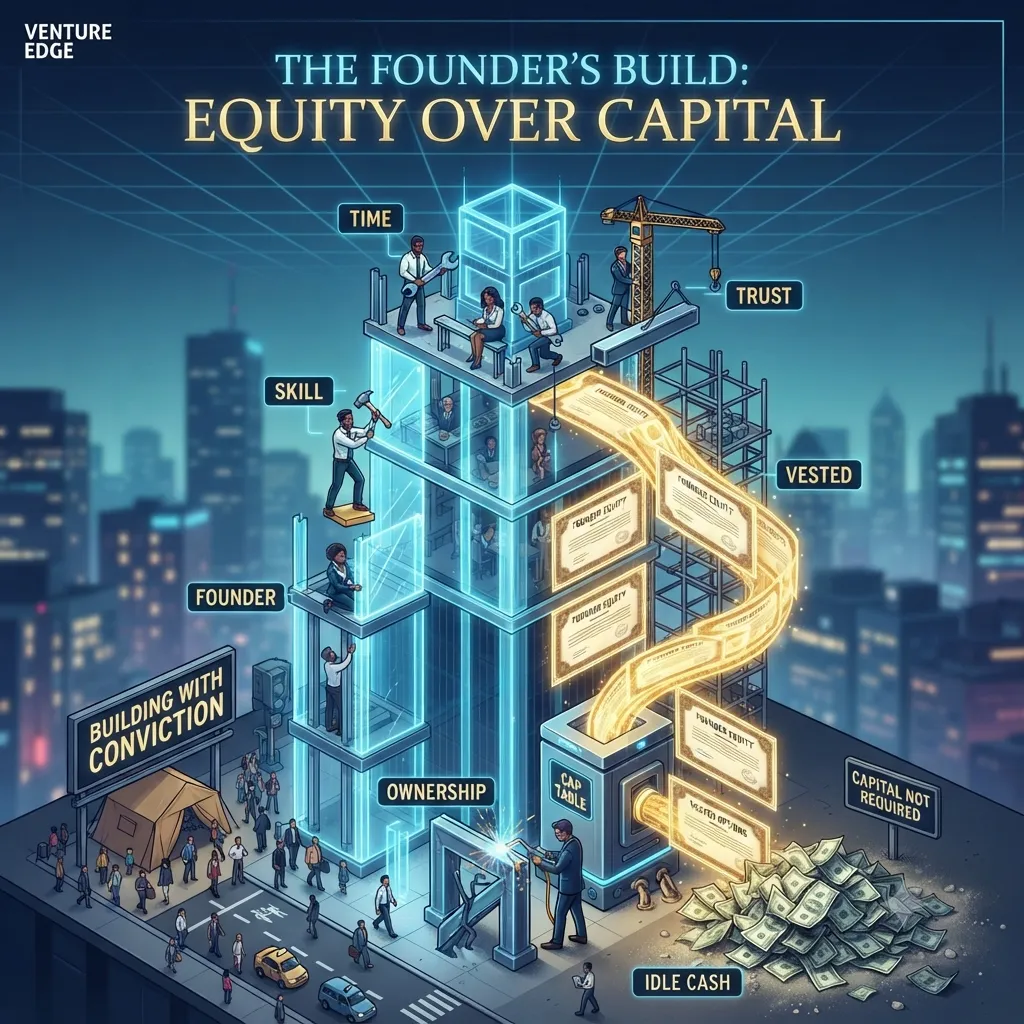
In the context of a pre-funded startup, equity acts as a proxy for financial compensation, rewarding those who "sweat" for the company's success. This mechanism aligns individual success with company success, transforming employees and advisors into a "crew of co-owners" who are intrinsically motivated to row in the same direction. For the founder, sweat equity is a tool for capital conservation, enabling the attraction of high-tier talent that would otherwise be unaffordable.
The Valuation of Non-Monetary Contributions
A recurring challenge for solo founders is determining the fair market value of contributions when no capital exists to set a baseline valuation. Conventional approaches often involve "market rate" proxies; for instance, if a developer normally charges $10,000 for a Minimum Viable Product (MVP), but accepts $5,000 plus equity, the equity is effectively being purchased at a $5,000 valuation. However, this static approach fails to account for the massive risk inherent in early-stage ventures, where the probability of the equity ever reaching liquidity is statistically low.
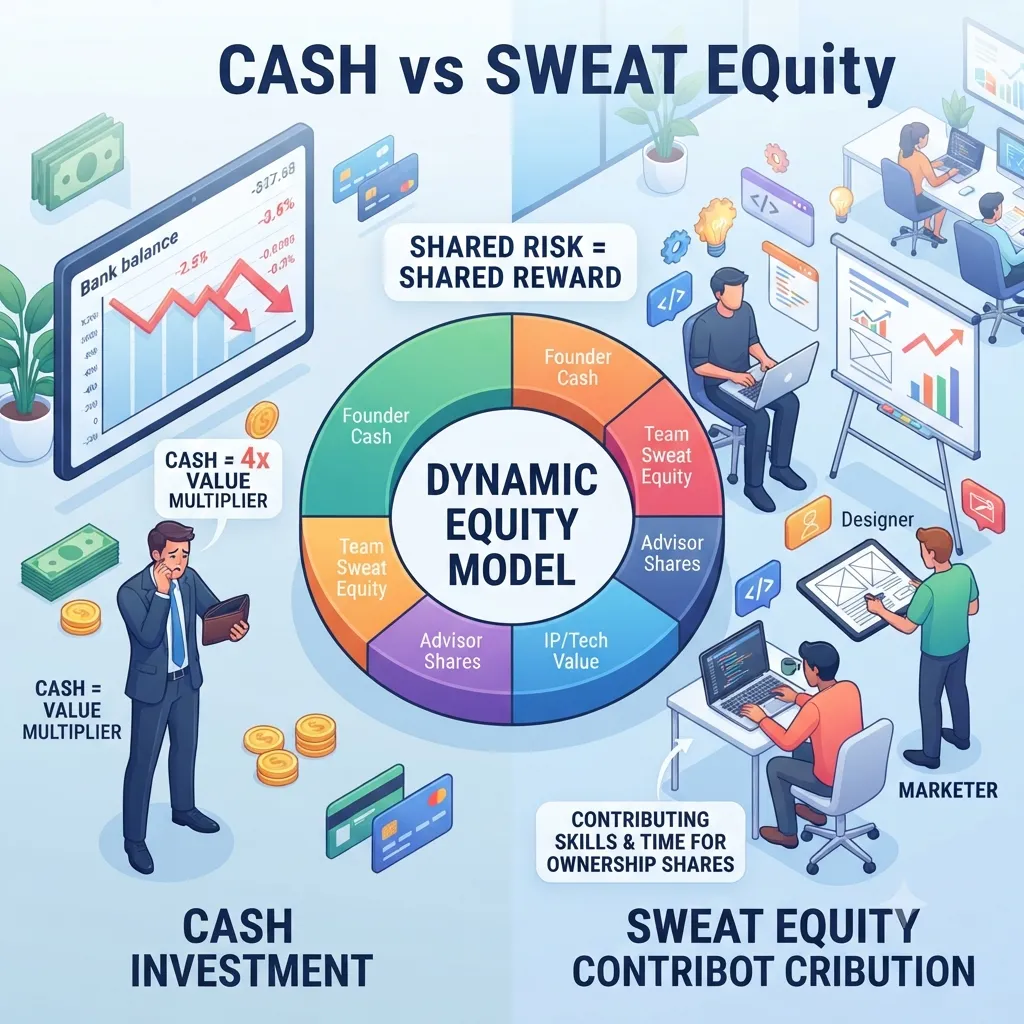
To address this, sophisticated frameworks utilize multipliers to assign a "risk premium". In a standard sweat equity model, labor is often valued at twice its market rate (a 2x multiplier) to acknowledge that the contributor is gambling their time. Conversely, cash—due to its scarcity and the fact that it is typically contributed after-tax—is often assigned a higher multiplier, such as 4x, to incentivize the "spend" of personal savings on business essentials. This creates a theoretical value for each participant’s contribution, which is then translated into ownership slices.
Equity Benchmarking for Lean Operations
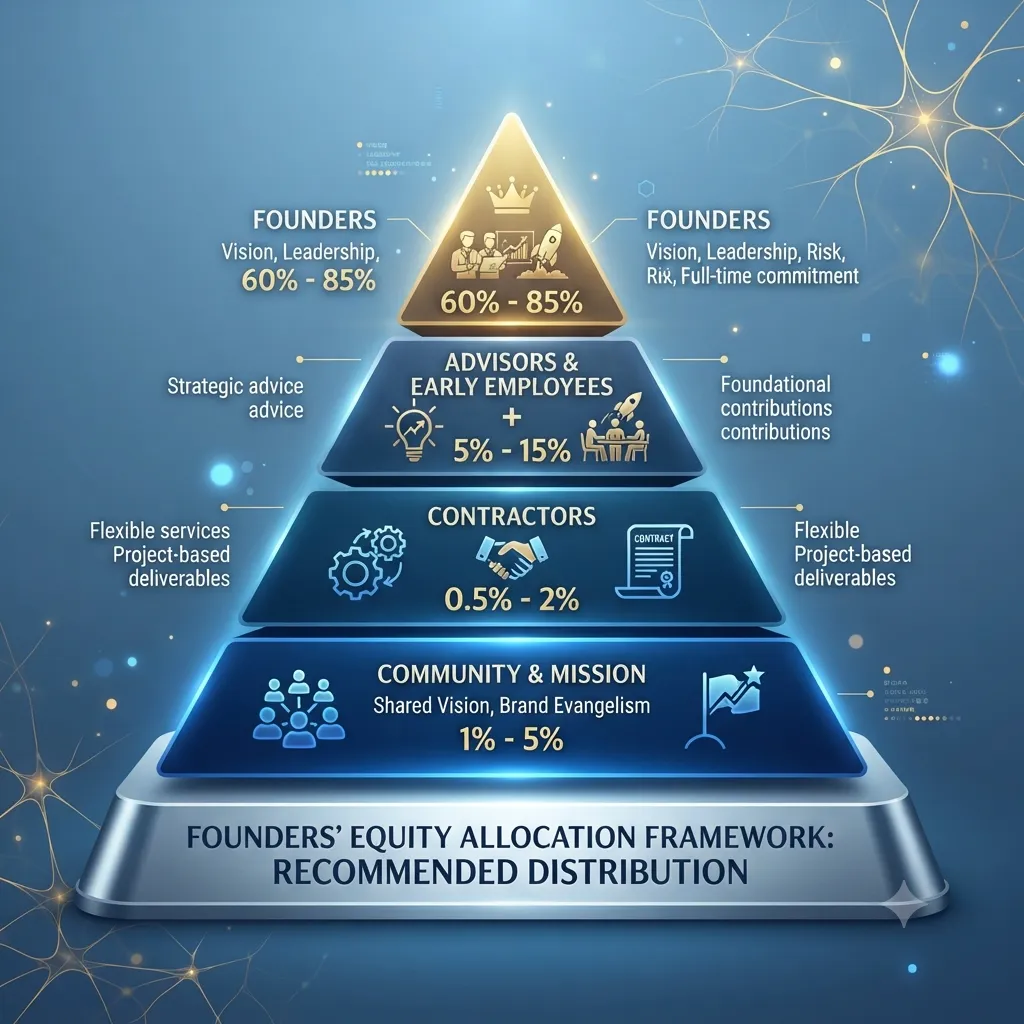
Founders must be judicious in "spending" their equity, as premature dilution can lead to a loss of control or a lack of motivation during later funding rounds. Professional benchmarks suggest specific maximum allocations for different stakeholder groups to maintain a balanced cap table.
Stakeholder Group | Recommended Equity Allocation Range | Strategic Purpose |
Co-Founders | 20.0% - 50.0% | Long-term commitment and operational leadership |
Early Employees (First 10) | 10.0% - 20.0% (Pool) | Talent acquisition and key feature development |
Strategic Advisors | 0.1% - 5.0% | Market connections and specialized expertise |
Independent Contractors | Project-specific Negotiated % | Bridging skill gaps without recurring payroll |
The rationale for these limits is rooted in the future outlook of the firm. Every percentage point given away today is one less available to leverage for millions in future funding or to contribute to the founder's personal returns at an exit. If a founder realizes they have diluted themselves so heavily that the eventual return does not justify the effort, they may abandon the venture, leading to its collapse.
Structural Frameworks: Static vs. Dynamic Equity Allocation
The method by which equity is divided is perhaps the most significant predictor of founding team stability. Traditionally, teams have favored fixed splits—equal divisions like 50-50 or 33-33-33—often to avoid uncomfortable conversations at the outset. However, this approach is fraught with risk, as it assumes that all founders will contribute equally over the life of the venture, a scenario that rarely materializes.
The Perils of Static Equity Splits
Research indicates that approximately 55% of founding teams encounter equity-related conflicts within the first 18 months of operation. These disputes often stem from the "free rider" problem, where a departed founder retains a significant ownership stake without ongoing contribution, or where roles evolve in ways that make the original split feel unfair. Furthermore, static splits are often negotiated when information about each member's actual commitment and value is at its lowest point.
Limitation of Fixed Splits | Long-term Organizational Consequence |
Inflexibility | Cannot adapt to shifts in roles or contribution levels as the business pivots. |
"Quick Fix" Mentality | Sidesteps necessary conflict early on, leading to resentment later. |
Investor Skepticism | Investors scrutinize allocations; unclear or unfair splits hurt credibility. |
Retention Failure | Lack of dynamic adjustment reduces the incentive for high-performers to over-deliver. |
The Dynamic "Slicing Pie" Framework
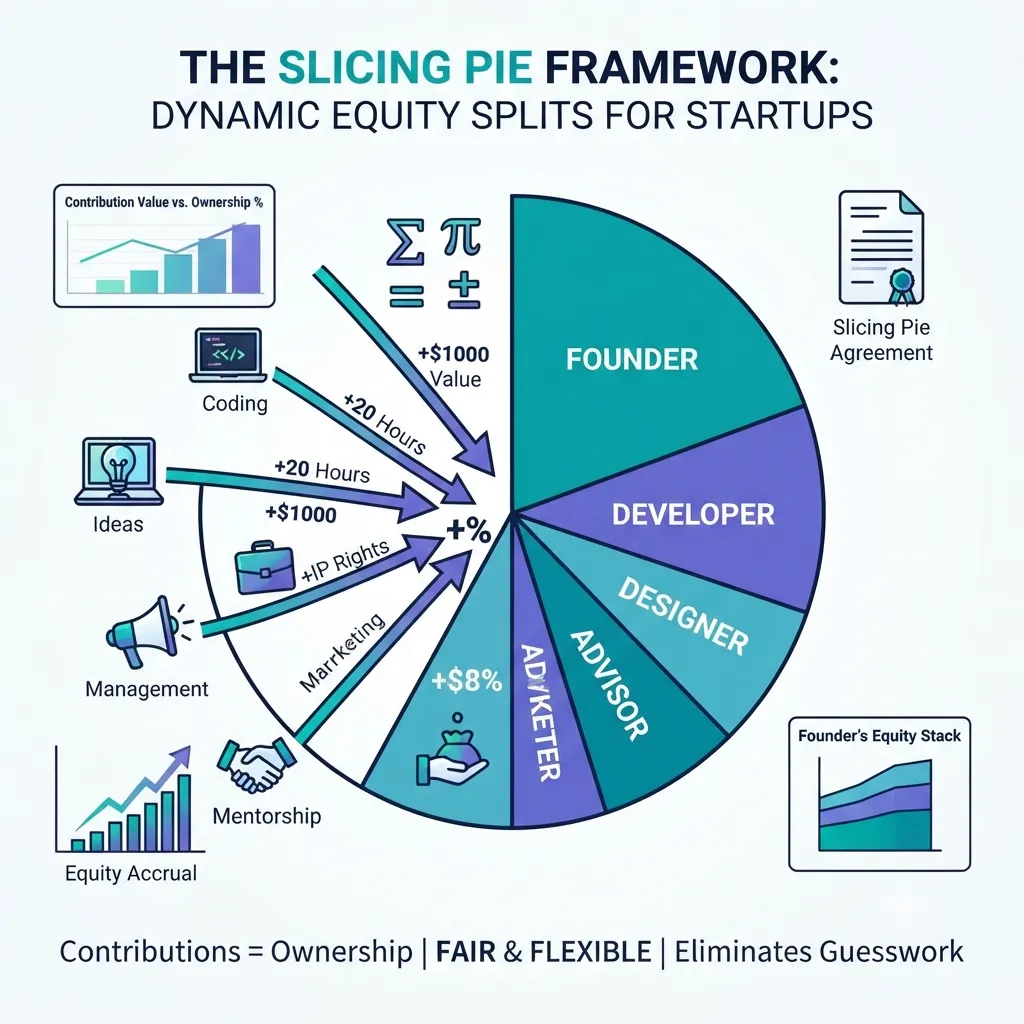
As an alternative to static models, the "Slicing Pie" or dynamic equity model, developed by Mike Moyer, adjusts ownership in real-time based on the relative value of each person's contribution. Under this framework, ownership is determined by who helped "bake the pie" rather than who showed up at the start with a fork. The model quantifies contributions into "slices" using fair market values and multipliers to reflect the level of risk.
The mathematical foundation of the Slicing Pie model relies on a ratio of individual slices to total slices:
E(i)=∑(j)1nS(j)S(i)
Where E(i) is the equity percentage of individual i, and S represents the total number of slices accumulated by that individual. Slices are calculated based on the fair market value (V) of the input and the associated multiplier (M):
S=V×M
This framework addresses the "Well" model for tracking cash investments. In this scenario, cash is put into a "Well" (a corporate account) but is not considered "at risk" until it is actually spent. At the moment of expenditure, the cash converts into slices at the 4x rate, effectively aligning the interests of managers and investors by discouraging wasteful spending. The model "freezes" once the startup reaches breakeven or raises significant external capital, at which point the proportions of equity are locked into a permanent cap table.
Legal Governance and Protection of the Unfunded Enterprise
The absence of financial capital increases the necessity for rigorous legal documentation. Founders must establish a legal foundation that protects the entity from personal disputes, intellectual property leakage, and premature departures.
The Founders' Agreement and Intellectual Property Assignment
A comprehensive Founders' Agreement is a critical document that governs roles, responsibilities, decision-making rights, and dispute resolution procedures. Beyond equity splits, this agreement must include a "Founders Service Agreement" or employment contract that explicitly assigns all Intellectual Property (IP) to the company. Without a signed IP Assignment, contributors may retain individual ownership of the ideas and code they produce, which can derail future investment rounds or acquisitions.
Vesting Schedules and Retention Mechanisms
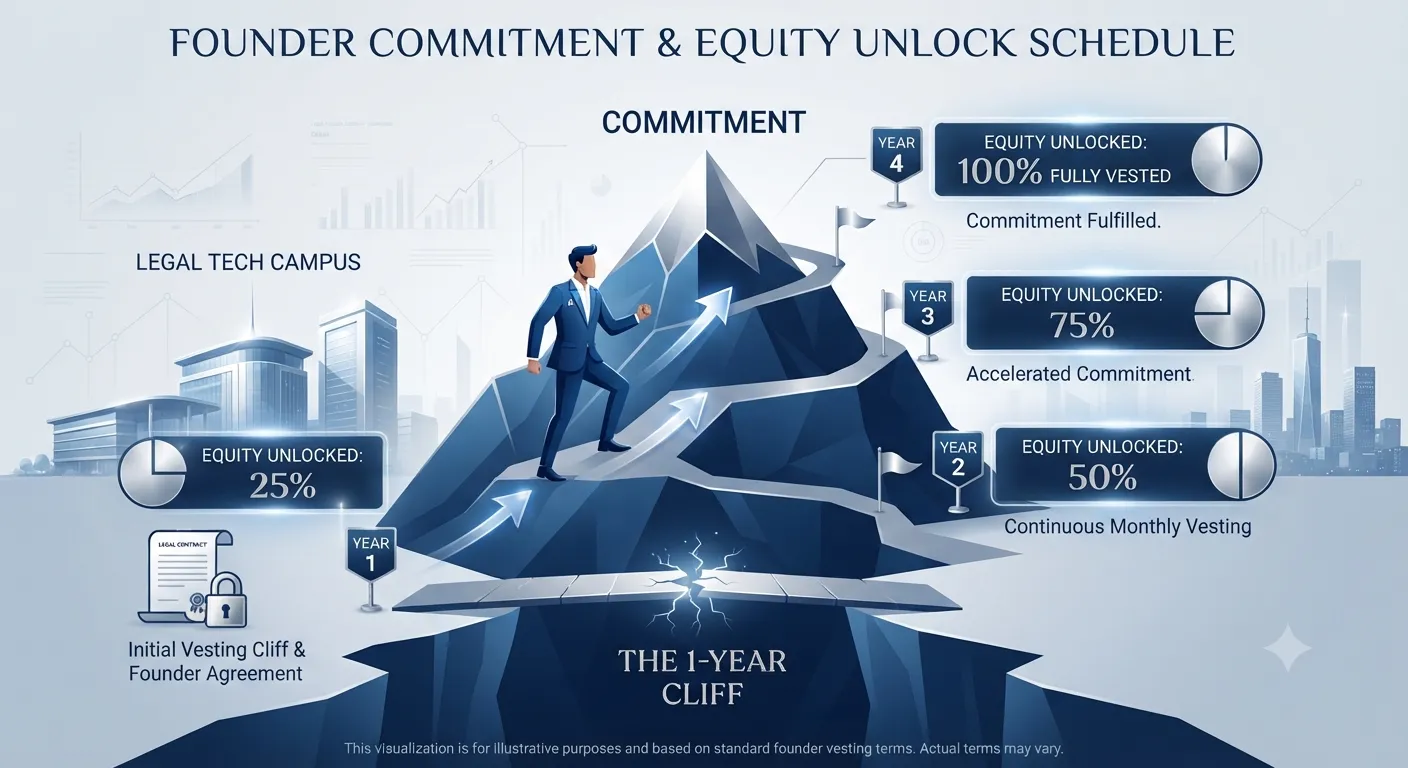
Vesting is the primary tool for ensuring long-term commitment. It dictates that equity is earned over time, typically following a four-year schedule with a one-year "cliff". This "cliff" prevents individuals from walking away with an ownership stake if they leave the company within the first 12 months.
Vesting Provision | Mechanism of Action | Protective Benefit |
1-Year Cliff | 0% vesting for 12 months; 25% lump sum at month 12. | Prevents "accidental" shareholders from early turnover. |
Monthly/Quarterly Vesting | Incremental earning of remaining 75% over 36 months. | Encourages sustained performance and institutional knowledge retention. |
Single Trigger Acceleration | Full vesting occurs immediately upon acquisition. | Protects founders' stakes if the company is sold. |
Double Trigger Acceleration | Vesting accelerates if the company is sold and the founder is terminated. | Protects founders from being ousted by new management post-sale. |
Essential Tax and Regulatory Elections
In the United States, founders must be aware of the Section 83(b) election, a letter sent to the IRS within 30 days of receiving a restricted stock grant. This election allows the individual to be taxed on the value of the shares on the date of the grant rather than the date of vesting. Since early-stage startup stock usually has a nominal value, this can save founders from massive tax liabilities if the stock's value appreciates significantly by the time it vests. Failure to file this election within the 30-day window is irreversible and can result in high ordinary income tax on the "fair market value" of vested shares.
Strategic Talent Sourcing in a Resource-Limited Environment
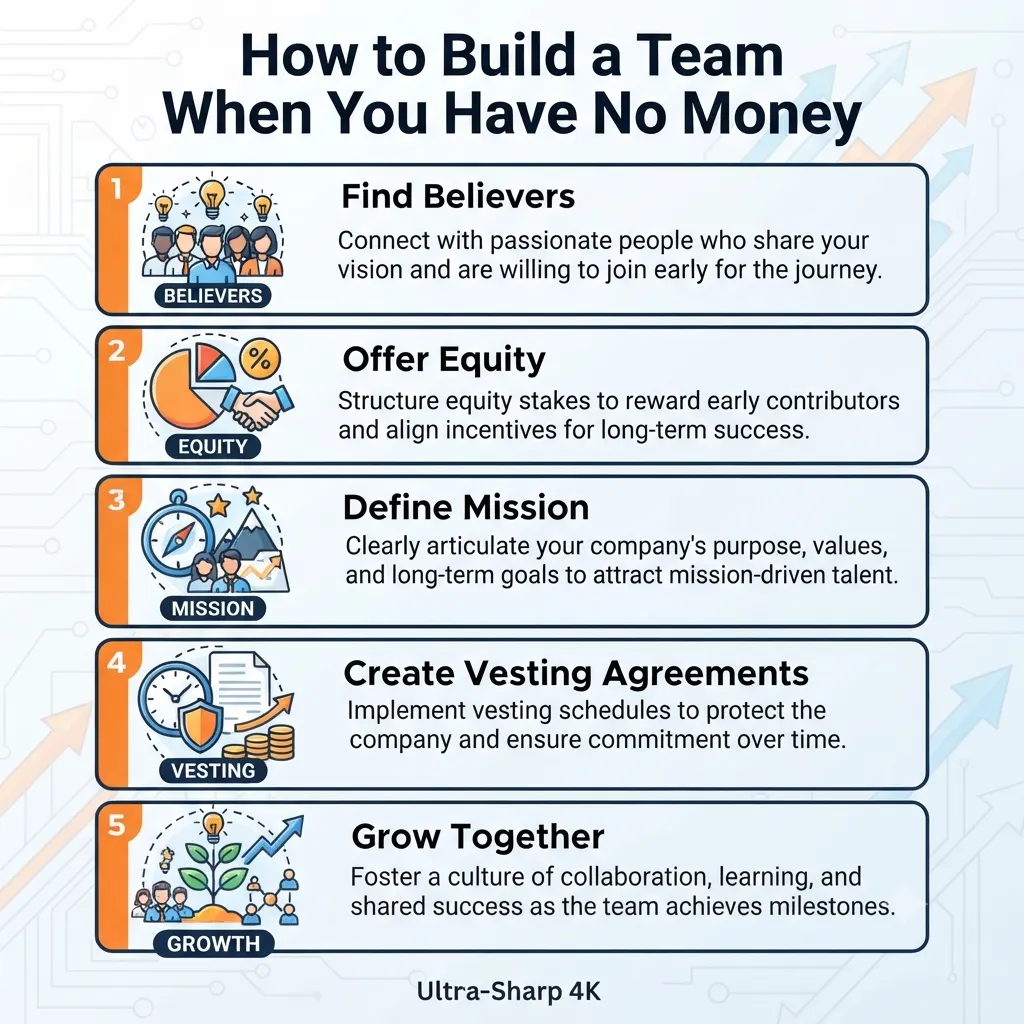
Attracting a team without a salary requires founders to be proactive in where and how they search for talent. The goal is to find individuals who are not just looking for a job, but who are "believers" in the vision and possess the grit to operate in a high-risk environment.
Digital Platforms and AI-Driven Matching
The ecosystem for co-founder matching has evolved beyond simple job boards. In 2025, several specialized platforms use AI to align potential partners based on skills, values, and risk tolerance.
Y Combinator Co-Founder Matching: A free service that has facilitated over 100,000 introductions, providing a structured "founder dating" experience with candidates who are already oriented toward the startup school philosophy.
CoFoundersLab: One of the largest online communities for matching business founders with technical talent, utilizing search filters for specific coding languages and startup stages.
Wellfound (formerly AngelList): A primary resource for "startup-ready" candidates, offering transparent information about equity and stock options from the outset.
Eightfold AI: A sophisticated tool that analyzes skills and hidden talents to unlock "non-obvious" hires who might be missed by traditional resume-based searches.
MegaSynapse: An AI co-founder platform designed to help solo founders move quickly from a "fuzzy idea" to a concrete, investor-ready plan, acting as a virtual partner during the early validation phase.
Leveraging Personal Networks and Physical Spaces
Despite the rise of digital platforms, personal networks remain the most fertile ground for finding partners. Founders should systematically evaluate former colleagues, university peers, and friends of friends, looking for complementary skills rather than just social compatibility. Physical "hacker spaces" or "maker spaces" and local hackathons are ideal for connecting with engineers who are actively building projects outside of their day jobs. Additionally, contacting university program chairpersons for marketing or engineering departments can yield high-potential students or recent alumni looking for their first major venture.
The Masterclass of Pitching Vision Over Salary
To attract top-tier talent without a paycheck, the founder must become a "Chief Inspiration Officer," selling the future of the company rather than the requirements of the job. This involves a strategic shift in the narrative from "what you will do" to "what we will become".
The "Believer" Recruitment Framework
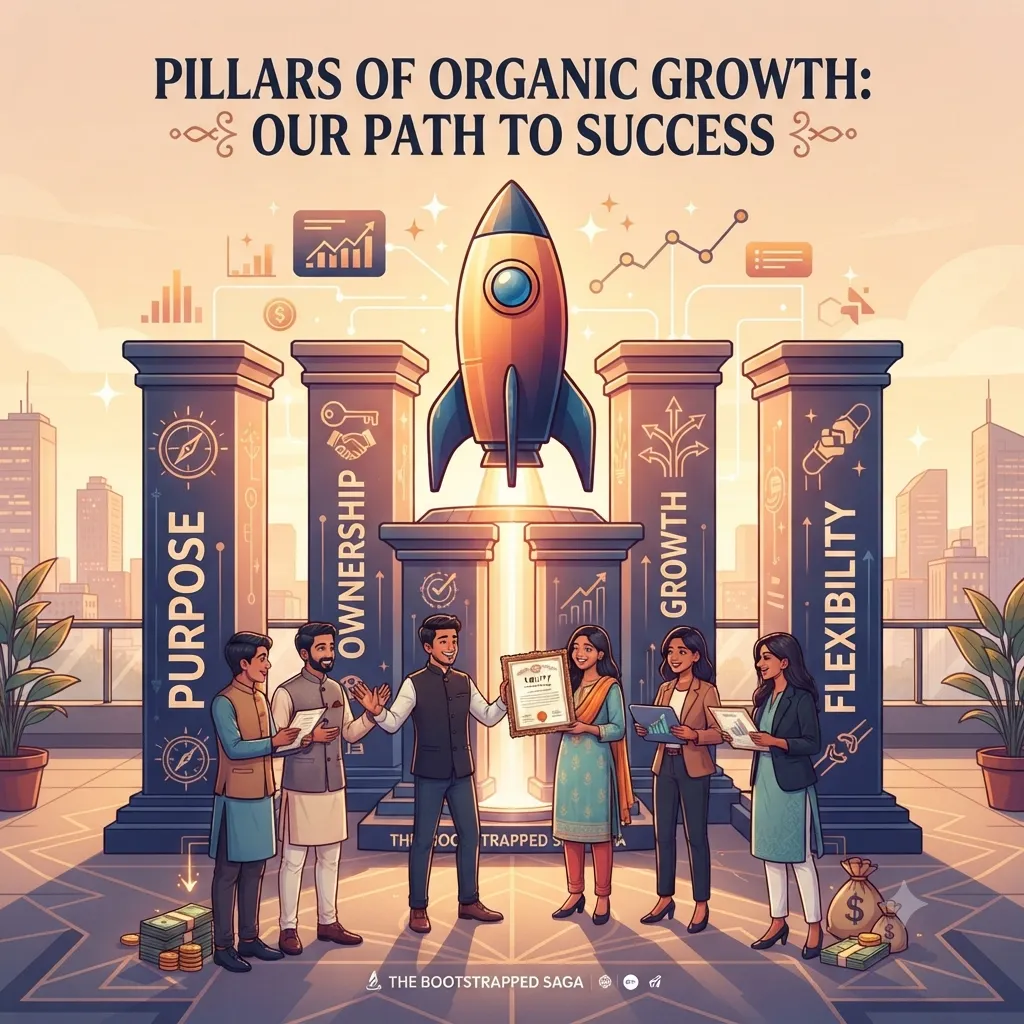
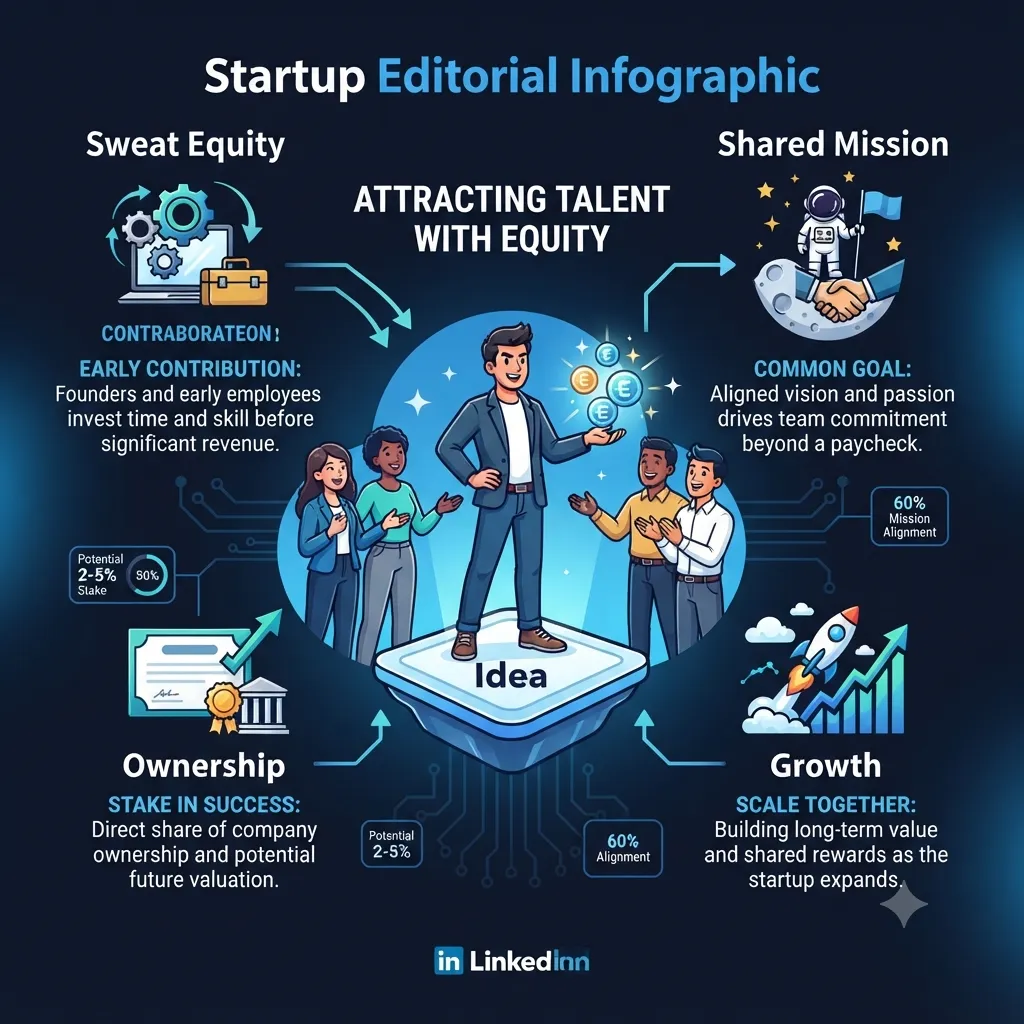
High-performance candidates are often bored by corporate stability and are looking for the "fast track" to responsibility and impact. The founder’s pitch must address four key pillars of the startup’s non-monetary value proposition.
Mission that Matters: Modern professionals, especially Millennials and Gen Z, are increasingly motivated by solving "must-have" problems in sectors like financial inclusion, healthcare, or sustainability.
Ownership and Autonomy: Startups can offer real decision-making power. Pitching a role as "Leading the GTM strategy for a new market" is ten times more attractive than "Supporting the marketing team".
Fast-Track Growth: Highlight that startup employees grow faster than corporate ones. Demonstrate the upward mobility potential—for example, how an intern can become a lead in six months based on merit rather than tenure.
Radical Flexibility: Use remote work, asynchronous communication, and unlimited leave as a competitive edge against the "return to office" mandates of larger firms.
The 4 P's of Employer Branding
In 2025, employer branding is as important as product branding. Founders should craft a story around the "4 P's" to attract passive talent who might not be actively looking for a job but are open to the right mission.
The 4 P's | Narrative Element | Practical Application |
People | Values and Accomplishments | Highlight the existing team's wins and diversity on social media. |
Purpose | Mission in Human Terms | Frame the company's "why" as a compelling narrative, not just a goal. |
Place | The Work Environment | Showcase the culture of innovation, speed, and collaboration. |
Product | The Solution's Impact | Use testimonials and case studies to make the vision feel "real" and tangible. |
Psychological Vetting: Assessing Grit and Risk Tolerance
A shared vision is insufficient if the partners have incompatible risk appetites or lack the "grit" to survive the "messy middle" of startup growth. Founders must engage in a structured vetting process that goes beyond "coffee conversations" and tests the relationship under realistic stress.
The Four Phases of Co-Founder Vetting
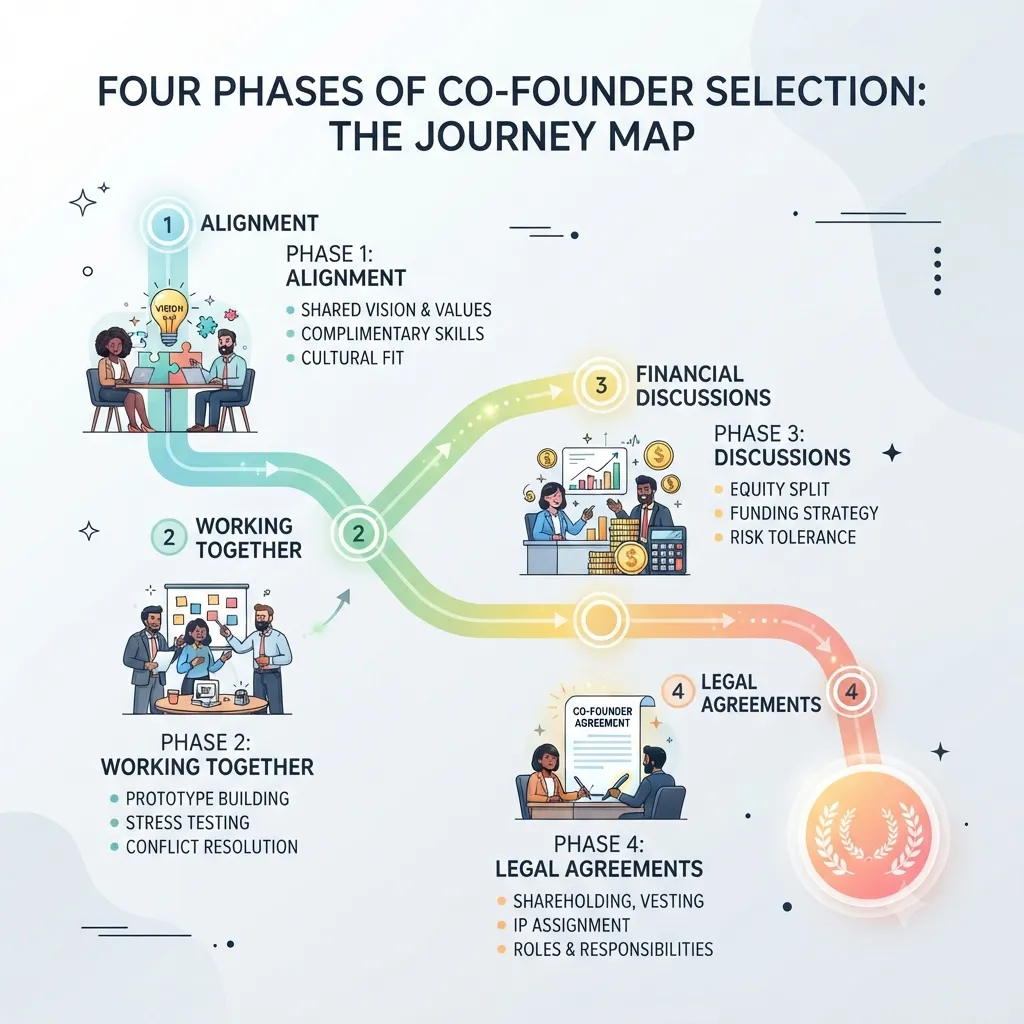
According to industry research, an effective vetting process should span two to three months and involve progressive disclosure of goals and behaviors.
Phase 1: Initial Alignment: Focus on vision, values, and working styles. This is the "honeymoon" phase where the focus is on whether the parties are even building the same company.
Phase 2: Working Together & Going Deeper: Real collaboration on actual business challenges. Schedule working sessions to build a prototype or solve a complex problem together. This reveals dynamics like decision-making authority and how disagreements are handled.
Phase 3: Financial & Legal Alignment: Difficult conversations about equity, exit scenarios, and personal runways. If a partner is unwilling to discuss what happens if the partnership fails, it is a significant red flag.
Phase 4: Formalizing the Partnership: Documenting all agreements in legal contracts with proper counsel.

The Seven Dimensions of Risk
Risk tolerance is not a monolithic trait; it is a multidimensional construct that affects how a partner will behave during a market downturn or when personal savings are depleted.
Dimension | Definition | Behavioral Indicator |
Tolerance | Perceived ability to withstand loss. | What they think they can handle. |
Capacity | Actual financial ability to handle loss. | The length of their personal runway. |
Perception | How risky something feels in the moment. | Influence by headlines or current mood. |
Literacy | Understanding of the risk being taken. | Grasp of the complexities of equity and failure. |
Composure | Behavior under real-world stress. | Reaction to actual setbacks or missed milestones. |
Need | Requirement to take risk to reach goals. | How much the person relies on this venture for their future. |
Preference | Types of risks drawn to or avoided. | Favoring bootstrapping vs. aggressive VC funding. |
Sustaining Motivation and Preventing Burnout
In a zero-salary environment, the risk of burnout is high, particularly when team members are working on top of their full-time day jobs. Founders must cultivate a "marathon performance" culture rather than a "sprint intensity" one to ensure the team reaches the finish line.
Purpose-Driven Engagement and Autonomy
Sustainable motivation comes from understanding the "why" behind the work. Leaders should regularly share customer feedback and demonstrate the real-world impact of the team's contributions. Granting autonomy over schedules and decision-making—within the bounds of clear roles—reduces the cognitive load and frustration that leads to disengagement.
Operational Tactics for Sustainable Growth
To prevent cognitive overload, especially for neurodivergent talent or remote teams, startups should adopt clear communication norms.
Asynchronous Communication: Reduce constant interruptions by utilizing tools for written updates rather than scheduled meetings.
Clear Priorities: Define what matters "this week" so the team doesn't carry the weight of the entire roadmap at once.
Role Clarity: Ensure everyone knows what success looks like for their specific area, even as the company pivots.
Modeling Self-Renewal: Founders should explicitly encourage time off and avoid after-hours emails to establish boundaries between work and personal life.
Historical Analysis: Lessons from Bootstrapping Giants
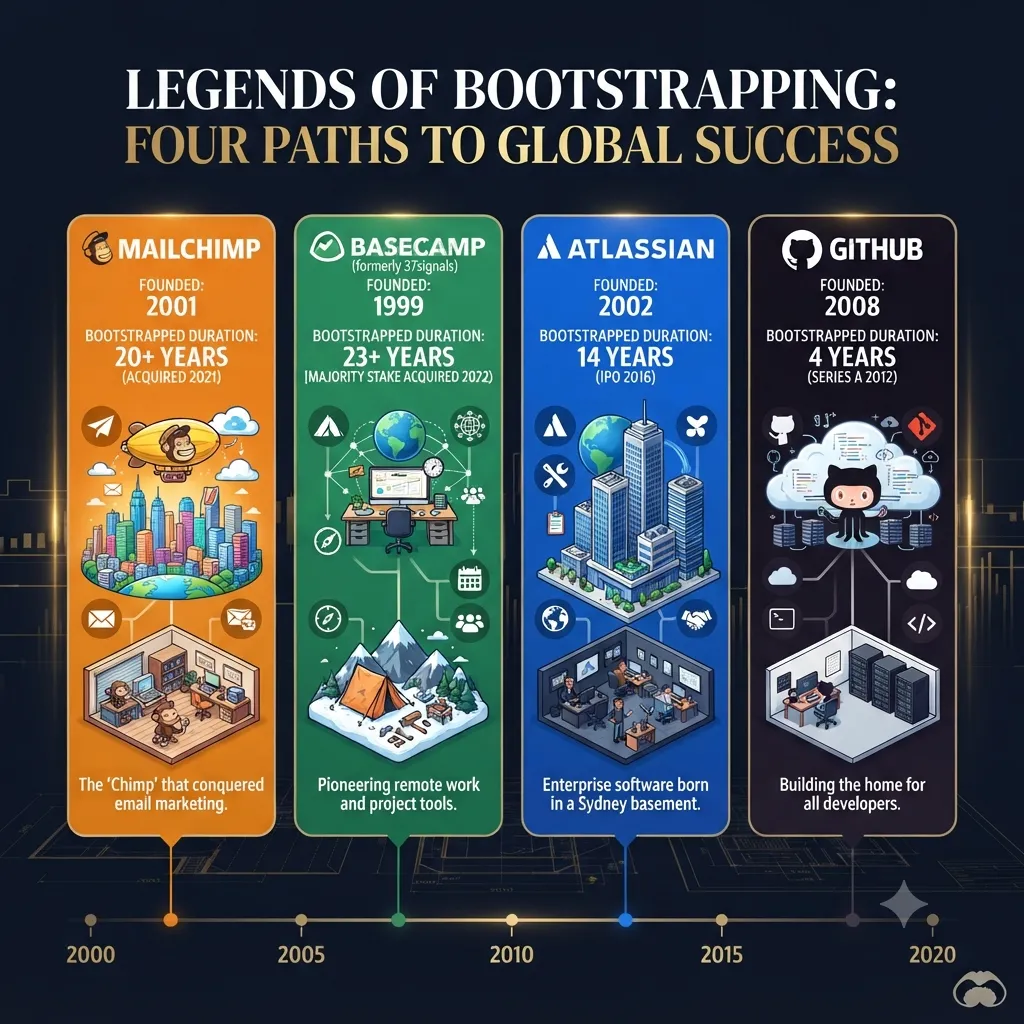
The path of building a powerhouse team with no initial capital is well-trodden. Analyzing the trajectories of companies like Mailchimp, Basecamp, and GitHub reveals common patterns of resourcefulness and strategic discipline.
Mailchimp: Reinvesting Profit into Independence
Mailchimp, founded in 2001, was bootstrapped for nearly twenty years before its $12 billion exit. Founders Ben Chestnut and Dan Kurzius utilized their web design shop as a "cash cow" to fund the development of the email tool. By focusing on a profitable model from the outset, they were able to grow organically and maintain 100% control, allowing them to reinvest profits into a user-friendly platform that outperformed well-funded competitors like Constant Contact. Their story confirms that a bootstrapped company can reach decacorn status outside of Silicon Valley without venture capital help.
Basecamp: The Power of Simplicity and Lean Operations
Basecamp (originally 37signals) started as a web design firm that created its own project management tool to organize its internal work. The founders, Jason Fried and David Heinemeier Hansson, recognized that the tool was more valuable than the consultancy. They focused relentlessly on simplicity, stripping away unnecessary features that bloated their competitors’ products. By embracing remote work early on and keeping their team small and expert-driven, they built a highly profitable business that generates over $25 million in annual revenue with no external funding.
GitHub: Building Community-First Capital
GitHub was founded in 2008 by Tom Preston-Werner, Chris Wanstrath, and PJ Hyett using their own savings and credit cards. They built a platform that solved a pressing problem for developers—sharing and collaborating on code—and leveraged the free open-source community to drive adoption. This community-first approach allowed them to scale efficiently and eventually sell to Microsoft for $7.5 billion.
Company | Founding Year | Bootstrapping Duration | Key Strategy | Outcome |
Mailchimp | 2001 | 20 Years | Reinvested service-firm profits. | $12B Acquisition. |
Basecamp | 1999 | 25+ Years | Radical simplicity and remote lean team. | Independent/Profitable. |
Atlassian | 2002 | 8 Years | $10k credit card debt; organic license sales. | Multi-billion market cap. |
Spanx | 1998 | 10+ Years | Personal savings; relentless persistence. | Global Powerhouse. |
GoPro | 2002 | 10+ Years | Savings/Family support; solving a niche problem. | Public Company. |
Synthesis of Actionable Strategies for 2025
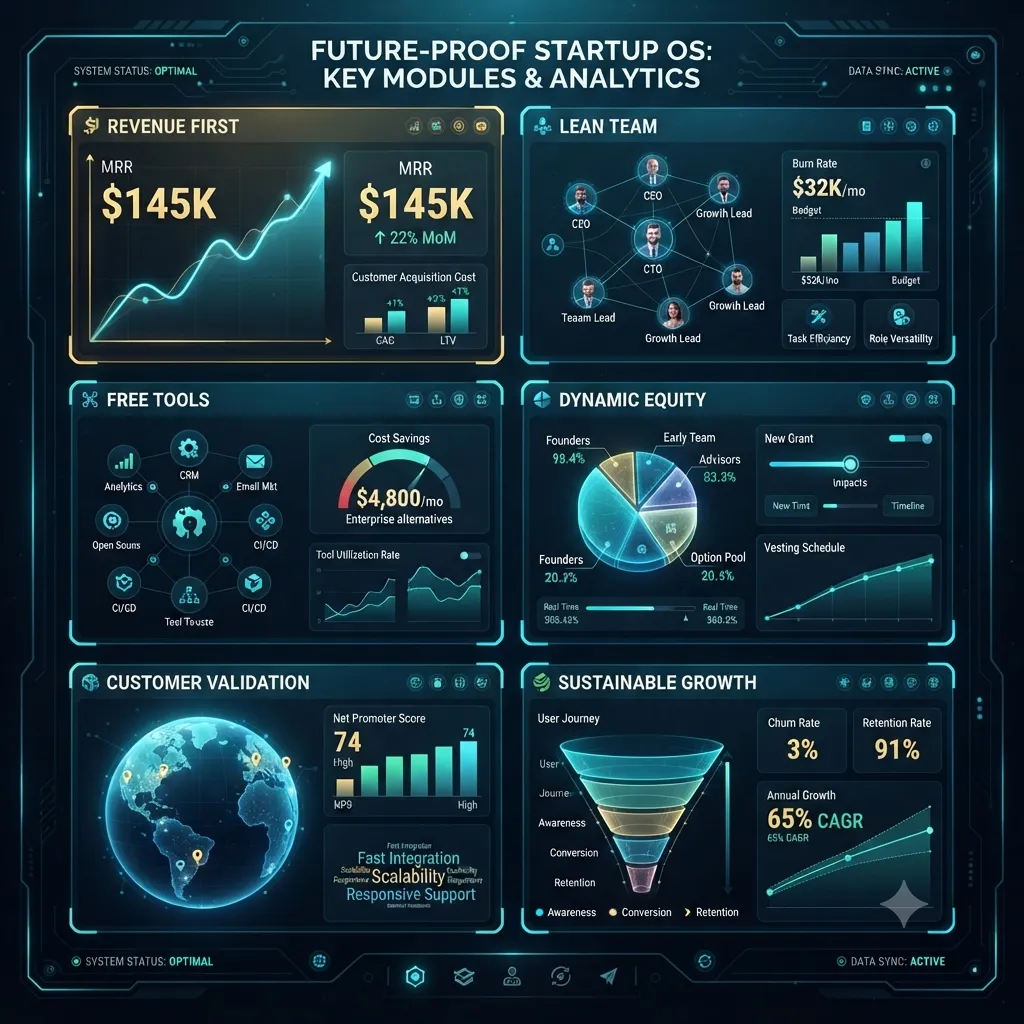
Building a startup team with no money is not a limitation but a strategy that forces founders to build more resilient, customer-centric, and capital-efficient organizations. When every dollar—or its equity equivalent—matters, the result is often better unit economics and higher lifetime values.
The Playbook for Starting Strong
Validate Demand Early: Do not build a team for a hypothetical problem. Validate that customers will pay for the solution before asking partners to risk their time.
Triple Downsize Your Niche: Instead of solving a broad problem, solve a meaningful problem for 100 people first. This clarity makes the mission easier to sell to potential team members.
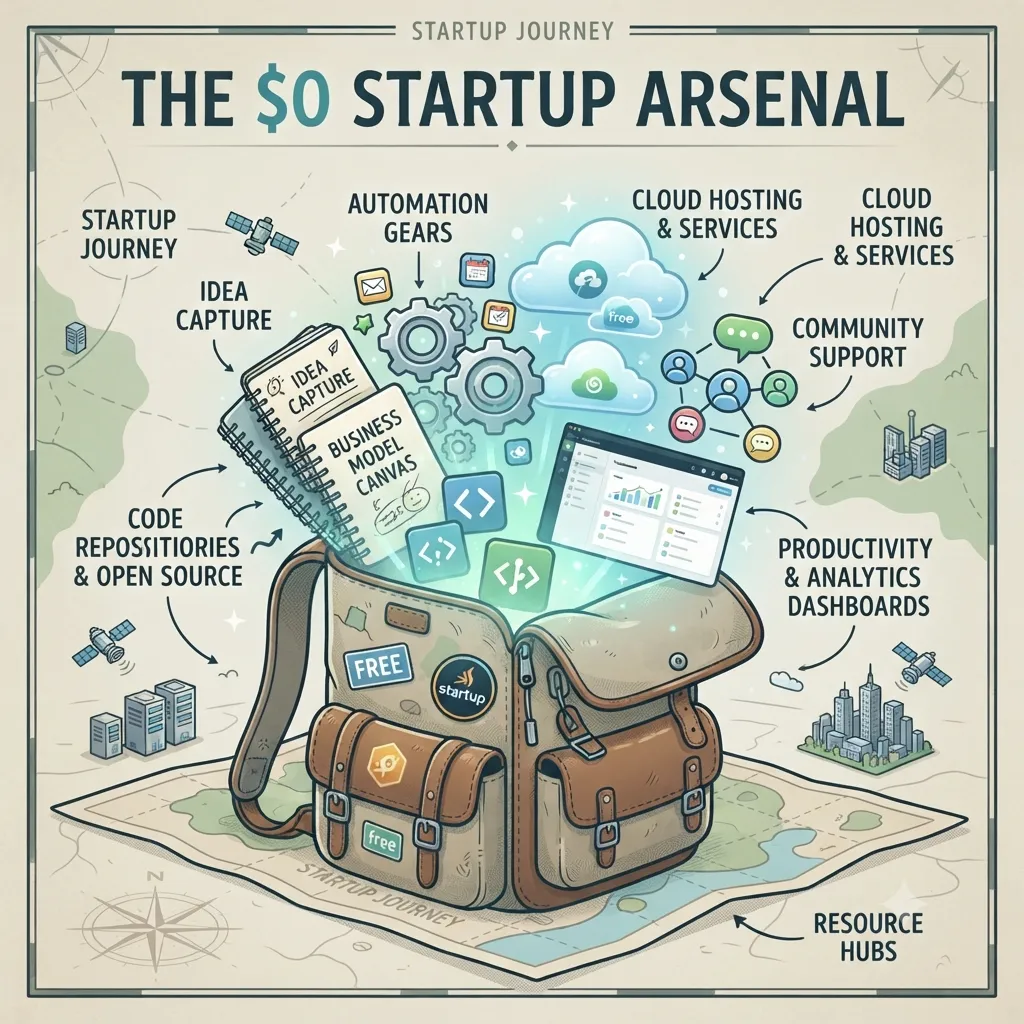
Leverage Free and Low-Cost Tools: Democratize business creation by using affordable platforms like Notion for organization, GitHub for code, and Zapier for automation.
Adopt a Dynamic Equity Culture: Use the Slicing Pie model to ensure that as roles shift and members flake, the equity automatically reflects the truth of the effort.
Prioritize Cash Flow Over Fame: Reaching profitability is a survival strategy. Monetizing early reduces dependency on outside funding and keeps control in the hands of the founders.
Conclusions and Future Outlook
The rise of the bootstrapped solo founder and the expert-led small team represents a quiet revolution in entrepreneurship. As AI and low-code tools continue to lower the overhead of product development, the barrier to entry shifts from "access to capital" to "access to resourcefulness". Founders who can master the legal, economic, and psychological nuances of building unfunded teams will be the architects of the next generation of decacorns. By focusing on fairness through dynamic equity, protection through rigorous legal agreements, and attraction through a purpose-driven mission, the capital-zero startup can not only survive but thrive in a competitive global market. In this new era, the strongest pitch deck is not a series of slides, but a profitable business built on the collective "sweat" of a team that believes in the mission enough to bet their future on it.
Protect Your Future: The Precision Vesting Calculator
Don't let a "handshake deal" complicate your exit. Map out your ownership journey with our Vesting Calculator
Calculate Your Vesting Schedule →