Copy vs Innovate: What Actually Works in Startups?
March 19, 2026 by Harshit Gupta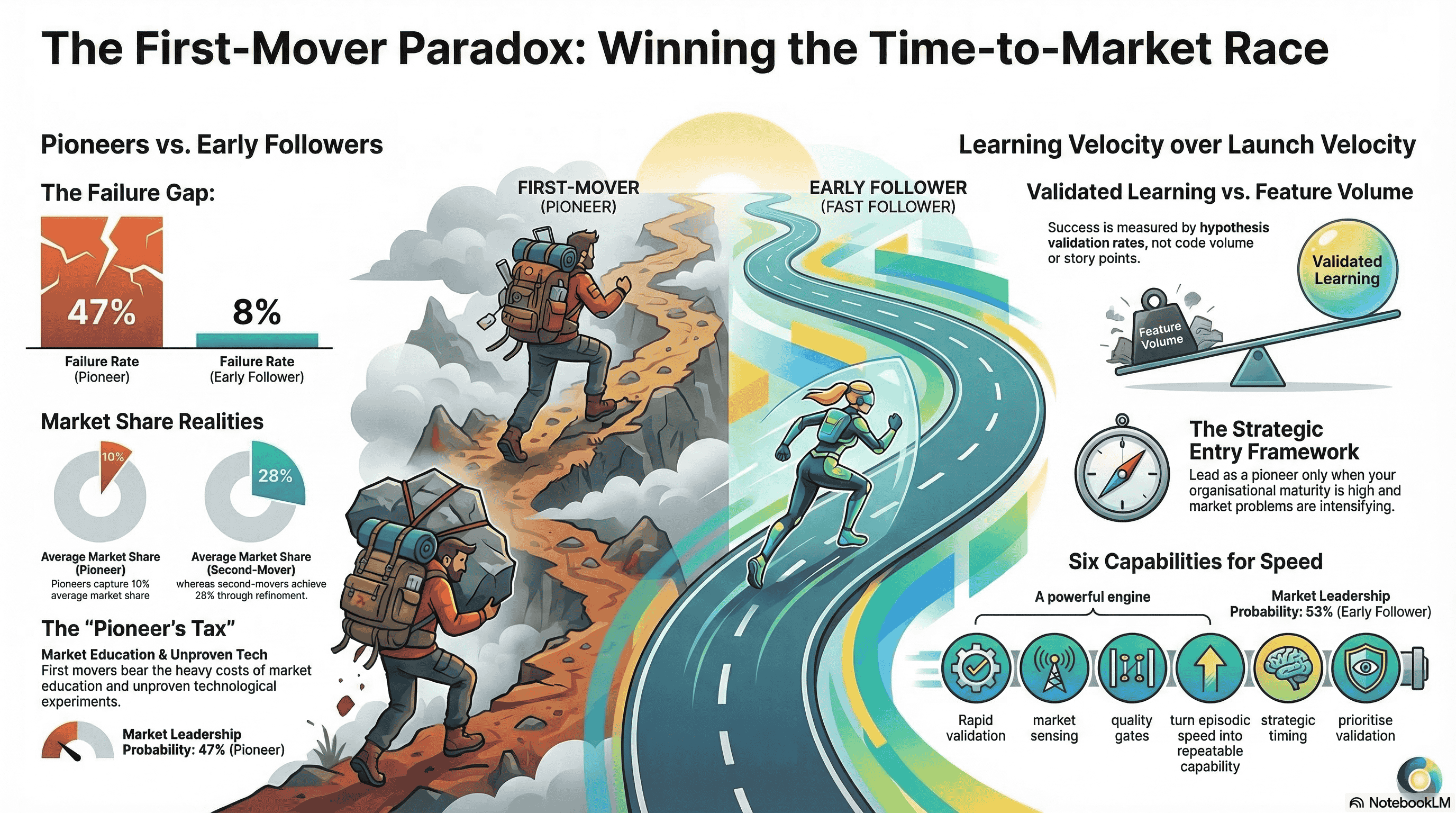
The discourse surrounding the optimal timing and nature of market entry has transitioned from a set of intuitive assumptions to a rigorous, data-driven discipline. For decades, the "first-mover advantage" was heralded as the primary driver of startup success, predicated on the belief that the first entity to enter a category would capture disproportionate value through brand building, resource preemption, and the establishment of industry standards. However, contemporary empirical evidence from longitudinal studies across hundreds of product categories has fundamentally challenged this narrative. The reality of market development reveals a stark dichotomy: while radical innovation creates new value networks and massive wealth, strategic imitation often provides a more predictable path to survival and profitability. This report analyzes the mechanisms of market entry, the economic conditions that favor different strategies, and the operational excellence required to sustain a competitive position, whether a firm chooses to pioneer or to follow.
The Empirical Foundations of Entry Strategy
The traditional allure of being "first to market" is grounded in theoretical protections such as technological leadership through learning curve effects, the preemption of scarce assets like distribution channels or talent, and the creation of high buyer switching costs. When these mechanisms align, iconic market leaders emerge, such as Coca-Cola or Kleenex, which become synonymous with their product categories and enjoy decades of dominance. Yet, these examples are often the beneficiaries of survivorship bias.
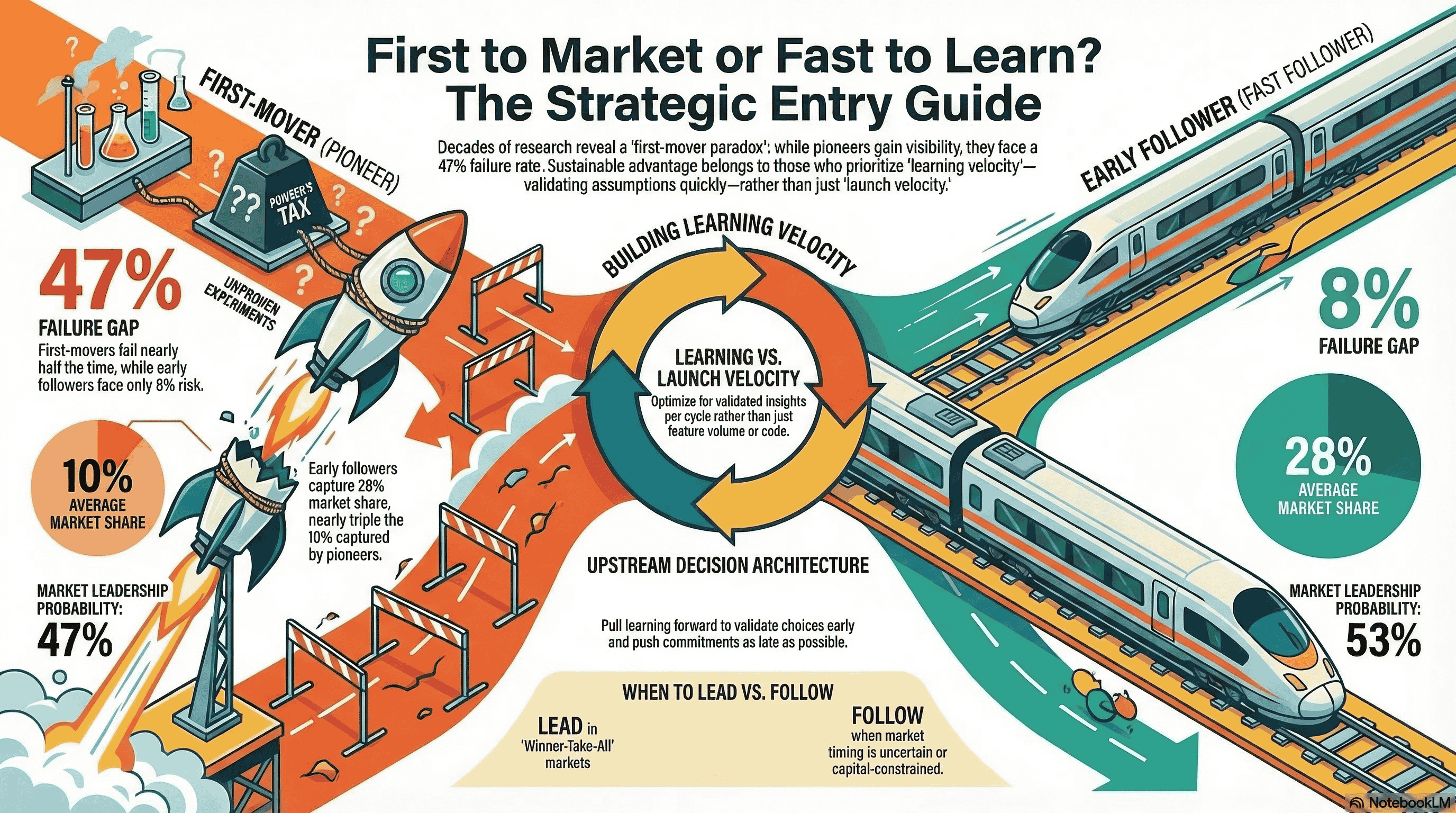
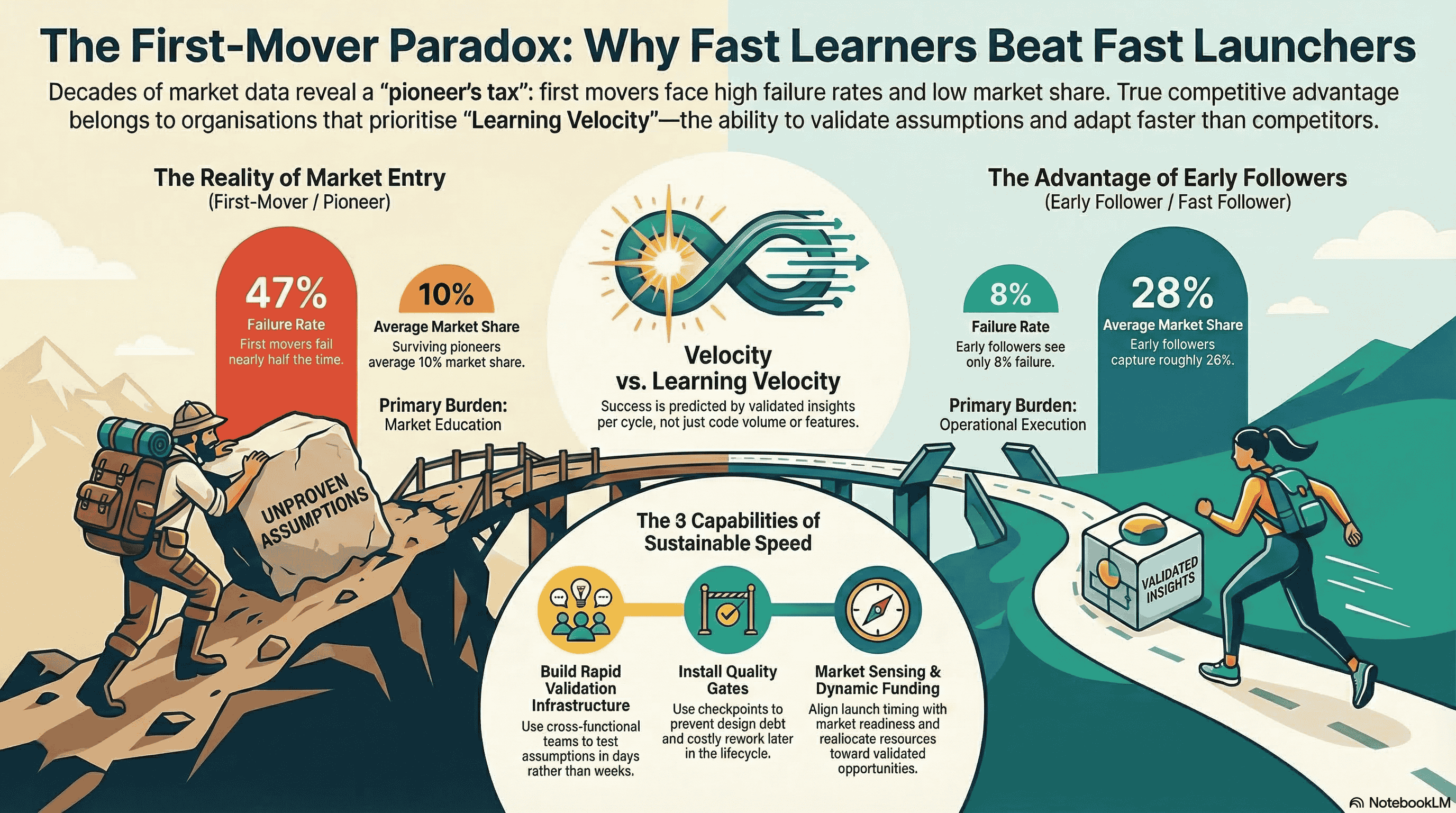
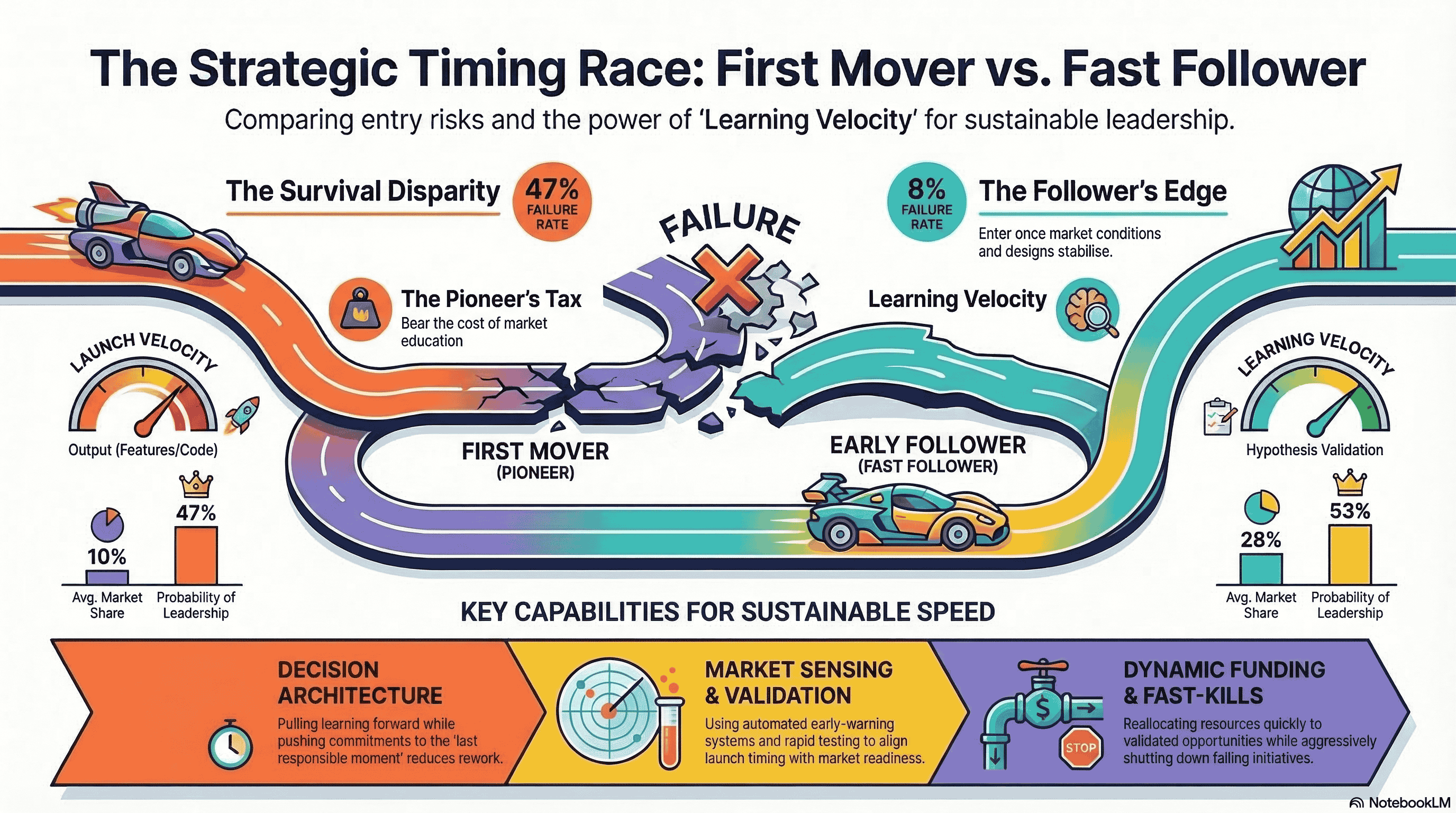
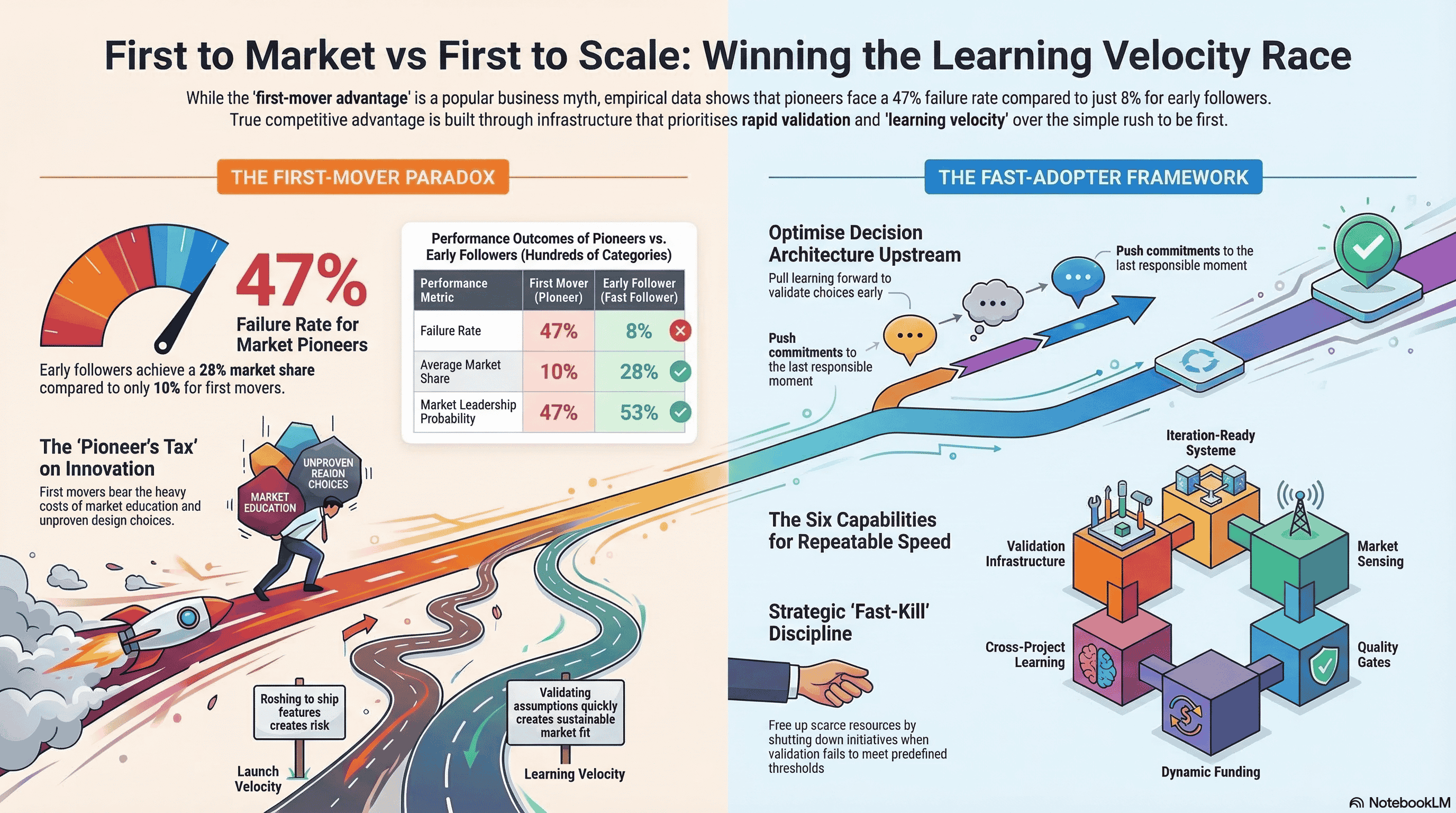
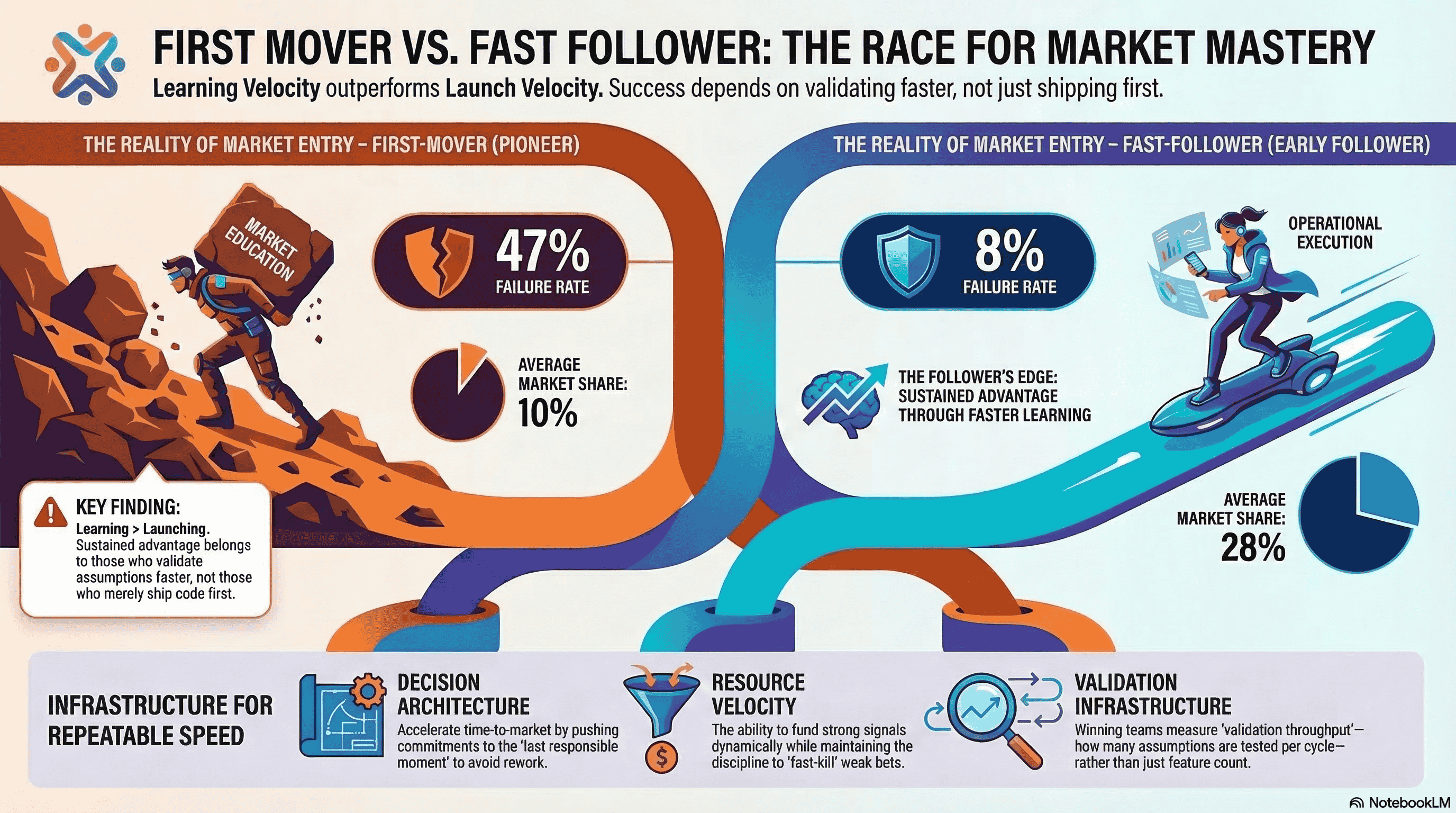
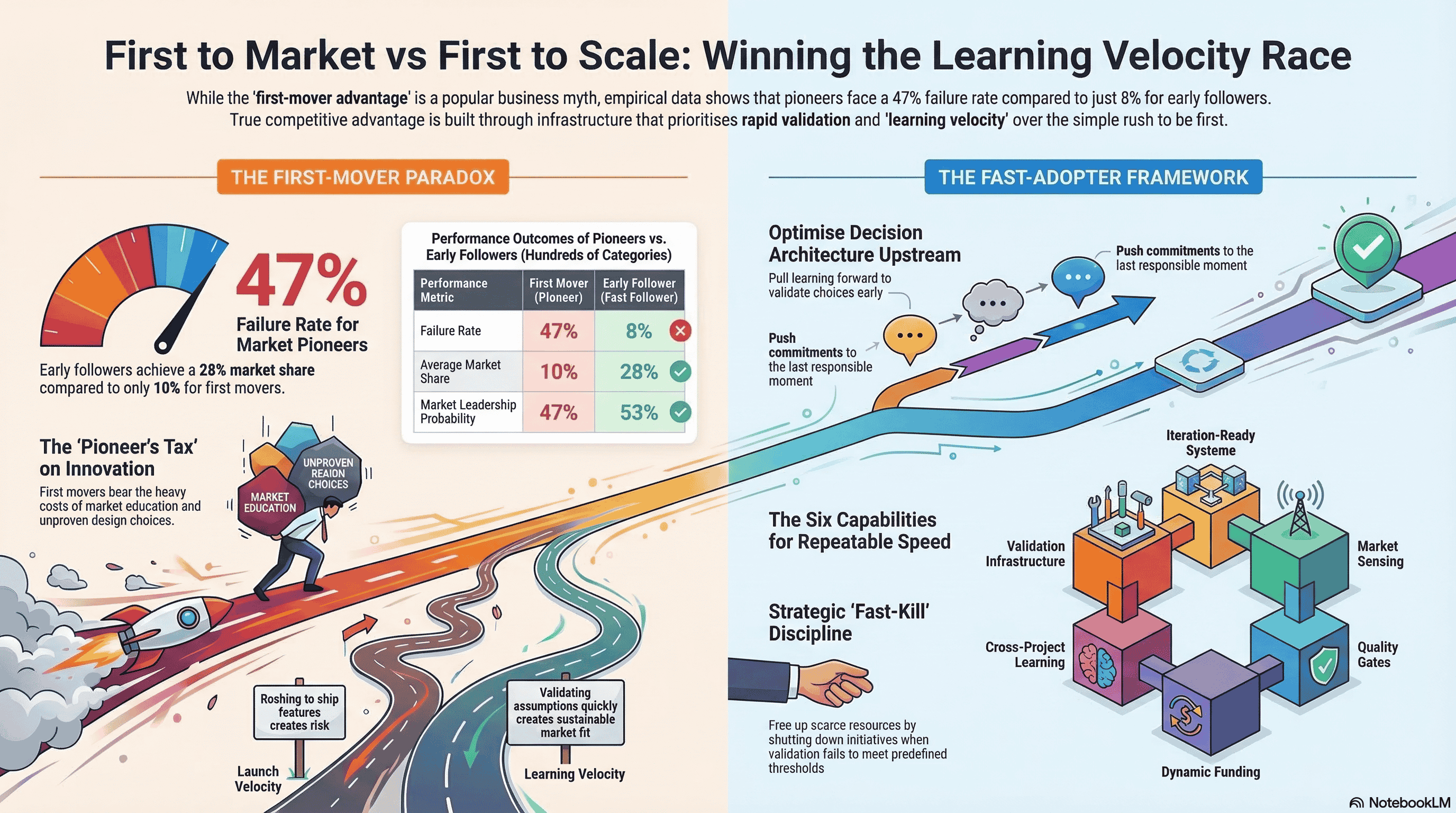
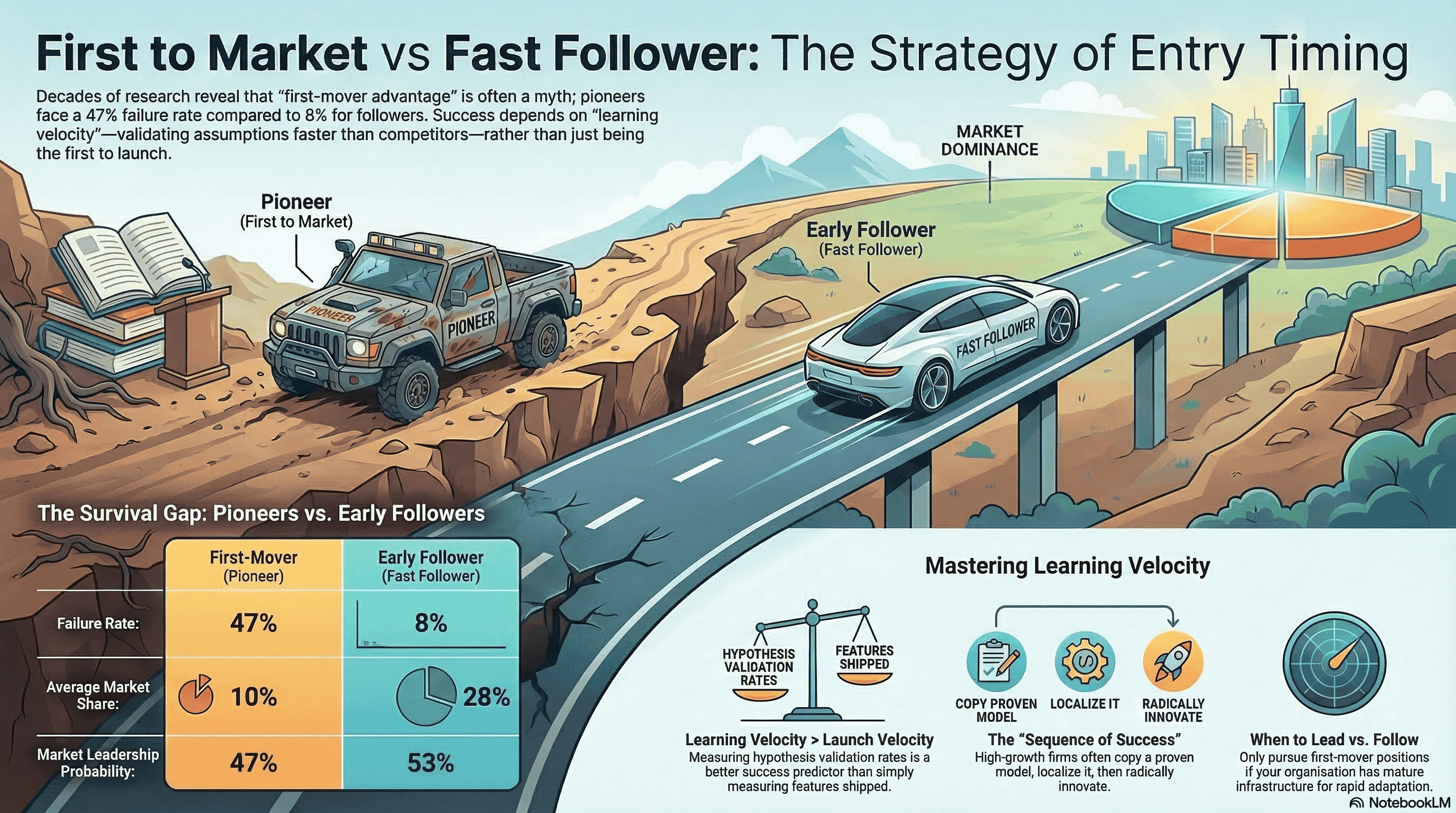
Research conducted by marketing professors Peter Golder and Gerald Tellis, who analyzed 500 brands across 50 product categories, provides a sobering counter-narrative. Their findings indicate that first-mover companies face a staggering 47 percent failure rate. In contrast, early followers—those who enter the market shortly after the pioneer but before it reaches full maturity—exhibit a failure rate of only 8 percent. Furthermore, even when pioneers survive, they capture an average market share of only 10 percent, whereas early market leaders who entered second or later achieve a 28 percent average market share and tend to gain further ground over time.
Comparative Survival and Performance Metrics by Entry Order
The following table synthesizes the performance outcomes for different entry positions based on cross-industry research.
Performance Metric | First-Mover (Pioneer) | Early Follower (Fast Follower) |
Failure Rate | 47% | 8% |
Average Market Share | 10% | 28% |
Long-term Profitability Superiority | 37% of markets | 42% of markets studied |
Market Leadership Probability | 47% | 53% |
Risk Level | Extremely High | Moderate to Low |
Primary Burden | Market Education | Operational Execution |
The discrepancy in these outcomes is largely attributable to the "pioneer's tax." First movers must invest heavily in market education, explaining the utility of a new category and building infrastructure without a guarantee of acceptance. Followers, conversely, benefit from an educated buyer base and can focus resources on refining the product, optimizing the price point, or improving the business model based on the pioneer's visible mistakes.
The Taxonomy of Innovation: From Incremental to Radical
To understand "what works," it is essential to categorize the types of innovation that startups employ. Innovation is not a monolithic concept but a spectrum defined by two factors: the technology used and the market addressed.
Incremental and Architectural Innovation
Incremental innovation involves making small-scale improvements to add or sustain value for existing products, services, and processes. This approach typically requires lower investment and carries less risk, making it accessible to organizations of all sizes. Classic examples include Gillette's evolution from a single blade to multi-blade razors or Coca-Cola’s line extensions like Cherry Coke. While incremental innovation often lacks the prestige of radical breakthroughs, its cumulative effect can lead to significant competitive advantages over time, as seen in the Toyota Production System.
Architectural innovation, meanwhile, occurs when existing technologies are applied to new markets. This type of innovation changes the way components are linked together without fundamentally changing the components themselves.
Disruptive and Radical Innovation
Disruptive innovation, a term popularized by Clayton Christensen, describes simpler, more affordable solutions that transform industries by appealing to overlooked or niche customer segments. Netflix’s transition from a DVD-by-mail service to a streaming giant is the quintessential example of a disruptive approach that eventually rendered traditional video rental businesses obsolete.
Radical innovation represents a complete departure from existing solutions, creating entirely new products, services, or technologies that fundamentally redefine industries. The development of the smartphone, which combined telephone, internet, and computing capabilities, is a radical innovation that created entirely new industry ecosystems.
Innovation Type | Market Focus | Technology Focus | Risk/Reward Profile |
Incremental | Existing Market | Existing Technology | Low Risk / Predictable Returns |
Architectural | New Market | Existing Technology | Moderate Risk / Market-Entry Focus |
Disruptive | New/Niche Market | Improving Technology | High Risk / Transformation Focus |
Radical | New Market | New Technology | Extreme Risk / High Reward |
The choice between these types often dictates the startup's required capital and exit path. Disruptive and radical innovators are significantly more likely to exit via an Initial Public Offering (IPO), as they have the potential to carve out independent market positions. Incremental innovators, however, are more likely to exit via a trade sale to an existing firm that can more efficiently scale their improvements.
The Strategic Logic of the Fast-Follower
The "mover advantage" in the contemporary digital era has shifted from those who move first to those who learn fastest. Fast followers prioritize learning velocity over launch velocity, allowing the pioneer to bear the costs of market discovery while they focus on optimization.
Learning Velocity and Decision Clarity
Fast followers utilize a diagnostic framework to determine when to enter a market. They monitor the "Gartner Hype Cycle" to jump in at the point where technology is maturing and the market is ready to monetize. A critical component of this strategy is "upstream decision-making." Research shows that upstream decisions—those made before significant capital is committed—require more lead time but prevent expensive rework later.
Strategy Dimension | First-Mover (Launch Velocity) | Fast-Follower (Learning Velocity) |
Resource Allocation | Exploration and Discovery | Refinement and Execution |
Key Metrics | Time-to-Market, Early Adoption | Hypothesis Validation Rate, Churn |
Primary Advantage | Brand Awareness, Resource Capture | Error Avoidance, Cost Efficiency |
Primary Risk | Technological Uncertainty | Competitive Entry of Late-Movers |
Information Basis | Unproven Assumptions | Market Research, Benchmarks |
Followers also benefit from avoiding "functional inertia." First movers often face trade-offs between the functionalities their products already excel in and the additional functionalities requested by users later. Late movers, by contrast, start searching when more functionalities are already known, typically resulting in superior product designs that better meet the matured needs of the market.
Case Studies in Industrialized Imitation and Localization
The success of "copycat" startups—particularly those in emerging markets—demonstrates that replication combined with localization can be a highly effective strategy for scaling.
Rocket Internet: The Venture Builder Model
Rocket Internet, based in Berlin, operates on a "venture builder" model that replicates successful American internet companies in international markets outside the U.S. and China. The company focuses on three areas: eCommerce, marketplaces, and fintech, reaching 4.5 billion users globally.
Rocket’s model is defined by repetition and high-speed execution. By centralizing technical development and legal functions, they can launch a new venture within approximately 80 days. They mitigate personnel risk by hiring interchangeable managers from prestige firms like McKinsey and Goldman Sachs, offering them competitive salaries and low equity. However, the model has limitations; it often falters when network effects, rather than pure execution, are the key to the business model.
Localization as a Moat: Grab vs. Uber
The competition between Grab and Uber in Southeast Asia serves as a definitive case study on why localization defeats global standardization. Uber utilized a "global mindset," dropping a standardized system into major cities with minimal cultural adjustment. Grab, conversely, utilized a "hyper-local playbook".
Strategic Pillar | Uber's Global Strategy | Grab's Hyper-Local Execution |
Payments | Required credit cards (US standard) | Cash payments and GrabPay for unbanked users |
Vehicle Modes | Standardized cars | GrabBike (motorcycles), GrabTukTuk, GrabTrike |
Driver Support | Self-service digital tutorials | Free smartphone and app literacy lessons |
Marketing | Global brand campaigns | Hyper-local CSR campaigns (e.g., voting rides) |
Infrastructure | Relied on global mapping data | Developed unique traffic tracking algorithms |
By 2018, Uber merged its Southeast Asian operations with Grab, taking a 28 percent stake in the company—a recognition that its standardized model could not compete with Grab's deeply localized solution.
Meituan: The Trajectory from Copycat to Innovator
The rise of Meituan in China illustrates a broader pattern where firms in developing economies grow in stages. Meituan initially copied Groupon's group-buying model to reduce early risk and focus on survival in a crowded market. Once financial strength and scale were achieved, Meituan invested heavily in R&D, robotics, and logistics, transitioning into a leader in fields like autonomous drone delivery. This suggests that "copying" is often a strategic prerequisite for later breakthrough innovation.
Radical Innovation as a Wealth Engine: Tesla and SpaceX
While imitation offers higher survival rates, radical innovation is the primary engine for massive wealth creation and the disruption of civilization-scale industries. Firms like Tesla and SpaceX demonstrate how radical innovation can create new value networks that displace established incumbents.
The Tesla Paradigm
Tesla is classified as a disruptive and radical innovator because it redefined new energy vehicles. Rather than just making an electric car, Tesla integrated electric powertrains, autonomous driving technology, and a direct-to-consumer sales model to create a new value network. Tesla's advantage lies in its "integration moat"—it designs batteries, motors, and software together, allowing it to scale production and innovate faster than automotive startups using modular approaches.
The SpaceX Model of Subversive Thinking
SpaceX has successfully broken the limitations of traditional space exploration through overall subversive thinking. By producing 70 percent of components in-house, SpaceX controls manufacturing costs and time, achieving massive cost reductions through reusable rocket technology. This vertical integration is a rational response to the constraints of complex AI and aerospace workloads, which require co-optimization of hardware and software.
Company | Radical Innovation / Disruption | Primary Competitive Moat |
Tesla | Electric Powertrain, Autopilot, Direct Sales | Integration Moat, Real-world Fleet Data |
SpaceX | Reusable Rockets, Vertical Integration | In-house Manufacturing, Cost Leadership |
OpenAI | Generative AI as a Metered Utility | Model Depth, Developer Lock-in (CUDA) |
Nvidia | AI GPU Infrastructure | Software Layer (CUDA) Moat, 70%+ Margins |
Market Structure: Winner-Take-All vs. Fragmented Markets
The success of a "copy vs. innovate" strategy is heavily dependent on the market structure. In "Winner-Take-All" (WTA) markets, a single company captures most of the value, while in fragmented markets, many viable competitors coexist.
The Mechanics of Winner-Take-All Markets
WTA markets are driven by network effects, where a product becomes more valuable as the number of users increases (Metcalfe's Law). These markets are also characterized by high multi-homing costs—where it is difficult for a user to participate in multiple networks—and increasing returns to scale.
In a WTA market, a "second-place" strategy is generally not viable. Startups must be first to scale or wait for a paradigm shift. If a leader has already locked in market share, a new entrant must attack via a different dimension, such as how DuckDuckGo competes with Google on privacy rather than search algorithms.
Fragmented and Concentrated Market Strategies
Fragmented markets, such as the Indian restaurant industry or accounting services, feature low barriers to entry and competition based on local execution. In these markets, startups should focus on differentiation and execution rather than volume.
Market Characteristic | Winner-Take-All (WTA) | Fragmented Market |
Concentration (HHI) | High (> 2,500) | Low (< 1,500) |
Leading Player Share | > 80% | < 20-30% |
Competitive Focus | Speed to Scale, Network Effects | Local Execution, Differentiation |
Barriers to Entry | Extremely High | Low |
Example | WhatsApp, Google Search | Real Estate, Professional Services |
Financial Metrics and Valuation Methodologies
Investors assess innovative and copycat startups through different lenses, primarily focusing on risk mitigation for copycats and outsized return potential for innovators.
The Venture Capital Method
The VC Method is a fundamental technique for valuing early-stage startups based on their anticipated exit valuation. The methodology involves projecting a company's terminal value—typically 5 to 7 years out—using industry-standard multiples for revenue or EBITDA.
For a seed-stage startup, VCs often target a 50 percent to 60 percent Internal Rate of Return (IRR) to compensate for the high risk. For example, if a company is expected to reach a $250 million exit in 5 years and the VC desires a 20x return, the post-money valuation today would be $12.5 million ($250M / 20).
Scorecard and Berkus Valuation Frameworks
For early-stage companies without significant revenue, qualitative factors dominate the valuation. The Scorecard Method compares a startup to others in the same region, weighting factors like the management team (25-35%) and market opportunity (20-25%). The Berkus Method assigns value (up to a cap) for five key milestones: a sound idea, a functional prototype, a quality management team, strategic relationships, and product sales.
Valuation Factor | Weighting (Scorecard) | Berkus Milestone |
Management Team | 25% - 35% | Quality Management |
Size of Opportunity | 20% - 25% | Sound Idea |
Product/Technology | 10% - 15% | Prototype |
Competitive Environment | 10% | Strategic Relationships |
Marketing/Sales Channels | 10% | Product Sales |
AI Revenue Multiples and Efficiency (2025-2026 Data)
As of late 2025, AI startup valuations are bifurcated. Core AI categories (LLM vendors, infrastructure) see median revenue multiples near 40x, with outliers like xAI trading at extraordinary levels. However, "Applied AI" (HealthTech, Fintech) trades in tighter ranges of 9x to 12x revenue, reflecting a shift where investors prioritize traction and efficiency over raw technical differentiation. A critical metric now emerging is EV/Funding—measuring how much enterprise value is created for every dollar raised. High revenue multiples do not always correlate with high capital efficiency, and investors are increasingly wary of "capital-intensive" models that have outpaced value creation.
Operational Excellence: The Internal Engine of Success
Innovation and vision are the cornerstones of a startup, but operational and financial acumen are the building blocks of sustainability. About 90 percent of startups fail, often due to operational inefficiencies or a lack of product-market fit.
Capital Efficiency and Burn Rate Management
Capital efficiency involves optimizing fixed and variable costs, such as rent and salaries, and focusing on customer retention to reduce acquisition costs. Startups that achieve capital efficiency have a 20 percent higher chance of reaching profitability within five years. A key metric is the "burn rate"—the rate at which a startup spends its cash reserves; controlling this extends the "runway," giving the firm more time to find product-market fit.
The Kaizen Approach to Operational Excellence
Operational excellence is an ongoing commitment to optimizing performance across dimensions like efficiency, productivity, and quality. This often involves the Kaizen philosophy—continuous analysis of production to minimize waste. For startups, this translates to lean operations and iterative development using Minimum Viable Products (MVPs) to validate ideas before significant upfront investment.
Operational Priority | Strategic Action | Business Impact |
Assess Current State | Identify bottlenecks and baseline KPIs | Clarity on inefficiencies |
Set Clear Goals | Align objectives with business strategy | Measurable improvement targets |
Prioritize Improvements | Focus on high-impact "quick wins" | Rapid ROI and momentum |
Develop Implementation Plan | Assign roles and allocate resources | Structured roadmap for scaling |
Monitor and Measure | Track KPIs and gather feedback | Data-driven adjustments |
Macroeconomic Influences on Strategic Choice
The decision to innovate or copy is also shaped by broader economic indicators like interest rates and inflation.
Interest Rates and Innovation Spending
Rising interest rates historically discourage investment in innovation. For every 1 percentage point rise in interest rates, VC investment falls by about 25 percent within three years, and patent filings decline by 9 percent. High rates reduce aggregate demand and make risk-taking less profitable, leading investors to favor "follow-on" bets in proven companies over new, unproven entrants.
Inflation as a Catalyst for Strategic Pivot
While inflation increases operational costs, it can also encourage consumer spending as purchasing power decreases over time. For nimble startups, inflation creates an opportunity to adapt products to address market gaps or offer value-driven solutions to price-sensitive customers. During the inflationary environment of 2025, U.S. startups that used value-based pricing and avoided overinvestment in saturated areas were better positioned to maintain profitability.
Emerging Markets: The Leapfrog Opportunity
Emerging markets in Asia and Latin America often provide conditions where localized copycats outperform global innovators. These markets frequently feature "institutional voids"—weak regulations or less mature legal systems—that require firms to develop robust, flexible management practices. "Frugal innovation" (or jugaad) allows these firms to develop cost-effective business models that are more suited to local household incomes and infrastructure constraints. In 2025, emerging markets rebounded, outperforming U.S. equities as digital infrastructure and AI-led innovation drove renewed leadership in these regions.
Strategic Synthesis: Determining What Actually Works
The analysis of "Copy vs. Innovate" suggests that neither strategy is universally superior; success is contingent upon the market type, the firm's capabilities, and the macroeconomic environment.
When to Prioritize Innovation
Entering Fluid, Disrupted Markets: Startups with more disruptive patents are 25.2% more likely to go public, making innovation the preferred path for firms seeking an IPO.
Building Integration Moats: When a product requires the co-optimization of hardware, software, and data—as in Tesla’s EVs—radical innovation is necessary to create a defensible "integration moat".
WTA Market Entry: In markets with strong network effects, innovation is required to either set the standard or wait for a paradigm shift that makes the current leader obsolete.
When to Prioritize Copying and Localization
Emerging Market Entry: In markets where local cultural preferences, regulatory environments, and infrastructure (like unbanked populations) differ significantly from Western norms, localization is more effective than standard innovation.
Resource-Constrained Environments: High interest rates and inflation favor the lower risk and predictable returns of fast-follower strategies.
Operational Plays: If a startup’s core strength is execution, centralization, and process optimization—as seen with Rocket Internet—copying proven business models allows them to out-execute the original inventors.
The Sequence of Success: Copy, Localize, Innovate
The most resilient startups often follow a phased sequence. They begin by copying a proven model to validate market demand and reduce early risk. They then localize the model to suit specific regional needs, building a defensive moat through customer loyalty and infrastructure. Finally, once scale and resources are achieved, they invest in radical innovation to sustain their market leadership and enter new verticals. This sequenced approach aligns financial stability with the high-reward potential of breakthrough innovation, creating a durable foundation for long-term growth.